
Author: EVAI

2025 Ferrari F1 car revealed as Hamilton era gets underway
 Ferrari has revealed the SF-25 as its contender for the 2025 Formula 1 season The SF-25 will be piloted by Lewis Hamilton and Charles Leclerc in the new season The first race will be the Australian Grand Prix, taking place on March 16 Ferrari’s new Formula 1 race car for the 2025 World Championship has been fully revealed following its debut late…

California pushes ahead with charger buildout despite Trump freeze
- California sees EV fast-charger creation continuing in 2025 and beyond
- Program offers funding now for “ready-to-build” charging projects at retailers
- Current $1.4B program is part of $10B EV-and-infrastructure plan
While the Trump DOT has frozen funds related to the federal EV charging buildout, that hasn’t stopped the creation of more publicly supported chargers in California—and plans for many more in the near future.
Last week California announced a $55 million project, overseen by the California Energy Commission (CEC), supporting the installation of DC fast-charging stations at retail sites throughout the state, for locations that include convenience stores, gas stations, and hotels.
While it’s a relatively small piece of the state’s latest $1.4 billion EV charging and hydrogen plan—all state funding—that it announced in December, its timing served to underscore a point: Much of California’s EV charger expansion is state-funded and will, simply, keep rolling with or without the rest of the country behind it.
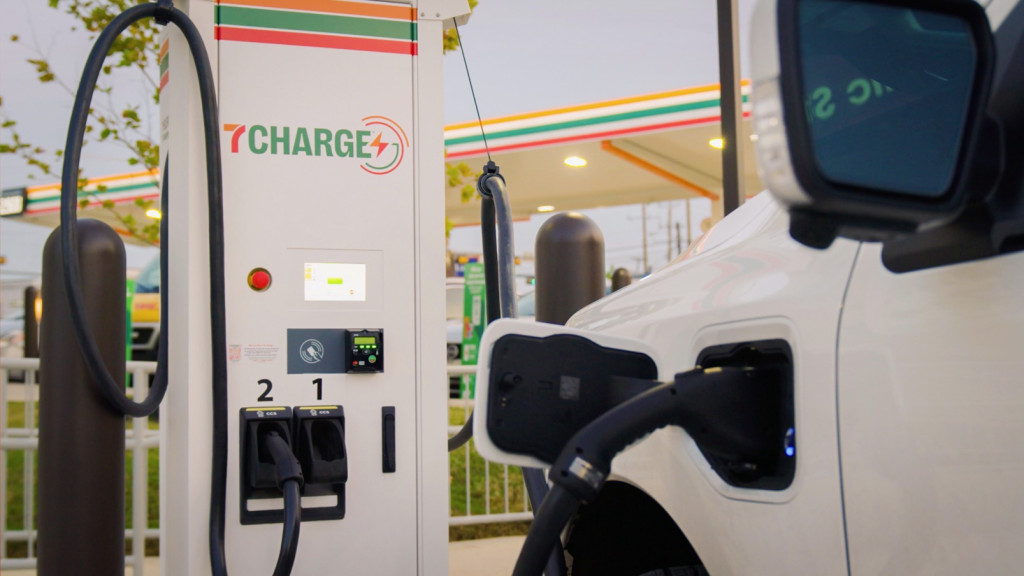
7-Eleven 7Charge EV fast-charging station
The latest $1.4 billion program covers 100% of the costs of approved, “ready-to-build” DC fast-charging projects, with up to $55,000 or $100,000 per charging port, depending on the power level. As the state emphasizes, disadvantaged communities and tribal land applications will be prioritized but aren’t required.
“The CEC is reviewing the recent memo and coordinating with federal and state counterparts,” said spokesperson Harrison Reilly to Green Car Reports, regarding how the Trump move might affect future California charging funding. “We remain confident in our ability to continue serving Californians and leading the state to a 100 percent clean energy future for all.”
California’s own program, which will include new incentives for manufacturing, job training, and electric trucks and school buses, is part of the $10 billion it plans to spend on EVs and infrastructure as part of its $48 billion climate commitment by 2045. California says it’s already spent $2.3 billion since 2007 on EV infrastructure plus alternative fuels and advanced vehicle technologies. Looking forward, it’s even considered adding its own $7,500 EV rebate that might exclude Tesla if the federal government nixes the tax credit.
While the state isn’t dependent on federal funds for building out public charging, it wouldn’t be completely unaffected. As the state noted in December’s program announcement, it has “also received billions from the Biden-Harris Administration for clean transportation.”
The Bipartisan Infrastructure Law enacted in November 2021 included $7.5 billion toward EV charging, in two big bins of funding. Firstly, $5 billion for the deployment of a national EV charging infrastructure, focused around designated travel corridors, and the formation of “an interconnected network to facilitate data collection, access, and reliability” of charging.
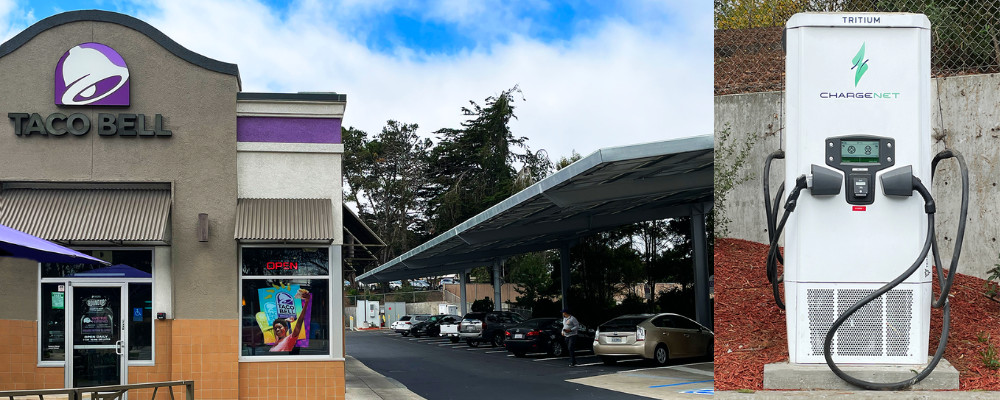
EV fast-charging at Taco Bell
The second big bin of funding under the infrastructure law is sending $2.5 billion toward rural charging and underserved/disadvantaged communities. California, following its own funding distribution, has already emphasized EV affordability for low-income and disadvantaged communities—and with it, remedying corresponding EV fast-charging deserts.
According to a report from the CEC itself, the state will need 1.2 million EV chargers by 2030 in order to meet the charging demands of the 7.5 million plug-in vehicles it sees in use by then.
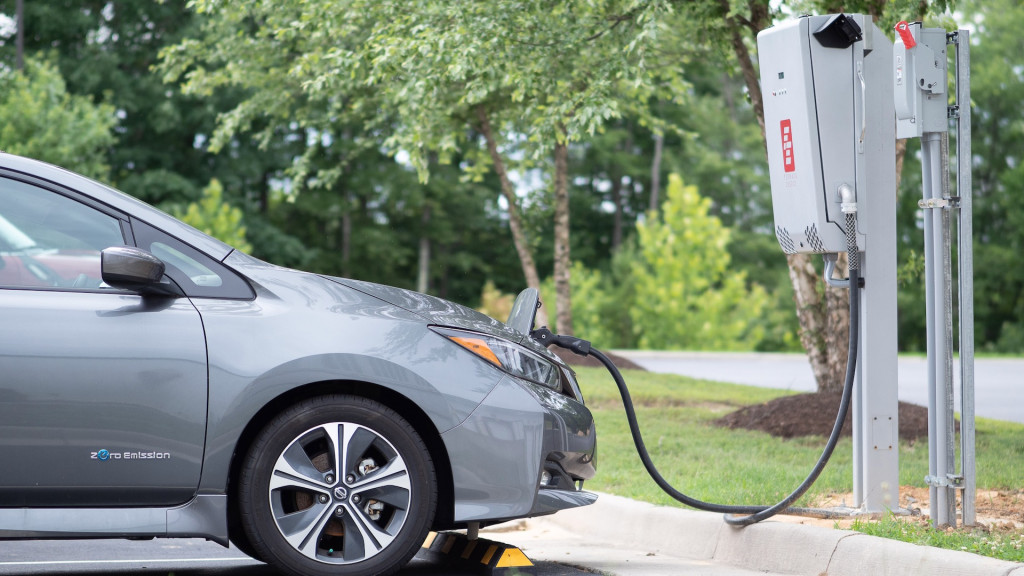
Nissan Leaf and Fermata Energy FE-15 bidirectional charger – Photo by Fermata Energy
Adding those chargers isn’t simply a matter of installing cabinets and connectors, but of grid upgrades in some cases. That same report also emphasized the importance of “vehicle-to-grid” (V2G) tech, part of bidirectional charging. It underscored that without the more widespread deployment of such tech, overall electricity consumption by electric passenger cars could boost electricity demand by 20% to 25% at peak times.
While California will push ahead with its EV charger buildout almost unfazed, one of the biggest questions ahead may be viability of its market scenario, including higher levels of EV adoption. With weak EV sales growth expected nationally in 2025, it may be building farther ahead than it’s intended to.

Kia EV4 sedan and hatch revealed
Kia on Monday partially revealed production-ready sedan and hatchback versions of its EV4 compact electric vehicle.
First previewed in 2023 by a concept car, the production Kia EV4 sedan retains the concept’s sleek profile and bold, multi-faceted surfacing. The hatchback replaces the sedan’s tapered tail with a squared-off shape that also looks fairly distinctive.
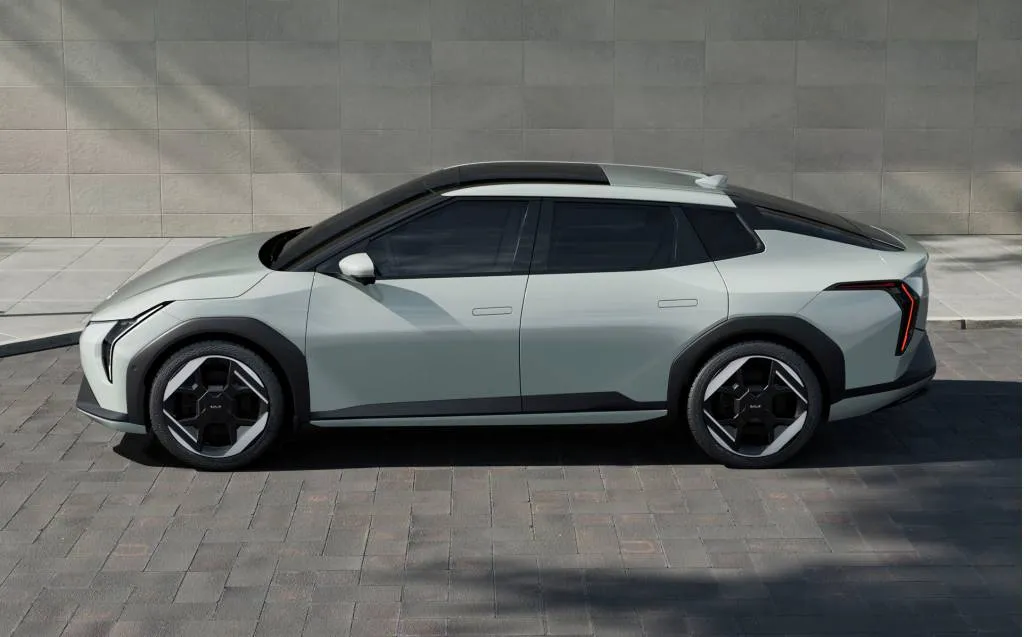
New Kia EV4 sedan
Kia is only showing the exteriors of the EV4 sedan and hatch for now. A more thorough reveal will take place Feb. 24 during a Kia EV Day presentation in Tarragona, Spain, at which the automaker also says it will provide an update on its electrification strategy. Full details on the EV4 will follow on Feb. 27.
The EV4 is one of three smaller electric models Kia unveiled at its October 2023 Kia EV Day event, all of which are expected to reach production for at least some markets. The other two models were crossovers, including the EV3, which is close to the same size as the Volvo EX30, and the EV5, which is sized like the Kia Sportage, Honda CR-V, and Toyota RAV4.
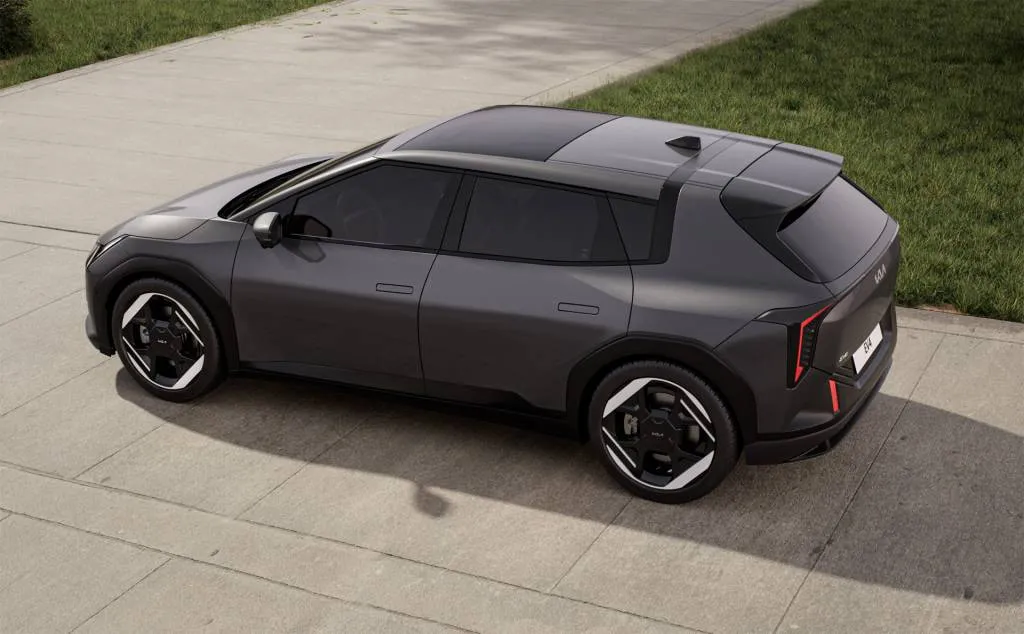
New Kia EV4 hatchback
Kia was quick at the time to say that the EV5 was not U.S.-bound, but it left the door open for the EV4 and EV3. A production-ready version of the EV3 was shown in May in of last year, and at the 2024 Los Angeles auto show last November, Kia America chief operating officer and executive vice president Steven Center told Green Car Reports that “we may see both” the EV4 and EV3 in the U.S.
A few months prior to that, a report said Kia was “developing a distinct North American model” of the EV3 targeting a $30,000 base price, to be built at the automaker’s factory in Monterey, Mexico, starting this year. The report didn’t mention the EV4, and Mexican production of any new EVs could be jeopardized by the Trump administration, which has threatened to levy tariffs against imports from that country.

Here’s why US EV sales may gain 3% in 2025 despite headwinds
- U.S. EV market share might be flat vs. 2024, but market expansion means 3% EV sales growth
- EV sales gained 58% looking past direct sales from Tesla, Rivian, Lucid, others
- California EV sales were close to flat for 2024, but non-Tesla EV sales gained 21%
- Policy wildcards include EV tax credit, tariffs, emissions policy, and charging infrastructure
Are U.S. EV sales still on the way up?
The answer is yes, but there’s a complex set of factors at play, including the continued decline of Tesla sales, a rise in popularity of mainstream EV models, and all that’s potentially set to happen under a Trump administration.
At the surface, it’s going to look like the EV market is just treading water. The analysts at the market research firm J.D. Power last week revised their EV retail market share forecast to be flat this year, with EVs at 9.1% of the U.S. retail market.
Behind that, J.D. Power cited a confluence of recent headwinds including vehicle-related tariffs, emissions policy softening, the potential removal of the EV tax credit, and the potential removal of federal charging-infrastructure funding (already in the obstructionism stage with a DOT freeze of funds).
Looking ahead, it adjusted the entire trajectory for EV adoption in the coming years downward versus where it had been, but still on a climb after this year—to 26% of the market by 2030, with quite a wide range for variation.
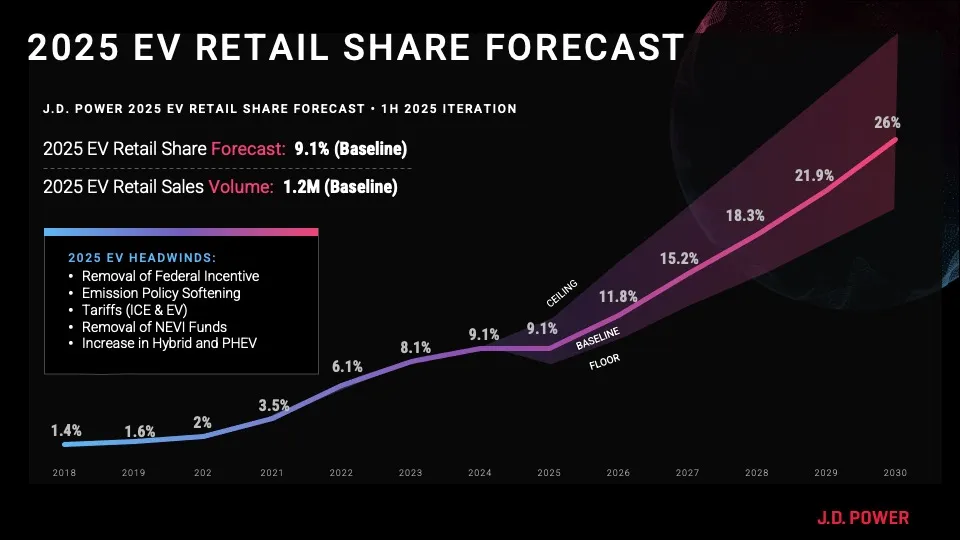
J.D. Power U.S. EV market share forecast – February 2025
An expanding market, more mass-market EVs
While there’s all that uncertainty at the surface, and might not seem like EVs are gaining traction, there’s a lot happening from underneath. As J.D. Power noted, there was a 58% rise in 2024 in what it called “franchise EV sales.” Not including direct-sales EV brands like Tesla, Rivian, Lucid, Polestar, and others, these sales at traditional dealerships amounted to 376,000 units during the year.
There’s also the reality that the tide is rising and the vehicle market as a whole is in expansion. In 2025, J.D. Power forecasts 16.3 million total sales—up 3% from 2024’s total of 15.8 million sales. And a flat market share of EVs means that they’ll gain by that same percentage in the market.
“We expect a flat retail share for EVs,” said Tyson Jominy, J.D. Power’s VP of data and analytics, to Green Car Reports. “With total sales expected to grow 3%, so will EV sales.”
EV sales by volume rose by about 7% in 2024, up from a total share of about 8% of the market in 2023.
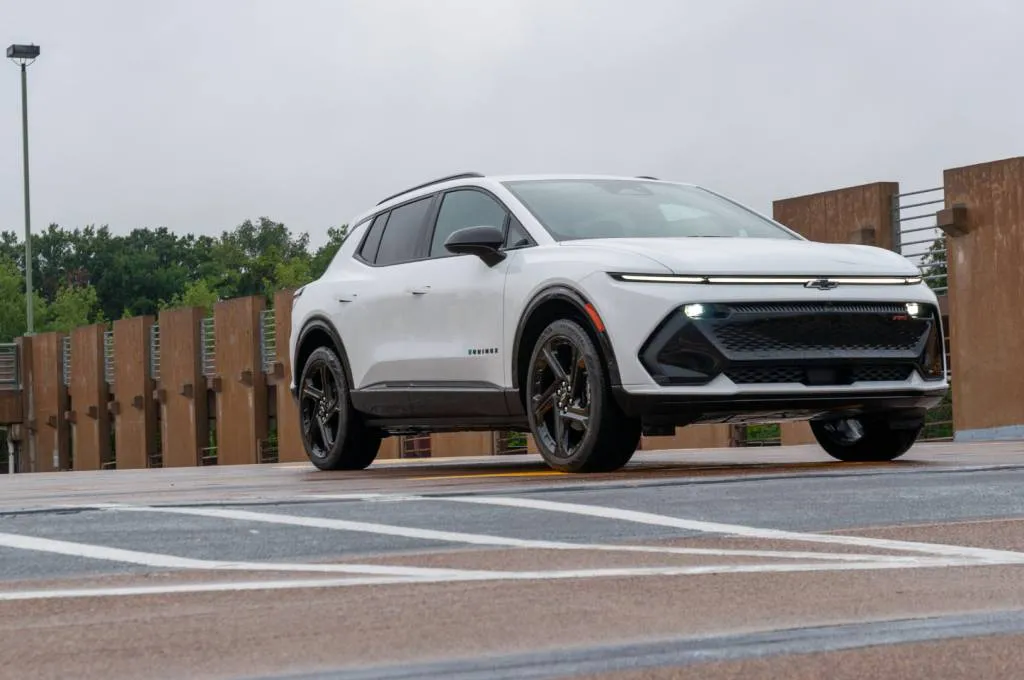
2024 Chevrolet Equinox EV
EV sales growth nowhere close to previous forecasts
So while growth is still happening for the EV market in 2025, it is far below what analysts had anticipated at the start of 2024. Bloomberg analysts in January 2024 anticipated that EVs would reach a 13% U.S. market share in 2024, at 1.9 million vehicles, and the International Energy Agency, in April 2024, still anticipated that EVs would rise to 11% of the market in 2024.
Further, pent-up demand for affordable models and the pending arrival of some of them, like the Chevrolet Equinox EV and Ford’s pivot to EV affordability, led some, including S&P Global Mobility, to point to more aggressive EV growth for future years versus previous forecasts.
But that all changed with November’s election, when U.S. voters made a strong statement against a Biden administration vision that had included a longer-lens green-energy focus, a modernization of the auto industry and supply chain around it, and incentives that rewarded U.S. manufacturing.
And there may be some surges and stumbles yet to the market in 2025, as policy changes. For instance, fourth-quarter 2024 EV sales were up—by more than 15% year over year—as dealerships saw a run on purchases due to concern that the EV tax credit might soon be going away.
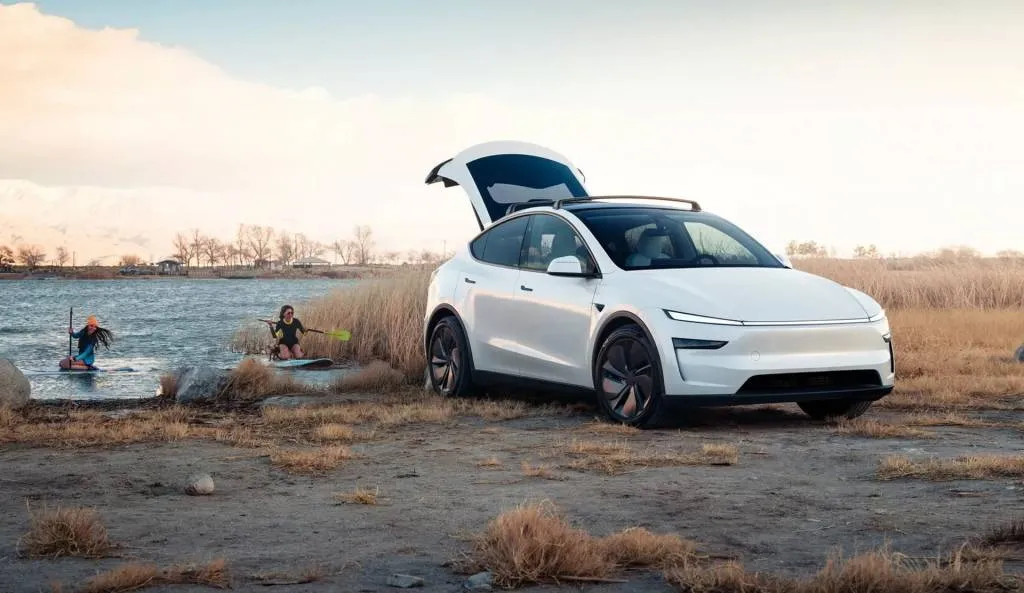
2025 Tesla Model Y
The California factor—or Tesla factor, or Musk factor
It’s impossible to assess EV sales and not include a look at Tesla and its pronounced downward trend in sales. After many years of gains, Tesla sales and deliveries fell in 2024—both internationally and within the U.S.
And Tesla’s California sales downturn was a key piece of that. Take Tesla out of the totals, and the California data tells a wildly different story. According to it, California sales of non-Tesla EVs rose 21% in 2024, versus 2023. So especially for California, 2024’s EV sales dip might have been a very Tesla-specific problem while EV shoppers flocked to other brands and models that weren’t
In California, EV sales have amounted to about 30% of the sales total, according to the California New Car Dealers Association, and more than a third of all EVs sold in the U.S. are sold in the Golden State. Less than three years ago California comprised an eighth of Tesla’s global deliveries.
While in 2022, Tesla cracked 10% of the market share in what used to be its home state, it’s now on a steep fall from favor—and considering how sharply sales of other EVs rose, it’s hard to point fingers to a sagging EV market.
Tesla’s 2024 sales totals in California (based on registration data from Experian Automotive) dropped by 11.6% versus 2023, while its actual market share of the entire California light-vehicle market dropped from 13.0% in 2023 to 11.6% in 2024. The Toyota Camry edged out the Tesla Model 3 for the top-selling passenger car in California during 2023, while the Tesla Model Y held on to its spot as the top-selling light truck.
Does Tesla’s California burnout extend to other states? It appears so. Tesla sold 611,755 vehicles in the U.S. in 2024, down nearly 5% from the 2023 total of 642,504, according to Automotive News, based on registrations. So despite an expansion of the EV market across the U.S., Tesla’s EV sales are in contraction elsewhere too, and it didn’t manage to produce sales gains.
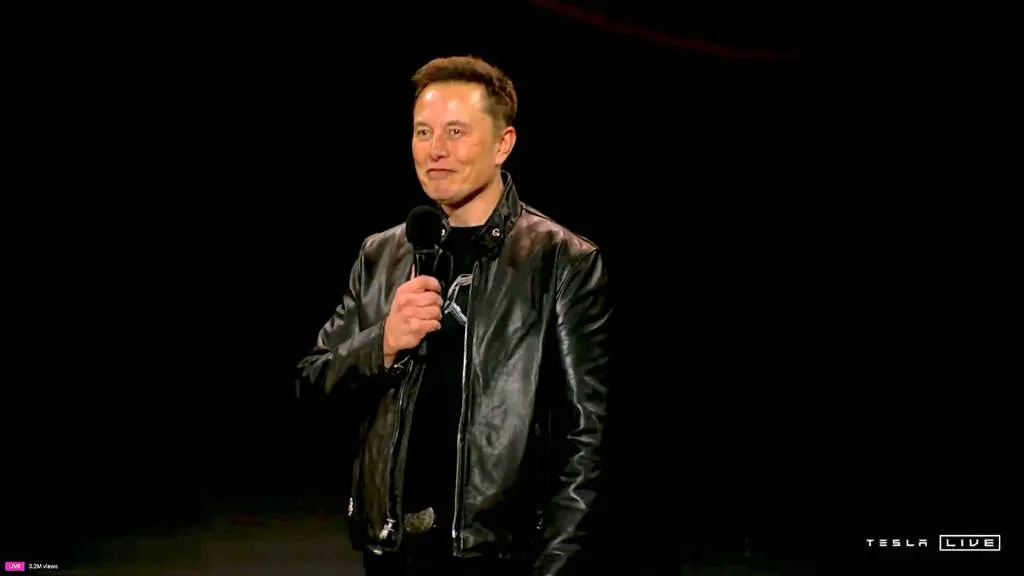
Tesla CEO Elon Musk at Cybercab event (screenshot) – Oct. 2024
While there wasn’t significant EV sales growth in California in 2024, as J.D. Power pointed out there was indeed new growth in the EV sector coming from mass-market EV models, as well as in New York, Florida, and Colorado, which have emerged as new EV sales hotspots.
To tease out the takeaway from another angle, Tesla isn’t making up for its California sunset in those new states. Its California sales drop of nearly 27,000 lands below its national-total sales drop of 31,000.
As several polls and market analyses concluded in 2024, Tesla CEO Elon Musk was getting in the way of Tesla sales as he became overtly political and then a participant on the campaign trail—and now a “special government employee” in the executive branch and, some have called it, an unofficial member of President Trump’s cabinet.
Based on those trends, and the quantitative trends emerging from sales data in 2024, it’s hard to imagine J.D. Power’s 3% EV market growth in 2025 happening through Tesla gains.
As 2025 unfolds, it isn’t just Musk and his memes, but the policy he’s backing from the White House itself, that will affect how EV sales play out.

Ford’s looking to redefine tailgating with the use of a hitch
 When tailgating, seating arrangements are usually limited to folding chairs and the open tailgate itself. But Ford’s engineers have been working on fold-out seats supported by a trailer hitch. This more elaborate seating design was disclosed in a patent application Ford submitted to the United States Patent and Trademark Office (USPTO) on May 23…

Prodrive’s rare Subaru Impreza 22B STI tribute up for sale
 A rare Prodrive P25 is up for sale via an online auction The car is one of just 25 built and the only one finished in silver The estimate is between $599,000-$725,000 Prodrive’s P25 is what the iconic Subaru Impreza 22B STI might have been like if launched today. It’s a supercar in a humble Subaru shell, designed not only to be driven but driven…

2025 Honda Odyssey
 What kind of vehicle is the 2025 Honda Odyssey? What does it compare to? The 2025 Honda Odyssey minivan compares well with the Toyota Sienna, Chrysler Pacifica, and Kia Carnival. Is the 2025 Honda Odyssey a good minivan? Yes, so long as you’re OK with its lousy fuel economy. The 2025 Odyssey has strong scores for its flexible interior and…

Test drive: 2025 Subaru Outback marks end of an era
 The Subaru Outback stands alone as the last mainstream wagon standing The next-generation Outback arrives for 2026 The 2025 Outback costs $30,430 Buyers wanting a mainstream wagon better head to their Subaru dealership soon. The 2025 Subaru Outback maintains the iconic package of a high-riding wagon with great packaging, comfortable ride, and…

Ride-along: BMW’s Heart of Joy control module pumps thrills into EVs
 BMW’s Heart of Joy consists of four integrated control modules at the heart of every Neue Klasse EV The Dynamic Performance Control module integrates acceleration, braking, handling, and steering dynamics The systems were tested to the limits in BMW’s Vision Driving Experience, nicknamed “The Beast” Pushing a vehicle to its limits is the essence…

BMW’s Heart of Joy control unit promises next-level vehicle dynamics, efficiency gains
BMW’s Heart of Joy control unit
- BMW has developed the Heart of Joy control unit for its upcoming Neue Klasse EVs
- Heart of Joy consolidates multiple separate control units—such as those managing the drivetrain and chassis—into a single, integrated unit
- Promised benefits include quicker and more precise vehicle control, plus efficiency gains
BMW’s upcoming Neue Klasse family of electric vehicles, set to start arriving later this year, will benefit from a new drivetrain and chassis management system that consolidates multiple control units into a single, advanced unit. This replaces the separate control units that current vehicles rely on.
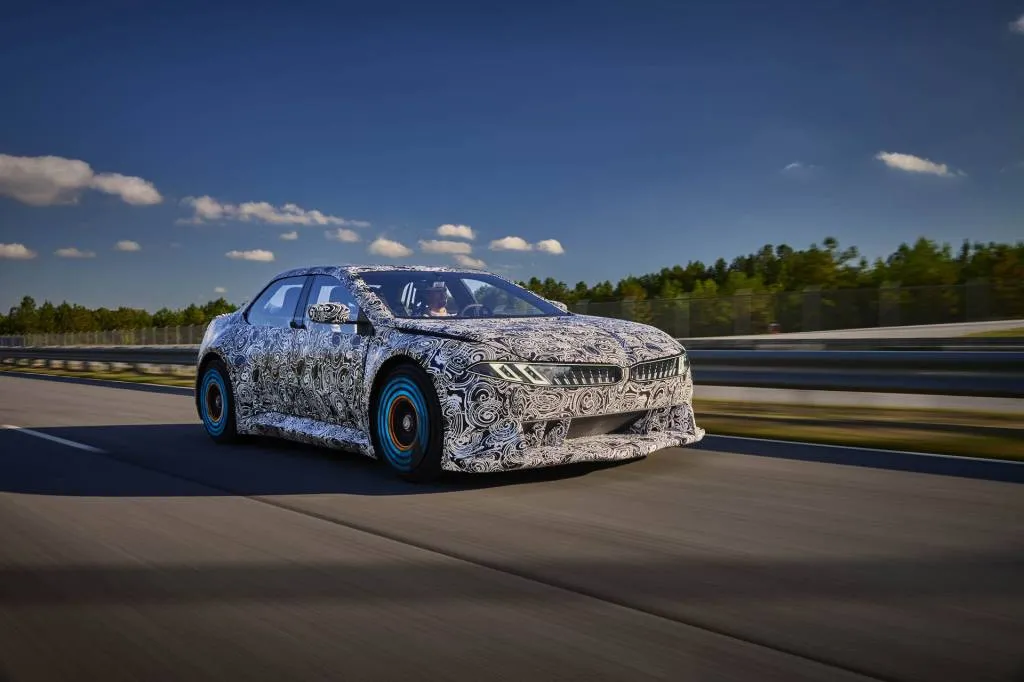
BMW calls this system the Heart of Joy, and on Sunday, the automaker unveiled the Vision Driving Experience prototype—a rolling laboratory designed to test and refine the technology.
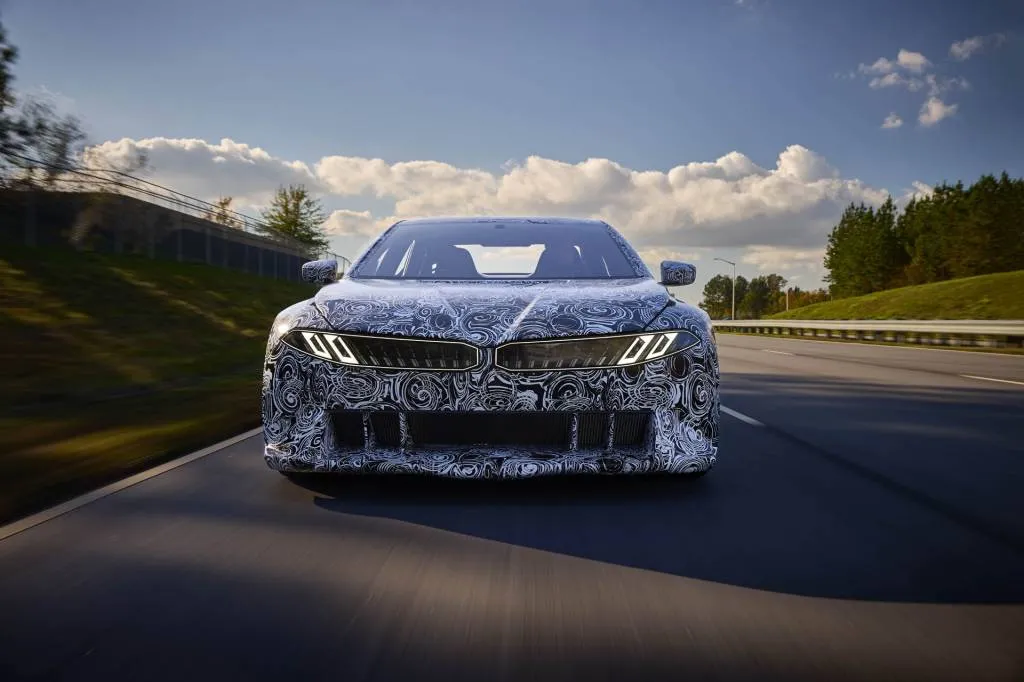
While the prototype itself doesn’t preview any specific production model, its design hints at elements that will appear on some Neue Klasse EVs, particularly a compact electric sedan that will be part of the next-generation 3 Series family. This sedan is expected to carry the i3 badge and arrive around 2026 as the second Neue Klasse model. The first Neue Klasse EV will be a compact crossover in the X3 family, set to debut later this year. It will replace the iX3 electric crossover sold overseas, likely retaining the same name.
BMW’s Heart of Joy control unit
The Heart of Joy control unit will shape the driving dynamics of these vehicles by managing the drivetrain, brakes, charging, energy recovery, and steering. By integrating control of these functions into a single unit, BMW claims information can be processed up to ten times faster than in current vehicles, leading to greater precision and responsiveness.
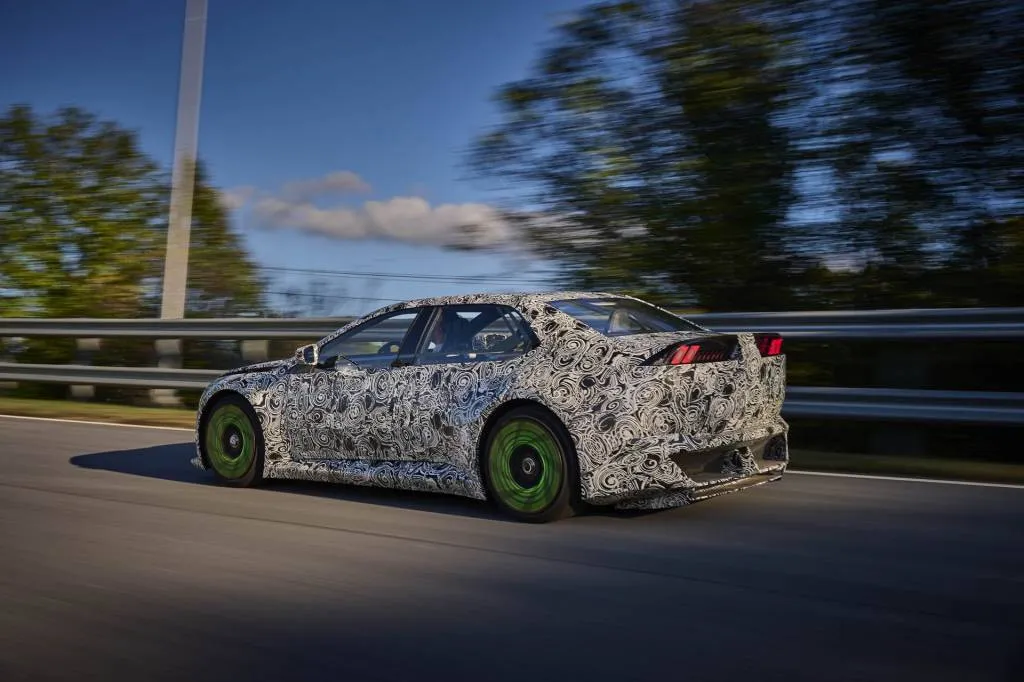
Working in tandem with BMW’s Dynamic Performance Control software, the Heart of Joy system will enhance stability and smoothness even at the vehicle’s limits—improving safety and requiring fewer driver inputs. For the Vision Driving Experience prototype, whose drivetrain specifications haven’t been disclosed, a staggering 13,269 lb-ft of torque is delivered at the wheels, allowing engineers to push the system far beyond what most drivers will ever experience.
Even in stop-and-go traffic, BMW promises noticeable improvements. Features like Auto Hold and Active Cruise Control will operate more seamlessly, the automaker said.
BMW’s Heart of Joy control unit
Efficiency will also see a boost of up to 25%, as BMW aims to maximize energy recovery. In Neue Klasse EVs, braking will be handled almost entirely through regenerative braking, with conventional friction brakes needed only in emergency situations. On the Vision Driving Experience prototype, the wheels feature color-coded lighting: green during acceleration, blue during energy recovery, and orange when friction brakes are engaged.
Every Neue Klasse EV will feature the Heart of Joy control unit, including dedicated M models. Additionally, the vehicles will have three supplementary control units dedicated to automated driving, infotainment, and basic vehicle functions (e.g., climate control, lighting, and door locks).
The Heart of Joy control unit may eventually filter across to some of BMW’s gas and hybrid cars as BMW has said the Neue Klasse’s technology will be made available across its lineup, where possible. However, timing hasn’t been mentioned.