
Author: EVAI

2024 Lexus GX 550, 2024 GMC Hummer EV SUV, 2025 Porsche 911: The Week In Reverse
 We towed with the 2024 Lexus GX 550, went off-roading in the 2024 GMC Hummer EV SUV, and spied the 2025 Porsche 911. It’s the Week in Reverse, right here at Motor Authority. We hooked 5,000 pounds of multi-species boat to the rear end of the 2024 Lexus GX 550 to see how the new SUV towed. Spoiler: Pretty well, but there’s quite a bit of hassle…

Mercedes’ F1 boss Toto Wolff wants Max Verstappen
 Mercedes-AMG is waiting to see if reigning F1 Max Verstappen chooses to leave Red Bull before making any other driver moves for the 2025 season, boss Toto Wolff said in a recent interview with Racer. “He’s the leading driver,” Wolff said, adding that Verstappen may not leave Red Bull, where he’s contracted until the end of the 2028 season. But the…

Report: Trump offered to nix EV incentives for $1B donation from Big Oil
At a meeting with top oil executives at his Mar-a-Lago club last month, Donald Trump offered to reverse Biden administration environmental policies in exchange for a $1 billion donation to his presidential re-election campaign, the Washington Post reports.
The donation would be a “deal,” Trump said, because of the taxation and regulation oil companies would avoid because of him, according to the report, which cited people with knowledge of the conversation who spoke on the condition of anonymity.
Under this quid pro quo, Trump reportedly said he would scrap stricter EPA emissions rules anticipated to drive up sales of electric cars—something he is quite critical of—through the beginning of the next decade (while stopping short of an EV mandate) as well as end the Biden administration’s freeze on permits for new liquefied natural gas (LNG) exports and auction off more leases for oil drilling in the Gulf of Mexico.
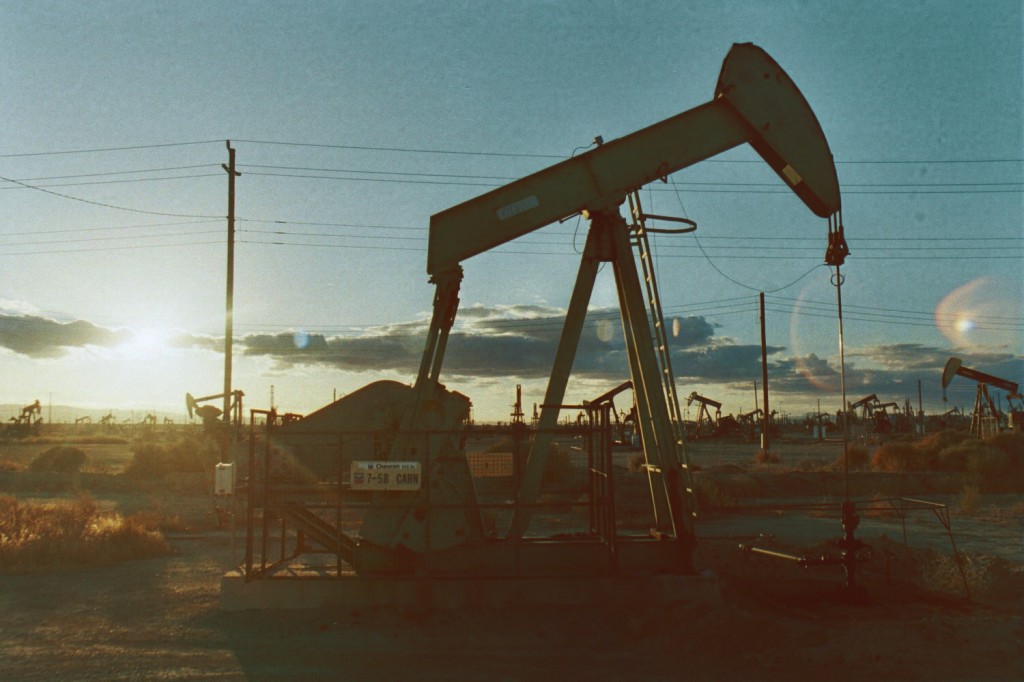
Oil field (Image: Flickr user johnny choura, used under CC license)
Under Biden, the U.S. is now producing more oil than any country ever has, at nearly 13 million barrels per day last year, the report noted. ExxonMobil and Chevron—the two largest U.S. energy companies—also reported their biggest profits in a decade last year. But the oil industry has still complained about Biden policies—particularly the new EPA emissions rules.
Yet oil companies have been hesitant to fund Trump’s campaign, according to the report. Oil interests contributed more than $6.4 million to Trump’s joint fundraising committee in the first three months of this year, according to an analysis by the advocacy group Climate Power. In contrast, one oil executive reportedly said in the Mar-a-Lago meeting that the industry has spent $400 million on lobbying the Biden administration this year.
It’s worth remembering that these companies diversified their investments, becoming “energy companies” rather than oil companies, and gasoline is seen as a legacy business—nevertheless one that will be important for a long time. So it’s not surprising that they didn’t immediately get on board with Trump’s offer.
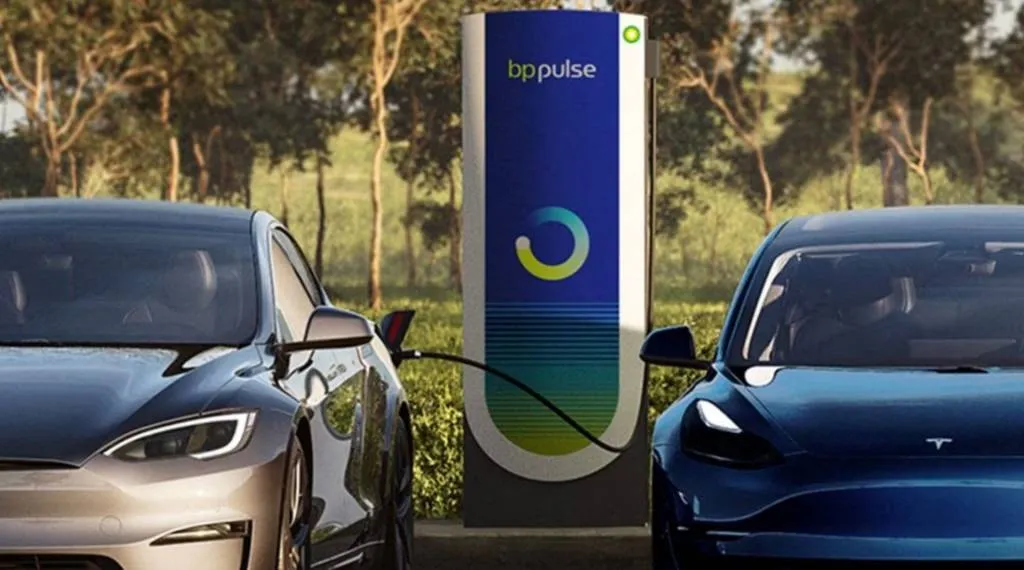
BP to purchase Tesla chargers
Were oil executives to take the former president up on said offer, they would be reasonably assured that he’d follow through. During the last Trump presidency, his agencies attempted to revoke California’s emissions authority—and failed—and delayed the imposition of higher fines for automakers that failed to meet emissions targets.
If re-elected, elimination of stricter emissions rules and EV-friendly policies might not be the only way Trump disrupts the auto industry. He’s announced that he will seek a 100% tariff on Chinese vehicles—even if they’re made in Mexico—with some indications he may try to go further in dismantling what’s left of NAFTA, which allows Mexico-built vehicles from other global automakers at no tariff and eligible for some federal incentives.

BP seeks stranded Tesla Supercharger sites in $1B EV charging buildout
BP is eying Tesla Supercharger sites as part of a planned expansion of the oil giant’s U.S. charging network, Bloomberg reports.
The company said it “is aggressively looking to acquire real estate to scale our network, which is a heightened focus following the recent Tesla announcement.”
Tesla CEO Elon Musk earlier this month fired most of the Tesla Supercharger team in a shift away from further fast-paced growth of the public charging network. BP now appears ready to capitalize on that.
“If there are stranded real estate partners who are looking for someone to call, they should feel free to pick up the phone and call me or look me up on LinkedIn,” Sujay Sharma, CEO of BP Pulse Americas, the corporate arm in charge of the company’s U.S. charging network, said in an interview with Bloomberg.
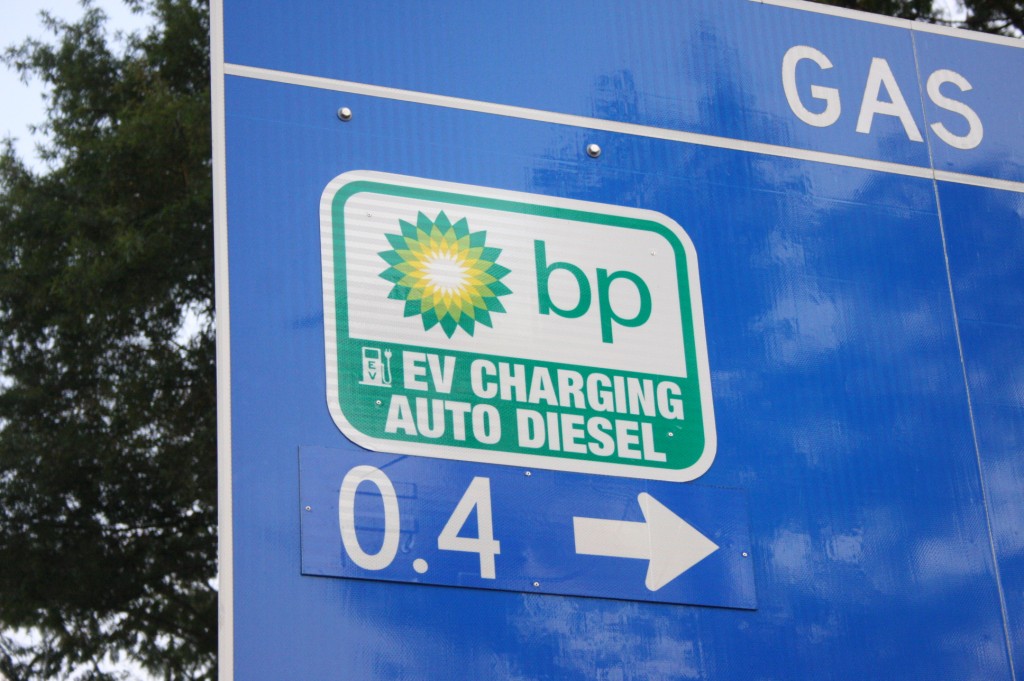
Highway sign for electric-car fast-charging station at BP in Metrolina area of Charlotte, NC
BP reportedly plans to spend $1 billion by 2030, half of that amount within the next two or three years, to install over 3,000 chargers in the U.S. That will include large-scale sites with 12 or more chargers that BP calls Gigahubs.
It first offered EV charging in 2010 and started a serious push in 2017. BP sees EV charging as a business line bound for profitability, with one executive saying in 2022 that chargers were already almost as profitable as gasoline pumps. It’s not the only oil company enthusiastic about charging: Shell announced earlier this year that it’s shedding some gas stations in favor of EV charging.
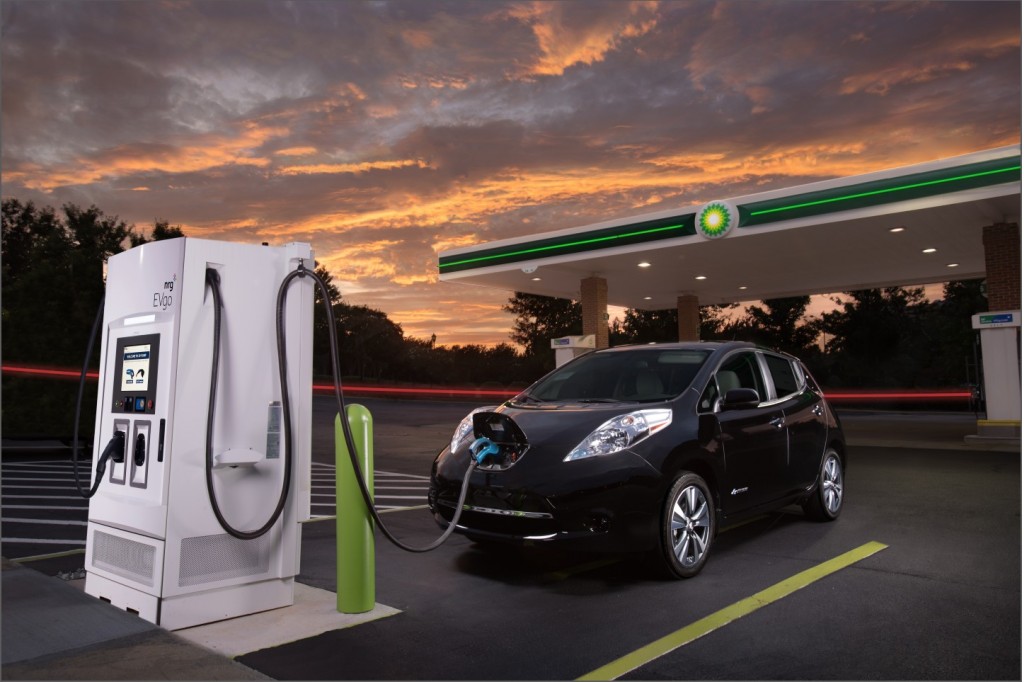
Nissan Leaf electric car using DC fast-charging station at BP in Metrolina area of Charlotte, NC
The BP charging buildout will be complemented by expansion plans from dedicated charging networks. Electrify America, which was created as part of a fine for Volkswagen’s diesel-emissions cheating, also this week confirmed an expansion push through this year. And Ionna, the national EV charging network funded by investments from seven automakers, is looking to open its first stations this year, on the way to a minimum of 30,000 fast-chargers across North America.
Automaker commitments to the Tesla North American Charging Standard (NACS) connector means, regardless of the gutting of the Tesla Supercharger team, NACS will likely continue to proliferate on these alternative networks. But when it comes to reliability, merely switching to the NACS connector won’t solve much; it’s about interoperability and keeping on top of the software updates to enable that—plus maintenance.

Guest commentary: Go back to basics — with a twist — to thrive in today’s buyer’s market
The shift to a buyer’s market from a seller’s market in the automotive retail space is nothing new. But there’s new technology to help a dealership get back to the basics but with added horsepower behind it.

Bentley Edition 8 collection bids farewell to pure V-8 power
 Bentley on Thursday revealed new Edition 8 versions of its Continental GT, Continental GT Convertible, and Flying Spur to mark the end of the road for those models powered solely by a V-8 engine. Updated versions of those cars are due later this year, and while they will still come with a V-8, the engine will be teamed with a plug-in hybrid…

Hyundai Ioniq 6 review, cheaper California charging, EV flame retardants: Today’s Car News

The Hyundai Ioniq 6 is a strong alternative to the Tesla Model 3. California shows ho it can make home EV charging cheaper. And are EV interiors—and car interiors in general—making us sick? This and more, here at Green Car Reports.
In a follow-up Hyundai Ioniq 6 test drive, Green Car Reports found that this electric sedan goes the distance for a competitive price—with more range in the real world, or by ratings, versus the Tesla Model 3. But the Ioniq 6 doesn’t quite get it right on all its details.
Residential electricity rates throughout the nation have soared over the past couple of years. Meanwhile, California is seeking to cut the cost of home EV charging through a fixed-charge plan—essentially a package of energy for a flat, reduced fee, with the cost even less for low-income households.
And are the flame retardants in vehicle cabins making us sick? Citing studies and investigations, Consumer Reports is calling on the federal government to reevaluate the standards, which were adopted in 1971 and haven’t changed much since. What’s more, the chemicals intended to curb a gasoline-fueled fire might not even be relevant in EVs.
_________________________________
Green Car Reports Newsletter
Sign up to get the latest green car and environmental news, delivered to your inbox daily!
I agree to receive emails from Green Car Reports. I understand that I can unsubscribe at any time. Privacy Policy.

Review: 2024 GMC Hummer EV SUV rules as king of off-road hill
 If not for its width and weight, the 2024 GMC Hummer EV SUV would be the most off-road-capable passenger vehicle direct from the factory on sale today. It climbs more assuredly than a stock Wrangler Rubicon or Bronco Raptor, it negotiates obstacles more easily and more safely than a Rivian R1S, and don’t even come at me with a Cyberfridge…

2024 Hyundai Sonata
 What kind of vehicle is the 2024 Hyundai Sonata What does it compare to? Sold in SEL, N Line, SEL Hybrid and Limited Hybrid trims, the Hyundai Sonata midsize sedan sports a new look with an updated interior and three powertrain options, including a hybrid, that should keep it competitive with the Honda Accord, Toyota Camry, Nissan Altima, and…