
Author: EVAI

EV startup Karma to debut GT-UV concept in Monterey
- Karma Automotive still exists
- The automaker plans to unveil a concept vehicle in August
- The concept might be an SUV
Karma this week said it will show up to next month’s 2024 Monterey Car Week with a new concept vehicle whose description suggests it will be an SUV of some sort.
The concept is referred to as the GT UV Design Study, though that isn’t its actual name. The debut is scheduled for Aug. 16 at The Quail, A Motorsports Gathering, one of the premier events of Monterey Car Week.
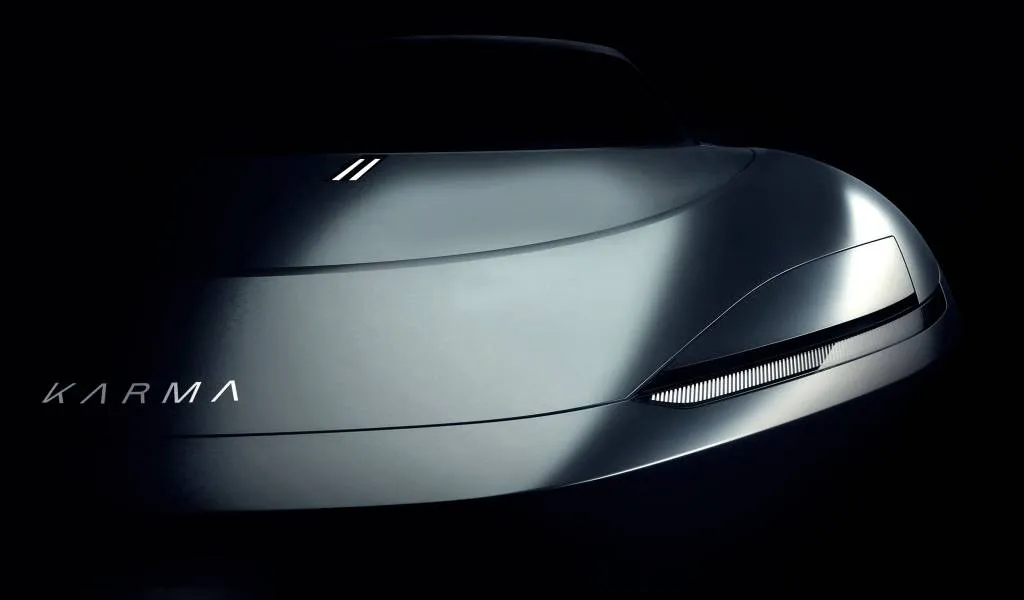
Teaser for Karma GT-UV Design Study debuting during 2024 Monterey Car Week
Karma describes the concept as a grand touring utility vehicle with four seats and multi-terrain capability. Teaser photos released alongside Monday’s announcement suggest we might be looking at an SUV of some sort, and a very sleek one at that.
Joining the GT UV Design Study on Karma’s stand at The Quail will be the previously revealed Kaveya sports car concept and Gyesera sport sedan.
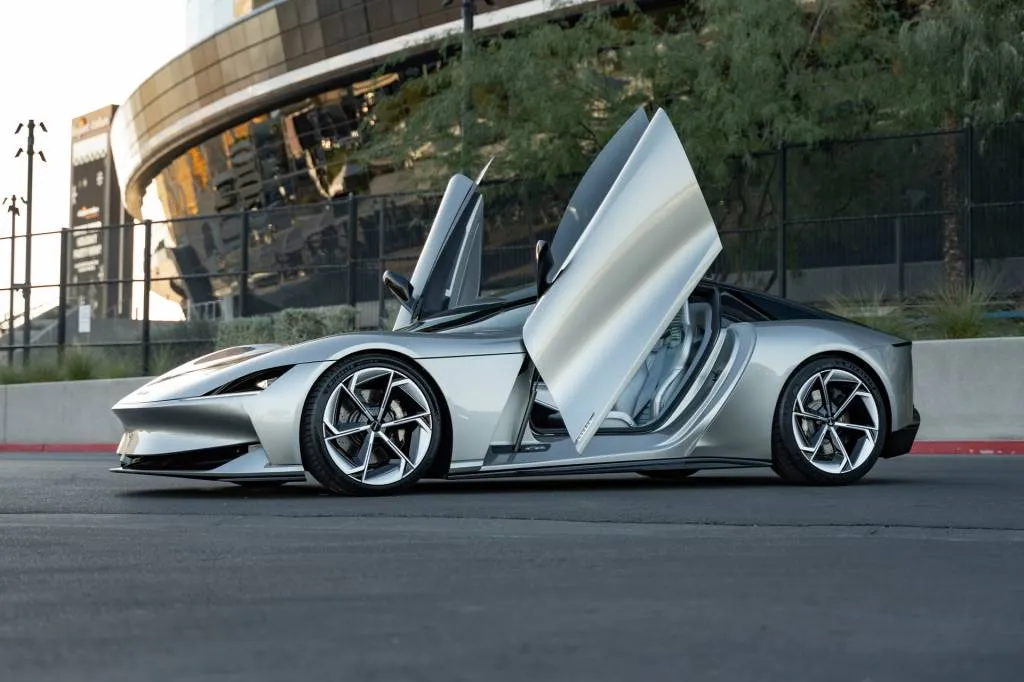
Karma Kaveya concept
The Kaveya was first shown in 2023 but the upcoming version will feature the interior of the production model that Karma now expects to go on sale in 2026, or a year later than previously announced. It will offer up to 1,000 hp and come with a starting price of around $300,000.
The Gyesera was shown in March and is on track to start sales later this year though this may also be pushed back into 2025. It will offer 120 kwh of battery capacity, a maximum 590 hp, and a starting price of around $175,000, Karma has previously said.
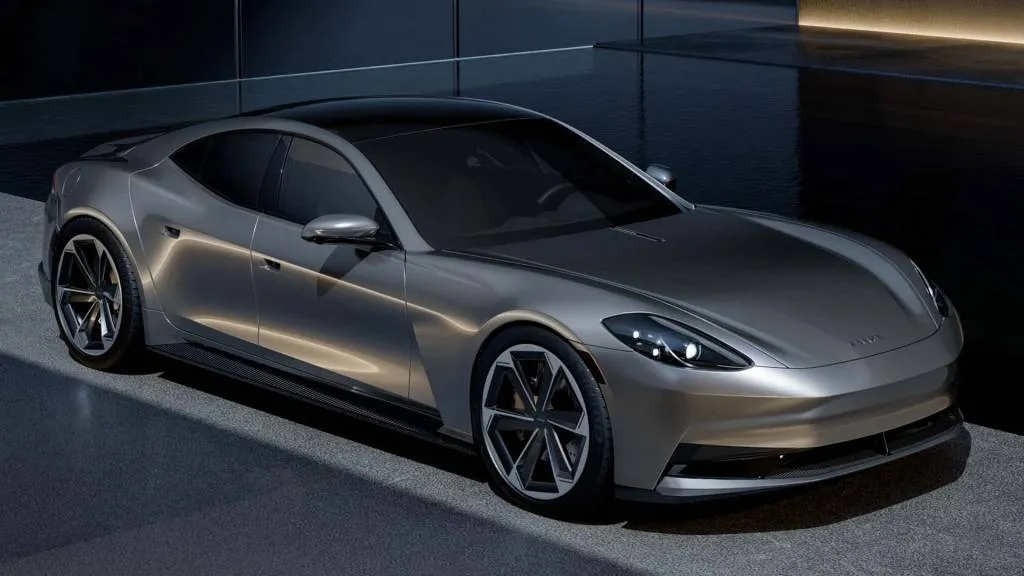
Karma Gyesera
Karma is the company born out of the remains of the original Fisker Automotive that went bankrupt in 2013, and its first and sole model currently available is the Revero, a heavily updated version of the Fisker Karma. Like the Fisker Karma, the Revero is a series plug-in hybrid, but all future models from Karma will be EVs.
Karma only a few years ago planned to offer luxury vehicles alongside commercial vehicles, though the company now plans to focus exclusively on luxury vehicles with a high level of personalization. It wants to position itself as an American ultra-luxury brand, not unlike Duesenberg more than a century ago. Production of the new Karmas will be handled at the company’s plant in Moreno Valley, California, where the Revero is built.

Study: Traditional brands’ EVs surpass Tesla in satisfaction
- J.D. Power’s 2024 APEAL study shows non-Tesla EVs higher in satisfaction than Teslas
- Buyers of traditional brands’ EVs are more satisfied than buyers of gas or PHEV models
- Value-minded mainstream Tesla buyers are more critical than the brand’s fans
Tesla appears to be having a much harder time charming EV buyers who are new to the brand, while various EV efforts from mainstream brands are winning over shoppers.
It’s a market turnaround that may have seemed hard to imagine just a couple of years ago: Owners of non-Tesla EVs are more satisfied with their vehicles than Tesla owners are with theirs, according to the annual J.D.Power APEAL study, out Thursday.
But it’s more than just a lead over Tesla. Power says that non-Tesla EVs rank higher in satisfaction than Tesla vehicles, and higher than gasoline and plug-in hybrid models.
APEAL, which stands for Automotive Performance, Execution, and Layout, includes responses from 99,144 owners of new 2024-model-year vehicles after 90 days of ownership. As J.D. Power points out, the study has correlated over decades to the resale value of vehicles, so don’t hold out for that Tesla in the driveway to become an appreciating asset.
Mainstream brands’ EVs were not resonating as well in recent years, when J.D. Power pointed out that battery electric vehicles from mainstream and non-Tesla brands had underperformed comparable gasoline vehicles in overall satisfaction. But they’ve been gaining. In 2020 and 2021, Tesla (unofficially) topped the study. By last year J.D. Power pointed out that non-Tesla BEVs had closed the gap with gasoline models.
J.D. Power pointed to improved interior storage and better-quality materials as a couple of the reasons traditional full-line automakers are doing better in satisfaction.
“For BEVs, recent launches from traditional manufacturers have surpassed perennial leader Tesla when it comes to owners’ level of emotional attachment and excitement with their new vehicle,” said Frank Hanley, J.D. Power’s senior director of auto benchmarking.
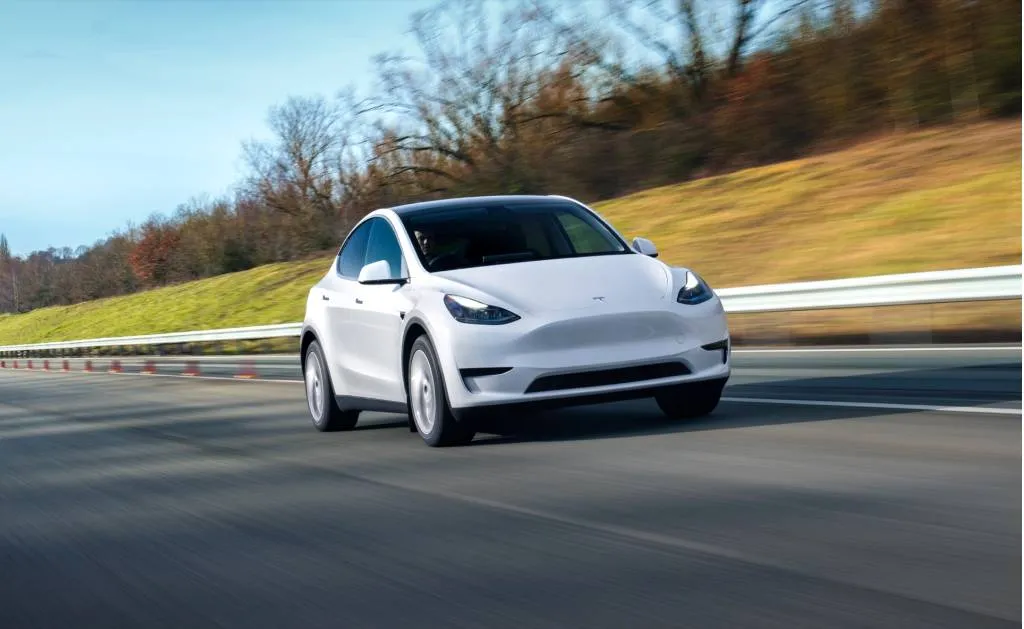
2024 Tesla Model Y. – Courtesy of Tesla, Inc.
Tesla needs to impress newbies, not just fans
Part of the issue is that Tesla buyers are diverging into a mix of loyal repeat buyers (the “Tesla fans”) and new “conquest” buyers who jumped from other brands to an EV for the first time, in some cases. And it appears Tesla vehicles aren’t impressing the conquest group all that much.
“Their buyer is changing,” Hanley said to Green Car Reports. “At first they had a lot of tech buyers, but obviously with their price change, they’re becoming more mainstream and getting a different buyer type.”
The conquest buyers are now coming from all over, Hanley explained, especially to the Model 3 and the Model Y. A series of Tesla price cuts made those models more obtainable to a wider array of customers.
And the gap in owner satisfaction between those who have previously had a Tesla versus those new to the brand is huge—a bigger gap overall than what spans all premium brands, according to Hanley. For those conquest Tesla buyers, there’s not a single point of criticism, he said; the negative responses relate to nearly all aspects of the vehicle experience.
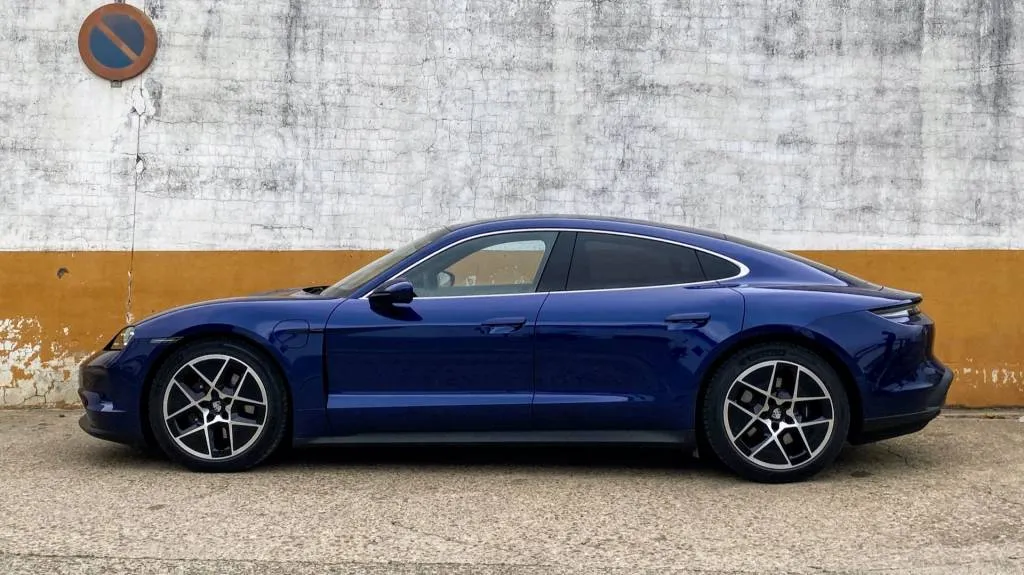
2025 Porsche Taycan
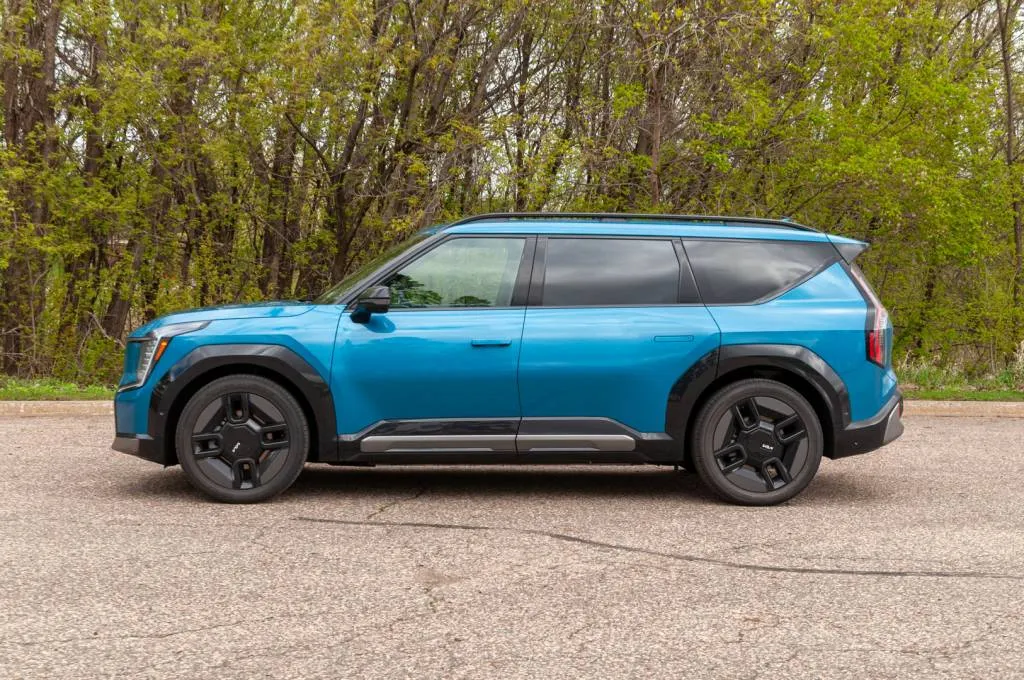
2024 Kia EV9
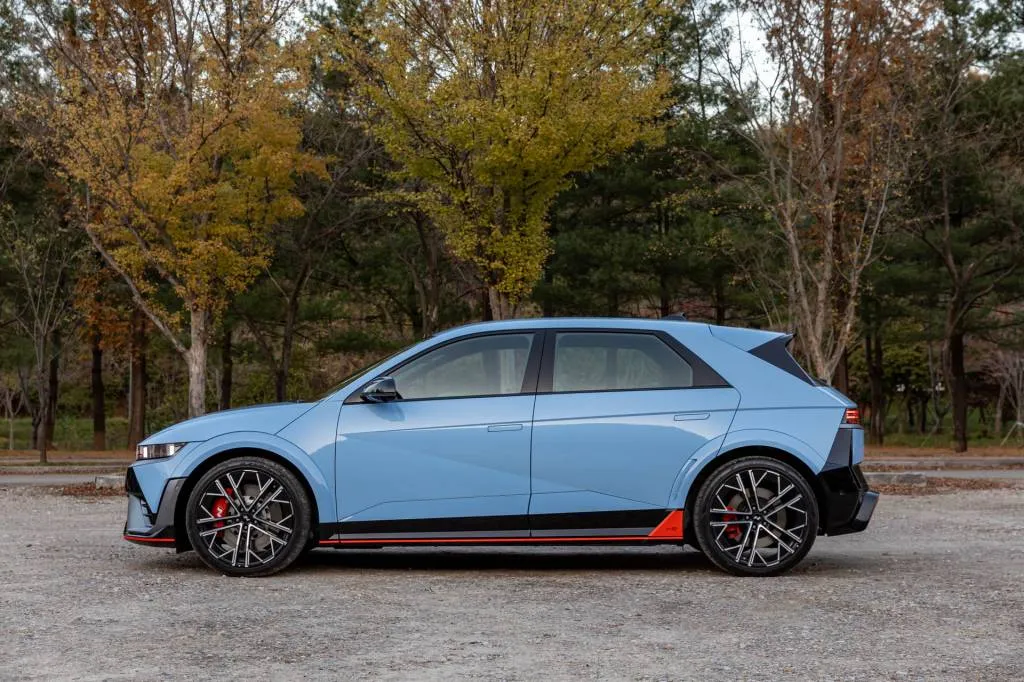
2025 Hyundai Ioniq 5
Porsche, Kia, Hyundai among top brands for EV appeal
Porsche was the highest-ranked premium brand in this year’s study, and J.D. Power notes that the Porsche Taycan does just as well as Porsche’s other models. Hanley also noted that EVs from BMW, Cadillac, and Genesis all performed above the average. “They’re definitely going in the right direction with their battery electrics,” he said of those brands.
Among mainstream brands, Kia and Hyundai were both in the top five offering multiple EVs, supporting that market appeal with popular models such as the three-row Kia EV9 electric SUV and Hyundai Ioniq 5 electric crossover.

2025 Chevrolet Corvette ZR1: King of the Hill climbs new heights
 2025 Chevy Corvette ZR1 is the most powerful gas-powered American production car ever ZR1’s twin-turbo LT7 V-8 uses turbos to spin up 1,064 hp ZTK Performance Package generates more than 1,200 pounds of downforce We expected 850 horsepower for the 2025 Chevrolet Corvette ZR1. We’re getting 1,064 hp instead. That makes the ZR1 not only…

Recall fix: Toyota to replace V-6 engines in Tundra, Lexus LX
 Toyota will replace engines in over 100,000 Tundra full-size pickup trucks and Lexus LX luxury SUVs as a recall fix, Automotive News reported Thursday. Toyota announced the recall in May, saying at the time that it encompassed 102,000 Tundra and LX vehicles equipped with twin-turbo 3.5-liter V-6 engines. These engines may contain machining debris…

Toyota to replace over 100,000 engines in Tundra, Lexus LX
 Toyota will be replacing its twin-turbo V-6 engine in the Tundra and Lexus LX The action comes as a fix for a recall announced in May for machine debris in some engines Redesigned for 2022, the Tundra full-size pickup has experienced several recalls Toyota has confirmed a fix for a recall involving over 100,000 Tundra full-size pickup trucks and…

Most automakers predict missed EV sales goals, slower transition in Kerrigan survey
The majority of automaker executives who participated in the 2024 Kerrigan OEM Survey said the transition to EVs will be slower than initially projected in the U.S.

Ford CEO: Bigger isn’t always better for EVs
- Ford’s CEO acknowledged small EVs are key to mass adoption and profitability
- Ford currently doesn’t make a small EV in the U.S.
- Ford was a proponent of pickup trucks and SUVs, killed its cars and small SUVs
Ford is shifting away from large EVs like the F-150 Lightning pickup truck to emphasize smaller models in response to high battery costs, reports Business Insider.
After declaring that Americans needed to move away from “monster vehicles” like the pickup trucks and SUVs that are currently Ford’s bread and butter, CEO Jim Farley told investors in an earnings call Wednesday that the smaller EVs would be key to mass adoption and profitability.
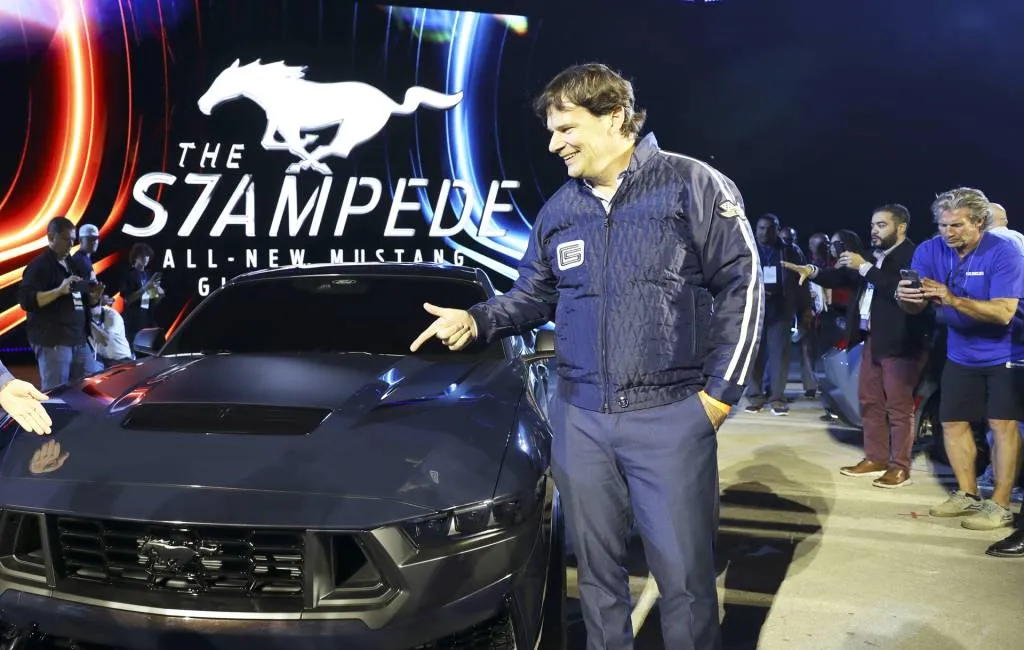
Jim Farley
“We believe smaller, more affordable vehicles are the way to go for EV volume,” Farley said. That’s largely down to battery costs. While the mantra for internal-combustion vehicles is “the bigger the vehicle, the higher the margin,” it’s a different matter with EVs, the CEO said.
“The larger the vehicle, the bigger the battery, the more pressure on margin because customers will not pay a premium for those larger batteries,” Farley said. That appeared to play out in Ford’s Q1 earnings, where the automaker promised more affordable EVs while reporting significant losses on the EVs it was already making.
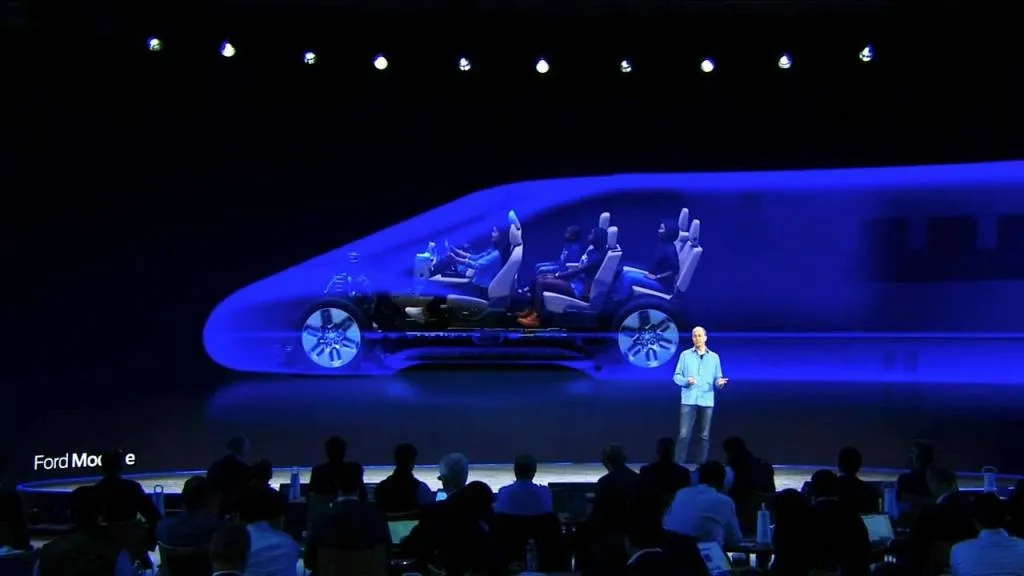
2025 Ford 3-row SUV –
Ford initially tried to replicate its success with large internal-combustion vehicles, launching the Lightning and intending to follow up that full-size pickup with a next-generation electric truck and three-row SUV that have now been delayed. But a shift in thinking by Farley and other executive has been apparent for months. Farley said during the automaker’s Q4 2023 earnings presentation that Ford seeks smaller, lower-cost EVs to address a “new market reality.”
Affordable EVs may be winning out against bigger, more expensive models in Ford’s product plan, but all EVs still need to compete for resources with the automaker’s very profitable internal-combustion trucks and SUVs. Ford last week announced that a Canadian plant previously slated to build EVs would make Super Duty heavy-duty pickups instead.

GM-backed startup promises cheaper, longer-lasting EV batteries
- Addionics developed a new foil current collector
- General Motors’ GM Ventures backed Addionics with funding
- Addionics plans to build a factory in the U.S.
A startup aims to make EV batteries cheaper by focusing on an oft-overlooked battery component.
Addionics, which is backed by General Motors’ GM Ventures venture-capital arm, has developed a new foil current collector, updating a component that “hasn’t changed much in 30 years,” CEO Moshiel Biton said in a recently published interview with TechCrunch.
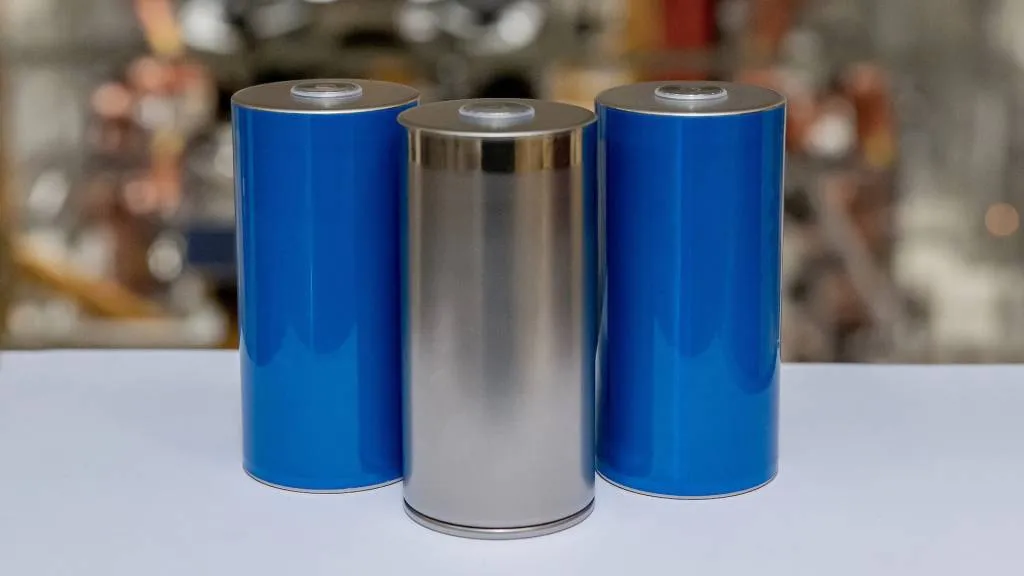
BMW cylindrical battery cells
Current collectors help gather ions in battery cells, a process Addionics believes can be improved by creating aluminum and copper foils with tiny holes and undulating peaks and valleys. The idea of adding texture to improve current collectors isn’t new, but it hasn’t been commercialized at scale, Biton claims.
Foil material is made wavy and porous using techniques from the semiconductor industry. Addionics uses electroetching on the aluminum foil for battery cathodes. For the copper foil used for anodes, the startup uses electricity to deposit copper ions in a given configuration.
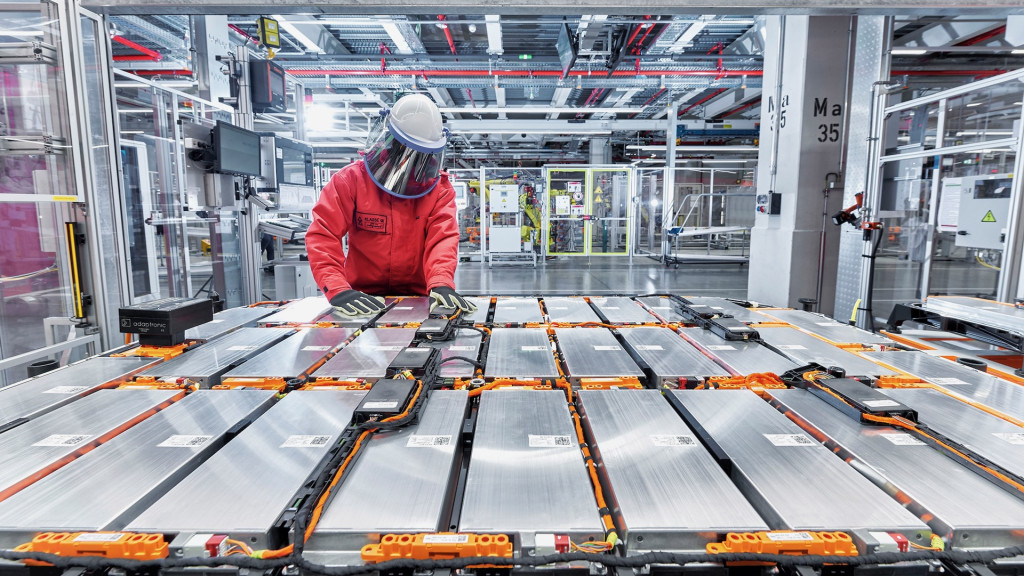
Audi battery assembly at Brussels, Belgium, factory
The result is a three-dimensional current collector that is easy to manufacture, while improving battery-level efficiency (already very high for EV batteries) and—most notably here—potentially doubling lifespan, Addionics claims. While Goldman Sachs earlier this year declared that EV battery prices are in the midst of dropping by 40%, some automakers like Toyota claim battery prices need to decrease further to make EVs truly affordable.
The startup announced earlier this year that it was planning to build a $400 million U.S. factory, and has also said it has letters of intent from unnamed automakers. As TechCrunch notes, sourcing battery materials from Addionics’ U.S. factory could help automakers meet federal EV tax credit requirements for domestically-sourced content.
Maserati under scrutiny after disappointing 1st half
Stellantis CFO Natalie Knight said there could be “some point in the future” when the group looks at “what’s the best home” for the luxury brand.