
Author: EVAI

The Dodge Charger Daytona EV Can Smoke Ford’s Best Mustang
- Edmunds pits the electric Dodge Charger against the most powerful Ford Mustang in a U-drag race.
- The Ford has a better power-to-weight ratio, but the Dodge has more power and traction and quicker acceleration.
- The Dodge beats the Ford in both races, but the second race is very close, highlighting the two cars’ strengths.
Electric vehicles are just quicker in a straight line compared to combustion cars thanks to their plentiful and instant torque, precise traction control and no need to shift gears. Period. You floor a powerful EV, and it will leave an equivalent gas car for dead, at least in a straight line. But would a U-turn at the end of a drag race be enough to secure a win for a lighter gas–powered car?
In the case of the Dodge Charger Daytona EV versus the Ford Mustang Dark Horse, the answer is nope. Even though, on paper, the ‘Stang has a superior power-to-weight ratio, Dodge’s electric muscle car can still take it down.
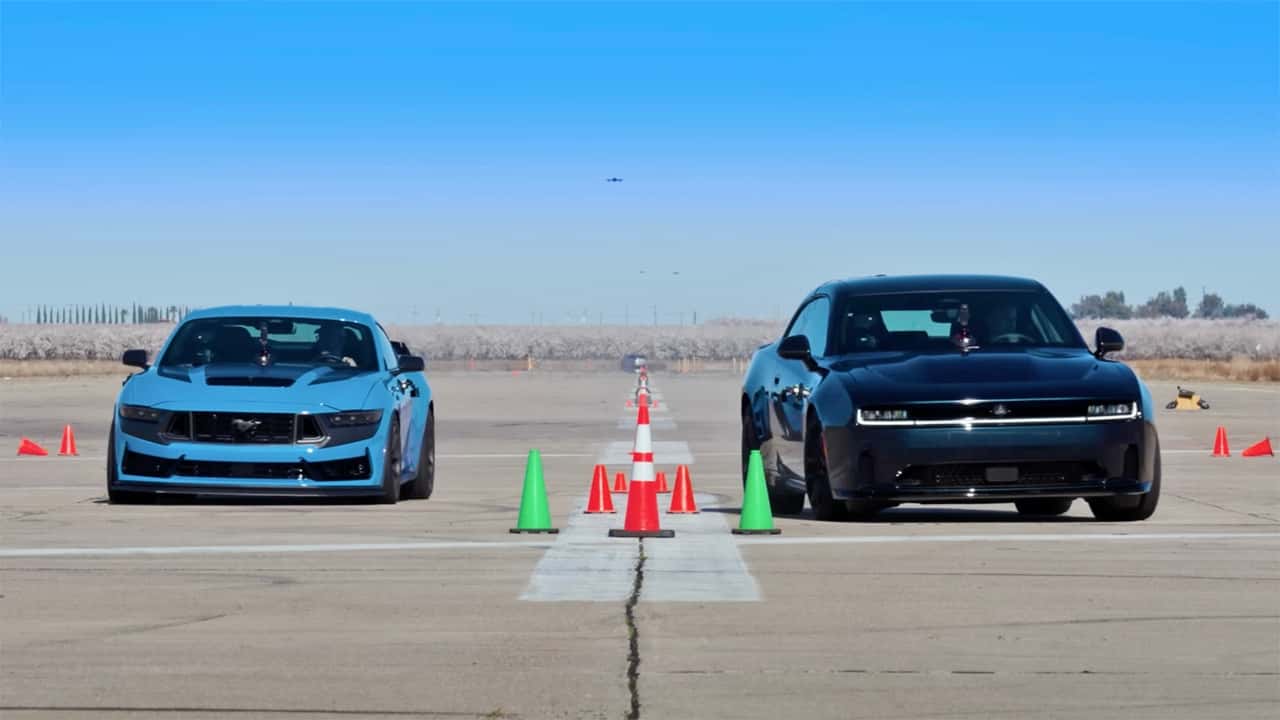
Edmunds put the two head-to-head in two of its U-Drags, basically a drag race with a U-turn at the end that is meant to highlight not only cars’ acceleration but also how well they scrub off speed, their cornering speed, and how well they put their power down.

[embedded content]
On paper, the Mustang Dark Horse, which has 500 horsepower and is the most powerful current model variant, can hit 60 mph from a standstill in 3.7 seconds with the 10-speed automatic transmission; it’s 4.1 seconds if you go for the manual. Until the new Mustang GTD goes on sale, this is the top-shelf Ford ponycar.
However, the Dodge Charger Daytona EV with the Scat Pack, which has up to 670 horsepower, is four-tenths quicker with a time of 3.3 seconds, which was shown to be even lower in independent testing.
Even with the power advantage, the Charger weighs a lot more and it’s the Mustang that has a better power-to-weight ratio. This should be a close race between the two, and it is, but even with the extra weight it has to carry around, the Dodge still manages to pull ahead.
Having a U-turn at the end of the first acceleration run highlights how much better the lighter and more track-focused Mustang is around the bends. It stops and steers much better than the Charger, which looks cumbersome by comparison, but it still loses to the Dodge in both races. Edmunds swaps drivers and lanes for the second race to make everything fair, and even though the difference was smaller and the Mustang put on a better show, pulling out of the U-turn ahead, the Charger reeled it in by the end of the run.
Nonetheless, the electric Charger has been a polarizing vehicle, disappointing some reviewers for lacking the ability to do burnouts and sometimes shaky EV powertrain. We’ll be testing it again for ourselves soon here at InsideEVs, so stay tuned for that.
Share this Story

Study: Tesla, Rivian charging networks have far fewer problems
- Owners report more than ten times the issues with Shell Recharge, EVgo, or Blink than with Tesla
- Rivian’s own charging network was second only to Tesla
- Hardware-related issues have become more prevalent than payment problems
Charging networks operated by Tesla and Rivian tended to have fewer problems than non-automaker efforts, according to a recent Consumer Reports survey.
Electric vehicle owners experience a problem in one out of every five public charging sessions, according to the survey, which draws from ongoing responses from CR’s EV Charging Community project.
In this edition, Consumer Reports includes information from about 5,700 total charging sessions, from 1,230 EV and plug-in hybrid owners. As CR notes to Green Car Reports, there’s not much variation in problems by U.S. region. But the rate of reported problems was certainly not uniform across all networks.
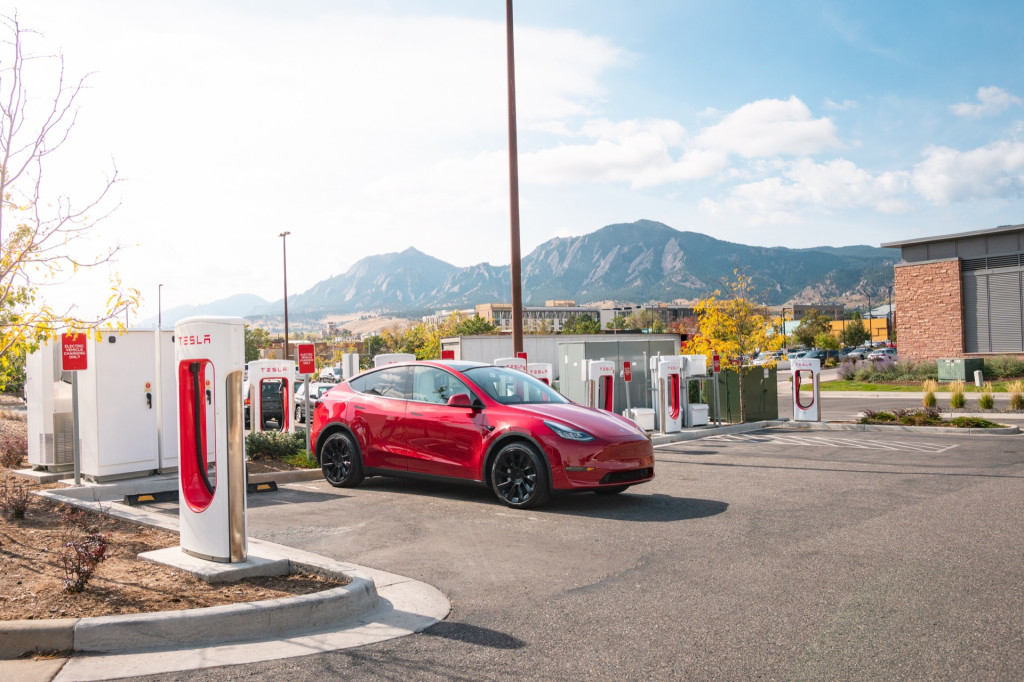
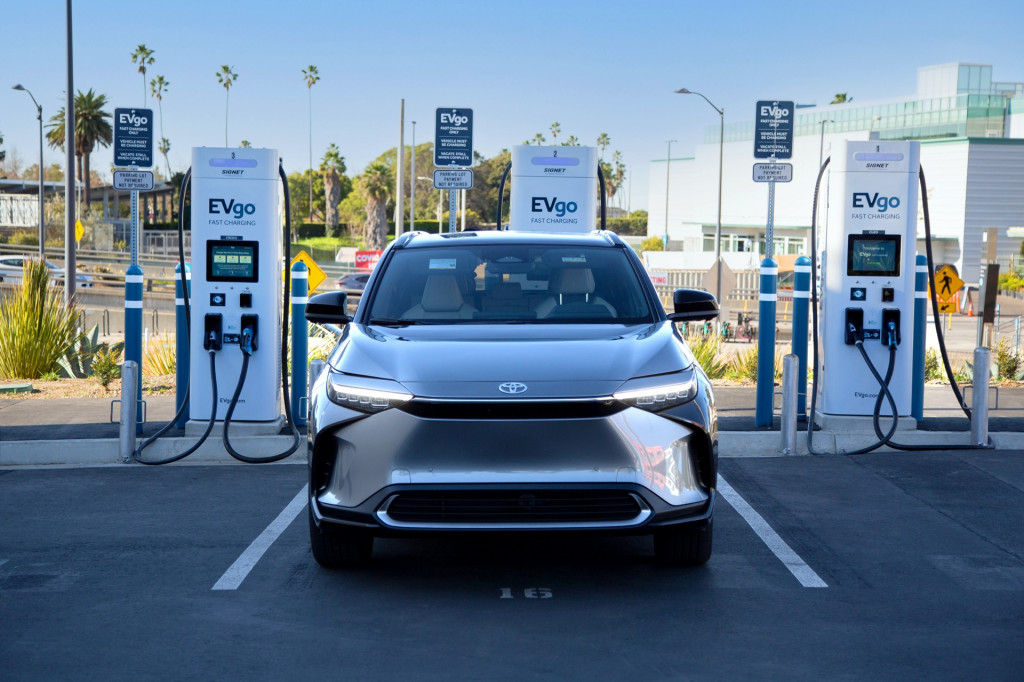
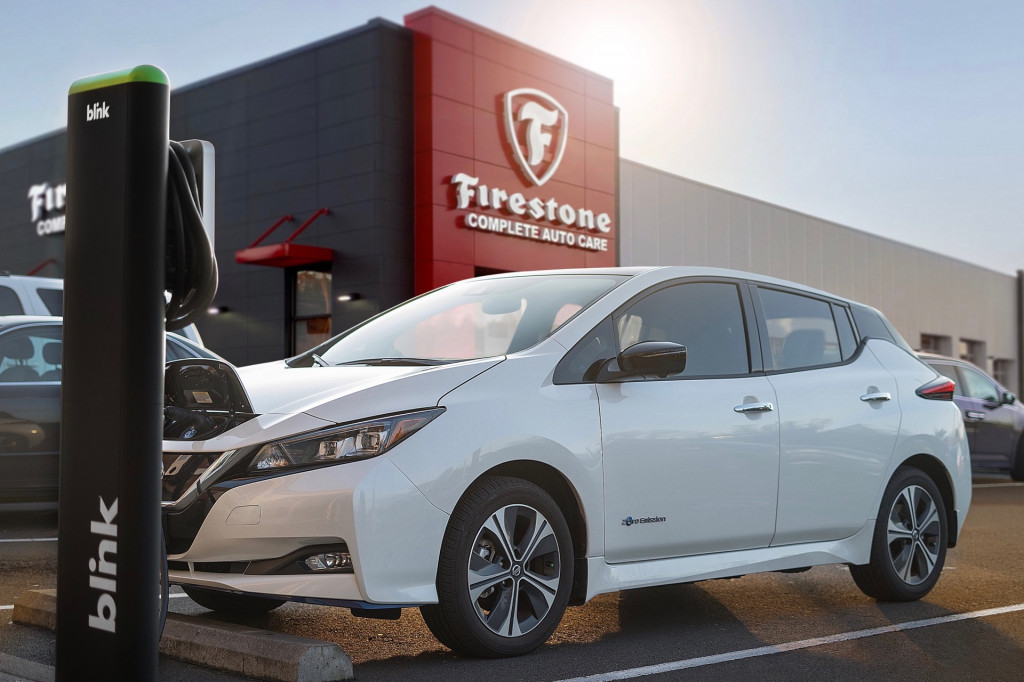
Survey respondents reported problems at Tesla charging stations 4% of the time, and 5% of the time at Rivian-operated chargers. In contrast, respondents said they experienced problems 48% of the time at Shell Recharge stations, 43% of the time at EVgo stations, and 41% of the time at Blink stations. It’s worth pointing out that all of these low-rated charging networks are third-party providers not directly owned or run by automakers
Tesla Supercharger
Rivian last year phased in a grading system for the charging experience via its route planner—so it appears that might be working. A J.D. Power study last year suggested Tesla Supercharging was losing its edge over other public charging, but this study suggests otherwise.
The most common reported problems were hardware-related, at 36%. “Other issues” accounted for 25% of the reported problems, followed by payment issues (23%) and charging power (15%). Payment issues used to be frequently cited as the most common issue EV drivers faced at public charging stations, so this is a notably different result.
Among the reported hardware problems, broken screens were by far the most frequent, at 76%. Other reported problems included damaged charging cables of connectors (10%), chargers that could not physically connect to a vehicle due to ice blockage, damage, or other issues (9%), and cables that were too short (5%).
2023 Toyota bZ4X at EVgo charging station
Of those EV drivers who reported payment issues, 56% said they were able to pay but then encountered another issue that prevented them from charging; 25% said they were unable to pay at a given charger and had to move to another one; and 19% said charging never started despite payment being accepted.
To help make public charging go more smoothly, Consumer Reports recommends having multiple accounts with saved payment information so that, if there’s a problem with the charger’s interface, payment can be completed on a network’s app.
Blink Level 2 charging station at Firestone service center
General charging best practices, such as only fast-charging to 80% and preconditioning the battery pack before arriving, can help as well, the publication notes. In various polls and surveys, consumers continue to emphasize that the absolute charge rate doesn’t matter so much, rather that they get some level of charge in a reasonable amount of time.
With automaker-funded Ionna expanding rapidly, we’ll see how it lands on the scale of consumer approval—perhaps in a future update from this same data set.

Deep dive: Bugatti Tourbillon aerodynamics
 The Bugatti Tourbillon’s standout feature is an 1,800-hp plug-in hybrid powertrain built around a high-revving V-16, but Bugatti didn’t forget about the aerodynamic work needed to make use of the immense power on tap. The goal was to surpass the Bugatti Chiron in slipperiness, Paul Burnham, chief engineer for the Tourbillon, said in a video posted…

A Tesla Superfan Ditched His Car For A Rivian. Here’s What He Thought
Is there life after Tesla? All over the world, for various reasons, a lot of electric vehicle owners are asking themselves that question right now. While many competitors are catching up or even surpassing the Elon Musk-led automaker these days, most EVs on the road globally are from Tesla. Figuring out what’s next is can be a big adjustment.
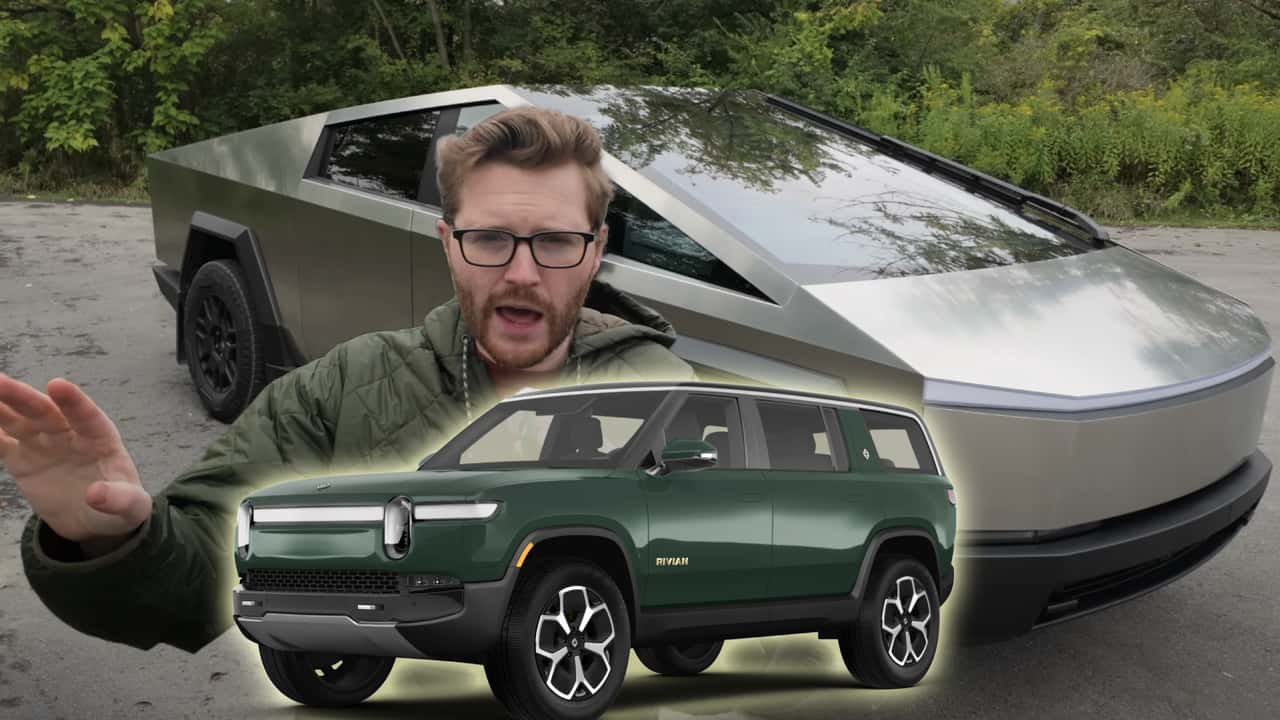
YouTuber Robert Rosenfeld is one such owner who’s asking himself that question. We have covered his videos before. He has only owned Tesla EVs since 2019, going from the Model Y to the Model X and now to a Cybertruck and building up his YouTube channel along the way. But when he got the chance to see how “the other half lives,” as he put it, he went for it, driving only a loaner 2025 Rivian R1S for a week.
Experience Rivian on the road—schedule your demo drive today.

[embedded content]
I’ll spoil the ending a bit here. Rosenfeld likes the R1S, but decides to keep the Tesla for reasons we’ll cover next. (It’s also worth noting that he has a big audience of Tesla devotees and is slinging referral codes as part of his videos, so officially making the switch may have had bigger implications for what he does.)
Yet this is still a good look at the differences between two of the most advanced EVs for sale in America right now. Rivian and Tesla are the only two brands that I believe make truly software-defined vehicles for first-rate smartphone app integration and continual over-the-air updates. And anecdotally, when I talk to Tesla owners looking to move on, Rivian’s EVs are often at the top of their list—although right now, Rivian’s choices are fewer and more expensive than Tesla’s lineup. That should change next year with the debut of the $45,000 Rivian R2.
In terms of pricing, this R1S Tri-Motor Max Pack costs about $111,000, making on par with a well-equipped Cybertruck or Model X Plaid. This Rivian configuration would get 371 miles of range, handily beating the Model X’s 314 miles and the Cybertruck’s 325 or 301 miles, depending on its configuration.
So how do these two brands really stack up? First and foremost, Rosenfeld likes the customization and options of Rivian’s R1S and R1T, including trim levels, colors and wheels. Tesla’s configurability is far more sparse. But he likes the boxy design, versatility and SUV capability of the Rivian too. “I’ve got a whole lot of room for hauling, which is nice,” he said.
Rivian YT Int
Photo by: YouTube
Rosenfeld is obviously a veteran of Tesla’s “very few buttons” approach, so he’s at home in the Rivian. (Personally, I wish both brands would add more physical controls.) He feels like it’s a premium vehicle inside and said it “checks most of the boxes,” but admits Rivian’s adventure-y vibe isn’t quite his jam. To each their own.
Rosenfeld heaps a lot of praise on the 360-degree top-down camera system and said he wishes Tesla would adopt something similar. He also really loves the driving experience and admits that even Tesla fans would like the increased degree of customization over the R1S’ driving dynamics: adjustable regenerative braking, customizable displays, different driving modes and so on. “I’d have no qualms about taking this on a road trip,” he added.
Rivian Software YT 2
Photo by: YouTube
But Rosenfeld said that software is what keeps him loyal to Tesla. He doesn’t love the Rivian’s menu setups (in part because it’s just different from what he’s used to) and he feels like the maps and HVAC controls are clunky. Frankly, I’m not a fan of the climate controls on either car and wish both of them would add some air vents. He’s also a big user of Full Self-Driving, which many Tesla owners are not, and said that not having a direct Rivian equivalent is a letdown. Right now Rivian is just now branching into hands-free highway driving assistance but has more plans for autonomy down the road.
In the end, Rosenfeld likens the experience to Apple vs. Android: one company tells you exactly what you’re going to get, and the other offers a lot more options, customizations and configuration. It can be tough to switch ecosystems, but I’d argue it’s a little easier for your car than it is for your smartphone and gadget universe.
[embedded content]
If you want a second opinion, check out this video from YouTuber Darren Byrd, a pilot who normally makes content about aviation but just posted a video about trading in his Model X for a similar R1S. He explains the upsides and downsides in a very fair way, but overall, he’s happy with his purchase. “The R1S is a more normal car that happens to be electric” than his Falcon Door-equipped SUV was, he said.
In the end, for those considering moving on from Tesla, I’d tell them to ask themselves this: what did you like most about your car? If it was range and ease of charging access, I’d recommend the new NACS-equipped Hyundai Ioniq 5. If was software, arguably Rivian is the closest Tesla competitor and likely to close any existing technology gaps soon enough. If it was performance, very few EVs are slow, but the Polestar 3 or the Porsche Taycan are always compelling options. And the entire field of options is getting better all the time.
This post may contain affiliate links. Click here to learn more.
Contact the author: patrick.george@insideevs.com
Share this Story

World’s only 2013 Aston Martin Bertone Jet 2+2 headed to auction
 The last concept car produced by legendary Italian design house Bertone is up for grabs. That car, the Aston Martin Bertone Jet 2+2, is scheduled to be auctioned off by Dore & Rees on Mar. 29. Unveiled at the 2013 Geneva auto show, it was slated to go into production, according to the auction house, but Bertone’s bankruptcy the following year…

EV battery recycling breakthrough recovers 99.99% of lithium
Chinese researchers claim to have developed a process to recover nearly all of the lithium from used electric vehicle batteries for recycling.
The Independent (via InsideEVs) reports on study results first published in the German academic journal Angewandte Chemie claiming recovery of 99.99% of lithium from a used battery, as well as 97% of nickel 92% of cobalt, and 91% of manganese.
The process used, called “neutral leaching” also eliminates harsh chemicals, increasing safety and lowering environmental impact, researchers claim—and in laboratory tests it took just 15 minutes to separate out the desired battery materials.
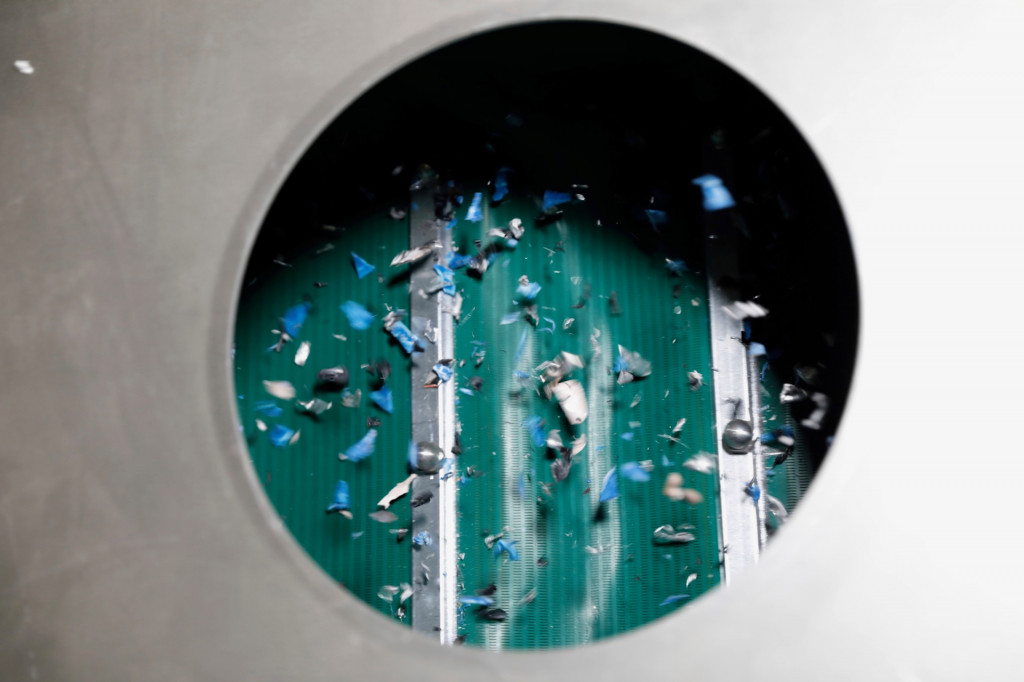
Volkswagen battery recycling
Current recycling processes use amino acids, and here study researchers used glycine, which is the simplest stable amino acid, along with a follow-up process to avoid further chemical reactions once the lithium and other materials were extracted.
Laboratory research does not always scale to commercial viability, but battery recycling has attracted interest from automakers looking to avoid the cost and the environmental impact of mining new raw materials for batteries.
Toyota and Redwood Materials battery recycling
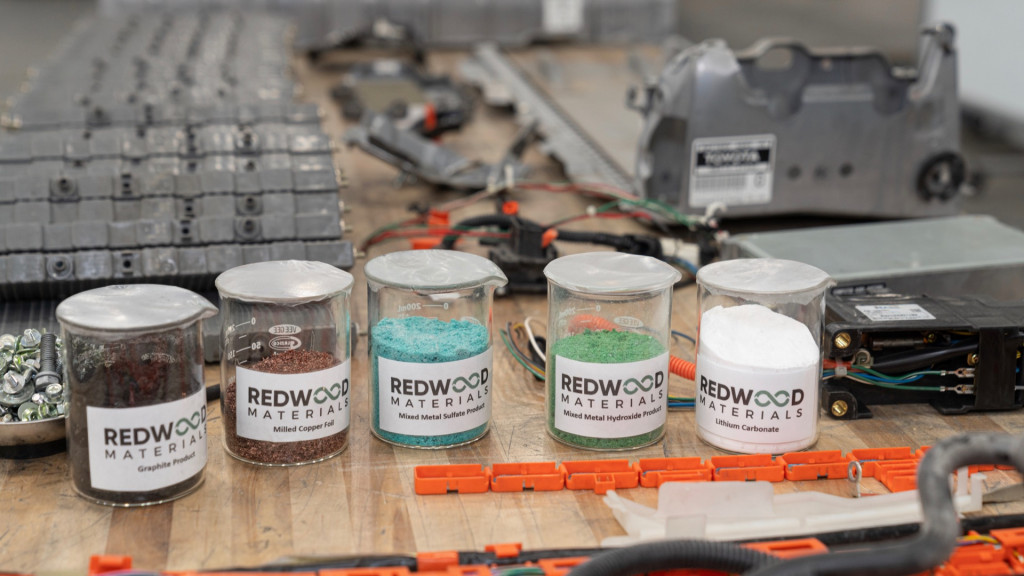
Toyota announced an agreement to utilize Redwood Materials, the battery-recycling firm founded by former Tesla CTO JB Straubel, in 2022. The following year, it expanded that agreement, setting the stage for batteries from hybrids like the Prius to provide material for future EV batteries as those vehicles reach the end of their useful lives.
Other automakers, including BMW, Ford, and Volkswagen Group’s VW and Audi brands, have also signed on with Redwood. But the fleet takes a long time to turn over, and the relatively small number of EVs and hybrids on the road could translate to a long wait for a critical mass of recyclable battery materials—with one 2021 report predicting that the market for these materials won’t heat up until 2030.

Karma Amaris plug-in hybrid coupe revealed, production end of 2026
 Karma Automotive on Thursday unveiled the Amaris, a plug-in hybrid coupe the company says is due to start production in the fourth quarter of next year, and confirmed that it’s moving closer to a replacement for the Revero sedan. Shown at the company’s first Create Karma production presentation event in Irvine, California, the Amaris will plug a…

2026 Range Rover Velar successor caught on video
 JLR has been spotted testing a prototype for an electric vehicle that will take a place in its Range Rover family of luxury SUVs. JLR is known to be planning the reveal of an electric version of its iconic Range Rover shortly, though that isn’t the vehicle seen here. The electric Range Rover matches the design of its gas-powered sibling, apart…

2025 Formula 1 Chinese Grand Prix preview
 The 2025 Formula 1 World Championship continues this weekend with round two, the Chinese Grand Prix, taking place once again at the Shanghai International Circuit. The circuit stretches 3.4 miles and features 16 turns. It’s known for fast corners, a smooth surface, and plenty of overtaking opportunities. Around 80% of a lap is spent cornering, so…

Rivian gear shop adds rooftop tent good for R1T or R1S
Rivian R1T and R1S owners can now buy a rooftop tent designed specifically for their electric vehicles.
Tent and camping gear manufacturer iKamper recently announced a special edition of its Skycap 3.0 Mini rooftop tent for Rivian, with mounting hardware keyed to the automaker’s trucks, an aerodynamic shell to reduce drag, and a Rivian-inspired color palette.
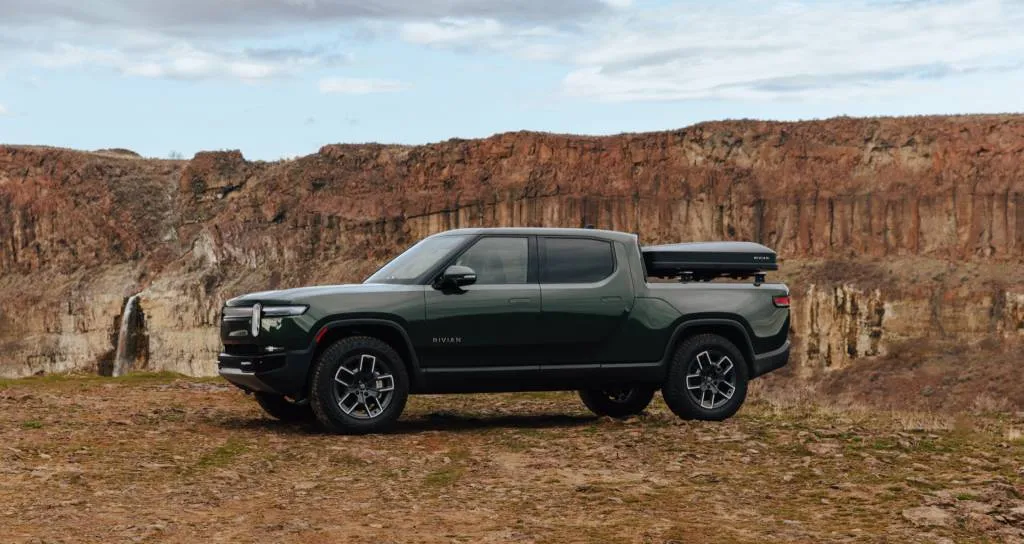
Rivian x iKamper Skycamp Mini rooftop tent
The tent itself can be pre-ordered for $4,595, and the first customers who do so will also receive iKamper’s Disco Series Stove for outdoor cooking. Rivian does offer a Travel Kitchen that can make breakfast for those who camp out, with a two-burner induction stovetop that can fit on an R1T’s open tailgate. It’s practical, but arguably not as cool as the Camp Kitchen, which slides out of the R1T’s Gear Tunnel pass-through, that the automaker showed at the truck’s media launch but never put into production.
Rivian has also made a point of showing off rooftop tents at various media events for its vehicles, perhaps also whetting appetites for this latest, brand-official version. It’s the perfect accessory for electric vehicles focused on off-road adventures, complete with a charging network built with that in mind.
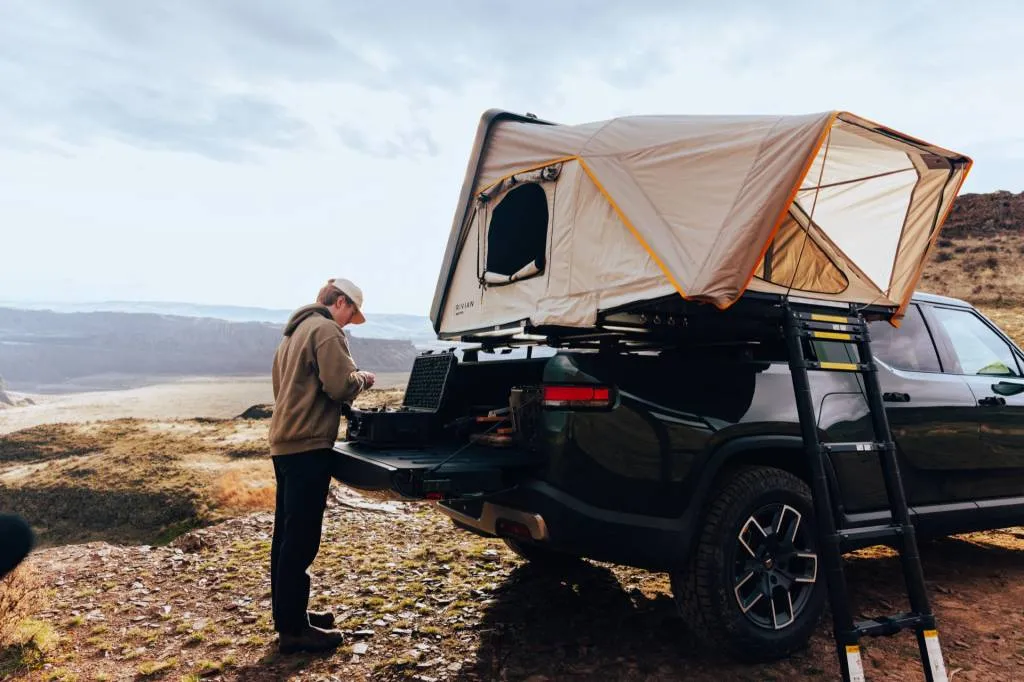
Rivian x iKamper Skycamp Mini rooftop tent
Called the Adventure Network, that charging network is being upgraded with more powerful DC fast-chargers and amenity-filled sites that will be open to all EVs. Rivian also operates Level 2 AC chargers, called Waypoints by the automaker, some of which let owners enjoy tent-based glamping with Under Canvas, which offers a more upscale alternative to traditional camping at popular recreation sites.
More options for off-grid travel are arriving soon—like the Airstream Basecamp 20Xe electric travel trailer that uses a 10.3-kwh battery pack and 3,000-watt inverter to power appliances and electronic devices for those that don’t want to disconnect completely.