
Author: EVAI

Fiat 500e production halted due to weak demand
The Fiat 500e isn’t selling well.
Stellantis paused production of the pint-sized electric car on Sept. 12 noting sluggish demand. Reuters reported on Tuesday that production is not scheduled to resume until Nov. 1.
The original production halt was only slated to last four weeks with a restart date set for Oct. 11.
Stellantis, Fiat’s parent company, slowed production operations at the Mirafiori plant in Turin, Italy in February noting it was a response to weak market demand for the electric Fiat 500e. The slowdown was set to have the plant operating at a single reduced eight-hour shift schedule. Previously the plant was running two shifts.
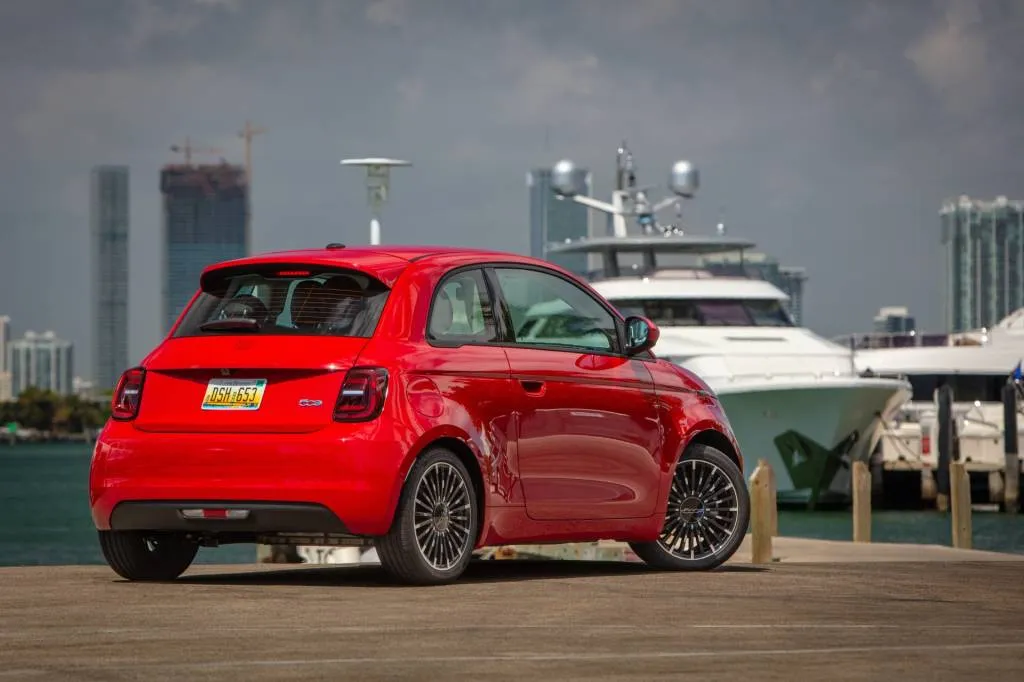
2024 Fiat 500e
Stellantis CEO Carlos Tavares will meet with the Italian parliamentary committee next week to discuss the automaker’s Italian production, according to Reuters.
Reuters reported that despite the production stop Stellantis recommitted to its plan of investing 100 million euros ($111 million) into assembly of an improved battery pack and to produce a new 500 Hybrid model in early 2026.
In September Italian officials told the European Union that it needed to review the plan to end sales of new internal-combustion cars by 2035.
“The ban must be changed,” Italian energy minister Gilberto Pichetto Fratin said. The government official called the ban “absurd” and that it’s being dictated by an “ideological vision.”
The 2024 Fiat 500e costs $34,095 and has 149 miles of EPA-rated range. Green Car Reports said it “charms city drivers” when we drove it in April.

Mazda MX-5 Miata, Fiat 124 recalled for excessive airbag force
 More than 90,000 Mazda MX-5 Miata and Fiat 124 convertible roadsters have been recalled for front airbags that can deploy with excessive force, putting front seat occupants in a kind of danger airbags are designed to prevent. Front-seat occupants are the only possible occupants in the two-seat convertibles. The recall covers 77,670 current…

Guest commentary: Sales and F&I efficiency keys to succeeding in today’s automotive market
While challenges remain, dealerships have an opportunity to sell more cars if they commit to better sales training and improving their financing skills and technology.

Renault stops F1 engine development, focuses on Alpine supercar
 Renault will no longer build F1 power units after 2025 F1 power unit staff to focus on EV technology, including Alpine supercar Alpine supercar due by 2030, possibly with solid-state batteries A major shakeup is underway at the Viry-Châtillon motorsports skunkworks located south of Paris, which serves both Renault and its Alpine performance…

Review: Bentley Continental GT Speed proves PHEV power is no compromise
 The fourth-generation Continental GT Speed and GTC convertible tap into plug-in hybrid power The GT Speed First Edition as tested costs $302,100 The GTC Speed First Edition convertible as tested cost $332,200 The Swiss Alps are objectively beautiful. With their ragged glacier peaks coursing with waterfalls like veins into verdant valleys clanging…

2025 Chevy Blazer EV price cut to $45,995, range to 334 miles
 Chevy dropped the price and increased the range and power of the 2025 Blazer EV, Chevrolet revealed on Friday. A new front-wheel-drive model is the new base model with a price of $45,995, including a $1,395 destination fee. Additionally, every 2025 Blazer EV qualifies for a $7,500 tax credit at the point of purchase. That model had been promised…

Ford giving EV buyers free home charger and installation
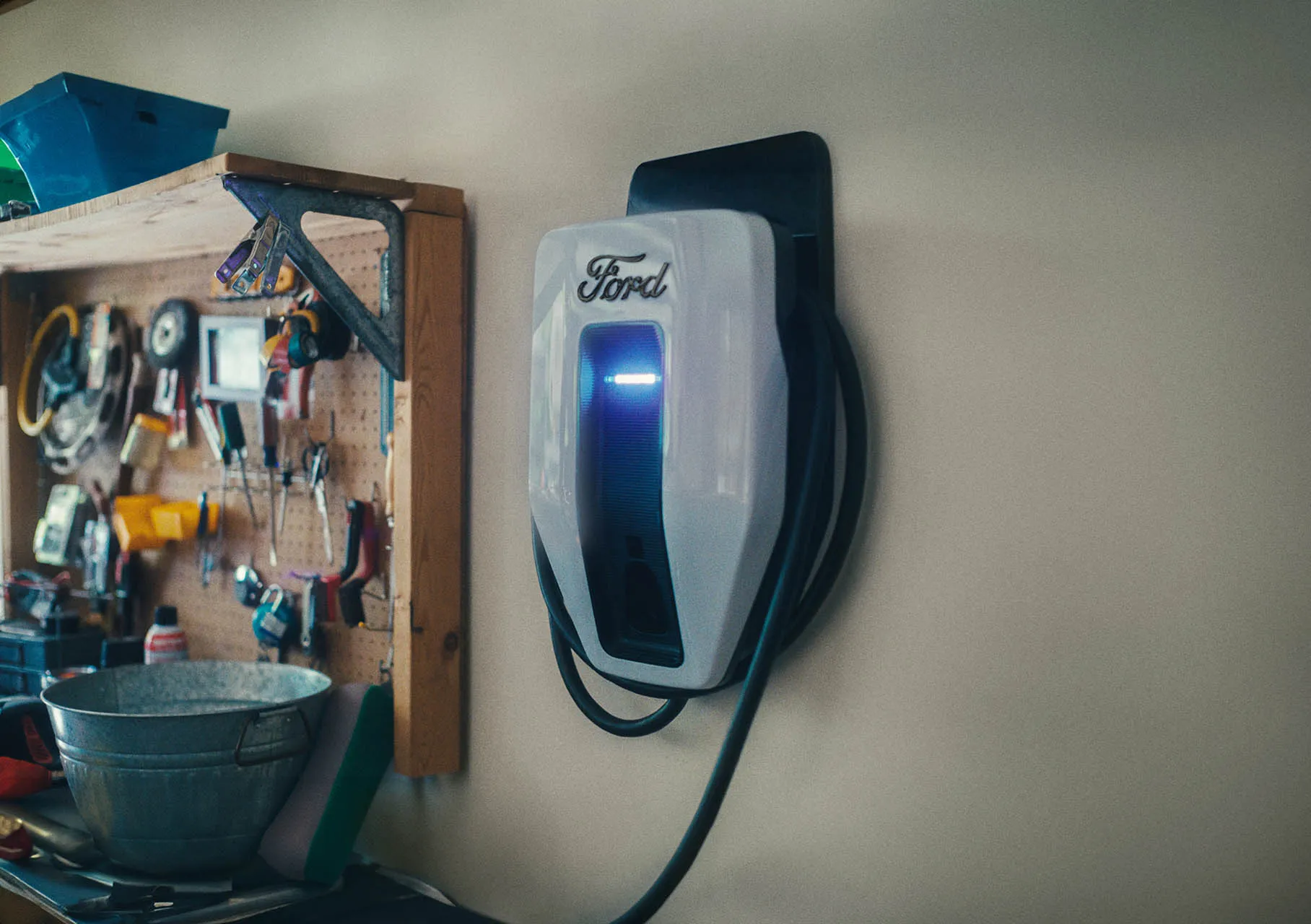
Ford’s aiming to make life easier and less confusing for EV buyers.
On Monday, Ford CEO Jim Farley posted on LinkedIn that the automaker will be providing a free home charger, along with installation, to its buyers that buy or lease a Mustang Mach-E, F-150 Lightning, or E-Transit.
Farley said the complimentary Level 2 home charger will either come with the vehicle or can be delivered when buyers are ready. Ford will arrange to have a professional install the charger for buyers at no charge.
The free charger install needs to be considered a “standard install, which Ford said means completed at a residential property with a dedicated electrical meter, circuit of up to 60 amps, and wiring that will only need to run up to 80 feet.
Recently, Farley took long road trips in EVs both across Western U.S. and Europe. The takeaway, according to Farley, is consumers are looking for “convenience, peace of mind and expert service.”
Farley said Ford’s learned home charging is important to overall electric vehicle adoption in the U.S. and nearly 90% of shoppers said they’d be more likely to buy an EV if they knew they could charge at home. Where, who, and at what cost is confusing to consumers, according to the executive. This latest incentive takes the guesswork out of the home charging situation in Farley’s view.
Ford was the first automaker to address the public charging infrastructure issue outside of Tesla, by partnering with Tesla. In 2023 Farley and Tesla CEO Elon Musk announced Tesla’s Superchargers would open to Fords. Farley also committed that Ford would adopt Tesla’s NACS charge port in future EVs.
Earlier in 2024 Ford began delivering CCS to NACS adapters free of charge to F-150 Lightning and Mustang Mach-E owners as Tesla opened its Supercharger network up to Ford EV owners.
Note – This story was updated with clarification on what Ford considers a standard installation

First 24/7 Manhattan EV fast-charging site vies for Uber drivers
Revel on Thursday opened what the company claims is New York City’s first electric vehicle fast-charging site open 24 hours a day, seven days a week.
Located at Pier 36 in the Lower East Side section of New York’s Manhattan borough, the site features 10 320-kw DC fast-chargers from Finnish company Kempower, according to a Revel press release. The site, which brings Revel’s total number of New York City fast chargers to 64, is off FDR Drive, the main highway running along the east side of Manhattan.
Revel claims the 320-kw chargers “will offer the fastest charging experience in New York City,” but a Manhattan site opened by Gravity earlier this year west of the Revel location claims to provide charging at up to 500 kw.
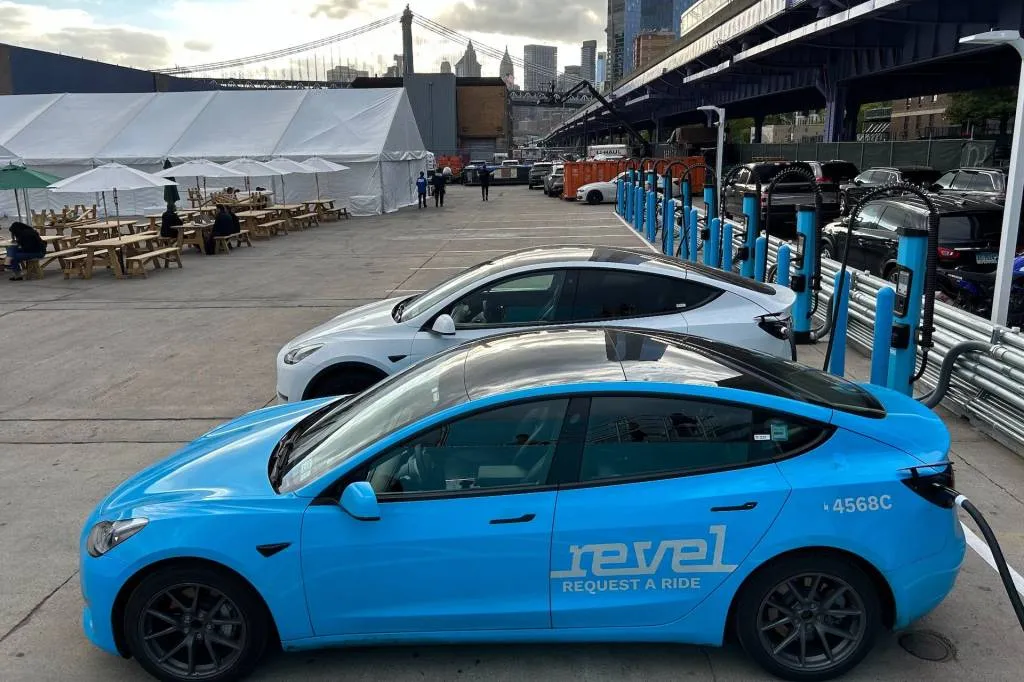
Revel DC fast-charging site at New York City’s Pier 36
While the Gravity site may see more mixed use, the Revel fast-charging site at Pier 36 will likely be used primarily used by ridesharing drivers, both from Revel’s own service and Uber. Earlier this year, Revel and Uber launched a partnership that gives Uber drivers a 25% discount at Revel chargers, while Uber guarantees a minimal rate of utilization at existing and future Revel charging sites.
Revel has had a confusing trajectory, shifting from electric mopeds under its original iteration five years ago to rideshare a couple years ago and now earlier this year just charging. The company now aims to expand its New York City charging network to 300 chargers by the end of 2025, including a 60-charger site in the borough of Queens and a 48-charger site at LaGuardia Airport, also located in Queens.
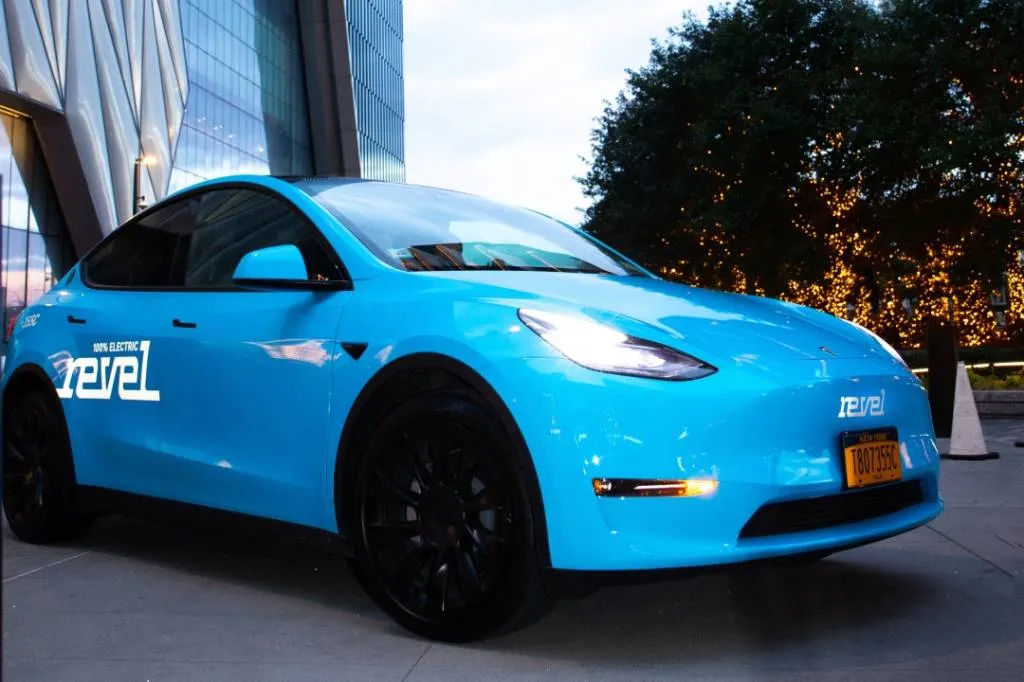
Revel rideshare service
Revel claims utilization of its charging sites has increased tenfold in the last year as a result of New York City’s Green Rides initiative, which aims to make the city’s rideshare fleet fully electric by 2030. Uber also targets all-electric rides wherever it operates by that year.
The opening of Revel’s new fast-charging site follows an announcement by New York’s largest parking operator just this past month of plans to equip 5,000 parking spots with Level 2 charging. These slower chargers will likely prove more useful for residents’ private cars rather than rideshare vehicles, though.
New York City had electric taxis in the ’90s—the 1890s, that is—but with last decade’s taxi of tomorrow push shunning EVs, it’s been a surprisingly long adoption curve for one of America’s densest cities. More public fast chargers could lay the groundwork for making the fleet of yellow cabs greener.

Bentley CEO says luxury market rejects electric cars
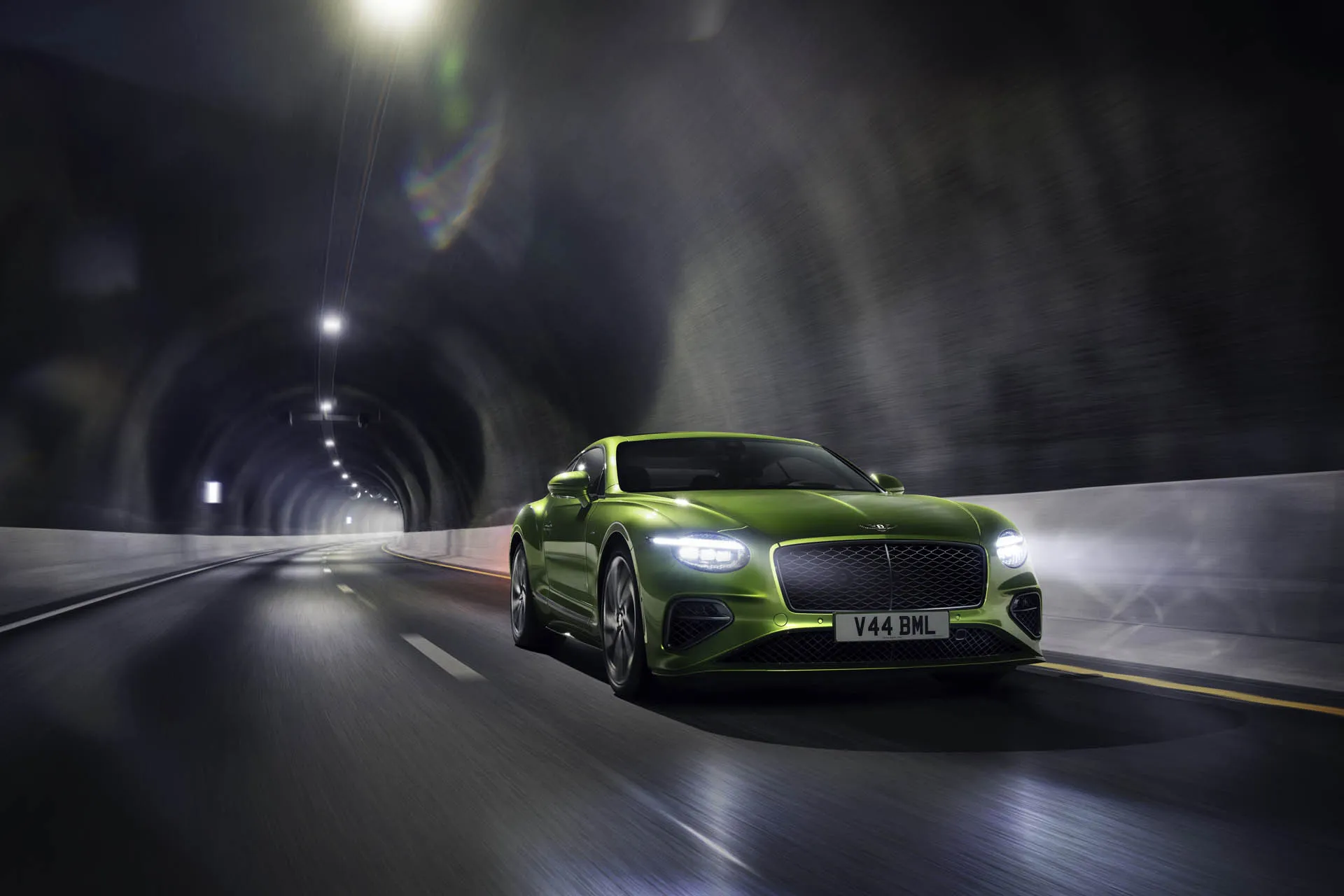
The Volkswagen Group ultra-luxury brand Bentley appears to have cooled even more on EVs.
As its CEO Frank-Steffen Walliser recently told Car and Driver “what we see in the luxury market right now (is that) people reject electric cars.” Wealthy consumers “consider luxury cars only with a combustion engine,” the executive claimed.
In 2020, Bentley laid out plans to make its entire lineup plug-in hybrids by 2026 and all-electric by 2030. The luxury automaker’s first EV was going to roll off the assembly line in 2025, according to Bentley in 2022.
After a change of plans, Bentley’s in the process of turning over its lineup and moving to plug-in hybrid V-8s replacing the former W-12 engine. The W-12 engine won’t be revived and is dead for good, according to Walliser. The automaker’s first EV is now set to debut in 2026 with a market arrival in 2027.
Walliser noted that Bentley is too small an automaker to afford simultaneous ICE and EV versions of the same car as Mercedes and BMW have been doing. Plug-in hybrids make sense and are more than a novel bridging technology in the executive’s eyes.
While the executive won’t commit to a Bentley offering only plug-in hybrids, he’s bullish on e-fuels. Walliser was an executive at Bentley’s sister company Porsche before being named CEO of the luxury automaker in July.
Bentley may continue producing non-hybrid gasoline cars, though those might be limited-production models only, according to Walliser.
Bentley’s main competitor Rolls-Royce is doubling down on EVs. The luxury rival already launched its first EV known as the Spectre, and an electric SUV and sedan are set to arrive in 2027 and 2028 respectively. Rolls-Royce committed to go all-electric by 2030 and remains steadfast with that plan.