Category: Rumors

The Ford Focus Hatch Is Dead. It May Return As An EV Crossover: Report
- Focus officially dies in November, but it could be replaced by a similar-sized electric and hybrid crossover.
- The new model will reportedly be built in Spain and have a focus on affordability.
- Ford may reuse the Focus nameplate, which is very familiar to European buyers and it could help sales.
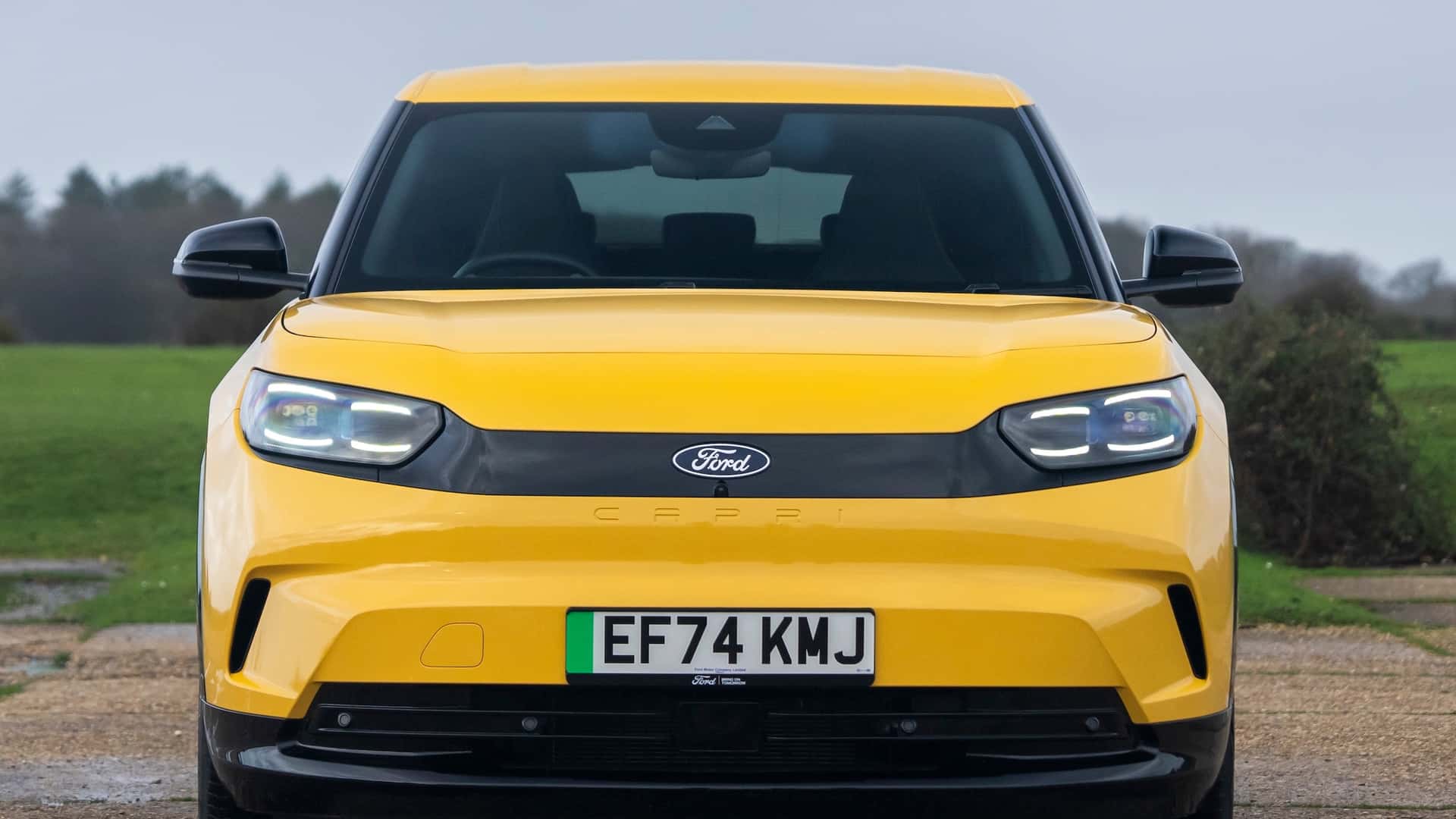
The Ford Focus nameplate became synonymous with practicality, sharp looks and having fun when you go a bit too fast around a corner. But after four very successful generations, each with its own highlights, the Focus is now almost dead in Europe (production ends in November). It was once one of the best-selling small hatchbacks there, along with the Fiesta and all other non-crossover or SUV models.
However, Ford is working on a Focus-sized crossover, which will be available with electric and hybrid power, Autocar reported on Thursday, without saying where it got its information.
Ford already sells the Focus-sized Explorer EV in Europe, but that’s built on the Volkwagen MEB platform, and it probably wants to switch to its own platform. Although, considering this is a Euro-only model, it likely won’t be the recently announced Universal EV Platform, since that will first be used in vehicles coming out of the Louisville plant.
The larger Ford Capri coupe-like crossover is also built on MEB, and, like the Explorer EV, it too could be replaced someday with something built on Ford’s own underpinnings. The new crossover could be built on a derivative of its C2 platform used in the outgoing Focus, the Bronco Sport and Escape.
According to Autocar, the new Focus high-rider will roll out of the Blue Oval’s plant in Valencia, Spain, which currently builds the Kuga (known as the Escape in the U.S.). It will somewhat match the Kuga’s size and be offered with both hybrid and fully electric powertrains. Ford will sell it alongside the Kuga as a more electrified alternative to what is a more conventional combustion crossover.
The Kuga is already available with different levels of electrification all the way up to a plug-in hybrid. Ford may be able to sell the Focus crossover at a lower price point than either the Kuga or the Explorer EV, which is how this starts to make more sense.
It would essentially slot in between the Puma (available with either combustion or fully electric power) and the Explorer in terms of both size and price. However, the outlet says, it won’t resemble a typical European-designed Ford, like the Puma, and will instead look more rugged and American. So it may be closer in style to the squared-off Explorer.
There’s also good reason to believe Ford could reuse the Focus nameplate for this new multi-energy crossover. The name holds some weight with European car buyers. And reviving iconic names to reuse them for crossovers—like the Mustang, Capri and Puma—is straight out of Ford’s playbook. Doing the same with the Focus may give the model the best chance of success.
Share this Story

BMW’s Electric Future Might Still Have A Gas Tank: Report
- BMW is reportedly working on an extended-range version of the next electric X5.
- The EREV system is said to provide up to 621 miles (1,000 km) of combined range.
- If true, this means all of BMW’s larger electric SUVs will likely get an EREV option.
BMW was among the first to offer a production range extender with the i3 REx, pairing the regular i3’s electric drivetrain with a small motorcycle engine to generate power and extra range. Discontinued in 2022, BMW claimed extended-range EVs had “no future,” but a recent report suggests a new EREV might be on the horizon.
It’s not an i3 replacement, though, since the i3 was indirectly replaced by the iX1, iX2 and the electric Mini hatchback. We won’t see another bespoke tall electric box made out of carbon fiber reinforced plastic, even though the i3 was at one point among the world’s best-selling EVs, and the REx certainly brought in additional buyers.
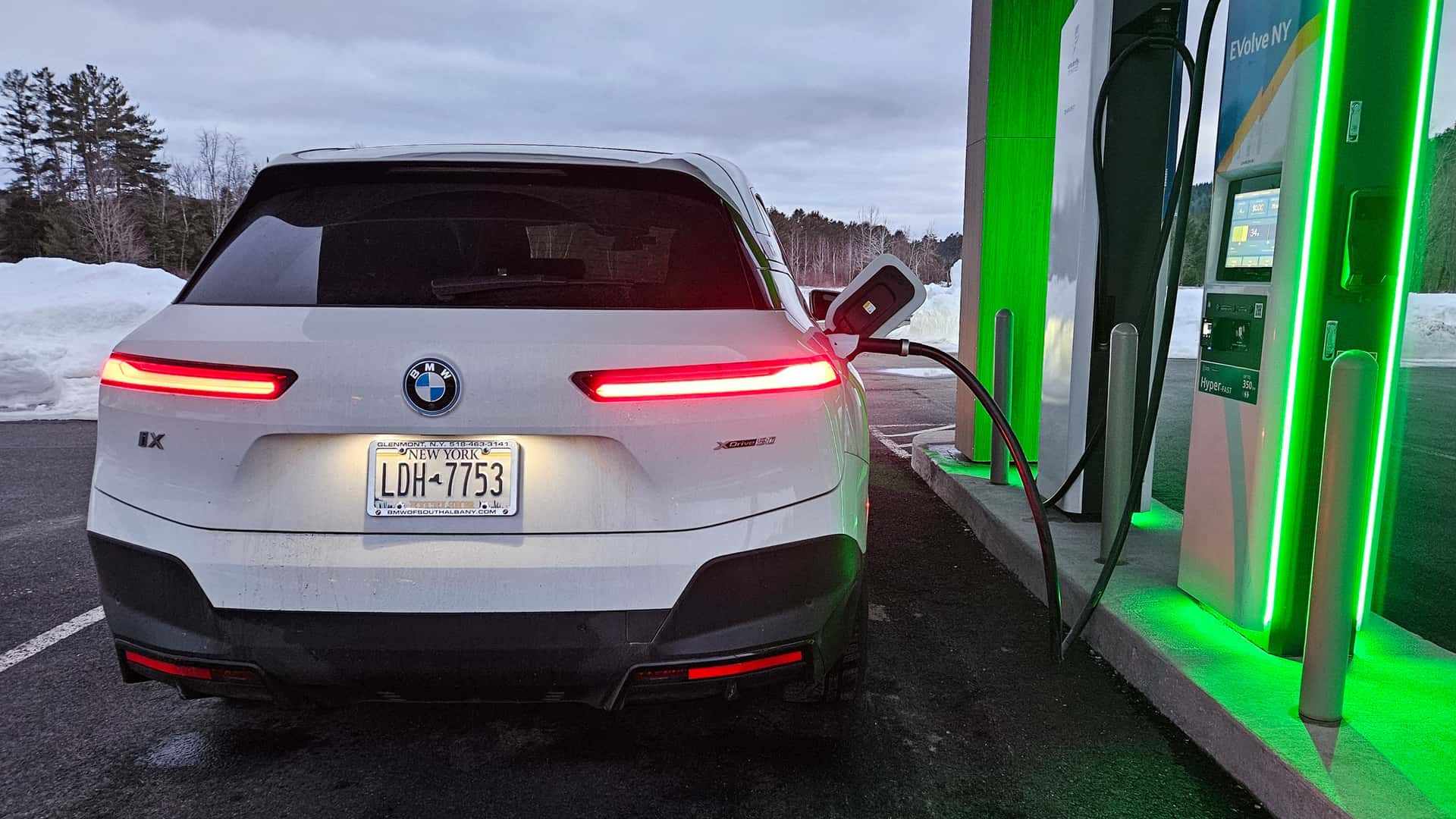
Automobilwoche reports that BMW is now working on a range extender version of the upcoming electric BMW X5, which will likely be called the iX5.
The manufacturer doesn’t officially acknowledge it, but it also doesn’t deny it. Automotive News quotes a BMW spokesperson, who, when asked about range extenders, said “We continuously analyze usage patterns, customer needs, and market developments and review the market potential of various technologies.”
Pivoting to an extended-range solution for its electric X5 makes a lot of sense. Unlike in the i3, which had the same-size battery pack as the regular pure EV version, in the iX5 range extender, BMW could make the battery smaller, allowing the combustion generator to compensate for the difference. The report from Germany also mentions that the extended-range iX5 would be able to cover 621 miles (1,000 kilometers) from a full tank and battery.
However, if we look at the range estimates for its new line of EVs—497 miles (800 km) WLTP for its upcoming iX3—it does strengthen the idea that the iX5 will have a smaller battery than the pure electric version of the same model. Mind you, the iX5 will be built on an evolution of the CLAR platform that underpins today’s model and not the Neue Klasse platform used in the iX3, so maybe it won’t quite be a match for outright range.
It would make sense for BMW to add range extenders to its lineup. A range extender is like a plug-in hybrid, with the main difference that the combustion engine is used solely as a generator and doesn’t drive the wheels. Buyers seem to be into the idea of having an electric vehicle that won’t be stranded when its battery runs out and having the comfort of a combustion generator will help ease the transition to electric for many undecided buyers.
Volkswagen-backed Scout is going to launch range extenders soon, and it says buyers are more interested in these versions with combustion generators than the pure electric variants. The Scout vehicles will also see more towing than anything BMW makes, but Genesis, a direct BMW rival that’s on a definite upward trajectory with its entire product portfolio, is already working to add EREVs to its lineup.
ZF, the automotive supplier known for its transmissions, but which is now working on its own EREV solution, is reportedly working with BMW on its new EREV project. We can only guess as to the specifics, but we believe a BMW 1.5-liter three-cylinder turbocharged engine would be enough to power a generator. Scout vehicles will reportedly have a four-cylinder naturally aspirated engine powering the generator, but BMW no longer makes non-turbo engines, and the 1.5-liter is the smallest it has available right now.
There is also no reason why the EREV powertrain would only be used in the iX5. If it’s true, then it should also power the mechanically related three-row iX7 and a potential coupe-like iX6 down the line. BMW likely won’t offer EREV versions of the iX3 (and potential iX4) since they will be built on a new EV-only architecture that BMW never said it engineered to take a combustion engine in any role.
Share this Story
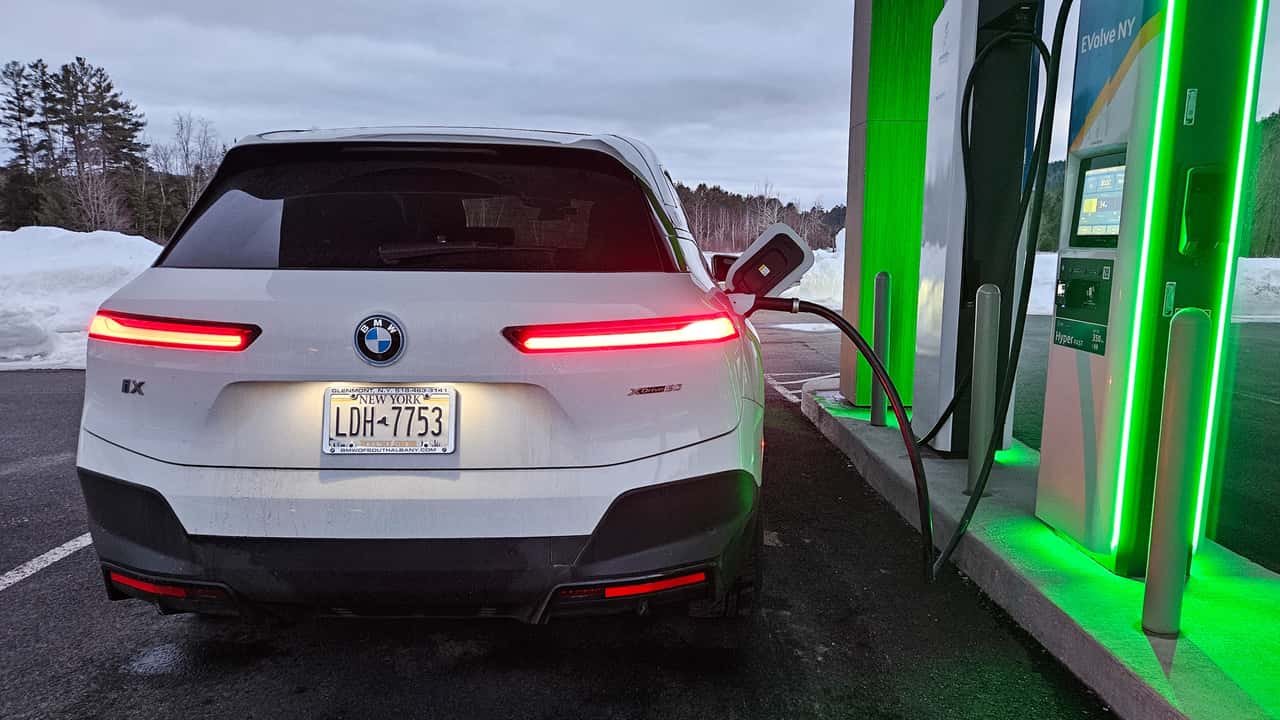

BYD Is Developing An Electric Kei Car For Japan: Report
- BYD is reportedly doing what no other non-Japanese automaker has ever done: it’s working on a kei car.
- The new model will be electric and arrive in Japan in 2026.
- The BYD kei model targets a lower starting price than Japan’s most popular EV, the Nissan Sakura.
Japan’s electric vehicle market fell 33% in 2024 from an already low baseline. But China’s BYD still saw sales growth in the country. Nissan still dominates the Japanese electric car market, and Tesla leads among imported EVs, but BYD is now reportedly working on a model it hopes will slingshot it to the top of the country’s EV sales charts.
Nikkei reports that BYD is working on an electric kei car to rival Japan’s best-selling EV, the Nissan Sakura. The Sakura is a Kei car with a starting price of around $18,250 USD. The Sakura has a tiny 20 kilowatt-hour battery that’s good for a claimed WLTC range of 112 miles (180 km). It gets a heat pump for efficient cabin climate control and 100 kW fast-charging capability.
In order for BYD to hit it big with its kei car in Japan, it needs to beat the Sakura’s specs and offer the car at a lower price. One of the reasons why Japanese car buyers are avoiding EVs (which accounted for just 2% of all new cars bought in 2024) is their higher price. If BYD can undercut the country’s bestseller, it shouldn’t have a problem dethroning it.
According to Nikkei, BYD is currently targeting a starting price of around $17,700, which would fulfill the all-important affordability criteria that would give it the best chance of success.
For a car to meet Japan’s kei car regulations (which bring low taxes on top of the parking/usability advantages of having such a small car), it must not be longer than 11 feet 2 inches (3.4 meters), wider than 4 ft 10 in (1.48 m) or taller than 6 ft 6 in (2 m). Kei cars are also limited to 64 horsepower.
Because kei cars so specific to Japanese regulations and not sold anywhere else, pretty much no company outside of Japan has ever made one. The sole exception (with an asterisk) is Smart, which made its ForTwo narrower and limited its cubic capacity to 660 cc to meet kei regulations in the Japanese market. The closest thing to a foreign kei car today is probably the Hyundai Inster, but it’s still around 10% too big since it’s not designed to meet the specific regulations.
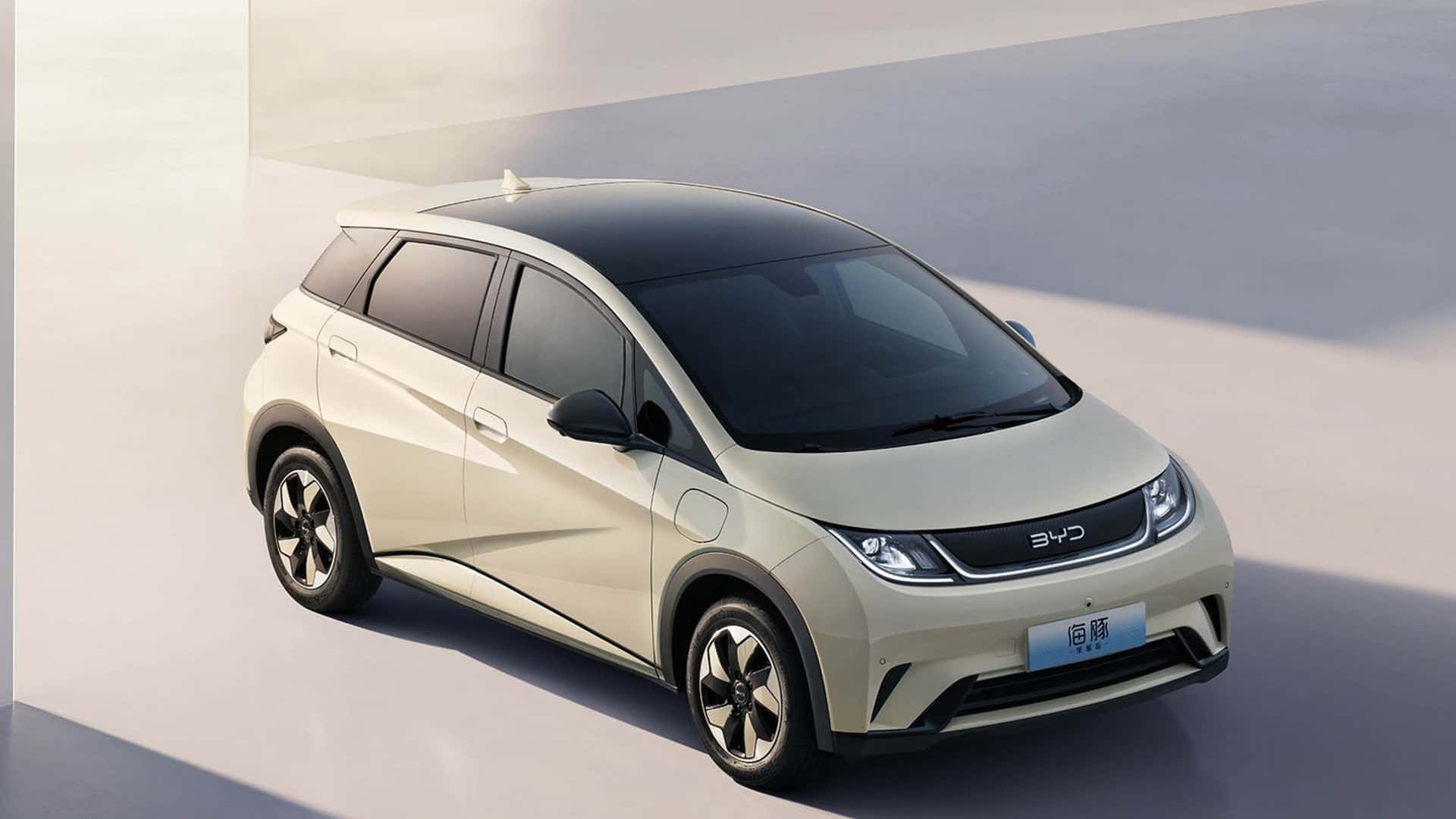
BYD may therefore be the first non-Japanese automaker working on an actual bespoke kei car. It currently sells four models in Japan: the Dolphin, the Atto 3, the Seal and the Sealion 7. The first of these is a small city car, but it’s too wide for the kei car classification, so it’s not as popular as it could be. Its new electric kei car is reportedly coming sometime in 2026.
Share this Story
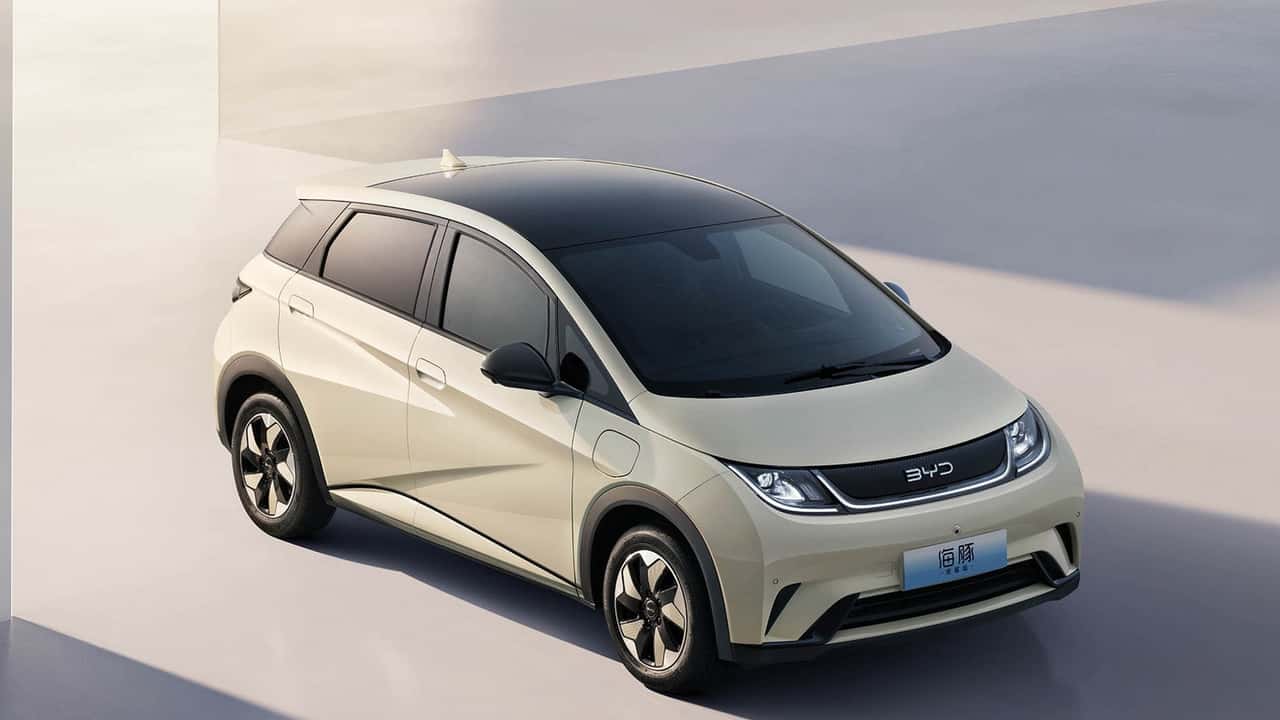

Nissan Wants Its Own City EV For Europe
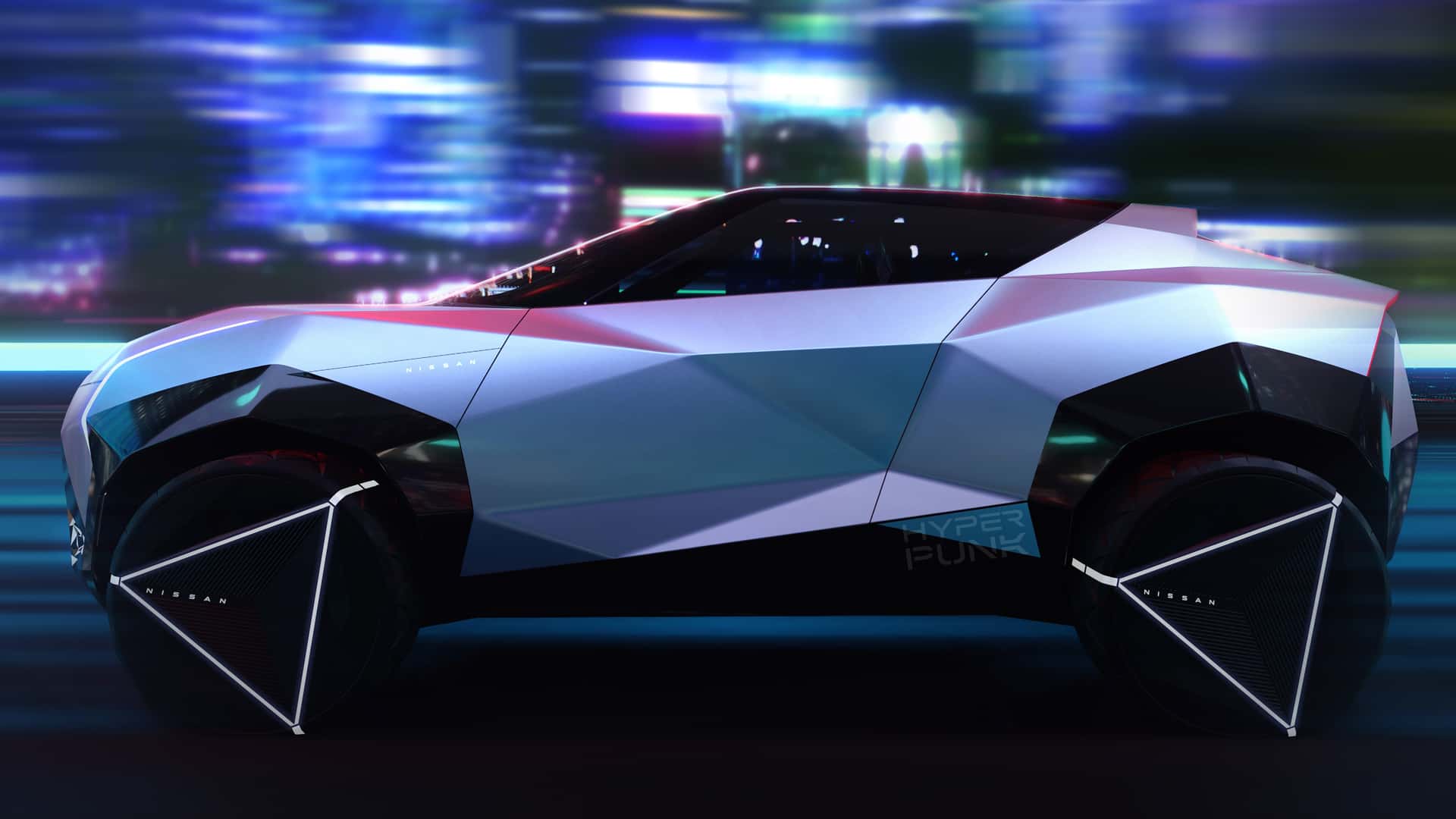
- Nissan wants its own interpretation of the Renault Twingo and Dacia Spring EVs in Europe.
- Like the Dacia, the new Nissan EV will have a shorter-than-usual development process.
- It will reportedly be revealed in 2026.
Renault’s revived electric Twingo is one of our most hotly anticipated European EVs and it looks like it’s going to have not one but two sister models. After Dacia revealed that it was fast-tracking a project to develop an all-new Spring city EV based on the same underpinnings as the Twingo, Nissan is reportedly doing the same.
AutoExpress reports that, just like Dacia, which said the new Spring would be the result of a quicker-than-usual development process, Nissan is also looking to bring its new EV to production in just 18 months. That’s much quicker than usual for the creation of a new model, and it’s likely a move prompted by tariffs now imposed on Chinese EVs imported into the European Union.
Dacia would likely have happily continued selling the Spring, which was given a major overhaul last year. But since it’s built in China and is now subject to import duties that will bring up its price, the Romanian automaker apparently quickly scrambled to build something similar in Europe instead.
Nissan could have also chosen to make its small EV for Europe in China. It has a joint venture with China’s Dongfeng, which currently builds the Nammi 01 EV that would have been a perfect fit for a bit of badge engineering to turn into a Nissan. But now it seems that Nissan has chosen to link its small EV with the new Twingo and Spring instead.
Unlike the Twingo, which stays true to the original’s hatchback design, retaining many of its now iconic design cues, the Nissan EV will have a more crossover-like stance. This is what Dacia is doing too. We’ve seen the Romanian automaker’s design sketches for the new model and they show an upright two-box vehicle with a mini-SUV aesthetic.
We should see both the Nissan and Dacia EVs revealed before the end of 2026, likely with identical batteries and motors to the Renault Twingo. All three models will likely be built in the same Renault factory in Slovenia. The Renault will be the most expensive with an estimated starting price of around $22,750 (€20,000), while Dacia is targeting $20,500 (€18,000). The Nissan model could fall somewhere in the middle regarding pricing, and it will likely look like a smaller version of the new Leaf.
Share this Story

Mercedes-AMG’s ‘Fastest Accelerating’ Supercar Ever Will Be All-Electric
- Mercedes-AMG is reportedly a few months away from revealing the quickest-accelerating car in the company’s history.
- It’s a fully electric supercar that will serve as a showcase for what AMG has in store for its future EVs.
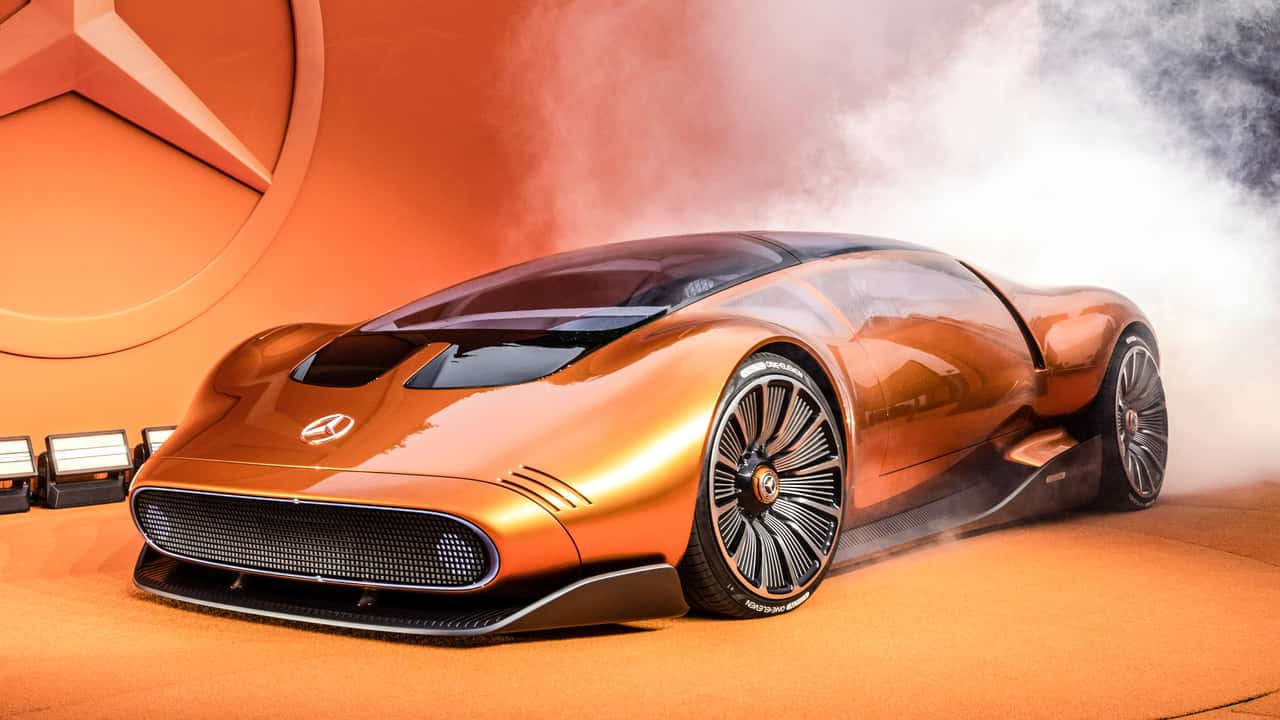
- Its design won’t be dissimilar to the Mercedes One-Eleven concept, which means it will look like a traditional mid-engined supercar.
Mercedes-AMG is working on its first dedicated series EVs, a high-performance SUV and a sedan, which will be launched sometime around 2026. Until then, the company will reportedly give us a taste of what it can do with electricity by unveiling a one-off electric supercar concept—a vehicle that will become the quickest-accelerating Mercedes ever when it’s revealed later this year.
Perhaps the biggest news about the concept, is that it could be powered by a solid-state battery. Mercedes is already testing this tech in a prototype on public roads. It will also showcase AMG’s next-generation electric powertrain, which includes axial flux electric motors that are smaller and several times more powerful than the drive units used in today’s EVs.
The concept will bear a resemblance to the Mercedes One-Eleven concept from 2023. According to an unnamed high-ranking insider quoted by Autocar, the upcoming concept is “not a million miles away” from the One-Eleven, which suggests it will have a retro-inspired design. The One-Eleven is a modern reinterpretation of the C111 series of 16 experimental mid-engined vehicles made in the early 1970s.

6
AMG doesn’t have a bespoke mid-engined car in its past to draw from, so its inspiration could be another Mercedes car, like the C112, which was an evolution of the C111. Regardless of its design, it sounds like this concept will be more of a technology showcase, hinting at where AMG will go next.
The unnamed insider noted that “Where the EQXX aimed to go the furthest, this aims to go the fastest. It will be the fastest-accelerating car AMG has ever produced.” They said it will redefine what an electric performance car is and what it can do.
Even though AMG doesn’t have any dedicated electric models on sale today, it is a performance EV pioneer with the SLS AMG Electric Drive produced in very limited numbers between 2013 and 2014. What makes it special is its quad-motor setup, which made it exciting enough to turn Top Gear’s Jeremy Clarkson, an outspoken critic of EVs, into a fan.
There’s nothing confirmed or floating in the rumor mill suggesting a quad-motor Mercedes-AMG EV is coming, but it’s not out of the question. Mercedes’ rival BMW has confirmed plans to put up to four independent motors in its upcoming electric M models, so it’s fair to assume that Mercedes, which briefly produced such a model in the past and offers a similar setup in the electric G class, is doing the same.
This unheard-of level of performance alluded to by the insider comes courtesy of mixing a high-voltage 800-volt platform with four motors and a solid-state battery. The latter offers many advantages over current lithium-ion batteries, but it should also be smaller and lighter, which is crucial when looking to make a performance car fun and responsive to drive.
The AMG One is currently the quickest car to wear a Mercedes badge. Its plug-in hybrid powertrain mixes a small-capacity V6 with electric turbocharging and two electric motors to produce a combined 1,049 horsepower and sprints to 62 mph (100 kph) in 2.9 seconds. It shouldn’t be hard to make a pure EV with a quicker sprint time than that.
To make this new AMG concept world-beating, it would have to come close to a Rimac Nevera. It’s currently the quickest road-legal production EV in the world, capable of reaching 60 mph in under 2 seconds thanks to its four individual motors. But while it’s the quickest in a straight line, it can’t quite keep up with the ludicrously grippy McMurtry Speirling which employs a fan to create immense downforce, even at low speed.
Having created the SLS Electric Drive over a decade ago and one of the most advanced EV programs of any automaker today, Mercedes could produce something really special. Since it’s a one-off, it’s clearly more a statement of intent and a sign of what future AMG EVs might be like. It will serve a similar role to the EQXX study, whose technology will find its way into electric Mercedes models beginning with the new CLA.
Share this Story

Upcoming Kia EV1 Will Be Even Smaller And More Affordable
- Kia is reportedly working on an even smaller electric model than the upcoming EV2.
- It will likely be called the EV and it is expected to be the electric equivalent of the Kia Picanto city car.
- It is expected to be priced €5,000 ($5,200) lower than the EV2.
Earlier this week, Kia unveiled several new electric models that will enter production soon. One of the most exciting is the pint-sized EV2 Concept, which previews a production model by the same name. The EV2 is basically Kia’s electric Europan city car, shrinking down the E-GMP platform for drivers who need something that doesn’t take up lots of space. But that’s not all—Kia is reportedly planning to go even smaller with its electric offerings.
The similar Hyundai Inster and EV2 are the Hyundai-Kia group’s smallest EVs, but according to Autocar, Kia is working on something even smaller, an electric equivalent of the tiny Picanto city car available on the European market. The Inster is already tiny by American standards, which is why neither it nor the EV2 are coming to the States, so the chance that the upcoming smaller model would be sold here is even slimmer.
And we know from past reporting that Kia has a whole family of EVs planned, from the EV9 all the way down to what this car will likely be: the Kia EV1.
For reference, the Hyundai Inster measures 150.6 inches (3.82 meters) in length and is just 63.4 inches (1.61 meters) wide, sitting on a 101.6-inch (2.58-meter) wheelbase. The Kia Picanto is almost 9 inches (22 cm) shorter and even narrower, and it’s likely the future EV1 will be roughly the same size.
The source report also says the EV1 will cost about €25,000 ($26,000) or around €5,000 ($5,200) more than the larger EV2.
Autocar quotes Kia president Ho Sung Song as saying, “If we want to move to the late majority customer target group, definitely we need a lower size of model—or a lower-price model—and we are internally studying what will be our entry EV models, apart from our EV2. Maybe next EV Day, we’ll show you what we are planning.”

54
Source: Alex Goy / InsideEVs
There are already EVs in the future EV1’s size bracket available in Europe, including the Dacia Spring, the Leapmotor T03 or the BYD Seagull. Renault is also working on an electric Twingo revival, which will share its underpinnings with an even cheaper future Dacia EV that will replace the current Spring.
The upcoming Dacia EV is expected to start around €18,000 ($18,800), making it considerably more affordable than all vehicles its size, including the EV1.
Share this Story

Future Mini EVs May Switch To Rear-Wheel Drive
- Future Mini EVs will switch to the BMW Neue Klasse platform.
- BMW created the Neue Klasse architecture with either rear- or all-wheel drive in mind.
- No cheaper front-wheel-drive version of the platform is planned.
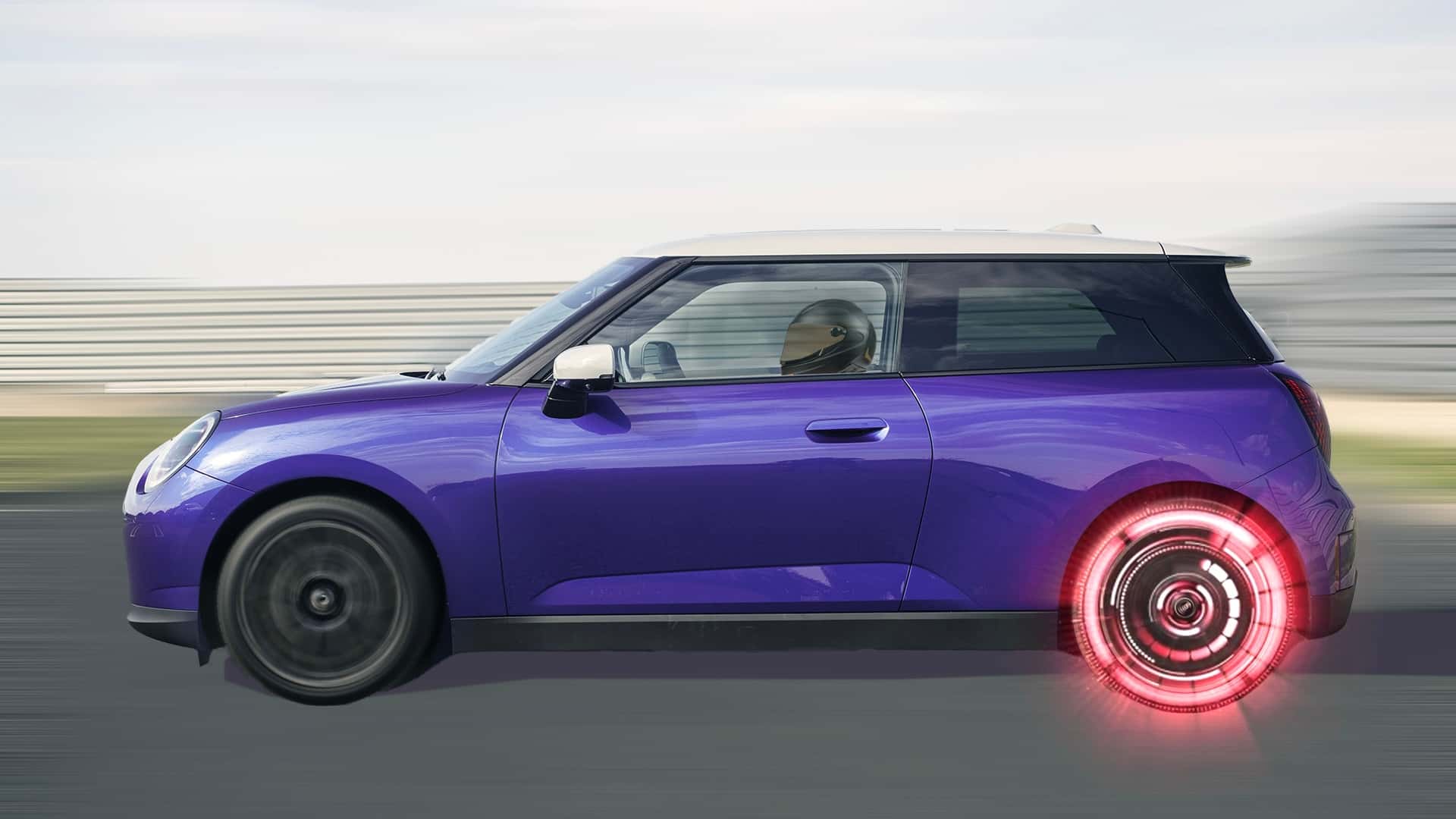
Minis have traditionally been small and fun front-wheel drive cars characterized by their nippy go-kart-like handling. All Minis, both before and after the BMW takeover in 2000, have been front-wheel drive, but a new report suggests that may change in the future as Mini models adopt the new Neue Klasse platform.
Autocar says that when the current electric Minis reach the end of their lifecycle, they will be replaced by Neue Klasse-underpinned cars. They asked Joachim Post, a BMW purchasing and supply board member, about the possible future switch to rear-wheel drive, and he didn’t deny it, stating, “We will see what the future is. We want to make one thing feasible: sheer driving pleasure.”
While that is far from a confirmation, it sounds like he was implying that a switch to RWD is very much in Mini’s future. Unlike Hyundai-Kia or Volkswagen, which have some cheaper front-wheel-drive versions of their E-GMP (used in cars like the Kia EV4) and MEB platforms (used in entry-level VW EVs), BMW has no plans to develop a front-wheel-drive version of its Neue Klasse platform to underpin more affordable models. That means it may have to make future Minis rear-wheel drive.
BMW Blog reached out to BMW to ask about the prospect of front-wheel-drive vehicles made on the Neue Klasse platform, and the manufacturer said it had no such plans. All Neue Klasse cars will have (at least) one electrically excited synchronous motor (EESM) motor in the back. All-wheel-drive cars will get an additional asynchronous motor to power the front axle. There will also be tri- and quad-motor performance BMW EVs made on this platform, likely with two motors per axle, while all base model cars will be rear-wheel-drive.
The first-generation Mini Cooper SE is still among the top three most engaging electric cars I’ve ever driven, even though it was a combustion car converted into an EV. It borrowed the electric motor from the rear-wheel-drive BMW i3S, but it was actually more fun to drive than the BMW, even with the motor driving the front wheels.
Around the time I drove the Cooper SE, I also tried the Honda e, a bespoke rear-wheel-drive EV designed to be a quick and fun city runabout. However, while I really wanted to like that car and it had so many good points, I was surprised to discover that the front-wheel-drive Mini was much more fun to drive and a much bigger enthusiast pleaser than the Honda.
If BMW makes future Mini EVs rear-wheel drive, it will have to do a lot of work on the cars to differentiate them from the BMWs they will share the platform with. Even though there are common traits, BMWs and Minis feel quite different to drive, and a lot of this comes from which axle is powered in cars from each brand.
Even if this becomes reality, Mini’s switch to rear-wheel drive is still a few years away. The manufacturer fairly recently released a new electric three-door Cooper and a five-door crossover called the Aceman, which are built on a reengineered version of the Great Wall Motor front-wheel-drive platform related to the one that underpins the Ora Cat. These new electric Minis will likely be around until toward the end of the decade, so BMW has time to work a front-wheel drive EV platform or retain Mini’s trademark driving manners in a rear-wheel drive package.
Share this Story

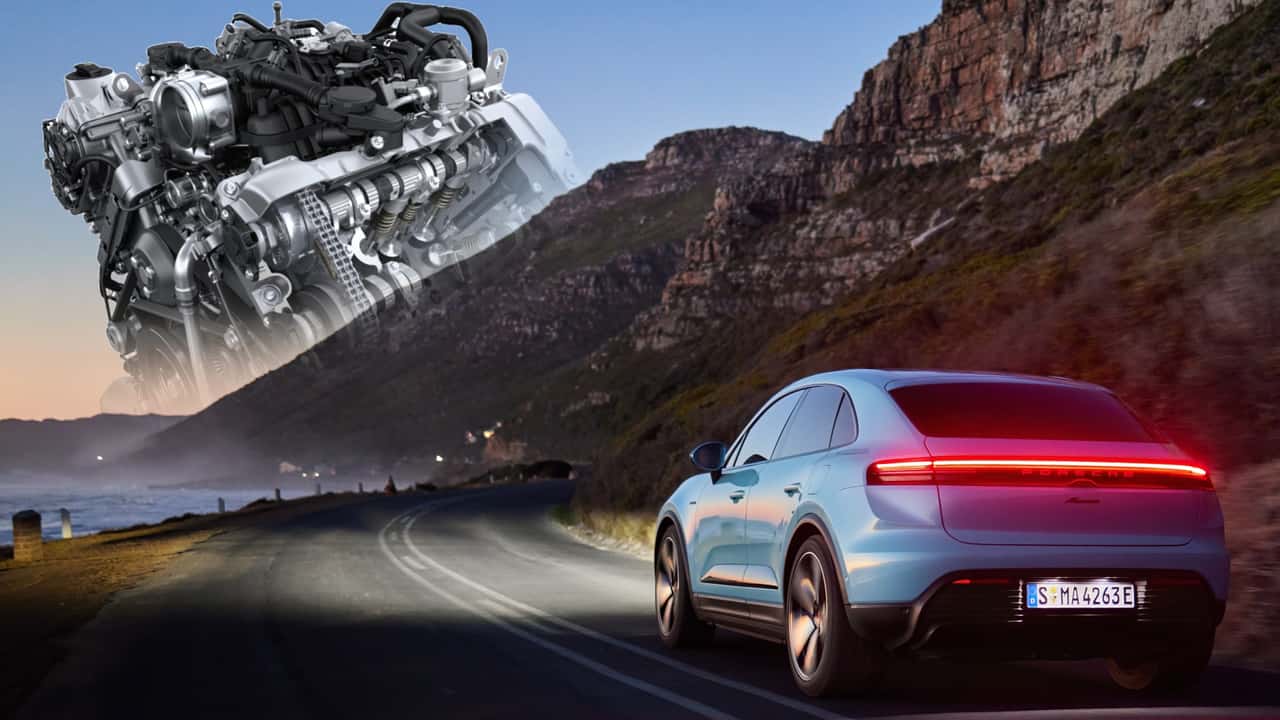
The Porsche Macan May Not Stay All-Electric After All: Report
- Porsche may come back on its decision not to make a new combustion-powered Macan after production of the current model ends in 2026.
- One report citing a “senior Porsche insider” says a new generation ICE Macan is being considered.
- Porsche EV sales weren’t so hot in 2024, which probably raised alarm bells within the company about its shift to electrified vehicles.
Porsche’s best-known models are sports cars, but the brand’s moneymakers are the SUVs: the Macan and Cayenne. The smaller of the two, the Macan, is Porsche’s global best-seller, so eyebrows were surely raised when the manufacturer announced that it would go electric-only for its next act. But now, one Porsche insider says the German automaker may be rethinking that plan.
Porsche initially announced that the original Macan, which debuted in 2014 and was discontinued in Europe last year, would remain on sale alongside the electric model in other markets (including the U.S.) until 2026. An Autocar report, quoting an unnamed “senior Porsche insider,” says the automaker is mulling a second-generation combustion Macan, even though it said it wouldn’t.

9
Source: Porsche
The insider explained, “The reception to the new Macan [Electric] has been positive, but we are yet to see its long-term performance, given uncertain market conditions.” Making a new ICE Macan is now being analyzed as part of a “range of product scenarios.”
Last year, Porsche sounded very optimistic about the Macan EV’s market success, with its CEO Oliver Blume even saying at one point that it was “overwhelmed” by orders. However, Macan EVs aren’t exactly flying out of showrooms, so it may have been more wishful thinking or an intentional exaggeration meant to stoke interest.
As good as the electric Macan is, buyers are likely put off by the very high price. The base model is $75,300, but the more powerful Turbo model with all the options costs twice that. The price is hugely important, as shown by the Tesla Model Y, which isn’t exactly a direct rival, being slightly smaller, less sophisticated and not quite as luxurious, but it costs considerably less and that’s a big part of why it’s a global hit.
Porsche began changing its narrative on how quickly it planned to transition to selling mostly electric vehicles. It appeared to lose confidence in its self-imposed goal of selling 80% electric vehicles by 2030, and we also analyzed reports that it was also considering putting a combustion engine in the new 718 sports car, even though it had previously emphatically announced that the Boxster and Cayman were going electric.
The timeline for the electric 718’s arrival is also uncertain, and it likely won’t be shown this year as initially announced due to issues with its battery supplier.
The manufacturer is alarmed by the fact that sales of its Taycan crashed in 2024, dropping by 49% globally, despite its major overhaul that made one of the best sporty EVs even better. In China, things were particularly bad for the groundbreaking electric sedan.
This was confirmed by Autocar’s unnamed insider, who explained that “The downturn in Taycan sales highlights new market dynamics. We cannot rely solely on traditional assumptions about consumer behavior,” he said.
Perhaps Porsche will end up giving customers different options longer than expected. As a U.S. spokesperson confirmed to us recently, nearly 30% of its global sales last year were hybrid or electric, and half of that figure was all-electric. The company may just be nervous about moving the Macan entirely away from gasoline.
It’s ultimately all about the money and Porsche looking to ensure its future existence. Lutz Meschke, Porsche’s chief financial officer, noted in November 2024 that they were “exploring the possibility of equipping some of the originally planned electric models with hybrid drives or internal combustion engines in the future. Conceptual decisions are being made, but what is clear is that we are committed to the combustion engine for much longer.”
Porsche isn’t alone in backtracking on its ambition to quickly transition to offering mostly electric or electrified vehicles. The other big German brands have made similar announcements, as have many other automakers, which are trying to adapt to changing market conditions. Even though hybrids, plug-in hybrids and range-extender EVs were seen as transitional vehicles that would be quickly phased out, it seems buyers prefer them over full EVs so manufacturers are reshuffling resources to add such models to their lineups.
Another reason why Porsche and other automakers are changing course is China. It is the world’s single biggest market for new cars, where the largest number of EVs was purchased in 2024. However, Chinese car buyers are increasingly opting for ever-more talented vehicles made by local brands, and they are moving away from foreign brands, even prestige names like Porsche, which sold 28% fewer cars in the People’s Republic in 2024 than the year before.
Share this Story

Polestar 7: Here’s A Theory About What It Could Look Like
- The Polestar 7 will be the brand’s compact SUV replacement, of sorts, for the Polestar 2 sedan.
- Polestar is owned by China’s Geely Group, which builds many different cars on versions of the same platforms worldwide. One common architecture can be found with Zeekr and Volvo as well.
- Could the Polestar 7 emulate the Volvo EX30 and Zeekr X? We’ll soon see.
The Polestar 2 has consistently been one of our favorite electric vehicles on the market. There’s only one big problem with it: it’s a sedan doing battle in an SUV-centric world. As good as it may be, it could only take the electric startup brand so far when people want bigger cars to haul kids and gear.
Actually, it has one other problem: it is built in China. That was fine for the Polestar 2 a few years ago when it launched, but these days, anti-China protectionist tariffs are all the rage in the U.S. and Europe. But today we learned that the upcoming Polestar 7 aims to solve both problems. It will be a compact electric crossover SUV, and built in Europe to avoid any of that tariff unpleasantness.
But while Polestar announced the Polestar 7 in its 2025 Business and Strategy Update video, it offered almost no details about the car at all—including from the company’s new chief designer. However, we can look to the rest of the Geely Group family for clues as to what it could be.

Polestar 7 Render
Photo by: Ralph Hermens
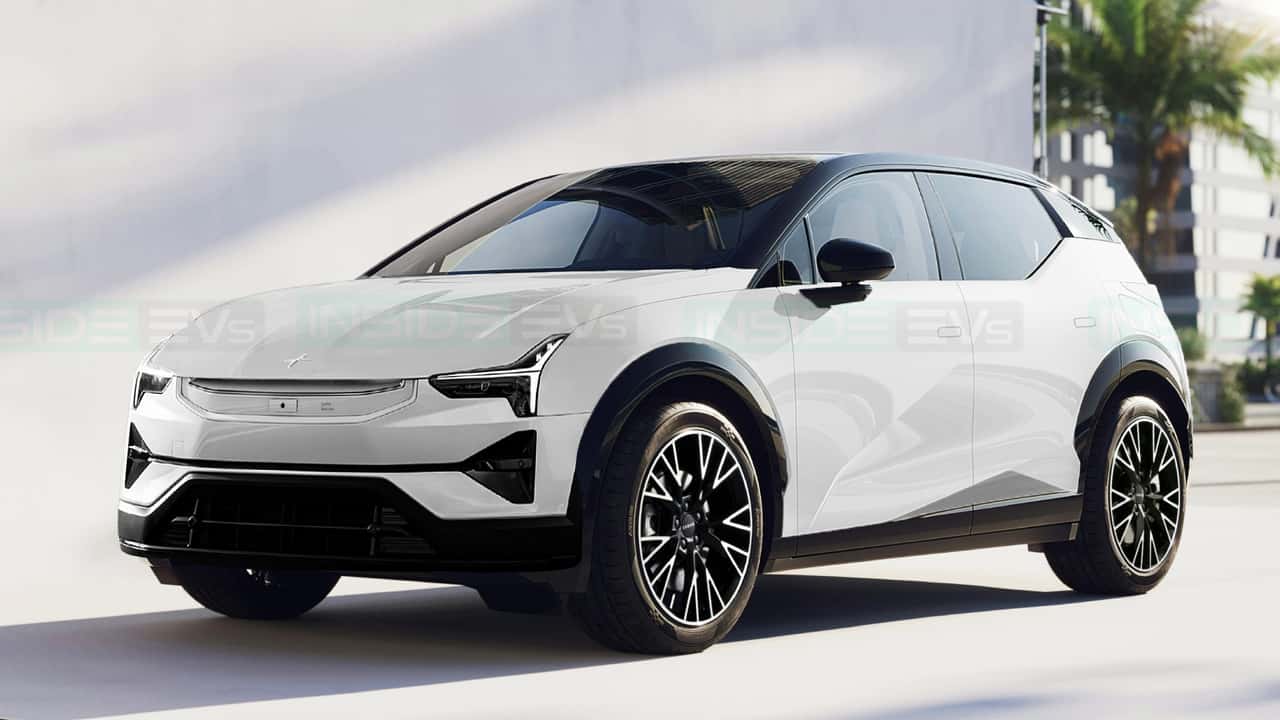
The rendering you see here is based on the Zeekr X, from another Geely Group EV and hybrid brand that we’ve covered extensively. And if that silhouette looks familiar, it’s because the Zeekr X is closely related to the Volvo EX30, another compact crossover that’s just now making it to U.S. shores.
Now, Zeekr’s cars are currently manufactured in China, which keeps it from coming to America for now. And after getting delayed by U.S. tariffs, the also-China-built EX30 now may face an uncertain future with a looming ban on Chinese car technology. But Volvo is moving fast to fix the latter issue; the EX30 will be built in Ghent, Belgium later this year, and that version of the car should be exported here.
All of this is to say that if Polestar is aiming to build a compact, performance-focused crossover in the Polestar 7, the EX30 and Zeekr X’s SEA-2 platform could be a great contender for it.
And the specs are already pretty legitimate. In U.S. form, Single Motor Extended Range Volvo EX30 has 268 horsepower and 253 lb-ft of torque with a range of 275 miles. The Twin Motor Performance has 422 hp and 400 lb-ft of torque and up to 253 miles of range. (Only the latter is being sold here right now, after the former was punted down the road due to tariffs.) In WLTP specs, the Zeekr X models are capable of at least 300 miles of range. The biggest battery in all of them is a 69 kWh NCM lithium-ion unit.
Lynk & Co Z20
Photo by: InsideEVs
Lynk & Co Z20 Interior
Photo by: InsideEVs
Hopefully—and if my theory is right—our Polestar 7 would be capable of at least 300 miles of range too, as that’s increasingly feeling like table stakes these days. But the Geely Group is also using this same platform for the Smart 1 and Smart 3, as well as the new Lynk & Co Z20. I would be quite surprised if Polestar didn’t go this route as well. All of these cars even look fairly similar inside: big screen, very few buttons and physical switches, and a big emphasis on software.
Lynk & Co Z20
Photo by: InsideEVs
One of the only things we do know is that while Polestar–and the wider Geely Group—use many different vehicle platforms for now, the plan is to increasingly unify its hardware.
“Reinforcing the value of Polestar’s asset-light business model, Polestar 7 is planned to be manufactured in Europe,” Polestar officials said in a news release. “With production already in place in the U.S., South Korea and China, Polestar continues to strengthen its global position with a well-balanced international manufacturing network. Over time, from Polestar 7 onwards, the Company will gradually move from a multi-platform approach to one single architecture, reducing complexity, costs, and investments.”
Regardless of how it goes down, Geely clearly has a lot to draw from. And as I experienced at CES sitting in the Zeekr 001, these cars seem very promising. Polestar may be coming off a rough year of sales and finances in 2024, but if it can get its own spin on cars like the Zeekr X and Volvo EX30, it should be in much better shape long-term.
Contact the author: patrick.george@insideevs.com
Share this Story

The Toyota Previa Minivan May Return As A Plug-In
- Toyota is reportedly working on a reborn Previa seven-seater people carrier coming in 2026.
- It will be available with plug-in hybrid or pure electric power, and it will be mechanically related to the Sienna.
- It could become the first battery-electric vehicle built on Toyota’s TNGA-K platform.
The 1990 to 1997 Toyota Previa minivan was never a sales champ, but its unusual, rounded design certainly made it stand out. Now, the automaker wants to renew its lineup, and one report says an all-new Previa that you can plug in is in the cards for launch in the next couple of years.
Forbes, citing local sources from Japan, says Toyota is gearing up to launch the all-new Previa in 2026 with both plug-in hybrid and pure electric powertrains. It reportedly won’t be underpinned by the e-TNGA EV-specific platform used in the bZ4X and Lexus RZ, with Toyota opting for the TNGA-K platform shared with models like the Crown and the Sienna, which is Toyota’s only minivan on sale in the United States.
The Sienna is also the Previa’s more conventional replacement, and it will probably live on alongside the new Previa, as a non-plug-in hybrid alternative with a more traditional design.
According to Forbes’ unnamed insider source, Toyota has chosen the TNGA-K platform to allow for both plug-in hybrid and pure electric powertrains. Had it used e-TNGA to create the new Previa, it would have been limited to offering only a BEV variant in a market where plug-in hybrids are steadily growing in popularity.
The plug-in hybrid Previa could borrow the Prius Prime’s powertrain, which combines two electric motors with a 2-liter engine for a total of 220 horsepower. The Prius Prime has a 13.6-kilowatt-hour battery pack, giving it a claimed WLTP range of 33 miles. The larger and heavier Previa PHEV will go less on one charge, so Toyota may choose to equip it with a larger pack to boost its electric range.
The 18.1 kWh pack that powers the RAV4 Prime seems a much better fit for a seven-seater minivan. It gives the RAV4 PHEV an EPA range of 42 miles, so it should take the more aerodynamic Previa even further.
Toyota doesn’t currently make any EVs on TNGA-K. For the pure electric variant of the Previa, Toyota could adapt the powertrain out of its bZ4X, which has a 201 horsepower single-motor front-wheel-drive configuration in base form and adds a second motor in the rear to for 215 hp, all-wheel drive and a lot more torque.
The bZ4X has a 71.4 kWh battery with a usable capacity of around 64 kWh, giving it an EPA range of 252 miles in single-motor guise. The larger and heavier Previa would probably struggle to get anything over 200 miles on one charge, so the BEV variant will likely feature a bigger battery pack than the bZ4X.
The source also notes that Toyota considered a fuel-cell version too, but that was shelved since this type of powertrain is proving even less popular than before when it still struggled to find buyers. Toyota’s FCV sales took a nosedive in 2024, falling by nearly 70% in the first eleven months of last year compared to 2023.
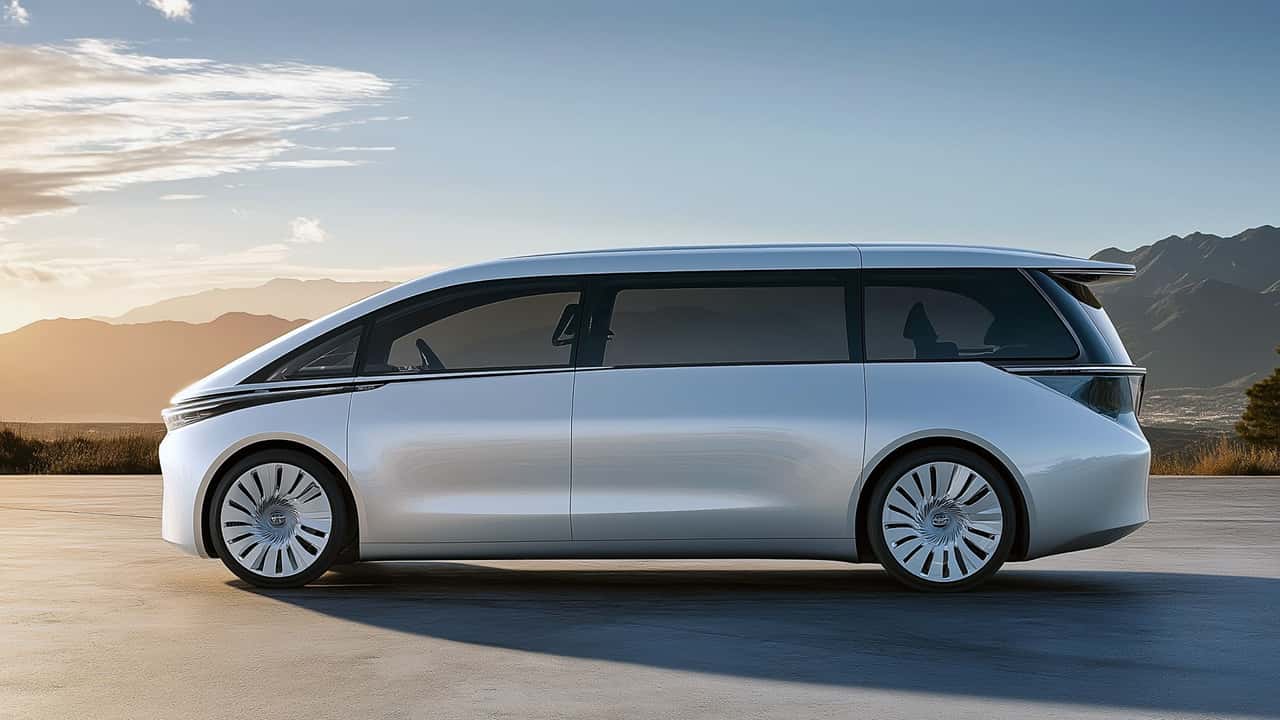
Toyota’s EVs haven’t been among the best on the market, but a practical, battery-powered people carrier might change that, especially if it has a bold design. It will likely be designed to remind of the 1990s original, whose unusual rounded design may have polarized opinions when it was new, but today it might serve as the basis for a cool retro-futuristic design, something like the transformation of the classic LeCar into today’s sharp Renault 5 electric hatch.
Toyota created the original Previa as a global vehicle, which will likely remain the case with the new model. Even though it was discontinued in the U.S. in 1997, the Previa continued to be sold in other markets. It received a second generation in 2000, which lost some of the original’s roundness and its mid-engined layout, but it remained a boldly-styled minivan. The third-generation model arrived in 2006 and it remained in production until 2019.
What they all had in common was their very slanted nose and aerodynamic profile, with the most significant difference to the second and third generations being their more upright rear. Toyota will likely integrate this same desire for aerodynamic efficiency into the new model’s design, making a lot of sense in an age when streamliners seem to be returning.
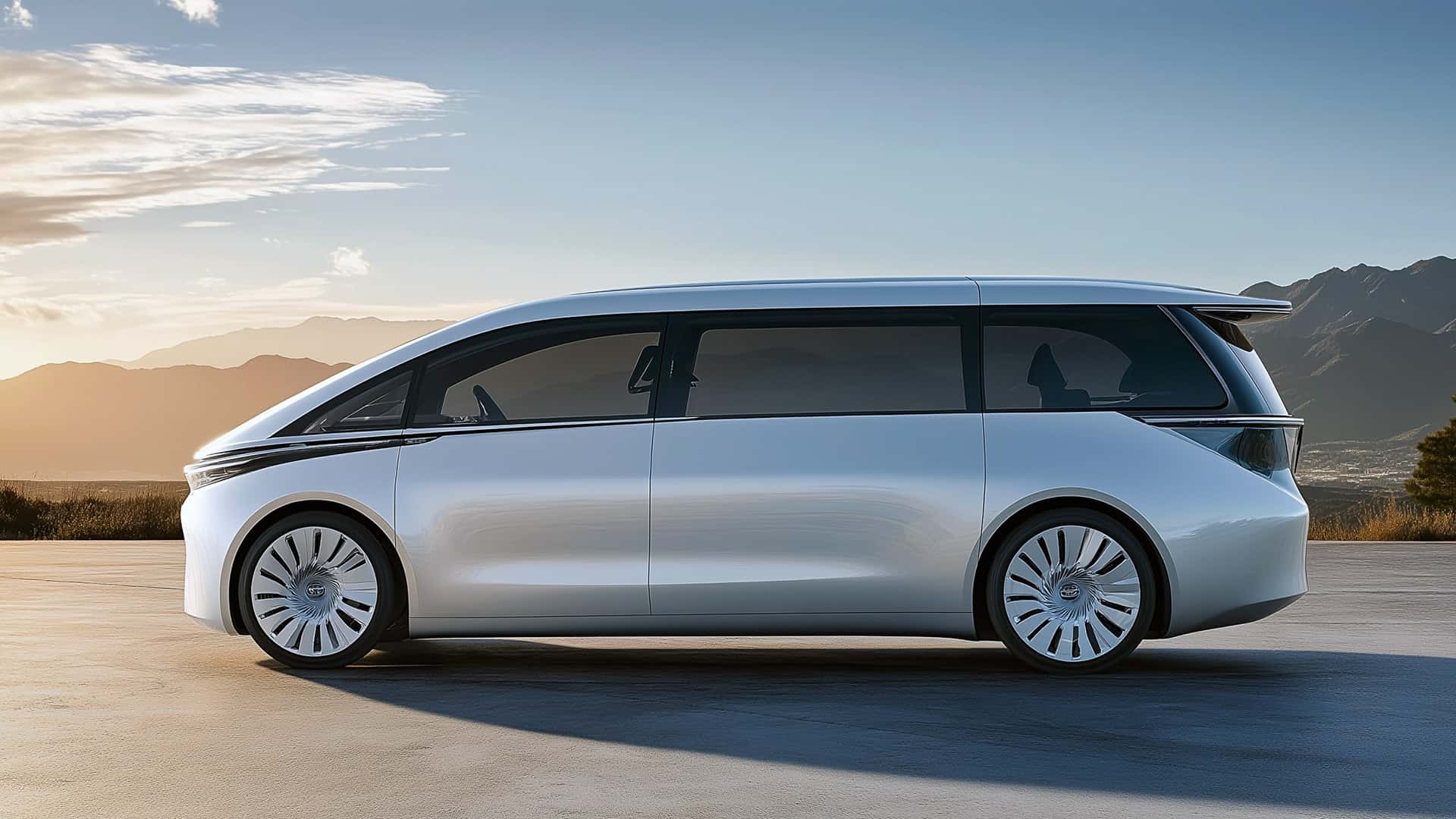
We tried to picture what a 2026 Toyota Previa might look like by using Midjourney AI, and you can see the resulting image at the top of this article.
Share this Story