Category: Reviews

2025 Tesla Cybertruck
 What the 2025 Tesla Cybertruck Does Right Competitive Range for Everyday Use The 2025 Tesla Cybertruck Long Range trim offers up to 350 miles of range, making it the most efficient option in the lineup. The All-Wheel Drive model provides 325 miles, while the tri-motor Cyberbeast delivers 301 miles. While these figures are competitive, they fall…

2025 Tesla Model S
 What the 2025 Tesla Model S Does Right Blistering Performance The 2025 Tesla Model S continues to deliver supercar-level performance in a luxury sedan package. The base All-Wheel Drive trim features dual electric motors producing 670 horsepower, allowing it to sprint from 0 to 60 mph in just 3.1 seconds. For those who crave even more power, the…

2025 FIAT 500e
 What the 2025 FIAT 500e Does Right Fashionable Design and Urban-Friendly Size The 2025 FIAT 500e stands out with its retro-inspired styling that pays homage to the original Fiat 500. Its circular headlights, rounded rear end, and grille-less front give it a distinctive look that’s both charming and modern. Despite its advanced electric…

2025 Tesla Model X
 What the 2025 Tesla Model X Does Right Blistering Performance The 2025 Tesla Model X continues to deliver astonishing performance for a midsize SUV. The base All-Wheel Drive trim features dual electric motors producing 670 horsepower, allowing it to sprint from 0 to 60 mph in just 3.8 seconds. For those who crave even more power, the Plaid trim…

2025 Tesla Model 3
 What the 2025 Tesla Model 3 Does Right Performance That Excites Tesla’s reputation for delivering thrilling performance is alive and well in the 2025 Model 3. The lineup now consists of three trims: Long Range Rear-Wheel Drive (RWD), Long Range All-Wheel Drive (AWD), and Performance. Each offers a unique driving experience: Long Range RWD…

2025 Chevrolet Malibu
 The Chevrolet Malibu has been a staple in the midsize sedan market for decades, but its time is coming to an end. The 2025 Chevrolet Malibu marks the final model year for this classic sedan, as General Motors plans to discontinue production after this year. While the Malibu isn’t as competitive as it once was, it still offers a smooth ride…

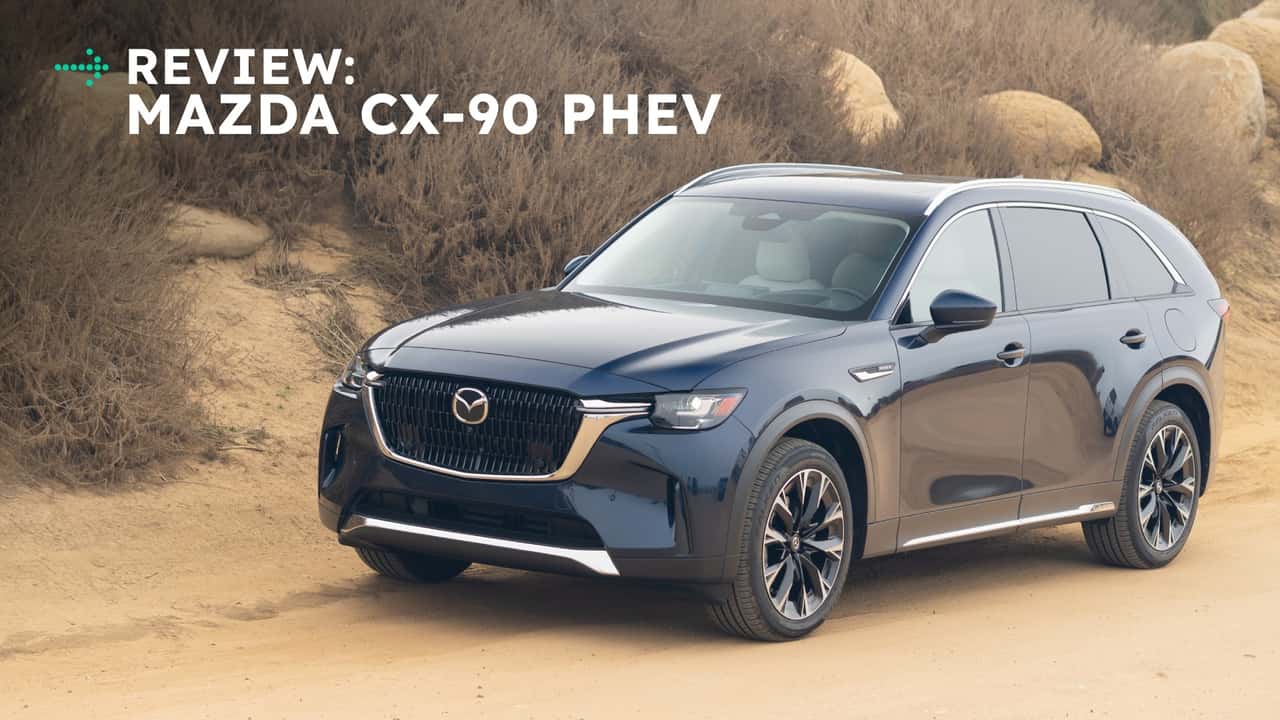
The 2025 Mazda CX-90 PHEV Isn’t Great, Because Making Hybrids Is Hard
When I wrote that making a plug-in hybrid is a lot harder than you think, Mazda was on my mind. The company is struggling to electrify, in part because it’s small and only has so many resources, but also because of how central lightweight, affordable cars are to its identity.
But as Mazda faces the same tightening emission standards and consumer preferences that other brands have dealt with, it’s trying the same solutions: Hybrids. As the CX-90 and CX-70 plug-in hybrids (PHEVs) show, that’s easier said than done.
The company’s first U.S.-market plug-in hybrids got off to a rocky start. Teething issues with the early CX-90 PHEV in 2024 prompted journalist complaints (especially about its transmission), consumer headaches and a spot on Consumer Reports’ “Least Reliable SUVs of 2025” list.
Like I said: making a great hybrid is tricky business. While making a compelling EV is hard enough, first-time hybrid designs have to mesh two disparate power sources in a way that feels natural to the consumer. Get it wrong, as Mazda did, and the result is herky-jerky at best, and unreliable at worst.

13
Source: Mack Hogan/InsideEVs
But the company has done a lot of work to fix this problem. It’s updated its PHEVs and refined their tuning, making them nicer to drive and, ideally, better suited for long-haul ownership. I sampled both to find out if Mazda has ironed out the kinks.
(Full Disclosure: Mazda loaned me both a CX-70 and a CX-90 for this review. Both vehicles arrived with a full tank of gas.)
I came away with mixed impressions. Mazda certainly has improved its hybrid system, yet the CX-90 and CX-70 themselves are not vehicles I would recommend.
2025 Mazda CX-90 PHEV Specs
Base Price
$51,400
As-Tested Price
$59,405
Engine
2.5-liter inline-four + one 68 kW electric motor
Battery
17.8-kWh lithium-ion
Efficiency
56 MPGe
EV Range
26 miles
Charge Time
1 hour, 30 minutes (Level 2, 20-80%)
Drive Type
All-wheel drive
Output
323 hp / 369 lb-ft
Towing
Up to 3,500 lbs
Weight
5,243 lbs
Driving experience
It may be confusing that I’m talking about the CX-90 and CX-70 as if they are the same vehicle. But they are.
With less budget to create a full-fledged lineup of SUVs than its competitors, Mazda opted for an odd strategy. It cut the third row out of the CX-90 and started selling it as a separate model. Bizarrely, the company dropped the base trim, too, so the CX-70 comes better equipped but with a higher starting price than its three-row twin: $51,400 for the base CX-90, $55,855 for the better-equipped CX-70.
Both the CX-90 and CX-70 are long, wagon-shaped SUVs. (CX-90 pictured).
Photo by: Mack Hogan/InsideEVs
For simplicity’s sake, I’m going to focus on the CX-90. They drive exactly the same, and if you’re buying something the size of a three-row SUV, you might as well get three rows.
Regardless, you’re going to be piloting something ginormous. And while Mazda has long enjoyed a reputation for making fun-to-drive cars, it can’t outsmart physics. A CX-90 PHEV weighs 5,243 pounds, and you can feel all of them. On a switchback mountain road, it’s not a fun thing to drive, even if it handles securely. Mazda has tried the old trick here of making the steering extra heavy to make it feel “sporty,” but there’s no feel there.
There’s also too much weight to manage, and the car’s attempt to blend electric propulsion and internal combustion occasionally falters, making it hard to drive smoothly. I blame the transmission. The eight-speed automatic has been the subject of plenty of debates, customer issues and technical service bulletins to address issues with it. It’s better than it once was, and mostly fine around town, but it’s not smooth enough to make the driving experience pleasant. (Mazda did not reply to my request for comment on the CX-90’s transmission issues.)
Photo by: Mack Hogan/InsideEVs
The engine is also gruff-sounding when you work it hard, and it sometimes revs higher than you’d expect given the load.
Even the driver aids get in the way of a smooth experience, especially on back roads. There are multiple layers of land-departure mitigation, and even after turning two such systems off, I still found the car nudging me around on windy roads.
In highway driving, the CX-90 was better. Yet it’s still stiffer than other three-row SUVs, so it’s not exactly a cushy cruiser. That’d be ok if the reward was a truly great driving experience, but for such a ho-hum SUV on backroads, I’d expect a more supple cruiser.
Range & Efficiency
The CX-90 can go 26 miles on its 17.8 kilowatt-hour battery alone on the Environmental Protection Agency’s cycle, per Mazda. I believe it. That roughly tracks with what I experienced, though you’ll blow through your miles quickly if you’re on a high-speed freeway in EV mode.
Unfortunately, getting more granular on efficiency is challenging given the information available to the driver. Mazda shows miles per gallon and miles per kilowatt hour on the same display, but by nature as one goes up the other falls. If your battery is depleted, you’ll burn up a bunch of fuel while getting a bajillion miles per kWh. In EV mode, that reverses.
My CX-90’s efficiency screen.
Photo by: Mack Hogan/InsideEVs
On balance, the EPA cycle says the CX-90 will get 56 miles per gallon equivalent (MPGe), factoring in the electric system. That’s a tick worse than you’d get in a Volvo XC90 plug-in, but acceptable. In general, the value proposition will depend more on your commute distance than the CX-90’s efficiency. If you go less than 20 miles a day and can charge at home, it should be all-electric most of the time. If you have a longer commute and don’t take a crazy number of road trips, consider electric options.
Interior
A spirited driving experience is not the main selling point for a family SUV. You know this, I know this. I wish Mazda did. Because not only is the CX-90 PHEV just-ok to drive, it’s also got a weird interior for its role.
It makes a good impression, sure. The interior looks great, especially in lighter tones, and everything feels premium. The seat surfaces are nice and the plastics are high-quality. Yet when it comes to usability, Mazda has always felt out of its depth making larger vehicles. The company just doesn’t do a great job of turning more space into usable compartments and features.
The interior certainly looks nice.
Photo by: Mack Hogan/InsideEVs
Take the dashboard and center console. There’s a spot for your phone on the wireless charger, two cupholders and that’s it. There’s nowhere to throw the keys or your wallet without setting off the metal-detecting fault light for the wireless charger—which never seems to stop blinking. The cupholders are too small for a bottle, and the door panels aren’t great. The center console is small, and there are no additional cubbies.
That motif of poor usability continues throughout. Whether you opt for the CX-90 with three rows or the CX-70 with two, you won’t get a flat load floor. I’d likely blame the switch to a rear-wheel-drive architecture, an outlier in a segment that has gone front-wheel-drive-based for packaging reasons. That may also explain why the third row is cramped, and not a realistic option for many adults beyond quick errands.

The seats fold down, but the resulting load floor slopes up to the second row of seats.
Photo by: Mack Hogan/InsideEVs
Sure, the CX-90 still has plenty of space. You’ll hardly find a modern three-row that can’t fit an apartment’s worth of crap in the back. But with 14.9 cubic feet of space behind the third row and 40.0 cubic feet behind the second, the Mazda manages to be toward the back of the pack when it comes to hauling either passengers or cargo. That battery has to go somewhere, I suppose.
Infotainment, Tech & UX
The Mazda CX-90 supports Apple CarPlay and Android Auto. This concludes the praise I will be giving it in the infotainment and tech sections.
The CX-90’s rotary controller takes up a lot of space, and I didn’t like using it.
Photo by: Mack Hogan/InsideEVs
The second car I ever reviewed was the then-new 2017 Mazda CX-5, and its technology felt outdated then. Eight years later and using broadly the same infotainment system, the CX-90 is unacceptably dated for a flagship product that debuted last year.
The entire system is run on a short and wide 12.3-inch infotainment screen. It is a touch screen, though you’d hardly know it. Touch controls work when you are using smartphone projection, and also when the car is stopped. Any time you’re in motion or in Mazda’s native system, you’re forced to use a rotary clickwheel. Think 2013 BMW iDrive, but less sophisticated.
The awkwardly shaped screen distorts the image from the rear camera. Look how much of the car’s own license plate you can see.
Photo by: Mack Hogan/InsideEVs
Navigation using the built-in system is, therefore, essentially unusable. The only way to input text is by using its rudimentary voice-control system or the rotary controller. All letters are laid out alphabetically around a circle, and you have to rotate around to click one at a time. That’s already indefensible, but you can’t even use it to find businesses or parks. You have to use a 2010-esque “POI search” where you refine by category first. Was the park I was looking for in sports and activities, government or outdoor? The answer is: Who cares, the Mazda couldn’t find it anyway. At least searching took a while!
The odd aspect ratio of the screen also means the rearview camera has a bizarre aspect ratio, stretching the whole field of view unnaturally and making it tough to judge distances. Charging and efficiency info is spare and hard to parse. The digital gauge cluster is also, in theory, customizable, but you get almost no choices for what to put there.
It’s all just too dated, too sloppy and too annoying. I understand that technology is not the core part of Mazda’s identity—I’ve owned a few Miatas, and recommended plenty of CX-5s. But the company still needs to find a way to take software far, far more seriously if it wants to exist in 10 years.
Photo by: Mack Hogan/InsideEVs
Safety & ADAS
The CX-90 comes standard with adaptive cruise control, blind spot monitoring and forward collision braking. It also offers lane keeping, though the system was not particularly sophisticated. And given the weird jargon in the Mazda menus, it was not particularly easy to turn it off.
The CX-90 received a five-star overall safety rating from the National Highway Traffic Safety Administration, with four stars for its overall performance in front crash tests. The CX-90 is an Insurance Institute for Highway Safety Top Safety Pick+, that organization’s highest honor.
Pricing & Trims
The CX-90 PHEV starts at $51,400, far above the $39,500 starting price of the standard six-cylinder CX-90. Both numbers include delivery. But PHEVs come better equipped: Even the base Preffered model comes with leather, a moonroof, heated front seats and all the safety stuff.
Step up to the $56,355 Premium Sport version and you get a panoramic moonroof, 21-inch wheels and stop-and-go support for the adaptive cruise control system. The $59,405 Premium Plus version—which I tested—gets nicer leather, second-row captain’s chairs and cooled front seats.
There are no major option packages, but most of the colors cost an extra $595.
Photo by: Mack Hogan/InsideEVs
Verdict
That leaves us with two questions. Do I recommend the CX-90 in general? And: Is the plug-in hybrid worth the extra cost? On both counts, I have to say not really.
The CX-90 is designed to be a family hauler, and by most metrics, it’s the worst in its class at hauling families. It has a bad third row, a bad cabin layout with not enough small-item storage and a small cargo hold for its class. Its interior looks nicer, but it does not feel designed for the rough-and-tumble life of small kids and pets. Its technology is unacceptably behind the times, and its value proposition isn’t great.
That value proposition gets worse when you step into the $50,000 PHEV, a product that isn’t smooth enough to be any company’s flagship. It may save you some gas money but—unless you can get the tax credit through the leasing loophole, which is likely to go away—you probably won’t make your money back before getting rid of the vehicle. Buyers looking for an electric option are better off with a Kia EV9, while hybrid buyers should probably stick with a Toyota Highlander or Hyundai Santa Fe.
Like I said: Making a good hybrid is hard. Mazda learned some hard lessons with its first attempt here in the U.S., and I’m sure it’s next generation will get better. But until the company refines the CX-90’s powertrain and wholly replaces its ancient tech suite, you should steer clear.
Contact the author: Mack.Hogan@insideevs.com.
Share this Story

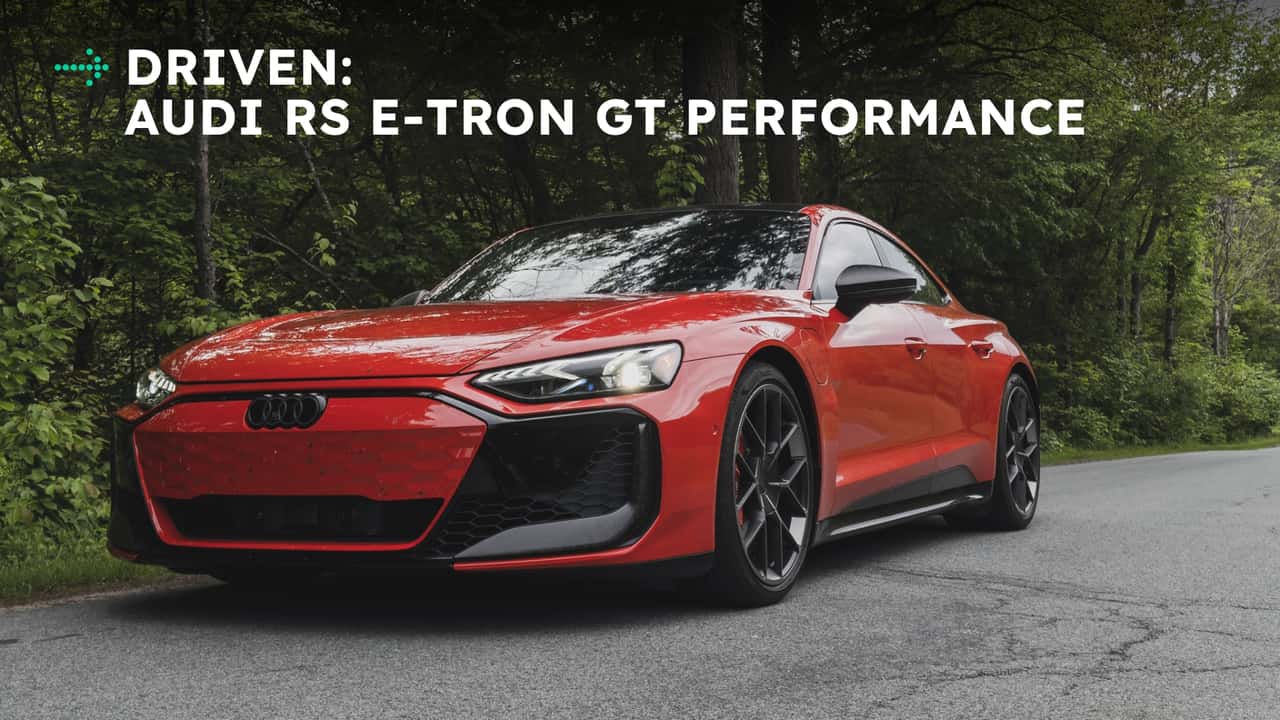
The 2025 Audi RS E-Tron GT Is A Nail In The Coffin For Gas Performance
I keep a mental list of the fastest cars I’ve ever driven. It’s not a very lengthy or detailed one, just an informal ranking of the best of the best when it comes to speed.
The Bugatti Veyron was at the top of the list for a long time. I was also fortunate enough to drive a Lexus LFA once; it’s definitely on there. So is the Porsche 911 Turbo S—specifically, the 991 generation of that car, but any Turbo S can ruin a supercar’s day. Oh, and the Nissan GT-R Nismo. That could always take down the best of the best, even when it had been on sale long enough to buy its own cigarettes.
But a funny thing has happened over the past few years as I’ve shifted to covering electric vehicles. That mental list keeps getting reset—and in some ways, it almost doesn’t matter.
Despite a pervasive myth to the contrary, nearly all EVs are quick, and just about every EV is going to be quicker than its gas-powered equivalent. The BMW i5 M60 is better than the current M5. A Ford Mustang Mach-E GT will outclass pretty much all of its V8 cousins. My dual-motor Kia EV6 is quicker than any gas-powered car I ever owned, and it’s not even an EV6 GT.
Hell, even a humble electric Volvo can pack 400 horsepower these days and isn’t to be messed with at the stoplight. And none of those cars are two-door supercars; they’re often just ordinary sedans and crossovers that anyone can live with.

2025 Audi RS E-Tron GT Performance
Photo by: Patrick George
So the fact that America these days seems dead-set on backsliding to gas-powered cars, with some brands happy to go along for the ride, feels like a step in the wrong direction for countless reasons. Cleaner air is one of them, certainly. So is technological competition.
But so is performance. Let’s be honest: in the race for speed, gas power has already been made irrelevant.
Few cars prove that more than Audi’s heavily updated RS E-Tron GT. And after a few days with one, I’m not sure why anyone is supposed to care about gas-powered performance cars anymore.
(Full Disclosure: Audi sent me an RS E-Tron GT to test for a week.)
2025 Audi RS E-Tron GT Performance
Photo by: Patrick George
Audi’s E-Tron GT has always kind of lived in the shadow of its close relative, the Porsche Taycan. I don’t really know how fair that is, but for the 2025 model year especially, it deserves to be considered and lauded in its own right. The American E-Tron GT lineup is now down to just two models: the S E-Tron GT, with “just” 670 horsepower, and the car you see here, the RS E-Tron GT Performance.
Big name, but it comes with a lot of car. Most of the time, its 105 kilowatt-hour battery sends 818 hp to all four wheels. But when launch control and its Boost Mode are engaged, that jumps to 912 hp—making it the most powerful Audi ever, and with more juice than all but three of the top Taycan trims.
2025 Audi RS E-Tron GT Performance
Photo by: Patrick George
It’s an absurd amount of power, really, and one that exceeds many supercars. But make no mistake: it is one. Even if it has four doors and a surprisingly cushy back seat (albeit one that’s pressed for headroom and legroom), the E-Tron GT is long, low and wide. From some angles, the design even evokes the old R8 supercar, or even the TT sports car, and I still consider myself a fan of both. There’s one big downside: how did Audi let Porsche get all the wagon versions? What an oversight. This thing deserves an Avant variant.
Like the Taycan, the E-Tron GT received significant upgrades for 2025. Charging speeds are now at a class-leading 320 kilowatts, so it’ll go from 10% to 80% in just 18 minutes, according to Audi. The steering, adaptive air suspension, front and rear motors and more have all been upgraded.
You even get an impressive 278 miles of EPA-rated range, which read as high as 290 miles on a full charge at my house. That’s exceptionally good for its level of performance.
2025 Audi RS E-Tron GT Performance
Photo by: Patrick George
You don’t see big improvements everywhere, of course. I rolled my eyes after I laid them upon Audi’s last-generation Multi-Media Interface (MMI) system, which has been thankfully replaced by Android Automotive OS-based software on newer EVs like the Q6 E-Tron. MMI is fine enough here, but the graphics, speed, menus and overall experience feel far from cutting-edge.
The front driver-facing display is highly customizable, which is a plus. So are the paddles on the steering wheel that let you adjust regenerative braking—albeit without true one-pedal driving, unfortunately.
2025 Audi RS E-Tron GT Performance
Photo by: Patrick George
2025 Audi RS E-Tron GT Performance
Photo by: Patrick George
2025 Audi RS E-Tron GT Performance
Photo by: Patrick George
But here’s the thing: if you get an E-Tron GT, you’re in it for the speed. And that’s where you’re really getting your money’s worth.
The RS E-Tron GT Performance mixes comfort and outrageous performance perhaps better than any car I’ve tested before. Yes, really. It starts with that air suspension: in the standard Comfort mode, where I was content to leave it nearly all of the time, the ride is impeccably smooth over any type of pavement without sacrificing even an ounce of handling excellence. You can dial up the firmness with the RS driving modes, of course, but I seldom wanted to.
Pardon the bugs.
Photo by: Patrick George
Not when the car can handle like it does. And the handling prowess of the RS E-Tron GT Performance reset my understanding of physics. The car just takes any corner at any speed you want—no drama, no slippage, no understeering. It just goes. On an empty, curving highway, you can bank at far over the posted speed limit with utmost confidence, as if it were designed for every road to be the Ehra-Lessien test track.
2025 Audi RS E-Tron GT Performance
Photo by: Patrick George
This is where electric power presents a distinct advantage. Torque vectoring—the act of independently distributing power to individual wheels—can happen much, much more quickly here than on a gas-powered car. There, some system of processors and sensors would have to tell an engine to adjust its output to deliver the optimum amount of power to each wheel. On an EV, that process happens much more quickly, bordering on instantly.
As InsideEVs contributor Peter Nelson, who is a better and more track-proven driver than I’ll ever be, put it recently: “it completely threw my concept of cornering grip and G-force through a loop.” I would add that this thing feels built for some other planet than ours, something with different levels of gravity or physics; it is too good for the laws of nature we must abide by here on Earth.
And that’s just the handling. In a straight line, I don’t see why anyone would care about V8 or V10 or V12 power after experiencing this car, save for some fondness for engine sounds. The RS E-Tron’s acceleration is utterly crushing. It uncorks that full power gradually, as if to make sure it’s what you want, but then it makes your stomach lurch as it silently shoots up to near triple-digit speeds.
2025 Audi RS E-Tron GT Performance
Photo by: Patrick George
Like the proper grand tourer it is, it never feels out of control. If you want, you can drive it as sedately as any other Audi sedan. But the power is stunning when you want it. Hit that steering wheel button that says “BOOST” and any sense of decorum gives way to utter violence: 10 seconds with a graphic countown where you get the full 912 hp.
It doesn’t accelerate in this mode, so much as it ticks up to highway-and-beyond speeds seemingly faster than your brain can handle, all while you desperately keep your eyes on the road. 74. 85. 96. Tick, tick, tick. You will run out of road, or courage, or common sense before that 10 seconds is up. Most of the time, I called it around four.
Oh, and do yourself a favor and pin your head back to your seat before you try this. I didn’t, and my neck is still a bit sore today.
2025 Audi RS E-Tron GT Performance
Photo by: Patrick George
So with zero to 60 mph happening in a claimed 2.4 seconds—and Motor Trend’s instrumented testing got it down to 2.3—I have to reset my list again. This electric Audi is now as quick, if not slightly quicker, than that Veyron. And that car, at the time, cost $2.35 million.
You pay an immense price for all the speed on this Audi, too. It’s not $2 million, but it is $190,690 with options. Then again, that undercuts a lot of supercars in the $300,000 range and well beyond, all with zero tailpipe emissions and probably better handling. (Oh, and depreciation? I’m counting down the days.)
I suppose there are plenty of people who would welcome a return to fossil-fuel power. But those people just haven’t had seat time in a car like this yet. For me, the future of performance has never been more obvious—and I know that my list will have to be updated again soon enough.
91
Source: Patrick George
Contact the author: patrick.george@insideevs.com
Share this Story

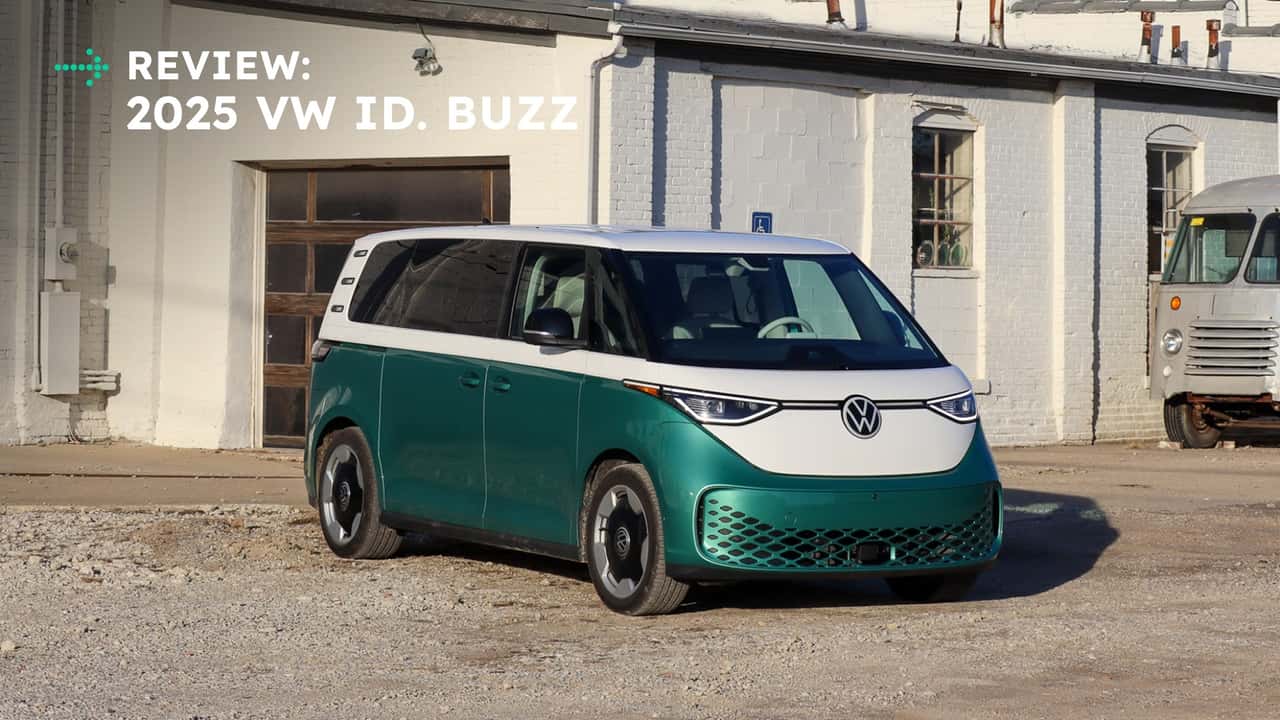
The 2025 VW ID. Buzz Proves That Nostalgia Is A Hell Of A Drug
The world has been stuck in a nostalgia rut since I was a young adult. That’s especially true in the U.S. There have been too many times when I’ve been on the internet, stumbling upon an endless scroll of click-farming channels with titles like: “Only 90s (or 80s or 70s) babies remember.” Like flies to a bug zapper, these pages full of old commercials, TV show openings, attract vast swaths of internet commenters, who are addicted to reminiscing about the past and agonize over how much nicer the world was back then. The addiction to nostalgia is a very real phenomenon in today’s culture. Every other pop song is just an interpolated sampling of some other more famous song from not that long ago. Hell, Marvel has rebooted Spider-Man’s origin story four times now.
The thing is, though, nostalgia can cover over sins, convincing the audience and distracting them from severe flaws, fooling them into thinking a piece of media is better than it really was. I thought that the rebooted Judge Dredd movie was a fun ride, but the remade Ghostbusters felt like a cheap cash grab riding on the coattails of nostalgia. Cars aren’t immune to this either. A lot of big brands have reached into the nostalgia toolbox to varying degrees of success. Some, like the Ford Bronco, are generally pleasant and well-resolved experiences, while others have been accused of being a low-effort way to fool car shoppers into buying a not-so-good car.
The Volkswagen ID. Buzz’s raison d’être is clearly designed around nostalgia. But the cynic in me, the same guy who isn’t fond of the VW ID.4, needed to know what way the ID. Buzz swung. Would it be a slimy cash grab? Did Volkswagen just throw some seats into an electric version of a European-style commercial van and hope people would be dumb enough to shell out $70,000? Or is it an earnest attempt to finally realize the dreams of those who placed the original Type 2 Transporter on a pedestal?
A week with a 2025 single motor two-toned unit revealed that the answer is a little more complicated than the dichotomy I’ve set up here. The ID. Buzz is a likeable electric car, and has its merits. But it has real quality of life issues that could cause some hopefuls to take off the nostalgia goggles, see the van for what it is, and keep their money in their pockets.
2025 Volkswagen ID.Buzz
As-Tested Price
$66,040
Base Price
$61,545
Battery
91 kWh (86 kWh usable)
Charge Type
CCS1
Charge Time
10-80%, 26 minutes
Efficiency
83 MPGe
EV Range
234 miles
Output
282 horsepower
Seating Capacity
7
Drive Type
RWD

43
Source: Kevin Williams/InsideEVs
It can be hard for Americans to remember the whole van segment of the U.S auto market, since we don’t have that many passenger models left. I’m not talking about minivans, but full-sized vans. I would know; Maybe you can call me the van vagrant, but I have explicit memories of learning how to drive on my mom’s V6 Ford Econoline, her last one being a 2000 model year in her 30 years of van driving. Any time someone would try and get her into a minivan, she’d go into a huge tirade about how minivans aren’t the same as vans.
She was right. The ID. Buzz is often compared to minivans like the Honda Odyssey or Toyota Sienna, but it feels much larger than those vans. It may be just as wide and slightly shorter than most minivans, but it’s 5-6 inches taller than most of them.
Photo by: Kevin Williams/InsideEVs
Because of this, ergonomically, the ID. Buzz has more in common with traditional true-van shapes like Ford Transit or Ram ProMaster. Whereas a minivan’s low floor and relatively low driving position make for ease of entry, it almost feels like you’ve got to climb a flight of stairs to get behind the wheel of an ID. Buzz. That ergonomic difference affects the whole driving experience. The driver-steering wheel relationship is more upright, the wheel’s column is a bit more bus-like and you feel somewhat close to the hood, even if the ID. Buzz’s long dashboard and faux-forward control van design is somewhat faked.
Still, when you’re up there, the ID. Buzz is remarkably pleasant and easy to drive, despite its large girth and very high driving position. Really–I found myself making up reasons to get behind the wheel of the green colored, two-tone large van. It’s not a sports car, and I didn’t expect sports car things from the van. But yet, the ID. Buzz tries its hardest anyway, and low-key succeeds. It definitely shocked me, and probably sickened the poor passengers that took down a twisty back road.
Photo by: Kevin Williams/InsideEVs
Throw the ID Buzz into a corner, and you’ll be rewarded with a remarkably flat and exceptionally mild-mannered cornering attitude for such a tall, heavy van. The van holds on tight and the steering is surprisingly sharp, even if the ratio is slow for truly sporting driving. Still, it handles better than I expected. The suspension damping is solid, with no weird bounce or bumbling under aggressive driving; it’s kind of a treat.
That driving prowess doesn’t come at the expense of ride comfort, either. I would describe the ID. Buzz’s ride as supple and sophisticated, no doubt due partially due to the ID. Buzz’s sophisticated multilink rear axle. It handily spanks the solid rear axle designs found on its ICE (and EV) full-size passenger van competitors like the Ford Transit or Ram Promaster. The ID. Buzz really can walk and chew gum at the same time; it doesn’t feel overly firm, but not wallowy and mushy on the road, either.
My tester was a single-motor, RWD unit with 282 horsepower. Initially, I was worried that this wouldn’t be enough power to move the ID. Buzz’s roughly 6,000 pounds with any authority, but I was glad to be proved wrong. The ID. Buzz feels quick off the line, and it has more than enough power for freeway driving, although I do think that my tune would change a bit if I drove the van fully laden. Still, in the context that I drove the car, I don’t think I would need the dual-motor all-wheel-drive setup’s extra power. Unless you’re in search of some extra winter traction or just want the roughly second-and-a-half improvement in 0-60, the single-motor van is likely just fine.
Photo by: Kevin Williams/InsideEVs
The only real gripe I had with the ID. Buzz’s driving experience is that there’s no true one-pedal driving. The van does not have any adjustment in its regenerative braking settings aside from sticking it in “B”, which won’t bring the vehicle to a full stop. For the ICE convert, they probably won’t notice. For the EV veteran like me, I found this to be a bit of an oversight.
All U.S.-market VW ID. Buzz models come with the same 91 kWh (86 kWh usable) battery. Curiously, the range difference between the AWD dual motor and the RWD single motor is minimal. My RWD tester was rated for 234 miles, only three miles more than the AWD model.
Yet, the on-road, real-world efficiency of the ID. Buzz wasn’t too bad for such a big car. This press loan took place in Ohio, during the tail end of winter, which would affect the van’s efficiency. Most of my time with the car was spent at or slightly above freezing temperatures. The van averaged 2.6 -2.7 miles per kWh in fairly mixed freeway and city driving. Given these figures (and based on a trip from Detroit to Columbus), the ID. Buzz was on track to hit about 220 miles from flat to full.
Photo by: Kevin Williams/InsideEVs
That may not be enticing to some readers and buyers who see headlines and marketing materials that claim 300 miles or more from smaller cars, but I do think it’s probably enough for most buyers. A three-row Kia EV9 will beat the ID. Buzz in all but its base trim, though.
Volkswagen says the ID. Buzz will charge from 10-80% in 26 minutes from a DC fast charger that can meet the van’s max charging speed of 200 kW. Sure enough, the ID. Buzz did the sprint in 26 minutes and 13 seconds, right on the money for VW’s claims. Volkswagen says the ID. Buzz can go from flat to full on Level 2 AC power in about 12 hours, provided that the van is connected to an outlet that can make full use of its 11kW onboard charger. Thankfully, the ID. Buzz had no issues starting or ending any charging sessions.
Photo by: Kevin Williams/InsideEVs
The ID. Buzz’s battery preconditioning can even be activated manually and has a timer as to when it’ll be at optimal temperature for maximum speed. That’s a nice feature for several reasons; it gives a lot of transparency to the driver, managing expectations as to what the car can or can’t do when it connects to the DC fast charger. Also, since it’s not necessarily tied to the car’s GPS, it can be turned on and off manually. This is nice for drivers who may not want to use the in-car route navigation or planning software but still want maximum charging speeds. Now that I’m used to living with an EV, I don’t use my in-car GPS at all, because I know how to navigate around my city.
The interior of the ID. Buzz might be one of its biggest points of controversy. At least, it was for me and most everyone I came into contact with.
The ID. Buzz might be the most spacious electric vehicle on the market. This is one of the few vehicles on the market that can seat seven full-grown adults in actual comfort. No matter what seat in the house you pick, there’s an abundance of legroom in seats that feel both cushy and supportive. There are funky colored inserts on the doors and dashboard that make the van feel fun and airy. Mine didn’t have the optional glass roof, but I can only imagine the downright joyful interior ambiance that amount of extra light would have created.
Photo by: Kevin Williams/InsideEVs
Yet, this is where I realized that the car is really good at blinding its users with its charming design and nostalgic attitude. After about two days with the ID. Buzz, I noticed that the interior was kind of annoying. I thought I was nitpicking, maybe I was going for bad here, subconsciously wanting the ID. Buzz to be a half-assed nostalgia ploy. I had to take a step back and make sure I was staying objective, I didn’t want any misplaced cynicism to cloud my review.
But then, I carted a few other friends around in the ID. Buzz. They noticed things as well, completely unprompted.
An awkward moment with a friend and a medium-sized thermos revealed to me that there aren’t any cupholders for the second-row occupants. That’s a huge oversight for a van that’s built for family and friend hauling duty. We tried to place the bottle in what looked to be the third row cupholders–no dice. They are oddly shaped and very shallow; I almost wish they had omitted them entirely. The front island between the seats has cupholder-shaped alcoves in the top, but they offer no support. Turn a corner too quickly, and that hot drink will be all over your lap. I certainly made a mess out of a Tim Horton’s double-double after exiting the drive-thru and learning the center console cubby holes aren’t cupholders. The only two cupholders are the fold-out ones that take up a surprisingly high amount of real estate in the lower portion of the dashboard. There are bottle holders in the doors, too, but again: no support.
Photo by: Kevin Williams/InsideEVs
My tester also had the seven-passenger layout that includes a three-person bench in the second row instead of two captain’s chairs. There was no center folding armrest, which could be exhausting on a long trip. The six-seat version has built-in armrests, but still no cupholders.
There are other ergonomic quirks, too. Because of the ID. Buzz’s packaging, there’s a huge step up into the front seats. I’m fine with it, but I recognized that entry and exit for front seat passengers may not be easy for those with limited mobility. The second and third row seats don’t fold flat into the floor, and the trunk is small. The trunk can be made larger with its sliding third-row seats, but the false floor to make a flat load space isn’t adjustable, so there will be a large gap for all of your cargo to fall through. You can remove the third row, too, but not the second.
Photo by: Kevin Williams/InsideEVs
Perhaps this is just my thinking, but it’s a little odd that the ID Buzz is only available in six or seven-seat configuration despite its third row appearing to be wide enough to accommodate three passengers. Seems like a misstep for EV buyers in search of a truly family-sized van.
I’m also not a huge fan of the dinky cutout second-row windows. They don’t seem like they do much but add wind noise and turbulence to the cabin when they’re open, and like the ID.4, there is no dedicated switch to open and close them from the front. Volkswagen says they did this instead of a traditional roll-down to improve the van’s aerodynamics while still keeping the windows-down, open-air California vibes of the original bus. I’m not convinced by its solution. Like the cupholders, they feel a little too ad hoc for such an expensive vehicle. There were several instances when I thought I had closed them, only to learn that they were still cracked ever so slightly and increasing cabin noise. This is a common issue for ID. Buzz owners.
Photo by: Kevin Williams/InsideEVs
The interior plastics themselves are a mixed bag. They fit together nicely, but there are a lot of roughly-textured, hard and brittle materials around the cabin. The faux wood trim is some of the lowest-effort trim I’ve seen in a while. It looks like a low-quality JPEG was enlarged in Photoshop, printed out by a cheap inkjet printer on a sticker, and slapped on top of a piece of plastic. I’m being slightly hyperbolic, but my point is that this van was nearly $70,000, and it should be nicer than this.
Photo by: Kevin Williams/InsideEVs
Still, the car’s interior generally has a positive, bright and fun ambiance. I just don’t know if it’s fun enough for buyers to completely overlook these glaring quality-of-life issues. Practically any given minivan would be more accommodating to carrying passengers while having a nicer interior, even if they have less legroom.
The ID. Buzz is somewhat advanced, although probably average in the era of hyper-connected EVs and hybrid cars. My Pro S tester came with a 110-volt outlet in the front seat and a wireless charging pad on the dashboard. Practically every seat in the van has access to a USB-C charging port, too. It has wireless CarPlay and Android Auto, feeding music through a 13-speaker Harman Kardon stereo system. It also has a head-up display.
The most interesting feature is Volkswagen’s Park Assist Plus with Memory Parking. In this mode, the driver can program the van to memorize very specific parking maneuvers, like say, a tight driveway or rough road. Then the car can repeat the maneuvers. It’s definitely cool, even if I’m not sure who would need to use it.
The ID. Buzz’s infotainment uses the latest version of Volkswagen’s self-developed operating system. This interface has been the subject of a lot of criticism, rightfully so, but Volkswagen says that it has done a lot to make it work better.
Photo by: Kevin Williams/InsideEVs
The system is a lot better than when I first used it in 2021 on the Volkswagen ID.4. It still has more than a few cryptic menus, and each interaction requires one too many steps. I also found it annoying that the visual representation of the ID. Buzz in the menus was of the not-for-U.S. short wheelbase version; why not spend a little time and make that graphic look accurate to the car it’s installed in? It may seem minor, but small attention to the car’s UX are what can make it feel that much more special.
Still, I do think that as a whole, the interface is very much improved. Most interactions were speedy, and it was generally reliable, although I did have to completely reboot the system twice during my week when the sound system randomly went completely mute and would not play music from Apple CarPlay. The vehicle’s route planning is much improved, able to navigate to chargers (and alter the route if the vehicle doesn’t have enough charge). The ID. Buzz also supports plug and charge at Electrify America stations.
Photo by: Kevin Williams/InsideEVs
I tend to echo the thoughts of deputy editor Mack Hogan on the software experience, though. He felt that the Buzz didn’t have enough functions in the infotainment system that cater to the car’s purpose. I agree, this is a big van that could be used for family outings or camping. Where’s the camping mode? Or Netflix streaming? Or any number of fun little apps that are now common in new EVs? Why can’t you export power when the vehicle is off? It just seems like such a missed opportunity here, for a brand that sees the ID. Buzz as a flagship for its EV efforts, I wanted something more unique aside from its exterior styling.
The ID. Buzz has a full suite of safety features, including IQ.DRIVE with Travel Assist. It’s not a true hands-free driver assistance feature, but it can do automated lane keeping with assisted lane changes.
The ID. Buzz has not been crash tested by the National Highway Traffic Safety Administration or the Insurance Institute for Highway Safety. For what it’s worth, the European ID.Buzz has a full five-star rating by the Euro NCAP.
The ID. Buzz comes in five trims for 2025; S ($59,995), Pro S ($63,496), Pro S with 4 Motion AWD ($67,995), 1st Edition ($65,495) and 1st Edition with 4 Motion ($69,995). All vans are subject to a $1,550 destination fee.
My tester was a Pro S, with no glass roof, and a middle bench seat. The only option it had was its two-tone Mahi Green Metallic and Candy White paint job, for an extra $995. In all, the van stickered at $66,040 after destination fee.
Photo by: Kevin Williams/InsideEVs
Make no mistake, this feels like a lot of money, made worse by the fact that the ID. Buzz is made in Germany and, therefore ineligible for any federal-level tax credits. That also means prices could increase following new tariffs. A Kia EV9 is a little cheaper, goes further and will soon be eligible for IRA tax credits, assuming that they don’t disappear in the next few weeks.
The ID Buzz ain’t cheap, but then again, neither is any other big 6 or 7 seater in the EV space.
In a lot of ways, the ID. Buzz is the quintessential car for 2025. It’s a retro redux riding on its look and the fond, rose-tinted memories of its clientele who do not want the world to change from when they were teenagers.
Photo by: Kevin Williams/InsideEVs
The thing is, though, people are getting tired of nostalgia and remakes. The luster of Marvel’s movies is wearing off, and now people are criticizing the formulaic scripts and flat acting in some of the newer movies. Similarly, Volkswagen has teased the world with a reborn retro new VW bus since at least 2001. It’s finally arrived, at what I feel might be the tail end of a culture that’s starting to get tired of seeing the same handful of ideas reinterpreted. I don’t know if buyers have the bandwidth for this, especially since the execution isn’t perfect.
Yet, of the same token, I preach that people should buy cars that make them smile. Ones that have personality. The ID. Buzz has a lot of flaws that would keep rational buyers away, but I would be lying if I didn’t enjoy driving the van. I mean, I said that the Ghostbusters remake was a crappy ploy to get fans of the original into theathers, but I also liked watching it.
The ID. Buzz doesn’t have the best software. It can’t go the furthest. It’s nice to drive, but I’ve driven electric cars and crossovers that are nicer.
But it’s been a while since I’ve driven something that made me, and everyone else, smile so widely. For some buyers, that’s all they need to make their decision.
Contact the author: Kevin.Williams@InsideEVs.com
Share this Story

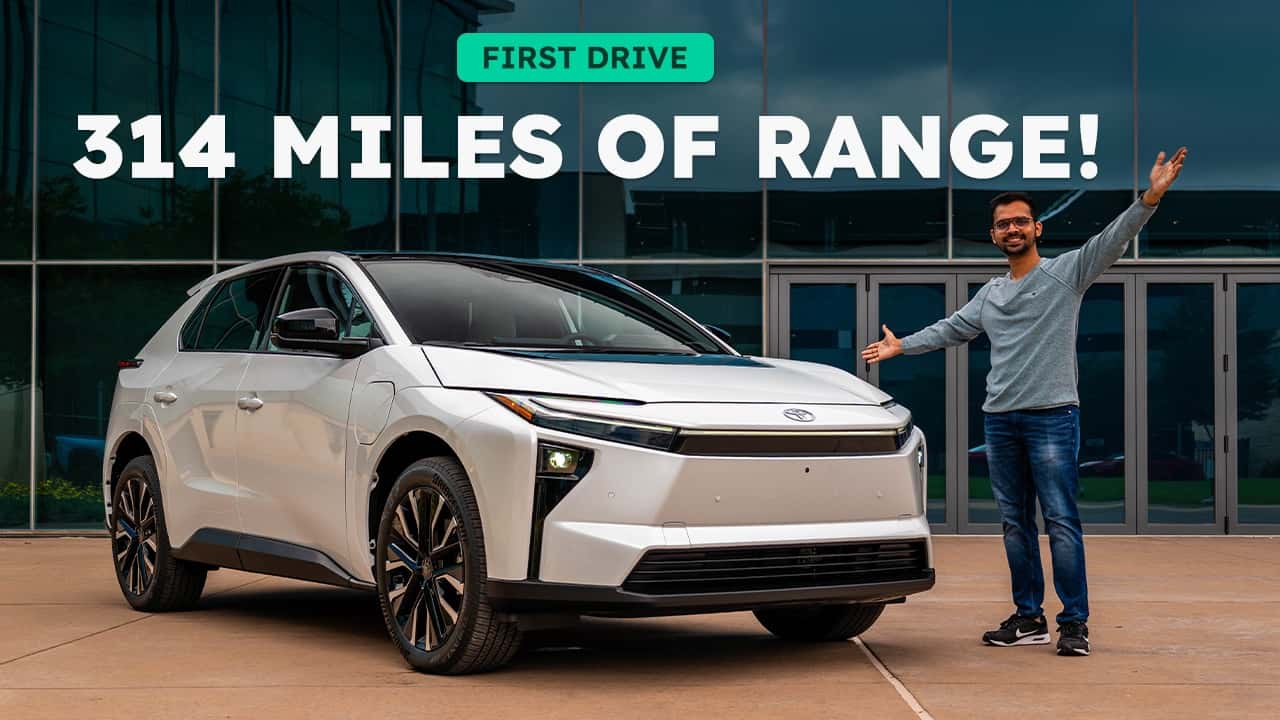
2026 Toyota bZ First Drive: The EV America Needs Right Now
Ask most people, and they’re already convinced that Toyota leads the way on electric vehicles. Unfortunately, this perception has been pretty far from reality.
Toyota’s electric vehicle offerings have been limited and middling at best. Here in the U.S., as competitors far and wide have expanded their EV lineups, it has made do with just the Toyota bZ4X for a long time—and everything that comes with that, from limited range to slow charging speeds and unimpressive software. But it must have done something right. The Japanese automaker sold more than 18,570 units of the bZ4X in the U.S. last year, nearly doubling its year-over-year sales.
Now, Toyota is giving the bZ4X a much-needed glow-up.

2026 Toyota bZ front three quarters 2
Photo by: Suvrat Kothari
That starts with a name that doesn’t sound like a Wi-Fi password. The bZ4X is now just the bZ. It gets major upgrades to performance, range, charging and amenities inside. After driving it near Toyota’s Plano, Texas headquarters last week, I found that this is the most enjoyable version of the vehicle yet. And it might even be the most fun Toyota without a Gazoo Racing badge on it.
More importantly, though, Toyota finally has a serious contender in the hotly competitive electric crossover market. And at a time when EVs are facing the worst political and economic headwinds, the bZ—and the broader EV line-up Toyota has in the pipeline—could play an important role in keeping America’s market alive. Here’s why.
(Full Disclosure: Toyota flew me to Texas last week to drive the 2026 bZ. The company paid for food and accommodations.)
2026 Toyota bZ Specifications
Battery
57.7 kWh/74.7 kWh
Charge Time
10-80% in 30 minutes (150 kW)
Charge Type
NACS
EV Range
236-314 miles
Drive Type
FWD/AWD
Speed 0-60 MPH
4.9 seconds (AWD), 8.0 seconds (FWD)
Output
221 hp (FWD), 338 hp (AWD)
Base Price
TBA
Seating Capacity
5
2026 Toyota bZ Range and NACS Charging
2026 Toyota bZ
Photo by: Suvrat Kothari
The current bZ4X is far from perfect. Its driving range maxes out at 252 miles on the EPA testing cycle. It also misses out on a key EV feature: its navigation system cannot locate charging stations along your route. As we noted in an InsideEVs test last year, it never got close to its maximum charging speed of 150 kilowatts.
For many buyers, these limitations can be dealbreakers, but the 2026 bZ addresses most of the prevailing concerns.
Toyota is now offering two battery options: 57.7 kilowatt-hours and 74.7 kWh. The smaller battery is only available on the entry-level XLE front-wheel-drive trim and delivers 236 miles of Toyota-estimated range.
Photo by: Suvrat Kothari
Both FWD and AWD versions I drove in Texas had the larger 74.7 kWh pack. The maximum manufacturer-estimated range on the FWD is now 314 miles, which puts it in the same league as the Tesla Model Y, Hyundai Ioniq 5 and Chevy Equinox EV. The all-wheel-drive version isn’t far behind at 288 miles. That’s all good company to be in.
While the peak charging speed is still capped at 150 kW, the improvements to the overall charging experience are substantial.
The bZ now gets the Tesla-style North American Charging Standard connector right from the factory, opening up access to tens of thousands of Superchargers across the U.S. It won’t charge at every Supercharger, but most will be compatible and the Toyota app will guide drivers to the ones that are available.
2026 Toyota bZ exterior
Photo by: Suvrat Kothari
Current Toyota and Lexus EV owners won’t be left behind either as the whole company moves to NACS plugs for new models. Existing customers will be able to purchase an official adapter later this year. Meanwhile, the updated bZ, C-HR, bZ Woodland as well as the Lexus RZ and ES will ship with their own adapters, giving drivers flexibility to charge at stations like Electrify America, EVGo and ChargePoint as well as the expansive Tesla network.
Toyota has also added battery preconditioning as standard across all trims. That’s a must-have for efficient fast charging in colder climates. It can be activated manually or automatically via the onboard navigation. The carmaker says it’s also improved the charging curve, allowing the battery to hold peak speeds for a longer duration.
The result is a 10-80% charge in 30 minutes. This isn’t segment-leading, but it isn’t bad, either. A Toyota engineer told InsideEVs in an interview that the company doesn’t expect most drivers to spend 30 minutes at public DC fast charging stations; they’re more likely to do quicker top-ups, and that’s where the bZ is now theoretically better.
I didn’t get a chance to test the range or charging speed during my limited time with the bZ, as is common with First Drive tests, but we’ve got that on our to-do list.
2026 Toyota bZ Performance
Photo by: Suvrat Kothari
Electrification is making new levels of performance more accessible to a wider audience. The 2026 bZ is the latest beneficiary of this trend. Toyota is now using upgraded electric motors with silicon carbide semiconductors which are both compact and lightweight.
The FWD trims now have an output of 221 horsepower (up from 201 hp). The all-wheel-drive models get a 50% power bump, with the net output increasing to 338 hp (up from 214 hp). Toyota hasn’t disclosed torque figures yet.
I drove both the FWD and AWD trims in Texas. The FWD version delivered power in a smooth, gradual way. Flooring the throttle gave me that familiar EV surge—for a moment—but that punchy acceleration I was hoping for was just not there. With a curb weight ranging from 4,057 to 4,453 pounds, the bZ is kind of heavy and its 221 horsepower won’t light your hair on fire. Still, it’s perfectly adequate for daily driving, highway merges or quick overtakes.
2026 Toyota bZ
Photo by: Suvrat Kothari
The AWD version is a different animal altogether. With 338 horsepower, Toyota claims it can sprint from 0 to 60 miles per hour in just 4.9 seconds. That means this electric family crossover will dust the GR86 in a straight line and it’s now within a second of the GR Supra. It’s also now more powerful than the Land Cruiser and among the most powerful Toyotas—only the Supra, Tundra and Sequoia with their turbocharged six-cylinder engines are more powerful. The bZ is also only about three tenths slower than the AWD Model Y.
On the road, the AWD bZ feels every bit as quick. The throttle is sharply tuned, delivering an instant jolt of acceleration that makes it tempting to turn city streets into traffic-light grand prix. I really had to exercise self-restraint here.
The needle climbs effortlessly and even the absurd 80 mph highway speed limits in Texas felt easy to breach behind the wheel of the bZ. The extra oomph does drive down the range, but 288 miles isn’t all that far behind rivals such as the Hyundai Ioniq 5 and Kia EV6.
One welcome addition are the paddles behind the steering wheel that let you toggle between four levels of regenerative braking. All four settings offer relatively mild regen but none will bring the car to a full stop. If you’re used to true one-pedal driving, you’ll notice its absence. Hopefully, Toyota can patch that in later with an over-the-air (OTA) update.
2026 Toyota bZ Ride and Handling
Photo by: Suvrat Kothari
It’s worth noting that these were pre-production prototypes, so Toyota may still be finalizing the ride and handling calibration. I think they could use some fine-tuning in the handling department.
The ride quality on the FWD version was overly soft. While the springs soaked up bumps well enough, the dampers struggled to rein in the rebound. Every road imperfection seemed to sneak into the cabin, giving the ride a floaty, unsettled feel. The AWD version, by contrast, felt far more dialed in with tighter body control, more confidence at speed and a noticeably more composed ride.
Still, both trims skew toward comfort in their suspension tuning, which isn’t surprising for buyers of this segment, many of whom are fleet operators and cabbies. The bZ requires more rotation of the wheel to make even small turns, which can feel a bit disconnected and sluggish, especially during quick maneuvers. Then again, I don’t expect bZ owners to be canyon carvers.
Still, I wish there were a GR Sport trim. With 338 horsepower on tap, the bZ has the power, now it needs the handling to match. A firmer suspension, sharper steering and more connected dynamics could transform this into a genuinely fun-to-drive EV. Toyota, if you’re reading this: If the new RAV4 can wear the GR Sport badge, there’s no reason the bZ shouldn’t.
Then again, the C-HR that’s expected to launch in early 2026 may end up the athlete in the electric family.
2026 Toyota bZ Interior and Technology
Photo by: Suvrat Kothari
The basic interior layout is similar to the old bZ4X, but it has now been festooned with soft-touch materials, a larger touchscreen, a more streamlined center console and a 64-color ambient lighting that give it a more upscale and minimalist look.
The touchscreen itself has grown from 12.3 inches to 14 inches. In my limited time with the car, the screen looked crisp, bright and felt responsive, but wasn’t nearly as snappy and lag-free as some other systems out there.
2026 Toyota bZ software
Photo by: Suvrat Kothari
On the plus side, it supports wireless Android Auto and Apple CarPlay. One notable difference I found in Google and Apple’s in-car systems is how they handle the initial connection. Android Auto requires an irritating number of steps to get going wirelessly. CarPlay pairs in seconds. My iPhone-toting colleagues were up and running while I was still fumbling through authentication prompts on my Pixel 9 Pro.
This may not be unique to Toyota, I’ve noticed it before, but it was more apparent this time because I drove different Toyotas back-to-back and had to reconnect my phone multiple times. Once set up, Android Auto worked flawlessly and a wired connection sped things up, but CarPlay still has the edge in pairing simplicity and speed.
Photo by: Suvrat Kothari
That said, the screen comes with a complimentary three-year trial of Toyota’s voice assistant, cloud navigation and destination assist. A “Hey Toyota” command can help you search for directions, adjust audio controls, and change the cabin temperature. The cloud navigation feature can provide the latest available traffic and routing data.
Most importantly, Toyota says the smartphone app now supports route planning—meaning you can look for charging stations along your route. In my limited time testing, it wasn’t immediately clear if owners can send that route planning data from the app directly onto the vehicle’s screen.
2026 Toyota bZ
Photo by: Suvrat Kothari
As for the interior, Toyota has mostly nailed the balance between minimalism and usability. The previously physical climate buttons have been integrated into the touchscreen, but thankfully, the temperature and volume knobs are still there. The gear selector and drive mode buttons are still physical too, though now relocated to the rear of the center console.
That frees up some real estate up front for two generously sized wireless charging pads. The pads lack any grip or securing mechanism, so the moment you get throttle-happy, your phone will go flying and end up wedged somewhere under the seat.
2026 Toyota bZ rear seats
Photo by: Suvrat Kothari
The bZ’s gauge cluster has a new design, but the top of the steering wheel still blocks the view. I experimented with several seat and wheel positions, but no matter what, some part of the display was always obscured.
Taller drivers might have better luck, but my 5’7″ frame always ends up in a relatively more tucked-in driving posture, so I had to crane my neck to look at key info like speed and remaining range. It’s a frustrating flaw in an otherwise neatly designed cabin.
2026 Toyota bZ: Early Verdict
2026 Toyota bZ exterior6
Photo by: Suvrat Kothari
Deliveries of bZ will begin in the U.S. in the fall, and prices will be revealed closer to launch.
No car is perfect and the new bZ is no exception. But its flaws pale in comparison to the massive improvements Toyota has made where it truly matters. The 2026 bZ is now a bona fide road-tripper with better charging capabilities, more than 300 miles of range, improved comfort and plenty of zip to get around fast.
It may not beat its rivals on every spec, but it doesn’t have to. It wears a Toyota badge; that alone should make rivals nervous. If the world’s largest car company by volume is really taking EVs seriously, nobody else gets a pass anymore if they don’t.
The bZ4X sold reasonably well despite its limitations. If Toyota prices this refresh right, it could unlock a much larger pool of buyers. The company has already put millions of buyers into its hybrids and plug-in hybrids. For customers who were on the fence with the bZ4X—or who have been waiting for the company behind the Prius to offer a real zero-emission option—this updated bZ could be their natural next step.
2026 Toyota bZ exterior
Photo by: Suvrat Kothari
And that’s what makes this moment so important. Looking at what else Toyota has in the EV pipeline—the C-HR, bZ Woodland, Lexus ES and even a three-row electric SUV that’s rumored to go into production at some point soon—it’s clear the company is finally taking this shift seriously.
If it delivers on those promises, Toyota could become a kind of unexpected savior of the EV market. With federal incentives in jeopardy, emissions rules under attack and tariffs already causing chaos, the industry is staring down a perfect storm. But few players have the scale and brand trust that Toyota does. If it keeps building EVs as capable and convincing as this one, it might be able to weather the chaos better than others.
Have a tip? Contact the author: suvrat.kothari@insideevs.com
Share this Story