Category: Reviews

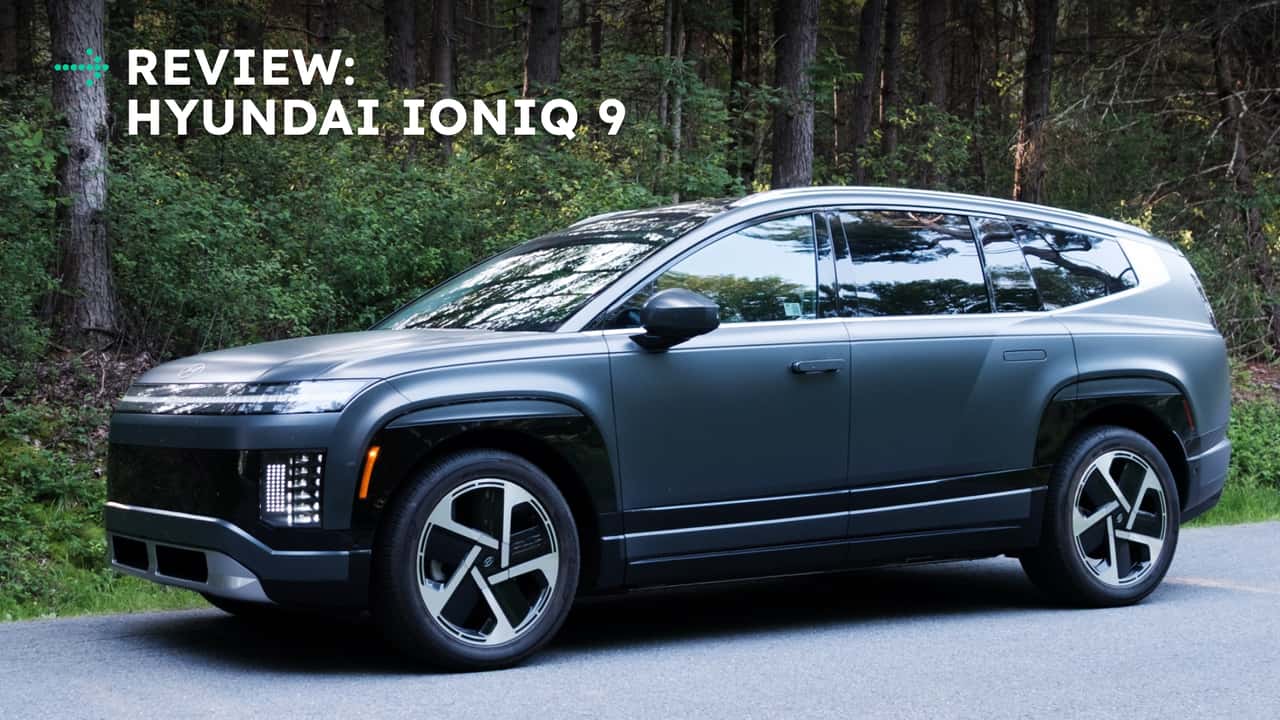
Why The 2026 Hyundai Ioniq 9 Is America’s New Road Trip Darling
America’s love affair with big three-row SUVs is nothing new. What’s less appreciated is how well electrification fits that formula. Ditch the traditional engine, transmission tunnel, or driveshaft, and space can be used for what you really want—for your family, your pet and every piece of luggage they might insist on bringing.
The Hyundai Ioniq 9 leans hard into that advantage. Built on Hyundai’s Electric-Global Modular Platform (E-GMP), its flat floor and six- or seven-seat layouts make it a proper lounge on wheels. The numbers back it up, too: Its 123.2-inch wheelbase is longer than the current-gen gas Palisade (114.2 inches) and even longer than the Cadillac Escalade (121.0 inches).

39
Source: Suvrat Kothari
Roadtripping in it is absurdly easy. It gets access to the Tesla Supercharger network, the country’s largest and most reliable charging system. Add in a smooth, quiet ride, Bose surround audio and a cavernous interior festooned with tech and you’ve got an EV that feels purposely built to keep you happy and comfortable on most roads.
So, if anyone is still telling you that gas SUVs are better roadtrippers for your family, you’re being lied to. The Ioniq 9 is here and it makes that case better than few other cars out there. We’ve already done a full review—which you can read here—but to learn more about its long-distance strengths, continue reading.
[Full Disclosure: Hyundai loaned me an Ioniq 9 for one week in Brooklyn. It arrived fully charged, and I returned it likewise.]
Photo by: Suvrat Kothari
As a bachelor living in New York City, I didn’t exactly put the Ioniq 9 through a family or soccer mom test. But I did the next best thing: I took three of my friends and drove upstate New York. I’ve never seen them as relaxed or as excited in any other press car I’ve brought home.
These are powertrain-agnostic, non-car people who care about one thing: getting from point A to point B. Yet a few things had them grinning the entire trip: the buttery ride quality, the plush second-row captain’s chairs, the smooth electric powertrain and the Bose speakers turning the cabin into a concert hall on wheels.
The creature comforts are truly great, but they don’t mean much if the EV underneath isn’t sorted. Luckily, the Ioniq 9 nails the basics. So, let’s start with those first.
Range And Charging
Hyundai Ioniq 9 Roadtrip
Photo by: Suvrat Kothari
The Ioniq 9 gets two things very right: range and charging speeds.
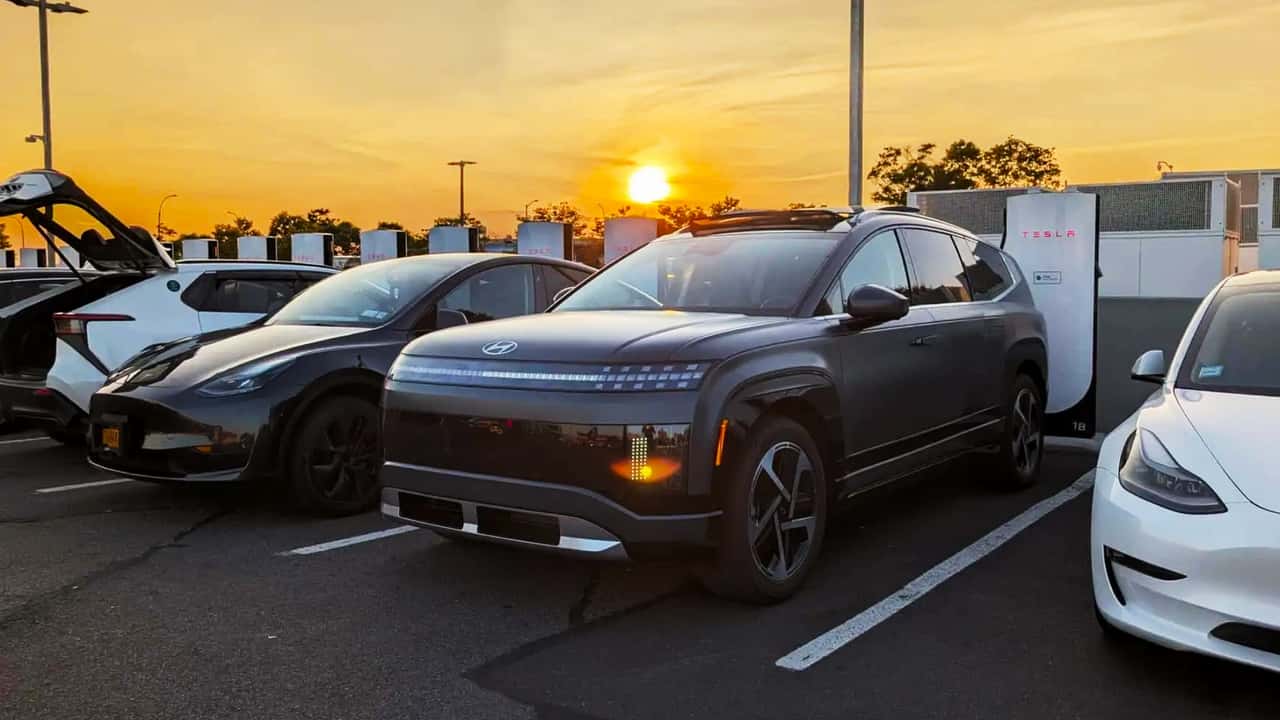
About 200 miles into my drive to upstate New York, I wasn’t even worried about plugging in. Interstate 87 has a decent frequency of Tesla Superchargers and the Ioniq 9 is equipped with a factory-fitted North American Charging Standard (NACS) port, opening up access to 20,000+ Superchargers nationwide.
Under the skin, the Ioniq 9 shares its platform with its corporate cousin, the Kia EV9. But Hyundai has given it a bigger 110-kilowatt-hour battery, compared to Kia’s 99.8 kWh pack. That extra capacity translates into 300 miles of EPA-rated range on every trim—the base S stretches to 335 miles, the SE and SEL hit 320 miles, while the Limited (my test car) and Calligraphy are rated at 311 miles.
Photo by: Suvrat Kothari
Its 800-volt architecture helps it charge from 10% to 80% in about 24 minutes on a 350-kilowatt DC fast charger—that’s plenty quick given the SUV’s large 110 kWh battery pack. Most new public fast-charging stations can deliver that much power, including Electrify America, EVGo, ChargePoint Express Plus and even Ionna.
During my week-long testing, I stuck to Tesla Superchargers simply because they were easier to find and use with the Tesla app.
While the majority of Superchargers are still capped at 250 kW, the new V4 units can hit 325 kW. The Ioniq 9 went from 30% to 80% in 25 minutes using one of these stalls. The charging speed was slower than what I expected, topping out at 126 kW, but it held that speed even past 70% percent before tapering near 80%—which is a pretty flat charging curve that helps you save time.
Utility Mode Rocks
Photo by: Suvrat Kothari
Hyundai’s newer EVs come with Utility Mode that taps the main high-voltage battery to run the infotainment, climate control, cabin lights, or even external appliances. The feature isn’t unique to Hyundai—Tesla and Rivian have been offering it for years, but it’s a great thing that more cars are coming with it as standard.
Turning it on from the infotainment screen shuts the drive unit down while everything else keeps humming—which is useful if you’re parked for hours or camping. In gas cars, if you kill the engine, you’re stuck with the small 12-volt battery, which will drain fast and might even die.
Dropping the second and third rows opens up 86.9 cubic feet of space, more than enough to toss in an air mattress or a surfboard (or both). Drive it to a campsite and you’ve got a panoramic roof for stargazing.
Photo by: Suvrat Kothari
I used it for something far less romantic: I used it as my office for half a day during a 98-degree Fahrenheit heatwave (felt like 104°F with humidity). It sipped just 2% of the battery during that time—the Ioniq 9’s 110 kWh battery is larger than average packs.
It also gets vehicle-to-load (V2L) capability, with a built-in 15 amp, 125 volt outlet in the trunk plus a 12 volt socket. That means you can power a coffee machine, induction stove, or whatever gear you throw in the back—all using battery power.
About Those Seats
Photo by: Suvrat Kothari
The seats give the Ioniq 9 a lot of personality. The S, SE, and SEL trims come with a second-row bench, giving the Ioniq 9 a seven-seat layout. Step up to the Limited or Calligraphy trims and you get captain’s chairs. If you’re not regularly hauling more than six people, they’re absolutely worth it.
The sweet spot is the right-side captain’s chair behind the front passenger seat. With a set of buttons on the front seat backrest, you can slide that seat fully forward, opening up limo-like space in the second row. The captain’s chairs are kitted out with armrests, powered leg rests, and heated and ventilated cushions. They also get almost pillow-like headrests with side support.
Photo by: Suvrat Kothari
Up front, both seats offer eight-way power adjustment with lumbar support, which goes a long way toward keeping posture in check on longer drives. And if you slide the second row just a touch, the third row opens up into legitimately usable space.
It doesn’t feel cramped, and Hyundai didn’t skimp on the details back there either: dedicated AC vents, powered recline, bottle holders, dome lights and dual 100-watt USB-C ports.
Because it has a flat floor and nothing obstructing lateral movement, moving around in the second and third rows is easy, especially if you’re petite like me.
Small Details Make Big A Difference
Photo by: Suvrat Kothari
In big cars, the little things matter the most. I’m not convinced every automaker gets that.
The Volkswagen ID. Buzz, for all its charm as a people-mover, skips bottle holders for the second row. Owners can buy a second-row center console, but it’s more of a general storage rack than a true cupholder setup. The Ioniq 9 gets 11 bottle holders: four in the first row, four in the second row and three in the third row.
It also gets a highly modular center console which slides all the way forward, or halfway back—about 7.5 inches—extending the access to both first and second-row passengers. Because there is no transmission tunnel running through the middle of the car, Hyundai has used that space smartly.
The console has a wide armrest that can open from both ends, has generous storage capacity, two large bottle holders, a wireless charging pad and climate settings for the second and third row passengers. That’s a lot of functionality packed into a small, movable unit.
Plush Ride Quality
Photo by: Suvrat Kothari
Despite weighing 6,000 pounds, the Ioniq 9 is surprisingly effortless to drive. Light steering, large side mirrors and a 360-degree camera make threading it through narrow streets far less intimidating than its size suggests.
The ride quality is where it really shines. The suspension absorbs road imperfections with poise, eagerly swallowing everything from small bumps to big potholes. There’s some inevitable lateral movement with an SUV this large. It dives a bit under braking and squats on acceleration, but none of that makes you feel unsettled. The dampers do a commendable job of keeping it all under control.
Hyundai credits that composure to self-leveling dampers and hydro bushings. The self-leveling dampers maintain the correct ride height regardless of the load, while the hydro bushings absorb vibrations more effectively than solid rubber. They’re basically fluid-filled mounts between the suspension and chassis.
Together, they give the Ioniq 9 an almost luxury-car-like ride, making smaller imperfections far less bothersome.
Photo by: Suvrat Kothari
And Hyundai has gone to great lengths to keep the outside world, well, outside. The Ioniq 9 rides on 21-inch Hankook Ion Evo SUV tires (285/45), each wearing a big “EV Soundabsorber” badge. Hankook has a whole breakdown of the technology behind the tires. In simple terms though, there’s foam lining the inner walls and a series of tread and groove designs aimed at killing road noise. After a week behind the wheel, it’s hard to argue—it just works.
Add to that acoustic glass, triple door seals and active noise cancellation and the cabin feels genuinely quiet. Enough that even at 70 miles per hour, you won’t have to raise your voice to talk to the third-row passenger.
It’s Halfway Software-Defined
Photo by: Suvrat Kothari
Hyundai’s software game isn’t at Tesla or Rivian levels yet, but the Ioniq 9 makes it clear the automaker is stepping up.
The 12.3-inch central infotainment screen felt responsive, though not as snappy as a Model Y. But it displays EV-specific data in great detail, better than probably most other automakers.
You get battery health monitoring, efficiency history and a breakdown of energy use split between the drivetrain, electronics, climate control and battery care. It even shows, in real time, how many kilowatts each system is drawing, which can help if you’re obsessive about efficiency like I am.
Photo by: Suvrat Kothari
Hyundai is also improving the software in small ways. One example is that you can electrically fold or raise the second and third-row seats straight from the screen. It sounds minor, but it requires tight software-hardware integration. If someone is trying to load a large item in the back and you need to drop the seats without leaving the driver’s seat, this feature will come in surprisingly handy.
And unlike General Motors, Hyundai isn’t ditching wireless Apple CarPlay or Android Auto anytime soon. Despite the tech-heavy cabin, manual buttons and knobs are still plenty. Key functions, including drive and terrain modes, volume, and climate controls, still get proper physical buttons and dials. Again, a small thing, but it makes a big difference in keeping your eyes on the road instead of buried in menus.
Photo by: Suvrat Kothari
Granted, none of this comes cheap. My press loaner carried a sticker of $71,250, which could be a dealbreaker for plenty of buyers. The base S trim costs $59,000. With the $7,500 federal tax credit, that starts to look like a more reasonable proposition.
Hyundai is also sweetening the deal until Sept. 30, when the federal tax credits expire. It’s offering $5,000 cash discounts across all trims on purchase. And lease options starting at $419 per month for 36 months with $4,999 due at signing. That’s not a bargain by any measure, either, but it does let you skip the steep purchase price and still land one of the best three-row electric SUVs on sale right now.
However, the price isn’t the Ioniq 9’s strength. I don’t think Hyundai intends it to be that way either. The Ioniq 9 feels more like a blueprint. It’s proof of how much capability you can pack into a three-row electric SUV without mechanical or design compromises. It’s proof that electrification is the way to go for family SUVs.
Remember that this blueprint will only get better as battery tech evolves and costs come down. So, this is just the beginning and the Ioniq 9 is easily one of the most convincing three-row electric SUVs yet.
Have a tip? Contact the author: suvrat.kothari@insideevs.com
Share this Story

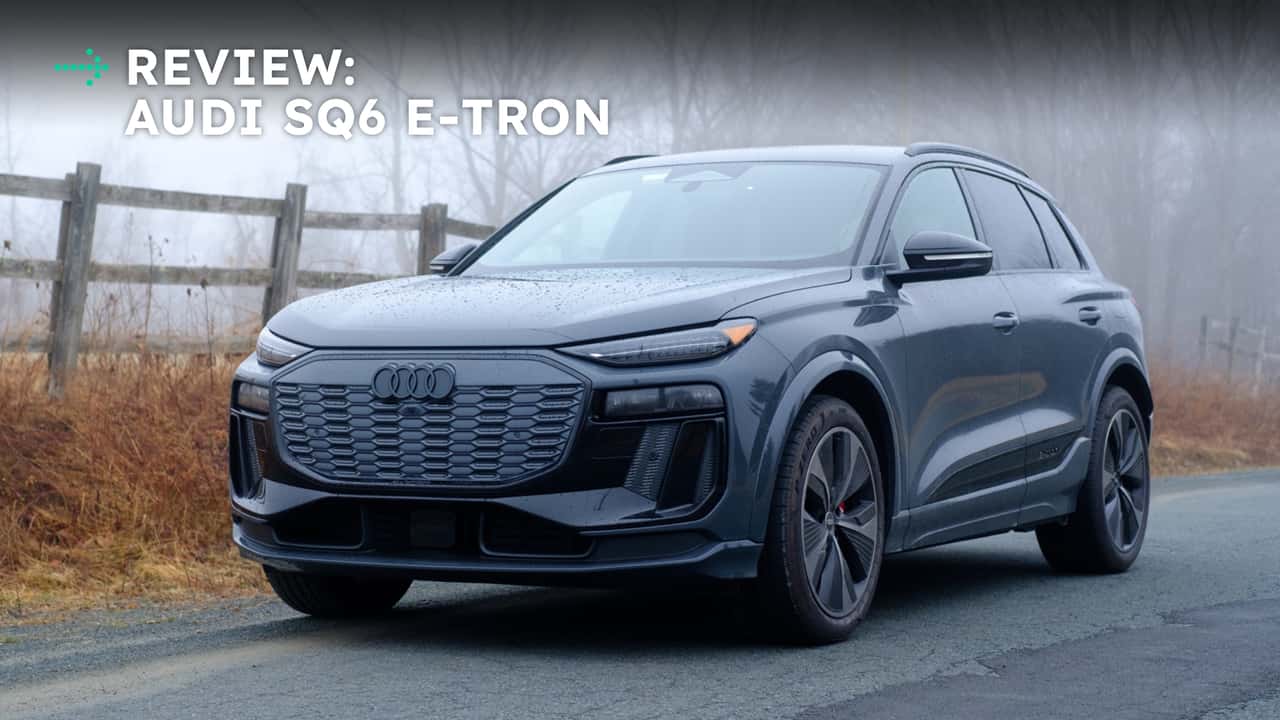
The 2025 Audi SQ6 E-Tron Proves There’s Light At The End Of The Tunnel
If you go looking for stories about the Volkswagen Group’s transition to electric vehicles, you probably won’t find a ton of positive headlines.
The original “pivot to EVs” company has suffered through software issues, delays to crucial new cars, C-suite upheavals and other crises, and now it’s staring down the barrel at brutal new tariffs—arguably none more so than its Audi brand, which doesn’t even build cars in the United States.
When your company’s press releases open with “Challenging half year,” well, the vibes aren’t exactly great.
But here’s what gets lost in all the noise: every single VW Group EV that I’ve driven is a quantum leap forward over the last one.

2025 Audi SQ6 E-Tron
Photo by: Patrick George
Nothing illustrates that better than the new Audi SQ6 E-Tron and the related Q6 E-Tron. It’s built on an all-new platform that was once a part of those many delays, but now that it’s here, it’s one of the more impressive luxury electric SUVs on the market. In terms of charging, range, features and performance, it handily outclasses what we’ve seen from Audi’s EVs before. Now, we’ll see if it has the juice to be the sales success that Audi needs it to be.
(Full Disclosure: Audi gave us an SQ6 E-tron with a full charge for a week, followed by a Q6 E-Tron later on.)
2025 Audi SQ6 E-Tron
Photo by: Patrick George
2025 Audi SQ6 E-Tron: Overview
The Q6 and SQ6 E-Tron models ride on the VW Group’s new Premium Platform Electric (PPE), alongside the related A6 and S6 E-Tron sedans and the similar-but-has-its-own-energy Porsche Macan Electric.
That’s a groundbreaking EV platform for this company on several fronts. It has an 800-volt electric architecture, which allows it to rank among the fastest-charging EVs on the market. It offers over-the-air software updates, an Android Automotive-based infotainment system with native Google Maps, new electric motors that are vastly more efficient than those on its first-generation EVs, along with a host of other new and improved components.
2025 Audi SQ6 E-Tron
Photo by: Patrick George
In the U.S., the Q6 and SQ6 E-Tron models are powered by a 100-kilowatt-hour battery pack with 94 kWh of usable capacity. The base Q6 E-Tron starts at $63,800 before destination fees and up to 321 miles of range and 322 horsepower in single-motor rear-wheel-drive form. Opt for dual-motor all-wheel-drive and you get up to 456 horsepower and an estimated 307-mile range.
If you want more power, go with the SQ6 E-Tron, whose trims come with Quattro AWD only. That bumps the base price to $72,900 and gives you 483 hp—up to 510 hp in Boost Mode—but cuts range to an estimated 275 miles. This test primarily covers the SQ6 E-Tron, but I’ll explain later where the sweet spot is in this lineup.
2025 Audi SQ6 E-Tron
Photo by: Patrick George
2025 Audi SQ6 E-Tron: Driving Experience
The best compliment I can give to the SQ6 E-Tron is that it drives like an S-Line Audi should. That’s to say, it handles spectacularly well and it’s damned quick, all while being considerably less vulgar and ostentatious than an AMG or one of BMW’s M cars.
The old Q8 E-Tron was a good handler by the end, too. This is better. It’ll do zero to 60 mph in a stated 4.1 seconds, but instrumented tests I’ve seen put it more in the high-3 range and I believe it. It’s a genuinely fun EV to drive, especially when the Boost function is used liberally.
[embedded content]
It has another advantage over even the Macan Electric: adjustable regenerative braking. The VW Group is tepid on one-pedal driving in general, but the SQ6 E-Tron at least offers several different strength settings using a “B Mode” toggle. The steering wheel paddles can also let you adjust regenerative strength temporarily.
Overall, it’s athletic, fun and balanced, but doesn’t offer many surprises in this field.
2026 Audi SQ6 E-Tron: Exterior and Interior
2025 Audi SQ6 E-Tron
Photo by: Patrick George
Let’s get this out of the way first: for such an important car, it doesn’t look like much. In fact, it looks like something the Audi design team won in a low-stakes poker game against the Infiniti design team, and I don’t mean that in a nice way. Its voluminous grille, anodyne profile and those narrow, insect-like headlamps are a far cry from the hits of the past like the Audi TT and R8, or even the comparatively elegant first-generation Q5. And its algebraic name doesn’t evoke anything special, either. Audi seems to get that it needs a reset on this front.
Hop inside, and a lot of those cares go away. This is a comfortable, tech-laden interior that loses nearly all of the gripes I had with the old Q8 E-Tron, as this car is a completely different animal in terms of hardware.
2025 Audi SQ6 E-Tron
Photo by: Patrick George
The seats are comfortable, bolstered well without being too aggressive (it’s thankfully not an RS Q6 E-Tron, after all) and the cabin is airy and modern. The grippy, rectangular-ish steering wheel is a delight to use.
I liked the abundance of physical buttons and air vents, although not so much the haptic buttons on the steering wheel. Those aren’t as irritating here as on older cars, but my thumb often slipped when trying to change the audio track on the sound system, for example. Just button-buttons would be preferable. But overall, the quality is exceptional and worthy of its price tag.
2025 Audi SQ6 E-Tron
Photo by: Patrick George
2026 Audi SQ6 E-Tron: Technology
Thankfully, those delays were worth it on the tech front, because the PPE cars are a technical tour-de-force. Audi’s infotainment system uses the Android Automotive OS for the first time, and like other EVs it’s featured on—cars from General Motors, Volvo and others—it offers a tremendous degree of speed and customization. Want a certain display or setting featured more prominently? Just drag it on over to where you want it.
2025 Audi SQ6 E-Tron
Photo by: Patrick George
Or you can talk to the voice assistant, which is better than most. It can do a lot of things you ask it to, like change the climate settings or defrost the rear window. It can’t do a lot of physical functions, like opening the windows, for example.
You get a 12-inch OLED virtual cockpit in front of the driver that blends into a 14.5-inch center touch display. There’s also an optional 10.9-inch display in front of the passenger, but like most screens placed there, whoever’s riding shotgun may wonder what they’re supposed to do with it. (This tends to be a vastly more popular feature in China.)
2025 Audi SQ6 E-Tron
Photo by: Patrick George
No matter how many screens you get or use, the displays are high-quality and powered by software that’s far more quick and responsive than what was on older Audis. Because it’s Android Automotive, you get a bunch of native, built-in apps, like YouTube, Spotify, and Zoom.
In terms of automated driving assistance tech, it’s a solid setup, but nothing groundbreaking: adaptive cruise control with lane-keeping, traffic sign recognition, a distraction and drowsiness warning system and other features. But it remains fully hands-on, so visit your Cadillac dealer instead if that’s a dealbreaker.
2025 Audi SQ6 E-Tron
Photo by: Patrick George
2026 Audi SQ6 E-Tron: Range, Observed Efficiency and Charging
Here’s where the SQ6 E-Tron falls down a bit. Going under 300 miles of range is par for the course for modern “performance” EVs (outside of China, anyway), but this model isn’t quite enough of a screamer to justify that range hit.
I drove the SQ6 E-Tron earlier this summer, when it was still on the colder side here in upstate New York. Even on a full charge, I never really got close to the claimed 275 miles of range. This, for a car with a 100 kWh battery; I often wondered where all of those kilowatt-hours actually went. In mixed driving, I saw between 2.7 and 3.2 miles per kWh pretty consistently. Not bad, but nothing at all special in terms of efficiency.
2025 Audi SQ6 E-Tron
Photo by: Patrick George
Where the SQ6 E-Tron acquits itself well is in DC fast-charging. It has a peak rate of 270 kilowatts, so if you find a fast enough charger, you can go from 10% to 80% in just about 20 minutes. On a slower 150 kW charger, I saw it jump from 34% to 60% in just nine minutes. Like their Porsche brethren, these modern Audi EVs do quite well on the charging front.
2026 Audi SQ6 E-Tron Or Q6 E-Tron: Which To Buy?
Incidentally, I drove a standard Q6 E-Tron Quattro a few weeks after the SQ6 E-Tron, and that’s the one I would tell you to buy. That car offers 456 hp with the same battery pack, the same fast-charging speeds, the same tech features, and largely the same interior. And it’ll do zero to 60 mph in the upper-mid four second range, which isn’t slow, either.
2025 Audi SQ6 E-Tron
Photo by: Patrick George
For all that, you still get Quattro AWD and a much more palatable 307 miles of range. The point is, I don’t think the SQ6 offers enough of a performance premium to sacrifice at least 30 miles of range, and at least $10,000. In real-world situations, they don’t even feel that different.
My hope would be that Audi adds some spice to the SQ6 E-Tron over time to justify that price premium, or finds a way to boost range across the board.
2026 Audi SQ6 E-Tron Verdict: Strong Contender
MY SQ6 E-Tron tester came in at $83,395 including the Prestige and Edition One packages. Not at all shocking for a loaded German luxury SUV. (And I don’t want to start any inter-family drama, but it may be a better overall deal than the Porsche Macan Electric is.)
2025 Audi SQ6 E-Tron
Photo by: Patrick George
I like the SQ6 and Q6 E-Trons a lot, and both of them finally put Audi where it needs to be in the modern EV space. Overall, the duo feel like an EV gateway drug for anyone who’s enjoyed their gas-powered SUVs over the years and wants to drive the technology of the future—and that’s a lot of people.
It also feels like a convincing luxury upgrade for anyone moving on from a Tesla Model Y, though those people may miss its hands-free highway driving features or the ubiquitous Supercharger network. (Audi will join that network at some point too, via an adapter at first and a native NACS plug later.) Ultimately, it needs more range and better efficiency to match its impressive hardware and first-rate driving experience, but there’s a lot to like anyway.
Globally, the Q6 E-Tron family is selling pretty well so far, so it’s good to see Audi’s big swing pay off. We’ll soon see how true that is when tariffs hit in the U.S., but I hope Audi loyalists give this thing a shot. And it’s proof that EV technlogy is getting better, and more quickly, than most people think.
64
Source: Patrick George
Contact the author: patrick.george@insideevs.com
Share this Story

The 2026 Hyundai Ioniq 9 Is The Best Electric People-Mover Yet
A three-row crossover SUV isn’t something you dream of driving. Most of them offer the dynamic excellence of a minivan, just with less practicality. You often end up in one because you have to—maybe you’ve got kids and tons of gear to haul around on the regular, or you have to be prepared for certain extreme use cases, like that one time a year when all the in-laws all come to visit at once.
For anyone facing the three-row doldrums, I’d say: Friend, have you heard the good news about battery power?

2026 Hyundai Ioniq 9
Photo by: Patrick George
It turns out that adding instant electric torque can spice up any large family-hauler. So can features like outboard power for camping or other adventures, and a Tesla plug to ease any road-trip charging anxiety.
The new American-made Hyundai Ioniq 9 may be exactly what you’re looking for. Even from a company whose electric vehicles are its best products ever, full stop, the Ioniq 9 may be its finest work yet. In fact, it’s one of the best examples of the three-row SUV genre in America, and one of the better ways to spend time in an automobile in 2025.
If there’s any downside, it’s that you’ll be paying more for that “H” badge than is to be expected. Then again, you’re getting a lot from this SUV, too.
2026 Hyundai Ioniq 9
Photo by: Patrick George
(Full Disclosure: Hyundai sent me an Ioniq 9 to test for a week with a fully charged battery.
2026 Hyundai Ioniq 9
Base Price
$58,955
As-Tested Price
$74,300
Battery
110 kilowatt-hour NCM
Charge Type
Tesla NACS-style port
Charge Time
Est. 10%-80% in 24 min on 350 kW; 20%-75% in 25 min Tesla Supercharger
Cargo Volume
86.9 cu-ft total; 47 cu-ft behind second row; 22 cu-ft behind third row
Output
422 hp, 516 lb.-ft.
Drive Type
RWD standard; AWD as tested
Weight
~6,000 lbs
2026 Hyundai Ioniq 9: Overview
The Ioniq 9 is a new model for the 2026 model year. On its face, it seems to take everything that was successful about Hyundai’s E-GMP platform, which underpins the massively successful Ioniq 5 and other EVs, and makes it bigger. But that’s only part of the story.
2026 Hyundai Ioniq 9
Photo by: Patrick George
In reality, the Ioniq 9 feels like a kind of second-generation EV product from Hyundai, because it builds on the success of the cars that came before it and debuts with a raft of improvements that just arrived on the Ioniq 5 and the rest. It has the largest battery pack this family of cars has seen yet, at 110 kilowatt-hours. It has an updated software suite with—finally—wireless Apple CarPlay. And it comes straight from the factory with a Tesla-style North American Charging Standard (NACS) plug, though getting the charging speeds the Ioniq line is famous for will require a CCS adapter.
More than that, the Ioniq 9 feels like a more mature, more dialed-in car than the first Ioniq 5 or my own Kia EV6 and the rest. The overall build quality feels better, and the entire car just seems to be a more cohesive EV product, as if made by a company that’s done with electric first drafts and really knows what it’s doing.
It’s more than just a re-badged and restyled Kia EV9, too. It’s a bit bigger and roomier in every dimension, has a bigger battery with more range across all trims, and only comes in a seven-seat configuration. The two remain very comparable in price and specs, but I’d give the slight edge to the Hyundai.
2026 Hyundai Ioniq 9
Photo by: Patrick George
And no matter which Ioniq 9 trim you choose, you won’t skimp on range, unlike some of the other lower-end Hyundai and Kia EV variants. The Ioniq 9 comes in single-motor rear-wheel-drive or dual-motor all-wheel-drive forms. The most basic one, the RWD S model, starts at $58,955 and gets 335 miles of range. This Ecotronic Gray Matte (what a name!) tester you see here is an AWD Performance Limited model, third from the top of the trim line, rated at 311 miles of range and priced at $74,300 with all its options.
A lot for a Hyundai? Sure, but when you consider that this Georgia-built EV also qualifies for the full $7,500 EV tax credit (for however long that lasts) and the equipment and specs you’re getting, it can be a solid deal.
2026 Hyundai Ioniq 9
Photo by: Patrick George
2026 Hyundai Ioniq 9: Driving Experience
I don’t care for driving most three-row crossovers. And as a person whose immediate family includes one spouse and one small dog, I don’t really need one. But the Ioniq 9 was an SUV I looked forward to driving every single time, and even made excuses to drive.
In dual-motor Performance form, the Ioniq 9 puts down an impressive 422 horsepower. There’s no hiding its almost 6,000-pound curb weight, but the thing can still scoot. Hyundai estimates it’ll do zero to 60 mph in a little under five seconds, and in reality, it feels a bit quicker.
2026 Hyundai Ioniq 9
Photo by: Patrick George
But the Ioniq 9 isn’t about brutal speed. It’s about smoothness. Comfort. While the handling is far from sloppy, it’s most at home when it’s cruising in near-silence. And it’s still much more fun and much more athletic than any gas-powered three-row crossover I can think of. Driving an Ioniq 9 is a pleasant and calming experience, even when you need to smoke someone on the highway in Sport mode.
One big plus here is Hyundai’s updated i-Pedal system, which offers four levels of regenerative braking (or none at all) via the paddle shifters. It’s a nice degree of customization when most EVs just do “on” or “off.”
2026 Hyundai Ioniq 9
Photo by: Patrick George
And in “Auto” mode, the i-Pedal automatically adjusts the level of regenerative braking depending on what’s detected in front of you—an upcoming turn, another vehicle, and so on. This feature is polarizing at the InsideEVs offices, but I’ve found that if you learn to work with it and understand what it’s going to do in most situations, you won’t want to live without it.
2026 Hyundai Ioniq 9: Exterior and Interior
2026 Hyundai Ioniq 9
Photo by: Patrick George
I give props to Hyundai’s designers for doing something kind of different with each member of the Ioniq line. The Ioniq 9 isn’t just a stretched-out Ioniq 5 (which I’m not even sure would look all that great); nor is it an obvious cousin to either generation of Ioniq 6 sedan. Instead, it’s a curvaceous streamliner with a distinct grille and rear light setup, shaped almost like a big wagon than just another anyodyne faux-rugged SUV, and it even packs a couple of fun colors to boot.
2026 Hyundai Ioniq 9
Photo by: Patrick George
2026 Hyundai Ioniq 9
Photo by: Patrick George
2026 Hyundai Ioniq 9
Photo by: Patrick George
But the Ioniq 9 shines the most on the inside. This no cheap, bargain-basement Hyundai; it’s a high-tech, modern, near-luxury car that would be convincing enough if it wore a Genesis badge. The materials are all first-rate and a lot of attention was clearly paid to their designs, from the door handles down to the cupholders. Oh, and physical buttons and air vents—it has them. Thanks, Hyundai.
My biggest complaint was how far away the dashboard felt. I had to lean over and reach further than I would’ve liked to operate the controls, which felt frustrating on longer drives. But Hyundai’s voice controls are first-rate, so try those when you can instead.
2026 Hyundai Ioniq 9
Photo by: Patrick George
Of course, this is a three-row SUV, so what matters most is probably behind the driver. And it’s one of the roomiest and most comfortable places in its class. I’m 5’11” and had plenty of headroom and legroom in the second row. And the third row? The Ioniq 9 has the only one I’d want to sit in. It’s plenty spacious back there even for adults, especially if the second-row folks are willing to move up just a smidge.
2026 Hyundai Ioniq 9
Photo by: Patrick George
Thank the packaging excellence that EVs offer. With no engine or transmission tunnel to account for, they can be roomier than gas-powered SUVs. And most of those have a third row in name only, or exist only for small children and only in a pinch. Not the Ioniq 9. It’s a true long-distance people-hauler.
You also get up to 87 cubic feet of cargo space, including 22 cubic feet of cargo area behind the third row, which outclasses even Hyundai’s spacious gas-powered Palisade. Not bad at all.
2026 Hyundai Ioniq 9
Photo by: Patrick George
2026 Hyundai Ioniq 9: Technology
The Ioniq 9 launches with Hyundai’s updated software suite. Among the best upgrades here: a range meter with three figures, including “minimum” and “maximum” ratings. It feels designed to avoid low-range surprises. It’s also very proactive in offering charge time estimates.
Beyond that, Hyundai’s software game continues to be just mid-tier in the EV race. It was never buggy, like some options we test. But the infotainment system isn’t as flexible or as customizable as some of the Android Automotive OS-based systems we’ve tested. And the decisions made by Hyundai’s navigation system are as frustrating as ever—you’ll be missing Google Maps in no time, or using your phone for directions instead.
2026 Hyundai Ioniq 9
Photo by: Patrick George
Hyundai’s Highway Drive Assist 2 (HDA2) automated driving assistance system is decent, offering automated lane changes and speed-limit monitoring. But it is not a true hands-free, eyes-on driving assistance system like General Motors’ Super Cruise or Ford’s Blue Cruise, both of which have it handily beaten for highway road trips.
2026 Hyundai Ioniq 9
Photo by: Patrick George
And Hyundai’s smartphone app won’t have Tesla’s tech team staying awake at night. As great as the Hyundai and Kia EVs are with design, performance and electric powertrains, their software and tech suites could stand to be a lot more competitive.
Still, it’s great at the EV stuff. Route-planning, charing scheduling, battery health ratings and battery management are all among the best in the industry.
Range, Observed Efficiency and Charging
Still, you can’t argue with 300-plus miles of range on every Ioniq 9 trim level. At 100% charge in my driveway, I regularly saw ratings of 330 miles or more in temperate New York summer weather. In our testing, we recorded around 3.3 to 3.5 miles per kilowatt-hour, and sometimes higher. Pretty excellent for its weight, overall.
You’ll need an adapter to use a non-Tesla plug like my home charger here, but it’s not a bad experience at all.
Photo by: Patrick George
Like the rest of the 800-volt E-GMP family, the Ioniq 9 will see max charging speeds of around 235 kilowatts. When hooked up to a 350 kW fast-charger, it’s rated to charge from 10% to 80% in as little as 24 minutes—absolutely outstanding for a battery this size, and only a few minutes more than an Ioniq 5 with its smaller pack. (Hyundai says using a CCS adapter will not affect the car’s charging performance at all.)
I’ve had great experiences with fast-charging these cars before; it’s why I bought one for myself. I wanted to try it on a Tesla Supercharger, which it works with natively thanks to that NACS port. Due to differences in voltage between Hyundai’s 800-volt setup and the Tesla chargers’ 400-volt system, you won’t see the usual crazy-quick speeds.
Ioniq 9 Tesla Charging
Photo by: Patrick George
But the Ioniq 9 still went from 20% to about 75% in 25 minutes on a Tesla plug at a consistent 126 kW. And honestly, that’s not bad. It’s about what any Tesla will do on the same plug, and it passes my “Can you plug it in and get back on the road reasonably quickly?” test.
And with access to more than 20,000 Tesla Superchargers (just note that not all of them work with a non-Tesla EV, even with that NACS port), you won’t really find yourself worrying about range all that much on your next road trip.
2026 Hyundai Ioniq 9
Photo by: Patrick George
Hyundai Ioniq 9 Verdict: Top Recommendation
I didn’t walk away with many criticisms of the Ioniq 9. It’s one of the best EVs you can buy in America today, and also one of the best EVs built in America.
Yes, that $74,300 price tag (before any tax credits or discounts) is steep. And plenty of people may scoff at paying that much for a Hyundai—but they shouldn’t. Unlike some of these so-called “luxury” EVs that are coming to market with half-finished software and enough recalls to keep the folks at NHTSA busy until the next decade, the Ioniq 9 is a complete, well-executed and extremely competent electric SUV.
2026 Hyundai Ioniq 9
Photo by: Patrick George
My recommendation would be the mid-range dual-motor SEL model, with 320 miles of range and a starting price of $66,320. Grab the EV tax credit while it lasts, and that’s $58,820, about on par with most nicely-equipped gas-powered three-row crossovers. And this offers a better experience, especially when you add in Hyundai’s complimentary home charger.
If you can buy a better three-row people-hauler, buy it. But I’m not sure you will.
115
Source: Patrick George
Contact the author: patrick.george@insideevs.com
Share this Story

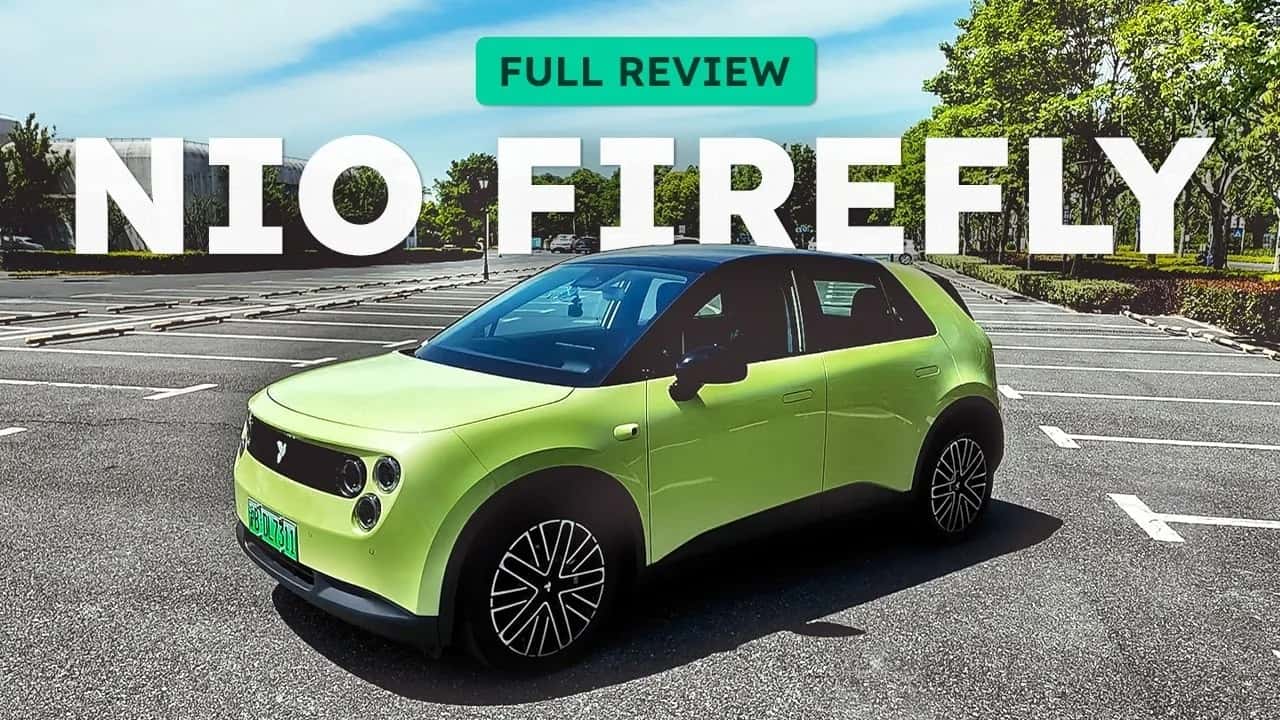
I Drove The Nio Firefly In China. I Walked Away Mad
- The (Nio) Firefly is a small subcompact EV hatchback meant to do battle with cars like the Mini Aceman or Fiat 500e.
- The model is so far only in China, but it will be in European markets before the end of the year.
- Like other Nio vehicles, the Firefly has swappable batteries.
Chinese battery-swapping electric-vehicle startup Nio has been selling cars in Europe for a while now too. But it’s had a rough go of things there. It launched with cars priced at the same level as BMW or Mercedes-Benz, in a market where buyers tend to be loyal to their luxury brands, and where Nio’s signature battery-swapping network isn’t as built out yet.
So, meet Nio’s European do-over: the Firefly hatchback, a direct electric competitor to the likes of Mini, Fiat and Volkswagen’s smaller models. But here’s the thing—the Firefly is even better.

(Nio) Firefly (2025)
Photo by: Kevin Williams/InsideEVs
I’ve made no secret of how much I liked the Nio Firefly after I tested one earlier this year. This small hatchback seems to be everything I’ve been looking for in an EV: cute, small, reasonably priced, and fun to drive. I said that much in my review of the car a few weeks ago.
It’s about the size of the current Mini Cooper, except a bit bigger in every dimension; it’s still tiny overall. Powered by a relatively small 42.1 kilowatt-hour (gross) battery, it’s rated at 205 miles of range, only costs about $17,000 in China, is packed with clever and innovative software features like iPhone-style finger-swipes for different functions, and since it’s rear-wheel-drive, it’s just a blast to drive.
Out of all the cars I’ve driven in China, this is one of my favorites. I didn’t want to give the keys back. I wish there were a way to somehow put it in my suitcase and take it home with me. (Editor-in-Chief Patrick George agreed, and being a two-time ex-Mini owner himself, he kind of drove it like he just robbed a bank. It’s that fun.)
But, just to drive the point home on just how good this thing is, we’ve got a video for you. I spent a full day with the Firefly and put it through its paces on Chinese roads. It’s a great little car.
The Firefly’s chances of coming to the U.S. are basically zero, but it is en route to Europe. In fact, this whole car was designed from the outset to cater to European drivers. The small, roughly Ford Fiesta-sized body hits right at the heart of what most European drivers are looking for. It’s a car that’s meant to be maneuverable and easy to park in any given European city.
Of course, it stands out on the wide and spacious roads of Shanghai. Buyers in China go more for big sedans and SUVs like we Americans do. It’s not a microcar country.
Still, I was able to get a great impression of this small hatchback. There’s a lot to like about the car, like its really fast steering or its rear-wheel-drive driving dynamics. Then there’s the essentially total elimination of range anxiety because the car’s little battery is totally swappable, just like other Nio vehicles.
Give our video a gander. I go into detail about just why this little runabout is special and what it means for the rest of the world.
Contact the author: Kevin.Williams@InsideEVs.com
Share this Story

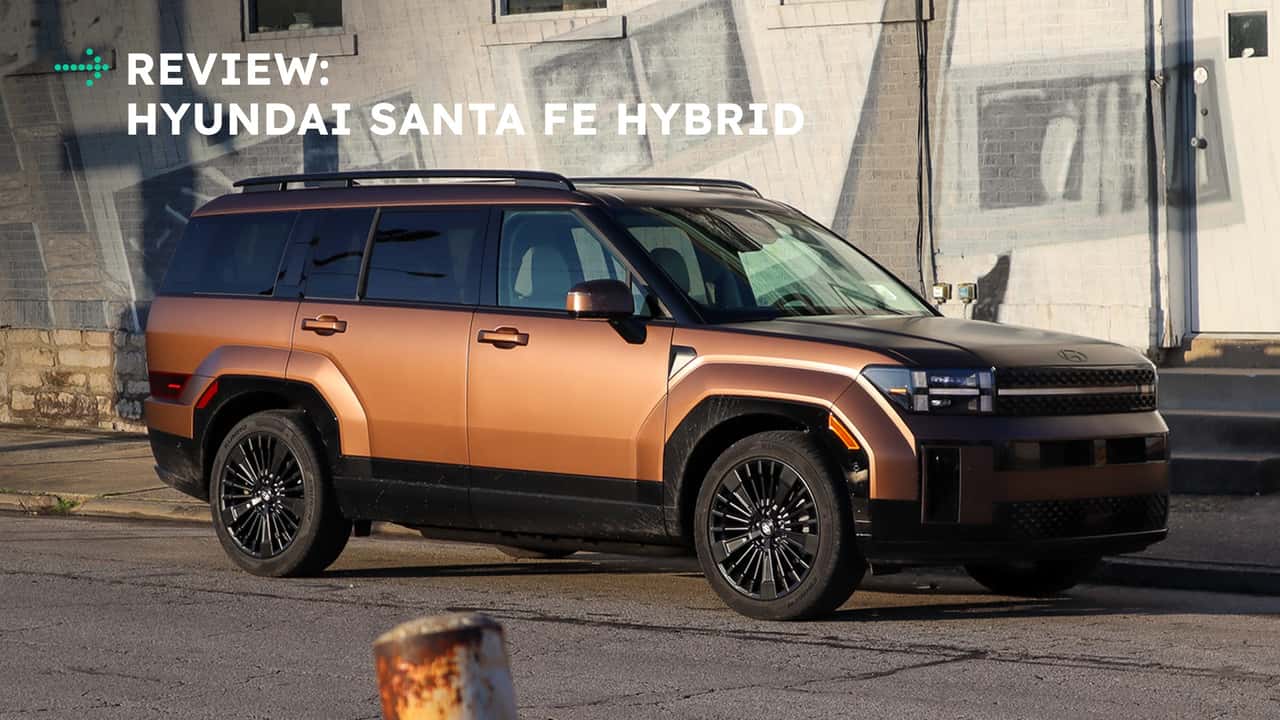
The 2025 Hyundai Santa Fe Hybrid Wants To Be An EV So Damn Bad
I started out skeptical of Hyundai’s hybrids. Perhaps it’s a weird fixation or quirk of mine, but hybrid cars that aren’t mechanically simple weird me the hell out. To me, we hit peak hybrid back in 2003 with the second-generation Prius. This triangle-shaped car with a mechanically robust eCVT and 1.5-liter naturally aspirated engine was ideal. Sure, it was slow and ugly, but incredibly reliable. There’s a reason why it’s not hard to find them with upwards of 300,000 miles with minimal maintenance; it’s just a damn good car. I would know. I had one.
So, when Hyundai started putting its own hybrids on the roads, I was skeptical. These cars had turbocharged, direct-injected engines that sent power through a real planetary-gearset transmission, just like a regular ‘ol internal combustion car. To me, this felt like a complicated solution compared to what we’d get with a Toyota or Honda. Certainly, these cars would not be as good on the roads as a Toyota, no?
Well, I’m eating crow. I spent a week with the Hyundai Santa Fe Hybrid and found it to be really good, especially at electrified driving. So good at electrified driving, in fact, that I wondered why the hell Hyundai didn’t just cut the middleman and go electric. This car wants to be an EV so damn badly.
2025 Hyundai Santa Fe Hybrid
Base Price
$39,795
Battery
1.49 kWh
Drive Type
FWD or AWD
Efficiency
35 mpg City/34 mpg Highway/34 mpg Combined, 28 mpg observed
Engine
1.6-liter turbocharged four cylinder with a 59 horsepower electric motor
Output
231 hp
Transmission
six-speed automatic
As-Tested Price
$51,675
Seating Capacity
6

31
Source: Kevin Williams/InsideEVs
We don’t delve too much into pure ICE cars here, but the Santa Fe is a midsized crossover that sits below the full-sized Palisade, but above the compact Tucson. Hyundai keeps its combustion-powered cars somewhat sectioned off from its EVs, but there is some overlap. If you’re in search of a full electric EV about this size, a Hyundai salesman would likely point you to the slightly larger Ioniq 9.
Whatever the case, there’s a pretty sizable demand for electrified SUVs in some fashion, even if they aren’t full EVs. Hyundai added its hybrid system (once found only on the Hyundai Ioniq and Sonata Hybrid) to one of its volume-selling combustion-crossovers. For 2024, the whole model line was completely redesigned, with faux-Land Rover styling and a whole new vehicle platform. The engines and transmissions, though, were carryovers from the old car, including the hybrid system. Power for all Santa Fe Hybrids comes via a 1.6-liter turbocharged and direct-injected four-cylinder and an electric motor. Shifting is handled through a six-speed conventional automatic. Total system output is 231 horsepower.
Photo by: Kevin Williams/InsideEVs
There’s a lot to like about this mid-sized, three-row SUV. For starters, the Santa Fe is really, really good at engine-off EV driving, despite its measly 59 horsepower electric motor and 1.49 kWh traction battery.
Some have called Hyundai’s hybrid system simple. It places its 59-horsepower motor between the gas engine and transmission. This means that the electric motor effectively has to turn through a transmission, a setup that some have criticized as inefficient compared to an eCVT in a Toyota Prius.
But, this setup has a clutch on the engine/electric motor side, allowing the Santa Fe to drive completely engine-off at speeds much, much faster than, say, a Toyota Prius. With a light enough foot, the Santa Fe will accelerate to about 45 mph before the engine starts. By comparison, most modern Toyotas (not including the Hybrid Max system in some newer big Toyota crossovers like the Grand Highlander) top out around 20 mph in EV mode.
Photo by: Kevin Williams/InsideEVs
This nearly pure electric driving experience is intensified by two things: the Santa Fe’s clever Green Zone EV drive and its adjustable EV-like regenerative braking. When the Green Zone EV drive feature is turned on, the car uses GPS location to prioritize quiet and lower-emission EV driving in certain areas of town, like near parks, schools or hospitals. And it really does work; while driving around my town of Columbus, Ohio, it would turn off its engine and drive on EV power whenever I got close the school near my house. Add in the relatively high-speed EV driving, and I was amazed at how much engine-off EV driving I could do in the Santa Fe for a car that has no plug. An unofficial test shows that it would do about a mile under ideal conditions before starting its gas engine.
Photo by: Kevin Williams/InsideEVs
Then, like Hyundai’s EVs, the Santa Fe has three levels of adjustable regenerative braking. Of course, there’s no one-pedal drive, but the level of adjustability makes the crossover feel remarkably electrified, even when its engine is running. Set it to max, let off the throttle, and watch the battery replenish just like it would on an Ioniq 5 or Kona Electric. If you’re like me and interested in recapturing electricity and using that electric power whenever possible, you’ll fall in love with this feature.
Overall, the Santa Fe is simply a pleasant, well-finished and well-packaged crossover. The one that Hyundai loaned to me was a fully loaded Caligraphy model with every box checked, of course. It stickered at $51,675, which in this day and age sounds like a bargain. Fit and finish are impeccable, and every button and switch felt hefty and high-quality. The infotainment and HVAC buttons worked flawlessly the entire time I had the car, a seemingly not-so-easy accomplishment in a world where everything is a computerized screen.
Photo by: Kevin Williams/InsideEVs
Hyundai Santa Fe Hybrid (2025)
Photo by: Kevin Williams/InsideEVs
The Santa Fe also has a lot of interior space. Its short length means that you’ll have to choose between cargo space or a third row seat, but when in place the Santa Fe’s third row seat is very usable. This crossover can take six adults in relative comfort, a task that some physically larger crossovers can’t do as well. Anecdotally, I understand why I see so many of these things on Ohio roads. When considering the roughly $34,000 base price for its combustion-only variant, the Santa Fe is one of the best values for money on the market.
Photo by: Kevin Williams/InsideEVs
When the Santa Fe (and its Hybrid sibling) was updated for 2024, we lost the plug-in hybrid (PHEV) version, which is a damn shame. The car is so good at driving in engine-off mode, it’s clear that it would benefit from more available energy. The adjustable regenerative braking is such a nice feature, only limited by the Santa Fe’s small 1.49 kWh battery and somewhat weak 59-horsepower electric motor.
The thing is, only the North American market Santa Fe lost the PHEV option. In most markets where the Santa Fe is sold, it comes with a 13.8 kWh battery with about 35 miles of range. It also gets a more powerful electric motor. Both of these would make the car’s energy recapture and engine-off electric driving significantly easier.
Photo by: Kevin Williams/InsideEVs
Perhaps the Korean-made PHEV model is hard to justify against the American-made combustion-powered variant, or the American-made new Hyundai Ioniq 9. Still, I’d argue that the Ioniq 9’s weird styling, super-sized dimensions and not-cheap price aren’t exactly a 1-to-1 comparison for the Santa Fe Hybrid. How hard would it be to give us a full EV version of the Santa Fe? I mean, they’ve already halfway there with the driving experience, just go all the way.
Also, despite the car’s penchant for engine-off driving, I only averaged about 28 mpg mixed. This is below the 35 mpg mixed that it’s rated for.
Photo by: Kevin Williams/InsideEVs
This car is really good at simulating an electric driving experience, but it’s not electric. On one hand, I think it is a great way to get consumers acclimated to a full electric driving experience without any compromises of charging infrastructure or elevated purchase price.
On the other hand, we’re still using gas. With me driving, too, it used more gas than initially advertised.
Still, the package is very pleasant and easy to use. It’s spacious, well finished and reasonably priced for what you get. C’mon, Hyundai, just cut the middleman, dump the gas engine stuff and make the Santa Fe electric, already.
Hell, I’d even accept an EREV.
Contact the author: Kevin.Williams@InsideEVs.com
Share this Story

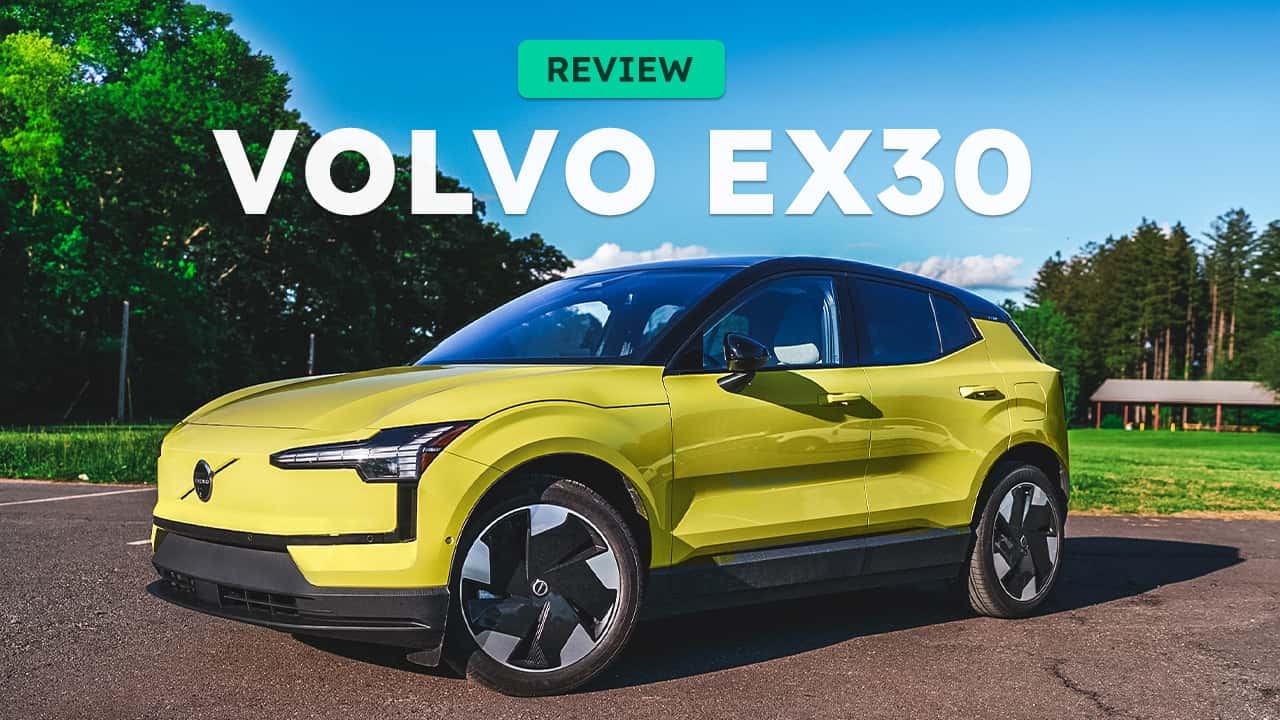
2025 Volvo EX30 Review: Not What We Wanted
I get to spend time with dozens of new cars every year for work. But I almost never get inspired to run out and immediately spend my own money on one—especially before I’ve even had a test-drive.
Yet as soon as the pre-order books opened for the Volvo EX30 in early 2024, I didn’t hesitate to throw down $500 of my own money for a refundable deposit. I had covered its debut in New York a few months earlier, and I knew I was in.
The EX30 seemed to have it all: style, power, respectable electric range and a very attainable $35,000 starting price tag, all from a reputable, big-name automaker. The kind of promise we’ve all gotten from the electric-vehicle revolution, but has rarely been kept.

2025 Volvo EX30
Photo by: Patrick George
It would be another 18 months after that deposit before I actually got to drive one. A lot of things changed in that time. And now that the Volvo EX30 is finally here, it arrives with far less of a value proposition than it once had.
(Full Disclosure: Volvo sent us an EX30 to review for a week.)
2025 Volvo EX30 Twin Motor Performance Ultra
Base Price
$46,600 (excluding destination)
As-Tested Price
$48,395 (incl. destination)
Battery
69 kilowatt-hour NMC battery
Charge Type
153 kW DC fast-charging; 10% to 80% in 27 minutes est.
Cargo Volume
31.9 cubic feet total
Output
422 hp, 400 lb-ft of torque
Drive Type
Dual-motor all-wheel-drive
Weight
4,155 lbs
2025 Volvo EX30 Overview
Let’s start with the price tag of the Moss Yellow EX30 you see here: $48,395, including destination fees. Math has never been my strong suit, but that’s a far cry from the under-$35,000 starting price that made such a splash for Volvo back in 2023.
In part, this is because that alluring price was for the base Single Motor Extended Range rear-wheel-drive model. For now, the only EX30 you can buy in the United States is the Twin Motor Performance all-wheel-drive version, which starts at $46,195.
2025 Volvo EX30
Photo by: Patrick George
Blame tariffs. Key to the EX30’s Tesla Model 3-fighting price was the fact that Volvo planned to build it in China. On paper, this makes sense. Volvo is owned by China’s Geely Group and there’s a ton of platform- and technology-sharing between the Swedish brands and its various cousins, like Polestar and Zeekr and Lynk & Co.
But here in America, car companies and policymakers alike haven’t loved the idea of super-low-cost Chinese-made cars flooding our market. That’s why made-in-China cars have been limited to a smattering of Lincolns, Buicks and other Volvos (and perhaps most notably, the Polestar 2) for years. Then, around 2018, America’s escalating tensions with China led to steeper 27.5% tariffs on cars from that country.
2025 Volvo EX30
Photo by: Patrick George
When it unveiled the EX30, Volvo said this would be fine; it’d absorb that cost somehow, and then also build it in Europe at some point. But then President Joe Biden had other plans. Concerned with the rise of China’s EV sector, the Biden administration increased those tariffs in mid-2024 to 100%, effectively blocking them from the U.S. market. And then President Donald Trump announced he’d turn up the tariff heat even more.
That meant months of delays before Volvo could figure out what to do with the EX30. Now it’s finally here, and still made in China for now, but only viable as the pricier Twin Motor Performance version. Even building the car in Europe won’t solve the problem now.
2025 Volvo EX30
Photo by: Patrick George
As for me, I canceled my Volvo EX30 order and leased a Kia EV6 instead. But now that the EX30 is here, I needed to see if it could still be a winner, even with a bigger price tag than we expected.
2025 Volvo EX30: Specs And Driving Impressions
The EX30 is powered by a reasonably-sized 69 kilowatt-hour battery. On the plus side, the dual-motor setup delivers an impressive 422 horsepower and 400 pound-feet of torque; less impressive is the total range, EPA-estimated at 253 miles. (By the way, the car can toggle between a “certified” display of range and an “estimated” one, and I highly preferred the former.)
Fast-charging, too, edges on the slower side for modern EVs at 153 kilowatts, not unlike the Chevrolet Equinox EV or the Toyota bZ4X. Volvo claims it can fast-charge from 10% to 80% in 27 minutes, which is also solidly midpack.
2025 Volvo EX30
Photo by: Patrick George
On a brief fast-charging test using a 150 kW plug, my EX30 went from a 21% charge to 50% in about nine minutes, but I saw max speeds of just 140 kW briefly and was quoted 26 minutes to reach 80%. I think Volvo’s being a bit optimistic with its charging claims.
The EX30 deserves credit for one thing: it’s damn quick. Zero to 60 mph happens in a mere 3.4 seconds, which is not the kind of velocity that comes to mind when someone pictures a Volvo. The little crossover can genuinely surprise someone at a stoplight.
2025 Volvo EX30
Photo by: Patrick George
Unfortunately, the rest of the car doesn’t really back up all of that speed. The ride quality is strangely firm, leading to me to repeatedly check if my tires were overinflated (they were fine.) The steering is a bit floppy and loose, even in its performance driving mode. It never feels especially confident in the corners, either. All of this speaks to the fact that the EX30 is meant to be an affordable European city car, albeit one with a lot of power by virtue of being an EV. Don’t expect a very inspiring driving experience here.
On the plus side, it is small—refreshingly so. At 166.7 inches long, it’s a whole foot smaller than a Honda Civic Hatchback and nearly 10 inches less than a Mini Countryman. It’s taller than the former but not the latter, and feels more like a tall, upright hatchback than a true SUV. These dimensions made it a delight to maneuver around New York City’s tight and traffic-choked streets, reminding me of my old Mini Cooper S more than once.
2025 Volvo EX30
Photo by: Patrick George
2025 Volvo EX30: Exterior, Interior And Controls
The EX30 sports a handsome design that cheerfully embraces its EV nature by dumping any openings in the grille area. And kudos to Volvo for offering it in a couple of fun colors, especially this yellow or the subtle Cloud Blue.
It oozes charm in other areas too, like the IKEA-esque etchings on the trunk opening that illustrate how much stuff you can fit inside its total 31.9 cubic feet of cargo space. The center console also slides out when you need one or both of its cupholders, and packs a little removable storage container for the rear seats.
2025 Volvo EX30
Photo by: Patrick George
All that charm has its limits. Also key to the EX30 price tag was how it pared down the physical controls and other interior bits; call it Tesla-style minimalism with a Scandinavian twist. There’s no central display in front of the driver, only a sensor bar for tracking your eyes and face when the automated driving assistance is engaged. The window controls are on the center console and you only get two of them, leading you to flip between “front” and “rear” as needed.
Nearly all controls route through the tablet-style center screen, which also has no buttons. If you want those, you get a handful of toggles on the steering wheel, and that’s what you’ll use to select many functions and menu options.
2025 Volvo EX30
Photo by: Patrick George
2025 Volvo EX30
Photo by: Patrick George
2025 Volvo EX30
Photo by: Patrick George
Tesla drivers have been doing this sort of thing for years. It’s not for everybody. And the Volvo loses points here because its software isn’t that fast or intuitive. It’s Volvo’s familiar Google Built-In system, which is great because it directly integrates the class-leading Google Maps into the car as well as your Android Apps accounts and voice-powered Google Search. That’s all excellent.
But when I needed to do find something specific, some key function or menu option that might just be a button on another car, I found myself scrambling through it more than I’d like. Including while the EX30 was moving, which often draws the car’s ire as it hits you with constant and aggressive safety warnings.
2025 Volvo EX30
Photo by: Patrick George
The worst is when it thinks you aren’t paying attention, because you have to turn those alerts off every single time you get in the car. All of that got old very, very quickly. Add in the fact that the interior just feels cheap—not because of the admirable use of recycled materials throughout, but because of the low-grade plastics—and you end up with something that seemed much better in concept than in everyday execution.
2025 Volvo EX30: Verdict
I wanted to like the EX30. I really did. I almost bought one, after all, and I can still see the appeal. And Volvo must be doing something right. The EX30 is doing really well in other places; last summer, it was Europe’s second-best-selling EV, right behind the Tesla Model Y. But European buyers have more EX30 pricing options than we do.
2025 Volvo EX30
Photo by: Patrick George
Ultimately, the EX30 probably would’ve been an outstanding buy at $35,000. At almost $50,000, that’s no longer the case. Almost all of its quirks could be forgiven for its original price tag. When it climbs this much, it runs up against the Volvo EX40 (née Volvo XC40 Recharge), which I like much better despite it being an older EV. And it comes up against larger, more powerful and longer-range options, like the Model Y or the Hyundai Ioniq 5.
In the end, the EX30 went from potential game-changer to rolling example of how volatile the American car market is right now. I hope Volvo can find some way to get its price tag down over time for U.S. buyers. But nobody should blame them if they move on in the meantime.
Contact the author: patrick.george@insideevs.com
Share this Story

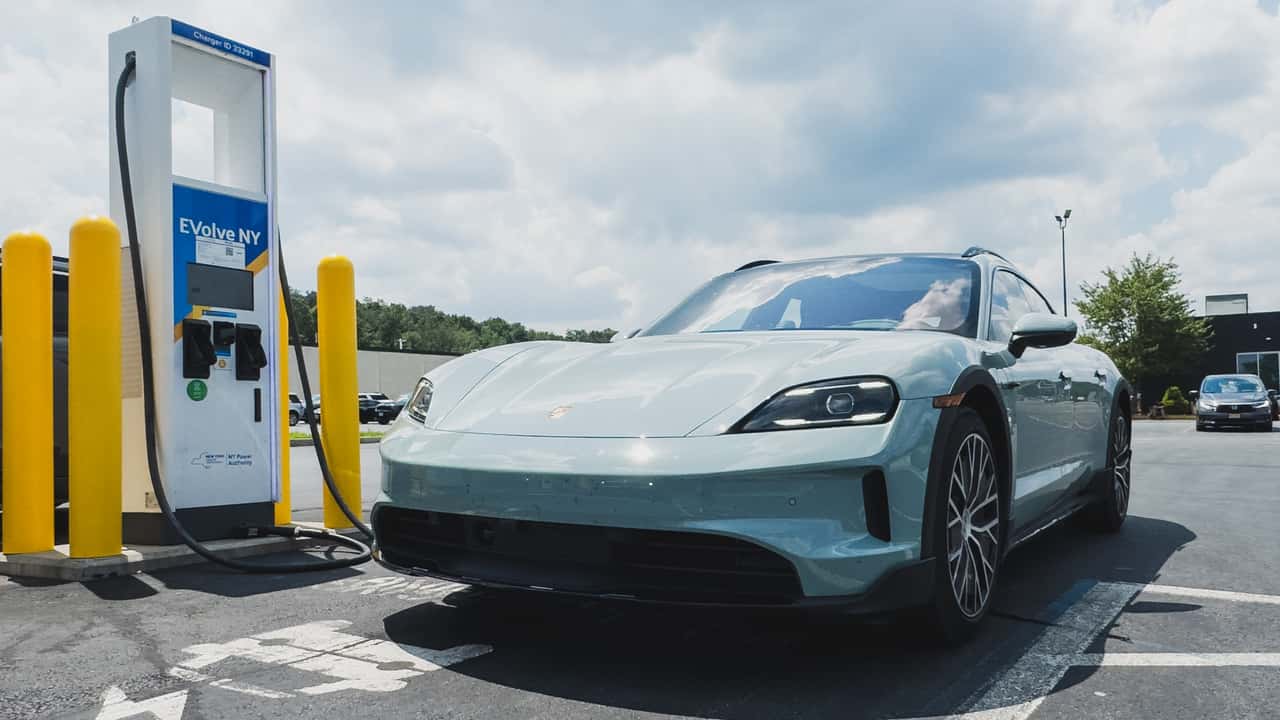
Tested: The 2025 Porsche Taycan Is Still A Fast-Charging Demon
- Our charging test of the 2025 Porsche Taycan 4S Cross Turismo saw the EV go from 15% to 70% in a mere 12 minutes.
- The Taycan can reach a maximum charging speed of 320 kW when using an 800V DC fast charger.
- It remains one of the quickest-charging EVs for sale in North America and shows where the field is going.
As much as I like the Porsche Taycan, I’ll readily admit that it’s certainly not for everyone—even by Porsche’s already-high standards for exclusivity.
The tester you see here came in Shade Green Metallic, a highly unusual pastel-like teal that stands out in every parking lot’s endless sea of gray and black cars. It’s also a Taycan 4S Cross Turismo, the Taycan’s wagon variant that comes with a little extra ground clearance and a “Gravel Mode,” yet still won’t convince anyone that it’s an SUV.
Throw in the $40,000 (!!!) worth of options as equipped here and the price tag comes in at a jaw-dropping $165,655. It’s a special electric vehicle, aimed at a special (and deep-pocketed) enthusiast.

2025 Porsche Taycan 4S Cross Turismo
Photo by: Patrick George
But it’s impossible to deny that you’re getting a lot of EV if you’re fortunate enough to spring for a Taycan. And I’d argue that its performance when parked is even more groundbreaking than its performance on the highway. It remains one of the quickest-charging EVs you can buy in America today.
(Full Disclosure: Porsche loaned me a Taycan 4S Cross Turismo for a week of testing.)
As part of its 2025 model-year updates, the Taycan’s charging speed has been increased to 320 kilowatts. If you need a refresher or are new to this, the higher the kW, the faster the charge, generally speaking. However, your time spent on the plug also depends on various factors, such as the size of your battery.
My tester had the Taycan’s largest battery option, the 105 kilowatt-hour Performance Plus pack. But even that is still reasonably-sized compared to some of the more gargantuan units on other high-range EVs.
2025 Porsche Taycan 4S Cross Turismo
Photo by: Patrick George
This means that the 2025 Taycan has a blistering charging time when hooked up to a powerful enough charger: Porsche claims it can go from 10% to 80% in just 18 minutes.
I experienced this for myself last year at a Porsche event in California, where I charged a then-new Taycan from 8% to 80% in as little as 16 minutes. That was a massively impressive charging result and another testament to the power of an 800-volt architecture—a more advanced electrical system underpinning some EVs that allows for far greater power intake than others can offer.
So now, almost 18 months later and with a Taycan tester in my garage for a week, I had to see if it could hold up. Spoiler alert: You had better believe it did.
2025 Porsche Taycan: The Charging Test
My test was very simple, and meant to replicate the kind of real-world driving and charging that anybody might do on a road trip or just a very extended drive about town. I drove the Taycan until the battery was low, set my local 350-kW charging station as the destination in the navigation system, drove it there, and plugged in.
2025 Porsche Taycan 4S Cross Turismo
Photo by: Patrick George
I told you it was very simple.
With this battery, the Taycan 4S is officially rated at 272 miles of range, but on my home charger and in temperate weather, I saw it estimate 300 miles. And as that same charging test in California proved, the Taycan can easily exceed that if you’re careful when driving—a remarkable number for a car that also packs up to 590 horsepower and can do zero to 60 mph in 3.6 seconds.
I started my charging test at on a Sunday afternoon at 1:57 p.m. and 15%, leaving roughly 39 miles left with the car in Sport Mode (your estimate skews higher in Normal Mode or rear-drive-only Range Mode). It was a warm 87 degrees F (31 degrees C) outside and the battery had been preconditioned for the charge.
2025 Porsche Taycan 4S Cross Turismo
Photo by: Patrick George
I considered running the Taycan down on the highway to get down to 10%, but again, this was meant to be more or less a real-world test of how quickly I could get back on the road. With the charge limit set to 80%, the Taycan gave me an estimated completion time of 2:18 p.m., which later dropped to 2:16 p.m.
2025 Porsche Taycan 4S Cross Turismo
Photo by: Patrick George
To my delight, my sometimes-inconsistent 350-kW charging station started working with the Taycan right away. Even more delightful was seeing the Taycan hit 300 kW right off the bat. Within a minute, the car charged from 15% to 20% and was humming at 308 kW by two minutes in.
2025 Porsche Taycan 4S Cross Turismo
Photo by: Patrick George
From there, the charging speeds kept climbing, first to 311 kW and then 315 kW. For a few brief moments, I saw it peak around 317 kW. Mostly, the Taycan stayed between 308 kW and 315 kW, reaching 50% in seven minutes. At 54%, that meant an estimated 143 miles, so I had already added more than 100 miles of range in seven minutes.
2025 Porsche Taycan 4S Cross Turismo
Photo by: Patrick George
It is here where I will pause and point out how results like this fly in the face of the “EVs take too long to charge when you’re on a road trip” argument. Sure, not every EV charges as quickly as the Taycan. But seven minutes is about the length of an average road-trip bathroom break. A hundred miles of range should easily get you to your destination, or at least another location with more chargers. A 20-minute break buys you three or four hours behind the wheel, too, and your back or bladder will demand a break by that point.
2025 Porsche Taycan 4S Cross Turismo
Photo by: Patrick George
The Taycan finally dropped to 300 kW around 60%, then 296 kW, about nine minutes into the test. I couldn’t help but be impressed. My Kia EV6 is pretty good at fast-charging too, and the most I’ve seen is around 225 kW.
2025 Porsche Taycan 4S Cross Turismo
Photo by: Patrick George
Around 64% the Taycan’s speeds dropped to 209 kW, but then it hopped right back to 272 kW soon after, even as I approached a 70% charge. That’s an incredibly high charging speed for a battery so full.
At this point, the line at my charging station was getting longer. This is one of the only non-Tesla stations in the area and right off New York State Route 17. A lot of folks, including one family in a Kia EV9, seemed to be on a July 4 road trip and were eager to get moving again. In keeping with my “only fast-charge to what you need” rule and to be a good fellow EV driver, I decided to call the test early at 2:09 p.m.
2025 Porsche Taycan 4S Cross Turismo
Photo by: Patrick George
I had already proved my point, anyway. The final result for the test was 15% to 70% in just 12 minutes—an addition of 58.044 kWh of energy and enough to leave the Taycan with 200 miles of range, still in Sport Mode. In Normal Mode or Range Mode, it would’ve read well over 200 miles. Oh, and the car said it was still capable of taking up to 274 kW if I wanted to plug back in.
That’s outstanding.

Porsche Taycan Charging Result
Photo by: Patrick George
2025 Porsche Taycan Charging Test: What We Learned
I never quite hit the 320 kW the Taycan is capable of, or if I did, it was in a “blink and you’ll miss it” moment. The car got very, very close to that level and stayed there consistently until it charged to more than 60%.
2025 Porsche Taycan 4S Cross Turismo
Photo by: Patrick George
These are the quickest charging speeds that I have ever personally seen outside of China; I have only experienced better speeds with my latest Taycan charging test and the Lucid Air Grand Touring, and even then, only very slightly. (The last Air I tested managed up to 322 kW.) The new Lucid Gravity is rated to pull up to 400 kW, but I have not tested that yet, and it would require a very high-voltage charger to do so.
Either way, this test proved a few things.
800-volt electrical architectures are the future. Many EVs still use less sophisticated 400-volt electrical systems, including newer ones that are designed to be more affordable. Having a less complex electrical architecture certainly keeps costs down. But long-term, I expect most EV manufacturers to use higher-voltage systems. You can’t argue with the results here.
Charging is getting better and better all the time. The first-generation Taycan was no slouch at fast-charging either, rated at speeds of up to 270 kW. That’s still better than most. But in just a mid-cycle update, its max speeds jumped a full 50 kW, and its charge curve got way better. The Volkswagen Group never gets credit for this, but every EV it makes feels like a quantum leap over the last one. And as charging stations proliferate, they’re becoming more powerful and offering more plugs at each station. Imagine where this field will be in five years.
With the right EV and the right charger, the experience can feel the same as a stop for gas. The fact that I added more than 100 miles of range in under 10 minutes alone feels like a game-changing experience. Nobody wants to wait at these stations forever. If more EVs can work that way, and more drivers learn to just fast-charge to the levels they need, then gas-powered cars are in trouble.
2025 Porsche Taycan 4S Cross Turismo
Photo by: Patrick George
The Porsche Taycan remains a fast-charging champion. It’s ridiculously quick, and it’ll get you back on the road just as quickly, provided you can find a 350-kW charger easily. Ultimately, this was my favorite thing about the Taycan. I drive fast EVs all of the time; zero to 60 mph in the mid-three-second range is almost common now. But the Taycan’s combination of range, speed and fast-charging make it truly special.
And I’ll take it as a preview of what’s next. This is still a charging system on a very high-end performance car. When this technology starts to trickle down to more normal cars, as it usually does, we’re all going to benefit.
Contact the author: patrick.george@insideevs.com
Share this Story

We’re Driving Europe’s Trendiest New EV. What Do You Want To Know?
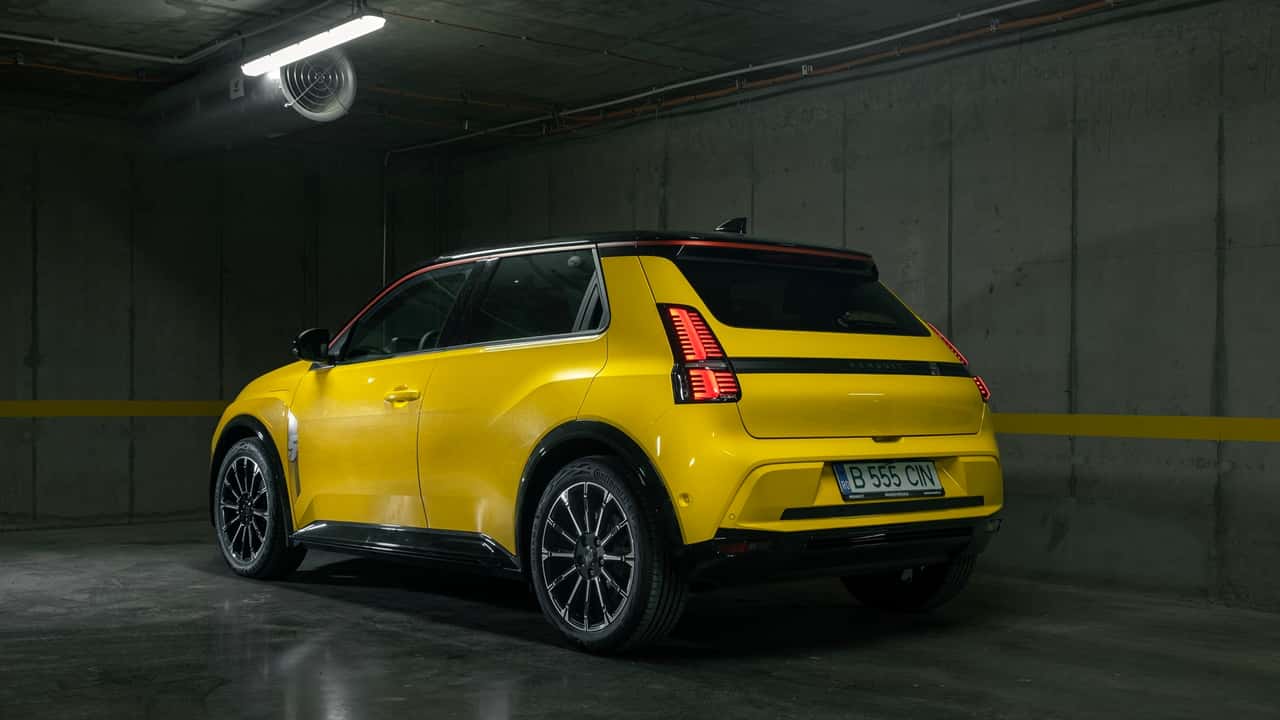
Renault is all about bringing retro design cues from iconic old models to the modern day, and it may definitely be on to something. Having lived with the new Renault 5 E-Tech for a couple of days, it’s one of the most compelling EVs that I’ve driven in a long time, blending head-turning design with all the desirable traits that you expect from an electric city car.
This car is all about the design. Driving it and leaving it parked amongst downtown Bucharest’s eclectic tangle of historic buildings, it absolutely looks at home. It makes most new cars look so last decade, even if it itself takes a lot of cues from Renault hatchbacks of decades past. I have so far looked back at it every time I’ve locked it and walked away, which is a clear sign that Renault has got the design right.

18
Source: Andrei Nedelea
Renault has done a tremendous job with the exterior design of this car, seamlessly integrating design elements from the 1972 original Renault 5 (known in the States as the LeCar), as well as the later rally-honed Turbo 2 model and the revised 5 that dropped in 1984. But there’s nothing dystopian here. Everything comes together into a visual package that you just can’t hate, even if you may not be on board with the whole retro-futuristic design trend.
However, all of the above would have been for nothing if Renault didn’t make it drive well. Thankfully, if there’s one automaker that knows how to make a good city car, it’s the one with the diamond badge. Having previously owned two Clio city cars, which I really liked and always think fondly of, I’m happy to report that the fun is still there and the new Renault 5 is great to drive. It’s the perfect instrument to carve through a congested city.
It may only have 150 horsepower, but it accelerates quickly, puts its power down well, and it is blessed with especially good steering that gives you confidence. It’s also surprisingly dynamically accomplished, keeping body roll in check but without feeling like it has dampers made of granite, which is the case with some new cars with overly firm suspension setups.
Specs-wise, it’s not amazing, with a 52 kilowatt-hour battery that is good for about 250 miles (400 km) WLTP and a peak DC fast-charging power rating of 100 kW. However, it’s pretty efficient (almost matching the manufacturer’s claim) and you can get surprisingly close to the claimed range (which is often not the case with WLTP estimates), and given its relatively small battery, it charges quickly enough.
Renault 5 E-Tech
Photo by: Andrei Nedelea
It’s not perfect, and there are some quirks and weird design decisions, but you’ll get to read about those in the full review coming soon.
I’m going to spend a couple more days with the R5, and I will be able to answer any questions you may have about it. Leave a comment, or feel free to drop me an e-mail at andrei.nedelea@insideevs.com and I’ll try to come up with an answer for you.
Share this Story

2024 BMW iX Long-Term Review: How Does It Compare To The New One?
We’re now more than 18 months and nearly 19,000 miles into ownership of our 2024 BMW iX xDrive50, and it’s been a good year and a half. When we bought it, we intentionally got a machine with as few options as possible, the smallest wheels, and the least amount of power. At the time, I remember wishing there was an even lower-spec trim available.
For 2026, BMW has introduced exactly that: a new xDrive45 trim with less power, less torque, and a lower MSRP than the 2024 model carried when new. It has a smaller battery, too, but its improved efficiency promises an EPA-rated maximum range of 312 miles, five more than mine is rated for.

2026 BMW iX First Drive
Photo by: Tim Stevens/InsideEVs
On paper, it certainly seemed like an attractive prospect, and when BMW offered me a chance to sample the new trim, I couldn’t resist heading down to their U.S. headquarters in New Jersey.
Road-Tripping To Test The New BMW iX
Naturally, I drove my iX down. I confess I felt a little weird about this, taking the old and familiar to meet the new and fresh, but I have a feeling the car didn’t mind. I have always had a habit of humanizing machines a little too much.
My 2024 BMW iX.
Photo by: Tim Stevens/InsideEVs
It was a roughly 125-mile trip down for me, and yet again, BMW’s range estimate was spot-on. It predicted I’d arrive with 57% remaining. I arrived with 60 percent on the clock. That, in theory, meant a 250-mile round-trip with plenty left in the tank, yet again exceeding the EPA estimate despite my spending the bulk of that time at speed on the highway.
But, while I was out sampling the new hotness, my ride was supping on electrons courtesy of one of BMW’s on-site chargers, meaning range for the return trip would not be a concern.
2026 BMW iX: First Impressions
On to the new machine, then. First impressions of the new 2026 iX were good. The exterior revisions are subtle, to say the least, with refined headlights and new graphics on the kidney grille being the big new changes, while the lower trims now get basically the same front fascia that the older M60 xDrive featured.
2026 BMW iX First Drive
Photo by: Tim Stevens/InsideEVs
Yes, lower trims, as there are three now, starting with the 402 hp, 312-mile xDrive45 at $75,150. Next up is the 536 hp, 340-mile, $88,500 xDrive60, which effectively replaces the old xDrive50. Finally, there’s the 650 hp, 302-mile M70 xDrive, which replaces the old M60 and gets a new, even more aggro-looking front fascia than before.
2026 BMW iX First Drive
Photo by: Tim Stevens/InsideEVs
2026 BMW iX First Drive
Photo by: Tim Stevens/InsideEVs
2026 BMW iX First Drive
Photo by: Tim Stevens/InsideEVs
BMW didn’t make any substantial revisions to the interior layout, meaning that the controversial front cupholder placement is still the same as before. Design changes inside and out are slight, to say the least, meaning if you didn’t like the look of the iX before, you ain’t going to like it now.
I will, though, guarantee you’ll like the way it drives. The first time I dipped into the throttle in the new xDrive45, I was convinced it was the right choice for most people. It still scoots off the line with way more aggression than is necessary or expected from an SUV of this size.
It feels every bit as quick as my xDrive50 until you get up to about 45 mph or so. Only above there can you start to feel a slight lack of urgency, but stress on the word “slight.” This is a quick machine at any speed, and the $13,000 savings over the xDrive60 means you just have more money to throw at options, like the new sports seats, which are a huge improvement over the iX’s flat, base units.
2026 BMW iX First Drive
Photo by: Tim Stevens/InsideEVs
Stepping up to the xDrive60, it honestly didn’t feel noticeably quicker than my xDrive50, but the extra 30-odd miles of range is a nice upgrade, considering it costs basically the same as the old model. That range boost is at least in part thanks to a revised 110.4 kWh battery pack, up about five over the old xDrive50 and roughly 10 bigger than that in the new xDrive45.
The new M70 also has the larger of the two battery packs, and like the old M60, it’s remarkably quick. The extra 40 hp here compared to last year feels positively unnecessary, more frosting on an already decadent cake, but again, the extra range is appreciated.
Why The Base Version Is Just Right
For me, I’d stick with the xDrive45. The savings over the outgoing xDrive50 can be put towards adding back on the panoramic glass roof, which is a $2,600 option on the xDrive45. The $1,600 Dynamic Handling package is well worth the cost. This gives the iX both a pillowy-smooth ride over broken asphalt and a surprisingly tight turning radius thanks to the rear-steering.
2026 BMW iX First Drive
Photo by: Tim Stevens/InsideEVs
The $2,550 Driving Assistance Professional package is also worth the spend. For the 2026 model, BMW has added its glance-to-pass feature, meaning you can now confirm overtakes on the highway just by looking at the left or right mirror, making the system truly hands-free. Sadly, that feature will not be added to earlier iX models, even though I know they totally could if they wanted to.
And that’s probably about all I would add. I’d stick with the smallest wheels available to maximize range, though I might indulge in spending a little extra for one of the new colors that have been added to the iX’s otherwise disappointing palette of hues. I’d be tempted to spend the $500 for the lovely wool upholstery, too.
But that’s all just theory. We’re still delighted with our 2024 model—which is good, because we still have 18 months left on our lease. We’ll stick with it for now, but if an opportunity to step up to the ’26 arrives, well, we’ll cross that bridge when we come to it.
12
Source: Tim Stevens/InsideEVs
Tim Stevens is a veteran editor, analyst, and expert in the tech and automotive industries. He helmed CNET’s automotive coverage for nine years and acted as Vice President of Content. Prior to that, Tim served as Editor-in-Chief at Engadget and even led a previous life as an Enterprise Software Architect. Follow Tim on X at @tim_stevens and catch his Substack.
Share this Story
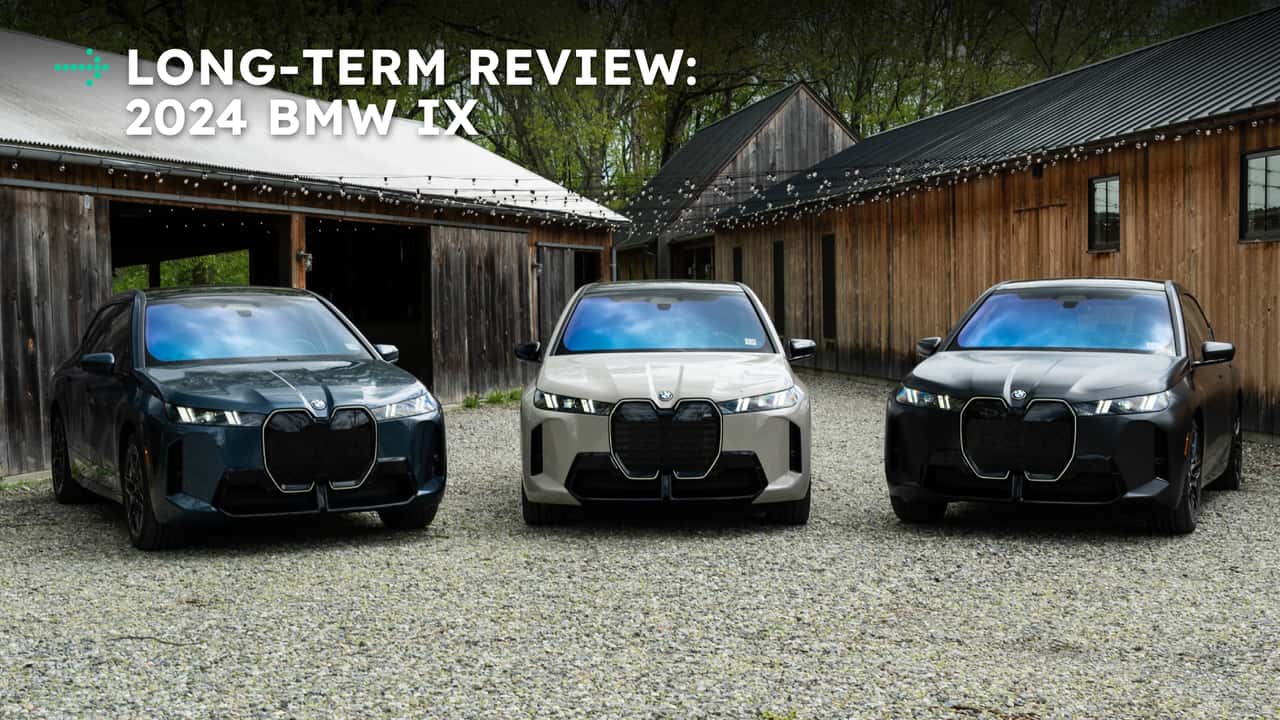

The Mercedes-AMG E53 Plug-In Hybrid: We Expected More
The new Mercedes-Benz E-Class is a masterclass in refinement. It offers sleek lines, a smooth ride and buttery engines, especially the straight-sixes. I was expecting more of the same from the current top variant, the E53, just with way more power.
Yes, it’s quick and clever with its plug-in hybrid powertrain, but it doesn’t punch you in the stomach and make your ears ring like I thought a proper unhinged AMG should.
The last gas-powered E63 I drove certainly did. You look at its flared wheel arches filled by aggressive black wheels and you think, “Oh, my! This thing is going to rearrange my internal organs,” but it stops short of doing that.

2025 Mercedes-AMG E53
Photo by: Andrei Nedelea
It’s not all that different than the four-cylinder E400e hybrid, just faster and with far more aggressive styling.
What Is It?
The E53 can DC fast-charge at up to 60 kW
Photo by: Andrei Nedelea
Its main source of power is still dinosaur juice
Photo by: Andrei Nedelea
The E53 is a 585-hp plug-in hybrid sedan that combines a 3-liter turbocharged straight-six engine from the E450 with an electric motor, feeding its power to all four wheels. It’s the top end of the E-Class lineup for now, as there isn’t a more aggressive E63 (yet).
My tester had the Edition 1 pack, which brought several visual changes, including decals on the sides of the car. They look ok, but are a bit much on an E-Class. What I did really like was that Mercedes didn’t advertise that the E53 is a plug-in hybrid or in any way electrified. There is no silly blue detailing (usually associated with electric vehicles, for some reason) nor any badging denoting it’s also powered by electricity.
It’s a great plug-in hybrid at that, with a remarkably smooth straight-six engine that starts up almost imperceptibly and plenty of power in electric mode. It’ll go over 62 miles (100 km) on electricity alone according to the WLTP test cycle. That’s an excellent number for a PHEV (although not in China), but its real-world electric range, I observed, is closer to 43-44 miles (69-71 km), matching its EPA range claim.
Photo by: Andrei Nedelea
It’s really good around corners, too, with standard rear-wheel steering that disguises its 5,100-lb curb weight.
When the time comes to fire it out of a corner, there’s none of the drama you expect from an AMG. It just sticks and goes, and it’s not even that noisy. The CLE 53 that I drove before it—which has a version of the same engine but with a mild hybrid setup—had a much more brutal and exciting powerband than the E53 and it sounds better too. It’s much closer to delivering the kind of experience I expect from an AMG, even without an angry V-8.
A Touch Of Class With A Dash Of Hard Plastic
The dashboard design is classy, but you can skip the third screen
Photo by: Andrei Nedelea
The optional bucket seats are a must
Photo by: Andrei Nedelea
Mercedes has been making some questionable decisions for the interiors of all its cars—like its usage of haptic and capacitive controls—but it also gets a lot of things right. Sure, I would have liked the soft-touch plastic to go all the way down the door cards and the center console, but the design was great, and the feeling of vault-like solidity was present throughout.
My well-equipped tester had the optional bucket seats. Don’t skip them, as the standard seats are better suited for appointments, not apexes. The steering wheel, which had suede grips, is absolutely fantastic to hold. It’s the kind of sporty wheel that makes you want to downshift for the heck of it, just to revel in the burble of the exhaust.
And even though I usually complain about touch controls on helms, Mercedes’ are the best I’ve tried of this kind, and they just seem to work really well. Not better than physical buttons, but close.
Photo by: Andrei Nedelea
The third screen in front of the passenger is pretty pointless, though. I know this is a trend originating in China that is now sweeping the car industry, but I just don’t get the need for a third screen when the central one is well within the passenger’s reach and line of sight and it offers all the functionality they would need. The center screen in the E-Class is one of the best I’ve ever used.
Mercedes is definitely on to something with having the central touchscreen placed at such an angle. Since you can use it while resting your elbow on the armrest, touching the screen precisely is much easier than in other cars where it’s placed vertically and higher up on the dash, and your arm is dangling in mid-air as you try to adjust the climate control. Unfortunately, Mercedes is moving away from this design with its future models, which will be a step back in ergonomics. The layout in the new CLA is a sign of things to come.
Overall, the interior of the E53 looked and felt pretty special, especially with the strong yellow accents throughout the cabin, including on the seats, the seat belts and on the dashboard in my First Edition tester. With the scratchier plastics lower down in the cabin, it doesn’t quite feel like a vehicle costing almost €120,000 ($136,000) as tested, but it’s undeniably more special in AMG trim. In the U.S., a base E53 costs around $89,000, and a similarly specced example would cost around $120,000.
Quick On Paper
The engine isn’t assembled by AMG, so it doesn’t have a plaque bearing its builder’s name
Photo by: Andrei Nedelea
The red around the E53 script indicates this car is electrified
Photo by: Andrei Nedelea
Scanning over the spec sheet and seeing it has 585 hp and a peak torque rating of 553 pound-feet (750 Nm), I was expecting the E53 to light my pants on fire with its performance. But it doesn’t.
That’s partly because it’s quite a heavy car, and even with that much power, it still needs almost four seconds to reach 62 mph (100 km/h). You expect fireworks to go off when you floor it, but you just get dynamic mood lighting. My passengers guessed 400 hp—nobody believed its actual power figure.
2025 Mercedes-AMG E53
Photo by: Andrei Nedelea
To unleash the full fury that the AMG badge demands, you absolutely need to specify the AMG Dynamic Plus package, which my tester, even though very well equipped, didn’t have. It ups the power to 600 hp and gives the car launch control, or Race Start, as Mercedes calls it, and I’m pretty sure it makes a difference. It also adds an electronically controlled limited-slip differential in the back, active engine mounts and upgraded brakes, together making this a more serious driver’s car and better through the corners.
2025 Mercedes-AMG E53
Photo by: Andrei Nedelea
Mercedes also needs to offer a louder exhaust for this car. It’s just too quiet and restrained for an AMG, even by 2025’s increasingly stringent and restrained European noise (and pollution) standards. I’d even take a bit more fake noise through the speakers to break the sublime silence that dominates being aboard any W214, even the E53.
Clark Kent, And Almost Superman
Electricity on the left, fuel on the right
Photo by: Andrei Nedelea
The decals may be a bit much for an E-Class, even one with a widebody kit
Photo by: Andrei Nedelea
Switch off the creamy turbocharged six, and the electric motor, which lives in the nine-speed automatic transmission, does a surprisingly good job of moving the car and getting it up to speed. On its own, it produces 163 hp and 354 lb-ft (480 Nm) of torque. That’s just around 10% less than a base rear-wheel-drive Volkswagen ID.4.
There’s plenty of punch for around-town driving, and it quickly gets the car up to highway speeds. It can drive only on electrons at up to 87 mph (140 km/h), which means you can commute on the highway at the speed limit in most European countries.
2025 Mercedes-AMG E53
Photo by: Andrei Nedelea
Driving the E-Class in EV mode suits the car’s relaxed character very well. This is a car that just eats miles like few new cars can, and not having the thrum of combustion power just suits it very well. The fact that you get two different cars in one (a quiet and civilized EV for sedate driving and a powerful gas-burning sports sedan for when you want to get a move on) makes it a great car.
Nothing about the way the E53 looks suggests it’s electrified
Photo by: Andrei Nedelea
Thanks to 21.2 kWh of usable battery capacity, you can get around 43 miles (70 km) of real-world electric range if you drive the car normally in EV mode. That’s less than Mercedes’ claim that you can get 62 miles (100 km) of gas-free driving in this on the WLTP cycle, but it’s a respectable number that should allow you to run most of your errands emissions-free.
One of the things that makes any current-generation E-Class PHEV unique is the ability to DC fast-charge, which is relatively rare among PHEVs. The E can draw up to 60 kW, finishing the 10 to 80% dash in around 20 minutes. You can also use the 11 kW onboard charger to replenish the battery, which will take a few hours.
Another rare trait among PHEVs is powerful regenerative braking. Mercedes says the E53 can recuperate 120 kW under deceleration, which is more than some lower-powered EVs. This means if you descend a mountain road, you could top up the battery very quickly, and the regen is strong enough that it helps lessen the load on the friction brakes, which need to be used less.
The Best E-Class But Not The Best AMG
50
Source: Andrei Nedelea
The E53 might be the best W214 variant specifically because of its dual character. There’s also the widebody kit that really makes it stand out in the shopping center parking lot, plus all the sporty interior touches that make both it and its occupants feel special.
In an age when automakers seem to be focusing more and more on crossovers and SUVs, Mercedes is staying true to what made it great and keeps making great sedans. It’s also great news that it’s doing the same with its pure electric sedans, which will be a lot more like its three-box combustion models than the jellybean EQ cars it sells today.
Having a traditional-looking Mercedes with classic sedan proportions and electric power is something we hope we’ll see very soon. Until then, the E53 is among the very best electrified Mercedes models that you can buy today—maybe the best—even if it doesn’t quite live up to the level of AMG lunacy that I expect from the brand.
As-Tested Price
€120,000
Charge Type
DC Fast Charging @ 60 kW
EV Range
43 miles real-world
Engine
3-liter turbocharged inline-six
Motor
Permanent magnet synchronous
Speed 0-60 MPH
3.9 seconds
Output
585 hp
Maximum torque
553 lb-ft
Drive Type
All-wheel drive
Battery
25.5 kWh total / 21.2 kWh usable capacity
Share this Story