
Category: General

Ford to build Super Duty HD trucks where it was going to build EVs
- Ford’s adding Super Duty heavy-duty pickup truck production to its Canadian factory
- Ford originally said it would use that factory to build EVs
- The move might signal an electrified Ford Super Duty HD pickup is coming
Ford will build Super Duty heavy-duty pickup trucks at a factory previously slated to build EVs.
The automaker on Thursday announced that it will add Super Duty production at its Oakville Assembly Complex in Ontario, Canada, starting in 2026. The move will increase production capacity by 100,000 units, according to Ford, which also plans to add jobs and/or overtime at an Ontario engine plant and three U.S. components plants to support this. The two plants currently producing the Super Duty made 200,000 of the trucks in the first half of 2024, Ford said.
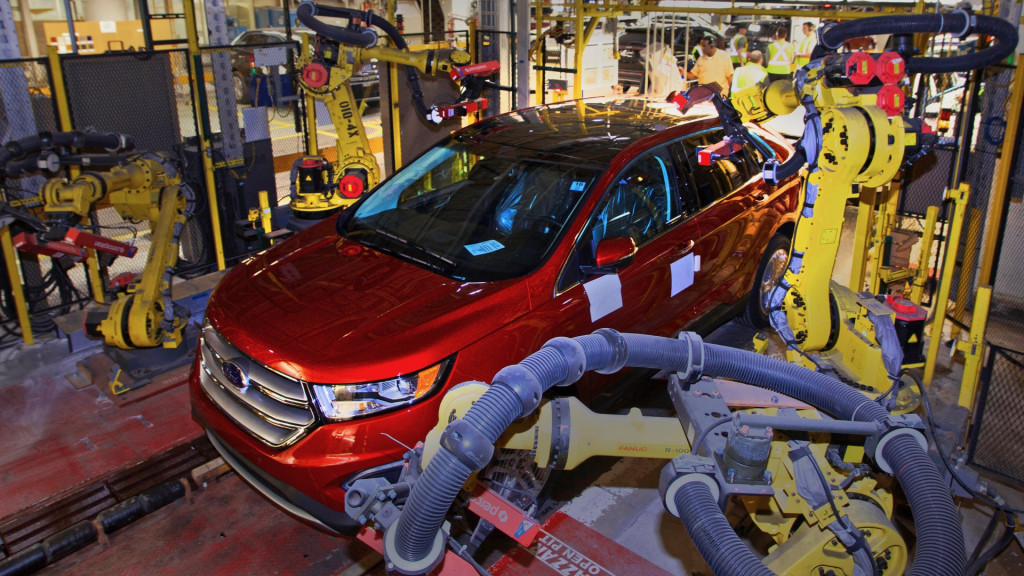
Ford Oakville assembly plant
The Oakville plant previously assembled the Ford Edge and Lincoln Nautilus crossovers, but was slated to shift to EV production starting this year. Ford in 2020 said it would allocate five electric models to the plant, with the last rolling out in 2028, as part of a new deal with the local union after the automaker opted not to continue production of the Edge and Nautilus in Oakville.
But Ford has been pulling back on EV plans lately. In April Ford announced that it would delay its next-generation electric truck, known as T3, by a year, and that a previously-announced electric three-row SUV would arrive two years later than planned. Ford said at the time that it was refocusing on hybrids, with plans to add a hybrid powertrain to every model.
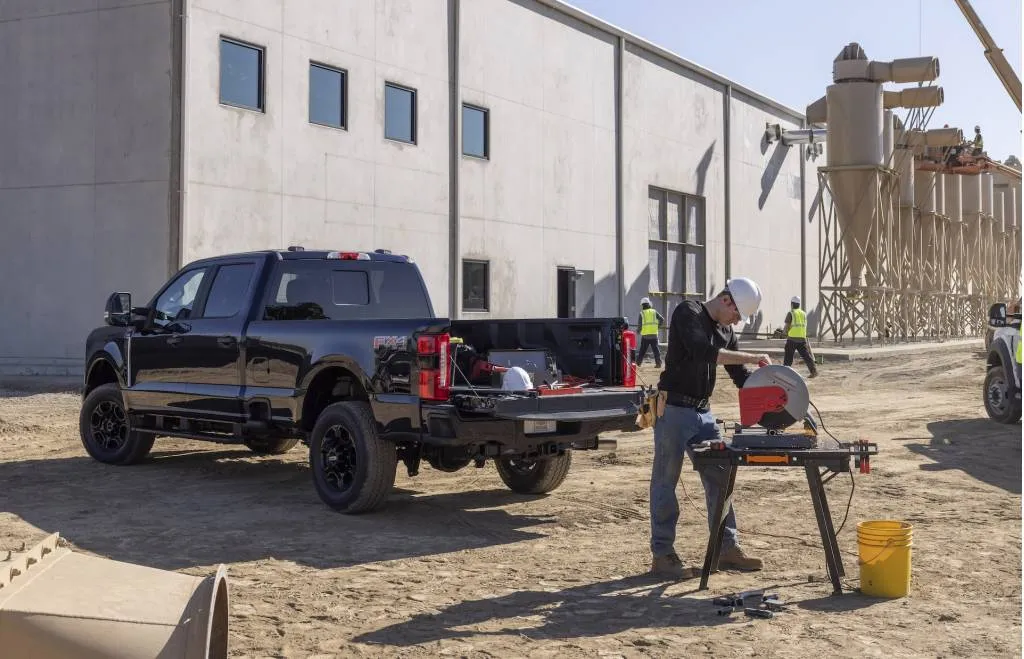
2024 Ford Super Duty F-250
Around the same time, Ford released financial results showing significant losses on EVs, or at least the ones attributed to the automaker’s Model E business unit. Model E handles electric passenger cars, but EVs are also sold by other Ford units, including the Fleet-minded Ford Pro. Ford at the time promised more-affordable EVs that could sell in larger numbers, but these will likely take some time to arrive.
Meanwhile, Ford has been spied testing what appears to be an electric pickup with in-wheel motors and the eight-lug wheels normally used by heavy-duty trucks like the Super Duty. But remains to be seen whether this technology will reach production.


Will in-wheel motor tech go big in electric pickups?
In-wheel motors became a reality in a production electric pickup for the blink of an eye—in the Lordstown Endurance. But the technology, also known as wheel-hub motors, hasn’t yet been confirmed as production-bound for any other U.S. passenger vehicle or personal-use truck.
That could change in the future. Based on some pictures recently published, Ford appears to be testing a pickup truck with in-wheel electric motors, possibly for an electric version of its Super Duty heavy-duty pickups.
Spy photos published Thursday by Autoblog show a camouflaged truck that appears to be a modified Ford F-150 Lightning. It’s hard to say for sure, but the circular shape behind the wheel seen in one photo looks like a hub motor. It’s certainly suspicious that the vehicle lacks visible brake calipers, as Ford no longer offers drum brakes on its big pickups, Autoblog notes.
The truck also has eight-lug wheels, which are used on Ford Super Duty pickups but not on the production Lightning or gasoline F-150. An electric Super Duty would also make more sense as an application for in-wheel motors as Ford already nixed them for the Lightning.
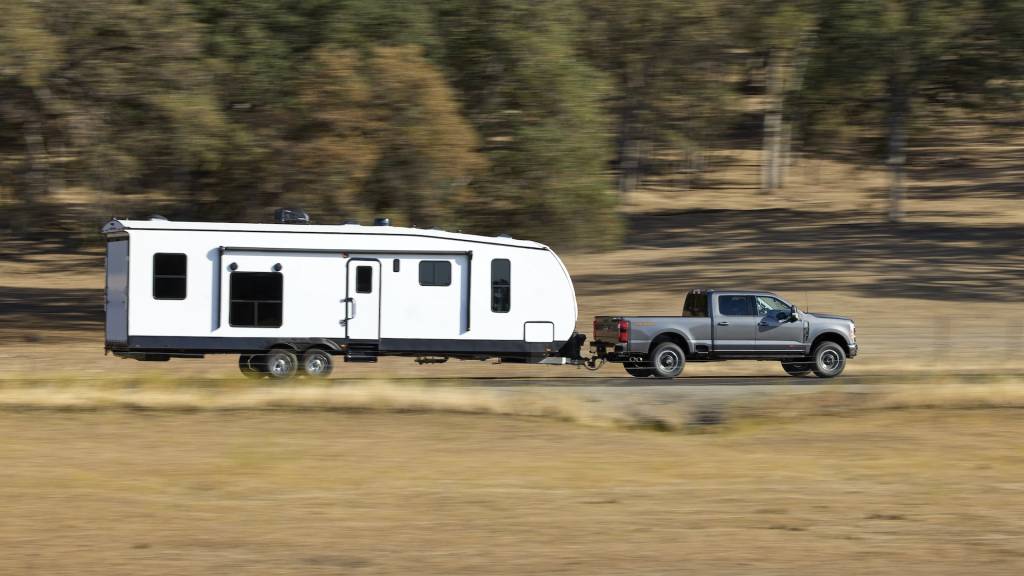
2024 Ford Super Duty F-250
Ford’s global EV product development director, Darren Palmer, told Green Car Reports in 2021 that Ford considered in-wheel motors for the F-150 Lighting and confirmed that Ford continued to test them, but he emphasized that it decided they didn’t make the cut then for a number of reasons. The unspring mass, making the ride and handling difficult to tune and tame, was part of it. But the dealbreaker sounded to be hub motors’ seals, potentially letting contaminants in from off-roading.
Lordstown Motors opted for hub motors licensed from Slovenian firm Elaphe for the ill-fated Endurance. Versus millions of Lightning development miles, Lordstown said in 2021 that it had put about 20,000 development miles on its electric pickup before its release and about 200,000 development miles on the motors. Only a handful of Endurance trucks were completed before the company declared bankruptcy.
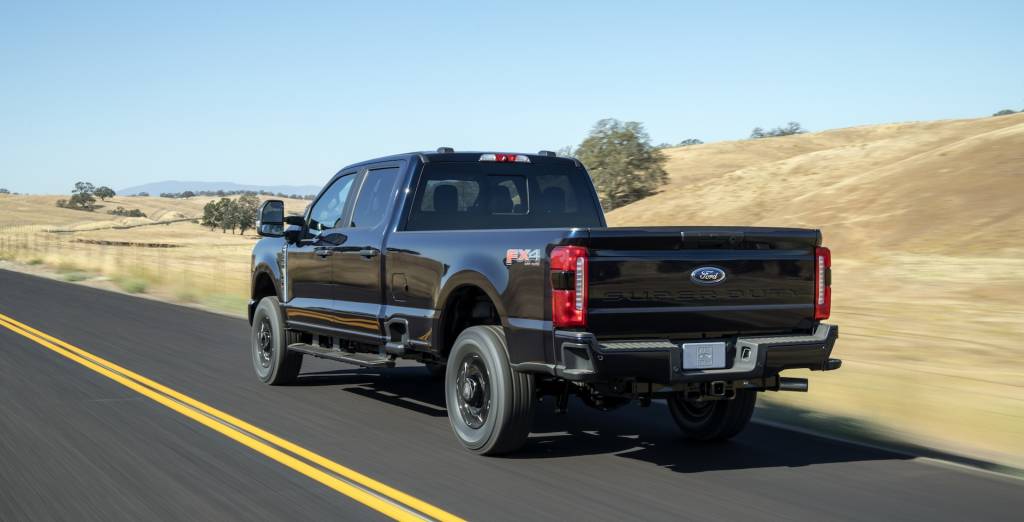
2024 Ford Super Duty F-250
That said, in 2023, Ford filed a patent for a system that uses a combination of in-wheel motors and solid axles. Perhaps that system is now being put to the test.
Meanwhile, Ferrari, McLaren, and others are reportedly considering in-wheel motors for future performance EVs. Several aftermarket conversions have shown off the packaging strengths that they allow as well. But it’s yet to be revealed whether the technology has evolved enough for Ford (and perhaps others) to see them as a viable solution—or whether they’ll remain at the testing stage for many years to come.

Tesla Cybertruck off-road mode detailed
- Tesla explained how the Cybertruck’s off-road modes work
- Cybertruck’s off-road modes include Baja, Overland, and Wade
- The off-road modes came via an over-the-air software update in May
Tesla added an off-road mode to the Cybertruck with a software update announced in May, and recently released a video explaining how it works.
Like the off-road modes available in other electric pickups like the Rivian R1T and GMC Hummer EV, Tesla’s includes a mix of features that alter vehicle characteristics for specific terrain, as well as driver aids to make navigating said terrain easier.
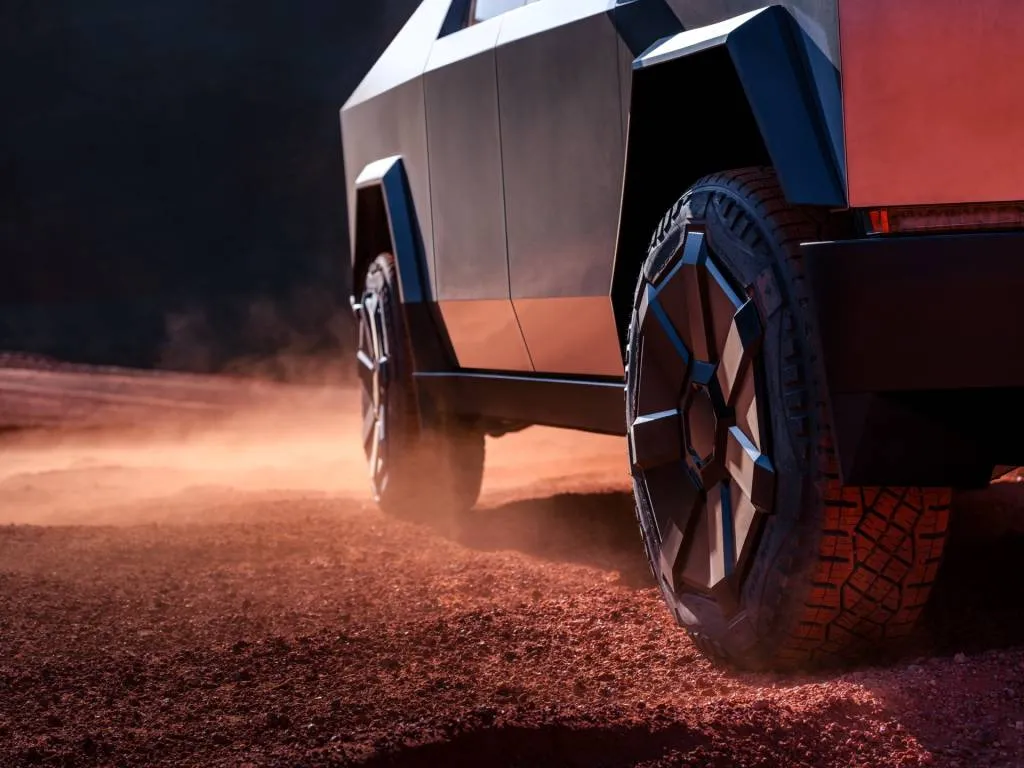
2025 Tesla Cybertruck – Courtesy of Tesla, Inc.
Within off-road mode, an Overland mode maximizes traction for low-speed, technical driving over rocks, while Baja mode is designed for higher-speed driving over loose surfaces. Drivers can also adjust the handling balance with a touchscreen slider, allowing for more stability or agility as needed.
Wade mode raises the ride height and pumps pressurized air into the battery compartment to help keep out water. This allows the Cybertruck to ford up to 32 inches of water, according to a Tesla off-road guide for owners. The feature is only available for 30 minutes at a time, and it may to take up to 10 minutes to pressurize the battery pack, Tesla notes.
[embedded content]
Tesla also included Trail Assist, essentially a low-speed off-road cruise control similar to what other brands already offer on their off-roaders. It automatically maintains a set speed (including while ascending and descending hills), letting the driver focus on steering around obstacles.
Tesla revealed the production version of the Cybertruck in November 2023, retaining much of the styling of the gasp-inducing stainless-steel behemoth Tesla first showed in 2019. But the production Cybertruck doesn’t come anywhere close to the $39,900 starting price or range of up to 500 miles Tesla suggested at the time. The Cybertruck has also been subject to numerous recalls since its launch due to busted wiper motors, loose trim, and sticky accelerator pedals.

VW already created an EV sub-brand for its EV sub-brand—for China
- Volkswagen’s adding a sub-brand to a sub-brand as part of its EV push
- The new sub-brand will be for China only and named ID.Unyx
- Volkswagen already launched a sub-brand in China named ID.UX
Volkswagen is launching a China-only sub-brand within its ID EV sub-brand.
The automaker on Wednesday announced ID.Unyx, which will include five electric models by 2026, starting with a coupe-like crossover of the same name. They’ll be among 34 new models the automaker plans to launch globally by 2030, with a specific focus on China as it looks to reinforce its position in the world’s largest car market.
“Intelligently networked electric models such as the new ID.Unyx are the key to attracting young, lifestyle-oriented target groups and retaining existing customers for the Volkswagen brand,” Stefan Mecha, head of the VW brand in China, said in a statement. Mecha didn’t explain why these new models needed to be in a new sub-brand nested within the ID EV family, though, and didn’t specify whether they’ll use the same MEB platform as other ID models.
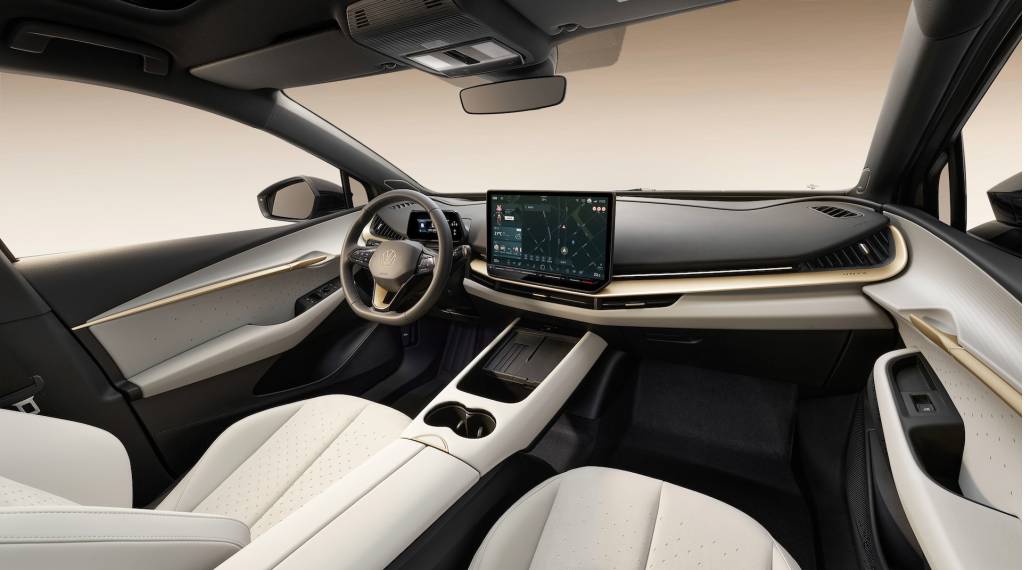
Volkswagen ID.Unyx
VW did say that the first ID.Unyx model was developed at a new facility in Hefei, China, and will also be manufactured in that city. Styling differs a bit from other ID models, with sharp creases in the body sides, a ribbed hood, and complex detailing on the front and rear bumpers.
The ID.Unyx crossover coupe will be offered with both single-motor rear-wheel drive and dual-motor all-wheel drive powertrains, rated at 281 hp and 335 hp, respectively. A 77.0-kwh battery pack is used with both powertrains. VW expects single-motor models to achieve 385 miles of range in CLTC testing.
The ID name goes back to 2016, when the initial ID concept debuted at the Paris auto show. That concept previewed the ID.3 electric five-door hatchback that would eventually launch in Europe as the first ID model. VW has since settled on a mix of numbers, as with the ID.3 and the ID.4 crossover that is central to the automaker’s EV plans in the U.S., and names, as with the ID.Buzz van—with the ID prefix.
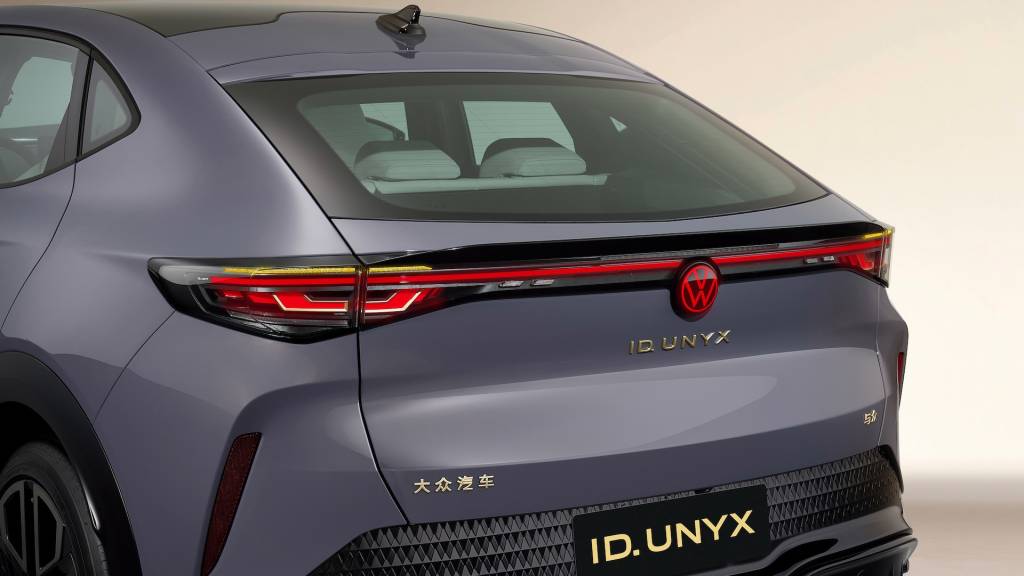
Volkswagen ID.Unyx
But VW has looked to supplement the global ID sub-brand with China-specific EVs. It previously announced a different sub-brand for China, called ID.UX, with five models in 2027. At the 2024 Beijing auto show, it unveiled a concept car called the ID.Code with styling claimed to be more in line with Chinese tastes.
VW is also developing at least one China-specific EV platform, dubbed the China Main Platform (CMP) for debut in 2026 and is partnering with Chinese automaker Xpeng on EV development. That’s in addition to existing joint ventures with local automakers SAIC and FAW, which originated under a government policy that required foreign automakers to partner with local firms.

Mercedes-Benz adds Starbucks locations to its EV fast-charging network
Mercedes-Benz will install EV fast chargers at over 100 Starbucks locations, the two companies announced Monday in a press release.
The initial phase will see Mercedes install 400-kw DC fast chargers at Starbucks locations along the I-5 corridor, the highway route that served as the location for one of the earliest charging infrastructure projects, known as the West Coast Electric Highway, over a decade ago. It stretches from Canada to Mexico, passing through Starbucks’ home city of Seattle.
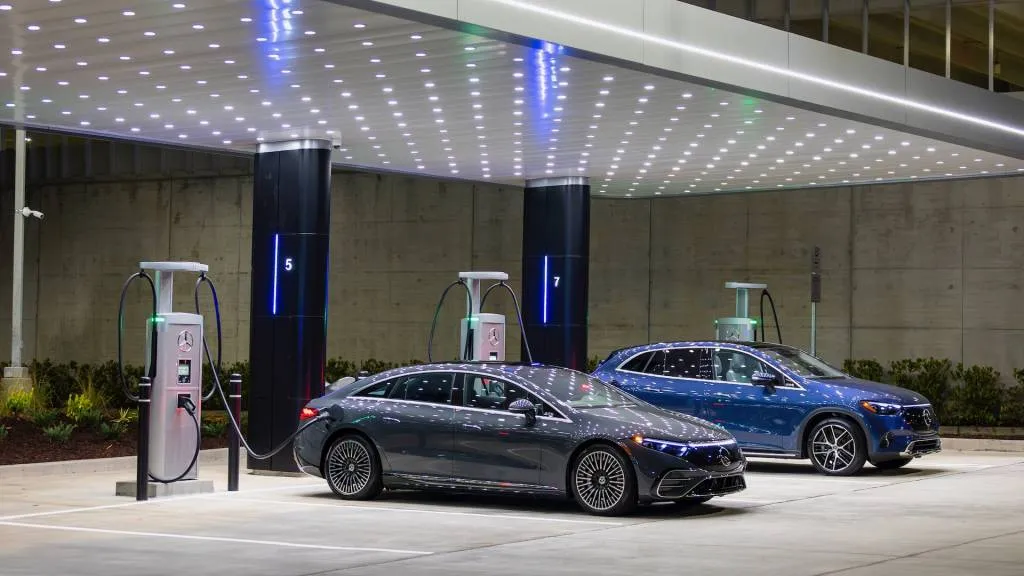
Mercedes-Benz EV Charging Hub in Sandy Springs, Georgia
Mercedes and Starbucks didn’t say how many chargers would be installed in the first phase, or what locations subsequent phases of the buildout would focus on.
The project follows a Volvo pilot program, announced in 2022, to add up to 60 ChargePoint DC fast chargers at up to 15 Starbucks stores along a 1,350-mile route between Seattle and Denver, with chargers placed every 100 miles.
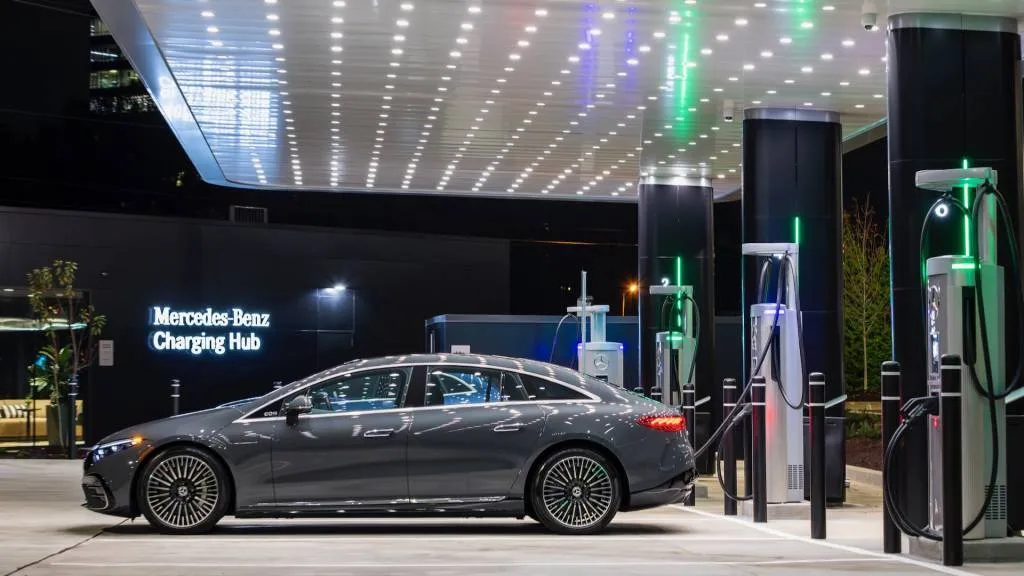
Mercedes-Benz EV Charging Hub in Sandy Springs, Georgia
Mercedes announced its fast-charging network in January 2023, and opened the first charging site in Sandy Springs, Georgia, near Atlanta, in November. The automaker has said it will use 400-kw hardware exclusively, with amenities like restrooms, vending machines, and well-lit charging stalls at planned standalone charging hubs. These hubs will eventually include both Combined Charging Standard (CCS) and Tesla-style North American Charging Standard (NACS) connectors.
The automaker claims to have opened a dozen additional charging hubs across Texas, Alabama, Georgia, Florida, South Carolina, Tennessee, and Kentucky since the November 2023 launch. It expects to continue expanding the network to “nearly half” of U.S. states in the next 12-18 months. Partnerships like the one with Starbucks will give Mercedes flexibility to build out the network at sites that may not be able to accommodate a dedicated charging hub.

GM CEO backs away from 1M EV target, says market’s “not developing”
- GM announced in 2022 it could build 1M EVs annually in 2025
- It aimed to make 400,000 EVs over 2022 and 2023—later extended into 2024
- Backpedaling on both targets, CEO Barra now says an undeveloped EV market is to blame
General Motors CEO Mary Barra has walked back the automaker’s target of having production capacity for one million EVs in 2025, blaming slowing demand.
Barra told CNBC (via Bloomberg) at an event July 15 that GM wouldn’t have the planned production capacity in place by next year, adding that customer demand would determine how quickly GM would reach one million annual EV sales, and that it’s currently seeing a slowdown in EV deliveries.
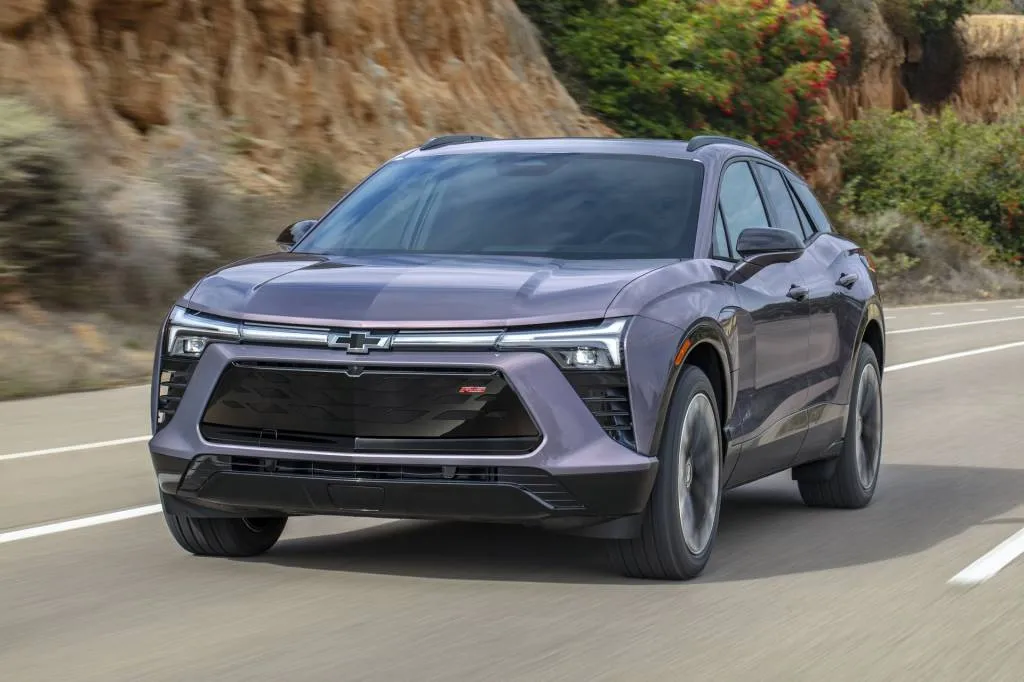
2024 Chevrolet Blazer EV RS
“We won’t get to a million just because the market’s not developing, but it will get there,” Barra said.
U.S. EV deliveries were flat in the second quarter compared with the same period in 2023, but still up 11% from the first quarter, according to research firm Cox Automotive. But GM has also struggled more than other automakers to ramp up EV production.
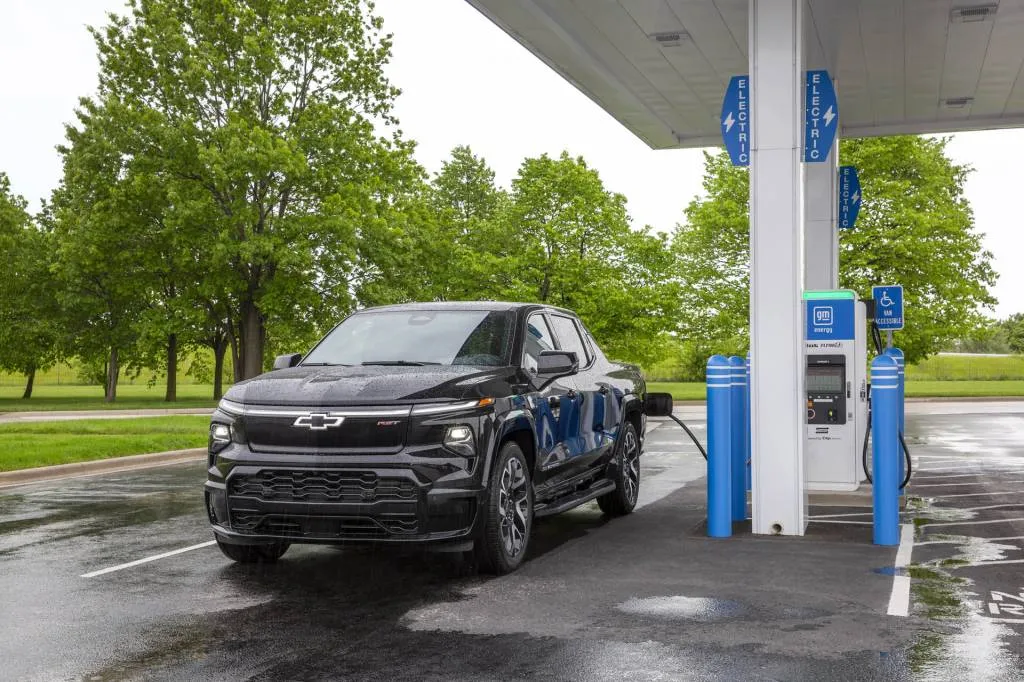
2024 Chevrolet Silverado EV
GM announced the one-million-EV goal in 2022, but struggled to accelerate EV production in the following year, due mostly to issues ramping up its Ultium battery cells. The automaker reported 21,390 EV deliveries in Q2 2024, up 34% from Q1 and 40% from the same period last year, indicating that it has turned a corner.
However, this pace meant GM was well off a goal of delivering 400,000 EVs in the first half of 2024, itself pushed back from 2023. And the discontinued Chevrolet Bolt EV outsold other Chevy EVs in the first half of this year, despite no longer being in production. So GM still has a long way to go with the Ultium ramp-up, which might be as much of an explanation of why it’s continuing to postpone EV targets as slowing demand.