
Category: General

Lightyear gets $11M to pivot from solar EV to supplier
- Lightyear secured approximately $11 million (10M Euros) of funding
- The funding will help the restructured business sell solar hardware
- Lightyear’s moved on from attempting to build its own EVs
Lightyear has secured 10 million euros (approximately $11 million at current exchange rates) to fund a new business of selling solar hardware for other companies’ vehicles, such as solar panels for vehicle rooftops.
“We will use this opportunity to grow our team of experts and technicians to become the leading supplier of on-board solar systems for vehicles,” Bonna Newman, who was appointed CEO of Lightyear earlier this year, said in a statement.
The Netherlands-based company previously focused on designing EVs that relied heavily on integrated solar panels, allowing for longer intervals between charging sessions. The company’s Lightyear 0 had a conventional battery pack and onboard charger, but the solar panels meant owners might not need to charge for months, Lightyear claimed.
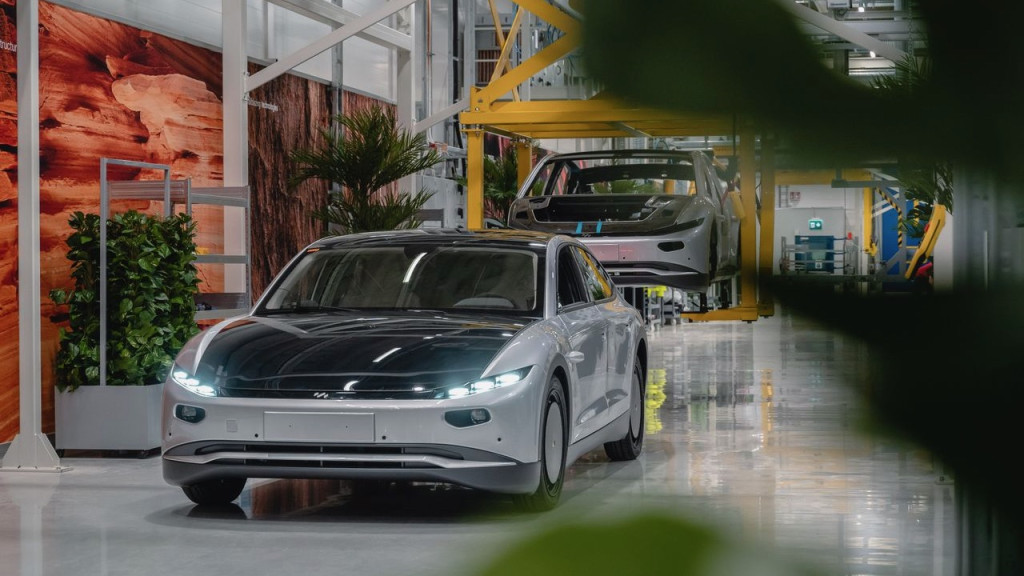
Lightyear 0 production at Valmet Automotive in Finland
This technology—and Lightyear itself—originated with the World Solar Challenge and Solar Team Eindhoven. That team’s cars, including the Stella Vie that predicted the form of the Lightyear 0, won championship titles.
The Lightyear 0 entered production in late 2022, with Lightyear claiming at the time to be the first to bring a solar car to market. The company also claimed the 0 had the most efficient powertrain and the most aerodynamic body of any car in production at the time.
However, the Lightyear 0 was an expensive, niche model. The car was to be built by contract manufacturer Valmet in Finland, initially at a rate of just one car per week. Valmet had been due to produce a 150-unit total, although only a few initial vehicles were built. The price was set at roughly $170,000.
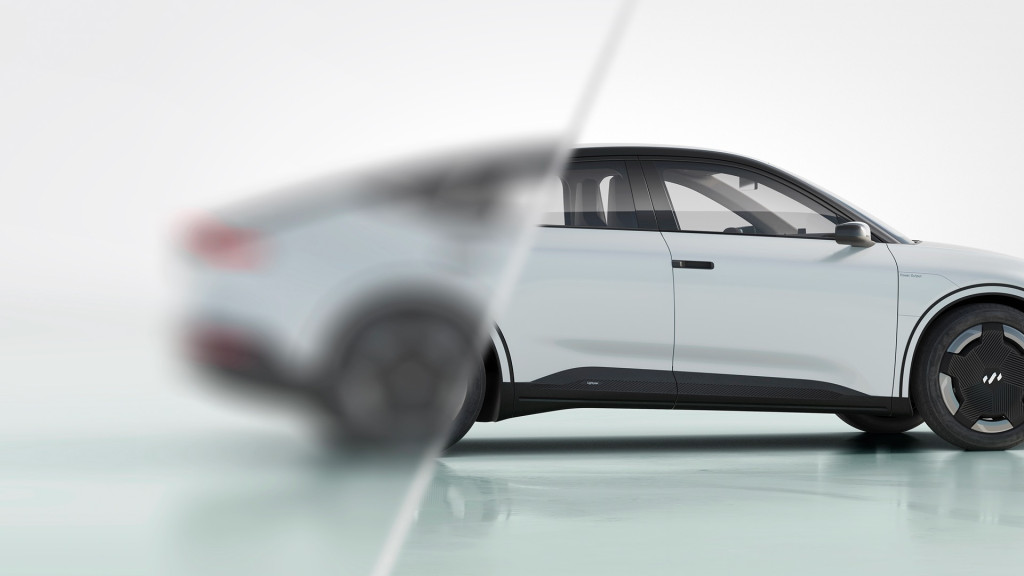
Waitlist announced for Lightyear 2 solar car due in 2025.
Lightyear nixed the 0 in order to pivot to the $40,000 Lightyear 2. The company announced plans for this follow-up model in 2021, and opened a waitlist in January 2023 in anticipation of starting production at the end of 2025. But the company was experiencing financial trouble as it made that announcement and never confirmed where the 2 would be manufactured.
A pivot from selling cars to selling solar hardware for use on other companies’ cars matches the path of another solar-EV startup. Sono Motors had also contracted with Valmet to manufacture its solar-assisted Sion hatchback, but terminated the project before production even started to focus on solar kits for commercial vehicles.

Study: Drivers misusing and abusing Tesla Autopilot system
- A study found Tesla drivers are distracted while using Autopilot
- Tesla’s Autopilot is a hands-on driver-assist system, not a hands-off system
- The study notes more robust safeguards are needed to prevent misuse
Driver-assist systems like Tesla Autopilot are meant to reduce the frequency of crashes, but drivers are more likely to become distracted as they get used to them, according to a new study published Tuesday by the Insurance Institute for Highway Safety (IIHS).
Autopilot, along with Volvo’s Pilot Assist system, were used in two separate studies by the IIHS and the Massachusetts Institute of Technology’s AgeLab. Both studies showed that drivers had a tendency to engage in distracting behaviors while still meeting the bare-minimum attention requirements of these systems, which the IIHS refers to as “partial automation” systems.
In one study, researchers analyzed how the driving behavior of 29 volunteers supplied with a Pilot Assist-equipped 2017 Volvo S90 changed over four weeks. Researchers focused on how likely volunteers were to engage in non-driving behaviors when using Pilot Assist on highways relative to unassisted highway driving.
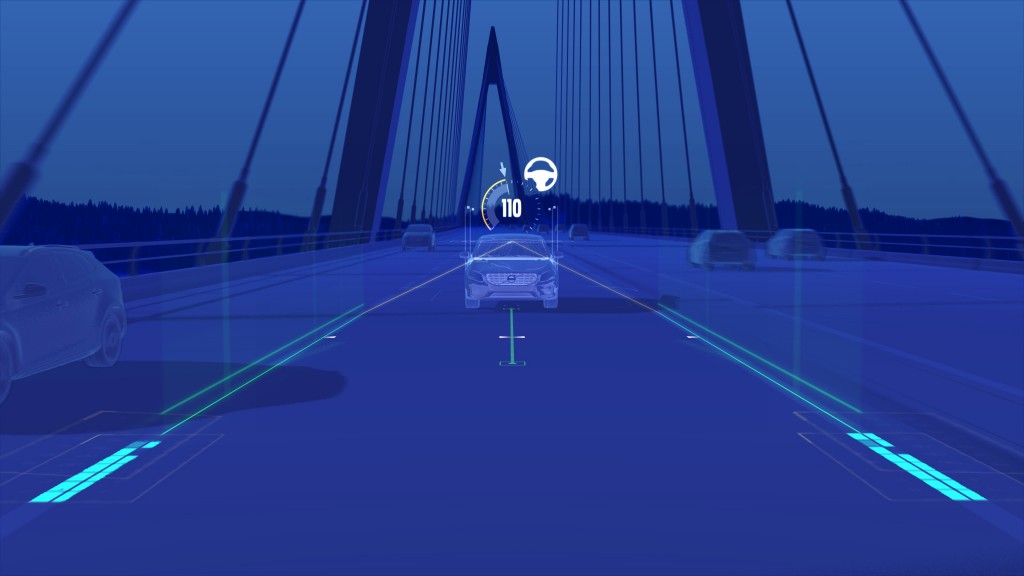
Pilot Assist, in 2017 Volvo S90
Drivers were much more likely to “check their phones, eat a sandwich, or do other visual-manual activities” than when driving unassisted, the study found. That tendency generally increased over time as drivers got used to the systems, although both studies found that some drivers engaged in distracted driving from the outset.
The second study looked at the driving behavior of 14 volunteers driving a 2020 Tesla Model 3 equipped with Autopilot over the course of a month. For this study, researchers picked people who had never used Autopilot or an equivalent system, and focused on how often drivers triggered the system’s attention warnings.
Researchers found that the Autopilot newbies “quickly mastered the timing interval of its attention reminder feature so that they could prevent warnings from escalating into more serious interventions” such as emergency slowdowns or lockouts from the system.
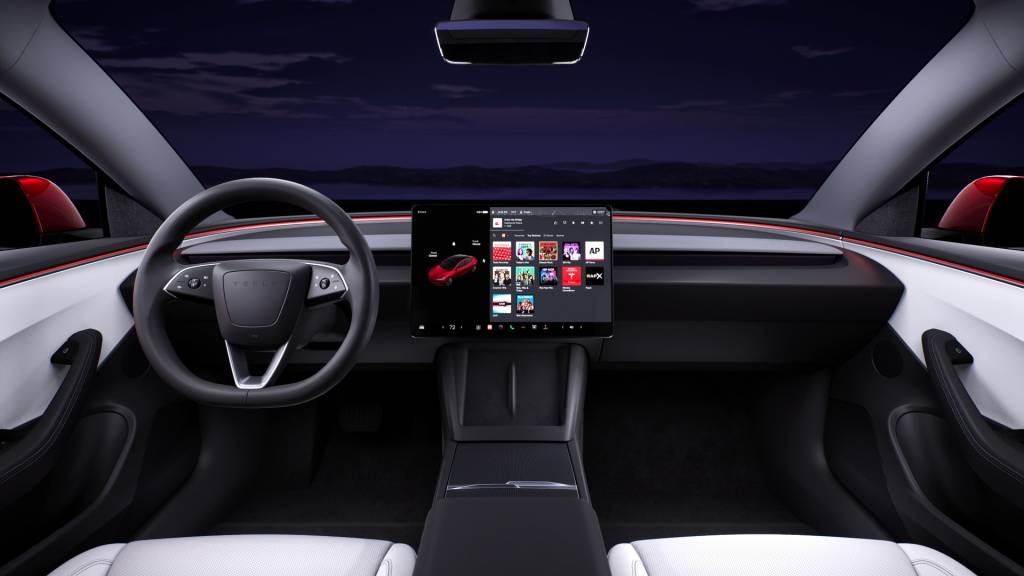
2024 Tesla Model 3
“In both these studies, drivers adapted their behavior to engage in distracting activities,” IIHS President David Harvey said in a statement. “This demonstrates why partial automation systems need more robust safeguards to prevent misuse.”
The IIHS declared earlier this year, from a different data set, that assisted driving systems don’t increase safety, and it’s advocated for more in-car safety monitoring to prevent a net-negative affect on safety. In March 2024, it completed testing of 14 driver-assist systems across nine brands and found that most were too easy to misuse. Autopilot in particular was found to confuse drivers into thinking it was more capable than it really was.
Autopilot’s shortcomings have also drawn attention from U.S. safety regulators. In a 2023 recall Tesla restricted the behavior of its Full Self-Driving Beta system, which regulators called “an unreasonable risk to motor vehicle safety.” Tesla continues to use the misleading label Full Self-Driving despite the system offering no such capability.

Luminar CEO Austin Russell | Forth director Jeff Allen (Episode 269)
Shift brings two timely conversations this week. First, Austin Russell explores what it takes to industrialize lidar at a time of turbulence in the industry. Then, Jeff Allen, previews the Forth electric transportation conference as it moves to Detroit.

Study: Never mind degradation, batteries will outlast EVs in most cases
- A study found the average EV battery degrades 1.8% per year
- That means EV batteries could last over 20 years, or longer than the EV itself
- Further reduction in degradation could help assure more second uses
Battery degradation can be a concern for potential electric vehicle owners, but new data indicates most batteries will outlast the EVs they’re installed in.
The data comes from the “Taking Charge” report released earlier this year by Geotab, a company that sells telematics systems and services, primarily to fleet companies. Geotab said it based its findings on data from 10,000 EVs operating in North America and Europe.
Analysis of that data showed average battery degradation of 1.8% per year, according to Geotab, which noted that batteries could last 20 years or more at that rate. Some vehicles performed even better, with estimated battery degradation of less than 1% per year.
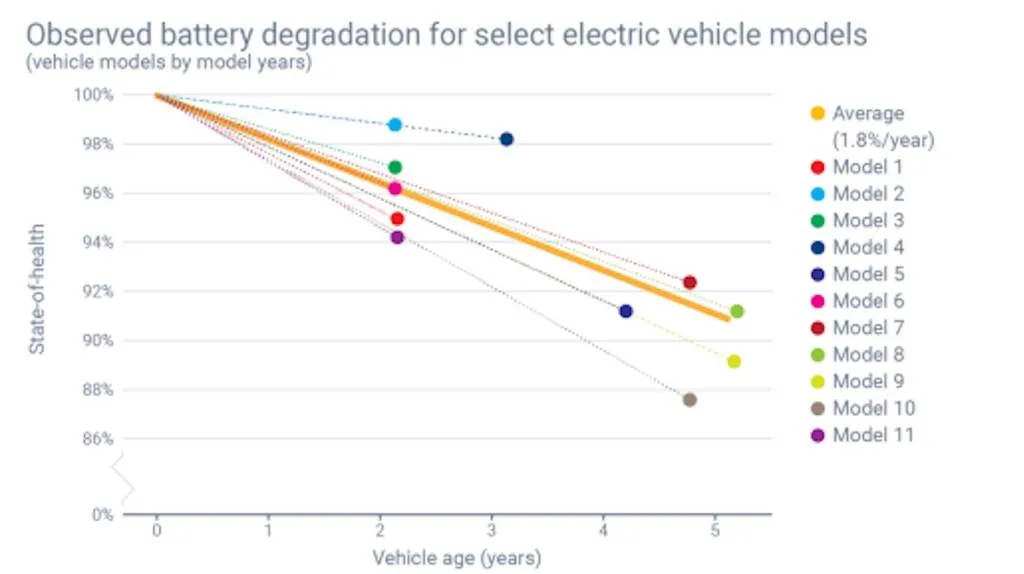
Observed EV battery degradation (from 2024 Geotab
Both numbers are improvements from just a few years ago. In 2019, Geotab saw average annual battery degradation rate of 2.3% from its sample, although that decreased to 1.6% under ideal climate conditions and charging patterns.
The report underscores that higher EV use doesn’t mean higher degradation, but more fast-charging might. Geotab noted a correlation between greater DC fast-charging use and faster-than-average battery degradation—especially for vehicles in hotter climates. Owners are often cautioned about frequent fast charging for this reason, although 2023 analysis by battery-data firm Recurrent showed Teslas performed better in this regard.
Similarly, previous analysis from Recurrent showed that EV batteries degrade faster in hot weather, but owners can take steps to prevent that, such as parking in a garage or in the shade, as well as leaving the battery half charged in hot weather. Any degradation from hot weather is also unlikely to leave people stuck in EVs.
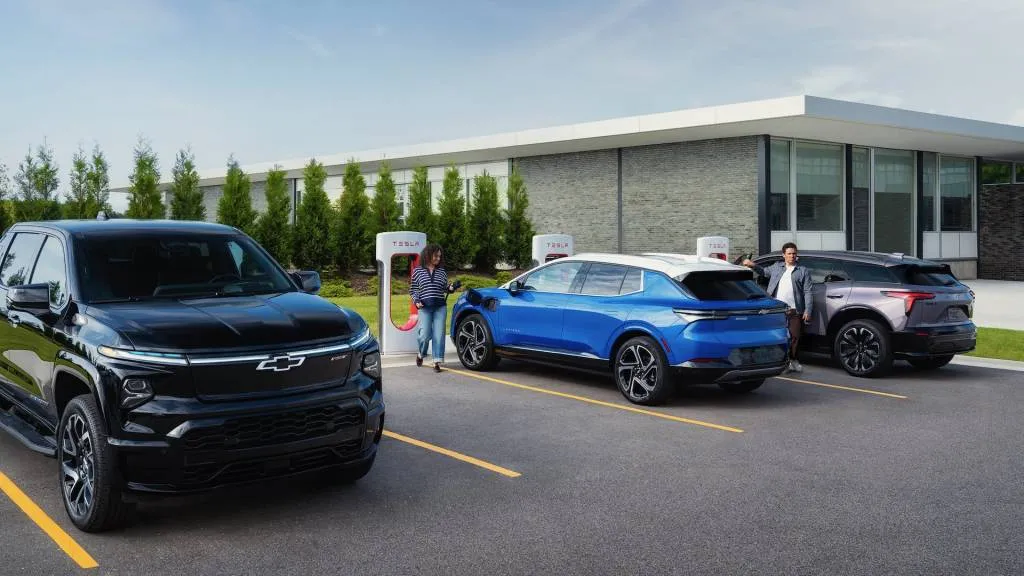
Chevrolet EVs at a Tesla Supercharger station
It’s also possible that battery degradation could be reduced even further with different practices. One study found that initial high-power charging at the factory could significantly extend EV battery life.
The slow rate of battery degradation observed in EVs already on the road should give fleet managers more confidence in electrification, Geotab says. In its report, the company estimates that 75% of light commercial vehicles could be replaced by comparable EVs today, and an EV could provide cost savings of $15,900 per vehicle over its life.
That also potentially leaves more room for second-life uses such as energy storage for solar, wind, grid-balancing and other clean-energy solutions.

EV charging stations give bump to nearby businesses, research confirms
Public charging stations don’t just drive EV adoption; they also increase consumer spending at nearby businesses, a new MIT study found.
The study is based on data from over 4,000 charging stations in California and 140,000 businesses, using anonymized credit and debit card transactions to track changes in spending. Researchers used data from 2019 through June 2023, but skipped 2020 to minimize any skewing of the results by the coronavirus pandemic.
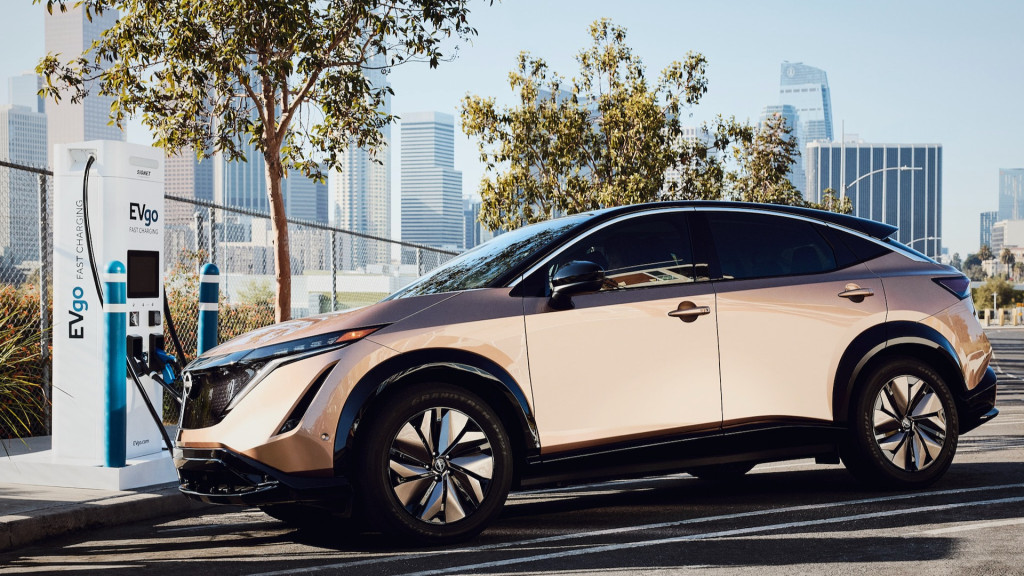
2023 Nissan Ariya at EVgo charging station
Using this data set, researchers found that opening a charging station in California boosted annual spending at adjacent businesses, on average, about $1,500 in 2019 and about $400 between January 2021 and June 2023.
To determine whether charging stations actually caused these spending increases, researchers compared data from businesses within 1,640 feet of a charging station before and after installation. The also analyzed data from similar businesses that weren’t near charging stations within the same timeframe.
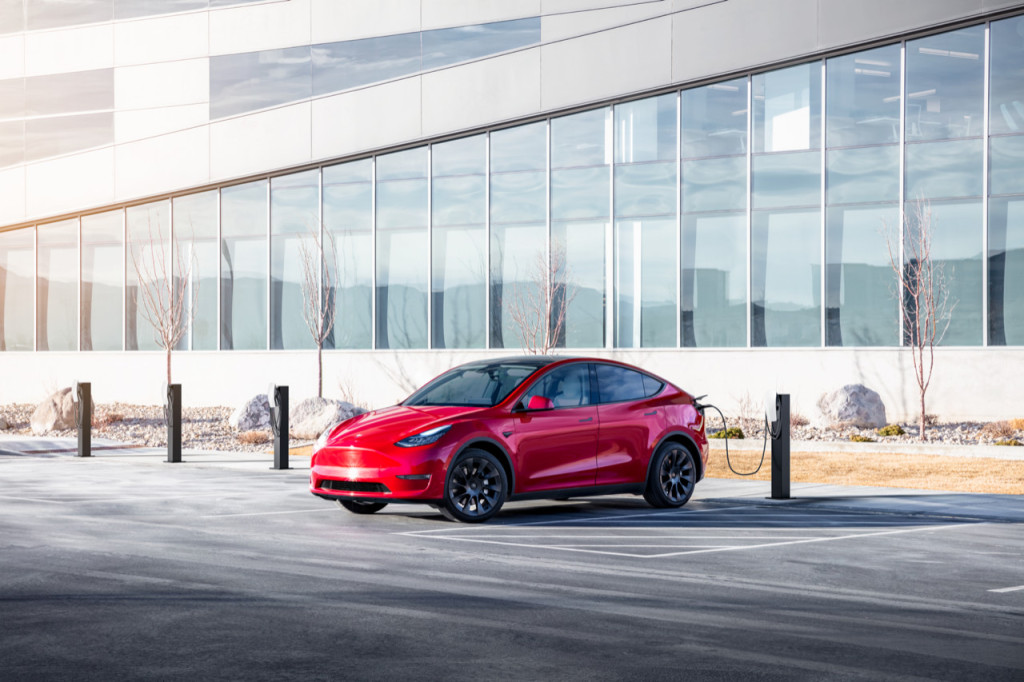
Tesla charging
In addition to pushing EV drivers to spend more at nearby businesses, charging stations themselves can make money. In 2022 a BP executive said, under certain circumstances, fast-charging stations could even be as profitable as gasoline pumps. An AutoPacific study published earlier this year also found that EV drivers want gas-station perks at charging stations—hinting at another way to get drivers to stop and shop at local businesses.
This helps underscore the potential economic ripple effects of the Bipartisan Infrastructure Law and the National Electric Vehicle Infrastructure (NEVI) program it backed. That program aims to start a national network of 500,000 EV chargers and, while that rollout is happening slowly due to a patchwork of local and utility rules, and coordinated state proposals, these results provide a picture of the economic growth they might help provide.

Lab-grown hides, shrooms, bamboo promise lower CO2 vs leather
- Leather alternatives could play a large role on lowering CO2
- Plant-based materials are being investigated
- The leather industry is pushing back
Leather alternatives could have a lower environmental impact than traditional leather made from animal hides, but may still require some development work, according to a new report from research firm IDTechEx.
Plant-based material and mycelium (mushroom) material are the leather alternatives attracting the most interest, according to the report. Either could be more sustainable than animal-based leather, the production of which is associated with greenhouse gas emissions, deforestation, and land monopolization from raising cattle, the report noted.
Plant-based leather could be made from a number of sources, including apple skins, pineapple leaves, cacti, grapes, and bamboo, adding that the challenge in making it a viable alternative to animal hides is in reducing plastic content and ensuring sufficient durability.
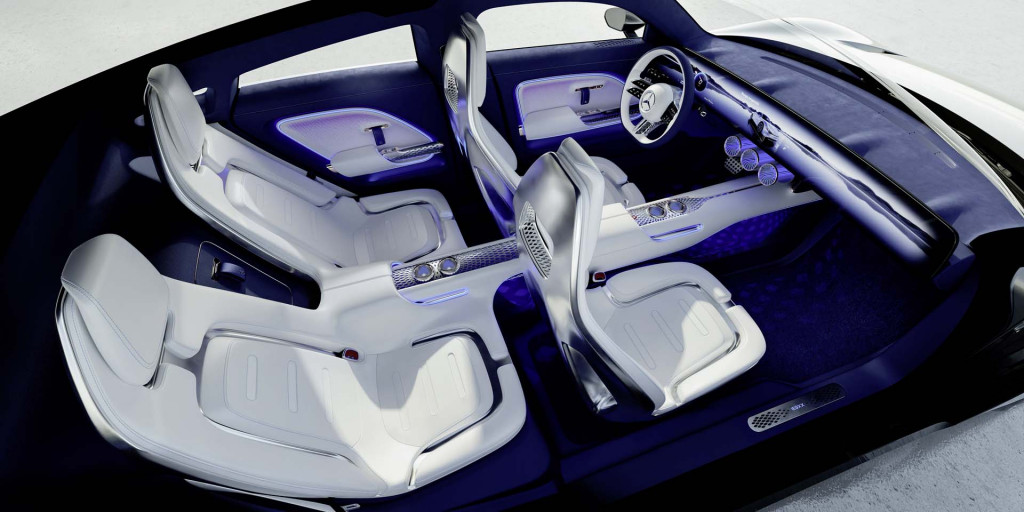
Mercedes Vision EQXX EV concept
Another alternative is mycelial leather made from the thread-like roots of fungi, which can be woven together into a mat-like format that can be cut and shaped, according to the report. Potential advantages include low water and energy usage, and the ability to both grow the feedstock and produce the leather within the same environment.
Automakers are already experimenting with shrooms. The Mercedes-Benz Vision EQXX and Cadillac Sollei EV concepts both used mycelium in their upholstery. But neither was intended as a production vehicle.
Microbial and lab-grown material, made from the fermentation of microorganisms and biopsies of animal skin cells, are another possibility, according to the report. This is still in the very early stages of development, however, and currently requires use of some plastic in the final product, the report notes. The use of animal skin cells also means the resulting leather isn’t vegan, although it would still be a major improvement over traditional leather in terms of emissions reductions.
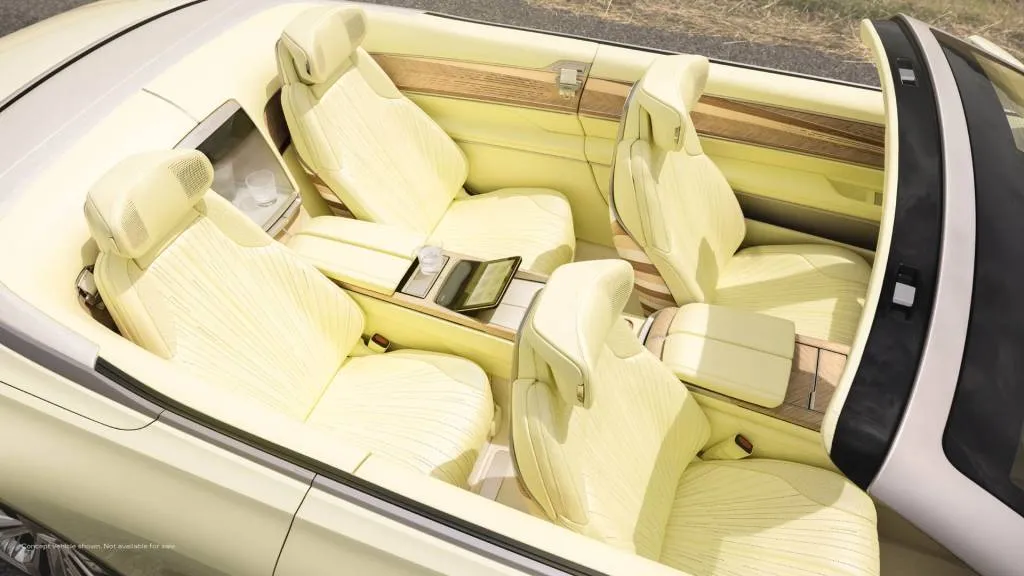
Cadillac Sollei concept
As automakers continue to reduce emissions from vehicle powertrains, more attention is being paid to use of sustainable materials to further reduce the carbon footprint of new cars. Volkswagen is working on synthetic leather made from hemp, and NASCAR even commissioned flax-based bodywork for its electric race car prototype.
The leather industry is pushing back, though. A trade group has argued that choosing leather lowers EVs’ carbon footprint because cattle are already being raised as a food source, so the use of hides for leather is effectively upcycling material that would otherwise be wasted. But that’s as much an argument against eating meat as it is against using synthetic leather.

VW recalling certain 2003-2024 ID.4s due to air bag inflator
Volkswagen is recalling a small number of ID.4 electric vehicles that may have improperly installed airbag inflators.
The recall includes just 837 vehicles from model years 2023 and 2024. In these vehicles, nuts securing the primary inflator of the passenger front airbag may have been left loose at the factory. This could cause airbags to inflate incorrectly, according to the NHTSA.
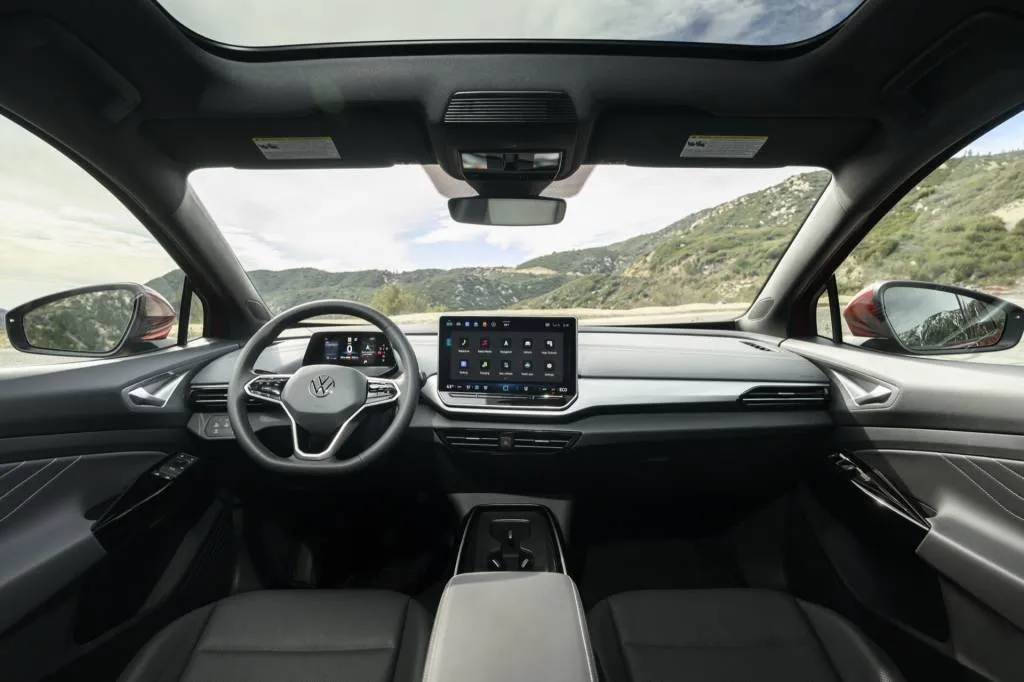
2024 Volkswagen ID.4
Owners may hear a rattling sound in the dashboard if the nuts securing the airbag inflator are loose, the NHTSA noted.
Dealers will check the torque of the airbag inflator screws, and replace the airbag if the screws are found to be loose, free of charge. VW plans to begin mailing owner notification letters October 18. Owners can also contact VW customer service at 1-800-893-5298 for more information.
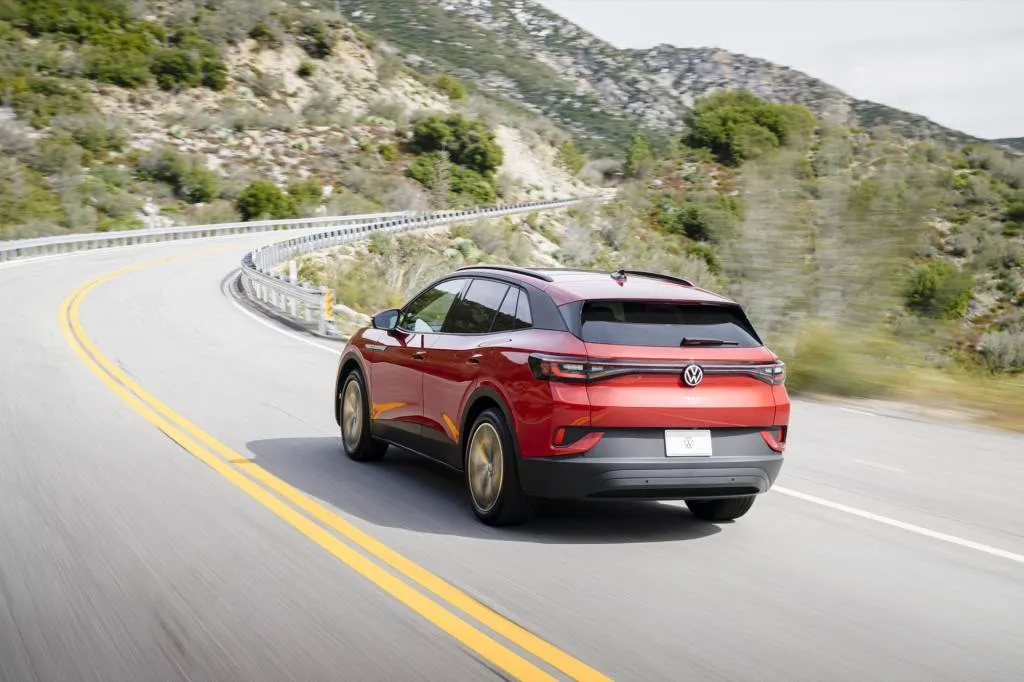
2024 Volkswagen ID.4
VW also recently issued a much larger recall of 98,806 ID.4 EVs from model years 2021 to 2024 for improperly manufactured door handles. The door handle issue resulted in a stop-sale and stop-production order being given for the ID.4 until a fix is implemented. The affected vehicles could have door handles with insufficient sealing, which could allow water to seep into a printed circuit board and cause doors to open unexpectedly. This follows a recall announced earlier this year for 2021-2023 ID.4 models that addresses issues with gauge clusters and infotainment systems.
Launched for the 2021 model year, the ID.4 received substantial upgrades for 2024, including more range and improved infotainment hardware that seemed to address many of the issues Green Car Reports found in earlier models. However, these improvements came with a price increase that somewhat eroded the VW’s value proposition. U.S. assembly in Tennessee does at least maintain the $7,500 federal EV tax credit for models with locally-sourced batteries, though.