
Category: General

Connecticut and Maine delay adopting California EV mandate
Connecticut and Maine have delayed adoption of California’s EV sales mandate, leaving EV advocates to retrench, reports Energy News Network.
On March 20, Maine’s Board of Environmental Protection voted 4-2 against adopting California’s Advanced Clean Cars II rules, which accompany the state’s planned ban on sales of new gasoline cars in 2035 and require more plug-in hybrids with higher electric range.
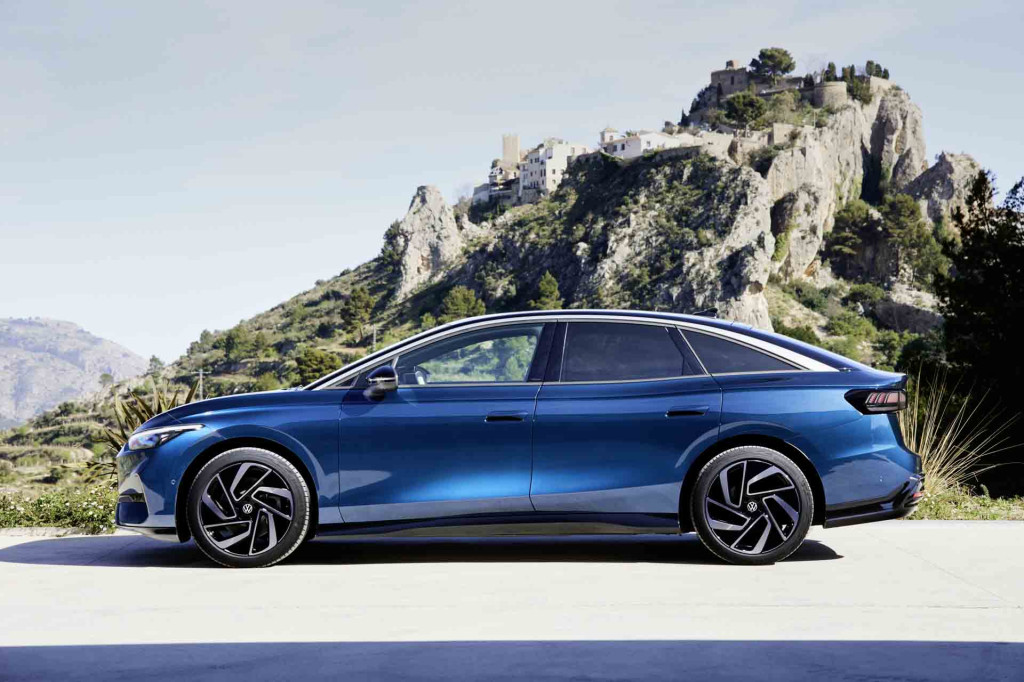
Volkswagen ID.7
Last November, Connecticut Governor Ned Lamont pulled a bill proposing adoption of the Advanced Clean Cars II rules from legislative consideration because it was not expected to have the votes to pass. And neither state has considered California’s Advanced Clean Trucks rules for commercial vehicles.
The two New England states haven’t exactly been hostile to EVs. Connecticut has been very proactive in its EV policy, in fact, and was one of the first states to revamp its EV policy around low-income households.
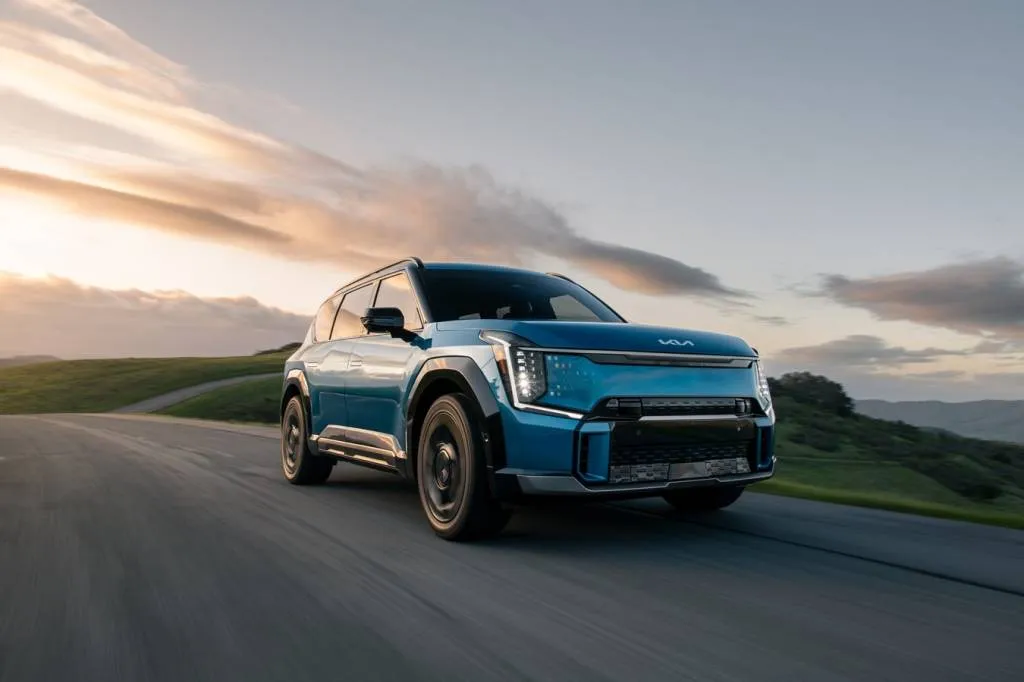
2024 Kia EV9
EV advocates believe the debate over adoption of the California standards in both states was “clouded by false and misleading claims, often pushed by fossil fuel industry groups,” according to the report. Advocacy groups are now concerned that the delay will push out adoption of the rules to the 2029 model year at the earliest, but are reportedly refocusing on efforts to build out charging infrastructure in the meantime.
California’s Clean Air Act waiver allows it to set its own, stricter emissions rules, which other states can follow in lieu of the federal rules. The West Coast states were quick to align behind California in this latest round of emissions standards, but it’s taken others much longer. However, mandates may not be the most effective factor in increasing EV sales. A 2021 Energy Department survey found that three of the five states with the most EVs did not have mandates for them.

Kia EV plans, NJ $1,000 EV fee, Stellantis’ EV skepticism: Today’s Car News
Kia keeps to its EV goals. New Jersey is asking for EV buyers to pay $1,000. And the CEO of global automaker Stellantis seemingly denies that EVs are a greener choice yet. This and more, here at Green Car Reports.
Kia on Friday detailed plans for its shift toward EVs and electrified powertrains through the decade, and it hasn’t budged in its target of 1.6 million Kia EV sales annually by 2030. But it does now see about 800,000 annual hybrid, plug-in hybrid, and fuel-cell sales by then—making electrified vehicles 58% of its mix in 2030.
With a bill signed into law last week, New Jersey is marking up EV ownership with an additional $1,000 upfront fee that applies on top of other existing registration fees. While it effectively replaces the role of the gas tax for EVs in funding road maintenance, it could amount to a disincentive toward the state’s adoption of California’s EV mandate and its goel to hit 50% EV sales by 2027 and 100% by 2035.
And Stellantis CEO Carlos Tavares last week claimed that EVs need a “breakthrough” in battery-cell energy density before they make sense from an environmental standpoint versus combustion vehicles—partly because of all the extra weight and raw materials. That stands in stark contrast to the overwhelming majority of academic papers and calculations from everyone ranging from environmental organizations to automakers, suggesting that EVs in their present state of tech pay off quickly in CO2 and overall environmental impact.
_________________________________

Kia keeps to EV goals but plans to enhance hybrid lineup
Kia remains committed to an ambitious EV sales goal, but plans to keep hybrids and plug-in hybrids as part of its product mix, the automaker announced Friday in a presentation to investors.
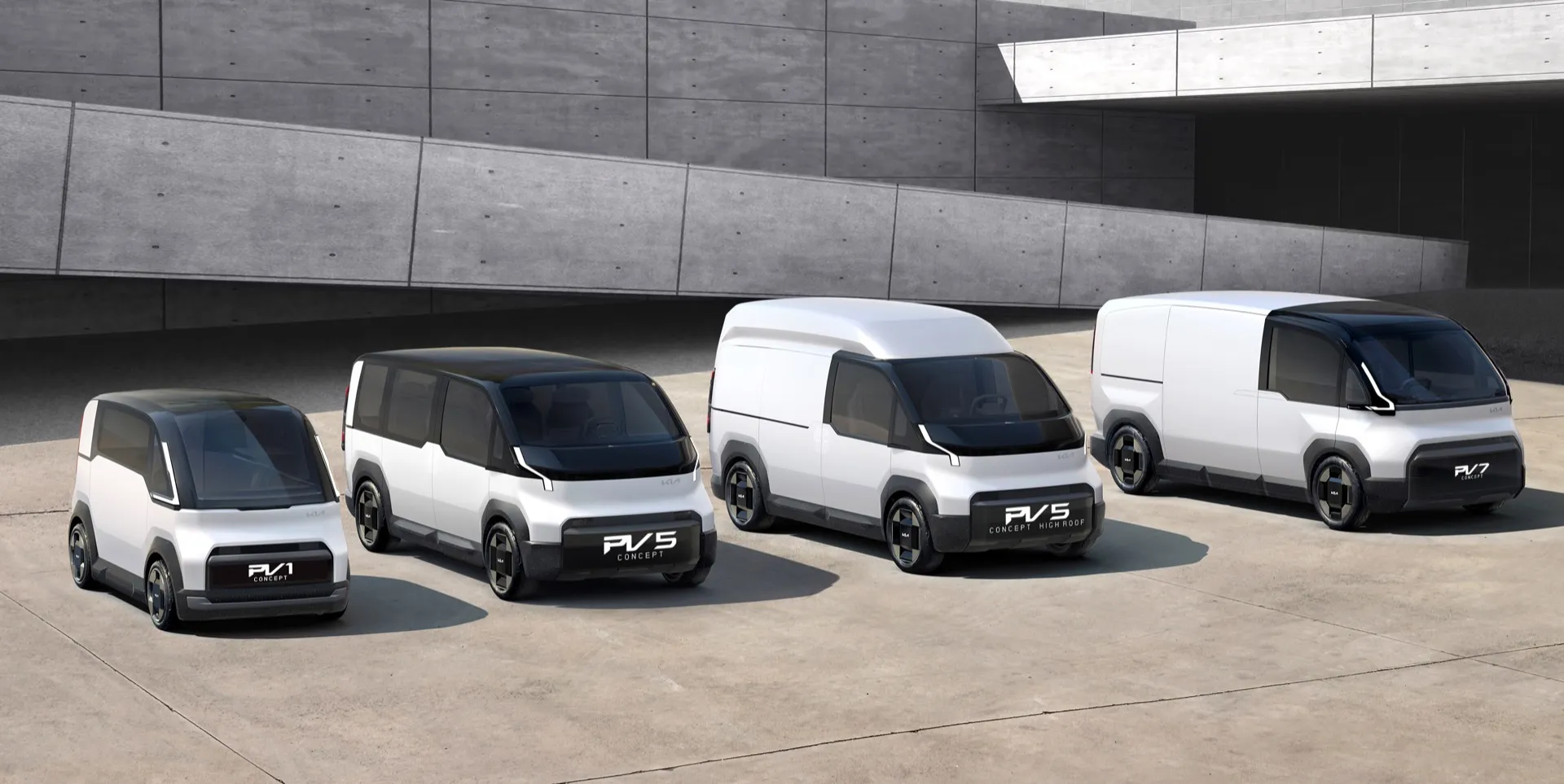
Kia still targets 1.6 million global EV sales annually by 2030. That’s the same goal the automaker stepped up to in 2023, versus a previous target of 1.2 million. And it plans to introduce 15 new electric models globally by 2027. Its flexible PBV electric vans, designed to switch from delivery vehicles to taxis, might initially be about 250,000 of these global sales.
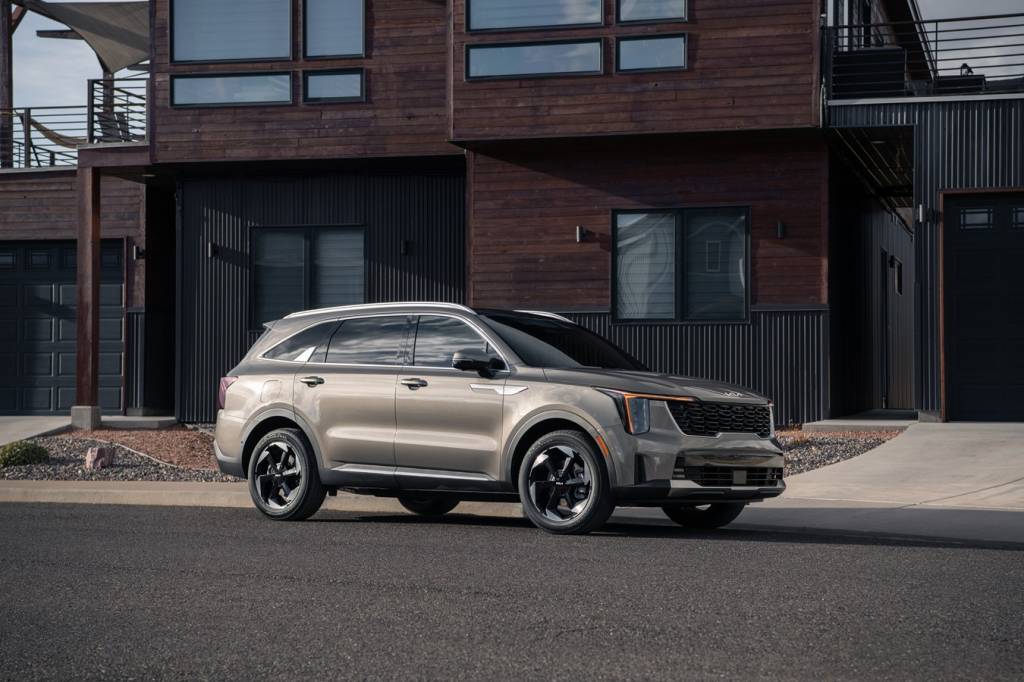
2025 Kia Sorento plug-in hybrid
Now Kia is also saying that those EVs will be a portion of a targeted 2.4 million global sales of “electrified models” by the end of decade, encompassing hybrids and plug-in hybrids alongside all-electric models. Kia anticipates that these models will represent 58% of its yearly global sales by 2030, which claims will give it the highest percentage of electrified-model sales of any (full-line) automaker at that point.
Growing sales will include increasing the number of model lines for all powertrain types. Kia plans to introduce EV2, EV3, EV4, and EV5 models globally, and grow its global hybrid lineup from six models in 2024 to eight in 2026, adding a ninth hybrid in 2028.
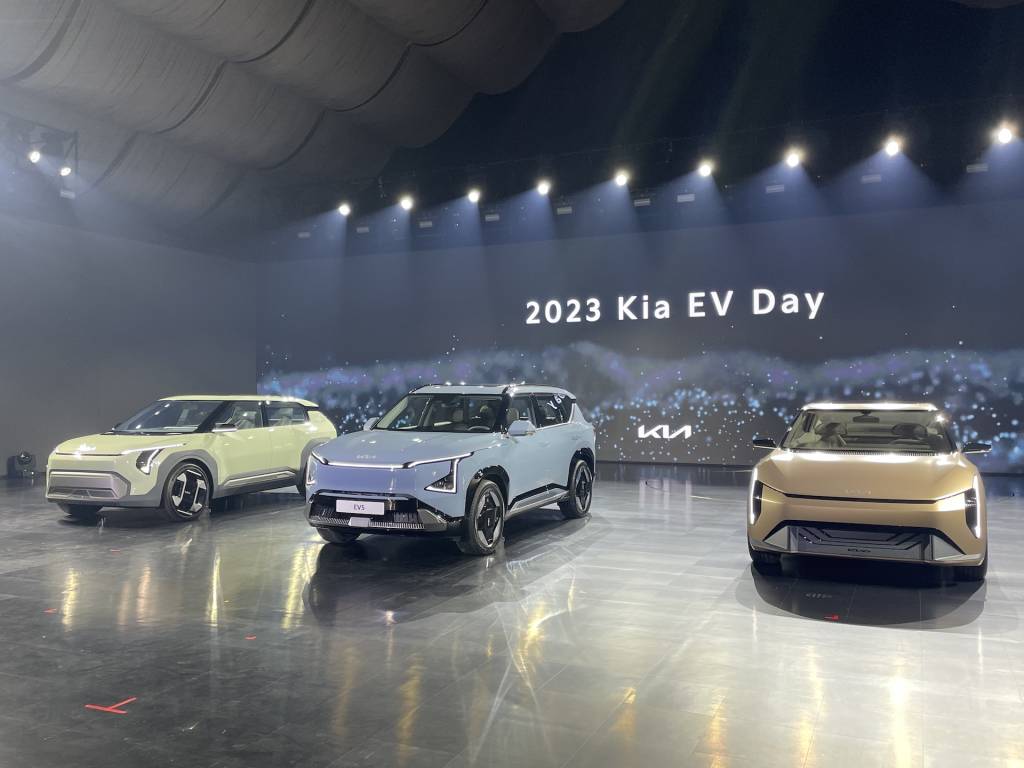
Kia EV Day, October, 2023
Kia first showed the EV5, a compact crossover in August 2023, with concept versions of the EV4 and EV5 appearing a few months later. Kia said at the time that the EV3 would target a base price of $30,000-$35,000, but so far hasn’t disclosed firm plans to bring any of these new models to the U.S.
In 2021, the company also added plans for a hydrogen fuel-cell lineup in 2028, and to phase out leather later in the decade—part of a large-scale sustainability vision. At the time, Kia announced aims to achieve a fuel-cell vehicle at a price point comparable to that of a battery-electric vehicle by 2030.

Shay Natarajan on confident mobility investing through uncertain times (Episode 245)
The partner at investment firm Mobility Impact Partners explains how she looks beyond transportation tech hype when investing and details a viable path for electrification through charging and infrastructure uncertainty.
Jay Joseph sketches out Honda’s hydrogen strategy (Episode 244)
The vice president of sustainability and business development at American Honda Motor Inc. details the automaker’s new CR-V fuel cell variant, an H2-focused joint venture with General Motors and the state of hydrogen infrastructure.
Justine Johnson touts Michigan as a hub of mobility (Episode 243)
Michigan’s chief mobility officer shares the state’s efforts to ensure that transportation is equitable, clean and innovative across land, air and waterways.
Energy Department’s Chelsea Sexton finances transportation’s future (Episode 242)
The program officer for the U.S. Department of Energy’s Loan Programs Office explains how EV and energy policy gets implemented through billions in federal loans, and how that work underpins a clean-energy economy.
Impact of the DARPA Grand Challenge reverberates 20 years later (Episode 241)
March 13 marks the 20-year anniversary of the inaugural DARPA Grand Challenge race, which catalyzed interest in self-driving tech. DARPA Director Tony Tether, Carnegie Mellon University’s Red Whittaker, Waymo’s Melanie Dumas Grimm and Pronto’s Anthony Levandowski offer reflections on that race and how it steered the course of automated-driving development.
Editor’s note: We have corrected the spelling Melanie Dumas Grimm’s name.
Augustin Wegscheider parses the nuances in AV, EV forecasts (Episode 240)
The co-leader of Boston Consulting Group’s Center for Mobility Innovation discusses complications in deploying automated-driving technology and points to limited EV offerings as a contributing factor behind a sales slowdown.
Larry Burns identifies the biggest threat to the automotive future (Episode 239)
The retired General Motors vice president of R&D and adviser to Google and Waymo believes the way digital technology is reshaping our lives will impact both vehicle development and whether we need vehicles at all.