Category: Design

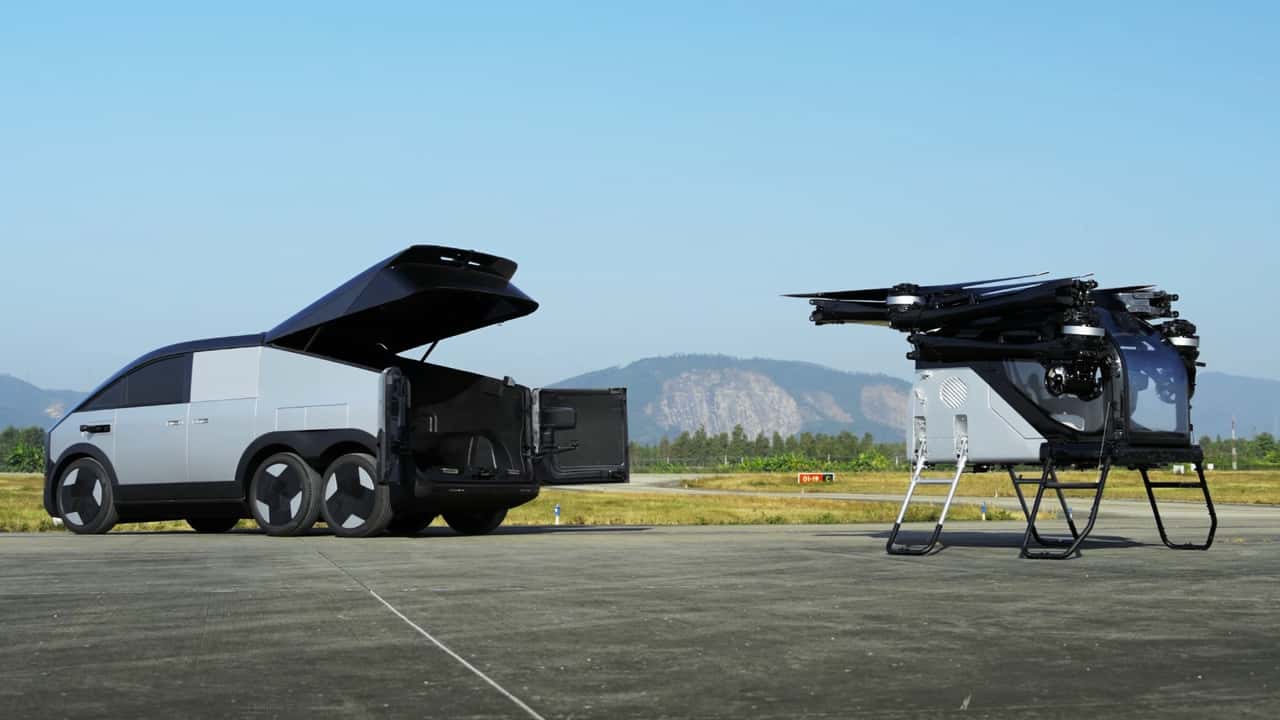
For Sale, Maybe: A Six-Wheel Van That Launches A Flying Car
CES has a long history with flying cars. But the CEO of Xpeng AeroHT says the company is serious. Can they pull it off?

Honda Says Thin Is In: 0 Saloon And 0 SUV Designs Are Close To Production
- The 0 Saloon and 0 SUV will enter production in Ohio starting in 2026.
- It’s not clear if the 0 Saloon or 0 SUV will remain the production names for these vehicles.
- Honda executives were clear that these designs are close to the production versions of these vehicles.
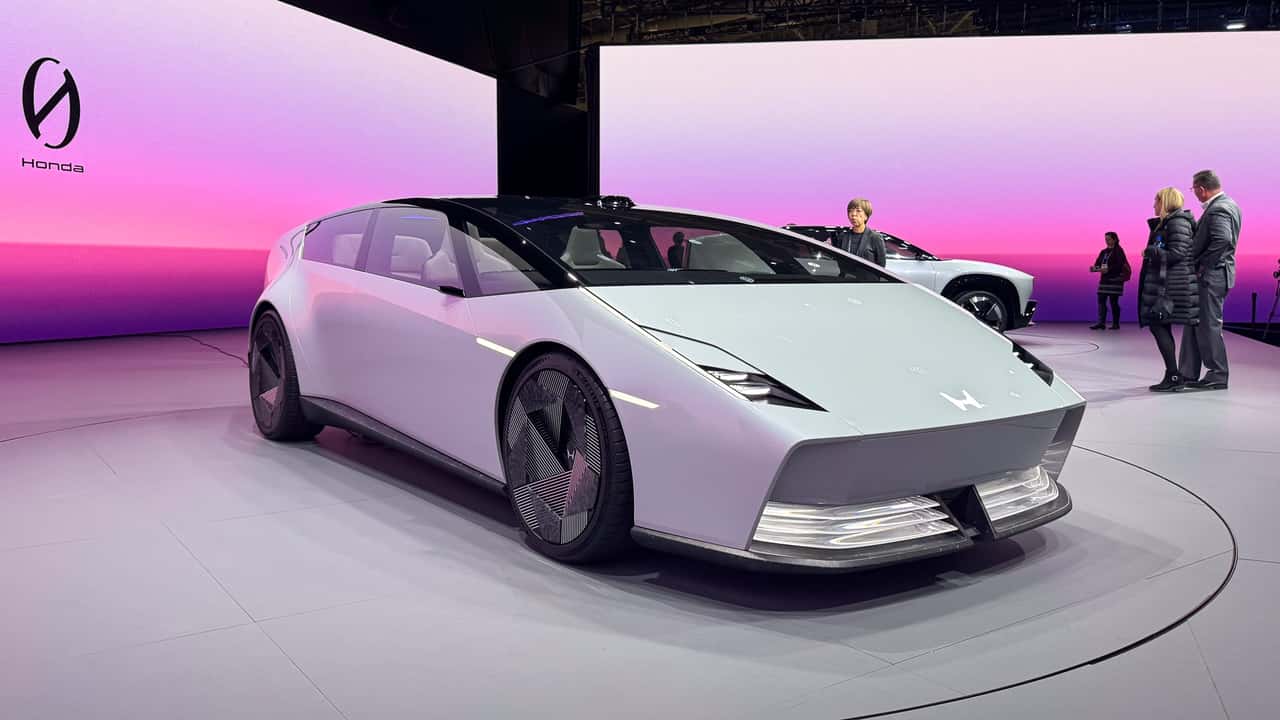
I didn’t think Honda had it in them. I remain skeptical that the brand’s EV efforts, and tech promises that that 0 Series SUV and Saloon will “bond” with their drivers and become best friends via AI is a real or desirable piece of kit. Yet, I have to admit – the Honda 0 Saloon is one slick-looking car. When the car was revealed at CES, it took all of five seconds for people to make the connection between Honda, and Lamborghini. According to Honda’s designers and executives, the 0 Saloon and its sister model, the 0 SUV aren’t just a pipe dream—the production models will likely look pretty close to what we see here.
Now, when Honda showed off the original 0 Saloon concept at last year’s CES while announcing the intent to produce it, most of us took Honda’s comments as pure vaporware, a sign of a brand completely unserious about electric cars. The two-door, gullwing ultra-low coupe looked pretty far from what could feasibly be placed on roads; it had no side impact beams, the yoke-style screen had zero bezels or buttons and the seats had no padding. The roofline was disconcertingly low and likely would never accommodate the headroom of real adults.

Honda Series 0 Prototype
Photo by: Honda
Nevertheless, the brand persisted. This year, it showed off an updated version of the striking-looking concept car from 2024. The gullwing doors were replaced with four conventional forward-hinged ones, and the headlights went from the base of the windshield to pseudo-pop-up ones that feel straight out of the sketchbook of an Italdesign employee working on a Lamborghini account circa 2001. The car is refreshingly long and skinny, refreshing in the age of the too-tall electrified crossover blob. There’s a reason for that, according to Toshinobu Minami, the Managing Director and COO of the Design Center at Honda R&D. For them, they really wanted the “thin, light, and wise” ethos to shine through with Honda’s first 0 Series models.
“In Japan, we’ve done things very challenging—we have had some failures. But we wanted to determine our concept thin/light/wise, especially exterior design,” said Minami during a Honda roundtable event during this year’s CES. Minami said that the 0 Series, in particular, was designed to channel the “thin” part of that three-word mantra.
7
Source: InsideEVs
It may be hard to gauge in pictures, but in person, the 0 Saloon is very much, a “thin” looking car. Compared to the original concept, this version of the 0 Saloon does look visually longer, with its upturned rear and relatively large greenhouse adding to the vehicle’s perception of thinness. It’s a radical-looking car, and Honda’s executives do admit that that radicalness may be challenging to some buyers in the U.S. market.
12
Source: InsideEVs
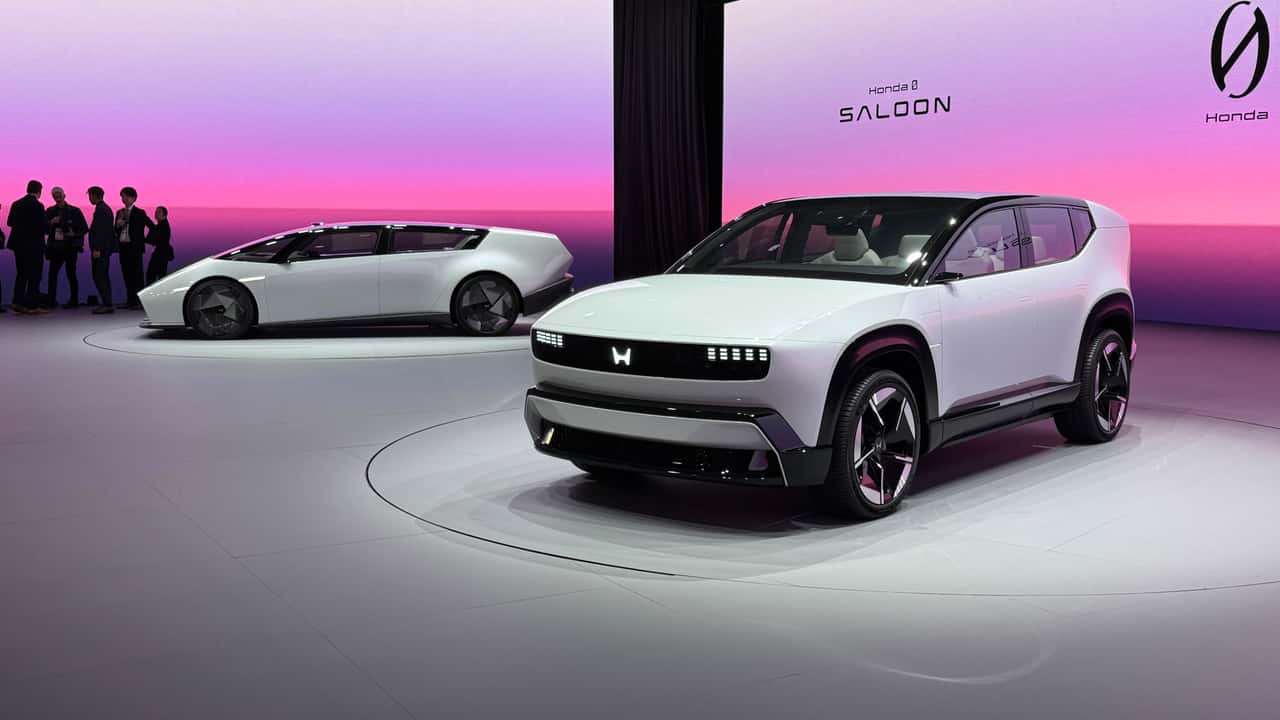
By comparison, the 0 SUV does look somewhat conventional. However, Minami insists it, too, was meant to convey the essence of thinness, even though it does admittedly look somewhat unrelated to the striking 0 Saloon. Minami spoke about giving the 0 SUV as much forward-looking glass and visibility as possible and emphasizing how (comparatively) thin the vehicle is compared to a traditional SUV. “When [the 0 SUV is] on the road, it will look a lot different on the roads compared to other cars,” said Minami.
The 0 Saloon and 0 SUV (along with the Sony-Honda Afeela) are planned for production at Honda’s Ohio EV hub starting in 2026. Yet, while the Afeela feels like a fairly finished (if kind of old) design, it’s not clear exactly if Honda’s giving us the runaround with just how much the 0 Saloon and 0 SUV will translate to production. For example, both vehicles have doors and full interiors, and even details like door jambs, but only the 0 SUV has cutouts for the charge door and potentially repairable bumper covers. Minami did say that part of the 0 SUV’s design decisions were to meet global regulations (including the United States), but as of right now the camera-only rearview setups on both cars aren’t legal.
Also, it’s still not entirely clear if Honda’s 0 Series will even be competitive when it is introduced. Honda has been somewhat vague about the 0 Series’s actual final technical specifications, but if it launches with the Afeela’s 91 kWh battery, roughly 300-mile range, and maximum 150 kW charging speeds, then Honda’s striking looking set of production-intent concept-like cars are dead in the water. We already know that 0 Saloon won’t be cheap. (Honda has not said how much the 0 SUV will cost, but that it will “meet market expectations.”)
Still, Honda’s design team remains optimistic. “When you go in your car, and look in your garage, you want to feel joy. I think (0 series) is going to be an upgraded version of Honda in the USA. We want to make a design that resonates with the next generation of Honda buyers,” said Minami.
The Honda 0 Saloon and 0 SUV are slated to go on sale in early 2026.
Contact the author: kevin.williams@insideevs.com
Share this Story

Honda 0 Series EVs Move Closer To Production With New Saloon, SUV Concepts
The Honda 0 Saloon gets a makeover, and the 0 SUV comes onto the scene as a preview of Honda’s Ohio-made EV crossover.

‘Get Butts In Seats’: Inside Dodge’s Plan To Convert EV Skeptics
Dodge, perhaps alone among contemporary automakers, has seen immense success in translating the archaic 20th-century Muscle Car formula into the 21st. It has done this by stuffing increasingly outrageous iterations of its modern Hemi V8 into nearly every vehicle in its product line. Its fervent Hellcat-ing has been enough, surprisingly, to maintain steadily vigorous sales of its Challenger coupe and Charger sedan, 20-year-old cars aping 55-year-old designs and riding on platforms developed more than 30 years ago.
But those vehicles are finally going away. They will be replaced by flexible-powertrain two- and four-door models, both called Charger, that will be motivated, at launch in early 2025, solely by a 100.5 kWh battery pack and a pair of electric motors. (And if you’re a Mopar nut but are committed to internal combustion, your muscle-car future means an inline-six engine, as if you were one of those guys whose entire wardrobe consists of ///M apparel. Can you imagine?) So how does Mopar’s methylized muscle-maker plan to convince potential consumers to buy into such a blasphemous switcheroo?

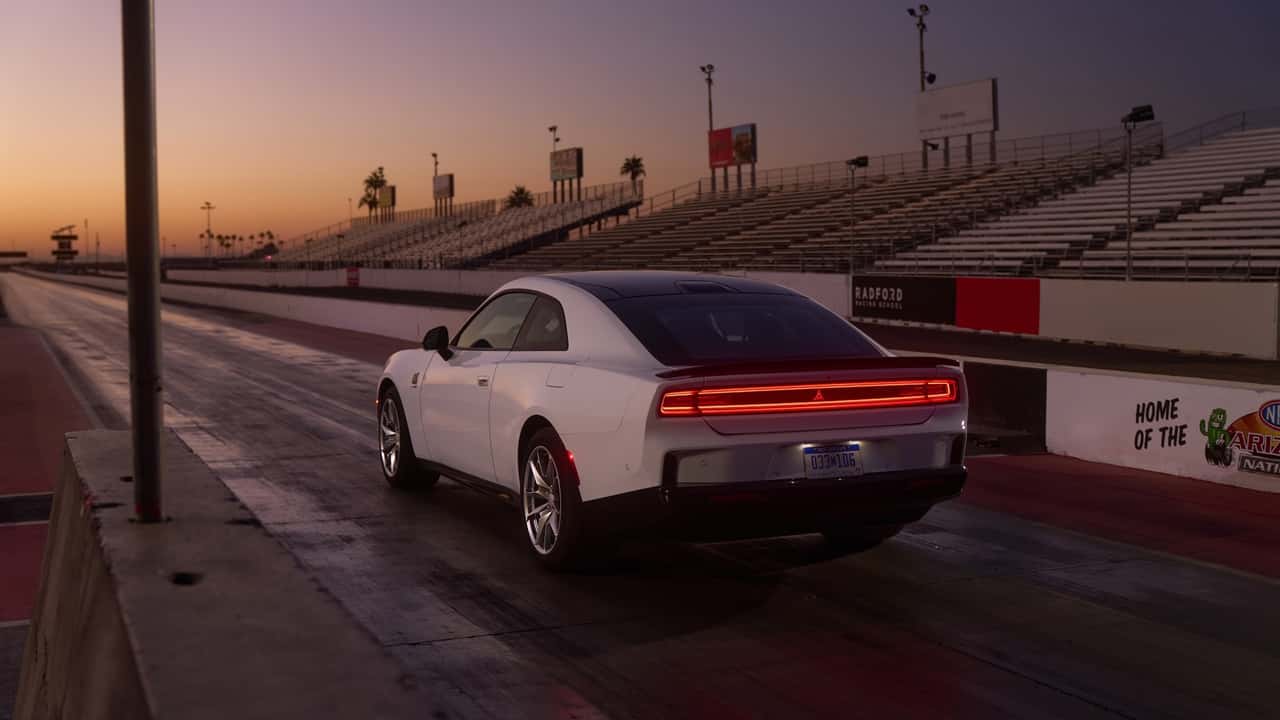
2025 Dodge Charger Daytona EV
Photo by: InsideEVs
To get enthusiasts’ “butts-in-seats” and assist with this electron baptism, Dodge is planning a whole series of events in the upcoming year, said Matt McAlear, the brand’s CEO. It will take its new EV muscle cars on tour in the first quarter of 2025 to train its sales and dealership staff and demonstrate the vehicles’ capabilities. It is launching a courtesy transportation program wherein it will send EVs to dealers to use for short-term consumer test drives, or as 96-hour loaners when customers come in to have their vehicle serviced. It will host consumer-facing “Thrill Ride” drive events at upcoming Mecum and Barrett-Jackson classic car auctions, and at its drifting/drag racing “Roadkill Nights” live events in the summer–—prime sites for the gathering of Hemis of all vintages.
“Dodge is always best as a brand when it does something different,” McAlear said, referencing the automaker’s marketing slogan from the 1980s and 1990s, Dodge Different. And he’s certainly right about convincing people with actual seat time and not just ads. Study after study indicates that once people experience EVs for themselves, or hear from friends and family who do, they’re far more likely to pull the trigger themselves.
Plus, he said, this EV has the bona fides. “This vehicle, it’s a muscle car first. If you look at the specs, the design, the capability, and take powertrain out of it, it’s a better muscle car on paper than the cars it replaces,” he noted. “So while there is a polarizing, controversial aspect to this—that it happens to have an EV powertrain as one of the powertrains that’s going to power it—no one can argue the battery electric technology enables terrific performance, and that’s what we’re bringing to market with this.”
2025 Dodge Charger Daytona EV
Photo by: InsideEVs
To enunciate this point, McAlear pointed out that even after Dodge introduces ICE-powered iterations of the Charger in the second half of 2025, gasoline power will represent “the entry-level vehicles from a performance standpoint.” So if a potential consumer desires a car with the quickest acceleration (0-60 in 3.3 seconds) they’ll learn that that capability is a battery-only option.
This powertrain rollout and hierarchy is a stated part of Dodge’s strategy for muscling the muscle car faithful toward EVs, according to McAlear. Another prong in this program is to focus on added utility and daily drivability, to create what Stellantis design chief Ralph Gilles called “emotional alibis” to lead consumers toward acceptance of this new product.
2025 Dodge Charger Daytona EV
Photo by: InsideEVs
McAlear listed a suite of capabilities that can provide such cover for what amounts to a highly irrational and emotional purchase. “All-wheel-drive, for instance, helps us compete more in the North as a daily driver,” he said, referencing its all-weather capability. “A hidden hatchback capability gives you amazing cargo space that you didn’t have in your old vehicle. The new Charger two-door now has more rear-seat legroom than the outgoing four-door,” he said. “So this becomes much more of a daily driver than any of the muscle cars that we’ve had prior.”
Will this litany of added functionality convince Dodge die-hards, who will receive a defeatable synthetic exhaust note that is as boisterous as that of the outgoing car, but no scent of unburned fuel or ability to smoke the rear tires from a standstill?
2025 Dodge Charger Daytona EV
Photo by: InsideEVs
“Probably not immediately out of the gate,” McAlear said. “It’s going to take some time. It’s going to take them seeing one on the street. It’s going to take them going in for service and testing one while they’re getting an oil change. But I’ve seen those people get behind the wheel and come out with changed opinions.”
However, convincing the faithful may not be the ideal tactic for furthering this car’s market penetration. “Though a muscle car and an electric vehicle seem diametrically opposed, there is an opportunity for electrification to magnify the idea, benefits, and aspirational nature of the muscle car,” said Alexander Edwards, president of Strategic Vision, a Southern California automotive research and consulting firm. “However, the conversion of those from the past, I do not believe is the best strategy. Instead, a new generation of muscle cars can find success with younger folks who think they like muscle cars.”
As it turns out, Dodge has just such consumers in its targets. “If you look at our current demographic today, we have the youngest demographic in the mainstream auto industry,” said McAlear. “We have the highest percentage of Gen Z and Millennials. And those customers have the highest propensity to be willing to adopt electrification. So that sets us up.”
2025 Dodge Charger Daytona EV
Photo by: InsideEVs
Dodge might be onto something here. Though muscle car seems like an anachronistic category to anyone who isn’t a Boomer, research shows that these vehicles have and maintain broader appeal. “The interesting thing with those cars, I think, is they’re far more long-lived than cars like tri-five [1955-57] Chevys, or other American cars of the era,” said Brian Rabold, vice president of valuation for Hagerty, the world’s largest insurer of collectible vehicles. “There are a lot more entry points for younger generations to become interested in them—through driving video games, through movies like the Fast and Furious franchise.” As Rabold notes, pop cultural exposure conjures interest and desire, and translates into purchases, whether those be old Polaras and Road Runners, or more recent Fox Body Mustangs and fourth-gen Firebirds.
Still, rumors have persisted that interest in Dodge’s new muscular EV is less robust than the brand initially suspected and that it is thus rushing the inline-six-powered iterations to supplement this engagement. McAlear denies this categorically.
“That’s what you call an urban legend,” he said. “Someone put one thing on the Internet. And if it’s on the Internet, it’s true, right?” He laughed, underlining his sarcasm. “We’re always trying to bring every new vehicle to market as quickly as possible,” he continued. “It doesn’t do us any good from an R&D and a capital expenditure standpoint to hold sales any longer than we have to. So nothing has changed with our timing.”
2025 Dodge Charger Daytona EV
Photo by: InsideEVs
Overall, once both powertrains are on the market, McAlear expects the mix of Charger buyers to segment about evenly: half electric, half gas. This aligns with Dodge’s current mix of high-test Hemi- versus lesser-powered Challengers and Chargers. “If we look historically at our V6 versus our performance V8, it was roughly 50/50,” McAlear said. “So I still think there’s an opportunity, over time—as adoption continues to happen, and as infrastructure comes in across the U.S. in terms of charging capability—I think there’s the ability for this [EV] to beat a 50/50 mix.” (Dodge officials declined to address questions about demand or pre-orders, but said they plan to remain flexible in terms of production based on consumer demand.)
If any marque is positioned to succeed with an electric muscle car, it seems to be Mopar’s performance brand. “Consumers who own the Charger and Challenger usually love their vehicles,” said Edwards, whose firm conducts hundreds of thousands of in-depth psychographic surveys with new car buyers annually. “Even those who never buy a Dodge can often agree that Dodge is an exciting brand that has a lot to offer. If Dodge takes the position that they are innovating excitement, then this next step could be a doorway for Dodge’s electric future.” He added one further provision. “They just have to get the messaging right.”
2025 Dodge Charger Daytona EV
Photo by: InsideEVs
McAlear and his teams seem to be thinking about this carefully, calibrating their messaging to entice purchasers who may be simultaneously powertrain-aware and -agnostic. “People buy a muscle car for so much more than just what powers it. They buy it because of how it makes them feel. It’s an extension of their personality. It puts a smile on their face. They have fun being in it. They have fun being seen it,” he said. “So I think that’s what this vehicle does. And it opens this up to a much larger demographic and audience.”
After spending some time in the Daytona Charger EV, recently, I felt like it succeeded in charting a freshly charged path into the moribund world of muscle cars. So Dodge seemingly has the product right. And it has a history of creating memorable messaging.
We’ll see if it can find a magic recipe that yields results from a youthful audience open to this surprisingly compelling and venerable category.
Brett Berk is a freelance automotive writer based in New York. He has driven and reviewed thousands of cars for Car and Driver and Road & Track, where he is a contributing editor. He has also written for Architectural Digest, Billboard, ELLE Decor, Esquire, GQ, Travel + Leisure and Vanity Fair.
Share this Story

Jaguar’s Rebrand Has An Even Tougher Foe: An EV War With China
Much has already been said about the relaunch of the Jaguar brand, most of it in the form of the vacuously cruel homophobic pablum that occupies much of the internet’s twiddling. A sliver of it has contained intelligent analysis. But little of it has looked at how the venerable, reimagined brand plans to address the world’s largest car market and the most cutthroat place on Earth to sell electric vehicles: China.
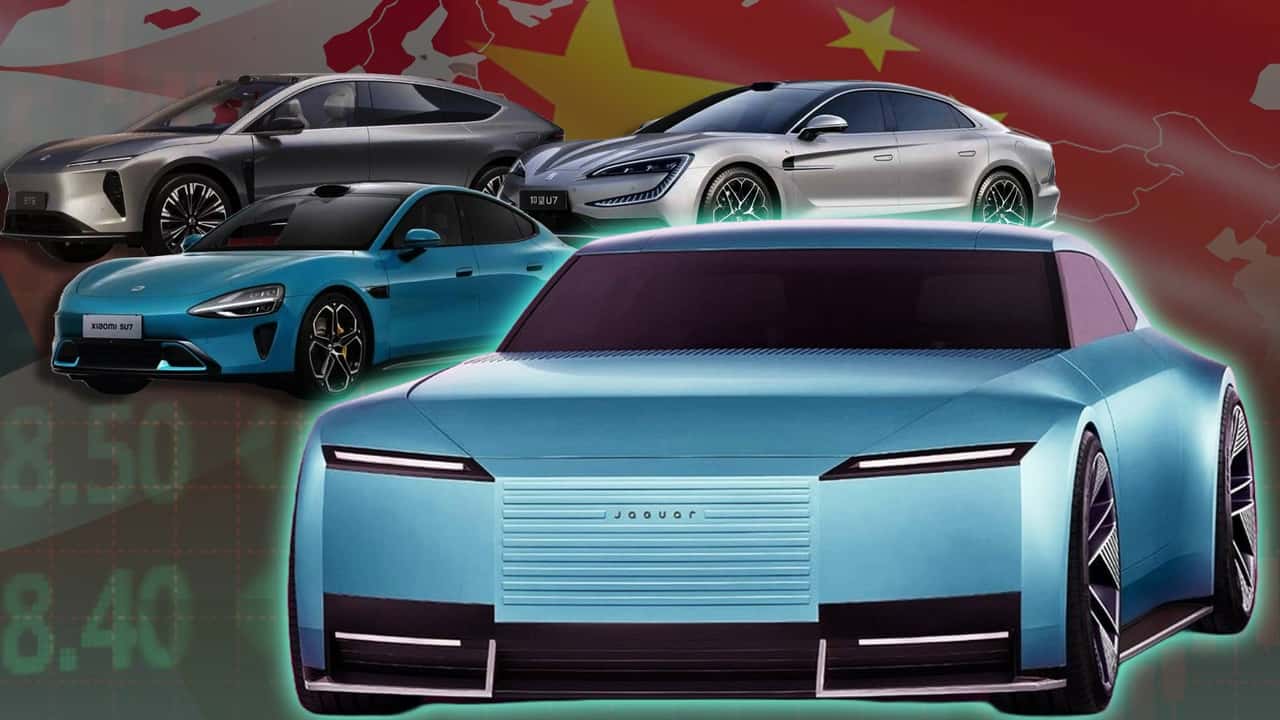
After all, China’s newcomer brands are rapidly displacing American, European and other Asian ones there as their EV technology quickly surpasses that of the rest of the world. At the same time, those Chinese automakers are the source of endless headaches for Volkswagen, Stellantis and others on their home turf. So as flashy and controversial as the leaping cat’s rebrand has been, it’s an open question how Jaguar 2.0 hopes to compete in China—and with China.
To remedy that, I sat down with Jag’s managing director, Rawdon Glover, in Miami, surrounded by the giant pastel pink walls and horizontal overhead streamers under which the brand’s Type 00 concept had been revealed, the mere hue of which cued shiftless gendered panic in so many keyboarding warriors.

Jaguar Type 00 Concept
Photo by: InsideEVs
Turns out, Jaguar has ideas about China. “As part of our strategy, we will be present in fewer markets, but we will want to really concentrate our efforts in those markets that are going to be super important for us,” Glover said. “And China, you can’t ignore the largest automotive market in the world, the largest luxury market in the world. And so that’s going to be going to be key for us as well.”
However, Glover admits that the British sport/luxury marque, unlike its Land Rover siblings, does not have a strong identity in that market—nor has it seen anything resembling strong sales there in about a decade.
“If I look at Range Rover, for example, it really resonates in China, and it’s very, very strong,” he said. “We’ve got some work to do with the Jaguar brand, which is really part of why we’re starting so early, because we probably won’t be in China until 2027.”
Rawdon Glover
Photo by: InsideEVs
For more than a decade, the Chinese market has held intense sway in global automotive design, influencing everything from grille size to chrome adornment to interior materiality and ambiance. According to Glover, the response in China seems to favor the marque’s new design and identity, which may have some significant correlation with the rebrand’s very intentional audacity.
“The initial reaction I’m hearing from China has been really positive in terms of the direction,” he said. “It’s very bold, is very evocative. And that plays well in that market, particularly among a lot of the young Chinese wealth. So, in terms of the repositioning, if we can connect into that in the right way, then I think we’ll be on to something.”
Jaguar Commercial Screenshot
Photo by: InsideEVs
Glover went on to describe some of the psychographic features that define this sought-after demographic category of young Chinese wealth. “We think people will be attracted to this who are independent-minded. They’re interested in design. Clearly, there is a level of economics involved, but there are also people that want to make a bolder choice,” he said. “Somebody who wants to make a very conservative luxury choice, that’s fine. We’re not going to be the brand for them. Jaguar is going to be a brand for people who make a really clear choice that they want to stand out from the crowd.”
In the two or three years between now and Jaguar’s first product deliveries in China, it has plenty of work to do, not just in terms of branding, but in terms of connecting with potential consumers. This provides further opportunity for reinvention, though nothing seems to be firmly set just yet. “We need to examine every single aspect of our customer journey if we’re going to elevate the brand to the price point we’re projecting,” Glover said. “So, yeah, that’s definitely on my to-do list.”
Jaguar Type 00 Concept
Photo by: InsideEVs
That price, in the U.S., will, according to Glover, begin at “about $120,000” for the four-door GT that Jag will release first in 2026, though cost will scale up significantly from there, given the pricey opportunities for personalization and individualization, opportunities that will be very important to the brand’s bottom line, as such optioning can add 50% or more to the sticker, and yield profits of as much as 80% for the automakers.
Glover expects that this elevated luxury positioning—along with outré design, and the intrinsic history and resonance of Jaguar—will also help insulate it from the onslaught of more affordable, Chinese-made electric vehicles that are flooding European, and other, markets.
“If we try and make this a technical or price competition [against China], I’m not sure that’s a game we can necessarily play to win,” he said. “I also think that while there’s lots of very, very competent vehicles coming out of China, I don’t think they have the sophistication in design that that we have. Maybe that will evolve, but those are the two differentiators.”
2025 Nio ET9
Still, it is evident that, while the Chinese automakers have focused for now on the more mainstream EV market, it is inevitable that they will continue to elevate their offerings. So I asked Glover if he sees those manufacturers eventually turning their sights upmarket.
“I think I see them moving into the premium segment, or endeavoring to,” he said, citing the Nio ET9 sedan, which will be priced around £90,000 ($114,000). “How successful will that be? That’s quite an elevated price point. We’ll see how that does,” he says.
Jaguar Type 00 Concept
Photo by: InsideEVs
He very intentionally positioned the new Jaguar brand in a category above premium. “I think luxury is another level,” he said. He offered a parallel in luxury consumer goods. “I’ve spent quite a bit of time in China. China is the single largest market for luxury brands outside of auto as well. And if you go to the luxury malls, it’s the established global brands—Gucci, Dior, Chanel, Louis Vuitton—that dominate. Because they’ve got history, they’ve got provenance. And that’s what you’re buying into. You don’t see a whole rash of ultra-high-end Chinese brands appearing,” he said. “Now, maybe in time that’s going to change. I suspect we’re going to see something similar in the automotive space, certainly in the medium term. And by that, I mean 10-15 years. That’s my take.”
Jaguar Type 00 Concept
Photo by: InsideEVs
Recent history has proven that the Chinese market can shift and adapt rapidly. And Jaguar is on a cautious, years-long path in reintroducing itself there. Who knows where that market, or any of us, will be in 2027 and beyond. As a fan of the brand and its spirit, I hope Jaguar will make it. And that clearly means making it in China.
Brett Berk is a freelance automotive writer based in New York. He has driven and reviewed thousands of cars for Car and Driver and Road & Track, where he is a contributing editor. He has also written for Architectural Digest, Billboard, ELLE Decor, Esquire, GQ, Travel + Leisure and Vanity Fair.
Share this Story

Jaguar Has Your Attention. Now The Type 00 Aims To Hit Reset
Mission accomplished, Jaguar. You have our attention. Along with that of Stephen Colbert, the gay-panic shit-stirrers at Fox News, X-man Elon and every hot-take purveyor from London to Los Angeles.
I’m referring to the, um, “Exuberant” rebranding of this famed-yet-foundering British luxury automaker; complete with expressionless models whose ruched-and-ruffled attire and lunar-pink backdrop seemed equal parts Teletubbies and Dune. “Does Jaguar sell ketamine now?” Colbert quipped, noting the ad’s Infiniti-esque absence of cars.

Jaguar Type 00 Concept
Photo by: InsideEVs
Well, cue the EDM from Miami, because this brand isn’t through with provoking, or the color pink. Jaguar chose the city’s Art Week to unveil an actual car, the Type 00—a concept design statement that history may record as the inflection point for Jaguar’s EV renaissance. Or an epitaph.
The initial rebranding struck so many observers as Category 5 corporate wankery. But perspective, people: Almost nobody buys, or doesn’t buy, a car based on advertising. If they did, Volkswagen would rule America, and Lexus wouldn’t sell any cars until December. Tesla doesn’t even advertise, unless you consider Musk a walking advertisement. Which is certainly going well.
In the words of Gerry McGovern, JLR’s creative director, “Product is God.” And Jaguar does need a miracle. But it’s a long way between now and 2026 when the first of a planned three-car electric lineup goes on sale. Pouring a glass half-full, that’s bankrolled by Jaguar’s share of $19 billion from owner Tata Motors, in planned EV and autonomous investment in Jaguar and Land Rover over five years. With green capital drying up elsewhere, it’s the kind of money any EV start-up would kill for.
Jaguar Type 00 Concept
Photo by: InsideEVs
Jaguar Type 00 Concept
Photo by: InsideEVs
Jaguar Type 00 Concept
Photo by: InsideEVs
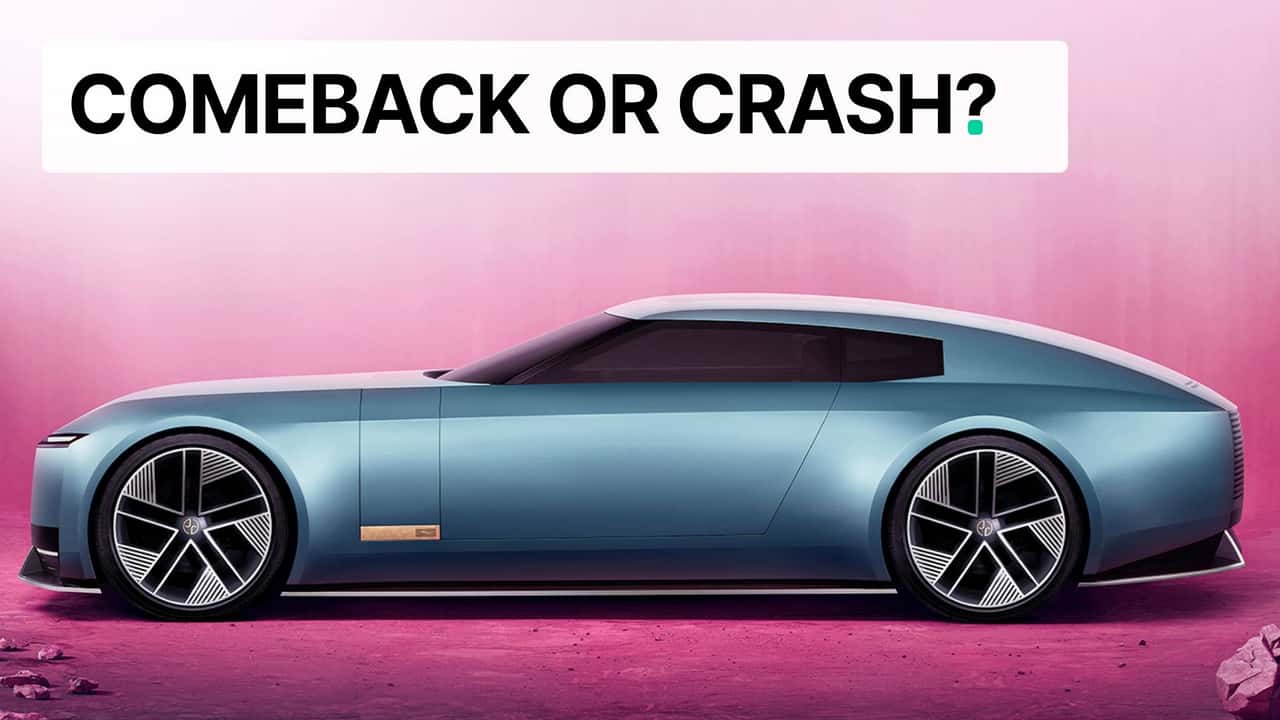
Jaguar says the Type 00 name alludes to zero emissions and a fresh start for an 89-year-old brand that once symbolized the best of British design. It’s a brawny two-seat fastback with faint echoes of those golden years, including a swept roofline, a boattail rear and a hood long enough to house a V-12, rather than a petite electric motor. As intended, this coupe appears carved from a single block of granite, albeit one with little room to spare for miniature windows. A freight-train front end recalls Audi’s original single-frame grilles, minus conventional openings.
Jaguar Type 00 Concept
Photo by: InsideEVs
The look is one part Streamline Moderne, one part armored vehicle. It’s like a brutalist take on the Rolls-Royce Spectre, at barely one-quarter the price, minus the Rolls’ traditional grille and graceful curvature. But the exterior also looks unfinished, like a rough design sketch that’s come to life. Dramatic butterfly doors and three brass rails inside—including a 10.5-footer that splits the cabin between floating seats—clearly aren’t meant for production.
Then again, the screens that rise theatrically from the dash appear doable. A new Leaper logo is laser-etched onto brass fender “ingots” that deploy to expose rear-facing cameras. Gorgeous travertine stone inlays might win over buyers all on their own. Too bad the natural stone appears unfeasible: It’s the kind of bravura element that could back up Jaguar’s “Copy Nothing” mantra that traces to founder William Lyons.
Jaguar Type 00 Concept
Photo by: InsideEVs
The Type 00 does take an opaque page from the Polestar 4: There’s no rear window, rather a “glassless tailgate” and a camera-based rearview mirror. That offputting gimmick—something nobody ever wanted—appears headed to the first production car inspired by this concept, a four-seat, roughly $120,000 GT. You’re not going to make this easy, are you Jaguar?
Under-the-skin details remain scarce for that production model, beyond an 800-volt architecture and what Jaguar claims will deliver 430 miles of range on the EPA testing cycle. Jaguar has said it will be its most powerful road car ever, so we’re expecting output to top 575 horsepower. That GT is to be followed by an SUV in some form because they actually need to make some sales here, plus an electric super sedan that sounds like a more affordable Bentley Flying Spur or Rolls-Royce Ghost.
Jaguar Type 00 Concept
Photo by: InsideEVs
To its credit, the Type 00 looks expensive, anchored by 23-inch wheels. But alluring roofline aside, it’s not traditionally “pretty,” lithe or elegant like Jags of old. And its blunt-force proportions and design pretensions will surely spark another round of handwringing from the easily outraged.
That includes the Type 00’s dusky shade of “Miami Pink” that I admired in November at JLR’s Gaydon, U.K. headquarters, during a hush-hush media showing prior to the official reveal. The rosy paint was a highlight for this careless coupe, seemingly designed for modern-day Daisy Buchanans to mow down peasants/pedestrians. In Miami’s Design District, Jaguar paired the pink car with a “London Blue” specimen.
Jaguar Type 00 Concept
Photo by: InsideEVs
A literal whiff of fashionista does follow the “Prism,” a kind of magic handbag that tucks into the bodyside, behind a powered door panel. The Prism contains three “totems”—wedges of Alabaster, Travertine and Brass—that slot into the console to summon various moods in ambient lighting, soundscapes or bespoke fragrances. Silly? A bit. But for decades, these kinds of playful flourishes have been par for the concept course.
Jaguar Type 00 Concept
Photo by: InsideEVs
Screen animations use chiaroscuro, mixing light and shadow to suggest three-dimensional objects. Jaguar’s new “strikethrough” design hallmark traces front and rear ends, and tops a striking peekaboo roof that appears solid at first glance. Think a Venetian blind with gracefully thin slats.
Even if the initial rebranding exercise was the equivalent of two torn hamstrings, Jaguar has captured its biggest mindshare in years. With all eyes on Jaguar, expect some auto writers and armchair critics to continue the gleeful pile-on, and declare the Type 00 more evidence of a brand and electric transformation gone awry.
But concept cars don’t work that way. So many concepts or design elements that were declared “radical” or ridiculed, from those Audi front ends to BMW’s X6 “SUV coupe”, were soon accepted or even beloved by actual buyers. They became commonplace or spawned myriad imitators. Looking back, you wonder what the original fuss was all about.
So if you were expecting a definitive answer as to whether Jaguar can design its way out of trouble, the Type 00 is not it. We’ll all need to wait until this polarizing concept and design language evolves into showroom form. Jaguar plans to reveal that GT late next year and build it in the UK sometime in 2026. Then wealthy EV prospects, not Jaguar’s critics, will have the final say.
34
Source: InsideEVs
Lawrence Ulrich is an award-winning freelance automotive journalist. He’s also the former chief auto critic of The New York Times and a contributing editor at Road & Track.
Share this Story

Rivian Was Inspired By Anime And ‘Optimism’ To Transform Car Controls
As crucial as things like touchscreens and software are to the modern automotive experience, we seldom stop to ask why everything looks so ugly.
Your average car’s touchscreen and menus likely have all the functionality of a Palm Pre, with the aesthetic appeal and artistic value of a Fort Worth outlet mall. Their menus and controls often feel haphazardly designed and look utterly forgettable. This is true even after more than a decade of in-car screen dominance and a future we’re constantly told is centered around over-the-air updates and smartphone-like tech features.
So when Rivian set out to completely overhaul its in-car software experience, its designers declared that things don’t have to be this way.
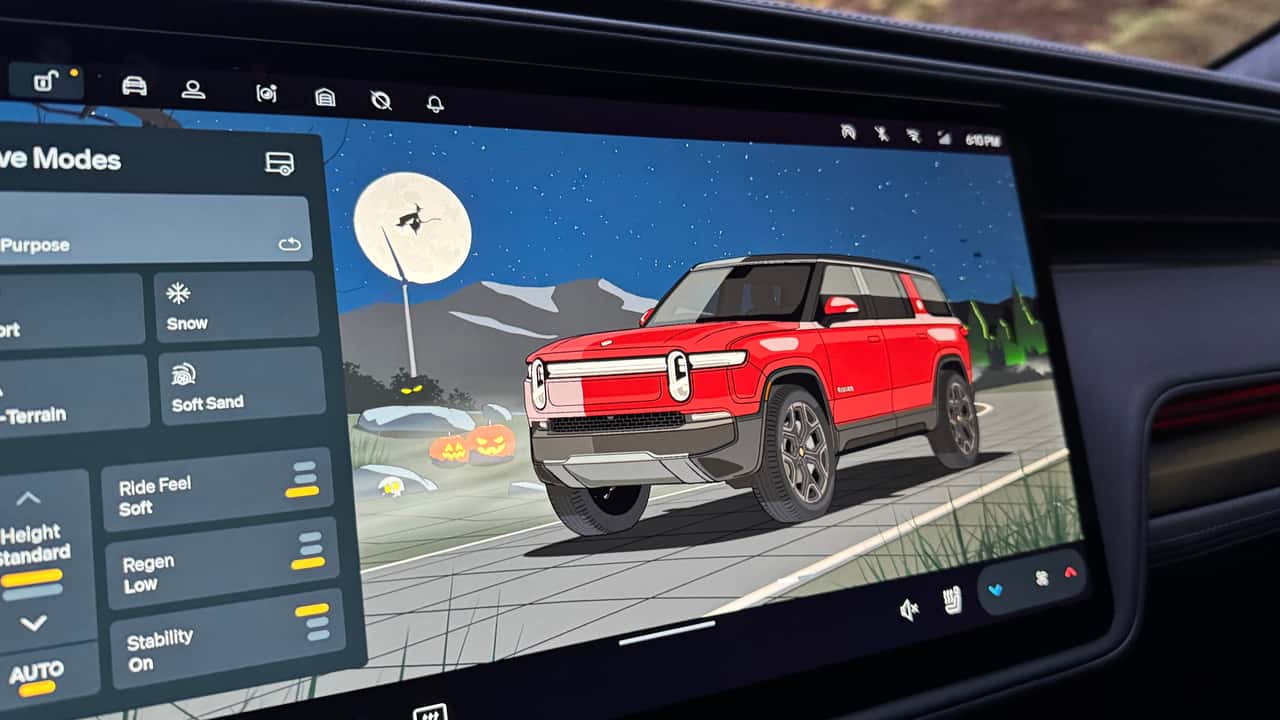
The electric startup’s latest infotainment setup features cel-shaded depictions of its trucks and SUVs, offset by animated depictions of different landscapes, bright colors, speed lines like you’d find in a Japanese manga comic and tons of “Easter eggs” in the backgrounds. New updates even give the software “costumes” inspired by classic TV shows and movies like Back to the Future and Knight Rider.

[embedded content]
When I asked Rivian’s Chief Design Officer Jeff Hammoud why his team went this route, one word came up again and again: “Optimism.”
“We felt it was an opportunity to have a little bit of fun and create a personality around the car,” Hammoud said in a recent interview. More than that, he said, the new software interfaces reflect a philosophy inside Rivian. “We want it all to look inviting,” Hammoud said. “Our vehicles have a friendly look and that’s part of our brand… that optimism around what we’re trying to do through electrification and protecting the world for our kids.”
2025 Rivian R1S and R1T Graphics
Photo by: InsideEVs
Rivian’s new interface language went live this summer on the heavily updated 2025 R1S and R1T models and via software updates to earlier cars. They give owners an animated representation of their vehicle that spins and transforms as they adjust things like ride height settings and the various driving modes.
On another car, switching to sport mode might mean a new set of gauges on the central display or shifting the menus to a red color scheme. But on an R1S or R1T, a cartoon depiction of the car zooms onto what looks like a race track as its glowing taillights fade into a red-and-white background. Instead of pop-ups to confirm you’re in “Snow Mode” or some off-road setting, Rivian offers a shift to a charming winter landscape or the vehicle perched atop a rocky mountain. Clouds, windmills and birds move about in the backgrounds and all of these visuals take on a different character at night as well.
2025 Rivian R1S and R1T Graphics
Photo by: InsideEVs
None of this is vital for a car to function properly, of course, and it’s highly unlikely that these animated graphics will be a make-or-break selling point. But they add a ton of something intangible—character—to Rivian’s cars, and they turn something that used to be an afterthought at best into something you actually look forward to using. And Hammoud said that a ton of effort went into devising how this ecosystem should look and feel.
“We used this idea of manga-style [or] Studio Ghibli films, those really optimistic movies where you feel like you’re in another world, and really taking that into a style where we could create the different worlds of the drive modes,” Hammoud said. He’s of course referring to the famed Japanese animated classics from Hayao Miyazaki and other creators like Spirited Away, My Neighbor Totoro, Kiki’s Delivery Service and, most recently, The Boy and the Heron. All of those are landmark animated films released to international acclaim. But Hammoud said they also share the general vibe Rivian is going for these days.
2025 Rivian R1S and R1T Graphics
Photo by: InsideEVs
“You look at something like Akira, versus Studio Ghibli,” he said, referring to the 1980s comic and landmark animated film about a dystopian future. The latter is “a little bit more optimistic and on the friendly side of that. We want to communicate power and dynamism with the vehicle, but we still wanted to have this sort of, ‘sitting down Sunday morning watching cartoons with your kids’ vibe with it as well.”
That stands in stark contrast with another eye-catching electric vehicle designed that has a distinctly apocalyptic energy: hard angles, allegedly bulletproof stainless steel, a “Bioweapon Defense Mode.” While Hammoud didn’t mention it by name, he made clear that he, Rivian CEO RJ Scaringe and their design teams didn’t share the same philosophy.
2025 Rivian R1S and R1T Graphics
Photo by: InsideEVs
“When you look at trucks, their faces are very aggressive, very angry, like the front ends could eat small children,” Hammoud said. “Purposely, we’re like, ‘All right, well, we don’t need a big grill.’ We want it to look inviting. Look at our headlight shapes. Our vehicles have a friendly look.”
Much of this was afforded by the power of the Unreal Engine, a 3D graphics software system made famous in video games that’s now making its way to the automotive world. This allowed Rivian’s artists and designers to “scale” all these new images easily without having to draw each one individually.
“It was really important to us that whatever car you have, it’s the right set of wheels and it’s the right color [on the screen], so that way we’re looking at is actually representative of your vehicle,” Hammoud said. “If we had to create, which is what we did in the past, an image for every single [Rivian color or option], that’s thousands and thousands of images.”
With the Unreal Engine, Hammoud said, “You put in the specifications of the vehicle, like if it’s a Forest Green car with 22s, you just put that into the code, and boom, it’s rendered and it updates.”
2025 Rivian R1S and R1T Graphics
Photo by: InsideEVs
Rivian isn’t alone in trying to add a more distinctive look and character to its software experience as well as its exterior designs. Mini recently added a cartoon dog to its infotainment systems as an AI-powered virtual assistant, and several Chinese automakers are taking similar approaches. And as with those cars, Rivian’s approach goes beyond mere visuals; these functions represent new ways for drivers to interact with their cars and control their features in the software-driven vehicle era.
So does it work? Based on a recent test of a 2025 Rivian R1S, I think the answer is mostly yes. It’s fairly easy to find the functions you want and the big, bright displays represent novel ways of presenting information to the driver. That’s crucial since Rivian famously—or perhaps infamously—eschews most physical buttons and Apple CarPlay in its EVs. It also aims to do more with voice controls, although it has a ways to go there to match many competitors.
[embedded content]
But this approach to software does show what Rivian’s made of, and why a traditional conglomerate like the Volkswagen Group sees such value in what the company does. That 2025 R1S got better while I had it, receiving an over-the-air software update that improved the energy and efficiency gauges (and put them in line with the rest of the car’s new artistic language) while correcting some issues with the stereo and adding the Halloween-themed visuals.
And until Rivian can get the upcoming R2, R3 and R3X models on the road, it’s got more in store for its current cars both through software updates and more tweaks—though Hammoud was cagey about what exactly is coming next.
“We have some new updates that are coming next year on R1 that I’m excited to share, some special editions,” Hammoud said. “I’ll leave it at that.”
Contact the author: patrick.george@insideevs.com
24
Source: InsideEVs
Share this Story

I Want To Go Off-Grid In Kia’s PV5 WKNDR Electric Van
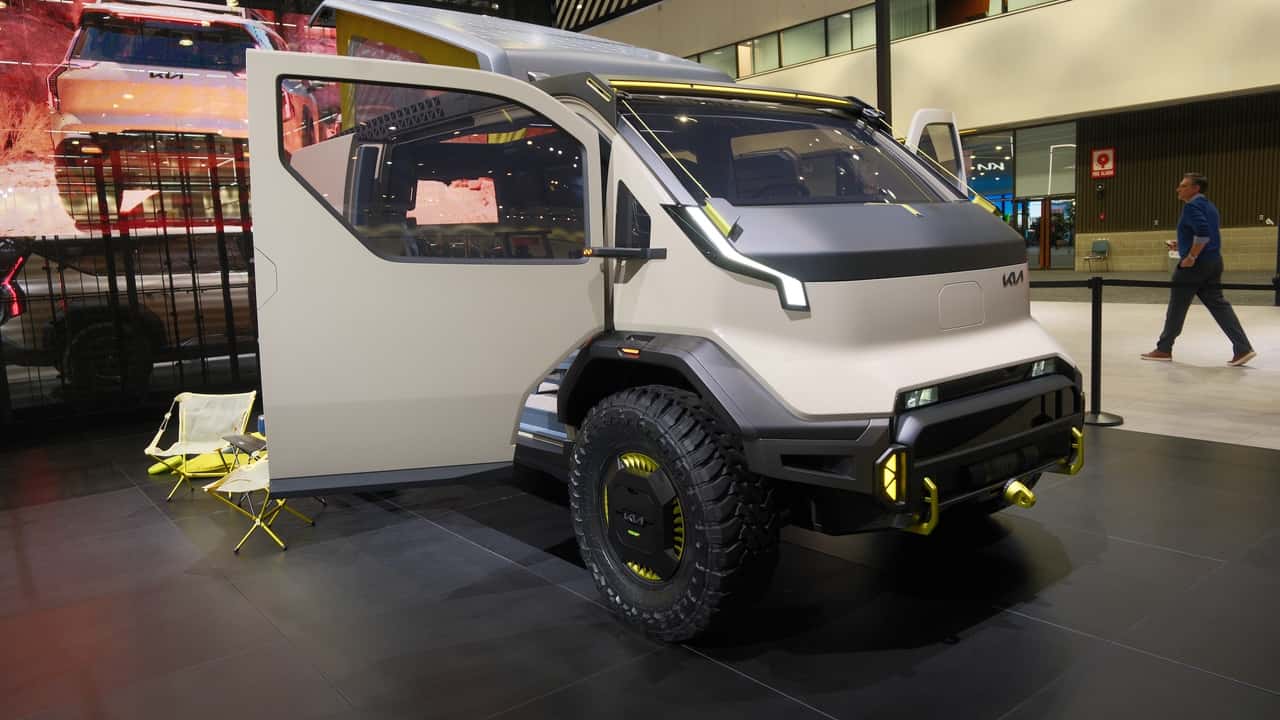
Falling in love with a concept car is setting yourself up to fail. The vast majority of them never become real vehicles, and those that do often end up disappointingly far from their striking original designs. For every BMW i8, we also get about 50 Pontiac Azteks. But love isn’t a rational thing, and that’s why I want to believe Kia’s PV5 WKNDR electric van concept could somehow become a reality.
The PV5 WKNDR made its first appearance at SEMA, the giant aftermarket and performance trade show, earlier this month. But I got to see it for myself last week at the LA Auto Show. And like a good movie, book or album, the fact that I’m still thinking about it a few days later tells me a lot.

The EV9 ADVNTR EV SUV and PV5 WKNDR EV Van
Photo by: Kia
The concept is a #vanlife take on Kia’s new Platform Beyond Vehicle program: a family of modular electric work vehicles in different sizes and configurations. Kia has big plans for that program as it expands into the commercial vehicle space; some of the ideas there are pretty wild, including transforming body types, autonomous driving and possibly even crab-walking wheels to deliver cargo to tight areas. We don’t know how far Kia will go with those technologies yet, but the Korean automaker clearly wants in on the nascent electrified delivery van and commercial vehicle space.
By comparison, the PV5 WKNDR is almost conventional. But it shows how well this platform could exist when repurposed for a consumer van aimed at off-road and off-grid adventuring. Kia describes it as “an escape pod for extended weekends in nature” and “a Swiss Army Knife on wheels.” That’s not only because of the big off-road tires, but because the whole interior has been customized to be a kind of mobile living space: the concept comes complete with lounge seats, camping chairs, tables, an extending rooftop tent and more. And you get towing hooks front and rear if other vehicles go sideways, or upside-down, in this case.
The EV9 ADVNTR EV SUV and PV5 WKNDR EV Van
Photo by: Kia
While I didn’t get to see Kia demonstrate this on-site at the auto show, the van also features solar panels for offboard charging and “hydro turbine wheels” that generate electricity while spinning. That’s a clever idea and I’d love to see it get applied to some actual production cars. In fact, this whole concept makes a strong case for an electric off-road machine: when EVs are stationary, they can provide massive amounts of electricity to power campsites, devices and even entire homes. If you apply that idea to a bigger vehicle (with a bigger battery) you can enable a ton of zero-emission power when you go camping. I think Kia’s onto something with this concept, and I hope the automaker finds some way to make it a reality.
If you find yourself at the LA Auto Show’s public days until the end of this month, go pay this thing a visit. I think you’ll get a kick out of it.
13
Source: InsideEVs
Contact the author: patrick.george@insideevs.com
Share this Story

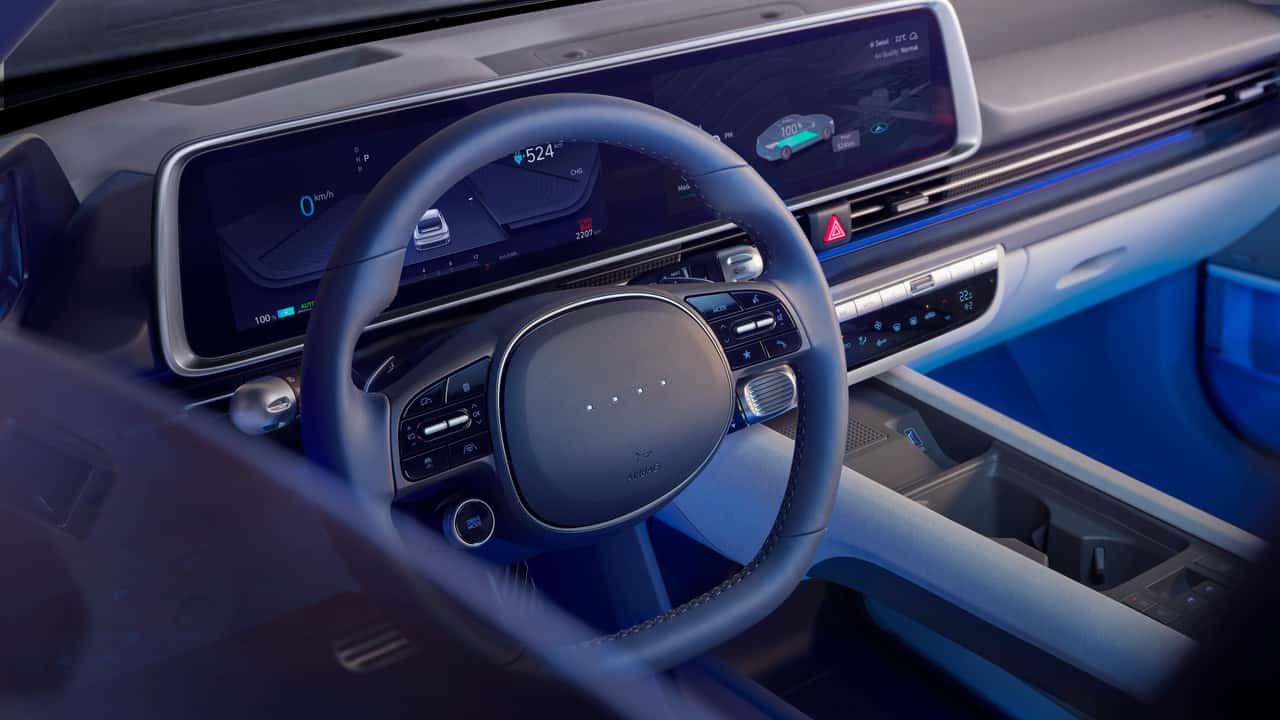
Hyundai Is Bringing Back Buttons Because Touchscreens Are ‘Annoying’
- Hyundai is slowly backing away from the all-screen approach to interior design.
- Hyundai Design North America Vice President Ha Hak-soo said that people “get stressed, annoyed and steamed when they want to control something in a pinch but are unable to do so.”
Screens inside new cars are better than ever. They’re huge, they have great resolution and the software behind them is usually snappy and well thought out. But after years of shoving what are essentially TVs on dashboards, it turns out that people don’t really like dealing with them, especially if accessing often-used features like climate control or volume settings means digging through menus on a screen while driving.
That’s dangerous, but it’s also very annoying, as Hyundai Design North America (HDNA) found out through the magic of focus groups. That’s why the Korean automaker is looking to bring back old-fashioned buttons in upcoming cars. The facelifted Ioniq 5 already has a redesigned HVAC control panel, but more are in the pipeline.
“As we were adding integrated [infotainment] screens in our vehicles, we also tried putting touchscreen-based controls, and people didn’t prefer that,” said HDNA Vice President Ha Hak-soo in a recent interview with Korea JoongAng Daily.
The reason why Hyundai–like other automakers–went down the all-touchscreen path was initially due to the “wow” factor of Telsa’s large multimedia systems. The Korean automaker even went as far as putting two touchscreens on the steering wheel of a concept back in 2019. Ultimately, though, Hyundai changed its mind and is now slowly reversing course.
“When we tested with our focus group, we realized that people get stressed, annoyed and steamed when they want to control something in a pinch but are unable to do so,” Ha said.

The 2025 Hyundai Ioniq 5 has a redesigned switchgear panel on the center console.
Photo by: InsideEVs
For a good number of years, car journalists, enthusiasts and industry experts have sounded the alarm for automakers to stop with the touchscreen controls. More recently, The European New Car Assesment Progamme, better known as Euro NCAP, which performs crash testing and issues a star-based safety rating, entered the discussion with a more serious tone. in simple terms, the organization said that beginning in 2026, automakers will have to fit physical buttons for certain functions if they want to get a five-star rating, the highest possible. That’s in addition to the usual active and passive safety features like airbags and automatic emergency braking.
It’s cool having a big screen–or even several screens–inside a car. It’s even a pretty well-disguised cost-cutting measure, despite few automakers admitting it. But it’s really distracting to have to go through a menu or a slide-out bar to change the temperature or skip the current song. With a simple physical button or knob–and no, those shiny haptic surfaces aren’t the same thing–you can just reach out and do what you want without even looking.
At the same time, we do know Hyundai is working on more advanced displays that span the entire windshield of the car and operate largely on voice controls. The automaker said we might even see a mass-production model with that technology as early as 2027. But perhaps there’s room for both: buttons, but also more displays right in the driver’s line of sight rather than a screen that turns them away from the road.
That, or Hyundai’s just hedging its bets here. Either way, the next few years will be quite interesting when it comes to the in-car user experience.
Share this Story

Just So Everyone’s Clear: Scout And Rivian Are Not The Same
- The Volkswagen Group’s electric revival of an iconic American truck brand, Scout Motors, has drawn many comparisons to a similar EV truck company: Rivian.
- The VW Group and Rivian have a joint venture to develop software and electrical architectures together.
- Despite this, and despite what you may see online, a Scout is not a Rivian.
What an age of miracles we find ourselves in. The internet is the greatest tool for disseminating information that humanity has ever created, but it also allows anybody to just instantly broadcast whatever is on their mind at any given moment, regardless of how true it is or not. That does lead to the occasional bit of misinformation that news outlets like InsideEVs must correct.
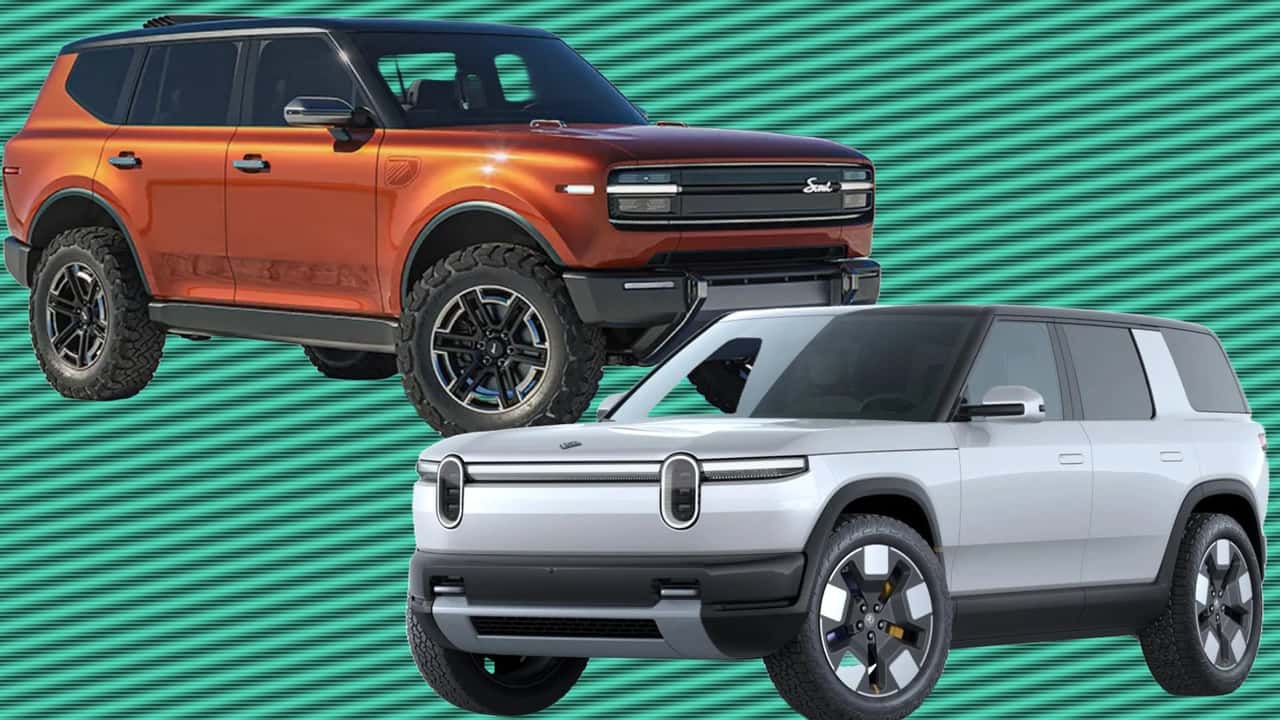
Since the recent debut of two new electric concepts from Scout Motors, the American truck and SUV brand revived by the Volkswagen Group, we have noticed more than a few comparisons drawn to another EV truck company: Rivian.
The comparisons are fair; Scout’s two concept vehicles bear a strong resemblance to Rivian’s first two vehicles, the R1T truck and R1S SUV. And the lines between the two brands are further blurred by the fact that the Volkswagen Group and Rivian have recently started working together.
<img src="https://evautoinsider.com/wp-content/uploads/2025/07/just-so-everyones-clear-scout-and-rivian-are-not-the-same.png" alt="
Photo illustration from InsideEVs.
” width=”16″ height=”9″ loading=”lazy”>
Photo illustration from InsideEVs.
But the latter situation, in particular, seems to be drawing a lot of confusion. Here are some emails, comments and social media posts we’ve seen lately:
“I can’t shake the thought that the Scout isn’t just like a Rivian, but it is a Rivian.”
“Well, now we know why Volkswagen is teaming up with Rivian.”
“Isn’t the Scout a rebadged Rivian?”
“The Scout Motors EV is really just a Rivian with a gas generator, isn’t it?”
“Reskinned Rivian? VW owns Scout, VW and Rivian announced a joint venture…”
“So how much is Rivian making per each Scout EV sold? It’s clear they’ll be using Rivian’s zonal architecture.”
And so forth. But I’m here to hopefully clear this one up once and for all: While Scout and Rivian have similar designs and will probably compete for the same customer, and Scout will use the new electrical architecture that VW is co-developing with Rivian, the two vehicles and brands are not the same. They do not use the same platform, are built (or rather, will be built) in different places and should have considerably different price tags.
Does it feel like a kind of McDonald’s-McDowell’s situation for the electric vehicle world? Yes, which is probably unfortunate for both brands. But there’s certainly room in the space for both, and whatever technological intersection exists between the two will probably benefit them both. Let’s dig in.

[embedded content]
Let’s Start With Rivian
We’ll begin with an extremely brief history of one of the more promising EV startups out there, California-based Rivian.
People forget this today, but Rivian actually launched way back in 2009 (and under a different name) with the goal of making a hybrid, mid-engine sports car. That idea was shelved, but by 2022, Rivian was making the R1S and R1T electric adventure trucks at a former Mitsubishi factory in Normal, Ill. Both vehicles boast excellent electric range, charming designs and legitimate off-road talents. The company also makes electric vans for fleet use, originally for Amazon alone but now available to any fleet customer.
Second Gen Rivian R1T and R1S
Rivian’s EVs have garnered considerable acclaim since then. While the company today has a sizable cash pile, it is still dealing with the instability and difficult path to long-term profitability that makes being a newcomer in the auto industry such a gargantuan task. Should it successfully fight through the “valley of death” that it’s currently in, Rivian is due to launch a series of more affordable, mainstream EVs by the end of this decade: the smaller R2 crossover and more compact R3 and R3X.
Rivian Future Roadmap
But Rivian has the advantage of being able to do things with a clean sheet, vertically integrated approach, something that traditional automakers who depend on vast networks of outside parts suppliers struggle with. This in-house approach, once pioneered by Tesla, has made Rivian into a burgeoning software power player too. The world took notice of that when Rivian and the Volkswagen Group (which has struggled mightily on the technology front as it seeks a mostly electric future) inked a $5 billion deal to co-develop software and electrical architectures together. That deal is giving Rivian the cash it needs to continue R&D and scale up operations, while VW is getting the kind of software and tech expertise it needs to be competitive in the future.
What About Scout Motors?
Scout’s history actually goes back many decades. The SUVs and trucks were made by the International Harvester Company, which was mostly known for agricultural and commercial vehicles, between 1960 and 1980. They were simple, capable machines that offered plenty of capability. The original Scouts are highly coveted by off-roading enthusiasts even today, as the company helped to pioneer that entire field of vehicles.
Scout Traveler and Terra Concepts
Photo by: Scout Motors
After a complicated series of sales and acquisitions, the VW Group ended up in possession of the Scout branding and trademarks (via the acquisition of International Harvester’s successor company, Navistar, to supplement VW’s other commercial truck brands) in 2020. As Scout Motors’ CEO Scott Keogh told InsideEVs earlier this year, that led to some discussions within VW, which has long struggled to garner the kind of mainstream, volume success in America that it enjoys in the rest of the world. Moreover, these days, the VW Group is losing ground quickly in China, so it needs to win big in the U.S.
That yielded a bold plan to relaunch the Scout Motors brand, and not as some re-badged ID.4 or Audi Q8 E-Tron but with an entirely new platform and a new factory in South Carolina to take advantage of tax incentives from the Inflation Reduction Act.
Scout Motors Factory Groundbreaking 2024 Official Photos
But They’re Both Boxy, Electric Trucks And SUVs Aimed At Off-Roaders. How Are They Different?
That’s certainly an understandable question, and I think the Scout Terra truck in particular bears an uncanny and perhaps uncomfortable resemblance to the R1T. We always knew the Scout was going to be boxy and utilitarian looking, as that’s how Scouts have always been. If you’re going for a boxy look while maintaining the aerodynamic design you need to build a competitive EV, it’s not surprising that the end result looks like an existing utilitarian, efficient electric truck. But the two vehicles from Scout and Rivian are different.

The R1T vs. the Scout Terra.
Besides predating the Scout vehicles by years (they won’t even go on sale until 2027 at the earliest) the Rivian R1S and R1T use a platform, motors and software all made in-house. The upcoming Rivian R3, R3X and R2 will use a new Rivian “midsize” platform as well that incorporates the lessons and cost-savings from the R1 vehicles. A Rivian spokesperson confirmed to InsideEVs that the R2 and R3 platform is “unrelated” to the upcoming Scout project.
Rivian R2 R3 R3X
As I mentioned earlier, Scout’s platform is a different animal. The automaker wanted a truly off-road capable EV, so it’s crafting a body-on-frame platform from the ground up with a solid rear axle and front and rear mechanical lockers—just like an old-school rock-crawling truck would have. Rivian’s vehicles do not use locking differentials. They also don’t offer solid axles.
The differences go even deeper. Perhaps most notably, the Scout models will offer a range extender option called the “Harvester,” which is simply a gasoline engine designed to solely recharge the electric battery. While it does not power the wheels at all, the engine is expected to boost the Scout EV’s range from 350 miles to 500 miles. Rivian has not announced any plans for a gas range extender, and given that it’s always been an all-electric automaker, that seems rather unlikely. Scout, however, has the advantage of potentially pulling a gas engine from the VW Group’s expansive family.
On the battery front, Rivian’s vehicles use cells from Samsung SDI in South Korea. CNBC reports that Scout’s batteries are expected to come from VW’s joint venture battery cell manufacturer in Canada.
Scout Terra Electric Pickup Truck
Photo by: Scout Motors
That’s not all. Besides being in different price classes—Rivian’s current vehicles start around $75,000 and reach into the $100,000 range, while the Scout EVs are aiming to start around $60,000—there are two very different approaches to the user experience at work here. Rivian’s interfaces famously (perhaps infamously, based on our reviews) eschew traditional buttons for touchscreen controls, voice commands and soon, a clickwheel system mounted on the steering wheel to operate various functions.
Scout, on the other hand, purposely went big on buttons. The Scout concepts revealed last week have some nice display units, sure, but also a row of physical buttons, volume knobs and steering wheel controls. Oh, and the Terra and Traveler will offer an optional bench seat as well, another old-school throwback.
Finally, the vehicles are different sizes. The Scout Traveler SUV is shorter than a Rivian R1S by about 10 inches, while Scout’s Terra truck is about a foot longer than an R1T.
So Where Do Rivian And Scout Intersect?
An excellent question, and one that’s come up recently. And this actually does speak to that Volkswagen-Rivian tie-up that’s in the works.
At the Scout concept debut, Keogh told InsideEVs that the cars could use the new zonal architecture being developed by that partnership—but only that one, not anything currently in use by Rivian. “It’s important to separate Rivian, the car company, from the joint venture,” Keogh said. “Those are two very different things. Rivian the car company, we have zero interaction with, absolutely nothing. But the joint venture company could potentially [provide] the architecture that is in this vehicle.”
That was confirmed on the other side of things by Rivian Chief Software Officer Wassym Bensaid at TechCrunch’s Disrupt 2024 conference this week. Here’s what Bensaid had to say:
[Scout] said at the time that the vehicles would use a zonal architecture — meaning it would rely on just a handful of computers that control the functions of a few “zones” of the electrical architecture. And the software in Scout’s press images looked awfully similar to what you can find in Rivian’s current vehicles, so Bensaid’s confirmation is not all that surprising. Bensaid stressed on the Disrupt stage that each brand that uses the joint venture’s software will “continue to have their own identity,” as well as “their own features.”
“We’re enabling competition,” he said. Bensaid also noted how much the Scout vehicles resemble Rivian’s overall design sensibility, even outside of the software. “That’s fantastic,” he said. “It’s great validation of the Rivian product.”
Scout Software Demo
And TechCrunch is correct that the software shown in the Scout concepts does look very Rivian-ish. (Rivish?) However, those vehicles are still just concepts with production models at least three years away. Even if these vehicles share commonalities on the back end that allow Scout to do things Rivians can do, like over-the-air updates, it’s extremely likely both brands will work to carve out their own identities and unique interfaces when they actually hit the market.
So What Did We Learn Today, Class?
In the end, while Scout and Rivian are both coming to market with similar products, designs, overall vibes and probably audiences, they are not the same brand or car.
I think that what this ended up being is two different EV-oriented companies both coming to the same conclusion about what American buyers love: big trucks and SUVs. In their own ways, they took advantage of the kind of retro-truck charm that’s extremely in vogue right now. Things got somewhat complicated by the software and tech team-up behind the scenes, but given what we’ve reported on Scout Motors’ development timeline, that certainly didn’t seem to be the plan all along.
Moreover, Scout’s target debut date of 2027 can feel like 500 years from now in the fast-moving world of modern EVs. We’re basing all of this on initial impressions, early official plans from both automakers and what we know about where both brands are at in late 2024. It’s entirely possible that the final production versions of the Scout vehicles could differ from these concepts in some way (though InsideEVs was told they are extremely close to the final designs) and we can’t rule out some kind of deepened tie-up between VW, Rivian and Scout in the future. For now, that’s just speculation.
But if you think these two adventure-ready EVs are the same thing, look a little deeper.
Contact the author: patrick.george@insideevs.com
Share this Story