
Category: Design

Top 5 stories of the week: CDK begins DMS restoration; BMW 6 Series to return
A quick look at the top automotive stories of the week as determined by reader interest.
China may deliver one-third of global vehicles by 2030, report says
The findings of a report by AlixPartners suggest that even as the U.S. enacts trade policies to protect the domestic market, Chinese automakers continue their steady march to global dominance.

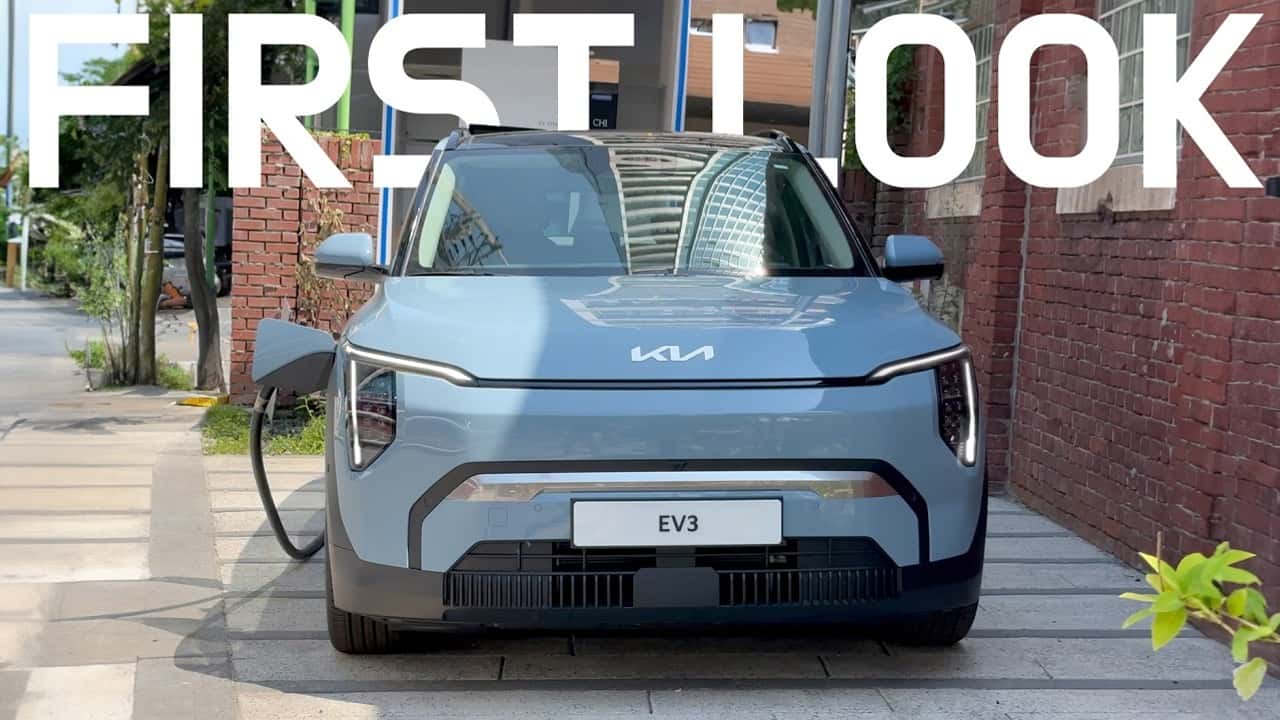
Kia EV3 In-Depth Video: Way More Than Just A Cheap New EV
Kia’s all-new EV3 electric crossover has the potential to become one of the most sought-after EVs in the United States after it lands here with an estimated starting price of around $30,000.
But with an MSRP that’s almost half that of the average transaction price of a new EV in the U.S., there must be some drawbacks. Or, at least that’s what legacy automakers accustomed us with over the years, with things like missing features, subpar infotainment systems and questionable design choices. So is Kia’s new affordable EV more of the same?
The 40-minute in-depth walkaround video from CarSceneKorea embedded at the top of this page seems to say otherwise.
High-tech features trickle down to mass-market cars
Historically, entry-level cars were devoid of any fancy features found on the more expensive models in a carmaker’s portfolio. But with the EV3, Kia somehow managed to cram a lot of the same goodies found on the much more expensive and fancier EV9 battery-powered flagship SUV.
As a reminder, the Kia EV3 is very similar in size to the Volvo EX30, the fate of which is currently unknown to U.S. customers, as the car is built in China and faces massive import tariffs. By contrast, the EV3 might be built in Mexico for the North American market, skirting heavy import fees and potentially making it eligible for the $7,500 federal tax credit.
So with that out of the way, let’s see what the Korean automaker’s entry-level mass EV offers. Design-wise, the EV3 is like the smaller brother to the rather impressive EV9 three-row SUV. It’s bulky and confidence-inspiring, but bear in mind that it’s still a subcompact crossover, so looks might be deceiving.
In South Korea, the electric hatchback is currently available in two trim levels, and the styling differences between them may exist when the car lands stateside. Both come with LEDs front and back, but the entry-level variant has three-module headlights and vertical-only taillights, while the upper trim comes with 12-module headlights and taillamps that extend onto the rear hatch.
The CCS charging port, located on the front-right, has a hinged cover for the DC charging pins, meaning that it won’t just dangle when you need to fast-charge the car. There’s also a small front trunk and the hood has gas struts, which are sometimes missing from other cost-conscious cars.

7
Inside, the EV3 has physical buttons for the heated, ventilated and memory seats located on the front door cards. There are also physical buttons and switches for the volume and aircon settings, while other often-used features can be accessed via haptic toggles. In Korea, Kia even offers a subscription that allows owners to set a sports-related theme on the infotainment system.
The two front seats have a lounge feature, which is quite rare in the subcompact segment. Furthermore, the front passenger seat has a secondary control panel toward the driver, making it easy to adjust its position while installing a baby seat in the back, for instance.
Speaking about the back seats, the split backrest reclines to make it more comfortable on long trips. Moreover, the floor is flat and there’s room under the front seats for the passengers’ feet.
But that’s not all, so make sure you check out the video at the top. Then, let us know what you think in the comments section below.
Share this Story
World’s biggest suppliers are rethinking where, how to make parts
Revenue at the world’s largest suppliers largely grew in 2023 from a year earlier as the supply chain chaos of the post-COVID global economy began to subside.
Top 5 stories of the week: CDK cyberattack; Fisker bankruptcy
A quick look at the top automotive stories of the week as determined by reader interest.
Tesla pushes for Musk’s $56 billion payout in run-up to shareholder meeting
Tesla Inc. is making a final push to convince shareholders to vote for CEO Elon Musk’s $56 billion pay package before its June 13 shareholder meeting.

Volkswagen ID.2 Production Version Looks ‘Even Better’ Than The Concept: Design Chief
In the tumultuous times preceding what is now known as the EV revolution for many automakers worldwide, there was talk of the then-new Volkswagen ID.3 replacing the iconic Golf.
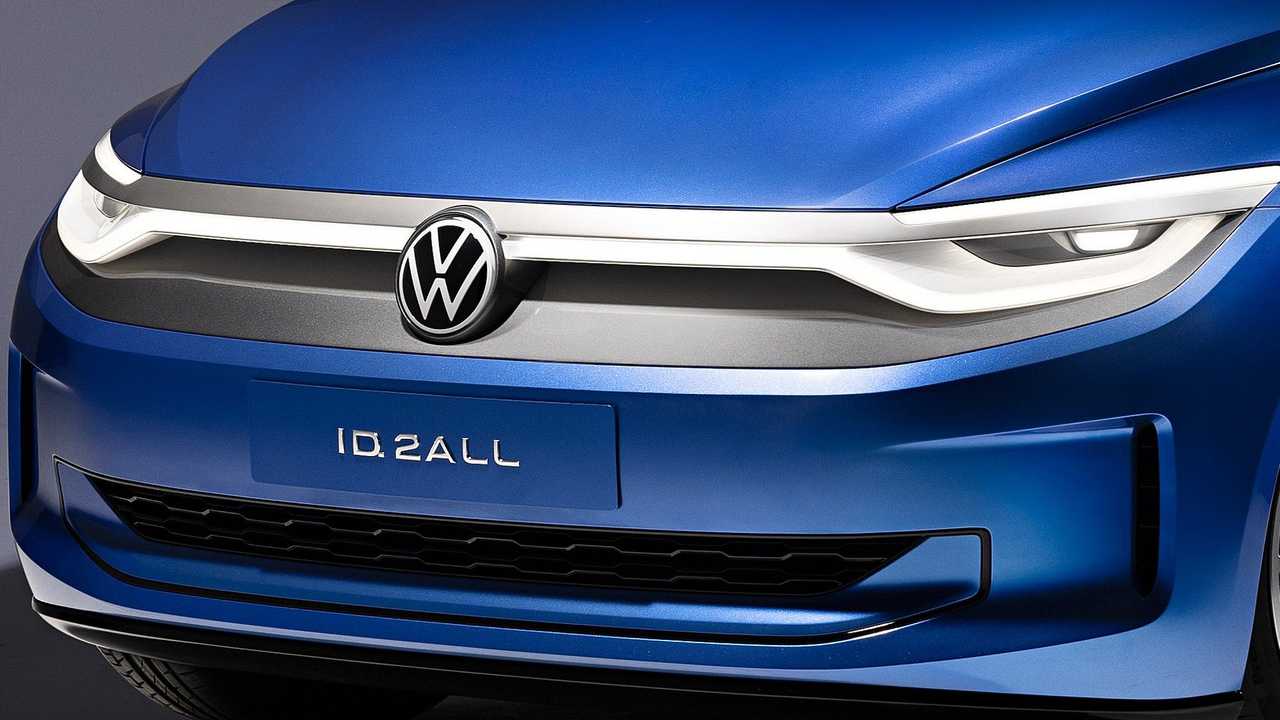
Well, that never happened, and it may very well never happen. But as VW charges forward with its commitment to electrification (where market conditions allow), a new, more friendly-looking player will join the German automaker’s portfolio by 2025: the upcoming ID.2, the production version of which is touted as being “even better” than the concept.
Volkswagen, the “love brand”
Volkswagen cars have rarely been described as sentimental, attractive or soulful, at least by journalists. They’re usually well-built and offer good value for money and the best of both worlds when it comes to handling. With the upcoming ID.2 electric hatchback, however, VW wants to change that.
We still don’t know what VW’s electric Polo replacement will look like, but it’s fair to say that it will be very similar to the ID.2all concept from last year. That’s a hatchback that looks like a futuristic next-gen Golf from the front and a retrolicious first-gen Golf from the back.
Thanks to an all-electric front-wheel-drive platform known as MEB Entry, the upcoming ID.2 (the name is still not official) will be shorter than the current ICE Golf, but the wheelbase will be similar, which will inevitably lead to better-than-expected interior space.
According to Autocar, quoting Volkswagen’s design chief Andreas Mindt, the design work on the production version of the upcoming sub-$27,000 EV is done. Mindt claims the road-going car looks “even better” than the concept that started it all.
The MEB Entry platform is designed to accommodate either a 38-kilowatt-hour battery or a 56-kWh pack for a maximum claimed range of 280 miles on a full charge. Presumably, this WLTP estimate will be valid for the bigger battery, while the cheaper car will get the smaller pack and a shorter range.

26
A high-performance GTI version and a souped-up ID.2X crossover-like trim are also in the works. What’s more, VW promised that physical buttons would make a comeback in its new affordable EVs after people were understandably not pleased with the company’s decision to replace as many buttons as possible in the ID.3 with virtual counterparts. Even the number of window buttons on the driver’s door was slashed in half for cost-cutting.
The Volkswagen ID.2 will be unveiled later this year, with a production ramp scheduled for next year. But what does “even better” mean in terms of design? Let us know in the comments below.
Share this Story
Forvia CEO raises questions about Mexico, citing high inflation and missing trucks
Mexico is becoming more difficult to do business in as security concerns persist and labor and energy costs rise, Forvia CEO Patrick Koller said.

2025 Rivian R1S And R1T: See How It’s Different
Real beauty, as they say, is inner beauty. And as attractive as the Rivian R1 Series models are already, with their 2025 updates, the real beauty is within. Though the R1S and R1T look pretty much the same as before, the upgrades underneath truly justify their “second-generation” title and make them almost new vehicles entirely.
As InsideEVs mentioned in our First Drive review yesterday, we’re talking about a new LFP battery pack for the base models; a new three-motor variant to go with the dual- and quad-motor ones; a new software stack; and a whole new approach to parts networking and computing that yields 1.6 fewer miles of internal wiring per car.
Rivian’s R1 updates need to close a gap
Like many EV startups, Rivian is struggling to become profitable and stay that way. Its planned mass-volume, mainstream models like the R2 and R3 should help there, but Rivian has to survive long enough to get them on the road. Can the updated R1S and R1T sell strongly enough to get them there?
That’s an impressive achievement. It means reduced complexity, reduced costs to help with Rivian’s profitability goals, better computing and, hopefully, some cheaper repairs. The last one has often been a major headache for R1S and R1T owners.
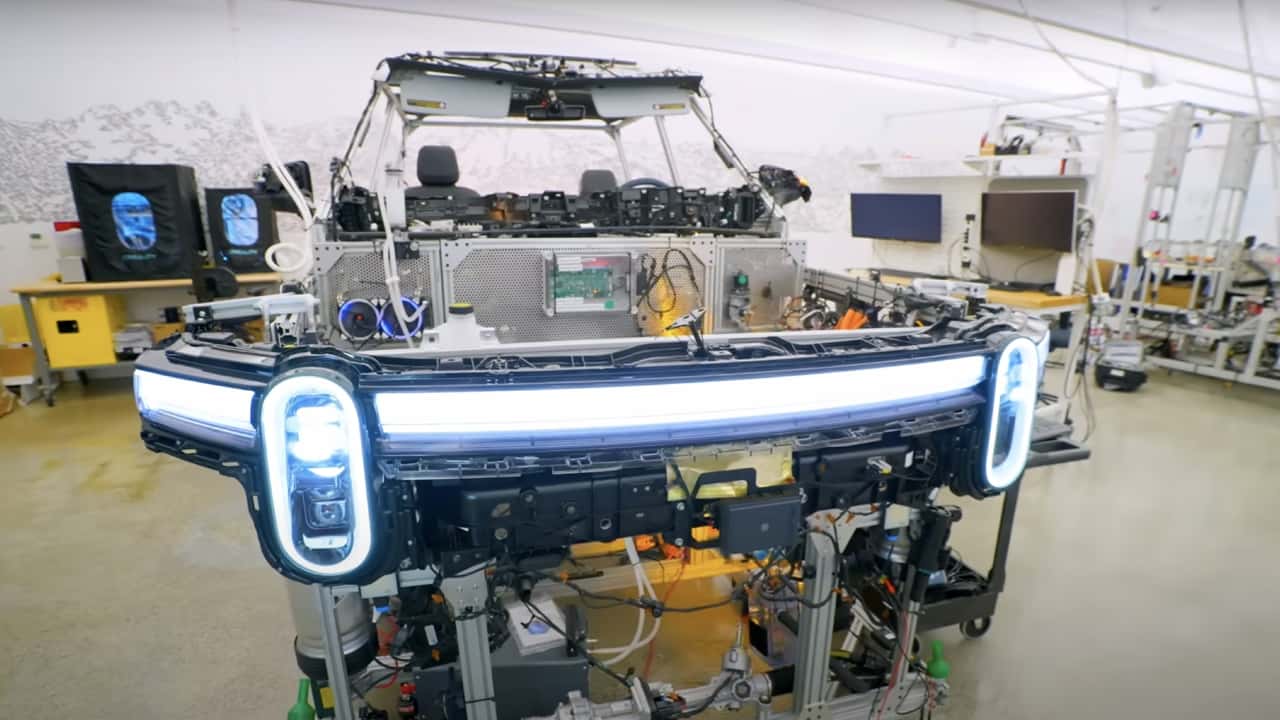
But reading is one thing; it’s a whole other thing to see how this looks in action. In this new video from CNET, veteran tech journalist (and EV newcomer!) Lexy Savvides checks out Rivian’s Palo Alto lab. There, she gets up close with the new car’s electrical architecture, software interface, AI-powered functions and more.

zonal architecture
One thing Savvides learned is that the R1 models now have seven ECU modules, down from 17 before as Rivian continues to evolve its zonal architecture setup. That’s a rethinking of vehicle design for EVs that organizes computing power by location in the car, not function (thermal controls, autonomous driving, etc.), which reduces complexity and allows for more advanced software features. Tesla has been at this for years and now more and more automakers are catching on to its benefits.
All of that happens before Savvides gets a go behind the wheel. Spoiler alert: she likes it a lot. And she’s just in a Dual Motor version, not even the crazy fast one variants. I’d say it sets the bar pretty high for your first EV experience.
Do you think these changes to the 2025 R1 models are enough to generate enough hype and sales until the more mainstream R2 and R3 come out?
Contact the author: patrick.george@insideevs.com
Share this Story
EU tariffs on EVs would cost China almost $4B in trade, study says
The number of Chinese EVs imported to the EU would drop by a quarter if Brussels were to impose a 20 percent import tariff, according to a Kiel Institute for the World Economy study.