
Author: EVAI

SEMA-bound Plymouth GTX Electromod teases EV conversion potential
 Plymouth GTX Electromod concept to debut at 2024 SEMA show Concept features electric crate motor rated at 335 hp Electric motor borrowed from 2024 Dodge Charger Daytona EV The crate engines offered via Stellantis’ Mopar division are some of the best in the business, but in the near future buyers will likely have the additional option of an…

First Drive: 2025 Ram 1500 RHO dials a baja brute up to 10
 I’m in the driver’s seat of the 2025 Ram 1500 RHO—the off-road-focused flagship of the Ram lineup—in the dirt, and being invited to get as sideways as I feel comfortable with. Further, I’m feeling stoked to be sampling its signature Baja drive mode on a course that Stellantis engineers say really showcases this…

LG shifting Ford Mustang Mach-E battery production to Michigan
- Ford Mustang Mach-E battery production will move from Poland to Michigan
- The move will translate into federal EV tax credit eligibility
- The Ford Mustang Mach-E is assembled in Mexico
LG Energy Solution will shift production of batteries for the Ford Mustang Mach-E from Poland to Michigan in 2025, checking a box for federal EV tax-credit qualification.
The Mach-E fell off the short list of EVs that qualify for the $7,500 tax credit this year when tougher rules for the origin of battery components and critical minerals were phased in. To qualify for half the credit amount ($3,750), the rules stipulate 50% of critical mineral content in batteries be North American-sourced, or be from countries in which there’s a free-trade agreement in place.
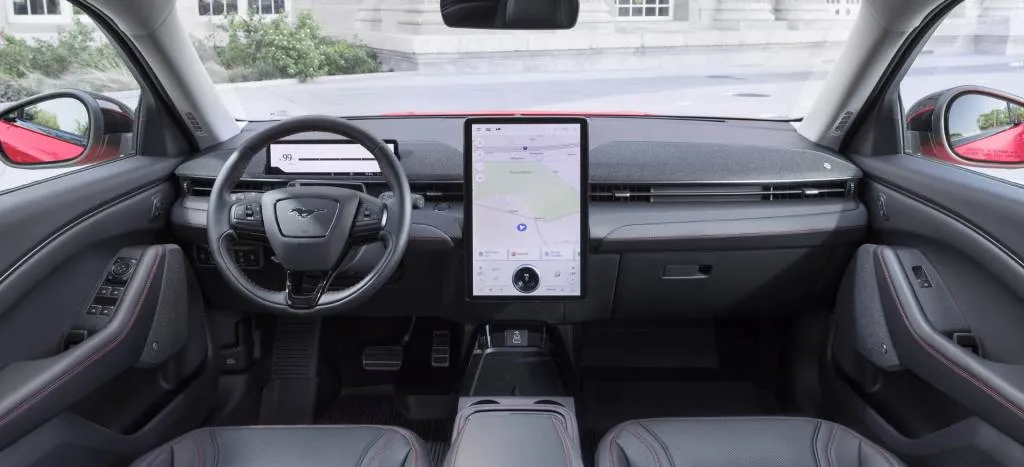
2025 Ford Mustang Mach-E (Premium with Sport Appearance Package)
The other $3,750 is based on North American sourcing of 60% of battery parts and North American assembly of the vehicle itself. The Mach-E is currently manufactured in Mexico, so it meets the latter requirement. For the rest of the lineup, the Ford F-150 Lightning currently qualifies for the full $7,500 credit, while the Escape Plug-In Hybrid qualifies for a $3,750 credit.
LG currently manufactures EV batteries in Holland, Michigan, but the battery supplier and Ford had planned another facility in Marshall to manufacture lithium iron phosphate (LFP) batteries, which Ford previously touted as a key to EV affordability. However, Ford paused construction on the $3.5 billion factory in late 2023.
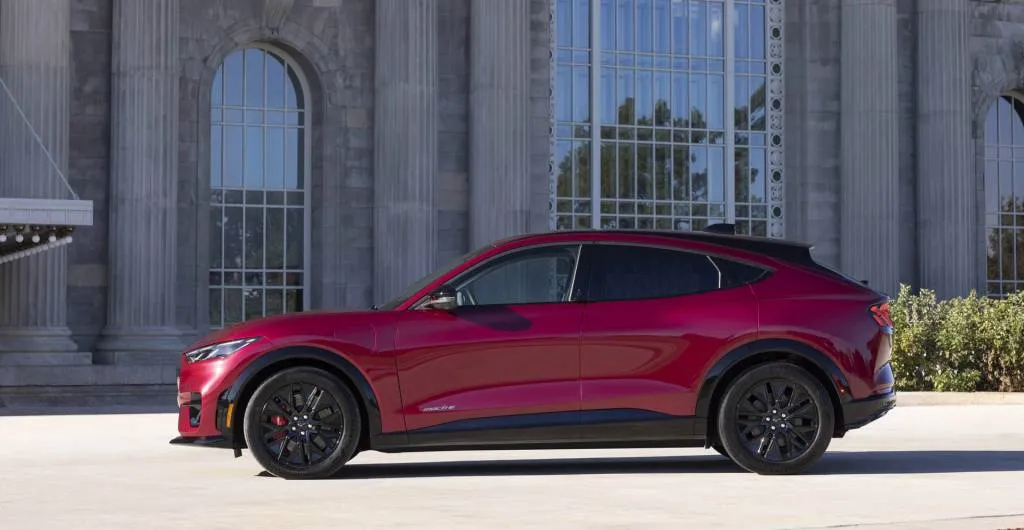
2025 Ford Mustang Mach-E (Premium with Sport Appearance Package)
Around the same time, Ford also delayed construction on one of two EV battery plants located on a common site in Kentucky, citing lower-than-expected demand for electric vehicles. The two plants comprise the Blue Oval SK Battery Park, a joint venture with battery supplier SK On financed with part of a $9.2 billion government loan. Construction work on the second plant was not affected.
Ford CEO Jim Farley said in 2021 that the automaker was pursuing projects like this because more U.S. battery production would ensure stability of battery supplies. The move will also keep carbon emissions lower by powering factories with a domestic electricity grid that’s cleaner than that of China—currently the world’s largest battery manufacturer. The potential boost in sales from more EVs that qualify for a federal tax credit adds another incentive.

Hyundai RN24 previews automaker’s EV performance future
- The Hyundai RN24 is a stripped-down EV concept
- Hyundai said the RN24 tests tech for future performance EVs
- Hyundai gave the RN24 features that mimic gas-powered cars such as sound
Hyundai is using a stripped-down test vehicle to develop its next generation of performance EVs.
The automaker on Friday unveiled the RN24 concept, which it describes as a rolling laboratory for testing technologies that could be used in vehicles for its N performance division. Hyundai has done this before with EV concepts like the RM20e and RN22e, but where those concepts used production vehicles as starting points, the RN24e goes in a more radical direction.
This concept is based around a bare chassis inspired by the one used by Hyundai in the World Rally Championship (WRC). Rally cars race with full bodywork, but Hyundai skipped that to keep the RN24 as light and compact as possible.
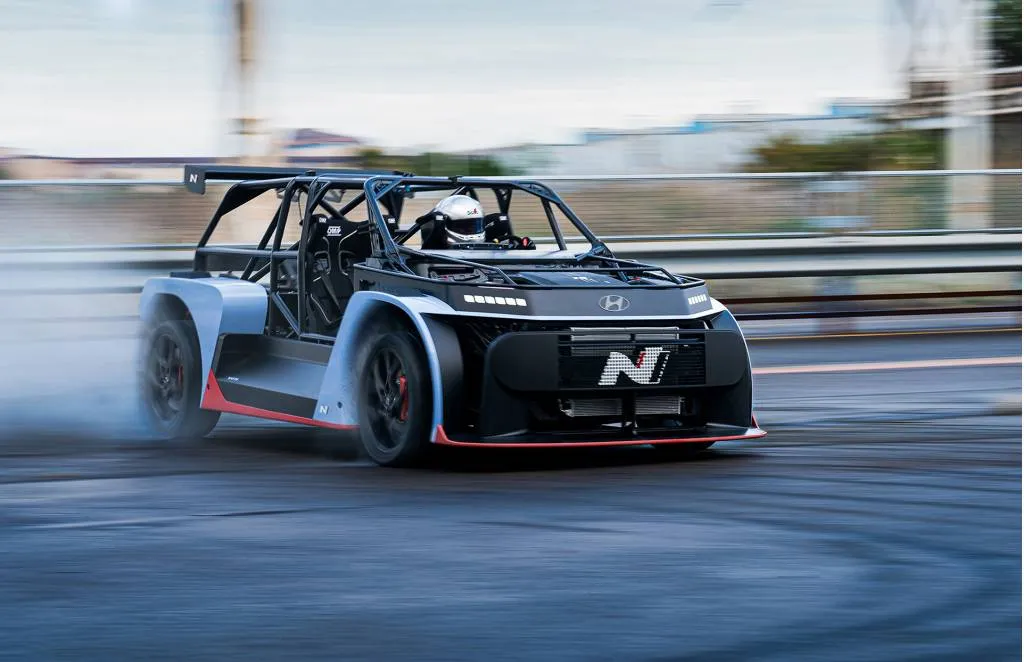
Hyundai RN24 concept
A 641-hp dual-motor all-wheel-drive powertrain has been borrowed from the Hyundai Ioniq 5 N, but because the concept’s wheelbase is 13.4 inches shorter, the Ioniq’s 84-kwh battery pack had to be reworked to fit. To take full advantage of the nimble chassis, the steering was designed to match the speed of systems in Hyundai rally cars.
The suspension was inspired by Hyundai’s rally cars as well, with similar dampers and high-rigidity subframes used, as were the electronic controls, which were taken directly from the current Hyundai i20 N Rally1 Hybrid. These include a powertrain controller that lets the driver adjust things like peak power, acceleration sensitivity, regenerative braking sensitivity, and more.
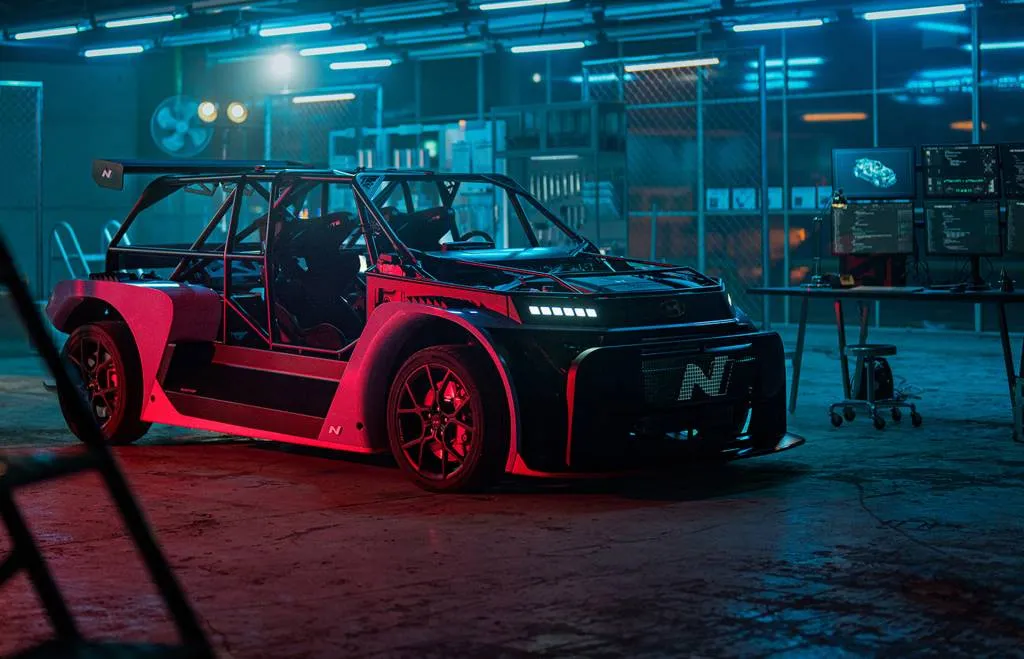
Hyundai RN24 concept
Other features are designed to mimic mechanical components in current rally cars. A Rally Mode is designed to distribute power among the four wheels in a manner similar to mechanical all-wheel-drive systems used in rally cars, and there’s an electronic hand brake as well.
An upgraded version of the N Active Sound+ system from the Ioniq 5 N adds two speakers, and is designed to use the rear fenders as a soundbox to further enhance the audio experience. With the Ioniq 5 N, Hyundai has tried to use artificial sound and gear shifts to cater to enthusiasts. The RN24 indicates it’s committed to that approach for the near term.

Brabus Rocket GTS is an AMG SL shooting brake packing 986 hp
 Brabus Rocket GTS shooting brake is based AMG SL 63 S E Performance Plug-in hybrid powertrain delivers 986 hp and 1,195 lb-ft of torque Production limited to 25 units Brabus is a German tuning company known for its powerful yet conservatively styled builds. Every now and then, though, the company takes a trip on the wild side, and this time one of…

2025 Hyundai Ioniq 5
 What kind of car is the 2025 Hyundai Ioniq 5? What does it compare to? Hyundai’s Ioniq 5 is a small hatchback EV with value baseline pricing. Rivals include the VW ID.4, Tesla Model Y, and Ford Mustang Mach-E. Is the 2025 Hyundai Ioniq 5 a good car? Yes. This Hyundai is one of the better options in its segment, with peppy performance…

Carlos Sainz cruises to victory at 2024 F1 Mexican Grand Prix
 Ferrari’s Carlos Sainz won the 2024 Formula 1 Mexican Grand Prix McLaren leads the Constructors’ Champion Reigning world champion Max Verstappen of Red Bull Racing leads the Drivers’ Championship Just a week on from its win at the United States Grand Prix in Austin, Ferrari has followed up with another win at this past weekend’s Mexican Grand…

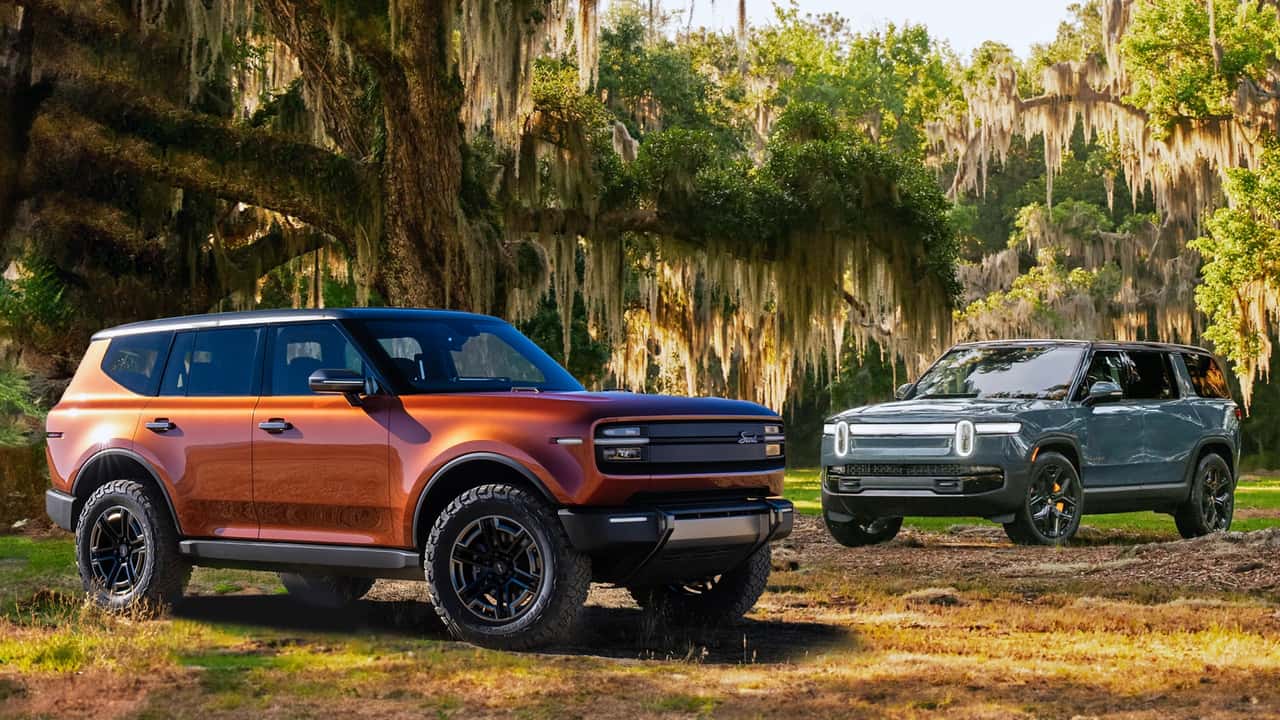
Scout Traveler Vs. Rivian R1S: How Do They Compare?
Scout has finally unveiled its electric SUV and pickup, the Traveler and the Terra, and many people have been saying they look like Rivian trucks seen through a retro filter or like a mix between a Rivian and a Ford Bronco. While there is some truth to that, at least visually, they’re also quite different trucks in terms of size, scope and philosophy.
When the Scout Traveler enters the market in 2027, it will face direct competition from the Rivian R1S. It’s worth noting that the Traveler shown at the official unveiling is just the production-intent model (officially designated a concept by the manufacturer), which is about 85% finished.
Some things can still change in the three years before it enters production. The R1S, on the other hand, has been around for a few years and recently underwent a major overhaul for the 2025 model year.
Size

While the Traveler and R1S may look very similar at first glance, they have different proportions and look quite different in person. The Scout is the shorter of the two overall, with a total length of 190.9 inches versus the Rivian’s 200.8 inches and it sits on a slightly shorter 120.4-inch wheelbase. This means the slightly longer R1S has more space between its axles, giving it a roomier interior, although the difference isn’t significant.
The Traveler is slightly narrower than the R1S, measuring 79.9 inches with its mirrors folded. The R1S is almost 2 inches wider at 82 inches.
The Scout is lower than the Rivian (76.3 inches versus 77.3 inches), and it also has less ground clearance (12.1 inches versus 14.9 inches). This is presumably for the standard steel spring suspension setup. The manufacturer hasn’t said anything about how much its ride height will vary with the available adjustable air suspension.
Power
You can get the Rivian R1S with between 533 and 665 horsepower in dual-motor configurations, 850 hp in the tri-motor, and the upcoming quad-motor variant will have 1,025 hp. The lowest-power model can sprint to 60 mph from a standstill in 4.5 seconds, which drops to 3.4–3.5 seconds in the 665-hp Dual Motor Performance model. The tri-motor R1S dips below the 3-second mark and the quad-motor will do the sprint in about 2.5 seconds.
Scout hasn’t mentioned specific power outputs for the Traveler, but all versions will come with a dual-motor all-wheel drive configuration. The manufacturer did say we should expect torque levels up to nearly 1,000 pound-feet, and the quickest version will be able to accelerate to 60 mph in 3.5 seconds.
Range
The heavily revised Rivian R1S features new battery packs with usable capacities ranging between 92.5 and 141.5 kilowatt-hours. They deliver EPA ranges of between 270 and 410 miles, making the R1S one of the longest-range SUVs available today. Because it has a 400-volt electrical architecture, it can only charge at up to 220 kW, but that’s still pretty quick, and Rivian says you should expect the 10 to 80% charge to happen in between 30 and 40 minutes, depending on the battery pack size.
Thanks to its 800-volt body-on-frame platform (specially developed for the two upcoming Scout models), the Traveler will have a higher maximum charging power of 350 kW. 350 is also the maximum number of miles that the Traveler will be able to drive on one charge. Scout hasn’t made any claims about the 10 to 80% charge time, but it should be around the 20-25 minutes mark thanks to its higher charging power.
Scout buyers will be able to specify an optional range extender (a combustion engine that will act as a generator to replenish range on the move), which will boost the figure to 500 miles. The Ram 1500 Ramcharger extended-range pickup will be powered by a similar system, but it will have a smaller battery than the fully electric Ram 1500, whereas the Scout EREV’s battery will be the same size.
Scout has confirmed that the Traveler will come equipped with a NACS charger, so it will be natively compatible with the Tesla Supercharger network. If you want to charge a Rivian R1S on a Tesla charger, you will need a CCS-to-NACS adapter to make it happen. Both vehicles support bidirectional charging.
Towing
Scout says the Traveler will have a maximum payload of almost 2,000 pounds, although it didn’t provide a final number, which is comparable to the R1S’ 1,764-pound rating. When it comes to towing, the Rivian has the advantage with a rating of 7,700 pounds, or 700 pounds more than the Scout.
Features
The Rivian R1S is a three-row SUV, so it can carry more passengers than the strictly two-row Scout Traveler. It also has a built-in air compressor that is very handy for pumping up the tires after you let some air out to improve off-road traction. Rivians are also known to be very good to drive on tarmac too, and with their standard air suspension in its lowest and stiffest setting, they actually corner at higher speeds than you would expect.
The Scout Traveler seems like a more off-road-focused vehicle. It will feature sway bar disconnects (like a Jeep Wrangler or Ford Bronco), which allow for greater wheel articulation off-road and will help prevent the car from teetering on two wheels when going over a crest at an angle. The Scout will also feature front and rear mechanical differential lockers like the proper off-road SUV that it aims to be.
Another cool Scout feature, which is also a retro touch, is the bench seat in the front. This used to be a staple of older American trucks, but it’s not something you see often in today’s models. Having three people in the front will make for a very unique experience, and given the extra width that it has over rivals, shoulder room shouldn’t be an issue.
We’re very happy Scout won’t force users to go through the touchscreen to access various functions. Most will have dedicated physical switches conveniently arranged in a row beneath the central display. It will also feature an optional Cabana Top, which is a retractable canvas roof that, once open, will give limitless headroom to both rows of seats.
Price
Scout will adopt a direct sales model similar to Tesla. This means you won’t be able to order a Scout vehicle through a regular Volkswagen dealership. The company wants to control the buying experience directly, and it will also provide maintenance and repairs in its own dedicated service centers.
Like Tesla and Lucid (and now Scout), Rivian also employs a direct sales model bypassing the traditional dealer network model and selling vehicles directly to customers.
You will be able to buy a Scout Traveler, with the current federal tax credit included, for around $50,000, which is in the same ballpark as gas-burning rivals like the Wrangler or Bronco. Although the price tag is slightly higher than the $40,000 Scout initially mentioned, it still makes these vehicles highly affordable for their size.
The range-extender powertrain will add a few thousand dollars to the price tag, but it is unlikely to make the Traveller a $60,000 vehicle.
Rivian wants $77,000 for a base R1S, which also qualifies for the $3,750 federal tax credit. If the vehicle’s value exceeds $80,000, which it will if you want any of the more potent, longer-range versions, then you won’t be able to claim the tax credit. The current top variant, the R1S TriMax, starts at $105,900, and the future range-topping quad-motor will likely cost more than $120,000.
Share this Story

Over half of US EV and PHEV sales in 2023 were SUVs
- SUVs were 53% of EV and 83% of PHEV sales in 2023
- They’re heavier and less aerodynamic—thus less efficient—than cars
- Broadly, SUVs emit 20% more CO2 than cars regardless of powertrain
Reflecting overall industry trends, most electric vehicles and plug-in hybrids sold in the U.S. in 2023 were SUVs, according to the Department of Energy (DOE).
By sales, SUVs have surpassed sedans, wagons, hatchbacks, and minivans, and last year they also accounted for 53% of battery-electric vehicle sales and 83% of plug-in hybrid sales. Conventional car body styles still accounted for 43.4% of EV sales, but just 10% of plug-in hybrid sales.
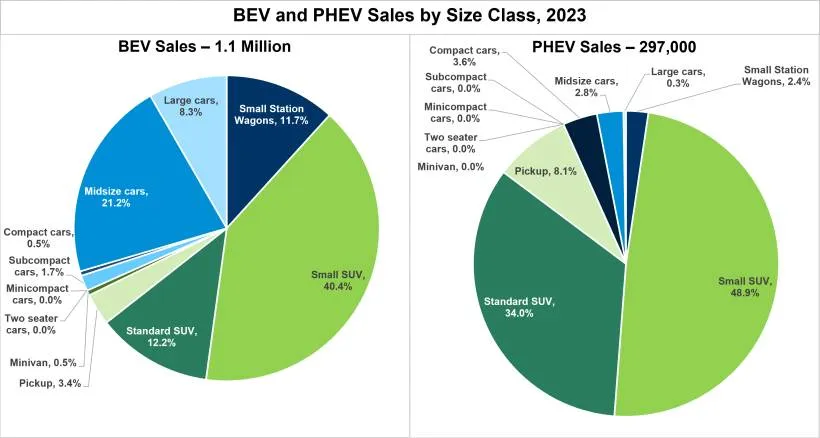
2023 U.S. EV and PHEV sales by size class (via U.S. Department of Energy)
SUVs are generally heavier and less aerodynamic than cars, which impacts efficiency of internal-combustion and electric powertrains alike. That’s led to differing analyses of the relatively high number of plug-in SUV sales.
The DOE has a fairly positive outlook, saying in September that a small electric SUV with 300 miles of range is estimated to have half the lifetime greenhouse gas emissions of a comparable gasoline vehicle. In 2021 it said that popular small SUVs were a meaningfully better choice than larger models in terms of overall emissions—and that EVs and plug-in hybrids were better still.
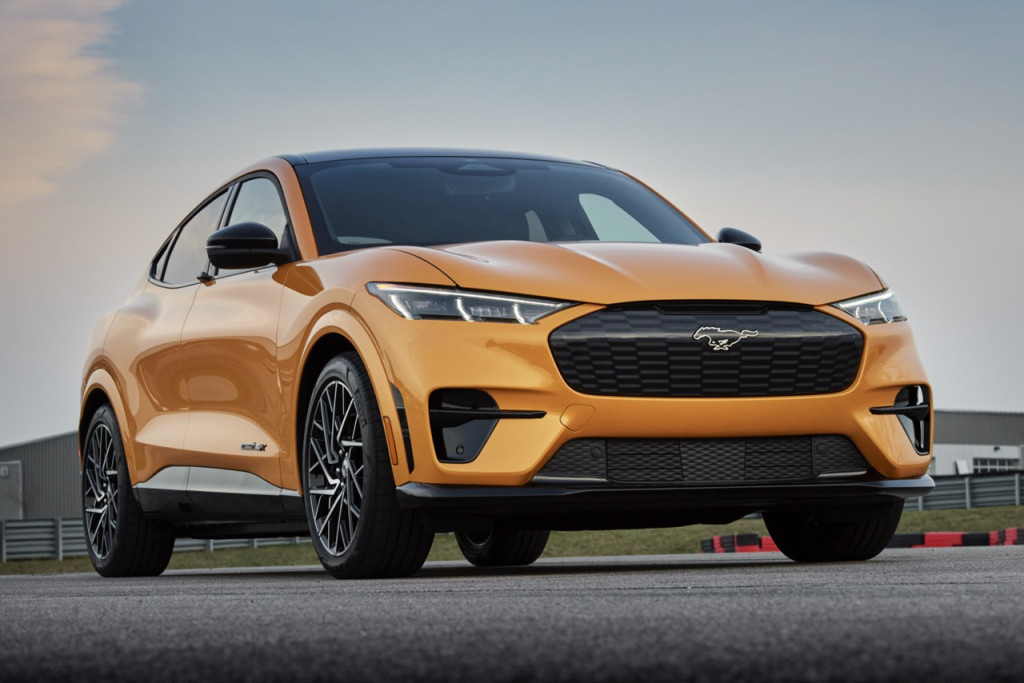
2023 Ford Mustang Mach-E
However, the International Energy Agency (IEA) said earlier this year that SUVs emit 20% more CO2 compared to cars, regardless of powertrain type. The IEA also warned in 2023 that the SUV market is fueling global oil demand, countering some of the emissions reductions one might hope to see from higher EV adoption.
When comparing electric SUVs to gasoline SUVs, though, electric vehicles at least have the advantage of getting cleaner over their useful life as more renewable energy is used to power the grid. And while emissions from electricity production and distribution are currently double that of the equivalent emissions for gasoline, that’s more than offset by the tailpipe emissions of gasoline vehicles, which represent nearly three quarters of their total lifecycle emissions, the DOE previously noted.

Michael Schumacher’s final Ferrari F1 car heads to auction
 A 2006 Ferrari 248 F1 race car is headed to auction Michael Schumacher drove the F1 car before his temporary retirement An F1 car previously driven by Schumacher sold for $14.8M in 2022. Michael Schumacher remains one of Formula 1’s most successful drivers, with most of that success coming in a dominant era with Ferrari in the early 2000s. The car…