Author: EVAI

The Cadillac Optiq’s Interior Is Weird. That’s A Good Thing
I have to admit that I didn’t think much of the Cadillac Optiq when it first debuted, or even right up until I got some seat time in one. It’s not that General Motors isn’t making good electric vehicles; these days, it very much is, and it has the sales numbers to back this up.
Instead, it’s just that a “new midsize electric luxury crossover” excites me about as much as the release of yet another superhero movie. Most of them are fine. A few are abysmal. But on the whole, it’s all stuff we’ve seen before.
But every now and then, something new surprises you. And I’m pleased to say the Optiq did exactly that—starting with its refreshingly original cabin.

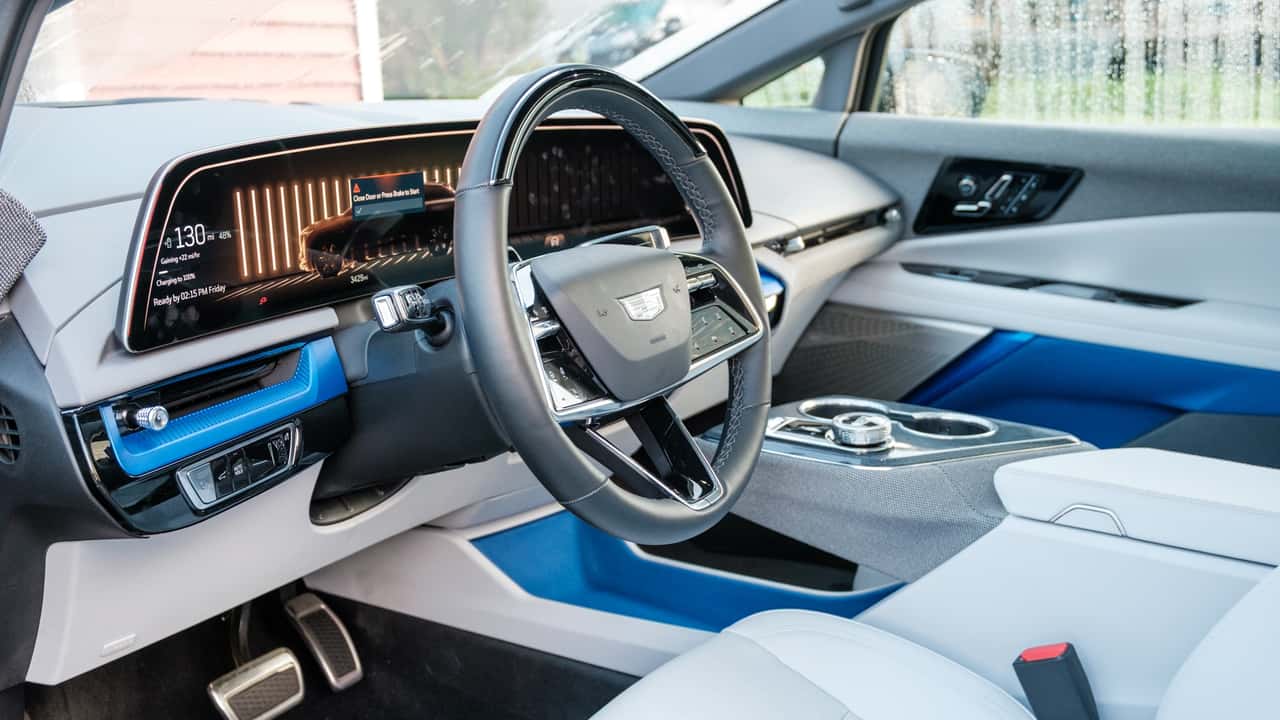
2025 Cadillac Optiq Interior
Photo by: Patrick George
Look at this! It’s blue! Aggressively blue, in fact. And that’s only part of the story: the Optiq’s cabin is filled with a charming assortment of different textures, materials, touchpoints and colored accents.
My Optiq tester’s interior scheme is called Sky Cool Gray with Santorini Blue accents, a zero-cost upgrade from the base car’s (called Luxury 1) all-black cabin. But that’s not all: upgrade to the nicer Luxury 2 or Sport 2 trims, and you can double down with the Phantom Blue trim’s navy leather seats, dashboard and door accents.
Cadillac Optiq Phantom Blue
Photo by: Cadillac
Reader: If you buy an Optiq, resist the temptation to get the tan or all-black leather. Cadillac doesn’t make bad interiors (not anymore, anyway) and so I am sure they’re very nice. But you deserve some spice in your life. Be bold. Be interesting. Get one of the blue interiors. You will be dead someday, like all of us, and the chance to drive something interesting—and kind of weird—should not be passed up during your limited time on earth.
2025 Cadillac Optiq Interior
Photo by: Patrick George
2025 Cadillac Optiq Interior
Photo by: Patrick George
2025 Cadillac Optiq Interior
Photo by: Patrick George
Let me be clear that I mean “weird” in the nicest possible way here. The EV world needs more weird. Every car company is trying to figure out an electrified, software-driven future so desperately that they don’t take risks in other ways.
2025 Cadillac Optiq Interior
Photo by: Patrick George
The ethos behind most EVs we test is generally “do more screen,” itself a derivative of “be more like Tesla, primarily for cost-cutting reasons.” There are certainly reasons why this happens. They aren’t always good for the consumer, however, nor do they end up being all that memorable. It’s also hard to define a brand by being exactly like the other brands.
The Optiq itself is certainly screen-forward. It has a 33-inch LED display with something called 9K resolution. The software suite will be familiar to anyone who’s driven another GM EV. But the neon blue accents? Now we’re talking.
2025 Cadillac Optiq Interior
Photo by: Patrick George
The dashboard trim, storage area below the center console, door cards and other bits really serve to spice up this cabin. The interesting touches go beyond the cabin; one pervasive material is the “patterned accent fabric” that’s woven from 100% recycled polyester yarn, and it’s splayed across the doors and dash too.
And then there’s that center console. That chrome-adorned rotary-dial control knob looks almost like some interior bit from your grandfather’s Cadillac, back in the tailfin era. I don’t know how else to describe it, but it has this old-school vibe that pairs well with a modern electric car.
2025 Cadillac Optiq Interior
Photo by: Patrick George
The whole Santorini Blue package is just fun. It reminds me of the avant-garde stuff that the French automakers used to put out, before the demands of modern technology and corporate ownership made them a lot more boring. It’s also deep in Cadillac’s DNA, as the company’s glory-days cars offered wild blue and red interiors, among other combinations. The Optiq’s blue interiors—both of them, really—seem like GM let its interior designers enjoy their jobs, and that energy is apparent throughout.
It’s certainly a nice antidote to screen-focused EV minimalism. I’ve had about all of that I can take for a bit. It’s time to bring some maximalism to this field for a change.
We need more stuff like this. More carbon fiber and recycled materials like the BMW i3. More wacky stuff like the Genesis GV60’s Crystal Sphere. Hell, half the cars we saw in China this year were purple. Life doesn’t have to be just an endless sea of gray.
Contact the author: patrick.george@insideevs.com
23
Source: Patrick George
Share this Story

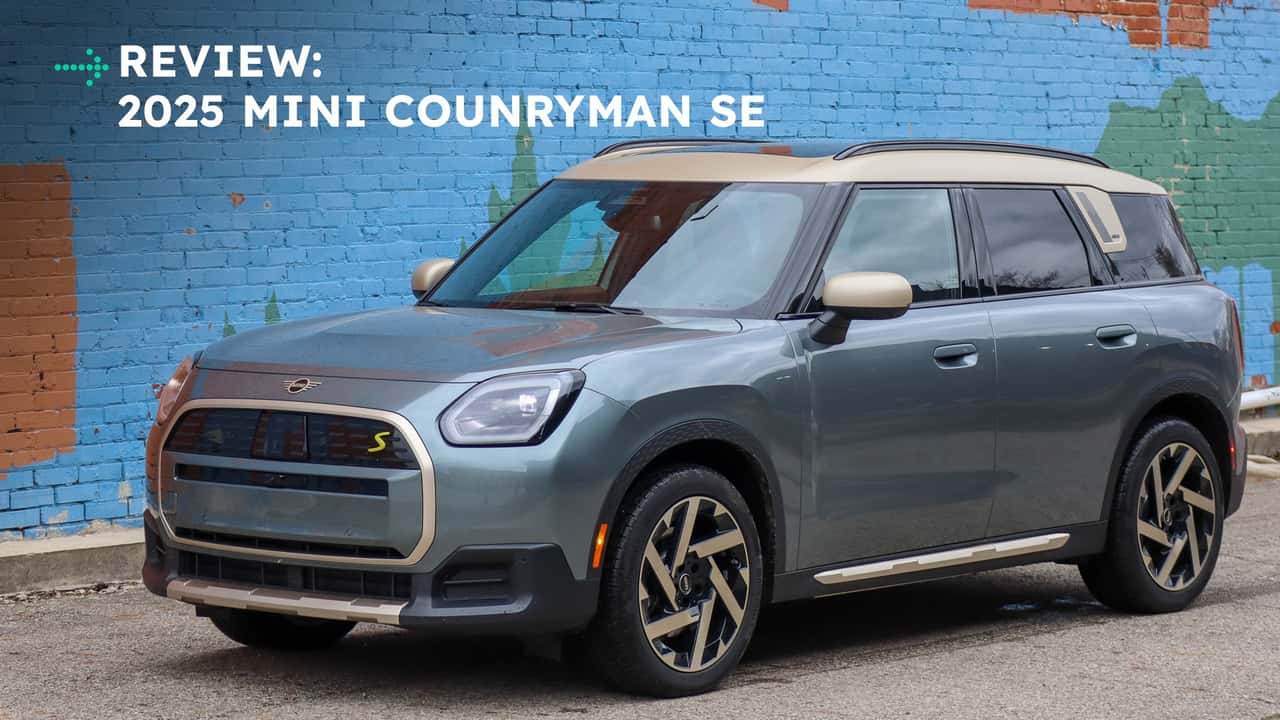
The 2025 Mini Countryman SE Is Good, Despite What The Haters Say
The BMW iX may be one of the ugliest cars on sale, but underneath that ugly wrapper lies quite a lovely electric car. The beaver-toothed front end and tragic proportions are hiding an interior that’s almost architectural in its ambiance, paired with a driving experience that’s sharper than some sports-oriented models from other brands. It’s a range king, too—a treat in the electric car space.
Similarly, the Mini Countryman SE has taken a lot of flak for what some people say represents everything wrong with the Mini brand. To some folks, this car is too big, too ugly, and its circular infotainment screen is way too complicated compared to the simplistic aura that classic Mini cars had. Or heck, even the early BMW-era Minis. Are they right?
I don’t know. I’m not going to pretend to be the ambassador for Mini enthusiasts and purists. But I do know that a week with the Countryman SE revealed a charming electric vehicle, even if it’s not exactly pitch-perfect in its execution.
2025 Mini Countryman SE
EV Range
212 miles
As-Tested Price
$51,145
Base Price
$46,375
Battery
64.6 kWh
Drive Type
AWD
Output
308 hp
Speed 0-60 MPH
5.4 seconds
Motor
dual
Charge Time
10-80% in 29 minutes

31
Source: Kevin Williams/InsideEVs
Believe it or not, the Mini Countryman is now in its third generation. Initially started back in 2011, this biggie-mini crossover was designed to court the number of buyers who liked the Mini Cooper hatchback, but wanted a little more space and a second set of doors. I suppose the ill-fated Clubman was also designed to satiate that desire, but its hearse-style rear doors and crew-cab door on the passenger side meant it was a five-door in the most maliciously compliant way. Mini drivers wanted a “five door” in the traditional sense, with four normal, forward-hinged doors, and a hatchback.
Photo by: Kevin Williams/InsideEVs
Some point after that, and possibly even in response, the slightly-bigger-than-Mini Countryman was born. It was an immediate sales success. Several generations later, and a healthy amount of middle-aged model bloat, the Honda Fit-sized Countryman has turned into a small crossover that’s a stone’s throw from a Toyota RAV4. Victory, it seems, has defeated the Countryman.
But while the third-generation Countryman is bigger than ever, its platform feels designed to right some of those wrongs. Underneath, the Countryman is an electrified version of its gas-powered sibling and closely related to the BMW X1. The Countryman SE’s direct electric analog is the BMW iX1, an electric version of the X1 that we don’t get here.
In Mini’s modern lineup, it’s the only four-door EV available with the Mini badge. The smaller Aceman five-door is missing in action for the U.S. market.
Power for the Countryman SE comes from two electric motors that have a combined output of 308 horsepower and 364 ft-lbs of torque. This is fed by a 64.6 kWh battery good for 212 miles of range, mounted underneath the car’s roughly 4,400-pound body. Oh, and dual-motor is the only way to fly; no front-wheel-drive-only models here.
A lot of people don’t like the way the Mini Countryman SE looks inside or out.
I am not one of those people. I think it’s a swell-looking car, but I will admit that it’s a design that looks far better in person. This is the biggest Countryman yet, but I think the Mini designers were good at both making the familiar Mini silhouette feel fresh, while disguising the car’s physical girth.
Photo by: Kevin Williams/InsideEVs
Like other modern BMW Group cars, photos don’t really do it justice; the Mini’s sides look kind of blank and understyled, with not much brightwork or surfacing aside from the chunky, squared-off wheel arches. Yet, in person, the Countryman SE’s side surfacing is deceptively complex, with interesting surface interactions. I fell in love with the Countryman’s dead-on rear view, the beefy trunklid, and Union Jack taillights feel like such a techno-futurist elevation of what we’ve already seen on modern Minis. Add in the bronze roof and wheels, and it’s such a good way to make an old theme feel new and modern. I like it a lot more than other second-gen retro designs, like the Fiat 500e.
The interior is arguably the best part of the Countryman SE.
Similar to the exterior, the interior is deceptively fresh. At first glance, the Mini’s interior looks like little more than a makeup compact-shaped screen mounted on a plastic panel. In reality, the car’s interior is so much more complicated. The shapes are simple – this feels like a more earnest reinterpretation of the very basic dashboards of the original Morris Mini Cooper.
Photo by: Kevin Williams/InsideEVs
Photo by: Kevin Williams/InsideEVs
Photo by: Kevin Williams/InsideEVs
Yet, all of the surfaces look so much more interesting in person. All of the bright work in my tester was bronze, matched to the bronze roof and wheels. The blue fabric on the dashboard and upper levels of the doors turns orange/bronze as it moves toward the rear of the car. Add in the really nice leather seats, and the interior is so charming that you’ll forget that there aren’t very many soft-touch plastics at all. The only soft part of the interior is the seats and armrests.
Oh, and I liked the circular-shaped screen and its software, but we’ll get into that in a more focused review of the software.
Fundamentally, the Countryman SE is a converted gas car with some batteries shoved under the floorboard.
On its face, the Countryman SE’s numbers are very average. It’s heavy, kind of tall, and its power numbers aren’t as staggering as cars like the Volvo EX30 twin motor, which has more than 100 more horsepower than this Mini. Yet, this still manages to be a fun-to-drive crossover. Especially when you don’t have a Mini purist all up in your ear, complaining about how the Countryman SE is the antithesis of any Mini product.
Photo by: Kevin Williams/InsideEVs
I guess to be fair to those folks, they are a little right. I’ve driven plenty of Mini Coopers in my day, and the low-to-the-ground, slightly raw feeling is part of their appeal. The Countryman SE instead feels tall and very refined behind the wheel, not at all like the old Mini hatchbacks of yore. Dare I say it, the Countryman SE’s suspension tuning is sophisticated and feels expensive, the ride is the opposite of rough, and it feels a premium car, not a toy. For some, they’d hate it.
I am not one of those folks. Yes, the Countryman SE feels a little tall and bulkier than I’d like, and yes, I wish the suspension were a tad firmer, but the car makes up for it by being relatively engaging to drive. The steering ratio is fairly quick, and there’s a bit of feel for the type of vehicle that it is. The car corners flat and grips hard, whereas other cars with similar characteristics would not feel anywhere near as engaging. I mean, drive an Equinox EV, then hop behind the wheel of this thing.
The Countryman SE is also a quick car. Stick it in Go-Kart mode, depress the throttle to the floor, and the Mini will do its best impression of a rocket ship – it’s one of the first EVs I’ve ever driven that genuinely felt as if Mini had underrated its specifications. Mini says it’ll hit 60 in 5.4 seconds, but Car and Driver said its Countryman SE scooted to 60 mph in a mere 4.8 seconds. That’s pretty damn quick.
Photo by: Kevin Williams/InsideEVs
The Mini Countryman SE’s range and charging abilities seem to be, on paper, kind of mediocre. The car is only rated for 212 miles of range, but it’ll zip from 10-80% on a DC fast charger in 29 minutes, with a maximum speed of 130 kW.
These numbers would have been cutting-edge in 2018. But, to be fair to Mini, the Countryman SE actually did all of those things. Our DC fast charging test hit the 29-minute mark right on the money, while a mixed-use road trip had me on track to achieve about 190 miles of range. For some, this may not be enough miles, but for my use case, the Mini was just fine. Over the week, I averaged 3.2 miles per kWh, which is merely okay.
Frustratingly, the Mini has DC fast charging preconditioning, but it’s not intuitive to use. It can activate automatically when navigating to a DC fast charger, but I often don’t use navigation in everyday driving. There is a button to turn on the preconditioning manually, but more often than not, it was greyed out with no explanation.
Photo by: Kevin Williams/InsideEVs
The Mini fans may have a point. On some level, the Countryman’s oversized dimensions and weird styling may not be everyone’s cup of tea. I get it, I remember being somewhat disappointed driving the new Fiat 500e compared to my old Fiat 500 Abarth.
However, I don’t think every car needs to be a direct 1-to-1 version of something old. Perhaps it’s time to reinterpret the past into something new—and take that something new, for what it is. With that in mind, the Mini Countryman SE has a lot of things to like about it. It’s sharp to drive without losing its premium edge, it is spacious for being a compact crossover, and in the grand scheme of things, it’s not even that expensive. True, the range and charging specifications are mediocre, but I think it’ll still work for most people.
Photo by: Kevin Williams/InsideEVs
I don’t even mind the price—my example stickered for $51,145. All Countryman SEs effectively come in one trim, with only a handful of option packs that can be optioned. My example came with the Iconic package ($3,200) and the Comfort Max package ($900), which added goodies like a Harmon & Kardon sound system, power front seats, and Mini’s Active Driving Assistant Pro. For comparison’s sake, this is cheaper than an AWD Cadillac Optiq. Although the Optiq qualifies for the federal $7,500 tax credit on full purchases. For now.
I just liked driving the Mini. Sometimes when I’m behind the wheel of these press cars, it can feel like a slog, like I am forcing myself to drive a car I don’t really like. Whereas with the Mini, I found myself making up reasons to drive the thing. I didn’t want to give it back. Because I liked it.
I think the world would be a better place if we drove cars we liked.
Contact the author: kevin.williams@insideevs.com
Share this Story

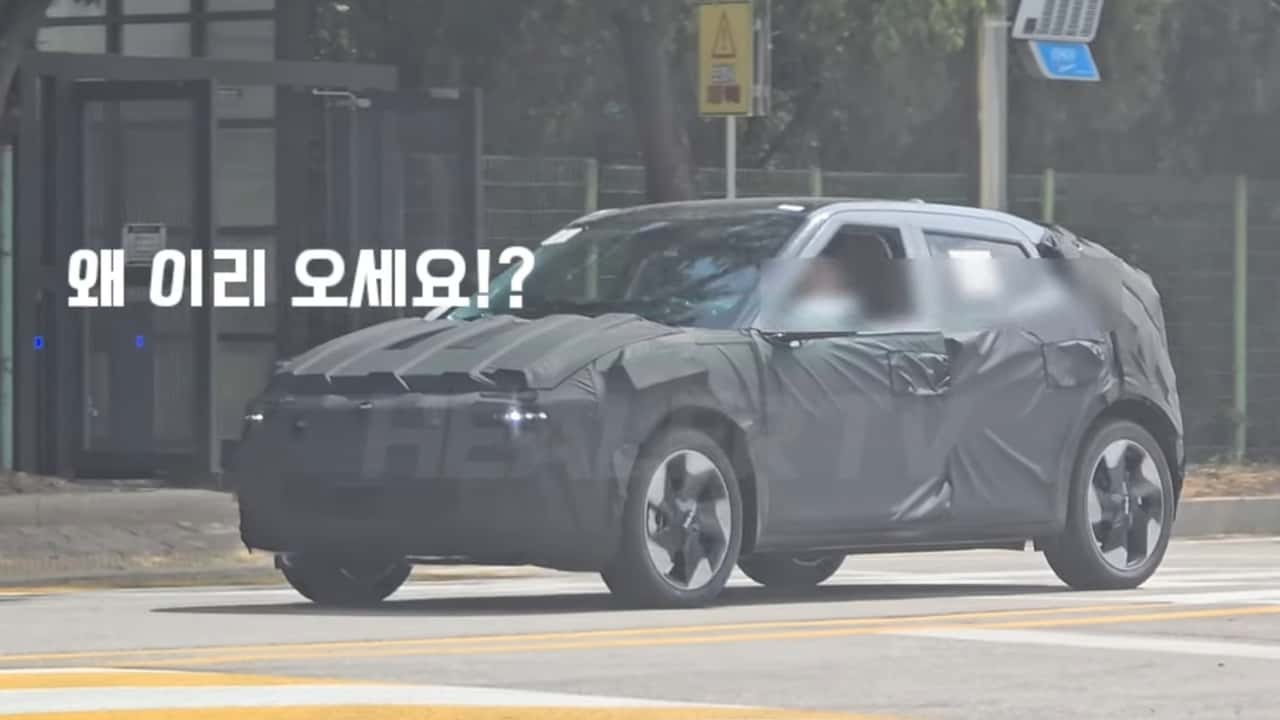
The Affordable Hyundai Ioniq 2 Is Coming In September
A smaller, more affordable Hyundai EV will be revealed soon for Europe. Does it have a shot anywhere else in the world?

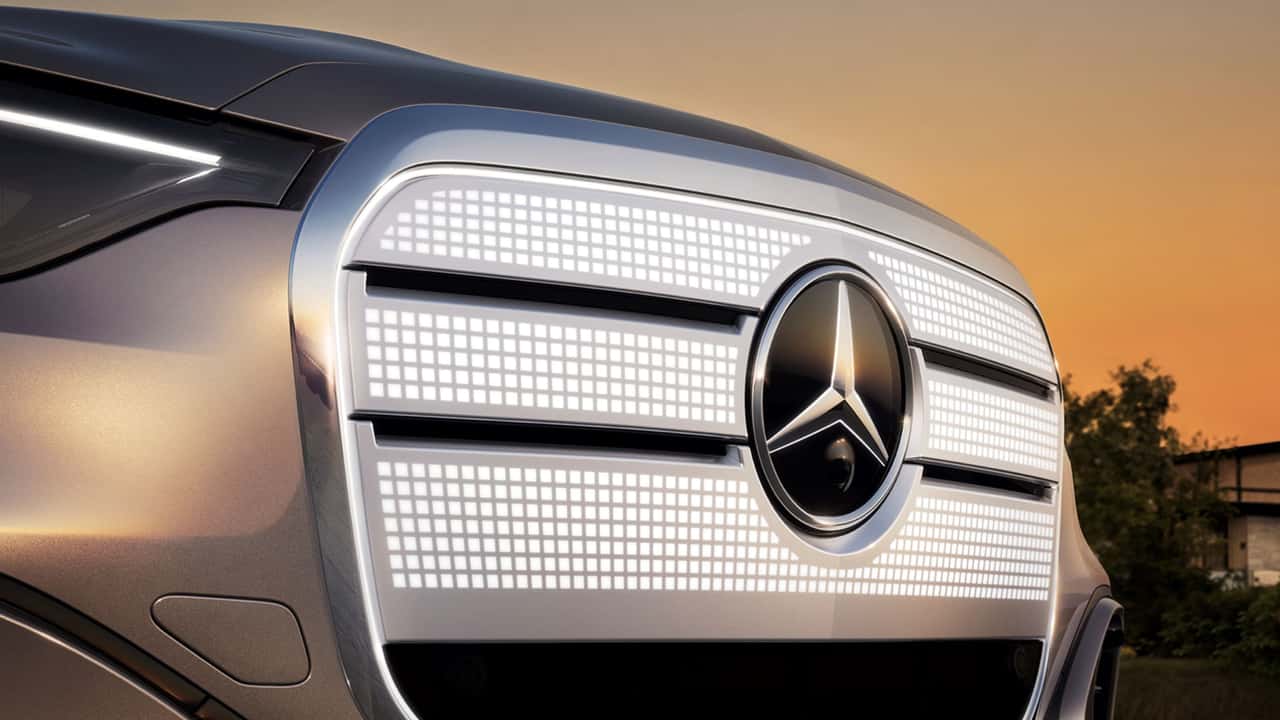
The Mercedes-Benz GLC EV’s Grille Has 942 Illuminated Pixels
- Mercedes-Benz is ditching the blacked-out grilles in favor of an illuminated extravaganza.
- The first new car to get the shiny new grille will be the electric GLC crossover.
- Future models will also get the redesigned grille that evokes the brand’s history.
It’s no secret that Mercedes-Benz’s egg-shaped electric cars haven’t really caught on. Despite the cars being quite good, sales have been anything but stellar, so the German automaker is starting from a clean slate with its new generation of EVs.
This includes the iconic Mercedes-Benz grille, which is also getting a makeover. Gone are the blacked-out grilles of old, and in their place we’ll see a brighter, digital reinterpretation of the classic shapes found on the classic 600 Pullman and S-Class models of old.

The new Mercedes-Benz GLC with EQ Technology will be the brand’s first model to get the redesigned grille.
Photo by: Mercedes-Benz
The first new Mercedes-Benz to get the glitzy new grille is the upcoming GLC with EQ Technology–that’s the electric version. The base version of the redesigned grille comes with a wide chromed frame, a smoked-glass-effect lattice structure and contour lighting.
More lighting will be available for more money, though. As an option, customers will be able to order an illuminated version with a total of 942 backlit dots that can also be animated. To top it all off, the central star and its surrounding contour will also be illuminated.
For now, Mercedes-Benz has only published a photo with the fancy version of the grille, so we’ll have to wait a little longer to see what the base version looks like. In any case, the German automaker is adamant that this redesign is exactly what the doctor ordered: the car’s design language is called “Sensual Purity”, while the grille is described as “a face for the future” and “a new era of iconic design.”
“Our new iconic grille is not just a new front for the GLC; it redefines the face of our brand,” said Gorden Wagener, Chief Design Officer at Mercedes‑Benz Group AG. “It is the perfect fusion of lasting design codes reinterpreted for the future, making our cars instantly recognizable.”
Besides the GLC, other models will also get a version of the new grille, including combustion cars. We’ll see the new GLC in all its glory when it debuts at the IAA Mobility show in Munich, Germany, on September 7, 2025.
Share this Story

Why The 2026 Hyundai Ioniq 9 Is America’s New Road Trip Darling
America’s love affair with big three-row SUVs is nothing new. What’s less appreciated is how well electrification fits that formula. Ditch the traditional engine, transmission tunnel, or driveshaft, and space can be used for what you really want—for your family, your pet and every piece of luggage they might insist on bringing.
The Hyundai Ioniq 9 leans hard into that advantage. Built on Hyundai’s Electric-Global Modular Platform (E-GMP), its flat floor and six- or seven-seat layouts make it a proper lounge on wheels. The numbers back it up, too: Its 123.2-inch wheelbase is longer than the current-gen gas Palisade (114.2 inches) and even longer than the Cadillac Escalade (121.0 inches).

39
Source: Suvrat Kothari
Roadtripping in it is absurdly easy. It gets access to the Tesla Supercharger network, the country’s largest and most reliable charging system. Add in a smooth, quiet ride, Bose surround audio and a cavernous interior festooned with tech and you’ve got an EV that feels purposely built to keep you happy and comfortable on most roads.
So, if anyone is still telling you that gas SUVs are better roadtrippers for your family, you’re being lied to. The Ioniq 9 is here and it makes that case better than few other cars out there. We’ve already done a full review—which you can read here—but to learn more about its long-distance strengths, continue reading.
[Full Disclosure: Hyundai loaned me an Ioniq 9 for one week in Brooklyn. It arrived fully charged, and I returned it likewise.]
Photo by: Suvrat Kothari
As a bachelor living in New York City, I didn’t exactly put the Ioniq 9 through a family or soccer mom test. But I did the next best thing: I took three of my friends and drove upstate New York. I’ve never seen them as relaxed or as excited in any other press car I’ve brought home.
These are powertrain-agnostic, non-car people who care about one thing: getting from point A to point B. Yet a few things had them grinning the entire trip: the buttery ride quality, the plush second-row captain’s chairs, the smooth electric powertrain and the Bose speakers turning the cabin into a concert hall on wheels.
The creature comforts are truly great, but they don’t mean much if the EV underneath isn’t sorted. Luckily, the Ioniq 9 nails the basics. So, let’s start with those first.
Range And Charging
Hyundai Ioniq 9 Roadtrip
Photo by: Suvrat Kothari
The Ioniq 9 gets two things very right: range and charging speeds.
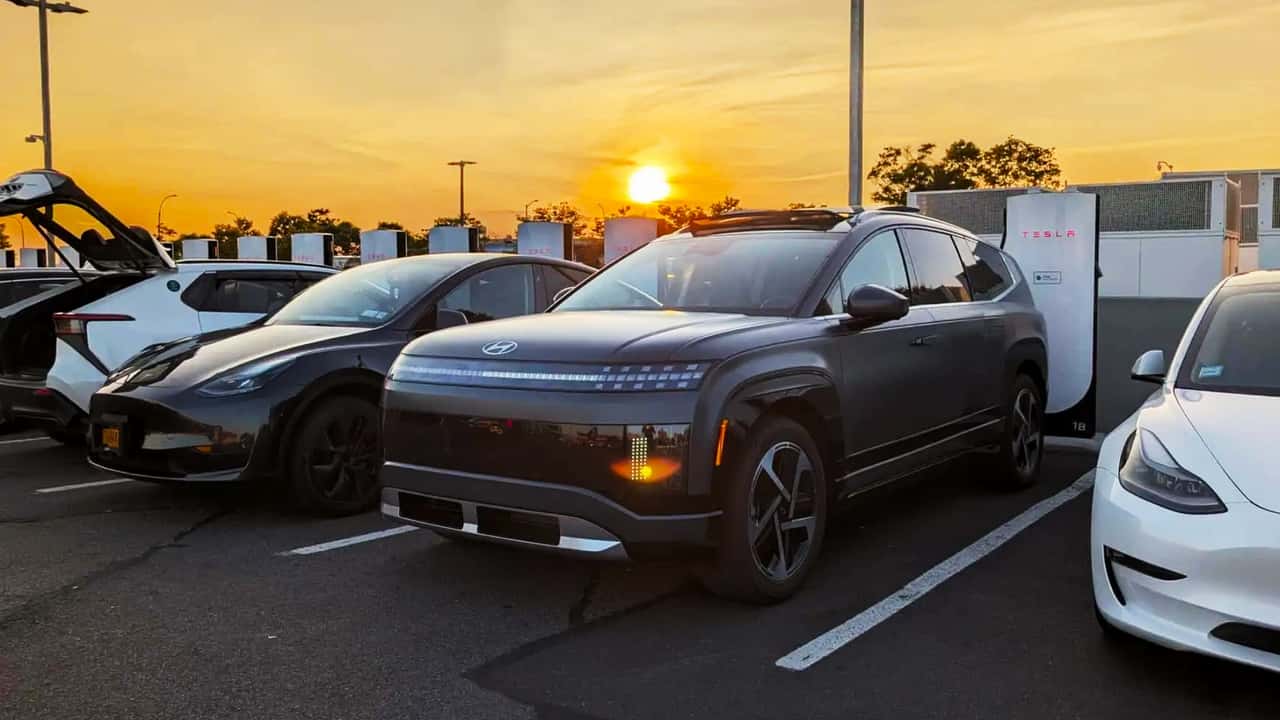
About 200 miles into my drive to upstate New York, I wasn’t even worried about plugging in. Interstate 87 has a decent frequency of Tesla Superchargers and the Ioniq 9 is equipped with a factory-fitted North American Charging Standard (NACS) port, opening up access to 20,000+ Superchargers nationwide.
Under the skin, the Ioniq 9 shares its platform with its corporate cousin, the Kia EV9. But Hyundai has given it a bigger 110-kilowatt-hour battery, compared to Kia’s 99.8 kWh pack. That extra capacity translates into 300 miles of EPA-rated range on every trim—the base S stretches to 335 miles, the SE and SEL hit 320 miles, while the Limited (my test car) and Calligraphy are rated at 311 miles.
Photo by: Suvrat Kothari
Its 800-volt architecture helps it charge from 10% to 80% in about 24 minutes on a 350-kilowatt DC fast charger—that’s plenty quick given the SUV’s large 110 kWh battery pack. Most new public fast-charging stations can deliver that much power, including Electrify America, EVGo, ChargePoint Express Plus and even Ionna.
During my week-long testing, I stuck to Tesla Superchargers simply because they were easier to find and use with the Tesla app.
While the majority of Superchargers are still capped at 250 kW, the new V4 units can hit 325 kW. The Ioniq 9 went from 30% to 80% in 25 minutes using one of these stalls. The charging speed was slower than what I expected, topping out at 126 kW, but it held that speed even past 70% percent before tapering near 80%—which is a pretty flat charging curve that helps you save time.
Utility Mode Rocks
Photo by: Suvrat Kothari
Hyundai’s newer EVs come with Utility Mode that taps the main high-voltage battery to run the infotainment, climate control, cabin lights, or even external appliances. The feature isn’t unique to Hyundai—Tesla and Rivian have been offering it for years, but it’s a great thing that more cars are coming with it as standard.
Turning it on from the infotainment screen shuts the drive unit down while everything else keeps humming—which is useful if you’re parked for hours or camping. In gas cars, if you kill the engine, you’re stuck with the small 12-volt battery, which will drain fast and might even die.
Dropping the second and third rows opens up 86.9 cubic feet of space, more than enough to toss in an air mattress or a surfboard (or both). Drive it to a campsite and you’ve got a panoramic roof for stargazing.
Photo by: Suvrat Kothari
I used it for something far less romantic: I used it as my office for half a day during a 98-degree Fahrenheit heatwave (felt like 104°F with humidity). It sipped just 2% of the battery during that time—the Ioniq 9’s 110 kWh battery is larger than average packs.
It also gets vehicle-to-load (V2L) capability, with a built-in 15 amp, 125 volt outlet in the trunk plus a 12 volt socket. That means you can power a coffee machine, induction stove, or whatever gear you throw in the back—all using battery power.
About Those Seats
Photo by: Suvrat Kothari
The seats give the Ioniq 9 a lot of personality. The S, SE, and SEL trims come with a second-row bench, giving the Ioniq 9 a seven-seat layout. Step up to the Limited or Calligraphy trims and you get captain’s chairs. If you’re not regularly hauling more than six people, they’re absolutely worth it.
The sweet spot is the right-side captain’s chair behind the front passenger seat. With a set of buttons on the front seat backrest, you can slide that seat fully forward, opening up limo-like space in the second row. The captain’s chairs are kitted out with armrests, powered leg rests, and heated and ventilated cushions. They also get almost pillow-like headrests with side support.
Photo by: Suvrat Kothari
Up front, both seats offer eight-way power adjustment with lumbar support, which goes a long way toward keeping posture in check on longer drives. And if you slide the second row just a touch, the third row opens up into legitimately usable space.
It doesn’t feel cramped, and Hyundai didn’t skimp on the details back there either: dedicated AC vents, powered recline, bottle holders, dome lights and dual 100-watt USB-C ports.
Because it has a flat floor and nothing obstructing lateral movement, moving around in the second and third rows is easy, especially if you’re petite like me.
Small Details Make Big A Difference
Photo by: Suvrat Kothari
In big cars, the little things matter the most. I’m not convinced every automaker gets that.
The Volkswagen ID. Buzz, for all its charm as a people-mover, skips bottle holders for the second row. Owners can buy a second-row center console, but it’s more of a general storage rack than a true cupholder setup. The Ioniq 9 gets 11 bottle holders: four in the first row, four in the second row and three in the third row.
It also gets a highly modular center console which slides all the way forward, or halfway back—about 7.5 inches—extending the access to both first and second-row passengers. Because there is no transmission tunnel running through the middle of the car, Hyundai has used that space smartly.
The console has a wide armrest that can open from both ends, has generous storage capacity, two large bottle holders, a wireless charging pad and climate settings for the second and third row passengers. That’s a lot of functionality packed into a small, movable unit.
Plush Ride Quality
Photo by: Suvrat Kothari
Despite weighing 6,000 pounds, the Ioniq 9 is surprisingly effortless to drive. Light steering, large side mirrors and a 360-degree camera make threading it through narrow streets far less intimidating than its size suggests.
The ride quality is where it really shines. The suspension absorbs road imperfections with poise, eagerly swallowing everything from small bumps to big potholes. There’s some inevitable lateral movement with an SUV this large. It dives a bit under braking and squats on acceleration, but none of that makes you feel unsettled. The dampers do a commendable job of keeping it all under control.
Hyundai credits that composure to self-leveling dampers and hydro bushings. The self-leveling dampers maintain the correct ride height regardless of the load, while the hydro bushings absorb vibrations more effectively than solid rubber. They’re basically fluid-filled mounts between the suspension and chassis.
Together, they give the Ioniq 9 an almost luxury-car-like ride, making smaller imperfections far less bothersome.
Photo by: Suvrat Kothari
And Hyundai has gone to great lengths to keep the outside world, well, outside. The Ioniq 9 rides on 21-inch Hankook Ion Evo SUV tires (285/45), each wearing a big “EV Soundabsorber” badge. Hankook has a whole breakdown of the technology behind the tires. In simple terms though, there’s foam lining the inner walls and a series of tread and groove designs aimed at killing road noise. After a week behind the wheel, it’s hard to argue—it just works.
Add to that acoustic glass, triple door seals and active noise cancellation and the cabin feels genuinely quiet. Enough that even at 70 miles per hour, you won’t have to raise your voice to talk to the third-row passenger.
It’s Halfway Software-Defined
Photo by: Suvrat Kothari
Hyundai’s software game isn’t at Tesla or Rivian levels yet, but the Ioniq 9 makes it clear the automaker is stepping up.
The 12.3-inch central infotainment screen felt responsive, though not as snappy as a Model Y. But it displays EV-specific data in great detail, better than probably most other automakers.
You get battery health monitoring, efficiency history and a breakdown of energy use split between the drivetrain, electronics, climate control and battery care. It even shows, in real time, how many kilowatts each system is drawing, which can help if you’re obsessive about efficiency like I am.
Photo by: Suvrat Kothari
Hyundai is also improving the software in small ways. One example is that you can electrically fold or raise the second and third-row seats straight from the screen. It sounds minor, but it requires tight software-hardware integration. If someone is trying to load a large item in the back and you need to drop the seats without leaving the driver’s seat, this feature will come in surprisingly handy.
And unlike General Motors, Hyundai isn’t ditching wireless Apple CarPlay or Android Auto anytime soon. Despite the tech-heavy cabin, manual buttons and knobs are still plenty. Key functions, including drive and terrain modes, volume, and climate controls, still get proper physical buttons and dials. Again, a small thing, but it makes a big difference in keeping your eyes on the road instead of buried in menus.
Photo by: Suvrat Kothari
Granted, none of this comes cheap. My press loaner carried a sticker of $71,250, which could be a dealbreaker for plenty of buyers. The base S trim costs $59,000. With the $7,500 federal tax credit, that starts to look like a more reasonable proposition.
Hyundai is also sweetening the deal until Sept. 30, when the federal tax credits expire. It’s offering $5,000 cash discounts across all trims on purchase. And lease options starting at $419 per month for 36 months with $4,999 due at signing. That’s not a bargain by any measure, either, but it does let you skip the steep purchase price and still land one of the best three-row electric SUVs on sale right now.
However, the price isn’t the Ioniq 9’s strength. I don’t think Hyundai intends it to be that way either. The Ioniq 9 feels more like a blueprint. It’s proof of how much capability you can pack into a three-row electric SUV without mechanical or design compromises. It’s proof that electrification is the way to go for family SUVs.
Remember that this blueprint will only get better as battery tech evolves and costs come down. So, this is just the beginning and the Ioniq 9 is easily one of the most convincing three-row electric SUVs yet.
Have a tip? Contact the author: suvrat.kothari@insideevs.com
Share this Story

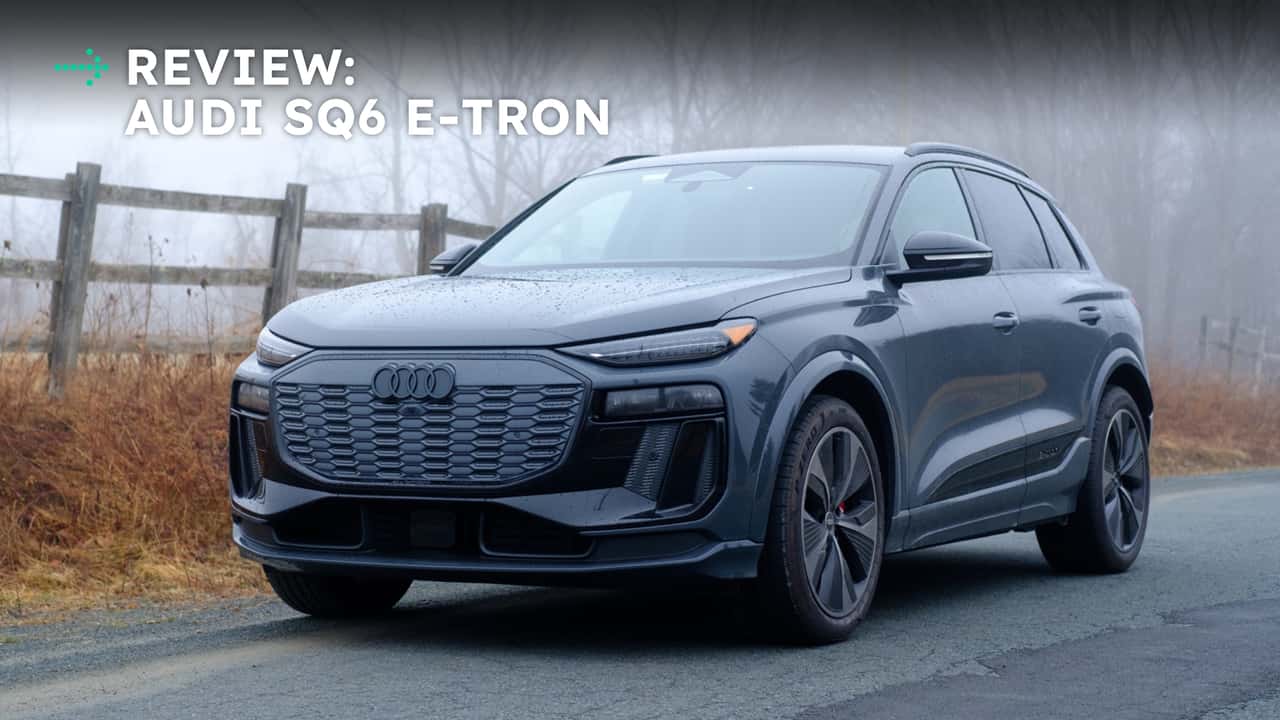
The 2025 Audi SQ6 E-Tron Proves There’s Light At The End Of The Tunnel
If you go looking for stories about the Volkswagen Group’s transition to electric vehicles, you probably won’t find a ton of positive headlines.
The original “pivot to EVs” company has suffered through software issues, delays to crucial new cars, C-suite upheavals and other crises, and now it’s staring down the barrel at brutal new tariffs—arguably none more so than its Audi brand, which doesn’t even build cars in the United States.
When your company’s press releases open with “Challenging half year,” well, the vibes aren’t exactly great.
But here’s what gets lost in all the noise: every single VW Group EV that I’ve driven is a quantum leap forward over the last one.

2025 Audi SQ6 E-Tron
Photo by: Patrick George
Nothing illustrates that better than the new Audi SQ6 E-Tron and the related Q6 E-Tron. It’s built on an all-new platform that was once a part of those many delays, but now that it’s here, it’s one of the more impressive luxury electric SUVs on the market. In terms of charging, range, features and performance, it handily outclasses what we’ve seen from Audi’s EVs before. Now, we’ll see if it has the juice to be the sales success that Audi needs it to be.
(Full Disclosure: Audi gave us an SQ6 E-tron with a full charge for a week, followed by a Q6 E-Tron later on.)
2025 Audi SQ6 E-Tron
Photo by: Patrick George
2025 Audi SQ6 E-Tron: Overview
The Q6 and SQ6 E-Tron models ride on the VW Group’s new Premium Platform Electric (PPE), alongside the related A6 and S6 E-Tron sedans and the similar-but-has-its-own-energy Porsche Macan Electric.
That’s a groundbreaking EV platform for this company on several fronts. It has an 800-volt electric architecture, which allows it to rank among the fastest-charging EVs on the market. It offers over-the-air software updates, an Android Automotive-based infotainment system with native Google Maps, new electric motors that are vastly more efficient than those on its first-generation EVs, along with a host of other new and improved components.
2025 Audi SQ6 E-Tron
Photo by: Patrick George
In the U.S., the Q6 and SQ6 E-Tron models are powered by a 100-kilowatt-hour battery pack with 94 kWh of usable capacity. The base Q6 E-Tron starts at $63,800 before destination fees and up to 321 miles of range and 322 horsepower in single-motor rear-wheel-drive form. Opt for dual-motor all-wheel-drive and you get up to 456 horsepower and an estimated 307-mile range.
If you want more power, go with the SQ6 E-Tron, whose trims come with Quattro AWD only. That bumps the base price to $72,900 and gives you 483 hp—up to 510 hp in Boost Mode—but cuts range to an estimated 275 miles. This test primarily covers the SQ6 E-Tron, but I’ll explain later where the sweet spot is in this lineup.
2025 Audi SQ6 E-Tron
Photo by: Patrick George
2025 Audi SQ6 E-Tron: Driving Experience
The best compliment I can give to the SQ6 E-Tron is that it drives like an S-Line Audi should. That’s to say, it handles spectacularly well and it’s damned quick, all while being considerably less vulgar and ostentatious than an AMG or one of BMW’s M cars.
The old Q8 E-Tron was a good handler by the end, too. This is better. It’ll do zero to 60 mph in a stated 4.1 seconds, but instrumented tests I’ve seen put it more in the high-3 range and I believe it. It’s a genuinely fun EV to drive, especially when the Boost function is used liberally.
[embedded content]
It has another advantage over even the Macan Electric: adjustable regenerative braking. The VW Group is tepid on one-pedal driving in general, but the SQ6 E-Tron at least offers several different strength settings using a “B Mode” toggle. The steering wheel paddles can also let you adjust regenerative strength temporarily.
Overall, it’s athletic, fun and balanced, but doesn’t offer many surprises in this field.
2026 Audi SQ6 E-Tron: Exterior and Interior
2025 Audi SQ6 E-Tron
Photo by: Patrick George
Let’s get this out of the way first: for such an important car, it doesn’t look like much. In fact, it looks like something the Audi design team won in a low-stakes poker game against the Infiniti design team, and I don’t mean that in a nice way. Its voluminous grille, anodyne profile and those narrow, insect-like headlamps are a far cry from the hits of the past like the Audi TT and R8, or even the comparatively elegant first-generation Q5. And its algebraic name doesn’t evoke anything special, either. Audi seems to get that it needs a reset on this front.
Hop inside, and a lot of those cares go away. This is a comfortable, tech-laden interior that loses nearly all of the gripes I had with the old Q8 E-Tron, as this car is a completely different animal in terms of hardware.
2025 Audi SQ6 E-Tron
Photo by: Patrick George
The seats are comfortable, bolstered well without being too aggressive (it’s thankfully not an RS Q6 E-Tron, after all) and the cabin is airy and modern. The grippy, rectangular-ish steering wheel is a delight to use.
I liked the abundance of physical buttons and air vents, although not so much the haptic buttons on the steering wheel. Those aren’t as irritating here as on older cars, but my thumb often slipped when trying to change the audio track on the sound system, for example. Just button-buttons would be preferable. But overall, the quality is exceptional and worthy of its price tag.
2025 Audi SQ6 E-Tron
Photo by: Patrick George
2026 Audi SQ6 E-Tron: Technology
Thankfully, those delays were worth it on the tech front, because the PPE cars are a technical tour-de-force. Audi’s infotainment system uses the Android Automotive OS for the first time, and like other EVs it’s featured on—cars from General Motors, Volvo and others—it offers a tremendous degree of speed and customization. Want a certain display or setting featured more prominently? Just drag it on over to where you want it.
2025 Audi SQ6 E-Tron
Photo by: Patrick George
Or you can talk to the voice assistant, which is better than most. It can do a lot of things you ask it to, like change the climate settings or defrost the rear window. It can’t do a lot of physical functions, like opening the windows, for example.
You get a 12-inch OLED virtual cockpit in front of the driver that blends into a 14.5-inch center touch display. There’s also an optional 10.9-inch display in front of the passenger, but like most screens placed there, whoever’s riding shotgun may wonder what they’re supposed to do with it. (This tends to be a vastly more popular feature in China.)
2025 Audi SQ6 E-Tron
Photo by: Patrick George
No matter how many screens you get or use, the displays are high-quality and powered by software that’s far more quick and responsive than what was on older Audis. Because it’s Android Automotive, you get a bunch of native, built-in apps, like YouTube, Spotify, and Zoom.
In terms of automated driving assistance tech, it’s a solid setup, but nothing groundbreaking: adaptive cruise control with lane-keeping, traffic sign recognition, a distraction and drowsiness warning system and other features. But it remains fully hands-on, so visit your Cadillac dealer instead if that’s a dealbreaker.
2025 Audi SQ6 E-Tron
Photo by: Patrick George
2026 Audi SQ6 E-Tron: Range, Observed Efficiency and Charging
Here’s where the SQ6 E-Tron falls down a bit. Going under 300 miles of range is par for the course for modern “performance” EVs (outside of China, anyway), but this model isn’t quite enough of a screamer to justify that range hit.
I drove the SQ6 E-Tron earlier this summer, when it was still on the colder side here in upstate New York. Even on a full charge, I never really got close to the claimed 275 miles of range. This, for a car with a 100 kWh battery; I often wondered where all of those kilowatt-hours actually went. In mixed driving, I saw between 2.7 and 3.2 miles per kWh pretty consistently. Not bad, but nothing at all special in terms of efficiency.
2025 Audi SQ6 E-Tron
Photo by: Patrick George
Where the SQ6 E-Tron acquits itself well is in DC fast-charging. It has a peak rate of 270 kilowatts, so if you find a fast enough charger, you can go from 10% to 80% in just about 20 minutes. On a slower 150 kW charger, I saw it jump from 34% to 60% in just nine minutes. Like their Porsche brethren, these modern Audi EVs do quite well on the charging front.
2026 Audi SQ6 E-Tron Or Q6 E-Tron: Which To Buy?
Incidentally, I drove a standard Q6 E-Tron Quattro a few weeks after the SQ6 E-Tron, and that’s the one I would tell you to buy. That car offers 456 hp with the same battery pack, the same fast-charging speeds, the same tech features, and largely the same interior. And it’ll do zero to 60 mph in the upper-mid four second range, which isn’t slow, either.
2025 Audi SQ6 E-Tron
Photo by: Patrick George
For all that, you still get Quattro AWD and a much more palatable 307 miles of range. The point is, I don’t think the SQ6 offers enough of a performance premium to sacrifice at least 30 miles of range, and at least $10,000. In real-world situations, they don’t even feel that different.
My hope would be that Audi adds some spice to the SQ6 E-Tron over time to justify that price premium, or finds a way to boost range across the board.
2026 Audi SQ6 E-Tron Verdict: Strong Contender
MY SQ6 E-Tron tester came in at $83,395 including the Prestige and Edition One packages. Not at all shocking for a loaded German luxury SUV. (And I don’t want to start any inter-family drama, but it may be a better overall deal than the Porsche Macan Electric is.)
2025 Audi SQ6 E-Tron
Photo by: Patrick George
I like the SQ6 and Q6 E-Trons a lot, and both of them finally put Audi where it needs to be in the modern EV space. Overall, the duo feel like an EV gateway drug for anyone who’s enjoyed their gas-powered SUVs over the years and wants to drive the technology of the future—and that’s a lot of people.
It also feels like a convincing luxury upgrade for anyone moving on from a Tesla Model Y, though those people may miss its hands-free highway driving features or the ubiquitous Supercharger network. (Audi will join that network at some point too, via an adapter at first and a native NACS plug later.) Ultimately, it needs more range and better efficiency to match its impressive hardware and first-rate driving experience, but there’s a lot to like anyway.
Globally, the Q6 E-Tron family is selling pretty well so far, so it’s good to see Audi’s big swing pay off. We’ll soon see how true that is when tariffs hit in the U.S., but I hope Audi loyalists give this thing a shot. And it’s proof that EV technlogy is getting better, and more quickly, than most people think.
64
Source: Patrick George
Contact the author: patrick.george@insideevs.com
Share this Story

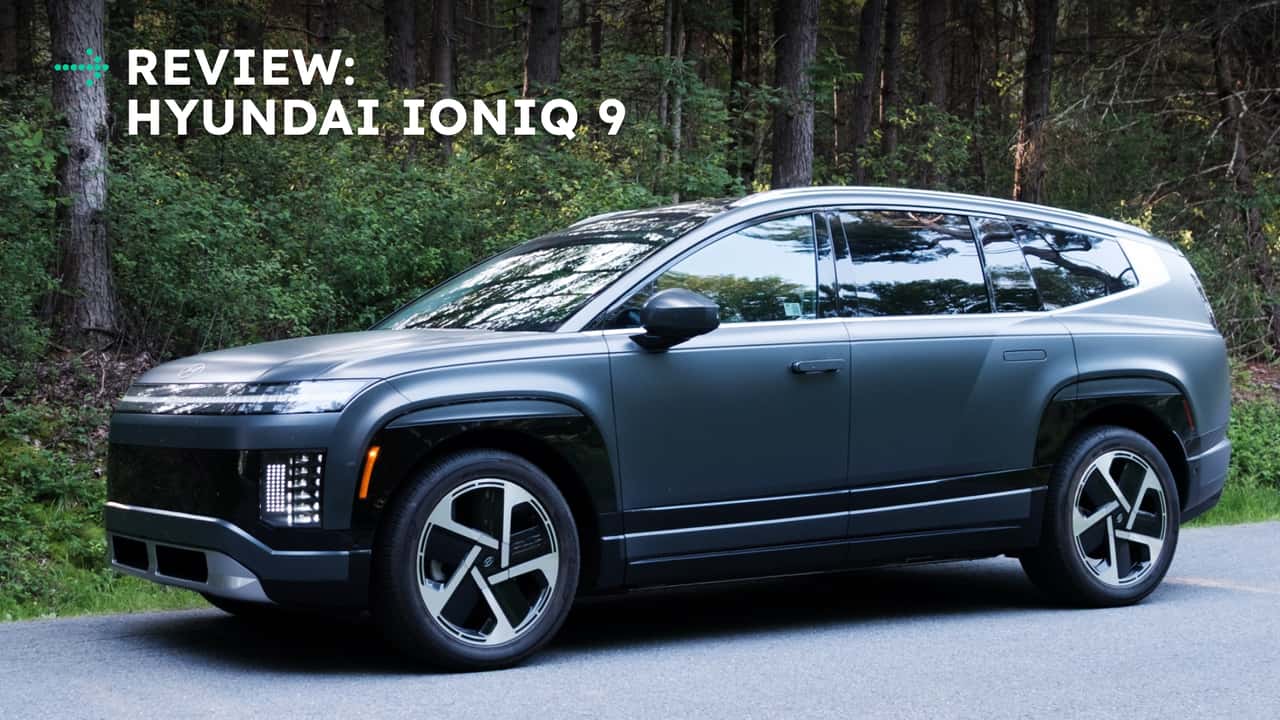
The 2026 Hyundai Ioniq 9 Is The Best Electric People-Mover Yet
A three-row crossover SUV isn’t something you dream of driving. Most of them offer the dynamic excellence of a minivan, just with less practicality. You often end up in one because you have to—maybe you’ve got kids and tons of gear to haul around on the regular, or you have to be prepared for certain extreme use cases, like that one time a year when all the in-laws all come to visit at once.
For anyone facing the three-row doldrums, I’d say: Friend, have you heard the good news about battery power?

2026 Hyundai Ioniq 9
Photo by: Patrick George
It turns out that adding instant electric torque can spice up any large family-hauler. So can features like outboard power for camping or other adventures, and a Tesla plug to ease any road-trip charging anxiety.
The new American-made Hyundai Ioniq 9 may be exactly what you’re looking for. Even from a company whose electric vehicles are its best products ever, full stop, the Ioniq 9 may be its finest work yet. In fact, it’s one of the best examples of the three-row SUV genre in America, and one of the better ways to spend time in an automobile in 2025.
If there’s any downside, it’s that you’ll be paying more for that “H” badge than is to be expected. Then again, you’re getting a lot from this SUV, too.
2026 Hyundai Ioniq 9
Photo by: Patrick George
(Full Disclosure: Hyundai sent me an Ioniq 9 to test for a week with a fully charged battery.
2026 Hyundai Ioniq 9
Base Price
$58,955
As-Tested Price
$74,300
Battery
110 kilowatt-hour NCM
Charge Type
Tesla NACS-style port
Charge Time
Est. 10%-80% in 24 min on 350 kW; 20%-75% in 25 min Tesla Supercharger
Cargo Volume
86.9 cu-ft total; 47 cu-ft behind second row; 22 cu-ft behind third row
Output
422 hp, 516 lb.-ft.
Drive Type
RWD standard; AWD as tested
Weight
~6,000 lbs
2026 Hyundai Ioniq 9: Overview
The Ioniq 9 is a new model for the 2026 model year. On its face, it seems to take everything that was successful about Hyundai’s E-GMP platform, which underpins the massively successful Ioniq 5 and other EVs, and makes it bigger. But that’s only part of the story.
2026 Hyundai Ioniq 9
Photo by: Patrick George
In reality, the Ioniq 9 feels like a kind of second-generation EV product from Hyundai, because it builds on the success of the cars that came before it and debuts with a raft of improvements that just arrived on the Ioniq 5 and the rest. It has the largest battery pack this family of cars has seen yet, at 110 kilowatt-hours. It has an updated software suite with—finally—wireless Apple CarPlay. And it comes straight from the factory with a Tesla-style North American Charging Standard (NACS) plug, though getting the charging speeds the Ioniq line is famous for will require a CCS adapter.
More than that, the Ioniq 9 feels like a more mature, more dialed-in car than the first Ioniq 5 or my own Kia EV6 and the rest. The overall build quality feels better, and the entire car just seems to be a more cohesive EV product, as if made by a company that’s done with electric first drafts and really knows what it’s doing.
It’s more than just a re-badged and restyled Kia EV9, too. It’s a bit bigger and roomier in every dimension, has a bigger battery with more range across all trims, and only comes in a seven-seat configuration. The two remain very comparable in price and specs, but I’d give the slight edge to the Hyundai.
2026 Hyundai Ioniq 9
Photo by: Patrick George
And no matter which Ioniq 9 trim you choose, you won’t skimp on range, unlike some of the other lower-end Hyundai and Kia EV variants. The Ioniq 9 comes in single-motor rear-wheel-drive or dual-motor all-wheel-drive forms. The most basic one, the RWD S model, starts at $58,955 and gets 335 miles of range. This Ecotronic Gray Matte (what a name!) tester you see here is an AWD Performance Limited model, third from the top of the trim line, rated at 311 miles of range and priced at $74,300 with all its options.
A lot for a Hyundai? Sure, but when you consider that this Georgia-built EV also qualifies for the full $7,500 EV tax credit (for however long that lasts) and the equipment and specs you’re getting, it can be a solid deal.
2026 Hyundai Ioniq 9
Photo by: Patrick George
2026 Hyundai Ioniq 9: Driving Experience
I don’t care for driving most three-row crossovers. And as a person whose immediate family includes one spouse and one small dog, I don’t really need one. But the Ioniq 9 was an SUV I looked forward to driving every single time, and even made excuses to drive.
In dual-motor Performance form, the Ioniq 9 puts down an impressive 422 horsepower. There’s no hiding its almost 6,000-pound curb weight, but the thing can still scoot. Hyundai estimates it’ll do zero to 60 mph in a little under five seconds, and in reality, it feels a bit quicker.
2026 Hyundai Ioniq 9
Photo by: Patrick George
But the Ioniq 9 isn’t about brutal speed. It’s about smoothness. Comfort. While the handling is far from sloppy, it’s most at home when it’s cruising in near-silence. And it’s still much more fun and much more athletic than any gas-powered three-row crossover I can think of. Driving an Ioniq 9 is a pleasant and calming experience, even when you need to smoke someone on the highway in Sport mode.
One big plus here is Hyundai’s updated i-Pedal system, which offers four levels of regenerative braking (or none at all) via the paddle shifters. It’s a nice degree of customization when most EVs just do “on” or “off.”
2026 Hyundai Ioniq 9
Photo by: Patrick George
And in “Auto” mode, the i-Pedal automatically adjusts the level of regenerative braking depending on what’s detected in front of you—an upcoming turn, another vehicle, and so on. This feature is polarizing at the InsideEVs offices, but I’ve found that if you learn to work with it and understand what it’s going to do in most situations, you won’t want to live without it.
2026 Hyundai Ioniq 9: Exterior and Interior
2026 Hyundai Ioniq 9
Photo by: Patrick George
I give props to Hyundai’s designers for doing something kind of different with each member of the Ioniq line. The Ioniq 9 isn’t just a stretched-out Ioniq 5 (which I’m not even sure would look all that great); nor is it an obvious cousin to either generation of Ioniq 6 sedan. Instead, it’s a curvaceous streamliner with a distinct grille and rear light setup, shaped almost like a big wagon than just another anyodyne faux-rugged SUV, and it even packs a couple of fun colors to boot.
2026 Hyundai Ioniq 9
Photo by: Patrick George
2026 Hyundai Ioniq 9
Photo by: Patrick George
2026 Hyundai Ioniq 9
Photo by: Patrick George
But the Ioniq 9 shines the most on the inside. This no cheap, bargain-basement Hyundai; it’s a high-tech, modern, near-luxury car that would be convincing enough if it wore a Genesis badge. The materials are all first-rate and a lot of attention was clearly paid to their designs, from the door handles down to the cupholders. Oh, and physical buttons and air vents—it has them. Thanks, Hyundai.
My biggest complaint was how far away the dashboard felt. I had to lean over and reach further than I would’ve liked to operate the controls, which felt frustrating on longer drives. But Hyundai’s voice controls are first-rate, so try those when you can instead.
2026 Hyundai Ioniq 9
Photo by: Patrick George
Of course, this is a three-row SUV, so what matters most is probably behind the driver. And it’s one of the roomiest and most comfortable places in its class. I’m 5’11” and had plenty of headroom and legroom in the second row. And the third row? The Ioniq 9 has the only one I’d want to sit in. It’s plenty spacious back there even for adults, especially if the second-row folks are willing to move up just a smidge.
2026 Hyundai Ioniq 9
Photo by: Patrick George
Thank the packaging excellence that EVs offer. With no engine or transmission tunnel to account for, they can be roomier than gas-powered SUVs. And most of those have a third row in name only, or exist only for small children and only in a pinch. Not the Ioniq 9. It’s a true long-distance people-hauler.
You also get up to 87 cubic feet of cargo space, including 22 cubic feet of cargo area behind the third row, which outclasses even Hyundai’s spacious gas-powered Palisade. Not bad at all.
2026 Hyundai Ioniq 9
Photo by: Patrick George
2026 Hyundai Ioniq 9: Technology
The Ioniq 9 launches with Hyundai’s updated software suite. Among the best upgrades here: a range meter with three figures, including “minimum” and “maximum” ratings. It feels designed to avoid low-range surprises. It’s also very proactive in offering charge time estimates.
Beyond that, Hyundai’s software game continues to be just mid-tier in the EV race. It was never buggy, like some options we test. But the infotainment system isn’t as flexible or as customizable as some of the Android Automotive OS-based systems we’ve tested. And the decisions made by Hyundai’s navigation system are as frustrating as ever—you’ll be missing Google Maps in no time, or using your phone for directions instead.
2026 Hyundai Ioniq 9
Photo by: Patrick George
Hyundai’s Highway Drive Assist 2 (HDA2) automated driving assistance system is decent, offering automated lane changes and speed-limit monitoring. But it is not a true hands-free, eyes-on driving assistance system like General Motors’ Super Cruise or Ford’s Blue Cruise, both of which have it handily beaten for highway road trips.
2026 Hyundai Ioniq 9
Photo by: Patrick George
And Hyundai’s smartphone app won’t have Tesla’s tech team staying awake at night. As great as the Hyundai and Kia EVs are with design, performance and electric powertrains, their software and tech suites could stand to be a lot more competitive.
Still, it’s great at the EV stuff. Route-planning, charing scheduling, battery health ratings and battery management are all among the best in the industry.
Range, Observed Efficiency and Charging
Still, you can’t argue with 300-plus miles of range on every Ioniq 9 trim level. At 100% charge in my driveway, I regularly saw ratings of 330 miles or more in temperate New York summer weather. In our testing, we recorded around 3.3 to 3.5 miles per kilowatt-hour, and sometimes higher. Pretty excellent for its weight, overall.
You’ll need an adapter to use a non-Tesla plug like my home charger here, but it’s not a bad experience at all.
Photo by: Patrick George
Like the rest of the 800-volt E-GMP family, the Ioniq 9 will see max charging speeds of around 235 kilowatts. When hooked up to a 350 kW fast-charger, it’s rated to charge from 10% to 80% in as little as 24 minutes—absolutely outstanding for a battery this size, and only a few minutes more than an Ioniq 5 with its smaller pack. (Hyundai says using a CCS adapter will not affect the car’s charging performance at all.)
I’ve had great experiences with fast-charging these cars before; it’s why I bought one for myself. I wanted to try it on a Tesla Supercharger, which it works with natively thanks to that NACS port. Due to differences in voltage between Hyundai’s 800-volt setup and the Tesla chargers’ 400-volt system, you won’t see the usual crazy-quick speeds.
Ioniq 9 Tesla Charging
Photo by: Patrick George
But the Ioniq 9 still went from 20% to about 75% in 25 minutes on a Tesla plug at a consistent 126 kW. And honestly, that’s not bad. It’s about what any Tesla will do on the same plug, and it passes my “Can you plug it in and get back on the road reasonably quickly?” test.
And with access to more than 20,000 Tesla Superchargers (just note that not all of them work with a non-Tesla EV, even with that NACS port), you won’t really find yourself worrying about range all that much on your next road trip.
2026 Hyundai Ioniq 9
Photo by: Patrick George
Hyundai Ioniq 9 Verdict: Top Recommendation
I didn’t walk away with many criticisms of the Ioniq 9. It’s one of the best EVs you can buy in America today, and also one of the best EVs built in America.
Yes, that $74,300 price tag (before any tax credits or discounts) is steep. And plenty of people may scoff at paying that much for a Hyundai—but they shouldn’t. Unlike some of these so-called “luxury” EVs that are coming to market with half-finished software and enough recalls to keep the folks at NHTSA busy until the next decade, the Ioniq 9 is a complete, well-executed and extremely competent electric SUV.
2026 Hyundai Ioniq 9
Photo by: Patrick George
My recommendation would be the mid-range dual-motor SEL model, with 320 miles of range and a starting price of $66,320. Grab the EV tax credit while it lasts, and that’s $58,820, about on par with most nicely-equipped gas-powered three-row crossovers. And this offers a better experience, especially when you add in Hyundai’s complimentary home charger.
If you can buy a better three-row people-hauler, buy it. But I’m not sure you will.
115
Source: Patrick George
Contact the author: patrick.george@insideevs.com
Share this Story

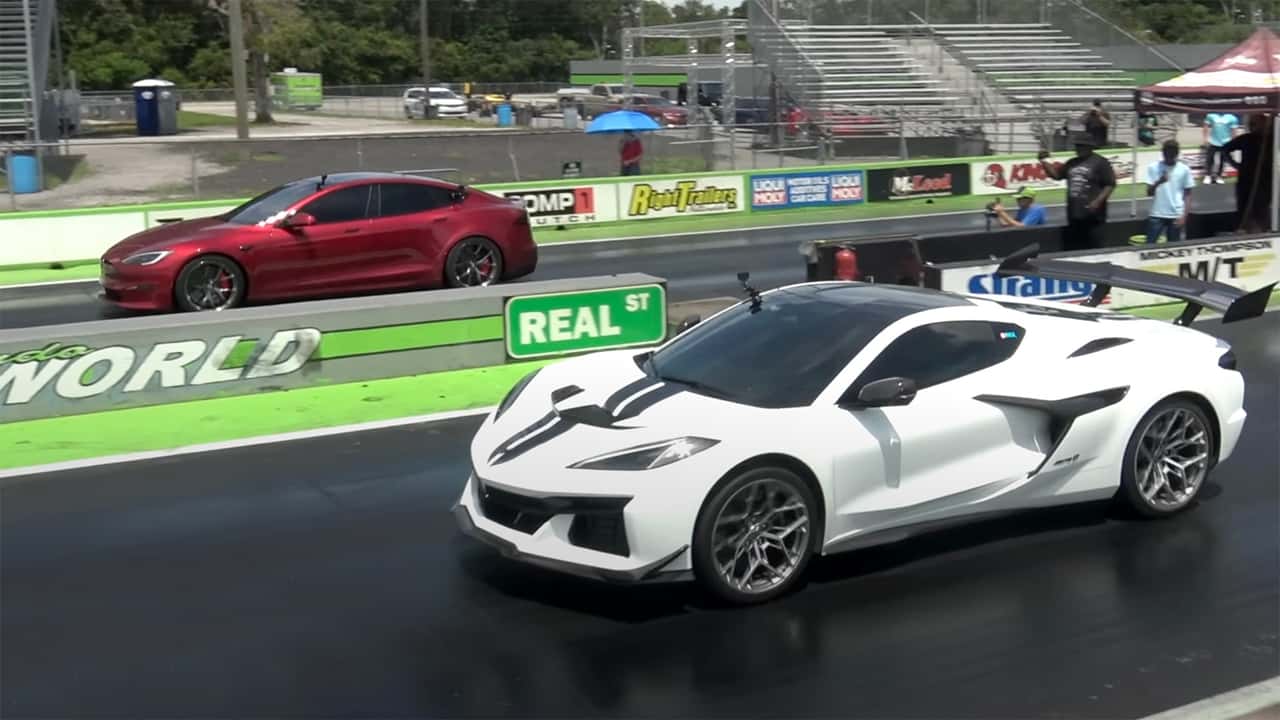
Aging Tesla Model S Plaid Still Trashes A New Chevy Corvette ZR1
- Even three years on, the Tesla Model S Plaid can still humiliate a supercar.
- Even with less weight and more power, the 2025 Corvette ZR1 loses every time.
- The Tesla rockets ahead in all drag races in this video, never giving the Corvette a chance.
The hype around the Tesla Model S Plaid has mostly died off since the car is now around three years old and it’s no longer the only EV with 1,000 horsepower or more. However, even if it’s not the newest electric sedan with whiplash-inducing acceleration, its 0 to 60 mph time of 1.9 seconds is still hard to beat, even in cars with more power.
You would think the 2025 Chevrolet Corvette ZR1, with its monumental 5.5-liter flat-plane crank V-8 engine that churns out 1,064 hp, would have no problem out-accelerating a Model S Plaid, which was recently given a very mild update. The Vette is only rear-wheel drive, so it needs four-tenths more to hit sixty from a standstill. However, its superior power, combined with much less weight, should give it the edge in a drag race against the Tesla. Right?

[embedded content]
It turns out that the Tesla starts ahead and stays ahead throughout an entire quarter-mile drag race. It’s not even close. The Model S Plaid consistently does quarter-mile runs in the low nine-second range, while the Corvette struggles to dip below 10 seconds in this video by DragTimes.
The Plaid has considerably more torque, 1,050 pound-feet versus 828 lb-ft in the Corvette, but it’s also over 1,100 pounds heavier, coming in just shy of 5,000 lbs. The Corvette’s power-to-weight advantage is undeniable, though, and it should come much closer to matching the Model S through the quarter-mile.
The first run was the best for the Corvette, with its best time to 60 feet of 1.57 seconds. The Tesla had a 1.46-second time in the same run, but it shoots ahead as if the difference was far greater than that. It almost makes the ZR1 look like it’s struggling to accelerate, but that’s just how big a difference there is in sheer acceleration between these two cars.
In all subsequent runs, the Tesla beats the Corvette by a bigger margin. Judging by how quickly it sprints ahead, the ZR1 would likely not be able to catch up even if this were a longer race. Maybe in a one-mile straight-line sprint, it could claw back some of the difference and take the lead from the Tesla, whose acceleration does begin to taper off after it reaches 150 mph and approaches its top speed of 200 mph.
Maybe it just takes an even crazier Corvette ZR1 to beat a Plaid.
Share this Story

I Drove The Nio Firefly In China. I Walked Away Mad
- The (Nio) Firefly is a small subcompact EV hatchback meant to do battle with cars like the Mini Aceman or Fiat 500e.
- The model is so far only in China, but it will be in European markets before the end of the year.
- Like other Nio vehicles, the Firefly has swappable batteries.
Chinese battery-swapping electric-vehicle startup Nio has been selling cars in Europe for a while now too. But it’s had a rough go of things there. It launched with cars priced at the same level as BMW or Mercedes-Benz, in a market where buyers tend to be loyal to their luxury brands, and where Nio’s signature battery-swapping network isn’t as built out yet.
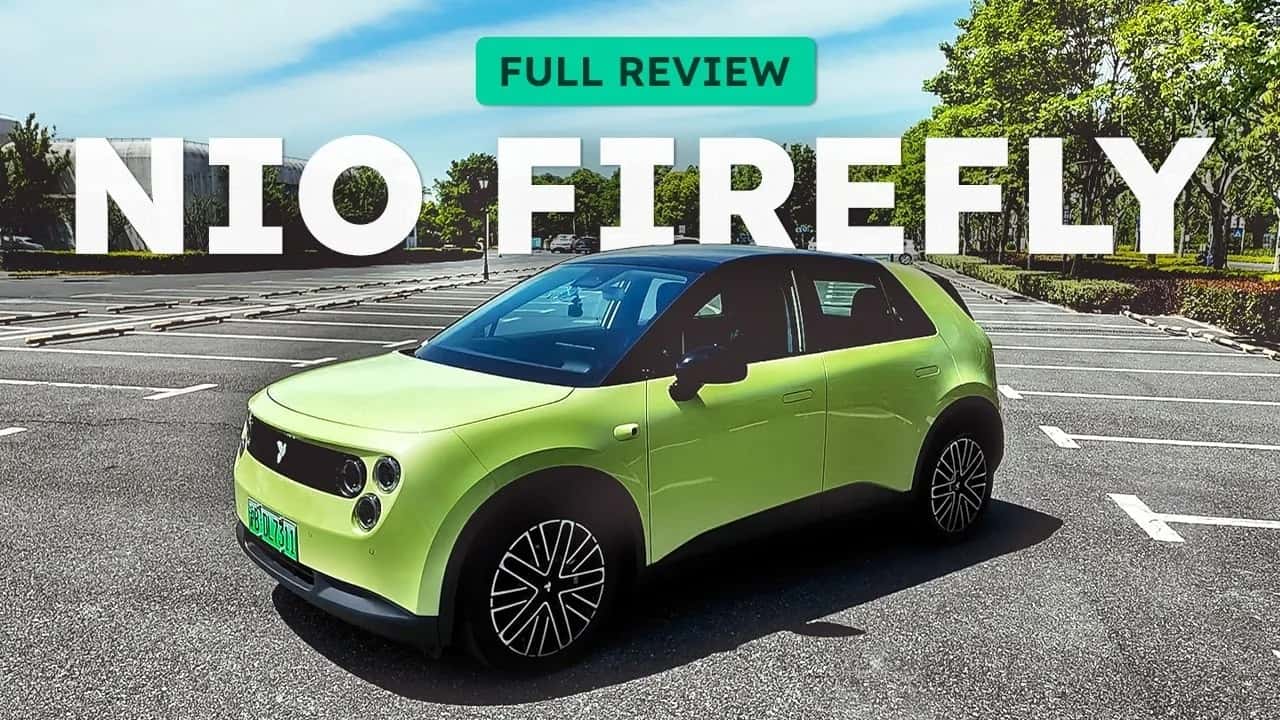
So, meet Nio’s European do-over: the Firefly hatchback, a direct electric competitor to the likes of Mini, Fiat and Volkswagen’s smaller models. But here’s the thing—the Firefly is even better.

(Nio) Firefly (2025)
Photo by: Kevin Williams/InsideEVs
I’ve made no secret of how much I liked the Nio Firefly after I tested one earlier this year. This small hatchback seems to be everything I’ve been looking for in an EV: cute, small, reasonably priced, and fun to drive. I said that much in my review of the car a few weeks ago.
It’s about the size of the current Mini Cooper, except a bit bigger in every dimension; it’s still tiny overall. Powered by a relatively small 42.1 kilowatt-hour (gross) battery, it’s rated at 205 miles of range, only costs about $17,000 in China, is packed with clever and innovative software features like iPhone-style finger-swipes for different functions, and since it’s rear-wheel-drive, it’s just a blast to drive.
Out of all the cars I’ve driven in China, this is one of my favorites. I didn’t want to give the keys back. I wish there were a way to somehow put it in my suitcase and take it home with me. (Editor-in-Chief Patrick George agreed, and being a two-time ex-Mini owner himself, he kind of drove it like he just robbed a bank. It’s that fun.)
But, just to drive the point home on just how good this thing is, we’ve got a video for you. I spent a full day with the Firefly and put it through its paces on Chinese roads. It’s a great little car.
The Firefly’s chances of coming to the U.S. are basically zero, but it is en route to Europe. In fact, this whole car was designed from the outset to cater to European drivers. The small, roughly Ford Fiesta-sized body hits right at the heart of what most European drivers are looking for. It’s a car that’s meant to be maneuverable and easy to park in any given European city.
Of course, it stands out on the wide and spacious roads of Shanghai. Buyers in China go more for big sedans and SUVs like we Americans do. It’s not a microcar country.
Still, I was able to get a great impression of this small hatchback. There’s a lot to like about the car, like its really fast steering or its rear-wheel-drive driving dynamics. Then there’s the essentially total elimination of range anxiety because the car’s little battery is totally swappable, just like other Nio vehicles.
Give our video a gander. I go into detail about just why this little runabout is special and what it means for the rest of the world.
Contact the author: Kevin.Williams@InsideEVs.com
Share this Story

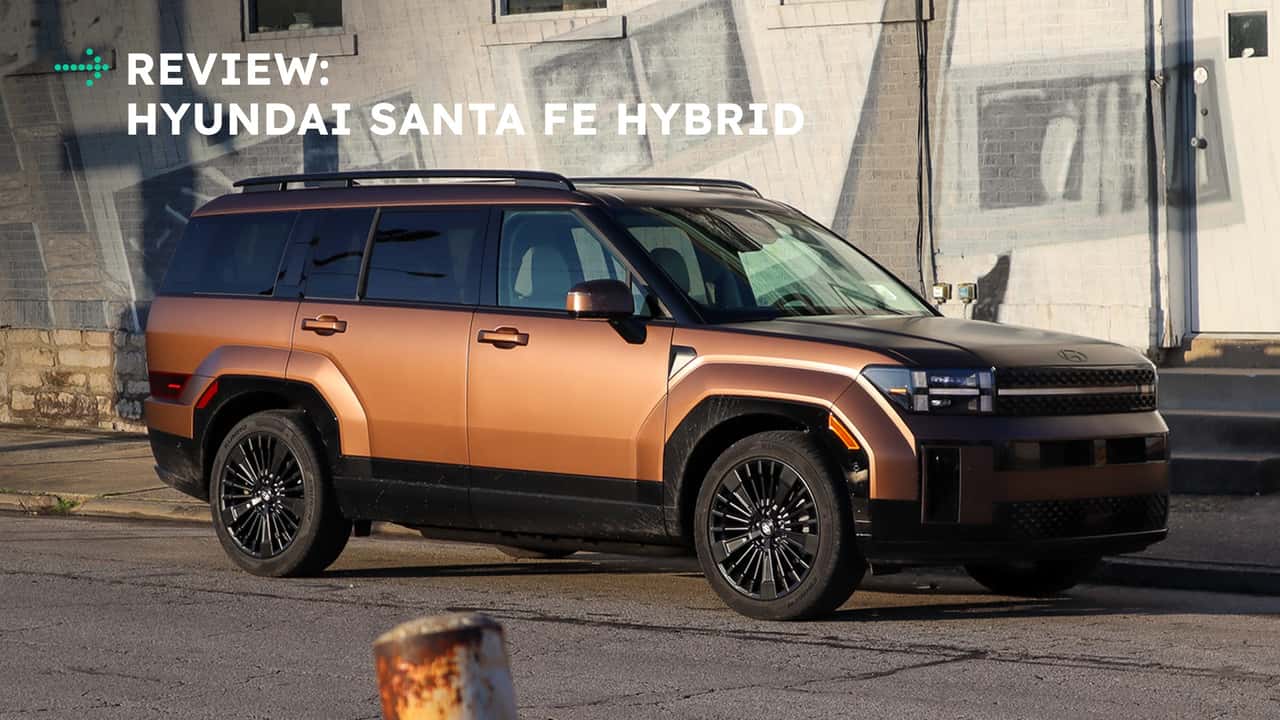
The 2025 Hyundai Santa Fe Hybrid Wants To Be An EV So Damn Bad
I started out skeptical of Hyundai’s hybrids. Perhaps it’s a weird fixation or quirk of mine, but hybrid cars that aren’t mechanically simple weird me the hell out. To me, we hit peak hybrid back in 2003 with the second-generation Prius. This triangle-shaped car with a mechanically robust eCVT and 1.5-liter naturally aspirated engine was ideal. Sure, it was slow and ugly, but incredibly reliable. There’s a reason why it’s not hard to find them with upwards of 300,000 miles with minimal maintenance; it’s just a damn good car. I would know. I had one.
So, when Hyundai started putting its own hybrids on the roads, I was skeptical. These cars had turbocharged, direct-injected engines that sent power through a real planetary-gearset transmission, just like a regular ‘ol internal combustion car. To me, this felt like a complicated solution compared to what we’d get with a Toyota or Honda. Certainly, these cars would not be as good on the roads as a Toyota, no?
Well, I’m eating crow. I spent a week with the Hyundai Santa Fe Hybrid and found it to be really good, especially at electrified driving. So good at electrified driving, in fact, that I wondered why the hell Hyundai didn’t just cut the middleman and go electric. This car wants to be an EV so damn badly.
2025 Hyundai Santa Fe Hybrid
Base Price
$39,795
Battery
1.49 kWh
Drive Type
FWD or AWD
Efficiency
35 mpg City/34 mpg Highway/34 mpg Combined, 28 mpg observed
Engine
1.6-liter turbocharged four cylinder with a 59 horsepower electric motor
Output
231 hp
Transmission
six-speed automatic
As-Tested Price
$51,675
Seating Capacity
6

31
Source: Kevin Williams/InsideEVs
We don’t delve too much into pure ICE cars here, but the Santa Fe is a midsized crossover that sits below the full-sized Palisade, but above the compact Tucson. Hyundai keeps its combustion-powered cars somewhat sectioned off from its EVs, but there is some overlap. If you’re in search of a full electric EV about this size, a Hyundai salesman would likely point you to the slightly larger Ioniq 9.
Whatever the case, there’s a pretty sizable demand for electrified SUVs in some fashion, even if they aren’t full EVs. Hyundai added its hybrid system (once found only on the Hyundai Ioniq and Sonata Hybrid) to one of its volume-selling combustion-crossovers. For 2024, the whole model line was completely redesigned, with faux-Land Rover styling and a whole new vehicle platform. The engines and transmissions, though, were carryovers from the old car, including the hybrid system. Power for all Santa Fe Hybrids comes via a 1.6-liter turbocharged and direct-injected four-cylinder and an electric motor. Shifting is handled through a six-speed conventional automatic. Total system output is 231 horsepower.
Photo by: Kevin Williams/InsideEVs
There’s a lot to like about this mid-sized, three-row SUV. For starters, the Santa Fe is really, really good at engine-off EV driving, despite its measly 59 horsepower electric motor and 1.49 kWh traction battery.
Some have called Hyundai’s hybrid system simple. It places its 59-horsepower motor between the gas engine and transmission. This means that the electric motor effectively has to turn through a transmission, a setup that some have criticized as inefficient compared to an eCVT in a Toyota Prius.
But, this setup has a clutch on the engine/electric motor side, allowing the Santa Fe to drive completely engine-off at speeds much, much faster than, say, a Toyota Prius. With a light enough foot, the Santa Fe will accelerate to about 45 mph before the engine starts. By comparison, most modern Toyotas (not including the Hybrid Max system in some newer big Toyota crossovers like the Grand Highlander) top out around 20 mph in EV mode.
Photo by: Kevin Williams/InsideEVs
This nearly pure electric driving experience is intensified by two things: the Santa Fe’s clever Green Zone EV drive and its adjustable EV-like regenerative braking. When the Green Zone EV drive feature is turned on, the car uses GPS location to prioritize quiet and lower-emission EV driving in certain areas of town, like near parks, schools or hospitals. And it really does work; while driving around my town of Columbus, Ohio, it would turn off its engine and drive on EV power whenever I got close the school near my house. Add in the relatively high-speed EV driving, and I was amazed at how much engine-off EV driving I could do in the Santa Fe for a car that has no plug. An unofficial test shows that it would do about a mile under ideal conditions before starting its gas engine.
Photo by: Kevin Williams/InsideEVs
Then, like Hyundai’s EVs, the Santa Fe has three levels of adjustable regenerative braking. Of course, there’s no one-pedal drive, but the level of adjustability makes the crossover feel remarkably electrified, even when its engine is running. Set it to max, let off the throttle, and watch the battery replenish just like it would on an Ioniq 5 or Kona Electric. If you’re like me and interested in recapturing electricity and using that electric power whenever possible, you’ll fall in love with this feature.
Overall, the Santa Fe is simply a pleasant, well-finished and well-packaged crossover. The one that Hyundai loaned to me was a fully loaded Caligraphy model with every box checked, of course. It stickered at $51,675, which in this day and age sounds like a bargain. Fit and finish are impeccable, and every button and switch felt hefty and high-quality. The infotainment and HVAC buttons worked flawlessly the entire time I had the car, a seemingly not-so-easy accomplishment in a world where everything is a computerized screen.
Photo by: Kevin Williams/InsideEVs
Hyundai Santa Fe Hybrid (2025)
Photo by: Kevin Williams/InsideEVs
The Santa Fe also has a lot of interior space. Its short length means that you’ll have to choose between cargo space or a third row seat, but when in place the Santa Fe’s third row seat is very usable. This crossover can take six adults in relative comfort, a task that some physically larger crossovers can’t do as well. Anecdotally, I understand why I see so many of these things on Ohio roads. When considering the roughly $34,000 base price for its combustion-only variant, the Santa Fe is one of the best values for money on the market.
Photo by: Kevin Williams/InsideEVs
When the Santa Fe (and its Hybrid sibling) was updated for 2024, we lost the plug-in hybrid (PHEV) version, which is a damn shame. The car is so good at driving in engine-off mode, it’s clear that it would benefit from more available energy. The adjustable regenerative braking is such a nice feature, only limited by the Santa Fe’s small 1.49 kWh battery and somewhat weak 59-horsepower electric motor.
The thing is, only the North American market Santa Fe lost the PHEV option. In most markets where the Santa Fe is sold, it comes with a 13.8 kWh battery with about 35 miles of range. It also gets a more powerful electric motor. Both of these would make the car’s energy recapture and engine-off electric driving significantly easier.
Photo by: Kevin Williams/InsideEVs
Perhaps the Korean-made PHEV model is hard to justify against the American-made combustion-powered variant, or the American-made new Hyundai Ioniq 9. Still, I’d argue that the Ioniq 9’s weird styling, super-sized dimensions and not-cheap price aren’t exactly a 1-to-1 comparison for the Santa Fe Hybrid. How hard would it be to give us a full EV version of the Santa Fe? I mean, they’ve already halfway there with the driving experience, just go all the way.
Also, despite the car’s penchant for engine-off driving, I only averaged about 28 mpg mixed. This is below the 35 mpg mixed that it’s rated for.
Photo by: Kevin Williams/InsideEVs
This car is really good at simulating an electric driving experience, but it’s not electric. On one hand, I think it is a great way to get consumers acclimated to a full electric driving experience without any compromises of charging infrastructure or elevated purchase price.
On the other hand, we’re still using gas. With me driving, too, it used more gas than initially advertised.
Still, the package is very pleasant and easy to use. It’s spacious, well finished and reasonably priced for what you get. C’mon, Hyundai, just cut the middleman, dump the gas engine stuff and make the Santa Fe electric, already.
Hell, I’d even accept an EREV.
Contact the author: Kevin.Williams@InsideEVs.com
Share this Story