
Author: EVAI

Hyundai Is Bringing Back Buttons Because Touchscreens Are ‘Annoying’
- Hyundai is slowly backing away from the all-screen approach to interior design.
- Hyundai Design North America Vice President Ha Hak-soo said that people “get stressed, annoyed and steamed when they want to control something in a pinch but are unable to do so.”
Screens inside new cars are better than ever. They’re huge, they have great resolution and the software behind them is usually snappy and well thought out. But after years of shoving what are essentially TVs on dashboards, it turns out that people don’t really like dealing with them, especially if accessing often-used features like climate control or volume settings means digging through menus on a screen while driving.
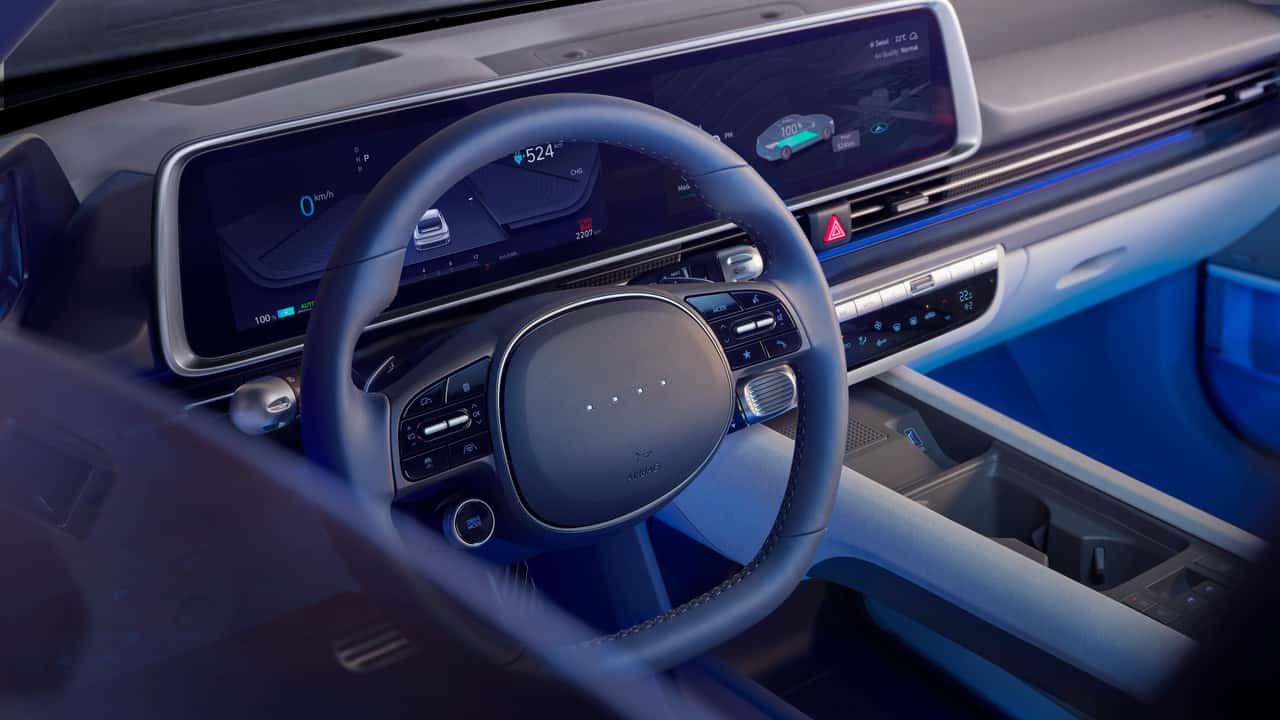
That’s dangerous, but it’s also very annoying, as Hyundai Design North America (HDNA) found out through the magic of focus groups. That’s why the Korean automaker is looking to bring back old-fashioned buttons in upcoming cars. The facelifted Ioniq 5 already has a redesigned HVAC control panel, but more are in the pipeline.
“As we were adding integrated [infotainment] screens in our vehicles, we also tried putting touchscreen-based controls, and people didn’t prefer that,” said HDNA Vice President Ha Hak-soo in a recent interview with Korea JoongAng Daily.
The reason why Hyundai–like other automakers–went down the all-touchscreen path was initially due to the “wow” factor of Telsa’s large multimedia systems. The Korean automaker even went as far as putting two touchscreens on the steering wheel of a concept back in 2019. Ultimately, though, Hyundai changed its mind and is now slowly reversing course.
“When we tested with our focus group, we realized that people get stressed, annoyed and steamed when they want to control something in a pinch but are unable to do so,” Ha said.

The 2025 Hyundai Ioniq 5 has a redesigned switchgear panel on the center console.
Photo by: InsideEVs
For a good number of years, car journalists, enthusiasts and industry experts have sounded the alarm for automakers to stop with the touchscreen controls. More recently, The European New Car Assesment Progamme, better known as Euro NCAP, which performs crash testing and issues a star-based safety rating, entered the discussion with a more serious tone. in simple terms, the organization said that beginning in 2026, automakers will have to fit physical buttons for certain functions if they want to get a five-star rating, the highest possible. That’s in addition to the usual active and passive safety features like airbags and automatic emergency braking.
It’s cool having a big screen–or even several screens–inside a car. It’s even a pretty well-disguised cost-cutting measure, despite few automakers admitting it. But it’s really distracting to have to go through a menu or a slide-out bar to change the temperature or skip the current song. With a simple physical button or knob–and no, those shiny haptic surfaces aren’t the same thing–you can just reach out and do what you want without even looking.
At the same time, we do know Hyundai is working on more advanced displays that span the entire windshield of the car and operate largely on voice controls. The automaker said we might even see a mass-production model with that technology as early as 2027. But perhaps there’s room for both: buttons, but also more displays right in the driver’s line of sight rather than a screen that turns them away from the road.
That, or Hyundai’s just hedging its bets here. Either way, the next few years will be quite interesting when it comes to the in-car user experience.
Share this Story

Final Mercedes-Benz 300SL Gullwing made heads to auction
 The last Mercedes-Benz 300SL Gullwing built will be among the lots of a small, but exclusive, RM Sotheby’s auction in Las Vegas. Scheduled to cross the block Nov. 22, this Gullwing is the last of 1,400 built between 1954 and 1957. That’s based on its chassis number (7500079) and completion date (May 15, 1957), according to the auction listing…

2025 Rivian R1S
 What kind of vehicle is the 2025 Rivian R1S? What does it compare to? The Rivian R1S is an electric three-row SUV with three battery pack size options. With its gut-dropping acceleration, bona fide off-road prowess, and overall on-road comfort, it can’t be matched by the Kia EV9, Tesla Model X, and any other of the small but growing number…

Asics sneakers reuse vehicle airbag fabric, win design award
Leftover fabric from car airbags is now being used in sneakers, helping to lower the environmental impact of cars and footwear alike.
The Asics Gel-Sonoma 15-50 uses airbag nylon fabric remnants from Toyoda Gosei, one of Toyota’s captive suppliers, in its upper elements. Launched in January 2023, the sneaker won a Good Design Award 2024 from the Japan Institute of Design Promotion.

Toyota Land Cruiser showing off airbags
“Making an upcycled product using waste material as a main material is seen as the kind of action that is needed by society, both from the viewpoint of effective use of materials and in arousing users’ interest in material waste in today’s society,” jurors said in a statement.
Toyoda Goesi has also marketed bags and pen cases made from airbag fabric and scraps from leather steering-wheel wrappers under its own Re-S brand. There have been a great many airbag recalls in recent years, some of which include hundreds of thousands of vehicles, like the Toyota Grand Highlander, so if the material could potentially be recovered, the supplier has shown a way to potentially use it.

2025 Toyota Grand Highlander
Automakers and suppliers are also well on the way to cutting the footprint of vehicles by taking other types of recovered materials—from landfill waste to ripped jeans—and using them for vehicle cabins.
Other odd but useful recovery efforts that may pay off big include recovering magnet material from old hard drives for EV motors. And Kia has ambitious plans, announced in 2021, to phase out leather and up the level of recycled plastics in its cabins and vehicles.

Infiniti Autograph Lounge SEMA concept is tailgating for the rich
 Infiniti brought a QX80 concept that’s ready for tailgating to the 2024 SEMA show, now running in Las Vegas. The Autograph Lounge concept is based on the redesigned 2025 Infiniti QX80, with most of the changes at the back. A television and custom Klipsch audio system—from the same supplier of the QX80’s factory audio systems—are…

See The Tesla Model S Plaid Take On The Lucid Air Sapphire
- Edmunds compared the Lucid Air Sapphire with the Tesla Model S Plaid with the optional Track Pack.
- Together, the two American EVs produce over 2,200 horsepower.
We live in fascinating times. You could go online right now and place an order for a four-door electric sedan that goes the distance, is comfortable and is seriously fast–among the fastest in the world, in fact.
Two models fit the bill currently, and they’re both made in the United States. There’s the original Tesla Model S Plaid, with its 1,020 horsepower and sub-2-second sprint to 60 miles per hour. Then, there’s the newer, fancier and more expensive Lucid Air Sapphire.
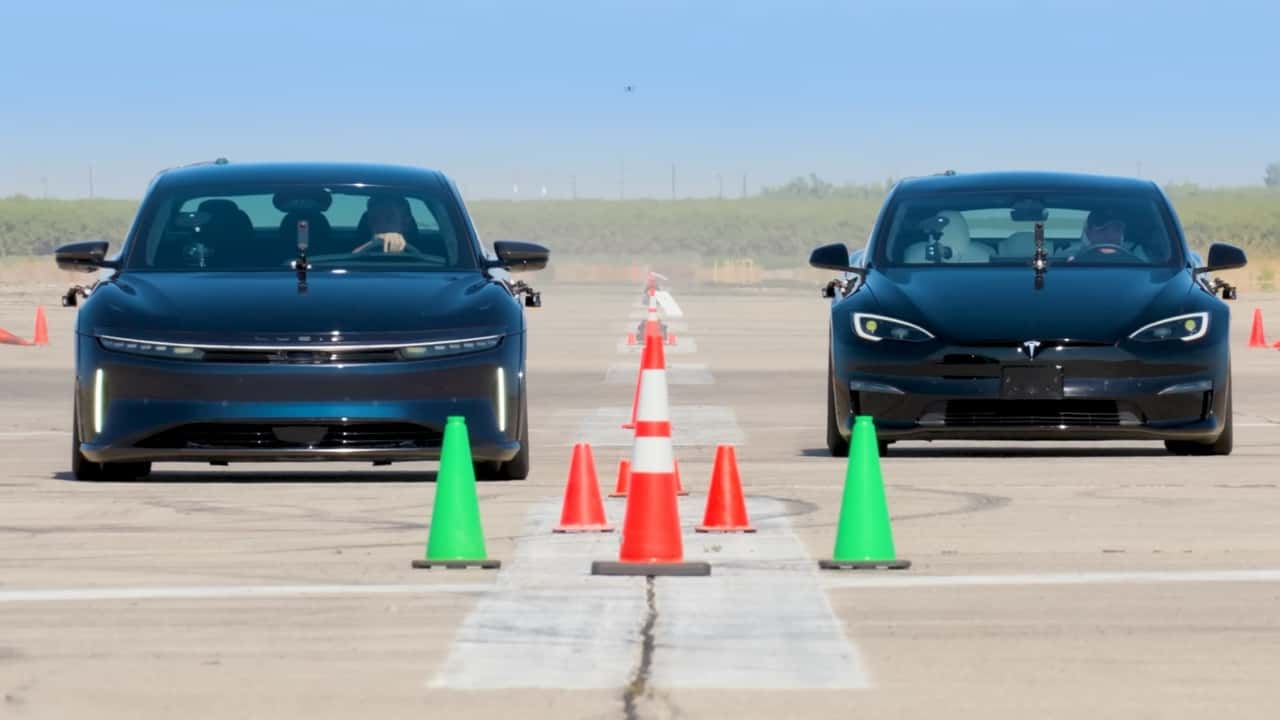
There have been plenty of comparisons between the two EVs, but none quite like the one put together by our friends at Edmunds. As you’ll see in the video embedded below, Edmunds pitted the 2023 Tesla Model S Plaid with the optional $20,000 Track Package against the 2024 Lucid Air Sapphire.
Tesla’s pricey add-on comes with carbon ceramic brakes and forged brake calipers, which enables the 4,810-pound EV to, you know, brake properly. Some fancy wheels are also included, as is some “track-ready brake fluid.” The car’s firmware is also slightly different, to take advantage of the new stuff.
Like the Model S Plaid, the Lucid Air Sapphire is powered by three electric motors. Unlike the Plaid, however, Lucid managed to squeeze out 1,234 horsepower from the setup, lowering the 0-60 mph time to just 1.89 seconds, as opposed to the Model S Plaid’s 1.99 seconds. On paper, at least.
Suffice to say, they’re very fast. Edmunds’ course consists of a quarter-mile drag race, followed by a braking section, a U-turn and then another sprint toward the start/finish line. It’s a very simple layout but it’s designed to test acceleration, braking and handling. Two runs are clocked and at the end of the first run, the drivers switch cars to eliminate any potential advantage or disadvantage.

[embedded content]
In the Model S Plaid, the battery was preconditioned for the Drag Strip mode, which took about 15 minutes to complete. The suspension was set to Sport and in the lowest ride height.
In the Lucid Air Sapphire, Track mode was selected, then the Drag Strip option–a little easier than in the Model S, but I’ll give Tesla credit for making the whole operation a little more dramatic, especially when it comes to the Cheetah stance that the Model S Plaid takes right before launch.
Now that the specs are out of the way, I’ll just say this: the race you’re about to see in the video is intense. At the end of the first run, the Lucid Air was clocked at a speed of 164 miles per hour. Let’s not forget that both these cars are four-door family sedans, so experiencing this amount of power and speed seems like cheating physics a little bit.
The second run was a little different, with the Model S set in Track mode instead of Drag Strip mode in the hopes that the car would send more power to the wheels when exiting the corner at the end of the straight. Did it help? Well, not really. For what it’s worth, though, the Model S Plaid, even with the $20,000 Track Pack, is still half the price of the Air Sapphire, which retails for a sweet, sweet $250,500. Meanwhile, Tesla is asking $91,630 for a base Model S Plaid without the Track Pack.
So, is it worth spending a quarter of a million dollars on an admittedly very nice EV? You be the judge.
Share this Story

Tesla Model S Plaid revealed in police spec
 California-based UP.FIT, a division of Tesla tuner Unplugged Performance, has turned a Tesla Model S Plaid into a police car. Debuting at the 2024 SEMA show in Las Vegas, the Plaid police cruiser is destined for a community outreach program of the Los Angeles Sheriff’s Department, according to Unplugged Performance. The company’s UP.FIT division…

Nissan Z recalled because pedestrian-detection sensors may not work
 Nissan is recalling 4,036 Z sports cars because malfunctioning sensors could increase the risk of injury to pedestrians in a collision. The recall, which encompasses 2023 and 2024 models, stems from righthand pedestrian-detection sensors that may be reversed in the front-bumper wiring harness. This could prevent the pop-up hood, a feature designed…

GM exec believes ditching Apple CarPlay in EVs is the path forward
- GM is phasing out Apple CarPlay in its lineup
- New Chevy, Cadillac, GMC, and Buick EVs won’t have Apple CarPlay
- GM’s software boss believes the automaker’s making the right call
General Motors is still committed to phasing out Apple CarPlay and Android Auto smartphone connectivity in future EVs, software boss Baris Cetinok said in a recent interview with The Verge.
Apple CarPlay and Android Auto, which allow users to “project” features from their smartphones onto in-car displays—plus more for EVs, including route planning—have proven popular with customers. But GM announced last year that it would stop including them in future EVs as it shifts to a new Google-based infotainment system.

2024 Chevrolet Equinox EV
That’s still the best path forward, Cetinok told The Verge, because it allows GM “to create the most deeply integrated experience that you can create with the vehicle,” rather than relying on interfaces ported in from smartphone apps.
“We are not shipping devices with just monitors; we’re not a monitor company,” said Cetinok, who previously worked at Apple in product management and marketing for features like Apple Pay and iCloud. Abandoning deeper smartphone connectivity will create a seamless experience across different features, such as driver aids like GM’s Super Cruise and entertainment features like podcast apps, he claimed.
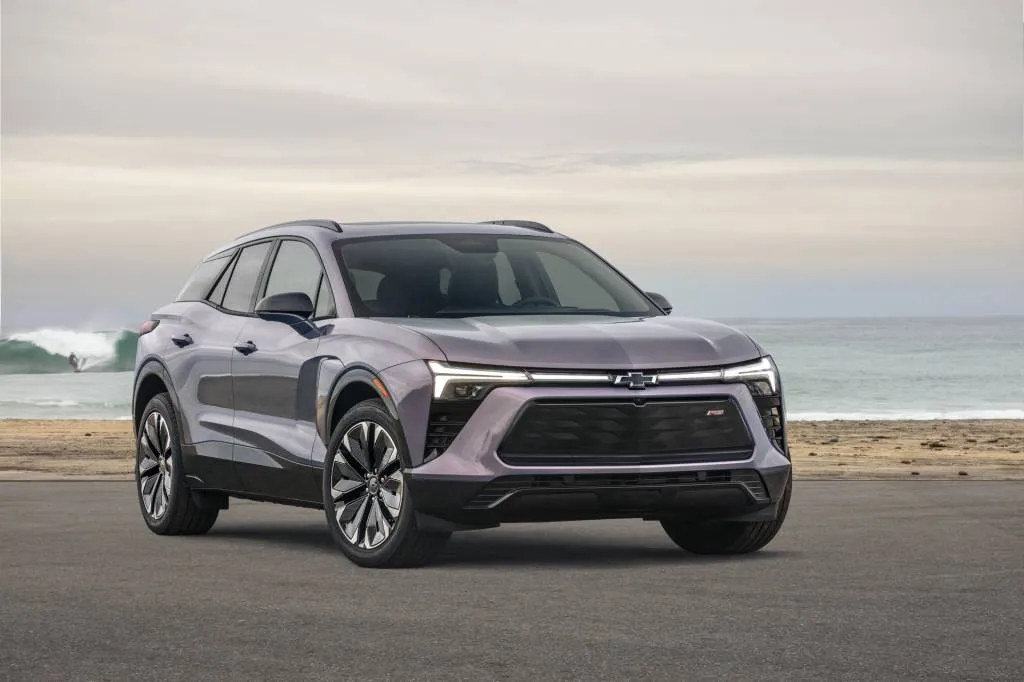
2024 Chevrolet Blazer EV RS
The 2024 Chevrolet Blazer EV was the first GM vehicle to launch without Apple CarPlay and Android Auto, and subsequent EV launches like the Chevy Equinox EV and Chevy Silverado EV have also gone without those features. It’s likely more of an adjustment for users who prefer Apple features like Apple Maps. Google-based infotainment systems in newer GM EVs incorporate many of the same features as Android Auto, such as Google Maps and Google Assistant voice recognition.
Deep integration of software features can be important for route planning, as access to the vehicle’s state of charge and other data is needed to determine charging stops and precondition battery packs for the quickest possible charge. But as other automakers have demonstrated, that doesn’t mean taking functionality away. For instance, Ford EVs offer a choice, with these abilities integrated with Android Auto and Apple CarPlay, as well as via its own built-in navigation systems.

2025 Mercedes-Benz S-Class
 What kind of vehicle is the 2025 Mercdes-Benz S-Class? What does it compare to? The S-Class is Mercedes-Benz’s top sedan. It’s similar in concept to the BMW 7-Series and Audi A8, as well as the Lexus LS. Is the 2025 Mercdes-Benz S-Class a good car? It’s about as good as a sedan can get. The S-Class brims with tech and style, and…