
Author: EVAI

2025 Mercedes-Benz CLE-Class
 What kind of car is the 2025 Mercedes-Benz CLE-Class? What does it compare to? Now in its second year, the Mercedes-Benz CLE-Class is a luxury midsize convertible and coupe lineup. Competitors include the Audi A5, Lexus RC, and BMW 4-Series. Is the 2025 Mercedes-Benz CLE-Class a good car? Yes. It’s stylish, powerful, and luxurious, racking…

These are the cars of Netflix’s “Senna” mini-series
 To make a mini-series about the life of F1 legend Ayrton Senna, Netflix needed a fleet of replica F1 race cars. To populate its small-screen grids, the streaming service turned to Argentina’s Crespis, which built 22 cars for the series, a video released ahead of “Senna’s” premiere explains. These included replicas of every car the triple F1…

Jaguar buying back nearly 3,000 I-Pace EVs over fire risk
JLR will buy back 2,760 2019 Jaguar I-Pace electric SUVs due to a fire risk that the automaker and safety regulators have determined has not been adequately addressed in previous recalls.
These vehicles—from the first model year of Jaguar’s sole EV—were included in multiple recalls to address the potential for overheating battery packs, the most recent in late August. At the time, Jaguar said it was looking for another solution to the overheating issue after diagnostic software installed as a remedy in previous recalls proved inadequate.
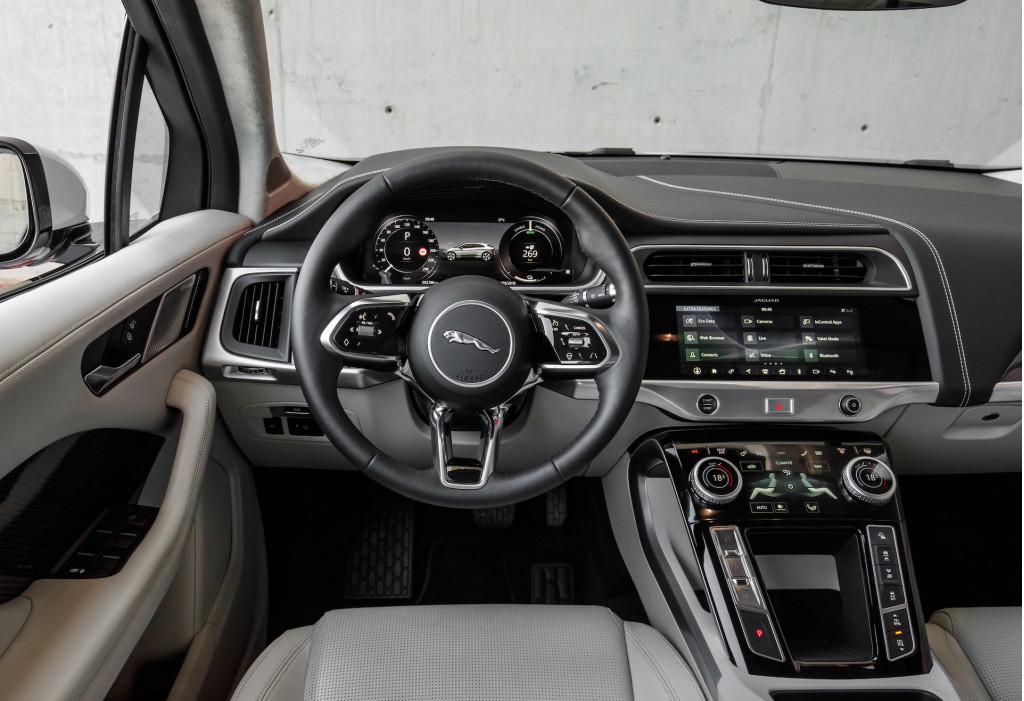
2019 Jaguar I-Pace S
Jaguar now plans to buy back the affected vehicles, according to the National Highway Traffic Safety Administration (NHTSA). Until that can be done, interim precautions announced with the August recall remain in place.
Sign up for Newsletter
Owners are still advised to park and charge their cars outside and away from structures, and are being told to have dealers install updated battery module control software limiting capacity to 80%, which will be done free of charge. This was explained in owner notification letters mailed Oct. 18 and Nov. 6, 2024. Owners can call Jaguar customer service at 1-800-452-4827 and mention recall number H514 for more information.
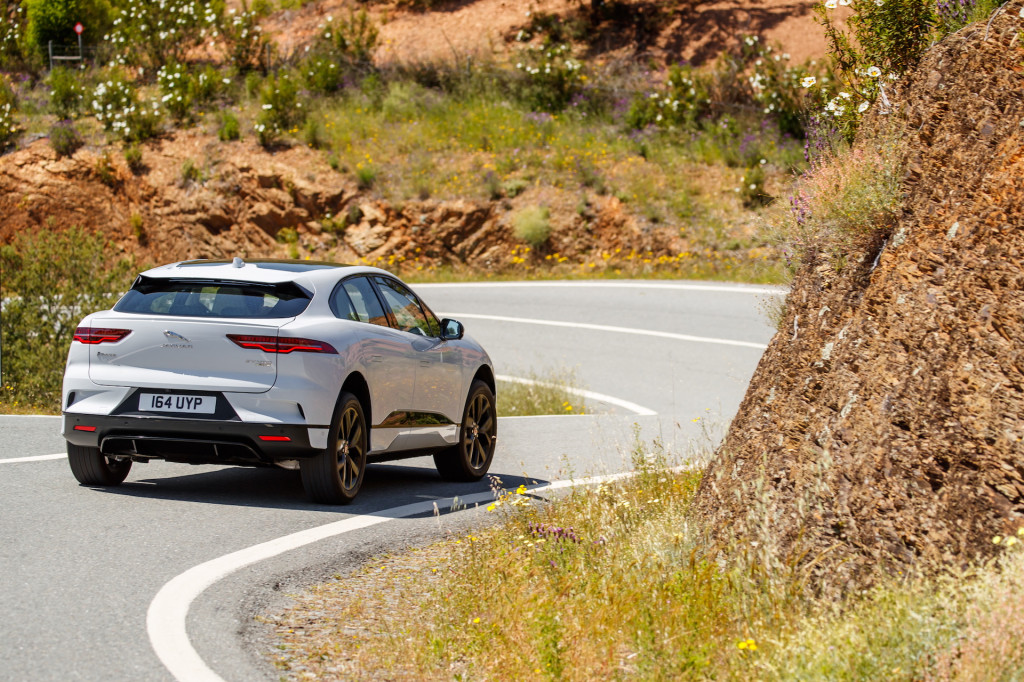
2019 Jaguar I-Pace S
Jaguar initially issued a broader recall of I-Pace electric vehicles for fire risk last year, followed by another small recall earlier this year of just 258 vehicles—all 2019 models. The automaker found these vehicles had a higher propensity for short-circuits within their battery cells, and eventually opted to replace entire packs.
Jaguar is going all-electric, but the I-Pace won’t be a part of that plan. The automaker will abandon its first electric model in favor of three new EVs based on a clean-sheet architecture, with styling previewed by a concept car making its public debut Dec. 2.

Insider says Nissan has “12-14 months to survive”
 Times are tough at Nissan. The automaker announced plans last month to lay off approximately 9,000 employees, representing 6.7% of its global workforce, and to cut production capacity by 20% due to declining sales, primarily in the U.S. and China. The Financial Times, citing insider sources, has now reported that Nissan is seeking an anchor…

2026 Ford Ranger Super Duty spied, will tow almost 10,000 pounds
 The Ford Ranger will soon be able to compete with the big players, as the Blue Oval is developing a heavy-duty version of the popular midsize pickup truck. The new truck is due in 2026 and will adopt the same Super Duty designation used by heavy-duty F-Series trucks. A prototype was recently spotted testing near Ford’s U.S. headquarters, and spy…

Kia EV3 and EV4 EVs might both be US-bound, PV5 van a maybe
- Kia hasn’t yet confirmed EV3 or EV4 for the U.S.—but we might get both
- Unclear if EV3 arrives, whether Niro EV would continue
- Kia PV5 WKNDR electric camper van is a test for U.S. interest
The future of compact EVs for Kia in the U.S. could be as simple as this: It doesn’t have to be an either/or.
And that might mean that U.S. EV shoppers could get the more interesting compact EV market that America has been largely missing out on—thanks to the possibility of Kia’s EV3 and EV4.
In October 2023, at its Kia EV Day event, the brand revealed the upright EV3 compact electric crossover, which is close to the same size as the Volvo EX30, and the somewhat longer, lower EV4 compact electric hatchback. At the same event, it also showed a production version of the EV5 electric crossover, which is sized closely with the Kia Sportage, Honda CR-V, and Toyota RAV4.
While Kia was quick at that time to say that the EV5 was not U.S.-bound, it left the door open for the EV3 and EV4.
Sign up for Newsletter
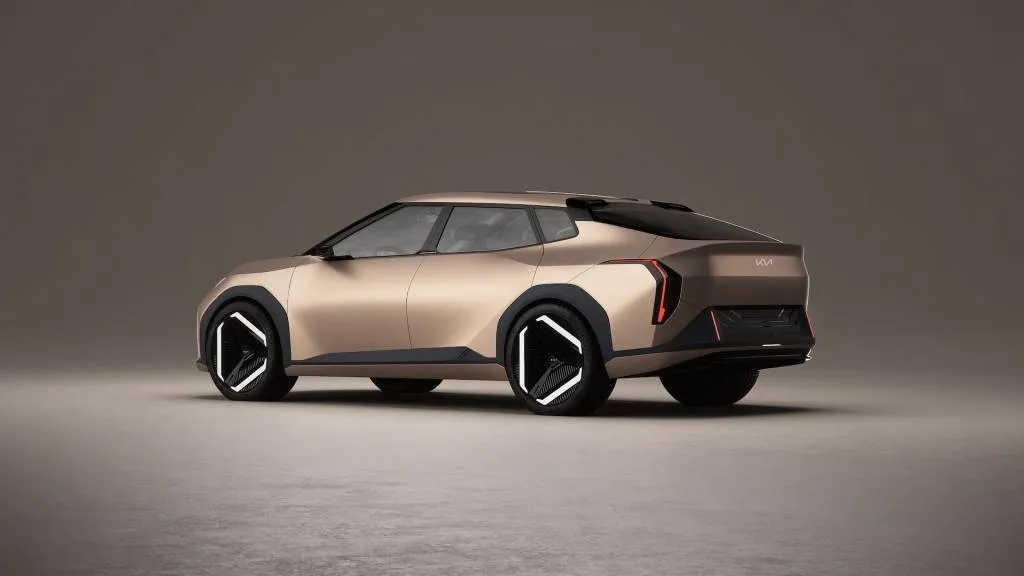
Kia EV4 concept
The production EV4 is expected to bow globally within the next few months. But Kia has already, since last year’s event, shown the production-bound EV3, with deliveries of it starting earlier this month in Europe. Amid that, there hasn’t yet been a U.S.-market confirmation for either the EV3 or the EV4.
Last week, at the Los Angeles auto show, Green Car Reports asked Kia America chief operating officer and executive vice president Steven Center which of these two EVs we might see.
“We may see both,” replied Center. “And I think that’s just a matter of segment management.”
Center elaborated that these are two quite different EVs, referring to the EV4 as an electric equivalent to the K5 sedan, and the EV3 as “sort of a Soul EV.”
Sign up for Newsletter
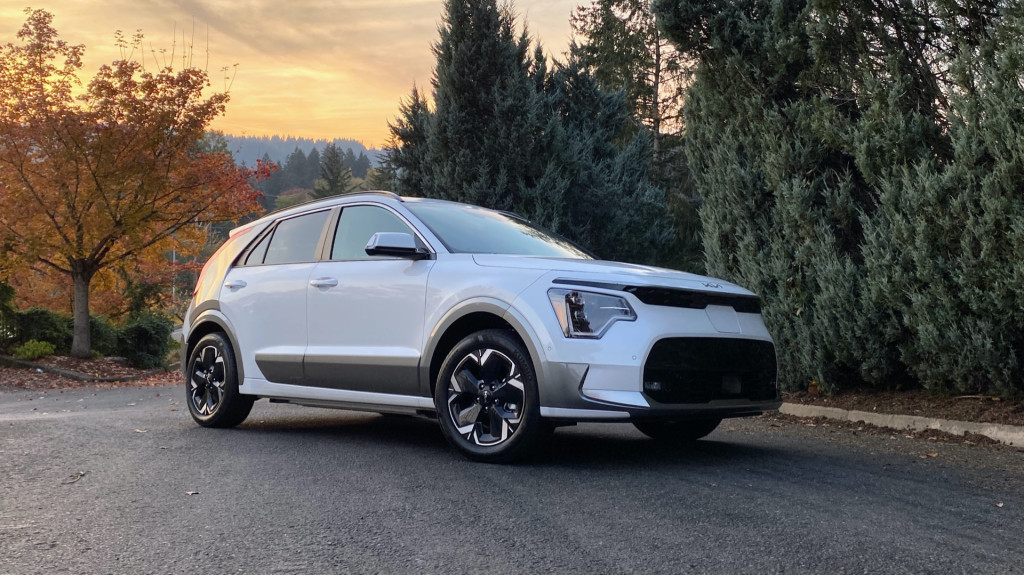
2023 Kia Niro EV
Whether that means borrowed time for the Kia Niro EV, which Kia opted to bring to the U.S. instead of the current Soul EV, Center wouldn’t say for sure—but he hinted that Niro EV is built on an internal combustion platform, and it’s the second-generation of a vehicle that was conceived when the company’s E-GMP EV platform didn’t exist.
Center also noted that at some point soon, Kia will have two lines of vehicles—an internal combustion line, including hybrids and plug-in hybrids, and one that’s pure EV.
Meanwhile, the number of U.S. Kia EV models will continue to grow over the next year, confirmed Center. Whether that means EV3, EV4, PV5, or something else completely—or a reference to the higher-power Kia EV9 GT also revealed at the show—rest assured it’s not sidelining its EV push in 2025.
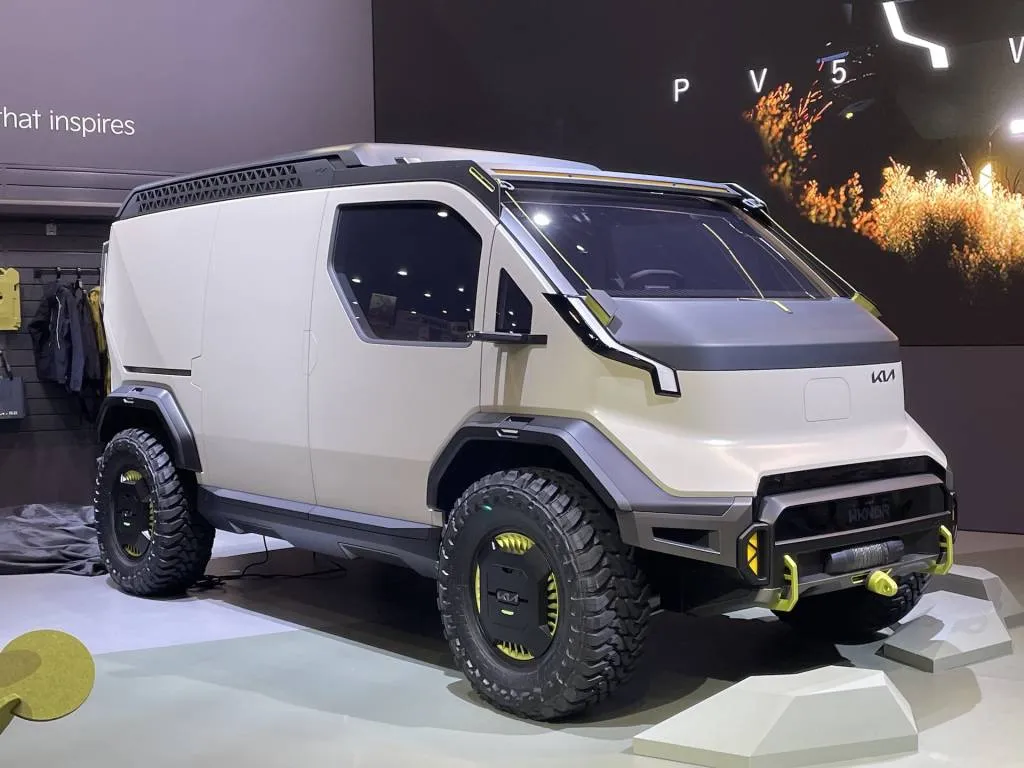
Kia PV5 WKNDR concept
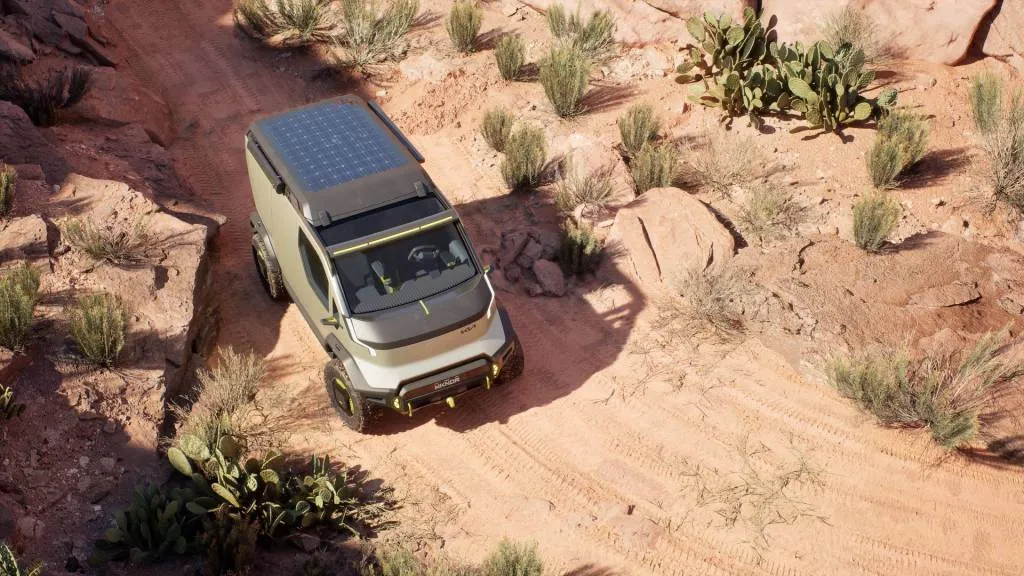
Kia PV5 WKNDR concept
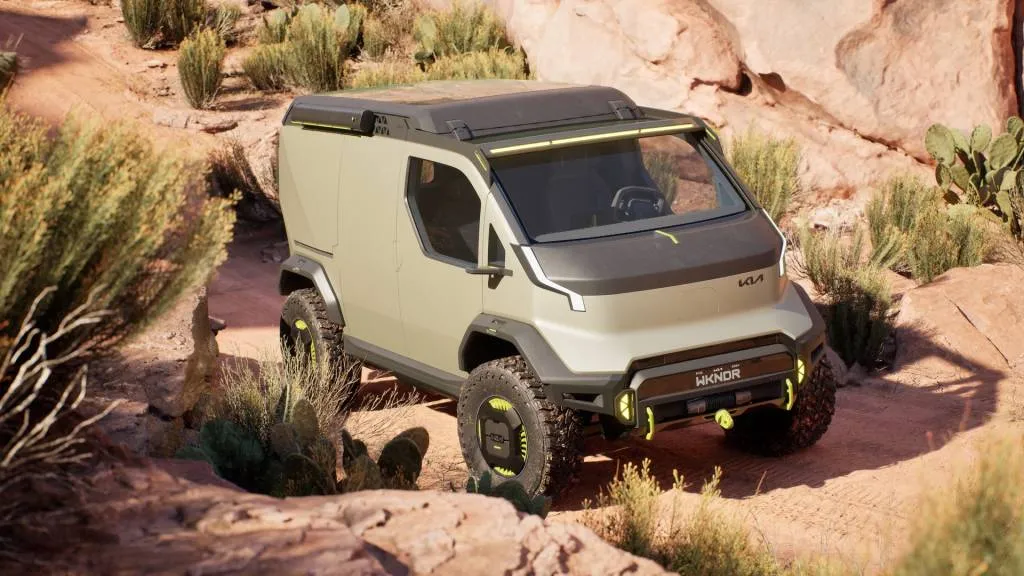
Kia PV5 WKNDR concept
For a tease of what that something else might be, Kia showed what we interpreted as a wild card at the LA show. Its upcoming PV5 electric van may primarily be focused toward commercial use and future robotaxis, the company has said up until now. But the recent debut of the PV5 WKNDR electric camper van concept at the annual SEMA show in Las Vegas earlier this month, together with its prominent display at the LA auto show, beg another question.
Sign up for Newsletter
Is the brand getting ready to pitch the electric vans in the U.S. as compact, activity-focused alternatives to the Volkswagen ID.Buzz—or, perhaps, even more in line with the original ethos of the cult-favorite Honda Element?
Kia America vice president for marketing Russell Wager replied to GCR, also at the LA auto show, that PV5 remains confirmed only for Korea and Europe, and the purpose behind the SEMA concept was to test American customers’ reactions to “more of an overlander concept.”
“So we’re still evaluating what that means, potentially, for the U.S. market,” said Wager.

Porsche might develop gas and hybrid versions of its EVs
 Porsche will continue developing internal-combustion engines longer than planned, including potentially adding hybrid variants to some planned all-electric models, CFO Lutz Meschke said during a Q&A session with Automotive News and other media on the automaker’s third-quarter financial results. Porsche previously said that it expected 50% of…

Modern Alfa Romeo 33 Stradale hits 207 mph at Nardò
 Alfa Romeo has completed some of the final tests for its modern 33 Stradale supercar Final testing for the 33 Stradale is taking place at Italy’s Nardò and Balocco proving grounds Only 33 examples are planned for production, which will be handled by coachbuilder Touring Superleggera Testing of Alfa Romeo’s modern 33 Stradale reached a high…

VW has no plans for 2-speed transmissions in EVs
- VW sees no need for multi-speed transmissions in EVs
- It tested a manual transmission for performance EVs
- More efficient EVs might be more expensive, VW says
It seems Volkswagen won’t be following Porsche or Mercedes-Benz.
On Thursday at the 2024 Los Angeles auto show Kai Grünitz, head of global research and development for Volkswagen, told Green Car Reports that the automaker doesn’t see a need for 2-speed transmissions in EVs.
Grünitz said that “today there is no plan to produce it,” but the executive quickly noted that’s “because there’s no demand from the customer side,” for multi-speed transmissions in EVs.
Grünitz then said that “there’s no reason to invest in that” if there’s no demand from customers.
Sign up for Newsletter
“To be honest, when you look for example to ID.7, it’s one of the most efficient cars,” Stefan Voswinkel, head of product communications for VW, added.
“We are best in class in that segment,” Grünitz said, referring to the VW ID.7, which has been delayed indefinitely for the U.S. and, like other EVs using VW’s MEB architecture for EVs, uses a single-speed reduction gear.
Grünitz noted there are other possibilities to reduce or to increase efficiencies outside of multi-speed transmissions, and it’s “most important coming from the engine side,” he said.
“There are a lot of little screws you can use to improve efficiency without going to the transmission,” Grünitz said.
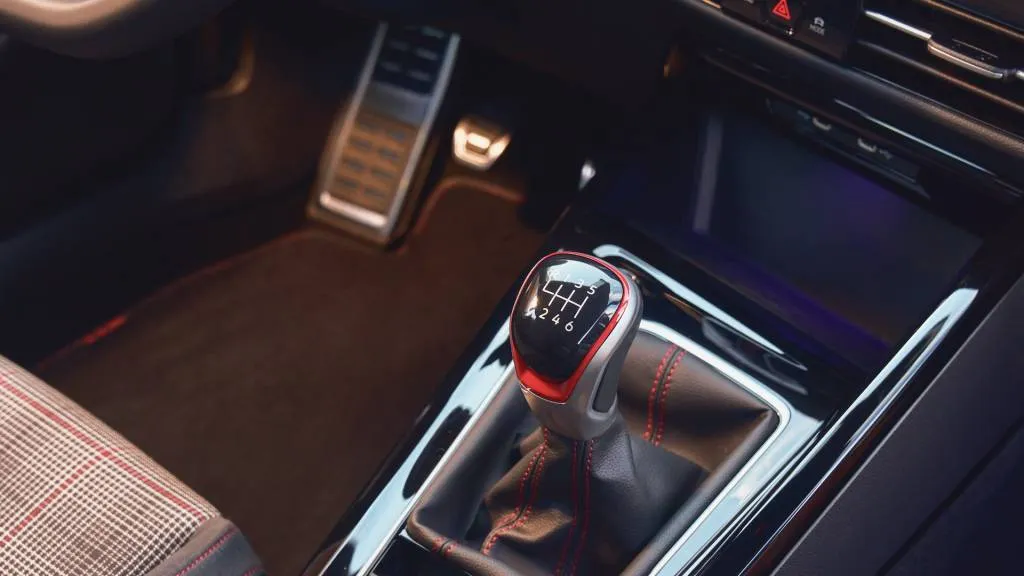
2024 Volkswagen Golf GTI 380
This is all despite the fact that Grünitz admitted Volkswagen’s created a manual transmission for EVs, and that he’s tested it—and didn’t like it. While that unit would have been for an enthusiast vehicle like an electric GTI, the executive said he likes the smoothness of EVs that comes with a single-speed transmission.
The upcoming 2026 Mercedes-Benz CLA-Class, the first vehicle from the automaker to arrive on the next-generation MMA platform, will use a 2-speed transmission. Mercedes executives noted that efficiency is the new currency. “Hopefully it will become a new currency,” said Grünitz. “I think it’s not today.”
Grünitz said no one is really talking about efficiency. When pressed on the topic because Lucid, among other automakers, is quite vocal about the topic, Grünitz noted it’s not being discussed at the consumer level, and asked: “Why don’t we see these discussions at our customers?”
Grünitz noted before his handlers pulled him away that making vehicles even more efficient would make vehicles more expensive.

Kia pickup for US might be gas or EV, won’t be Tasman
- Kia says Tasman pickup revealed in Oct. isn’t for U.S. market
- Brand hasn’t decided on a U.S.-bound Kia electric pickup
- Push toward more hybrids and PHEVs may show the direction in a truck
Kia is still considering a pickup for the U.S., but whether that amounts to a gasoline-fueled truck or an EV remains to be determined, according to two top U.S. executives for the brand at the Los Angeles auto show last week.
In either case, that pickup won’t be the Tasman, which was revealed in October and is intended initially for Australia, Africa, and the Middle East.
The Tasman, an old-style body-on-frame gasoline midsize pickup with a live rear axle and an available diesel engine, has a polished cabin look but otherwise fits the mold of a workhorse.
“Tasman is not for this market,” Kia chief operating officer and executive VP Steven Center said on Thursday to Green Car Reports in an interview at the show. But that doesn’t mean there might be a different gasoline truck that’s a possibility, the executive explained.
Sign up for Newsletter
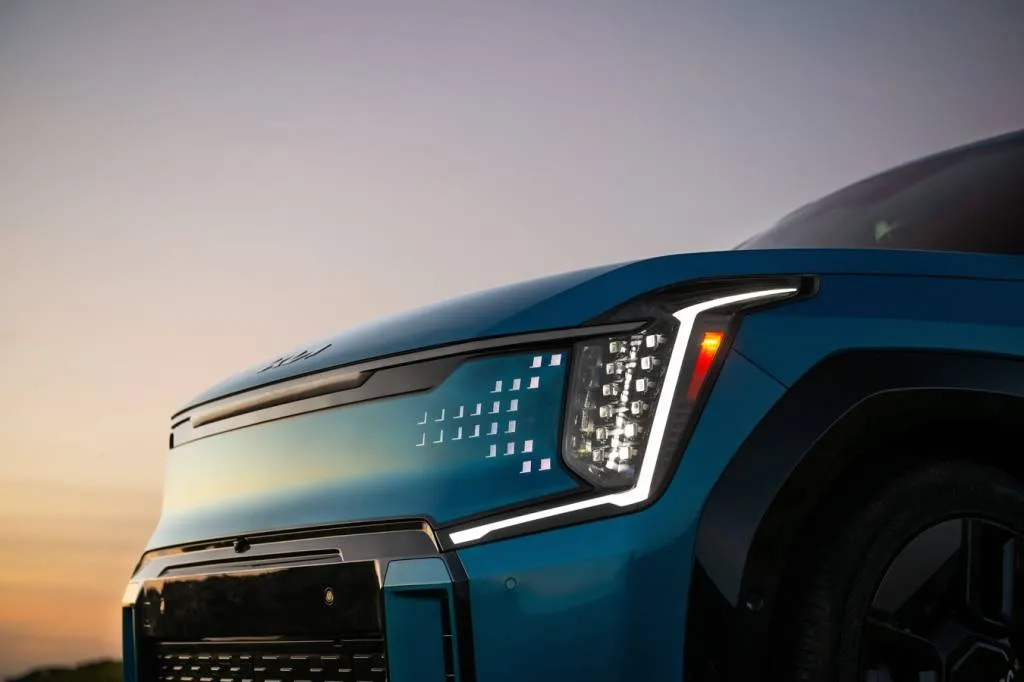
2025 Kia EV9
Meanwhile, the Kia electric pickup previously confirmed as under development, and sharing some of its underpinnings with the EV9, isn’t a shoo-in for America either.
“We still haven’t decided we’re bringing it,” top Kia America marketing executive Russell Wager said in a separate LA show interview, adding that the electric truck remains “a possibility.”
The hesitation may have something to do with how such a truck would be positioned. In 2022, when the brand first confirmed the Kia electric pickup project globally, Wager told Green Car Reports that in order for it to make sense for North America such a model would need to be positioned as an upscale electric truck, not a high-value model with a low price.

Kia EV teaser
Factor in what’s increasingly looking like a market saturation of high-price fully electric pickup entries, and it may be easy to see why Kia’s cautious in this area. The high-end electric truck market has grown and includes models from Ford, Chevrolet, GMC, Rivian, and Tesla—with upscale electric trucks from Ram and VW’s Scout brand also on the way.
Further clouding the picture was a piece of news from the South Korean business publication Pulse that broke last week around the time of our LA auto show interview: Hyundai Motor Group and General Motors are reportedly pursuing the joint development of an affordable pickup truck for Latin America, and perhaps beyond. Under the memorandum of understanding this is built on, GM and Hyundai are also collaborating on EV and hydrogen tech, and sourcing, but it’s unclear whether the pieces might fit together.
The answer, for Kia and a U.S-bound pickup, may lie somewhere in the middle, between a fully electric truck and a throwback like the Tasman—and perhaps involving a long-rumored product related to the Hyundai Santa Cruz, from its corporate cousin. Kia plans to add more plug-in hybrids and hybrids to the lineup—with more models, sales volume, and electric range, even perhaps a modest EV layout with a range extender. Any of those options might give Kia and its customers some of the up-front value the truck market is missing right now.