
Author: EVAI

U-Haul Toy Hauler aims for track days
 Next year, U-Haul will add a new trailer to its rental fleet that’s perfect for hauling race cars to and from the track. Called the Toy Hauler, this trailer measures just over 23 feet long and 8.5 feet wide. That creates 16 feet of usable deck space, and U-Haul included drive-over fenders to maximize use of that space. A 6,800-pound load capacity…

2025 Hyundai Santa Cruz
 What kind of vehicle is the 2025 Hyundai Santa Cruz? What does it compare to? The 2025 Hyundai Santa Cruz small pickup truck builds off the Tucson compact crossover but swaps out a cargo hatch for a bed. It’s similar in size and attitude to the Ford Maverick. Is the 2025 Hyundai Santa Cruz a good truck? It’s a good car, with crossover…

2026 Hyundai Palisade revealed with boxy design, nine seats
 A second-generation Hyundai Palisade boasting a boxy design and seating for up to nine has debuted The new Palisade is expected to reach the U.S. in 2025 as a 2026 model Full specifications, including pricing, will be announced closer to the market launch Hyundai has revealed a new generation of its Palisade three-row midsize SUV. The SUV debuted…

Lucid Gravity starts rolling off assembly line in production form
The first customer examples of the Lucid Gravity electric SUV began rolling out of the automaker’s Casa Grande, Arizona, assembly plant Thursday.
The Gravity was first revealed in production form at the 2023 Los Angeles auto show, and it arrives as a 2025 model, initially in Grand Touring form with a starting price of $94,900 before destination. Grand Touring models target more than 440 miles of range with battery capacity similar to the Lucid Air Grand Touring sedan—suggesting not much more than 118 kwh.
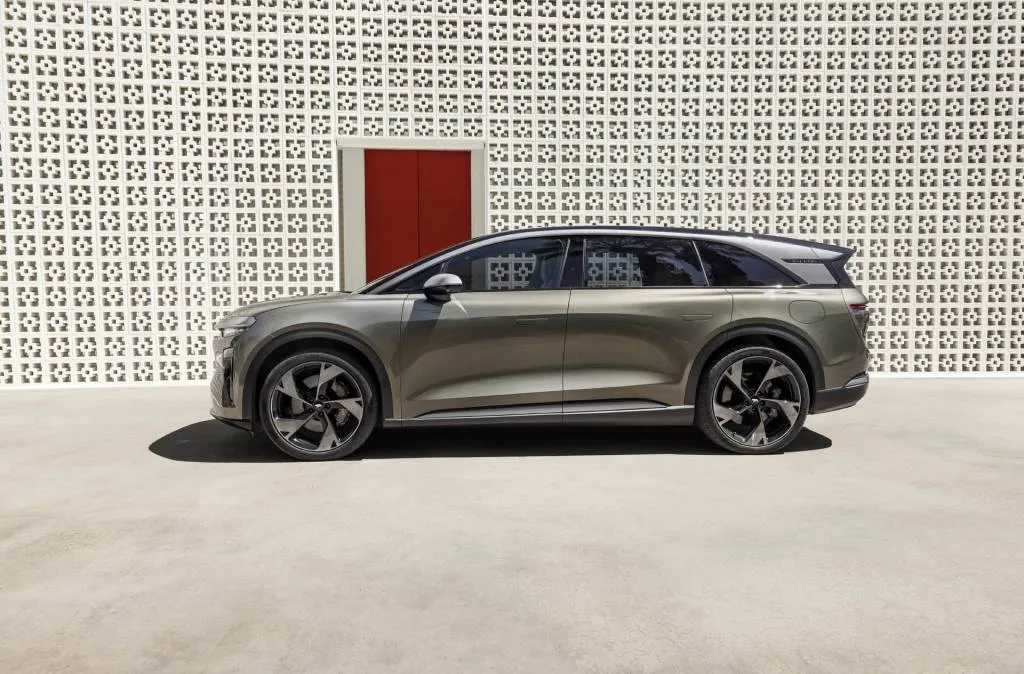
2025 Lucid Gravity
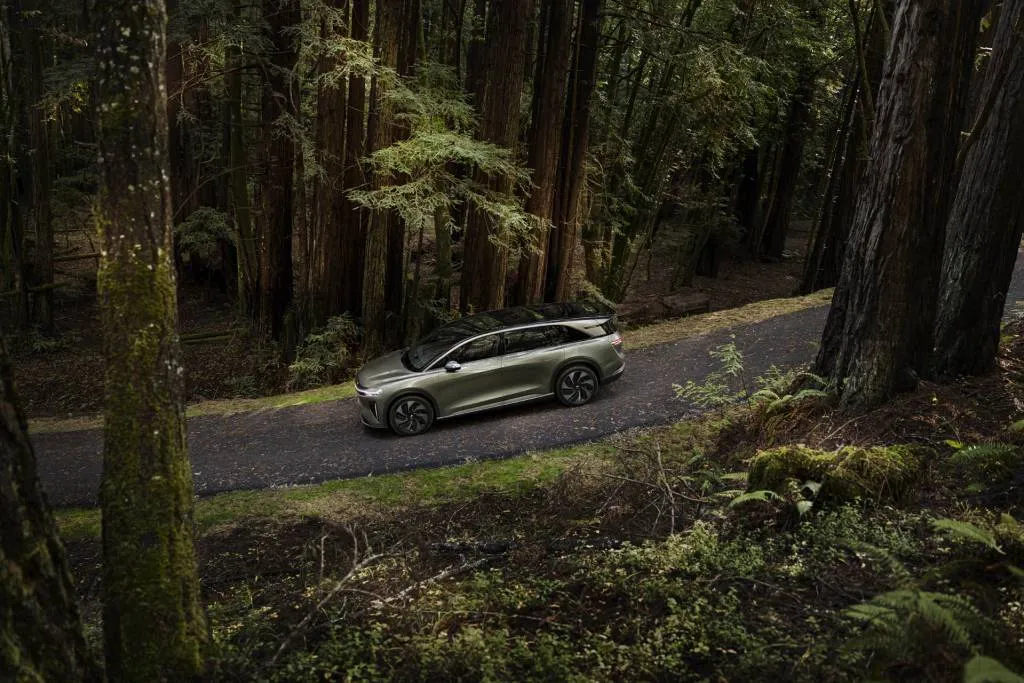
2025 Lucid Gravity
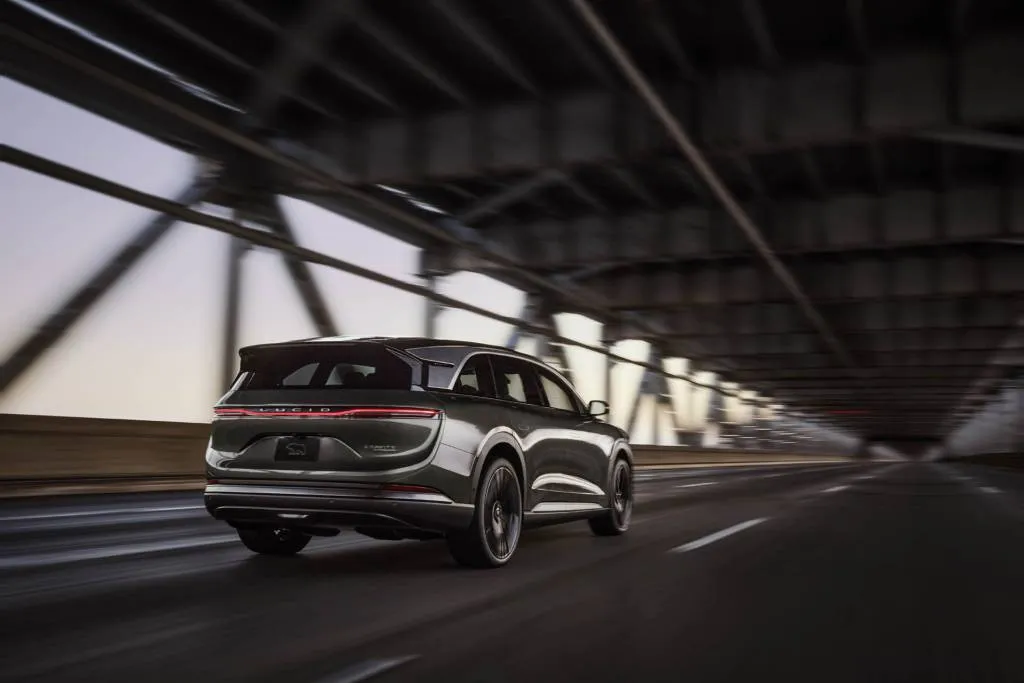
2025 Lucid Gravity
A dual-motor powertrain is expected to deliver 828 hp from dual motors which, along with the range estimate, is in line with what Lucid claimed when the Gravity was first shown in 2023. The automaker said at the time that launch versions would do 0-60 mph in less than 3.5 seconds. A prototype drive earlier this year hinted at fairly sporty handling as well.
The Grand Touring will be followed by a $79,900 Touring grade, arriving for the 2026 model year. Lucid hasn’t confirmed any additional variants, but it’s possible the automaker will eventually introduce a lower-priced Pure grade and a tri-motor Sapphire performance version, matching the current Air lineup.
Sign up for Newsletter
The first customer Gravity models have Combined Charging Standard (CCS) ports, but Lucid confirmed in September that the Gravity will get a Tesla North American Charging Standard (NACS) port starting in 2025.
Today marks an exciting landmark for our company. Production of the Lucid Gravity is now underway at our factory in Arizona!
This milestone is a celebration of the hard work by our passionate and dedicated team to bring this groundbreaking SUV to life. Its combination of space… pic.twitter.com/ItJsOL3H3Y
— Lucid Motors (@LucidMotors) December 5, 2024
Lucid will next move closer to the mass market with three additional models. The first will be a $50,000 mid-size SUV called the Lucid Earth, which is expected to start production in late 2026.
The Earth and Gravity SUVs will likely open up a bigger market than the Air, of which Lucid delivered just 2,781 units in the third quarter of 2024. Even that was up 90% from the same period a year ago, when Lucid was likely still working to ramp up production.

Acura MDX vs. Kia Telluride: Compare Crossover SUVs
 Three-row SUVs substitute for the minivan for many American families. They have the space and carrying capacity needed for runs to grocery stores and soccer games without the nerdy stigma of the minivan. As everyday transportation, many buyers want luxury in their SUVs, and the Acura MDX and Kia Telluride are two fine options in that regard. The…

Honda recalls 205,760 SUVs due to increased fire risk
 Honda is recalling more than 200,000 crossover SUVs because fuel-filler neck components may separate, allowing fuel to leak and potentially cause fires. The recall includes 2023-2024 Honda Passport two-row mid-size SUVs and 2023-2025 Honda Pilot three-row mid-size SUVs. Some of these vehicles may have an incomplete connection between the…

Analysts: Trump tariffs would make vehicles more expensive, EV or not
- Tariffs imports from Canada and Mexico could add $2,100 for U.S.-assembled vehicles
- Mexico-made pickup trucks might cost $8,000-$10,000 more
- Proposed tariffs could also drive up the cost for EVs like $35k Chevy Equinox EV
The incoming Trump administration’s proposed 25% tariffs on all imports from Canada and Mexico could hit the Detroit Three automakers hard, raising the prices of not only EVs but also the gasoline pickup trucks that are those automakers’ lifelines, according to recent reporting from Reuters.
GM would likely see the biggest impact from these policies, which are steeped in the anti-immigration rhetoric that was a major feature of Trump’s campaign message but would disrupt long-established North American supply chains, according to Reuters.
GM is expected to import more than 750,000 vehicles from Canada and Mexico this year, according to that Reuters report, which cites business analytics firm GlobalData. About half of those will be the highly-profitable full-size gasoline pickups that contribute most to the automaker’s bottom line.
Sign up for Newsletter
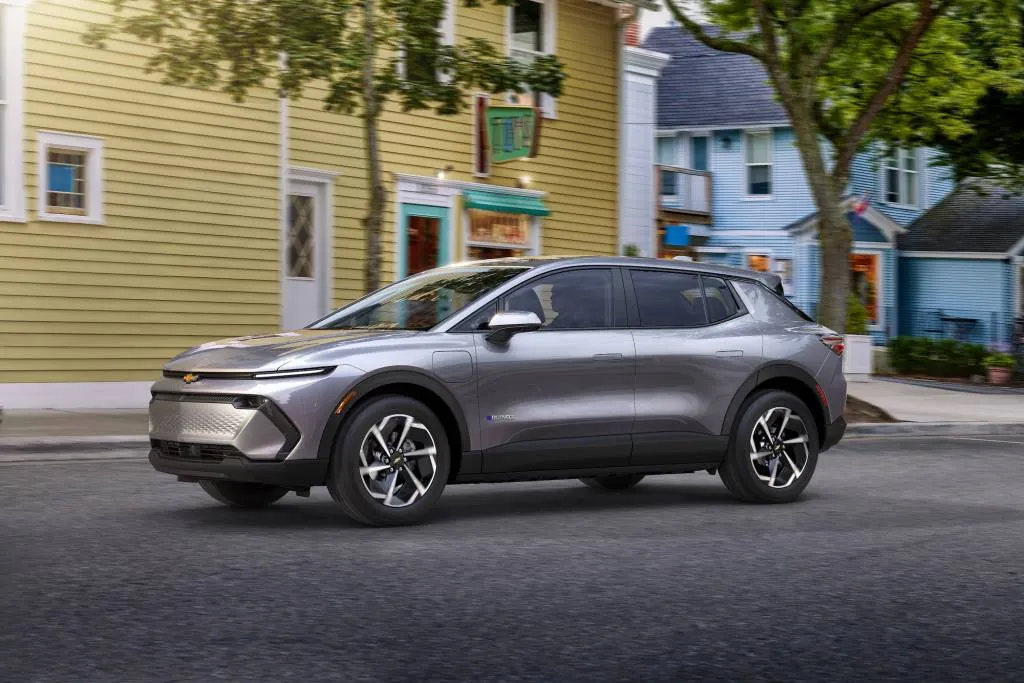
2025 Chevrolet Equinox EV
Separately, Reuters also notes that tariffs could affect the price of the Chevrolet Equinox EV, currently GM’s most affordable electric model. It’s assembled in Mexico and costs $34,995 before a $7,500 federal EV tax credit Trump is expected to take away.
Mexico is a major EV manufacturing hub, with more EVs going to the U.S. than are sold domestically—but that’s just part of an overall trend that relates to all types of vehicles and the parts that go into them. As Reuters states, 90% of light vehicles and 43% of auto parts manufactured in Mexico are exported to other parts of North America. GM, Ford, Nissan, and Stellantis lead with exports from Mexico to the U.S., but Toyota, VW, and Honda each brought in more than 100,000 vehicles from Mexico just in the first six months of 2024.
The Trump tariffs would apply to both complete vehicles and parts. A 25% tariff on parts from Canada or Mexico would add $2,100 in cost to consumers for U.S.-assembled vehicles, and $8,000-$10,000 for vehicles also assembled in Canada or Mexico, according to Reuters, citing Wells Fargo estimates.
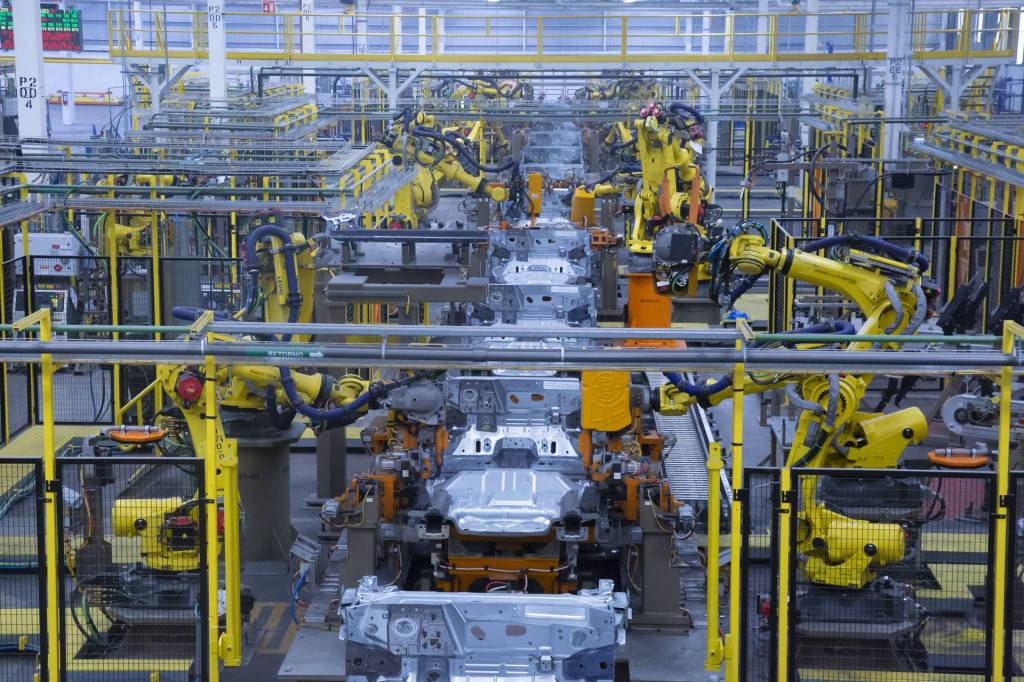
Ford Mustang Mach-E assembly – Mexico
Trump voters may feel that financial pain more than most. While many pickup trucks are assembled in the U.S., a good share of popular models, including not only GM’s Chevrolet Silverado and GMC Sierra, but also the Ford Maverick, Ram 1500, and Toyota Tacoma are built in Mexico. So the vehicles most popular in rural areas that overwhelmingly voted for Trump will also be impacted by tariffs, Reuters points out.
Trucks are at least profitable, offering a chance that automakers can absorb the cost increases rather than pass them on to consumers. That may not be the case with more affordable compact cars like the Nissan Sentra, longtime industry analyst Sam Fiorani noted to Reuters. EVs could follow the same price-hike path as affordable gas cars.

2026 Hyundai Palisade offers 9 seats, but will it come to US?
 The redesigned Hyundai Palisade three-row SUV launched in South Korea It comes with an available front-row bench seat to accommodate three people, or nine people total across its three rows It remains to be seen if the 9-seat configuration will be offered in the U.S. The Hyundai Palisade three-row SUV has been redesigned with even more seating…

Stellantis aims to halve EV battery cost by 2030 with lithium-sulfur
Stellantis on Thursday announced an agreement with Texas-based Zeta Energy to develop lithium-sulfur batteries that could significantly reduce cost and pack weight, while boosting charging speed.
The automaker and Zeta Energy claim lithium-sulfur chemistry can deliver comparable volumetric energy density to current lithium-ion battery cells, but at less than half the price per kwh. Sulfur is cheap and widely available, Stellantis noted in a press release, adding that batteries will be produced using unrefined sulfur produced as a byproduct of other industries, other waste materials, methane, helping to keep costs down while minimizing carbon dioxide emissions.
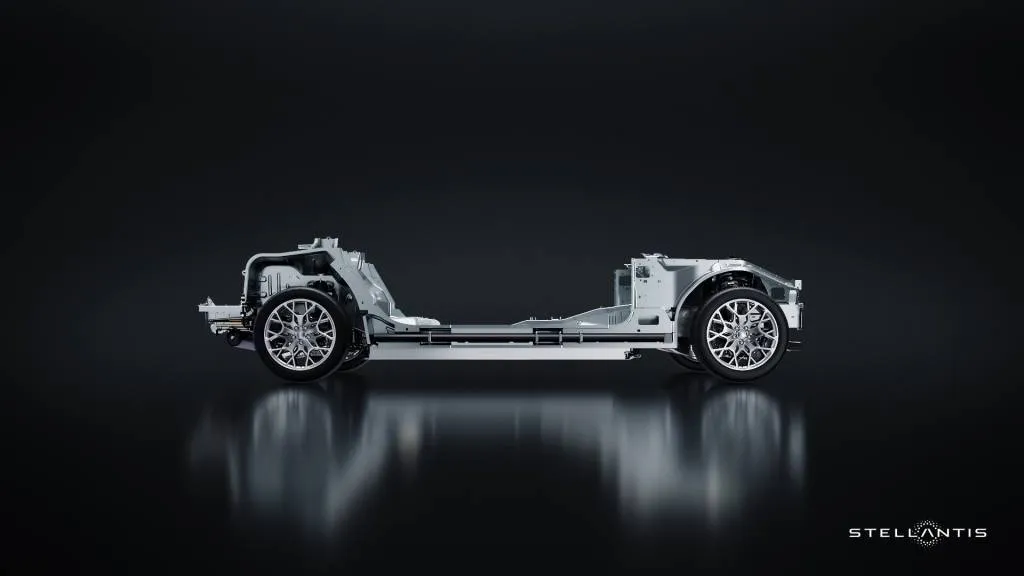
STLA Large platform
Lithium-sulfur tech also “has the potential” to increase fast-charging speeds by up to 50%, the automaker emphasized, along with significantly lighter battery packs with the same usable capacity as equivalent lithium-ion packs.
Sign up for Newsletter
The agreement calls for pre-production development work with an eye toward possible commercialization by 2030. Stellantis intends to use existing battery factories, and claims it can keep the supply chain for battery materials concentrated within either Europe or North America, in line with its current vehicle manufacturing footprint.
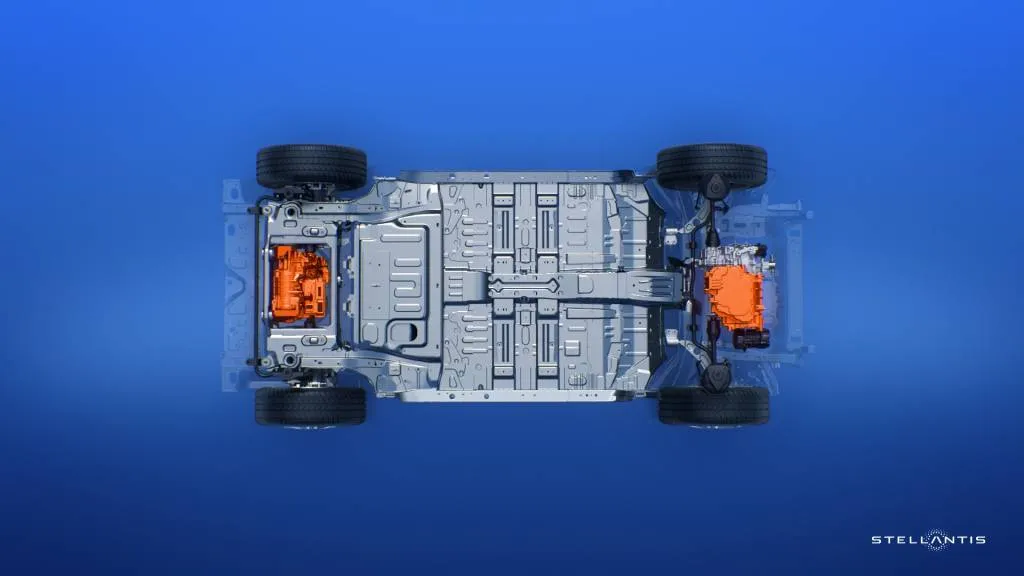
Stellantis STLA Medium platform
Stellantis in 2023 announced a partnership with Lyten to develop lithium-sulfur battery tech, as well as an investment in the California-based startup from its Stellantis Ventures arm. The automaker made clear to Green Car Reports that this partnership with Zeta Energy is complementary to the partnership with Lyten.
For years, lithium-sulfur batteries have been considered one of the next frontiers to greatly boost range without adding weight or driving up production cost. Advances from the past decade have helped push development past some of the key obstacles, but mass production and relatively short life for the cells have remained issues. It will be interesting to see if Stellantis can address those issues before the end of the decade.

Universal plug-and-charge coming to all EVs starting in 2025
A consortium of stakeholders aims to roll out a universal plug-and-charge protocol for the U.S. in 2025, allowing all electric vehicles to automatically start charging at public stations simply by plugging in.
Announced Wednesday, the initiative is being undertaken by the Society of Automotive Engineers (SAE), the federal government’s Joint Office of Energy and Transportation, and the Electric Vehicle Public Key Infrastructure (EVPKI) consortium, which represents automakers, charging networks, hardware manufacturers, and other private interests.
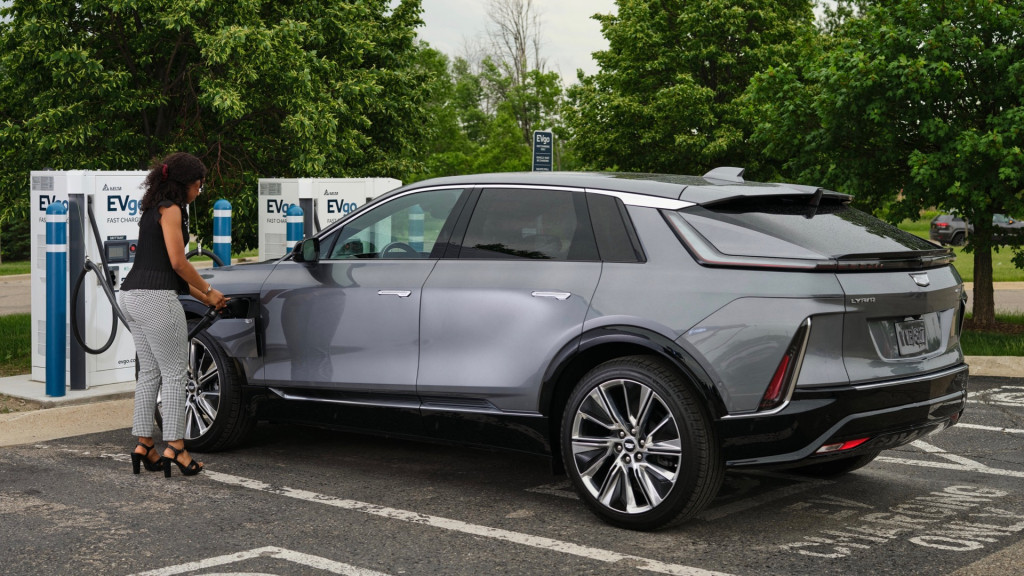
2023 Cadillac Lyriq at EVgo DC fast-charging station.
Some automakers have been rolling out plug-and-charge piecemeal, often packaged as part of charging ecosystems for each brand’s customers. But that’s left a range of situations in which plug-and-charge will work with some vehicle-and-charger or vehicle-and-network combinations but not others. This new effort aims to shift reliance away from individual automakers or specific hardware or software variations and make plug-and-charge the norm.
Sign up for Newsletter
That means developing a common framework that allows all EVs, chargers, and charging networks to seamlessly communicate, a press release from the Joint Office of Energy and Transportation, a collaboration between the Department of Energy (DOE) and Department of Transportation (DOT), said. The office was created under the Biden administration’s infrastructure law to serve as the main point of contact for the administration’s national EV charging network plan.
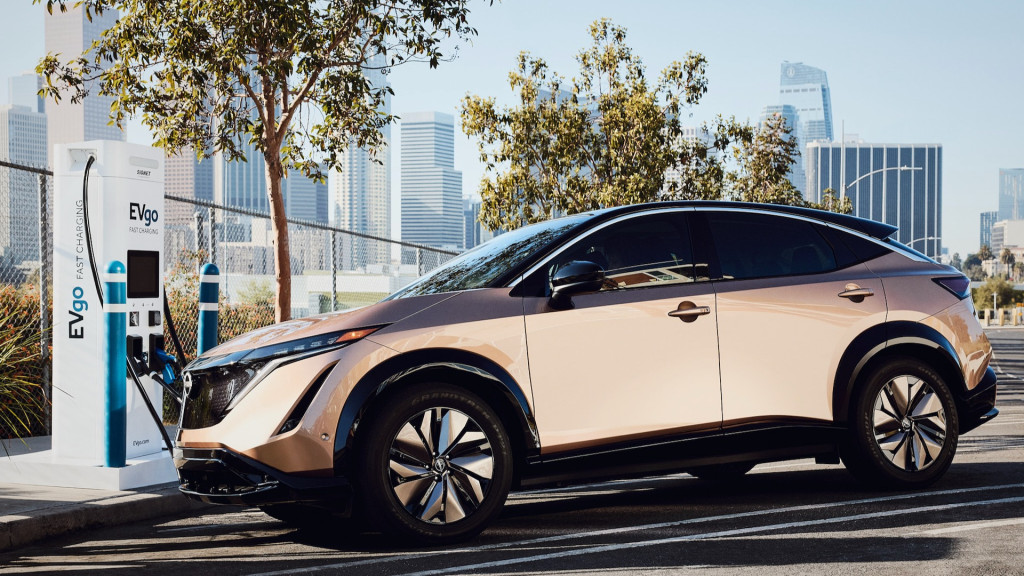
2023 Nissan Ariya at EVgo charging station
Key to this is a Certificate Trust List (CTL) to be developed by the consortium members. It would essentially be a compendium of vehicles, hardware, and payment platforms that meet certain standards. The goal is to allow for quick authentication when a vehicle is plugged in to charge, by pre-clearing adherents to these standards. The consortium also aims for robust cybersecurity measures, something the federal government has been investigating since at least 2022.
No timeline was given for the full rollout of this evolution of plug-and-charge, but the initiative takes EV charging a further step away from the bad old days of requiring multiple accounts, cards, and fobs to access all public charging stations.