
Author: EVAI

Mercedes-Benz electric van concept coming in spring 2025
Mercedes-Benz will preview its Van.EA electric van architecture with a concept vehicle this spring.
The automaker confirmed plans for the van concept Friday, releasing a teaser image indicating that, despite its dedicated EV platform, the concept and the next-generation electric vans it heralds will look like exactly what they are.
Van.EA will be the first EV-specific architecture for Mercedes vans, although the automaker currently sells the eSprinter, as well as a handful of smaller Europe-only models, based on combustion-vehicle architectures.
Sign up for Newsletter
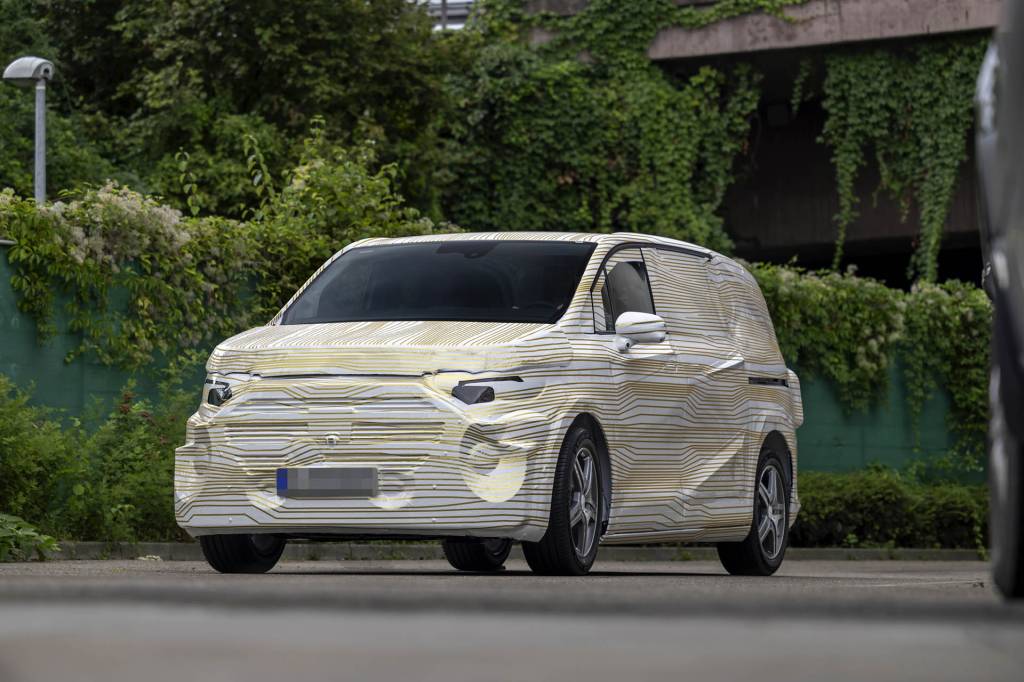
Mercedes-Benz Van.EA prototypes via Mercedes-Benz
Mercedes showed photos of camouflaged prototypes out testing in October ahead of a 2026 production launch. Mercedes intends for every new electric van it introduces after that point to use the Van.EA platform, which is designed around a shared set of components and modules to accommodate midsize and large vans.
Those modules will include three main sections, with front and rear sections able to house electric motors. Single-motor models will be front-wheel drive, but dual-motor all-wheel drive will also be available.
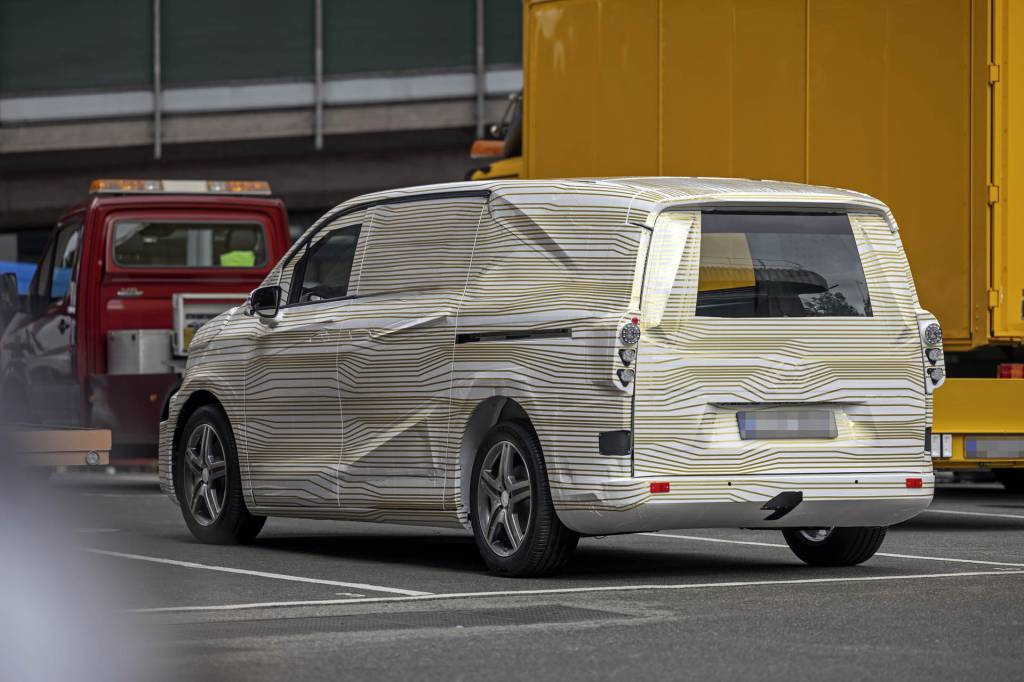
Mercedes-Benz Van.EA prototypes via Mercedes-Benz
Mercedes is also planning for a variety of applications, from work vehicles like cargo vans to a U.S.-bound electric luxury van. Mercedes has also discussed the potential for electric RV conversions, addressing what is already a lucrative market for the automaker’s gasoline and diesel vans.
Van.EA is one of several new EV architectures Mercedes plans to introduce over the next few years, alongside the MMA platform for compact cars like the 2026 Mercedes CLA, and the AMG.EA platform to be used by EVs from the automaker’s AMG performance division, including a fastback sedan and an electric SUV.

Mk1 Ford Escort RS back in production via Boreham Motorworks
 Boreham Motorworks has unveiled a modern Mk1 Ford Escort RS One of the available engines revs to 10,000 rpm and delivers 296 hp Pricing starts at $375,000 The original Ford Escort sold in Europe was a popular economy car whose production spanned decades and also got Ford started in rallying. The Mk1 Escort would eventually become one of the most…

2024 Dodge Charger
 What kind of vehicle is the 2024 Dodge Charger? What does it compare to? After a much ballyhooed final year and the end of the Dodge V-8, the 2024 Dodge Charger returns as an electric vehicle badged as the Charger Daytona. A twin-turbo inline-6 will follow in 2025 as the Charger Sixpack, but for now the muscular electric car absorbs the Challenger…

FIA unveils latest 2026 F1 car design
 New regulations will go into effect for Formula 1 race cars in 2026 Next-gen F1 race cars will have less downforce, more electric power, and a Manual Override mode for overtaking F1 cars will become smaller and lighter, run on synthetic fuel, and still go 220 mph with faster cornering Formula 1 is set to enter a new era in 2026 and the FIA, which…

Electric BMW M3 teased, likely has 4-motor powertrain
BMW M on Wednesday released images of a prototype of what is probably its upcoming electric M3 sports sedan.
Posted to the performance division’s official Instagram page, the photos show a camouflaged sedan with the same exaggerated wheel arches as the prototype BMW M has been using to test a four-motor layout for future performance EVs. It would make sense for a quad-motor powertrain to debut in a car wearing the M3 badge, one of the most hallowed in BMW lore.

Prototype for electric BMW M3 based on Neue Klasse platform
The electric BMW M3 was confirmed by M division boss Frank van Meel in an interview earlier this year, with the executive boasting that it “will beat everything you have ever seen.”
Sign up for Newsletter
One of several electric M models understood to be in development, the M3 will be part of BMW’s Neue Klasse family of next-generation EVs. These will introduce updates like cylindrical battery cells and an 800-volt electrical architecture that BMW has said will deliver a 30% boost in charging speed and up to 30% better driving range compared to its current EVs.
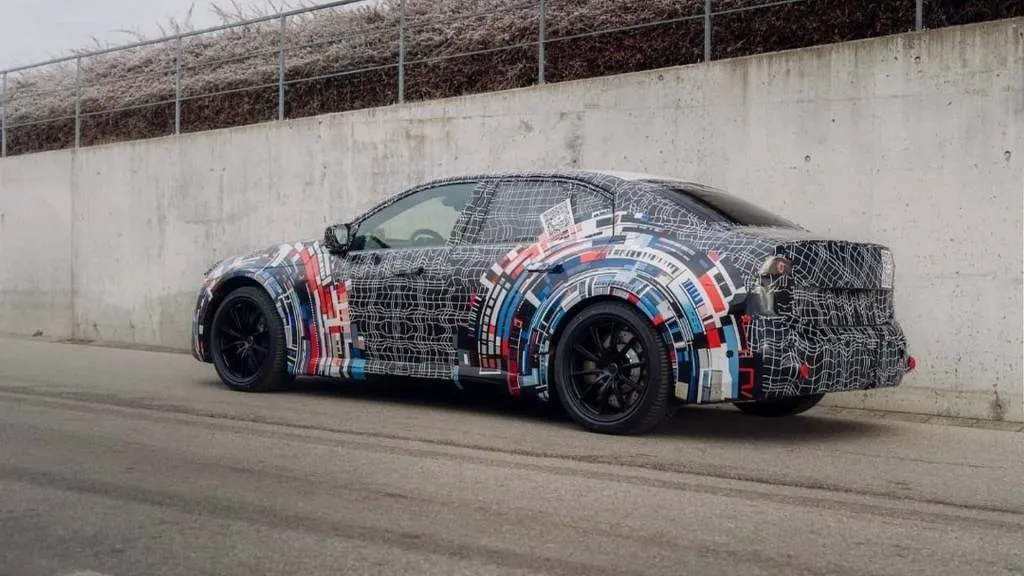
Prototype for electric BMW M3 based on Neue Klasse platform
The electric M3 could also feature simulated gear shifts and artificial engine sounds synced to a driver’s inputs, similar to the Hyundai Ioniq 5 N. In a separate interview, van Meel said BMW was working on this feature, adding that he thought Hyundai’s approach made sense.
Performance models like the M3 will likely arrive later in the Neue Klasse rollout. Pre-production of the initial Neue Klasse SUV started at BMW’s assembly plant in Debrecen, Hungary, last week, with production of customer cars expected in late 2025. BMW then plans to ramp-up production at its main plant in Munich, Germany, followed by Mexican production in 2027.

Standalone Mercedes-Benz AMG electric SUV breaks cover
Mercedes-Benz on Thursday teased a camouflaged prototype of the dedicated electric SUV for its AMG performance division.
AMG primarily makes sportier versions of existing Mercedes models, and has already done so with some of the automaker’s electric vehicles. And it’s launched standalone models like the current GT coupe (in two- and four-door forms), SL Roadster, and the discontinued SLS AMG sports car. But this will be the first SUV designed as an AMG model from the ground up, and one of two planned EVs based on the new AMG.EA platform.

Teaser for standalone electric SUV from Mercedes-Benz AMG
The prototypes show that the sleek silhouette shown in a sketch when the AMG electric SUV was announced last month was not exaggerated. Despite this being an EV, with different cooling requirements than combustion cars, AMG also appears to have installed a large grille up front, with a hood and headlights arcing around it.
Sign up for Newsletter
Mercedes confirmed that the SUV will start testing on schedule. It’s currently heading up to the Arctic Circle for cold-weather testing at the some location where the first AMG.EA-based electric vehicle was sent for testing this past spring. That other model is a fastback sedan that may replace the current AMG GT 4-Door Coupe, and is scheduled to arrive in showrooms next year. Expect the SUV to follow sometime after that.
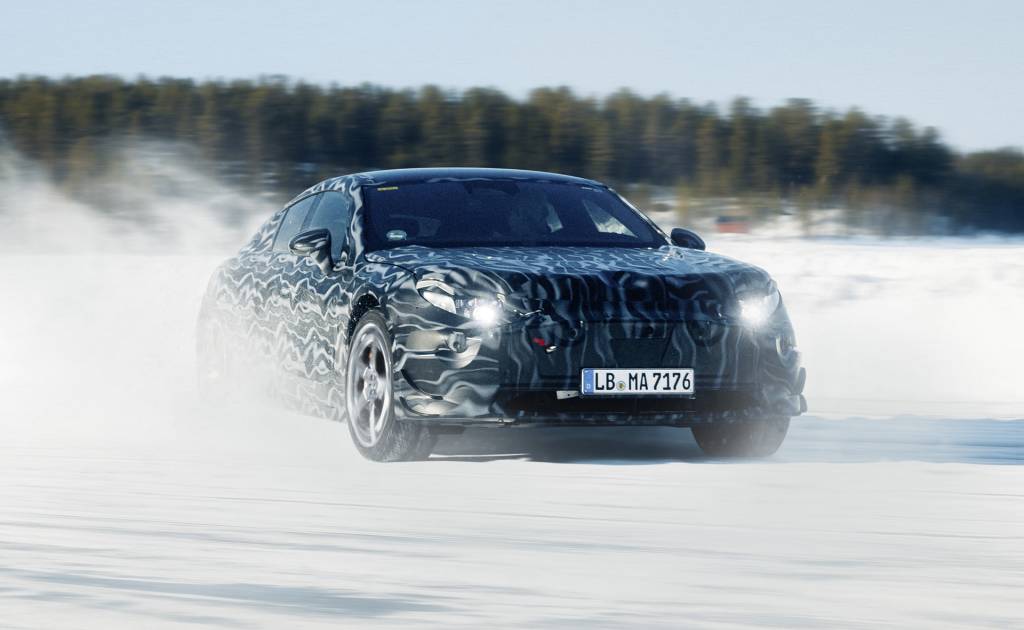
Prototype for first EV fully developed by Mercedes-Benz AMG
Both models will likely use axial-flux motors from British firm Yasa, which Mercedes acquired in 2021. Mercedes also mentioned a “new high-performance battery concept,” without giving further details. The automaker could be hinting at its tech that will enable EV batteries with mixed cell types.
In addition to the two confirmed AMG.EA models, a report earlier this year suggested AMG was mulling an electric supercar based on the Vision One-Eleven concept unveiled in 2023. An AMG version of the 2026 Mercedes-Benz CLA EV is also expected.

Chevrolet Equinox EV: Green Car Reports Best Car To Buy 2025 finalist
- Equinox EV has $34,995 base price and $7,500 EV tax credit eligibility
- 319-mile EPA range, but no efficiency or charging standout
- Although it’s Chevy’s current entry EV, it’s family-sized
- Well-equipped except for lack of smartphone connectivity
The Chevrolet Equinox EV is one of our Best Car To Buy 2025 finalists, and it shows how families on a budget can trade in their gasoline vehicle for a fully electric one that probably offers many of the same features and comfort, for a bottom line that’s no more than the equivalent gasoline model.
While some Equinox EVs were delivered for a brief 2024 model year, for the purposes of this award we’re focusing on 2025—because that’s when the lower-priced Equinox EV LT version arrives, with a price tag starting at just $34,995 including destination. That includes the 85-kwh battery pack and an EPA-rated 319 miles.
For now the 2025 Chevy Equinox EV is an absolute steal, as those base Equinox EV models, like the whole lineup, qualify for the full $7,500 EV tax credit. That brings the effective price to just $27,495 for the LT.
Sign up for Newsletter
2025 Chevrolet Equinox EV
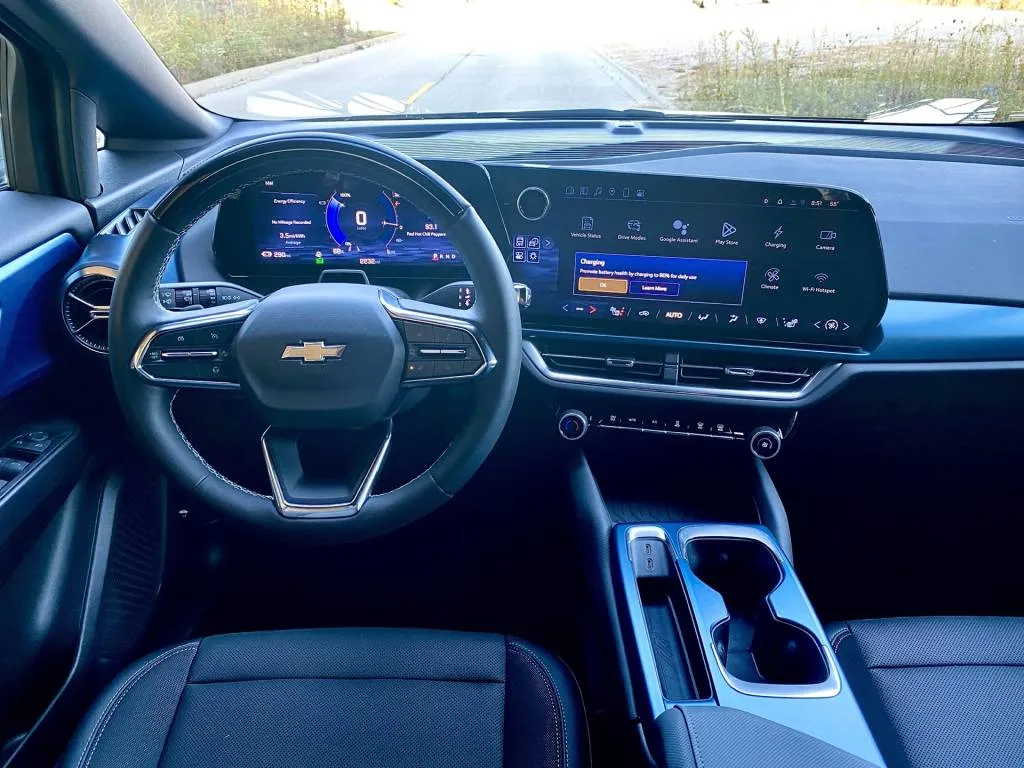
You get a lot of car for the money—not just a lot of electric car for the money. All versions include a full set of active safety features, automatic climate control, wifi hotspot capability, adaptive cruise control, six-speaker audio, and a huge 17.7-inch touchscreen infotainment system that does pretty much everything you might want except play well with your phone through Apple CarPlay or Android Auto.
Opt for the Comfort Package for $2,000 extra and you get heated seats, a heated steering wheel and a power driver seat, plus an HD surround-view camera system, rear pedestrian warnings, and more. A dual-pane panoramic sunroof costs $1,500 extra. And GM’s Super Cruise (for three years) plus an enhanced automatic parking assist feature come together in a $3,355 package.
Base LT front-wheel-drive versions of the Equinox EV make 220 hp and 243 lb-ft of torque. They’re the $34,995 bargain here, while dual-motor all-wheel-drive versions are more powerful and quite a bit more expensive, making 300 hp and 355 lb-ft and starting at $40,295.
2025 Chevrolet Equinox EV

2025 Chevrolet Equinox EV
2025 Chevrolet Equinox EV
2025 Chevrolet Equinox EV
Chevy is marketing the Equinox EV as an SUV but really, it’s a station wagon. At 190.6 inches long, the Equinox EV is almost exactly the same length (and shape, except for the longer wheelbase of a modern EV) as a 1980s-era Chevy Celebrity wagon—albeit with a higher seating position.
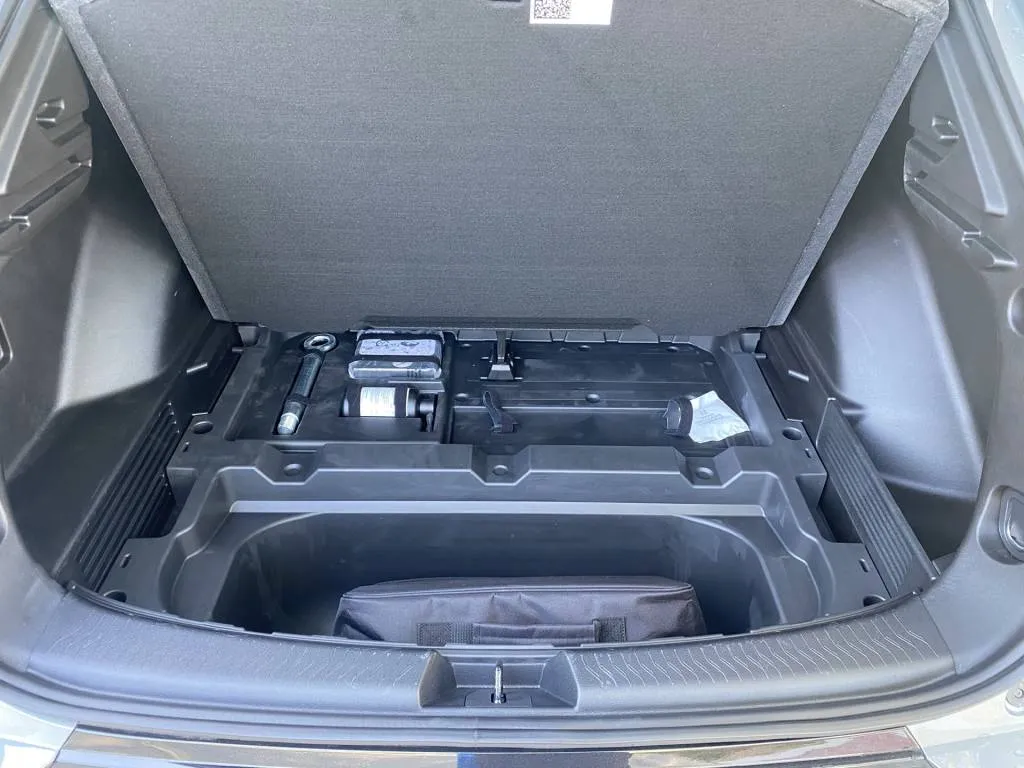
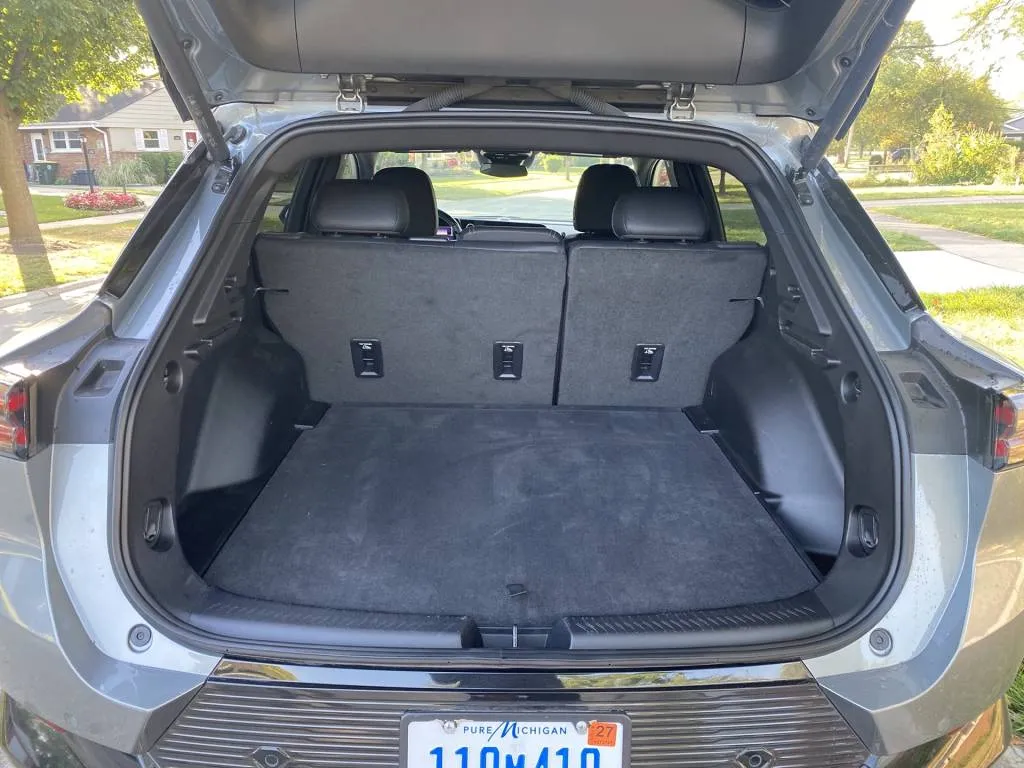
For reasons we don’t completely understand—even comparing them back-to-back, as we did at Best Car To Buy testing in Georgia in October—the Equinox EV has easier ingress and egress than its Chevrolet Blazer EV cousin, and what amounts to better backseat space for most situations. Flip down the Equinox EV rear seatbacks and you can expand the 26.4 cubic feet to 57 cubic feet.
Sign up for Newsletter
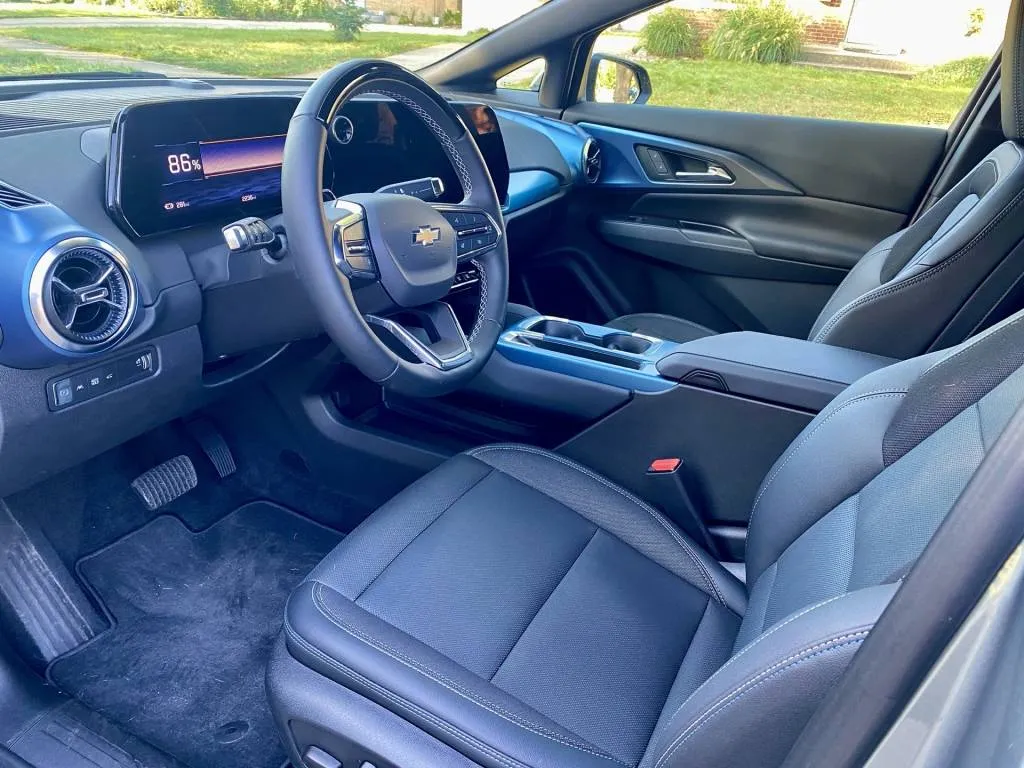
GM has to watch the pennies somewhere to make this all work. In that in-person testing, our cohort included a range of different EVs and it did become apparent that this isn’t quite as focused toward tuning out road noise. And interior trims and the general cabin ambiance leave a lot to be desired—unless you feel a certain nostalgia for surfaces and switchgear that you might have thought GM left in the early days of the millennium.
2025 Chevrolet Equinox EV
It’s also worth pointing out that Equinox EV isn’t a charging or efficiency standout. For instance, the Lucid Air Pure goes more than 100 miles farther on a charge with slightly less battery. The Chevy’s 10-80% charge in a bit over 30 minutes is certainly good enough for a road trip, though—and plenty of fancy lunches while you’re waiting with the money you’re saving. And it’s compatible with GM’s suite of energy products, should you care to use that big battery to back up the home.
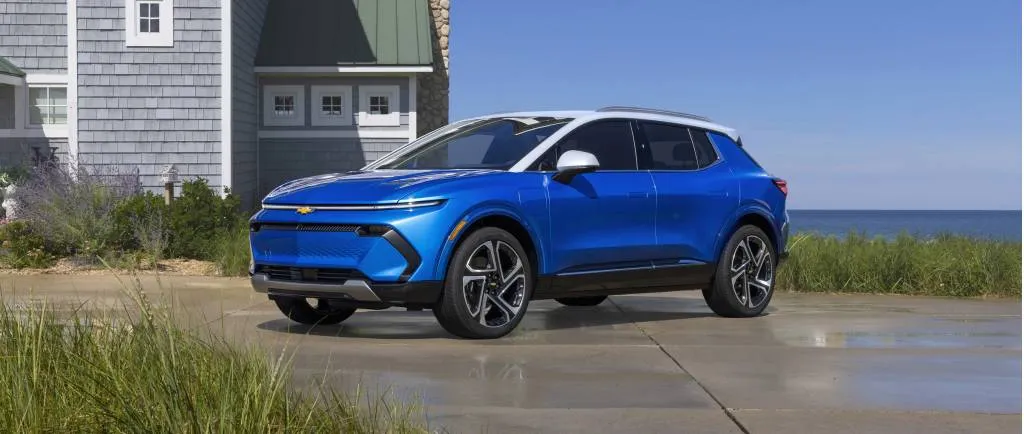
2025 Chevrolet Equinox EV
So to sum, we certainly need more of this. The Equinox EV offers up the electric-car bargain that’s in short supply. And it delivers on some of GM’s earlier Ultium buzz, even if the strategy has been reeled back a bit.
Sign up for Newsletter
Will the Chevy Equinox EV’s set of credentials top those of the other four Best Car To Buy 2025 Finalists? Check back Jan. 6.

EV batteries could last longer with varied charging, use patterns
New electric vehicle battery chemistries and configurations are constantly under development, but a new study highlights the importance of testing them under realistic conditions.
Published in the journal Nature Energy by researchers from Stanford University and the Energy Department’s SLAC National Accelerator Laboratory, and first spotted by Electrek, the study follows up on research into battery longevity—including a 2022 study from the same research team detailing a way to “revitalize” lithium-ion batteries by adjusting the charging protocol, potentially extending their useful life by nearly 30%.

Audi battery assembly at Brussels, Belgium, factory
The tests used for studies like this generally involve many cycles of charging and discharging at a constant rate. The assumption is that the number of cycles a battery experiences is the main factor in degradation, meaning this appears to be the most straightforward way to push battery cells to their limits.
Sign up for Newsletter
But for this study researchers compared four discharge profiles, ranging from constant discharge to profiles meant to simulate real-world driving conditions, such as short bursts of acceleration. These were tested on 92 commercially-available lithium-ion batteries over two years.

Panasonic cylindrical EV battery cells
Researchers found that the profiles with more variation in the discharge rate helped batteries last longer—potentially by up to 38%. That insight could help with the design of more accurate tests for new batteries, and it could help guide rules for battery degradation should they be enacted.
The findings show that for EV owners, varied driving patterns might help maximize battery longevity, and that’s also encouraging. But there are other simple best practices to keep in mind for limiting battery degradation, including parking cars in the shade or in a garage when temperatures climb.

Everybody wanted to keep the Hemi except Stellantis’ former CEO, according to sources
 Carlos Tavares, who led Stellantis since its formation in 2021, quit the company this week According to sources, Tavares was too heavily focused on cost-cutting and making the company green This focus reportedly led to the Hemi V-8s and popular models being dropped without their replacements being ready With Stellantis’ global sales down 17% in…

2026 Polestar 5 spy shots
 Polestar is deep in the development of its Polestar 5, a Porsche Taycan rival previewed by 2020’s Precept concept. The new car is set to begin sales in 2025, likely as a 2026 model. Initial development work on the sleek electric sedan was handled at Polestar’s R&D center in the U.K., and now the latest prototypes are out testing in public…