Author: EVAI

2026 Toyota Crown
 Where the 2026 Toyota Crown Shines Hybrid Power with Unexpected All-Wheel Drive Every Toyota Crown combines a hybrid system with all-wheel drive, delivering sure-footed traction in poor weather while sipping fuel at a pace that beats most full-size sedans. Most trims use a smooth 2.5-liter four-cylinder and electric motors, striking a strong…

2026 Subaru Ascent
 The Subaru Ascent carves out a family-sized niche with standard all-wheel drive, confidence-inspiring safety, and true three-row versatility. Where the 2026 Subaru Ascent Shines All-Weather Peace of Mind, All Year Round No matter the trim, every Subaru Ascent comes standard with full-time symmetrical all-wheel drive. For shoppers facing winter…

2026 Hyundai Tucson
 With class-leading tech, striking looks, and a broad range of trims, the Hyundai Tucson keeps its top-tier status among compact SUVs for 2026. Where the 2026 Hyundai Tucson Shines Style Meets Substance in a Feature-Packed Cabin The Hyundai Tucson makes an entrance with bold lines, a striking grille, and uniquely integrated lighting that sets it…

2026 Jeep Cherokee
 Where the 2026 Jeep Cherokee Shines Thorough Redesign for Modern Drivers The new Jeep Cherokee stands out immediately with its brawnier shape and instantly-recognizable seven-slot grille. The chunkier bumpers, strong body cladding, and upright stance all reinforce a sense of adventure, while dimensions have grown for greater interior comfort and…

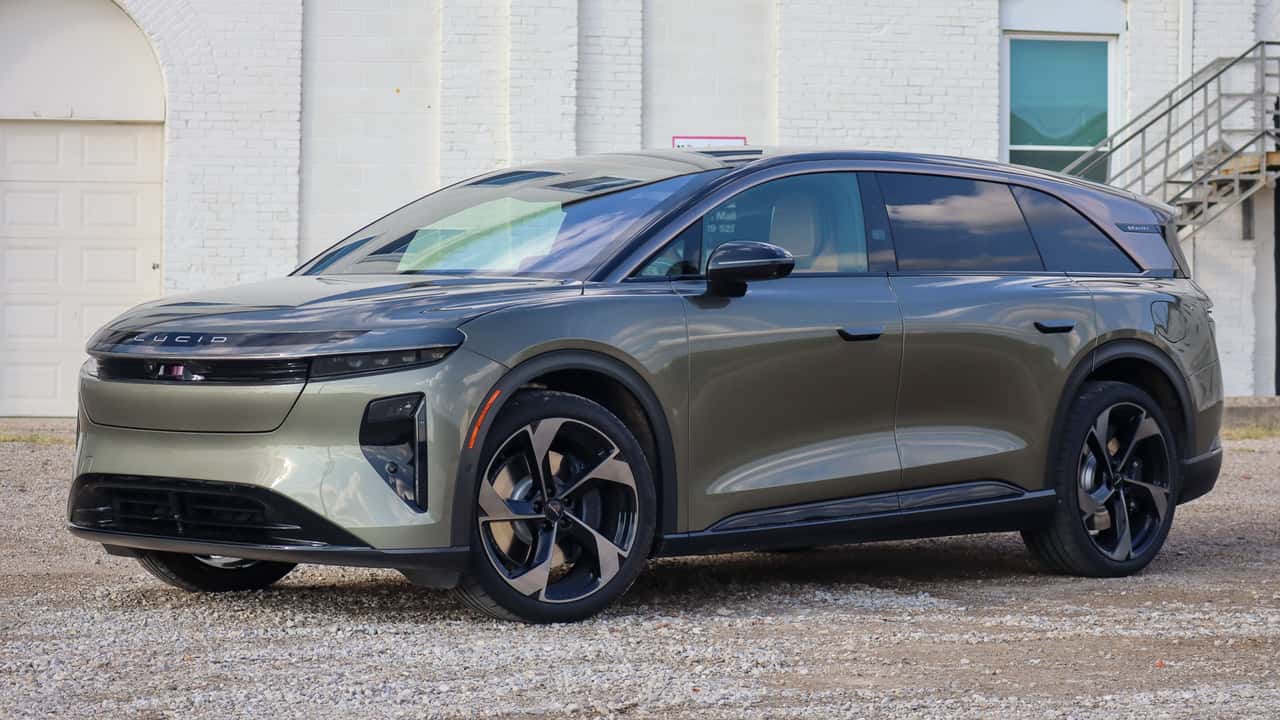
Lucid Gravity: We’re Finally Driving One. What Do You Want To Know?
It’s no secret that it’s tough going for any electric newcomer. For lots of brands, both startup and legacy, it’s been last-man-standing when it comes to just who can actually get a compelling EV product to market. And there’s always the question of whether what’s in the oven is even what people are metaphorically hungry for anymore. The economy is wonky, people are scared, and federal incentives to both build and buy EVs have been cut off at the knees.
Nevertheless, brands gotta keep going, no? Especially brands like Lucid Motors, an EV-only luxury brand aiming to usurp the likes of Mercedes-Benz and BMW. Lucid’s fooled around with the very good (but sometimes glitchy) Air sedan. The Air is great, but let’s face it—it’s a big luxury sedan in a world where sedan buyers are becoming fewer and fewer.
Lucid’s latest model, the Gravity, promises to right the ship with wider appeal, in the form of a three-row luxury SUV.
For the next two weeks (and slightly beyond), a few of the staff here at InsideEVs will have the chance to put the car through its paces. I’ve got first dibs this week down here in Ohio, and then Editor-in-Chief Patrick George and my colleague Suvrat Kothari will get a go at Lucid’s three-row SUV in New York.

Photo by: Kevin Williams/InsideEVs
Our Gravity loans may slightly differ in color or possibly optional equipment, but it looks like they’ll all follow the same baseline Grand Touring trim. This means our cars will have a base price of at least $94,900 (before destination fee). These SUVs come with a dual motor setup fed by a 123-kilowatt-hour battery, good for an EPA estimated 450 miles of range.
Oh, and the Gravity isn’t a slowpoke, either. This thing has an electric motor at each end, good for a combined output of 828 horsepower. This quiet behemoth’s sprint to 60 mph comes in about 3.5 seconds.
This is a very important model for Lucid. As stated before, the Air sedan’s an amazing car, despite its flaws. And one of its biggest flaws is just that it’s not an SUV. For the troubled brand, the Gravity has to pop off, for its own sake.
We’re all excited to put some miles behind the wheel of the Gravity SUV. What would you like to know about the Lucid Gravity? Feel free to sound off in the comments below.
Click here to see all articles with lists of the best EVs
Share this Story

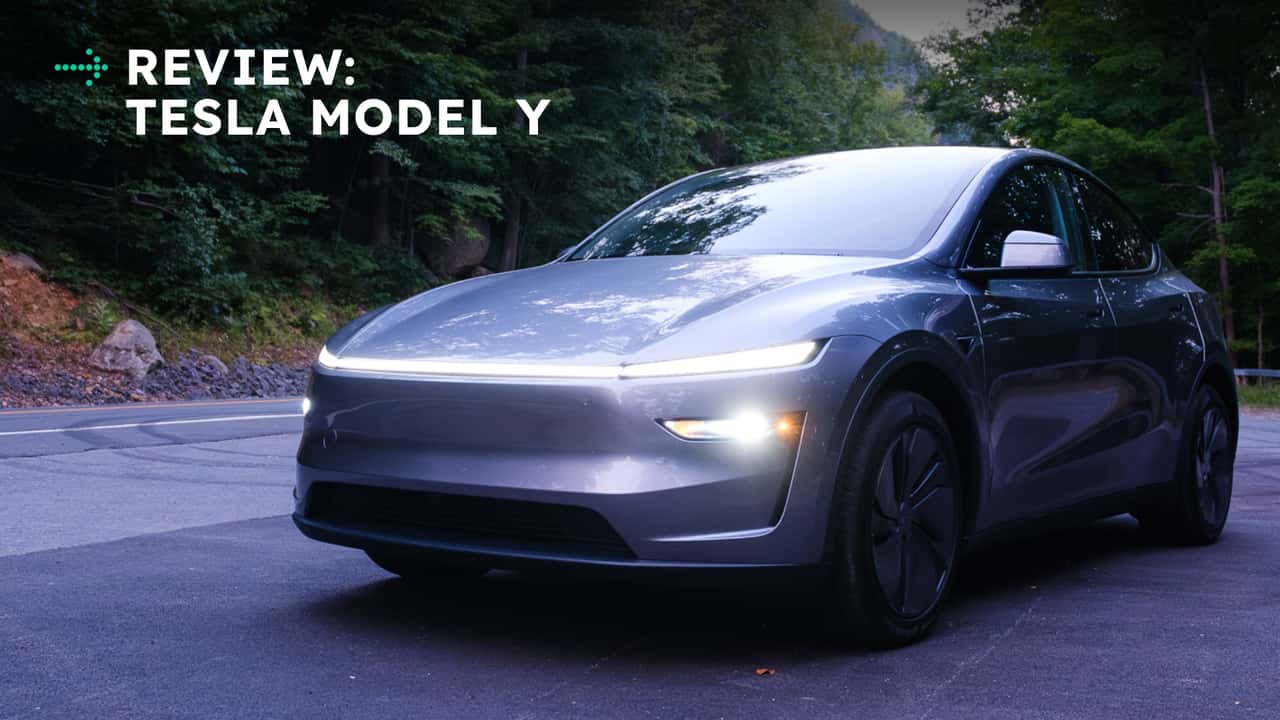
I Drove The Updated Tesla Model Y. Here’s Why It’s Still The iPhone Of Cars
It’s hard to fathom this happening today, but not so long ago, we’d collectively get really, really excited about the debut of a new iPhone.
Livestreams broke the internet, Apple Stores overflowed with launch-day crowds, and everyone obsessed over the latest features. That hype has faded—smartphones became routine, Apple’s updates more iterative than revolutionary. This new iPhone 17 may be impressive, but it’s no cultural moment.
That same evolution came to mind while I was driving the updated Tesla Model Y. If the iPhone defined modern tech, the Model Y defined modern EVs—good enough to be the world’s best-selling car in 2023 and Tesla’s biggest success.

2026 Tesla Model Y Juniper
Photo by: Patrick George
But the latest update to the Model Y no longer feels groundbreaking. It’s a better version of the same car with sharper looks, more range, a nicer interior and stronger specs.
Yet Tesla hasn’t changed the fundamentals. There’s still no ultra-fast charging, 800-volt architecture, factory bi-directional charging or flashy Cybertruck tech like steer-by-wire. It feels like the “slightly better camera” update of EVs. And that’s all before we get to certain perception issues Tesla has these days, to put it gently.
Behind the wheel, the upgrades do add up to something meaningful. The new Model Y is drastically better than before, and probably Tesla’s best car yet. And for most buyers, it may still be the best all-around EV for sale in America.
(Full Disclosure: Tesla does not provide press loaner cars to InsideEVs, so I paid to rent this 2026 Model Y on Turo from HDP Mobility. They were fantastic hosts.)
2026 Tesla Model Y Juniper
Photo by: Patrick George
2026 Tesla Model Y Juniper: Specs and Overview
2026 Tesla Model Y Long-Range AWD
EV Range
327 miles EPA-estimated
As-Tested Price
$49,000 (est.)
Base Price
$48,990
Battery
75 kWh (usable)
Drive Type
Dual-Motor AWD
Output
397 hp (est.), 375 lb-ft (est.)
Speed 0-60 MPH
4.6 seconds (est.)
Charge Time
10% – 80% in ~27 min on a Tesla Supercharger
Two Model Y versions are on sale in the U.S. as of this writing. The Long-Range Rear-Wheel-Drive version starts at $44,900 and the Long-Range All-Wheel-Drive version comes in at $48,990.
Power comes from an approximately 75-kilowatt-hour (usable) battery with 357 miles of range on the RWD car and 327 miles of range on the AWD model. Those numbers may no longer be industry-leading, but they’re certainly above-average for this class.
2026 Tesla Model Y Juniper
Photo by: Patrick George
These improvements over the old car aren’t always obvious, but they are vast. Take the new Model Y’s signature visual upgrade, the thin, horizontal matrix LED light bar upfront. It’s not just a nod to the Cybercab; it is the best adaptive high beam system I have ever tested, detecting cars and other objects on the road at night and shining “around” them so it never blinds other drivers.
Headlights like these are newly legal in North America, and as far as I’m concerned, Tesla has reset the bar for illumination with them. Speaking of bars: that full-width LED bar on the rear hatch is a neat trick. It projects its light onto a panel below it and looks pretty wild at night.
Tesla Model Y Rear Light Bar
Photo by: Patrick George
Tesla Model Y Rear Light Bar
Photo by: Patrick George
2026 Tesla Model Y Juniper
Photo by: Patrick George
Since the Model Y was never designed with the historical baggage of gas cars, it remains superb in terms of cargo space and storage. You get 29 cubic feet of space behind the second row of seats, 75.5 cubic feet of total interior space, and four cubic feet out of the deeply generous front trunk. The “frunk” on my AWD Kia EV6 can’t even hold my camera bag. Tesla trounces the competition here, including bigger EVs and any gas-powered car in this class.
Tesla Model Y Frunk
Photo by: InsideEVs
The new acoustic glass also cuts road noise and wind noise by 20% compared to the outgoing model, according to Tesla, while the thicker roof glass is far less likely to bake you in the sun like older cars do. The subtle visual tweaks also yield far better aerodynamic efficiency than before. And the sound system is better, while the sometimes-questionable build quality of older Teslas is now long gone.
Basically, if you had gripes about the old Model Y, you will have fewer of them this time.
2026 Tesla Model Y: Driving Experience
The car I rented was an AWD Model Y on 19-inch wheels. Springing for the 20-inch ones drops your range up to 24 miles, so this is the one I’d get.
2026 Tesla Model Y Juniper
Photo by: Patrick George
The Model Y’s driving dynamics have grown up. Gone is the notoriously harsh ride that made the previous car (and its sibling, the Model 3) unpleasant to be in when the pavement got even moderately rough. This is a thoroughly revised chassis and suspension design with new frequency-selective dampers and a stiffer structure overall. The result is a car that’s less punishing than it once was, and much more relaxing to put hundreds of miles on in one go.
Even in non-Performance form, the Model Y remains damn quick. While Tesla doesn’t release horsepower numbers for these cars, it does quote a zero-to-60 time of 4.6 seconds. In highway passing, it feels quicker than that, enough to surprise some mid-tier performance cars.
2026 Tesla Model Y Juniper
Photo by: Patrick George
The handling feels sharp too, owing to that revised suspension and the Model Y’s relatively compact size. It’s better in the corners than, say, a comparable non-N Hyundai Ioniq 5, and it remains hundreds of pounds lighter than other EV options. At the same time, Tesla’s steering setup is as numb as it’s ever been, but overall, it’s rather fun to drive.
That’s aided by some of the best one-pedal driving calibration in the business. You can only choose between Standard and Low regen, so don’t expect the deep customization you might get elsewhere. But in terms of smoothness, controllability and predictability, the Tesla approach is outstanding.
2026 Tesla Model Y: Interior
If you hate Tesla’s ultra-minimalist, screen-centric approach, you will probably hate this Model Y just as much as the last one, if not more.
2026 Tesla Model Y Juniper
Photo by: Patrick George
It’s not for everyone, and it does present a learning curve that even I, as a non-Tesla-owning journalist who drives every EV out there, have to adjust to. The thing is, you do get used to the two roller balls and smattering of buttons on the steering wheel, along with the screen itself—especially once you get your settings and preferences dialed in. It takes me around 20 minutes whenever I’m back in one of these cars, and then everything clicks. And unlike the Model 3, the Model Y at least still gets a physical turn-signal stalk.
2026 Model Y Interior
Photo by: Patrick George
But the headline here is that the Model Y’s cabin is vastly improved, nicer even than the updated Model 3. You get some nice synthetic leather upholstery, faux suede and fabric accents on the door cards, a dual wireless charging pad that actually works without overheating my phone and a thin LED light strip that extends across the dash to the doors.
2026 Tesla Model Y Interior
Photo by: Patrick George
All told, it just doesn’t feel as cheap as it used to, and it’s hopefully less prone to falling apart the way these interiors used to. The overall build quality is markedly better than the fleet of Cybertrucks we tested last year, too. The Model Y is dialed in, much more complete-feeling. Probably best of all, the rear seats are far less thin and hard than before. It’s no longer an Uber ride you’ll absolutely dread.
Do these improvements make the Model Y a luxury car? I don’t think so. Not the way, say, the new BMW iX3 aims to be. But it is a much nicer piece of kit for a mainstream crossover than it once was—on par with something like a Toyota RAV4, if not nicer.
2026 Tesla Model Y Juniper
Photo by: Patrick George
But the Spartan-ness can sometimes be much more frustrating. I think my week of renting the Model Y was nearly up before I got the damn screen-based air vents pointed the way I wanted.
2026 Tesla Model Y: Tech
2026 Tesla Model Y
Photo by: Patrick George
If you’re eyeing a Model Y or any other EV right now, Tesla’s tech experience may make or break your decision. It all comes down to this: how much do you want your car to be a smartphone on wheels?
Tesla’s in-house-designed operating system is fast, responsive and powerful, one of the only ones I’ve tested that feels on par with the Chinese automakers (all of whom are using Tesla’s software playbook). It’s also packed with apps you may never use, low on customization and absolutely central to the driving experience.
2026 Tesla Model Y
Photo by: Patrick George
Everything runs through the screen. The door locks. The steering wheel position. The charging door. The lighting system. The climate controls, including the heated and cooled seats and steering wheel. It all works, to be sure—but you should see if it’s something you can live with before you buy one.
2026 Tesla Model Y
Photo by: Patrick George
Where Tesla is still the gold standard, in my book, is the smartphone app. It’s deeply embedded into the Tesla experience and lets you remotely control an array of functions from charging management to locking and unlocking and even allowing access to new users. Need to plan a road trip? Do it on the app and send it to the car, complete with all the charging stops along the way. It couldn’t be easier.
2026 Tesla Model Y
Photo by: Patrick George
Plenty of automakers are doing this now, sure. My Kia EV6 does some of this stuff. But it’s maddeningly slow, far more limited and not worth the annual fees Kia wants to charge me for it. In short, Tesla is the template of a modern, software-driven connected car; outside of China, only Rivian comes close to what Tesla does. And it’s still not completely on par yet.
The other big piece of tech is, obviously, Autopilot and Full Self-Driving. I’ll share my thoughts on those in a subsequent story, but the TL;DR version is that it’s quite good hands-free on the highway and outstanding in a traffic jam, but never rises above being a gimmick when you use it in city settings like the so-called Robotaxis do. Make sure you understand how it works and what its limitations are before you try it.
2026 Tesla Model Y
Photo by: Patrick George
The tech experience can also be irksome in other ways. To “shift” into Drive or Reverse, you swipe a little tab up or down, respectively, on the screen. This can make quick three-point turns much trickier than they need to be. It is highly effective in “knowing” whether you need to go forward or backward based on the AI’s interpretation of your surroundings, but that doesn’t help you in a tight turn situation.
There’s still no 360-degree camera for parking, which feels like a major oversight for a company hinging its autonomous car dreams on cameras alone. And the entire system remains very heavily centered around FSD and automated driving assistance, since that’s being hailed as the future of Tesla beyond actual cars. As I said, good—but not for everyone.
2026 Tesla Model Y Range And Observed Efficiency
2026 Tesla Model Y Juniper
Photo by: Patrick George
I drove the Model Y in moderate summer temperatures here in upstate New York and it consistently delivered more than 330 miles of range on a full charge. I averaged a very impressive 3.95 miles per kilowatt-hour in almost 900 miles of mixed city and highway conditions, and I had moments where I was not driving slowly. That’s fantastic for an EV of this size and price class.
I’d love to re-test this Model Y in the winter to test its cold-weather efficiency, but overall, high marks in the distance department.
2026 Tesla Model Y Charging
The Model Y still uses a 400-volt EV architecture, as do all current Tesla Superchargers. You’re lucky to see, at most, 250-kilowatt charging speeds in most of your fast-charging adventures. But because the Model Y has a strong charging curve, it took roughly 27 minutes for me to go from 10-80%.
This is a reasonably quick-charging car, but Tesla’s pacing threat isn’t Toyota or General Motors; it’s BYD and Hyundai. The company may not be “behind the pack compared to the average American-market EV, but it is certainly not leading it anymore.
2026 Tesla Model Y Juniper
Photo by: Patrick George
But what the Model Y lacks in charging speed, it makes up for in charging ubiquity. Tesla Superchargers are damn near everywhere these days. They’ve even saved me a few times on road trips through places like the rural West Texas desert. And that was with an adapter, which, on a non-Tesla EV, only allows access to some Supercharger stations. Buying a Model Y means you can use all of them. Plus, they just work every time—plug and go, no smattering of apps or buggy credit card payment systems.
Ultimately, between 330 miles of juice and a charging network that’s this extensive, I find myself just not worrying about range all that much. It’s a different experience than with other EVs I drive, where I’m always running a kind of mental math about my charging situation. It’s as carefree and easy as these cars get.
2026 Tesla Model Y Pricing And Verdict
I’ve been an iPhone user since 2010. Like most people, I use it for just about everything. I also couldn’t even tell you which one it is before I had to check for this article—it’s an iPhone 15 Pro, turns out. I don’t really think about it all that much. It does what I need it to do, and I’ll go years without needing or wanting an upgrade.
It just works. And the Tesla Model Y has been so successful because it, too, just works.
2026 Tesla Model Y Juniper
Photo by: Patrick George
Go walk up to somebody with their Model Y plugged into a Supercharger. You think that driver could explain the nuances of their charging curve to you? Maybe. More than likely, it’s just that person’s car, and it all works seamlessly, and they have far fewer concerns than other EV drivers.
2026 Tesla Model Y Juniper
Photo by: Patrick George
The range gets them where they need to go, the performance outpaces any comparable gas car, and they have plenty of room for their families and all their gear. They don’t use third-party apps for route planning; They tell the car where they want to go, and the car sorts out the rest in the background. They don’t worry about whether the charging stations will work or have available stalls, because Superchargers almost always work and have available stalls.
As near as I can tell, this Model Y stickered for somewhere around $49,000, right around the average price of a new car in America these days. That’s before any EV tax credits or Tesla discounts. For all you’re getting, it’s a solid package.
2026 Tesla Model Y Juniper
Photo by: Patrick George
This is especially true when you look at the competition. A Ford Mustang Mach-E comes close, but the Model Y has a slight Supercharger access advantage. The Hyundai Ioniq 5 comes even closer with faster charging and a native Tesla-style plug, but the Model Y has far better software. The Nissan Ariya, Volkswagen ID.4 and Chevy Blazer EV just aren’t executed as well. The Lucid Gravity and Porsche Macan Electric are way more expensive. The Rivian R2 doesn’t exist yet.
You get the idea. Plenty of other EVs may now outclass the Model Y in individual areas, but Tesla’s crossover is still the all-arounder to beat.
I don’t know how long Tesla can keep this going, since its focus no longer seems to be on new and better EVs. But if Apple’s proved anything lately, it’s that iteration over revolution can be plenty successful on its own—so long as a more disruptive product comes around. Until that day arrives, the Model Y remains the benchmark.
InsideEVs Rating: Top Recommendation
Contact the author: patrick.george@insideevs.com
 See all InsideEVs.com Best EVs lists
112
Source: Patrick George
Click here to see all articles with lists of the best EVs
Share this Story

The Ford Focus Hatch Is Dead. It May Return As An EV Crossover: Report
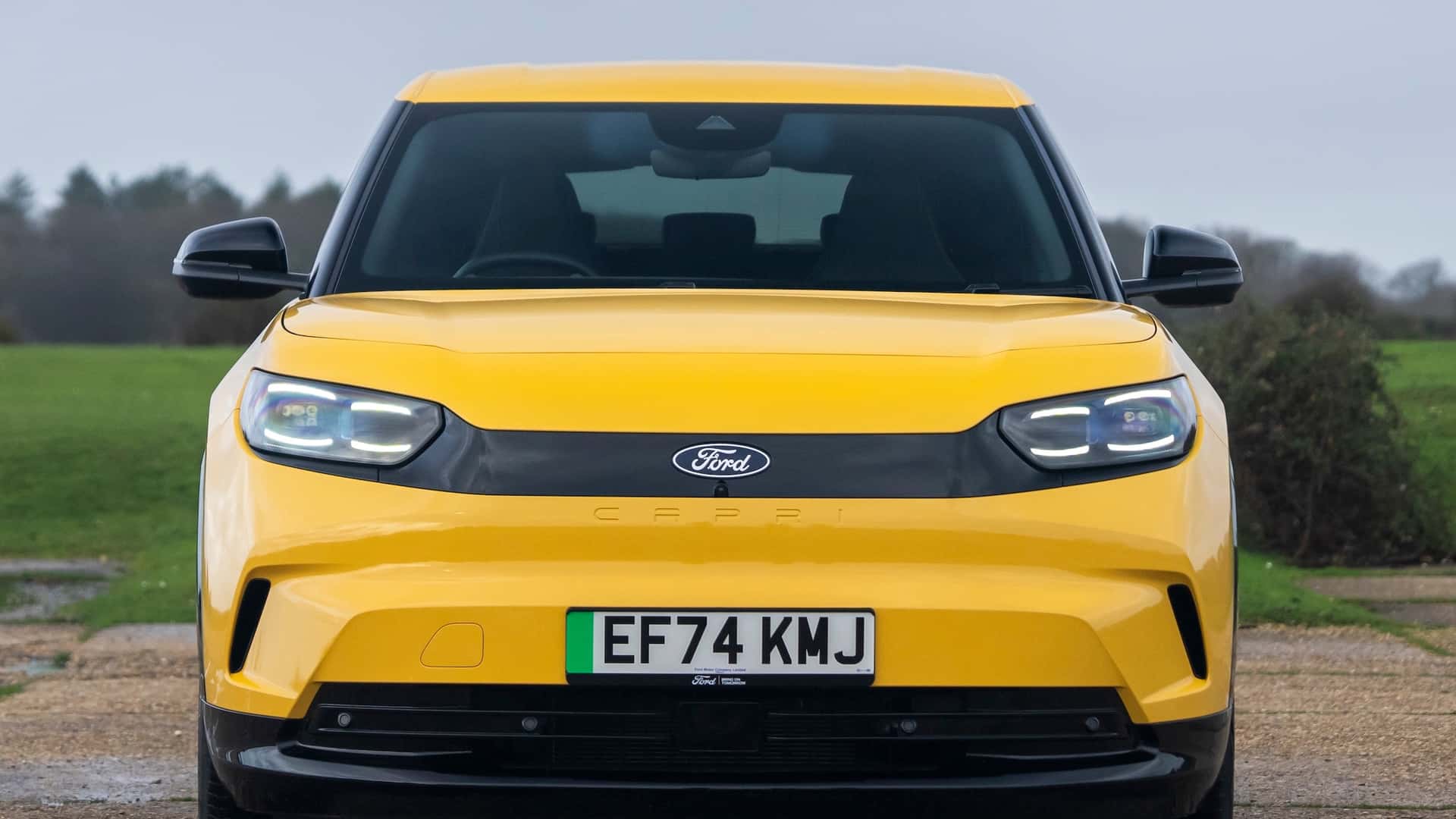
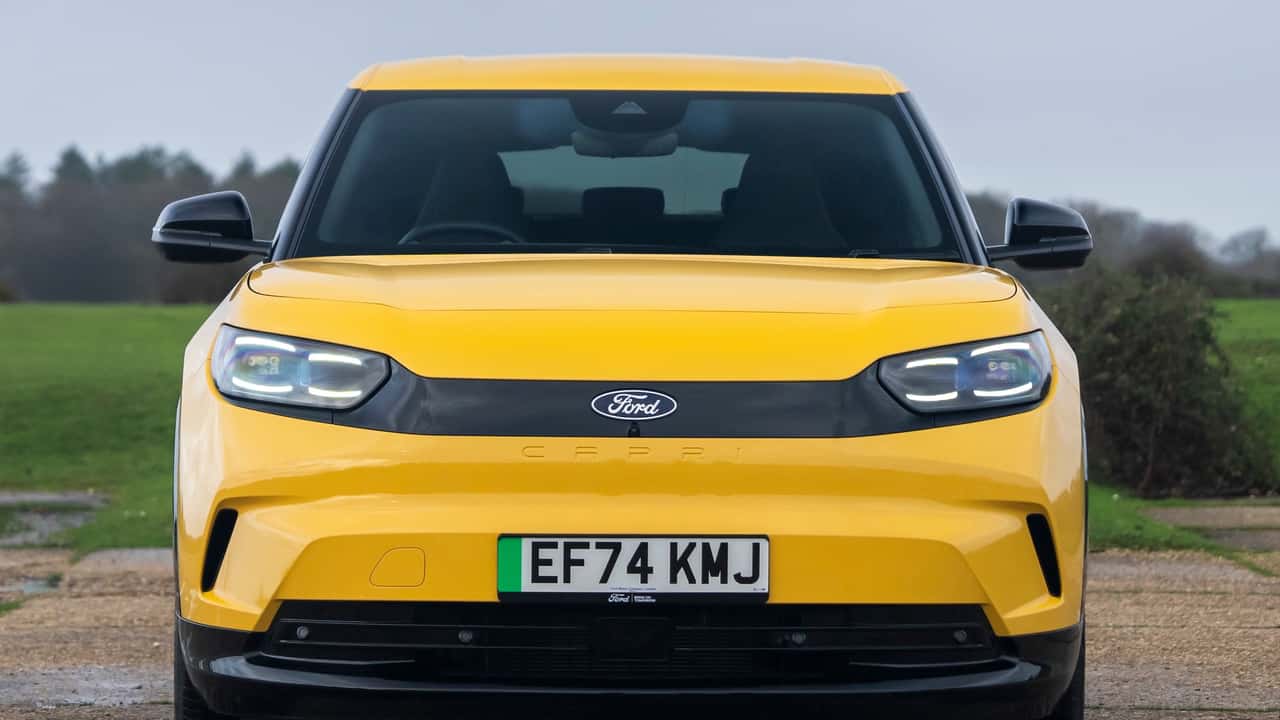
- Focus officially dies in November, but it could be replaced by a similar-sized electric and hybrid crossover.
- The new model will reportedly be built in Spain and have a focus on affordability.
- Ford may reuse the Focus nameplate, which is very familiar to European buyers and it could help sales.
The Ford Focus nameplate became synonymous with practicality, sharp looks and having fun when you go a bit too fast around a corner. But after four very successful generations, each with its own highlights, the Focus is now almost dead in Europe (production ends in November). It was once one of the best-selling small hatchbacks there, along with the Fiesta and all other non-crossover or SUV models.
However, Ford is working on a Focus-sized crossover, which will be available with electric and hybrid power, Autocar reported on Thursday, without saying where it got its information.
Ford already sells the Focus-sized Explorer EV in Europe, but that’s built on the Volkwagen MEB platform, and it probably wants to switch to its own platform. Although, considering this is a Euro-only model, it likely won’t be the recently announced Universal EV Platform, since that will first be used in vehicles coming out of the Louisville plant.
The larger Ford Capri coupe-like crossover is also built on MEB, and, like the Explorer EV, it too could be replaced someday with something built on Ford’s own underpinnings. The new crossover could be built on a derivative of its C2 platform used in the outgoing Focus, the Bronco Sport and Escape.
According to Autocar, the new Focus high-rider will roll out of the Blue Oval’s plant in Valencia, Spain, which currently builds the Kuga (known as the Escape in the U.S.). It will somewhat match the Kuga’s size and be offered with both hybrid and fully electric powertrains. Ford will sell it alongside the Kuga as a more electrified alternative to what is a more conventional combustion crossover.
The Kuga is already available with different levels of electrification all the way up to a plug-in hybrid. Ford may be able to sell the Focus crossover at a lower price point than either the Kuga or the Explorer EV, which is how this starts to make more sense.
It would essentially slot in between the Puma (available with either combustion or fully electric power) and the Explorer in terms of both size and price. However, the outlet says, it won’t resemble a typical European-designed Ford, like the Puma, and will instead look more rugged and American. So it may be closer in style to the squared-off Explorer.
There’s also good reason to believe Ford could reuse the Focus nameplate for this new multi-energy crossover. The name holds some weight with European car buyers. And reviving iconic names to reuse them for crossovers—like the Mustang, Capri and Puma—is straight out of Ford’s playbook. Doing the same with the Focus may give the model the best chance of success.
Share this Story

Yes, The Audi Concept C Looks Better In Person
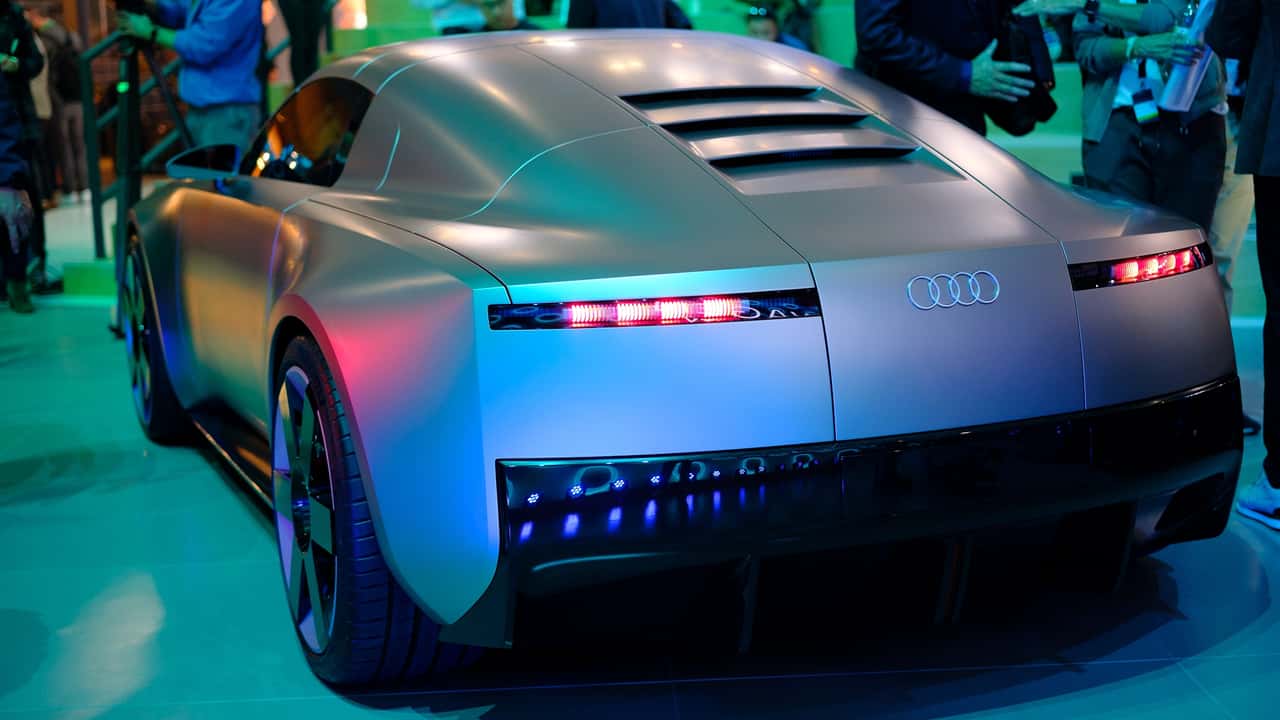
I don’t care whether your car runs on gas or electricity—it takes a lot to look good parked next to a Porsche 911 Turbo S. Yet here was Audi’s concept car on a stage at IAA Munich, grabbing plenty of attention in its own right. For anyone worried about whether the Audi Concept C was actually good-looking or not, I have great news: it is.
That’s exciting for a couple of reasons. For one, the Concept C definitely previews an upcoming electric sports car, and Audi’s own CEO revealed some exciting new details about it at Europe’s biggest automotive expo.
And it previews the future of Audi’s design language, which has gotten a bit fussy and overcooked yet somehow indistinctive in recent years. This design is meant to take Audi back to its 1990s and 2000s heyday, while drawing inspiration from its classic prewar racecars too.

Audi Concept C Live Photos
Photo by: Patrick George
The Concept C has certainly proven divisive, however. Go to any comment section on a news story (including ours) or YouTube video about this car and you’ll see plenty of criticism to go with any praise—more than a few folks have drawn unfavorable comparisons to the Jaguar Type 00. Given how that brand’s “relaunch” has gone, it may not be company any other car would want to share.
Audi Concept C Live Photos
Photo by: Patrick George
But maybe our vision plan at InsideEVs is bad, because I’m not seeing it. I really like how this thing looks.
I’ll start with my impressions after seeing the Concept C in person. Interior-wise, it’s very much still a concept, but it wouldn’t take much for the rest of this two-seater to make it to production. I especially love that horizontally vented rear treatment, although I am curious if Audi has the guts to take it to production without a rear window, Polestar-style.
Audi Concept C Live Photos
Photo by: Patrick George
And in terms of size, it’s technically a bit bigger than the last Audi R8, though it wears those dimensions well; at least visually, it seemed closer to a Nissan Z in its overall packaging. It’s low, wide and sleek, and has a kind of elegance that the R8 traded for brute force.
Audi Concept C Live Photos
Photo by: Patrick George
No wonder, then, that it’s being hailed as a successor to the Audi TT. But Audi CEO Gernot Döllner said that isn’t the case. At the show, he told Top Gear that it will not bear that name and will instead be positioned in price between the TT and the R8.
Audi Concept C Live Photos
Photo by: Patrick George
There’s a pretty big gulf between “Volkswagen Golf-based two-seat coupe” and “V10 supercar,” so that doesn’t help narrow it down much. But if it does indeed share a platform with the upcoming all-electric Porsche 718 Boxster and Cayman as everyone suspects, I’d guess it’ll start near or around the six-figure range. Döllner also said that this car is “90% there” in terms of the design that’s actually going to production, and that moving forward, Audi won’t show off cars it doesn’t intend to make.
Audi Concept C Live Photos
Photo by: Patrick George
Moreover, Döllner confirmed that the Audi electric sports car will get a “virtual gearbox” a la the Hyundai Ioniq 5 N and simulated engine sounds as well. It joins a small but growing field of performance-focused EVs that aim to replicate gas-car sensations without the emissions.
Audi Concept C Live Photos
Photo by: Patrick George
But the CEO told Top Gear the goal is to be additive: “We found that a virtual gearbox and sound really add something to driving an electric car. Even on the racetrack, I’m faster with a car with a virtual gearbox,” he said.
Audi Concept C Live Photos
Photo by: Patrick George
Sure, it’s not for everyone. But two-seat sports cars aren’t supposed to be. And we need more EV representation on that front, especially because I’ll be long dead before the Tesla Roadster finally gets here, if it ever does. I’m excited to see where Audi goes with all of this, from the car itself to how it’ll trickle down to future designs.
And hey: People are talking about it. That’s half the battle, isn’t it?
Check out the gallery below for more live photos.
32
Source: Patrick George
Contact the author: patrick.george@insideevs.com
Share this Story

The Hyundai Concept Three Is Our First Glimpse At The Upcoming Ioniq 3 EV
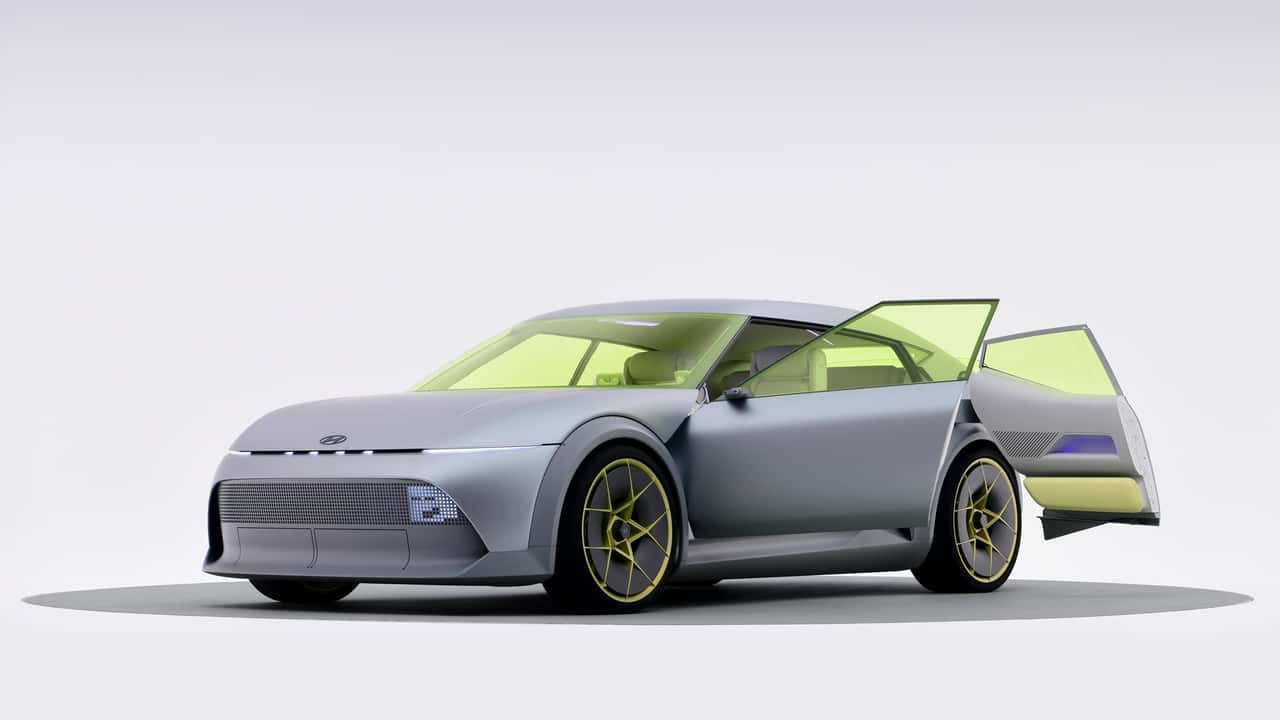
Hyundai’s latest show car fits between the Ioniq 5 and the Inster, setting its sights on the Volkswagen ID.3.

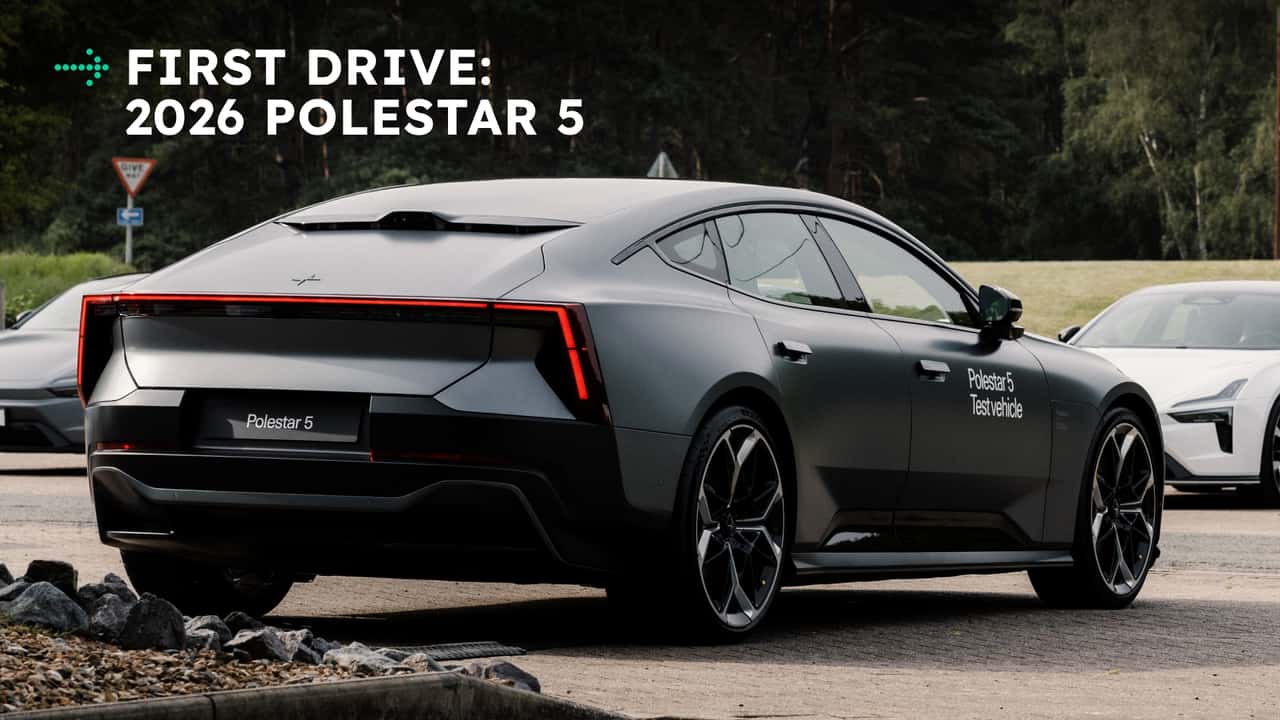
First Drive: The Polestar 5 Isn’t Just A Porsche Taycan Fighter. It’s Even More Interesting
Chris Baguley wanted to go out again. He didn’t insist on it, per se, but the rain had tapered off a while ago and the tarmac at the Millbrook Proving Ground was finally drying off. I was impressed enough with the Polestar 5 in the wet, but now the car’s chief engineer wanted me to experience it in the dry.
Who was I to say no? When a top engineer, who’s also a superb wheelman in his own right, wants to show you what his 884-horsepower electric grand tourer could do on a proper track, you shut up and get in the passenger’s seat.

2026 Polestar 5
Photo by: Polestar
We had another go, and once again, I got tunnel vision from the acceleration the Polestar 5 could put down. And when Baguely completed our lap, he flashed a big grin, as if to say: “Not bad, right?”
He didn’t have to say anything. Lots of EVs are fast, especially in a straight line. But the point Baguely was trying to make came loud and clear: few fast EVs handle quite like the Polestar 5 does. And this thing has what it takes to challenge—I’m not saying beat, but challenge—the almighty Porsche Taycan. And even the likes of the Lucid Air, while it’s at it.
If it comes to the United States, it’ll make for a fascinating match-up. But that remains a fairly ambiguous if.
(Full Disclosure: Polestar flew me to the United Kingdom last month for a preview drive of the Polestar 5. The brand covered my travel expenses.)
2026 Polestar 5
Photo by: Polestar
Polestar 5: What Is It?
The Polestar 5 makes its world premiere today at IAA Munich, Europe’s largest auto show. It’s being hailed as a big deal for the sometimes-troubled but aspirational electric luxury brand, which was spun out of Volvo and has deep ties to the rest of China’s Geely Group.
To understand why, it helps to go back to the beginning.
The Polestar 1 was a limited-run plug-in hybrid luxury coupe that packed a lot of power but looked like a two-door Volvo S90, because under the skin, it basically was one. Then came the Polestar 2, a much-beloved electric sport sedan and early Tesla Model 3-fighter, but based on the Geely Group CMA platform that underpinned the Volvo XC40 and other cars.
Next was the Polestar 3, which offers excellent performance and style, but is again a twin to another Volvo. And finally, there’s the Polestar 4: Korean-made but also on another shared Geely Group platform used by various Zeekr and Lynk & Co. models, albeit with its own spin on things.
You get the idea. Polestar may be a newer brand, but under the skin, its cars have borrowed heavily from the rest of the family.
2026 Polestar 5
Photo by: Polestar
The Polestar 5 is where that starts to change. It’s built on an entirely new architecture exclusive to Polestar, including an all-aluminum platform and body, an 800-volt electrical architecture, an internally developed rear motor and plenty of other touches to make it something truly unique.
“The most Polestar Polestar yet,” is how it was described to me. And that sort of thing is going to be key to making Polestar finally stand out from Volvo and the rest.
Polestar 5: Design And Tech
And it does stand out. It’s a low, sleek sedan, angular in the right ways and perhaps echoing designs like the original Audi A7—hardly a bad thing to my eyes. You may remember the Polestar Precept Concept; this is that, taken to production with almost everything except the rear-hinged doors, which present crash-test challenges.
2026 Polestar 5
Photo by: Polestar
On the inside, it’s roomier than a Taycan, which admittedly isn’t hard to do because that car can feel more like an electric 911 than Porsche will admit. But the amount of rear headroom inside surprised me. My 5 foot, 11-inch frame never felt cramped in it, which can happen in some EV sedans like the Mercedes-Benz EQs, and I’m not even really that tall.
How much you’ll like the interior depends on how much you like Polestar’s signature Scandinavian minimalism. (The same goes for the fact that, like most Polestar models, this one comes in Gray, Silver, The Other, Second Gray, White, Black, and who knows, down the line—Possibly Another Gray.)
Why do you people hate colors so much?
Photo by: Polestar
Now, let’s get to the obvious: there’s no rear window. But the whole design and process is more artfully done than the Polestar 4 (and as much as I like the Polestar 4, this feels like the car it’s trying to be) and in my limited drive on the track, I can’t say I minded the camera-based rearview mirror much. It all works functionally just fine, though it’s still an acquired taste.
2026 Polestar 5
Photo by: Polestar
2026 Polestar 5
Photo by: Polestar
2026 Polestar 5
Photo by: Polestar
In terms of software, you get Polestar’s standard Android Automotive operating system with Google built-in. While I didn’t get to play with it much on this drive, I’ve largely been impressed with that system’s speed, flexibility and voice recognition before, but more testing will be needed to render a final verdict.
Polestar 5: EV And Platform Specs
The Polestar 5 Performance—the top version and the one I tested—has a 112-kilowatt-hour battery (106 kWh usable) that powers dual motors and puts down the aforementioned 884 hp and 749 lb-ft of torque. You also get MagneRide adaptive dampers, bespoke Michelin performance tires and higher torsional rigidity from the platform than many gas-powered sports cars, Polestar says.
2026 Polestar 5
Photo by: Polestar
But people don’t buy EVs for track days, or for performance alone. On the electric front, the Polestar 5 seems very competitive. Range for the base Dual Motor car is rated at 670 kilometers (416 miles) on Europe’s WLTP cycle, while the more powerful Performance version can go 565 km, or 351 miles. In EPA estimates for America, that equates to 330 miles for the base car, and 300 for the Performance. The max charging speed is a very healthy 350 kilowatts, and it can charge from 10% to 80% in 22 minutes.
All in all, it’s an impressive package. And making something that wasn’t just another chip off the Geely block was the whole point.
Polestar 5 Charging Test
“There’s no group platform on which you can deliver this car,” Pete Allen, the head of Polestar UK’s R&D arm, told me. Nothing the Geely Group offered could make a car this low, or this stiff, or this light, so Polestar went out and made it alone. And the company won’t be watering it down later. “This is a no-compromise platform,” Allen said. “It’s only there to do sports, GT cars. There’s no plan to make an SUV off this platform.”
Check out the aluminum on that hood underside.
Photo by: Polestar
Allen is British. So is Baguley, the lead dynamics engineer. So were a bunch of other folks who worked on the Polestar 5. The car drives like it was made by a bunch of people who’ve worked at places like Lotus and McLaren, because it was.
I suppose this makes sense. If you want AI in a car that opens your trunk when you ask it to, call up a Chinese automaker. If you want to make a car that is God’s gift to handling, call some Brits.
2026 Polestar 5
Photo by: Polestar
Polestar 5: Track Tested
For all those aluminum weight savings, the Polestar 5 still comes in at a beefy 5,518 pounds; a battery that size is heavy, and there’s no way around that. Beefier than a Taycan, for sure. But this platform affords an agility that belies its weight. Out on the Millbrook Proving Ground track—where prototype McLarens and Morgans can be seen alongside British military vehicles, hence why only Polestar was allowed to take photos—the Polestar 5 proved itself to be one of the best-handling EVs I’ve ever driven. Maybe even the best, although it’ll take more data to determine that for real.
2026 Polestar 5
Photo by: Polestar
The sedan’s steering is tight and direct. Porsche has it beaten on feel, but the 5 feels nimbler and smaller than it is. The ride quality still errs on the side of harsh, which could change if it comes to the U.S., but it’s tight and direct and handles a two-mile high-speed bank with as much confidence as it does a set of winding, off-camber blind curves. Baguley made better work of it than I could, but even a semi-skilled track driver like myself could get a lot out of it, and then some.
It’s not just a handler, either. It’s fast. Crushingly so. I did two hard launches on a straight and managed a zero to 60 mph run in 2.7 seconds, in the wet, which is considerably better than Polestar’s quoted 3.1-second time. And every launch kind of sucked the blood back in my eyes, warping my sense of reality a bit. Even by EV standards, it’s a beast. I managed to get it up to 155 mph on Millbrook’s back straight, tying it with a Cadillac CTS-V at Circuit of the Americas for the fastest I’ve driven any car on any road.
2026 Polestar 5
Photo by: Polestar
Above all, the Polestar 5’s notable for the analog vibe it has. There are surprisingly few hold-my-hand gizmos for a high-tech EV grand tourer. It doesn’t have active anti-roll-bars, or torque vectoring or an air suspension—all conscious choices, the engineers said, to make something that felt approachable and rewarding to driving enthusiasts.
Polestar 5: Early Verdict
But as much as I liked this thing, even I’ll admit it’s a tricky sell. Polestar could use some wins lately, and what the Polestar 5 is—an expensive halo car—can’t make that happen alone. It’s targeting Porsche with a lot of the performance capability, but almost none of the brand cachet.
2026 Polestar 5
Photo by: Polestar
The prices reflect its ambition. The base Dual Motor Polestar 5 will start at 119,900 Euro, or about $140,000, while the Polestar 5 Performance I tested is 142,900 Euro, or $167,000 at current exchange rates. That’s not what it would cost stateside—exchange rates, tax differences and tariffs mean you can’t simply convert one price to another—but it won’t be cheap.
Then there’s the fact that I’m left wondering if it can come here at all: It’s made in China, at a new sustainability-focused plant in Chongqing. Engineers said it’s borderline impossible to move the tooling for such a bespoke platform to another location, so if it’s to come to America, it would face an additional 100% tariff.
“As with previous vehicles, we are taking a staggered approach to the launch,” a Polestar official told me. “The initial launch locations for Polestar 5 will include 24 of our 28 active markets and availability for customers in the U.S. will be announced at a later date.”
75
Source: Polestar
I’ll take that as a maybe. But I hope it does. The Polestar 5 won’t be for everybody, but it’s as genuine an enthusiast car as EVs get—the kind of car where one gearhead sees it and nods to the other gearhead behind the wheel. If you know, you know. And if it previews more interesting adventures yet to come from Polestar, I’m here for it.
Contact the author: patrick.george@insideevs.com
Click here to see all articles with lists of the best EVs
Share this Story