
Author: EVAI

Rolls-Royce restomod takes classic luxury electric
 A U.K.-based company plans to offer electric conversions of classic Rolls-Royce luxury cars starting in Spring 2026. Evice recently unveiled a prototype of its conversion package as a first step toward the planned commercial launch. Called the XP1, it’s a modified Rolls-Royce Silver Shadow sedan, but Evice aims to offer conversions of the Corniche…

Why the Nissan GT-R is known as Godzilla
 The Nissan GT-R earned its nickname of Godzilla The nickname was given to the R32 GT-R by Wheels magazine in 1989 The Australian Touring Car Championship series changed rules in 1993 effectively banning the GT-R from competing U.S. car enthusiasts have embraced the nickname “Godzilla” for the Nissan GT-R, but the moniker originated in Australia…

Study: EV battery material supply challenges loom by 2030
- EV sales are predicted to increase sixfold by 2030
- Demand for EVs and battery materials, could account for 95% of lithium supply
- Reuse, recycling, and alternative chemistries could take pressure off supply chains
Increased global demand for electric vehicles could tax supplies of raw materials by the end of the decade, according to new analysis from McKinsey & Company.
The firm estimates that EV sales will increase sixfold, from approximately 4.5 million vehicles globally in 2021 28 million in 2030. But analysts believe producers of raw materials may have trouble keeping up with this increased demand.
For example, while McKinsey anticipates increases in lithium supply from the widespread adoption of direct-extraction technology in mining, that will be in parallel with an increase in demand from battery suppliers. They account for 80% of global lithium use today but that could grow to 95% by 2030, McKinsey estimates.
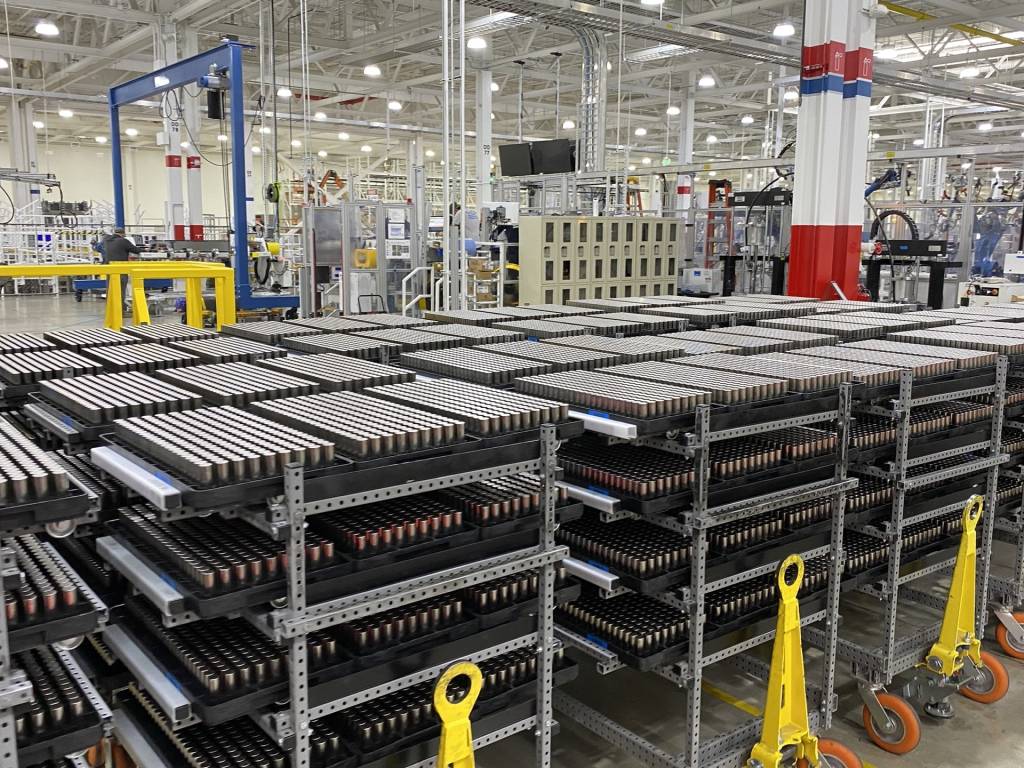
Stack of Rivian battery cells
If demand for NMC-chemistry EV batteries continues to grow, as McKinsey expects, that could also potentially lead to a shortage of nickel despite anticipated increases in mining of that metal as well. in this case, the battery industry competes against the steel industry (which uses nickel to make stainless steel), with both sectors expected to consume more nickel through the end of the decade, McKinsey notes.
That’s assuming NMC continues as the dominant chemistry. McKinsey acknowledges increased interest in LFP chemistry, and notes that an uptick in LFP battery cell production could change the supply scenario.
So could cultivation of additional sources of raw materials as part of efforts by the European Union and U.S. to increase domestic battery production. Although the latter’s policies could be changed by the incoming Trump Administration, throwing away what could be a cost advantage over China on battery production.
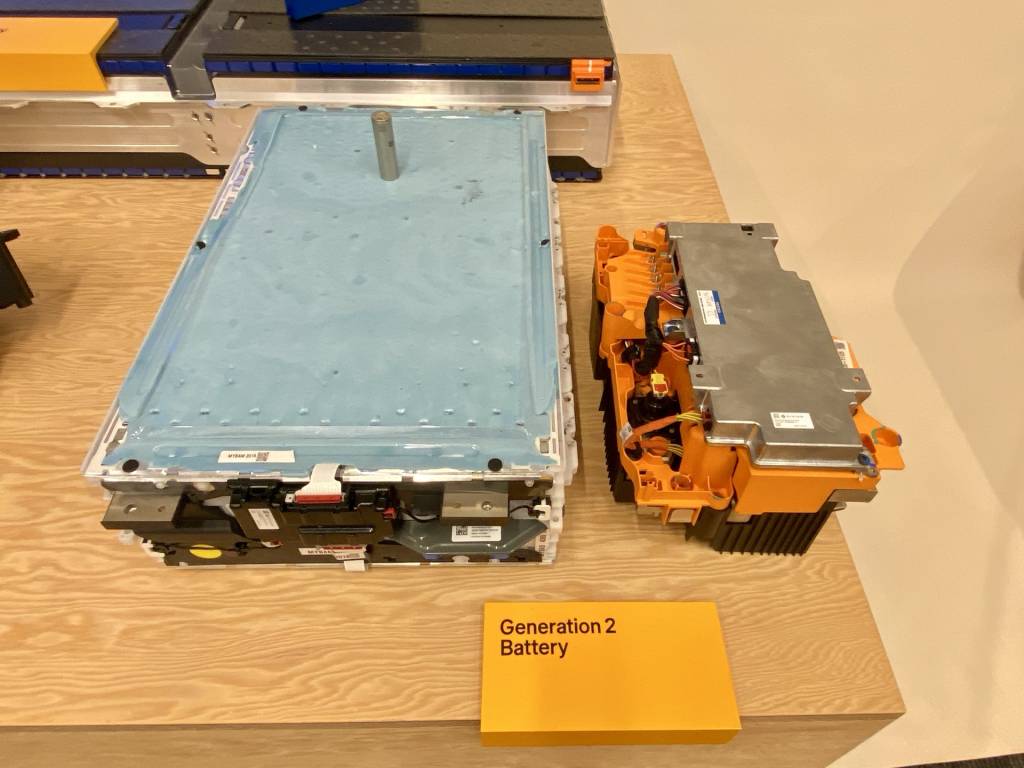
Rivian Gen 2 battery pack
Several companies are also looking at reuse and recycling of battery materials, as well as further alternative chemistries beyond LFP, that could come into play at a small scale before the end of the decade, potentially taking some pressure off the main raw-material supply.
Analysis that paints a positive picture of battery raw-material demand—and perhaps those seeking investment—might not surprise those familiar with McKinsey’s work. Goldman Sachs, on the other hand, reported in November that EV battery prices could drop 50% by 2026 in part due to decreasing prices for raw materials like lithium and cobalt. So even among some big names in analysis and forecasting, there are some very different ideas of what path the future might take.

Free NACS adapters soon enabling Supercharger access for Hyundai EVs
- Complimentary NACS adapter will allow Supercharger access to CCS EVs
- Details coming early in 2025; Genesis also participating
- 2025 Ioniq 5 has NACS port, needs opposite adapter from CCS connector for max rate
Hyundai on Monday provided more information about when it will start providing adapters good for charging its EVs at Tesla Superchargers—and which Hyundai EVs are eligible for a free adapter.
Drivers will be able to request a complimentary adapter, shipping included, starting in the first quarter of 2025, Hyundai said, with “details, instructions, and terms and conditions” all yet to be revealed.
Those who own or lease a Hyundai EV by January 31, 2025—and currently have the vehicle—will be eligible to receive the NACS adapter.
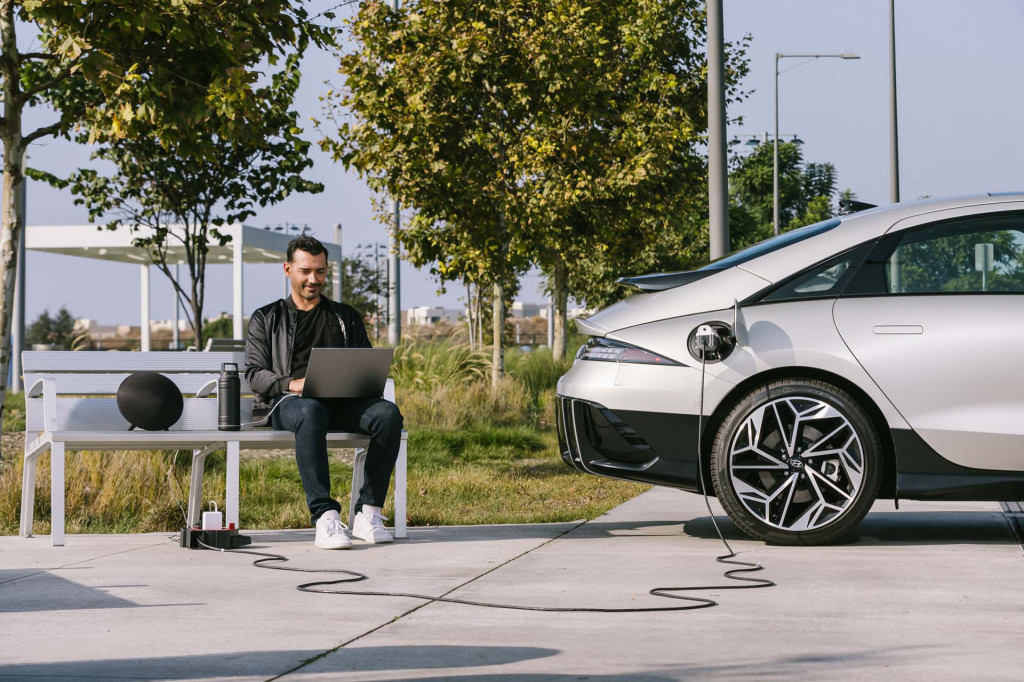
2023 Hyundai Ioniq 6
Especially of note is that Hyundai isn’t picking and choosing on eligibility; it’s essentially offering drivers of all of its U.S.-market EVs the adapter. Here’s the eligibility list:
Hyundai Kona Electric (model year 2018-2025)
Hyundai Ioniq Electric (MY 2017-2022)
Hyundai Ioniq 5 (MY 2022-2024)
Hyundai Ioniq 5 N (MY 2025)
Hyundai Ioniq 6 (MY 2023-2025)
Hyundai’s Genesis luxury brand is also included in the program, it said, with details set to be revealed in early 2025.
It’s shaping up to be quite different than Hyundai’s Kia corporate cousin, which is only offering a NACS-to-CCS adapter only for EV6 and EV9 models delivered after September 4, 2024—just to the EV6 from the 2024 model year or the EV9 from the 2024 or 2025 model years. It’s skipping Niro EV buyers entirely in this and it’s not yet clear of the retail price of them to earlier buyers of models including the EV6.
2025 Hyundai Ioniq 5
The fast-charge adapter dance: NACS-to-CCS, CCS-to-NACS
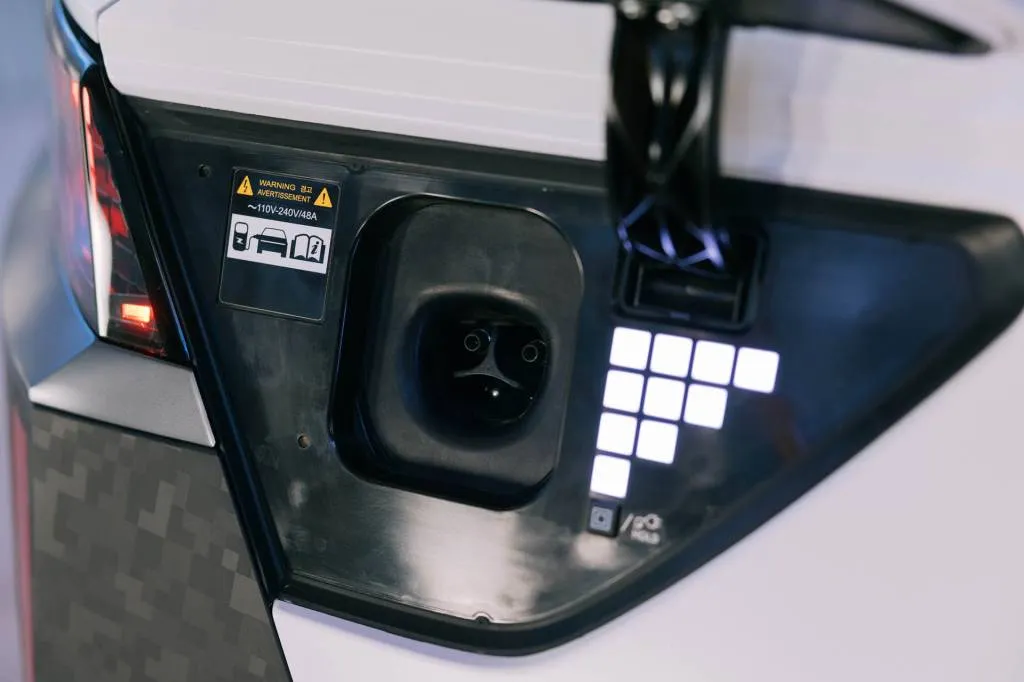
Kia, Hyundai, and Genesis also face an adapter issue in the other direction. Most of the 2025 Hyundai Ioniq 5 lineup gets a native NACS port, and it’s the first mass-market, non-Tesla vehicle to do so. The only exception in that lineup is the Ioniq 5 N, which remains built in South Korea for at least this model year. And Hyundai has already confirmed that when it’s introduced later this year, the 2026 Hyundai Ioniq 9 will also have a NACS port, not CCS.
The 2025 Kia EV6, which is built on the same 800-volt E-GMP underpinnings, will also get a bigger battery pack for more range, plus a native NACS port and U.S. assembly. And the Alabama-made 2026 Genesis Electrified GV70 also gets a range boost and NACS port.
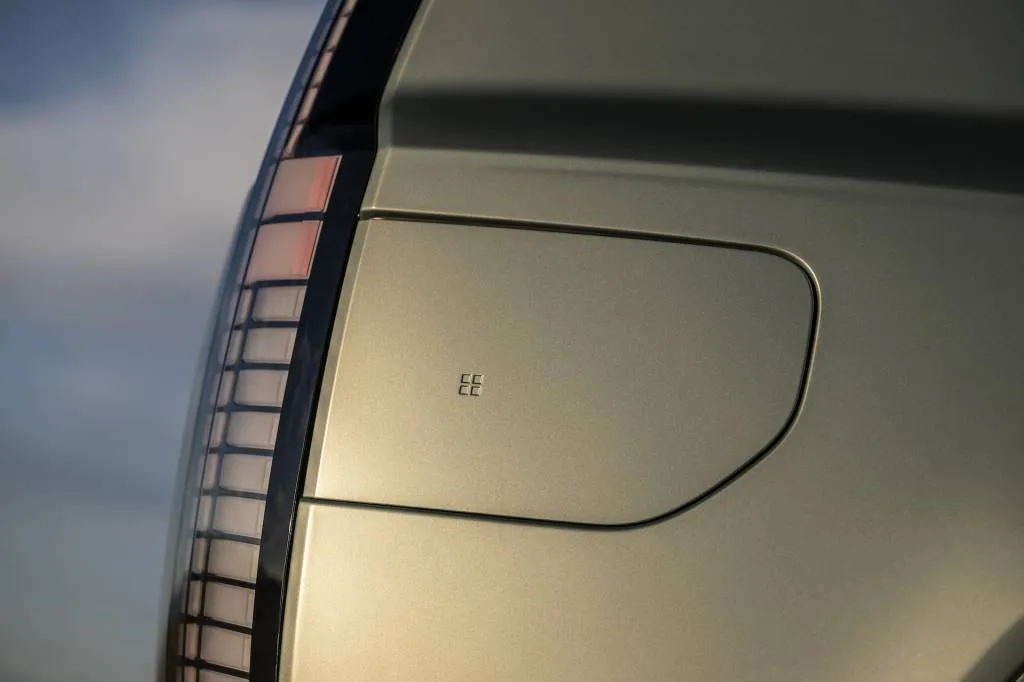
2026 Hyundai Ioniq 9
As Hyundai has made clear, though, the Ioniq 5 and Ioniq 9 will charge slower with NACS on the Tesla Supercharger network than with their CCS adapter, which is needed to tap into the Ioniq 5’s maximum rate and 20-minute 10-80% fast-charging stops. That’s not because of the vehicles but because of the Supercharger network, which is finally due to get upgraded V4 Cabinets in 2025 that will allow full-rate charging of 800-volt EVs like the Cybertruck and these from Hyundai.
So for a time we all may be juggling a lot of adapters—all for the sake of consolidating on one, eventually.

2025 Cadillac Lyriq
 What kind of vehicle is the 2025 Cadillac Lyriq? What does it compare to? The 2025 Cadillac Lyriq is a luxury EV with an SUV-ish body. Compare it to the Audi Q8 E-Tron, Mercedes-Benz EQE SUV, and Tesla Model X. Is the 2025 Cadillac Lyriq a good SUV? Absolutely, and in many ways it is the brand’s best overall model. It scores highly for its…

McLaren 765LT recalled due to rear window detaching
 McLaren has issued a recall on its hardcore 765LT supercar due to the rear window potentially detaching. The recall covers examples of the 765LT coupe from the 2021 model year, and affects a total of 163 cars in the U.S. According to the recall notice published by the NHTSA on Nov. 28 (recall campaign number 24V901000), insufficient adhesive…

2025 Kia Sportage
 What kind of vehicle is the 2025 Kia Sportage? What does it compare to? The 2025 Kia Sportage is a compact SUV that compares well to the Toyota RAV4 and Mazda CX-50, not to mention the Honda CR-V and Hyundai Tucson. Is the 2025 Kia Sportage a good SUV? It’s a great overall choice, particularly when fitted with the refined, reasonably quick…

Feder: The Mercedes-Benz S-Class makes time stand still
 I’d been trudging up to the Alps chalet, my feet stopped in their snowy tracks. A glimmering gold W126 Mercedes-Benz S-Class sat on winter tires, with chains on the rears. It looked perfect. Instantly I was transported to a garage in Fargo, N.D., that belonged to my grandparents, Grandpa and Nonnie as I called them. It was like…an out…

2025 Lincoln Aviator
 What kind of vehicle is the 2025 Lincoln Aviator? What does it compare to? The Lincoln Aviator three-row crossover SUV slots between the smaller Nautilus and the full-size Navigator. Related to the Ford Explorer but with a more refined cabin, a more advanced suspension, and a more powerful standard powertrain, the Aviator’s rivals range from…

Here’s why the first non-Tesla EV with a NACS port charges slower with it
- 2025 Hyundai Ioniq 5 is first with native NACS port
- NACS Hyundai EVs might charge faster—for now—with a CCS adapter
- Most Tesla Superchargers can’t charge at 800v at peak rates
- V4 cabinets rolling out in 2025 will finally match CCS
The 2025 Hyundai Ioniq 5, which ships to U.S. dealerships before the end of the year, is the first mass-market, non-Tesla vehicle that comes standard with the Tesla-based NACS charge port, as part of a standard now also known as J3400.
For Hyundai, it’s the first formal step in a shift away from the Combined Charging System (CCS) port that the Ioniq 5 and most non-Tesla modern EVs have had until now.
The NACS rollout itself is also a bit different for Hyundai. While other brands are rolling out adapters for Tesla connectors before delivering vehicles with the port, Hyundai will deliver adapters for CCS fast-charging connectors after its new vehicles start getting a native NACS port.
In the meantime, Hyundai will be getting customers what they need to access the Tesla Supercharger network—in the form of a NACS adapter for CCS vehicles, that it announced Monday would be provided for free to owners of its full range of EVs from the current and previous model years, including the Kona Electric, Ioniq Electric, Ioniq 5, and Ioniq 6.
Now that full NACS specs on Tesla’s current Supercharger hardware have been revealed, it’s much easier to understand why Hyundai has done it in this order. For the time being, the Ioniq 5 charges significantly faster with its included CCS adapter than via NACS.
With the larger 84-kwh battery pack that will be included for much of the 2025 Ioniq 5 lineup (up from 77.4 kwh for 2024), the EV charges from 10-80% in just 20 minutes on a CCS connector, via its adapter. Meanwhile, it takes 30 minutes (50% longer) when a Tesla Supercharger NACS connector is plugged directly into the charge port, with no adapter of course.
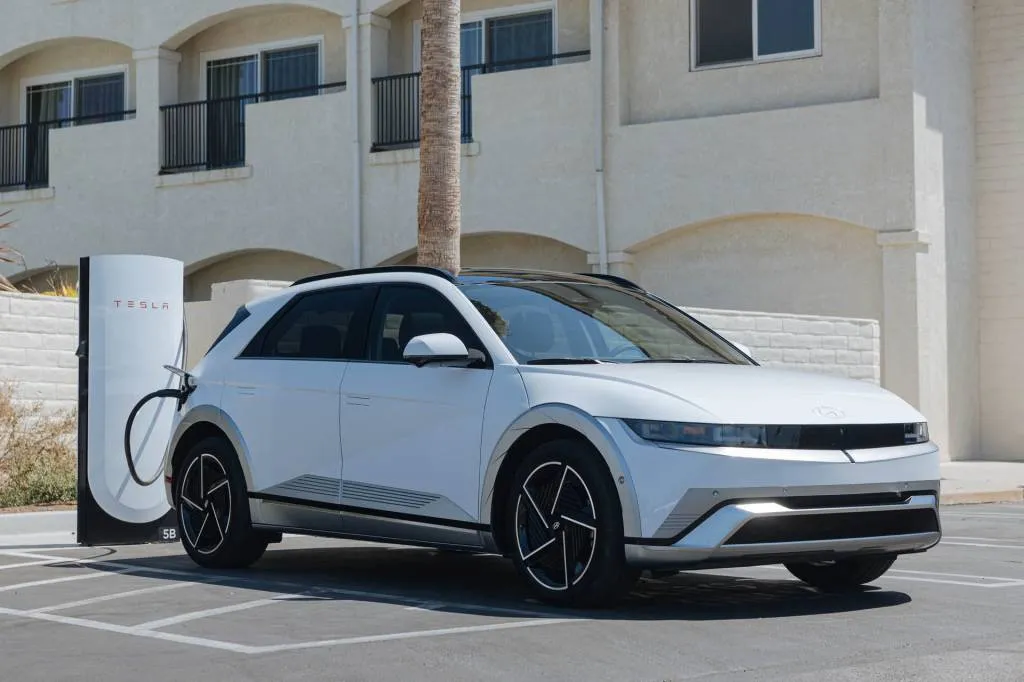
2025 Hyundai Ioniq 5
Adapter needed for the fastest 2025 Ioniq 5 charge
The reason for that is simple: Tesla Superchargers, up until now, aren’t able to deliver the voltage that Hyundai’s EVs built on its 800-volt E-GMP platform can accept. That’s due to change over the next few years, which we’ll get to, but in the meantime the “legacy” CCS chargers do it faster.
Hyundai confirmed to Green Car Reports that 257 kw is the new peak charge rate for its 84-kwh battery pack (versus 235 kw for the former 77.4-kwh pack on Long Range versions), with the adapter and a 350-kw CCS connector. It specifically mentioned Electrify America as an example for where this maximum would be possible, and said there would be no fringe limitations of the adapter that might slow the charge rate beyond what a CCS connector would otherwise deliver.
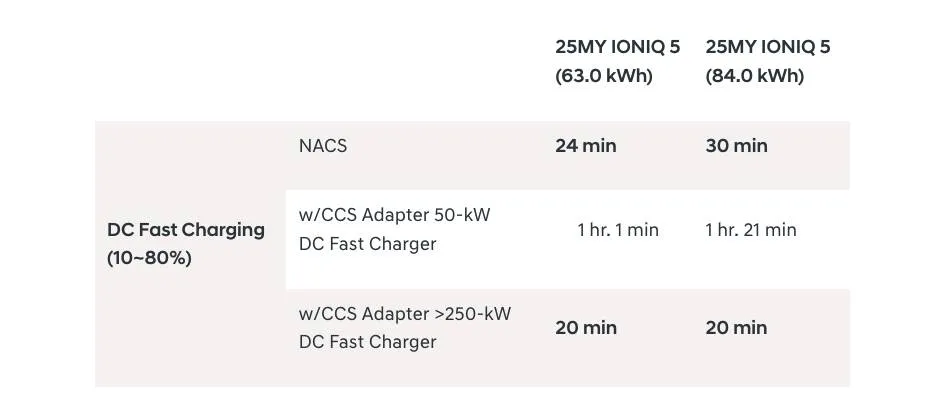
Hyundai Ioniq 5 charge times for NACS (Supercharger) vs. CCS
With the smaller 63-kwh battery pack included in the Standard Range models (up from 58 kwh for 2024), there’s not as much of a disparity, and official 10-80% times land at 20 minutes and 24 minutes with CCS/adapter and via Tesla Supercharger V3 hardware, respectively.
Level 2 AC charging rates aren’t affected by the adapter, and the Ioniq 5’s 10.9-kw onboard charger allows a 10-100% charge in as little as 7.3 hours with the 84-kwh battery pack or 5.7 hours with the 63-kwh pack.
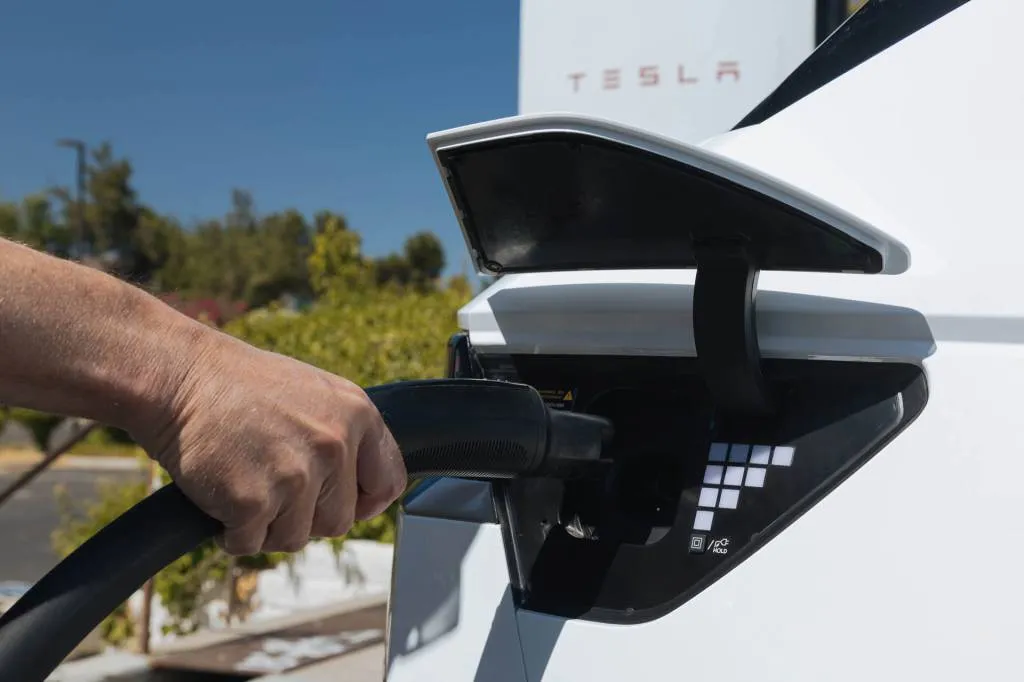
2025 Hyundai Ioniq 5
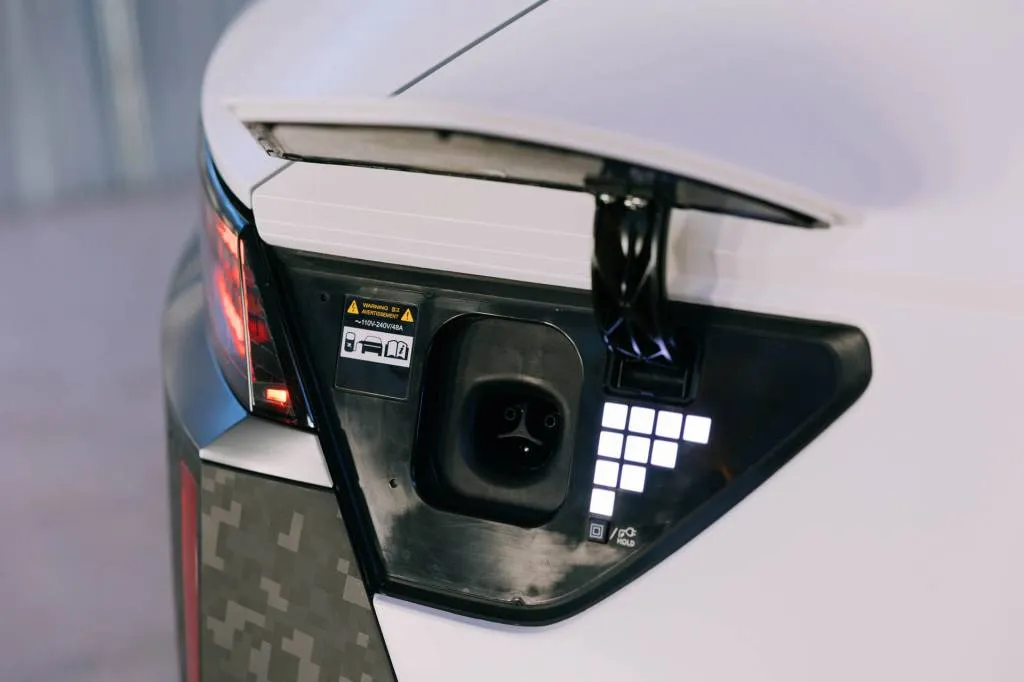
2025 Hyundai Ioniq 5
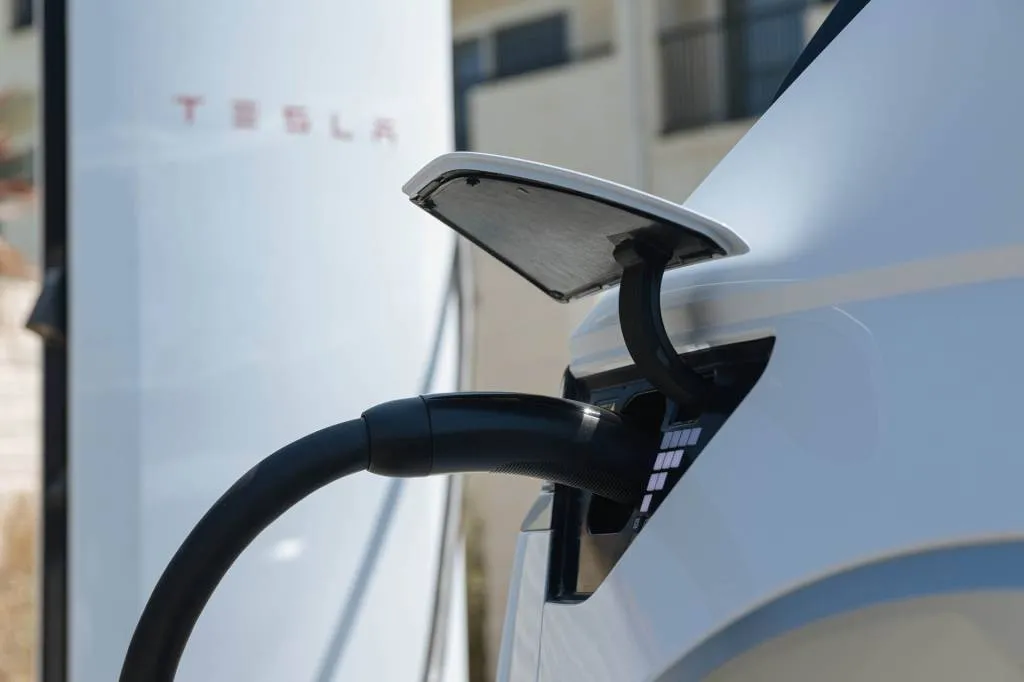
2025 Hyundai Ioniq 5
Speediest Ioniq 9 charge rate also relies on adapter
The automaker has released a similar comparison for its upcoming Ioniq 9 electric SUV, which will have a much larger 110.3-kwh battery pack and ship initially with the NACS port. With it and a CCS adapter the Ioniq 9 will charge from 10-80% in 24 minutes (with a peak of 233 kw), whereas it will take 38 minutes natively on NACS, using Tesla Supercharger V3 hardware.
So in an ideal situation—certainly harder to come by with CCS than with Supercharger hardware—a CCS adapter could save 10-14 minutes with Hyundai’s 800-volt E-GMP EVs.
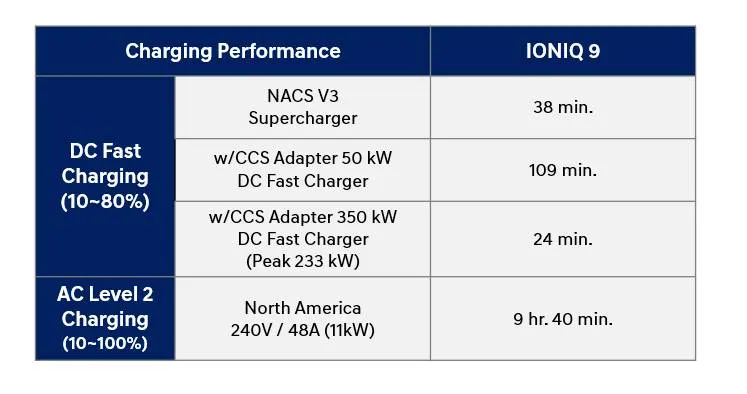
Hyundai Ioniq 9 charge times for NACS (Supercharger) vs. CCS
In the coming months, the whole Ioniq 5 lineup is getting the NACS port—except for the high-performance Ioniq 5 N, which will stay Korean-built for now and keep offering its CCS port for this year, while the rest of the Ioniq 5 lineup is shifting to U.S. production. Hyundai has already announced that all U.S.-market Ioniq 5 models are due to be sourced from Georgia eventually.
It hasn’t yet said exactly when the NACS port will arrive on Ioniq 6 electric sedans, but that’s also due for production at Hyundai’s so-called Metaplant America in Georgia.
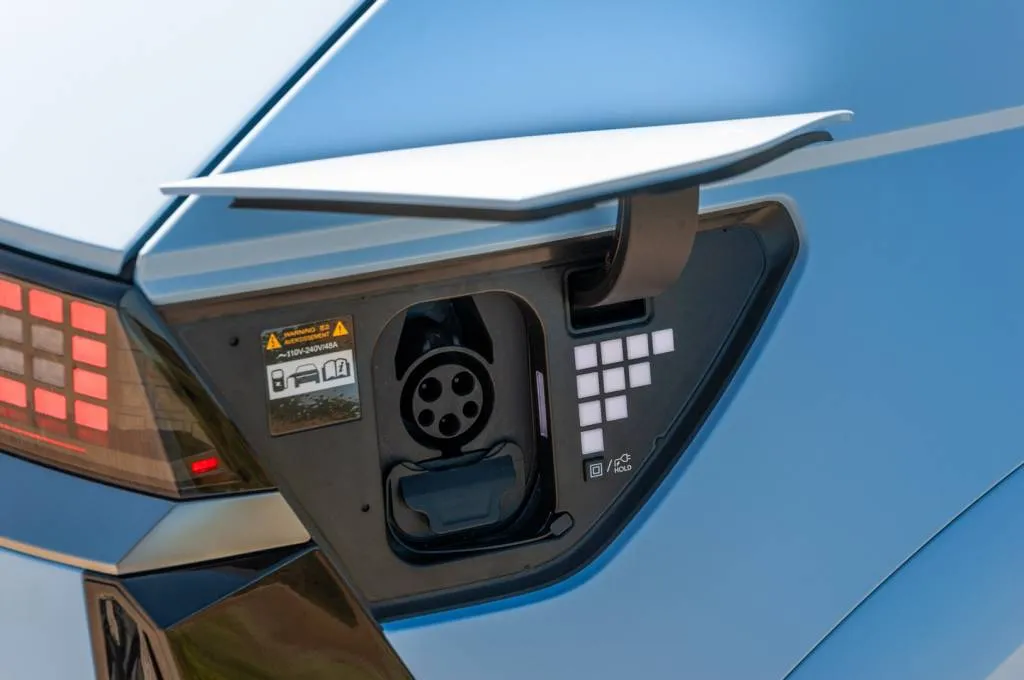
2025 Hyundai Ioniq 5 N
Hyundai is using its own charge ports and adapters, rather than buying them from Tesla, and it’s said that this will enable the full range of bidirectional capabilities of its latest E-GMP electric vehicles, including V2L to power accessories, camping gear, and more.
Supercharger access will come in the first quarter of 2025, but it will require that drivers initiate charging through the Tesla app initially rather than using Plug & Charge via Hyundai’s app and interface.
Superchargers won’t lag for long
Tesla announced its V4 Supercharger hardware in 2022, and it made some first installations in 2023, but there’s been no widespread rollout as of yet. And although a number of locations have included the V4 post, including longer charge cords and upgraded connectors, the hardware behind it remained missing.
On November 18, Tesla finally confirmed that the full V4 is on the way soon, with sites backed by actual V4 cabinets in permitting now and due to be opened in 2025.
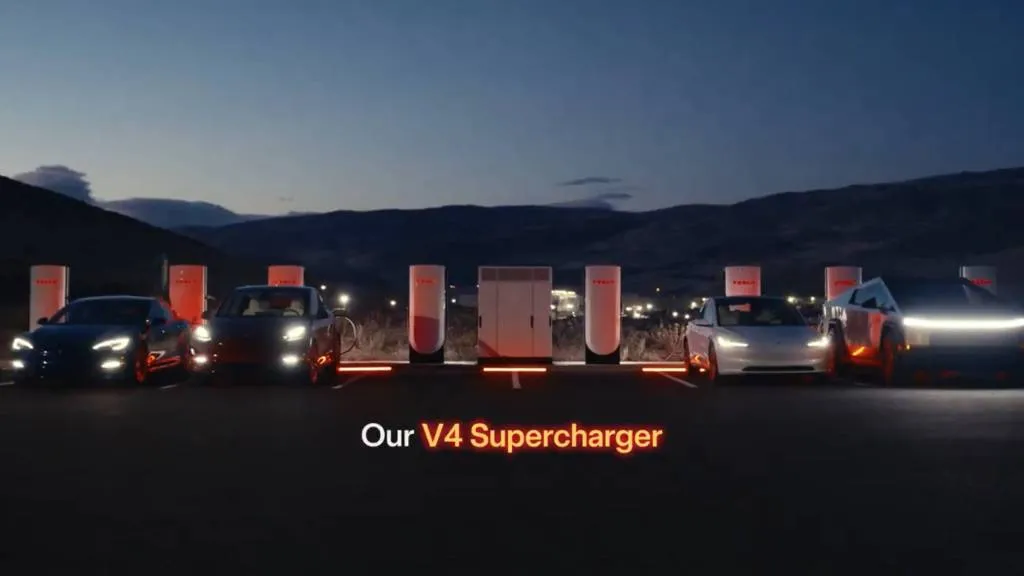
Tesla Supercharger V4 Cabinet upgrade set for 2025 (screencap)
Each V4 cabinet powers eight charging posts, versus four posts each for V3 cabinets, which Tesla notes means a reduction in the footprint of the hardware and the overall complexity—a factor that means more sites will come online faster.
Tesla says that the V4 cabinet will be able to deliver up to 500 kw for cars and up to 1.2 megawatts for the Semi. It hasn’t said where exactly peak power will be for the Cybertruck, but it notes that this change will mean 30% faster charging for that model. That roughly corresponds to the peak power of 327 kw that multiple sources have reported for the Cybertruck when using CCS adapters (and tapping into its full 800-volt charging potential).
Charge rates for Tesla’s own Model 3 and Model Y, by the way, won’t change.
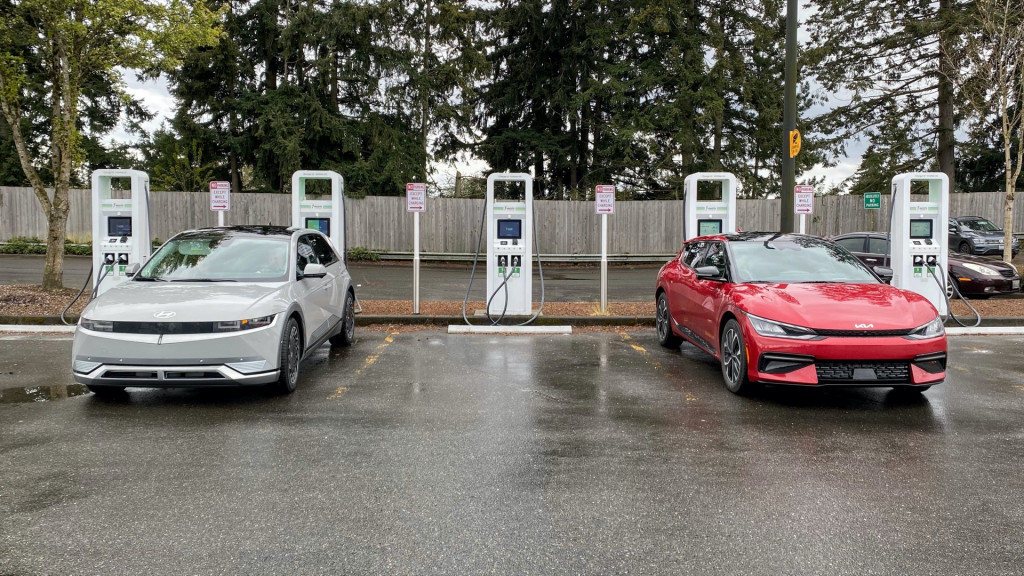
2022 Hyundai Ioniq 5 and Kia EV6 fast-charging – Lacey, WA
What it means: Look for the most convenient charger
In all, for Hyundai EVs, a time difference of 10-14 minutes likely won’t matter much in the scope of things—especially considering that Tesla Supercharger stations tend to be more reliable and tend to offer locations that are sometimes better-located along typical road-trip routes.
That said, it’s pretty close to the difference that Hyundai owners face in whether to choose a 150-kw CCS connector directly on the way, or go slightly off-route for a 350-kw connector. As we’ve pointed out before, the vast majority of the time, 150-kw connectors will provide such a speedy charge on EVs like the Ioniq 5 or Ioniq 6, with relatively lean battery packs and long range from them, that you shouldn’t seek out 350-kw connectors. Just go with the more convenient location.
But soon, with Tesla Supercharger cabinets and connectors at last able to deliver the voltage that EVs like the Ioniq 5, Ioniq 6, and Ioniq 9 can all take advantage of, finding a more convenient Tesla connector may no longer mean a longer charging stop. And with a push of infrastructure coming from Ionna, which is supported by Hyundai as well as six other automakers, there’ll be no shortage of high-power, high-voltage connectors, no matter which standard.