
Author: EVAI

Kia EV9 recalled due to missing seat bolts
Kia is recalling 22,883 EV9 electric SUVs because they may be missing mounting bolts for their second- and third row-seats.
The EV9 arrived in the U.S. as a 2024 model and is currently being sold here as a 2025 model. The recall includes a mix of vehicles from both model years that may have left the factory with missing seat bolts due to an error by an assembly-line worker, Kia told the NHTSA. All of the affected vehicles were assembled in South Korea; Kia began building EV9s at its U.S. plant in June, but has only produced small numbers of the SUVs there.
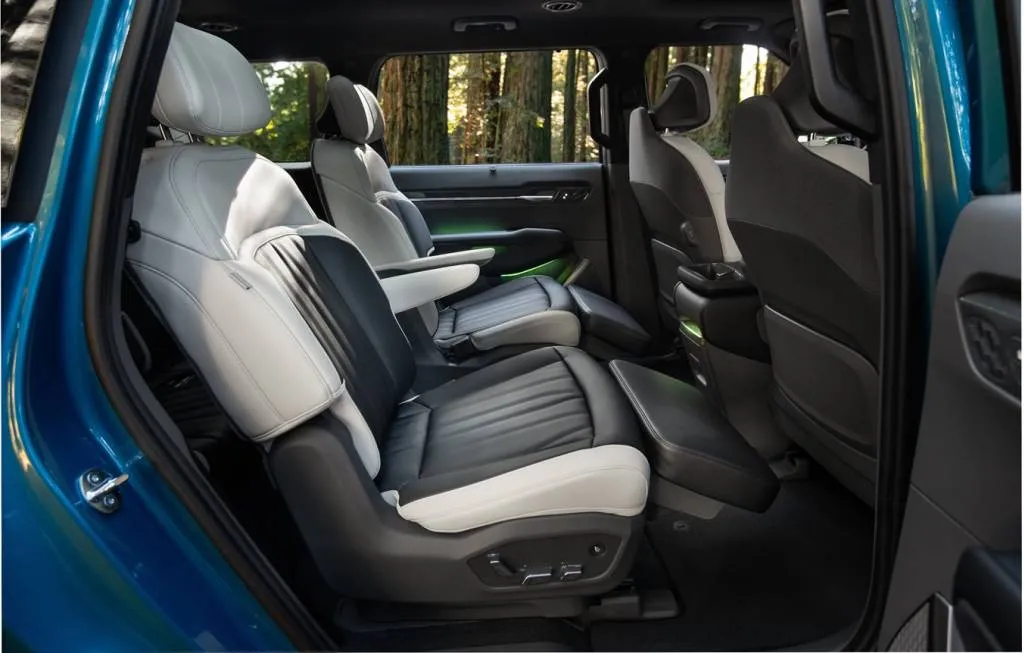
2025 Kia EV9
Without these mounting bolts, seats may not be able to properly restrain occupants in the event of crash, increasing the risk of injury, the safety agency said. Owners may also notice ratting or looseness of the seats if bolts are missing.
Kia estimates that just 1% of the recalled vehicles are missing the bolts in question, and told the NHTSA that it is not aware of any crashes, injuries, or fatalities related to this issue, which was discovered during a quality-control inspection.
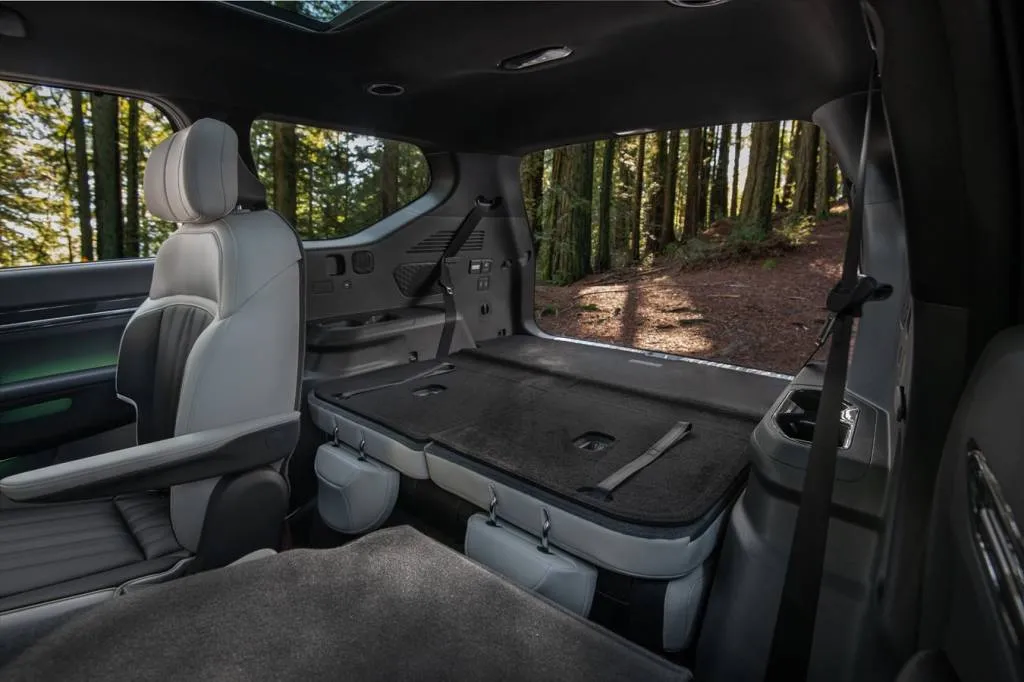
2025 Kia EV9
Dealers will inspect the seats and replace any missing bolts free of charge. Kia plans to mail owner notification letters Jan. 24, 2025. In the meantime, owners can contact Kia customer service at 1-800-333-4542 for more information. Kia’s reference number for this recall is SC329.
This recall follows two in October. One addressed a remote parking system issue in 12,400 vehicles from the 2024 model year equipped with that feature. The other addresses a software issue in both 2024 and 2025 models that could cause digital instrument clusters to fail.

GM proposes making prismatic EV batteries differently
General Motors is investigating a new way of configuring prismatic battery cells to improve cooling characteristics.
A patent filing from the automaker published by the United States Patent and Trademark Office (USPTO), dated Dec. 26, 2024 but originally filed by GM Jun. 23, 2023, details stacking of layers in an inverted “U” shape, as opposed to the rolled or stacked layers used in current prismatic cells.
This format creates higher thermal conductivity in the horizontal direction in the upper part of the cell for better heat dissipation, as well as in the vertical direction near the bottom of the cell, potentially increasing the effectiveness of cooling systems when they’re installed in a pack, GM claims.
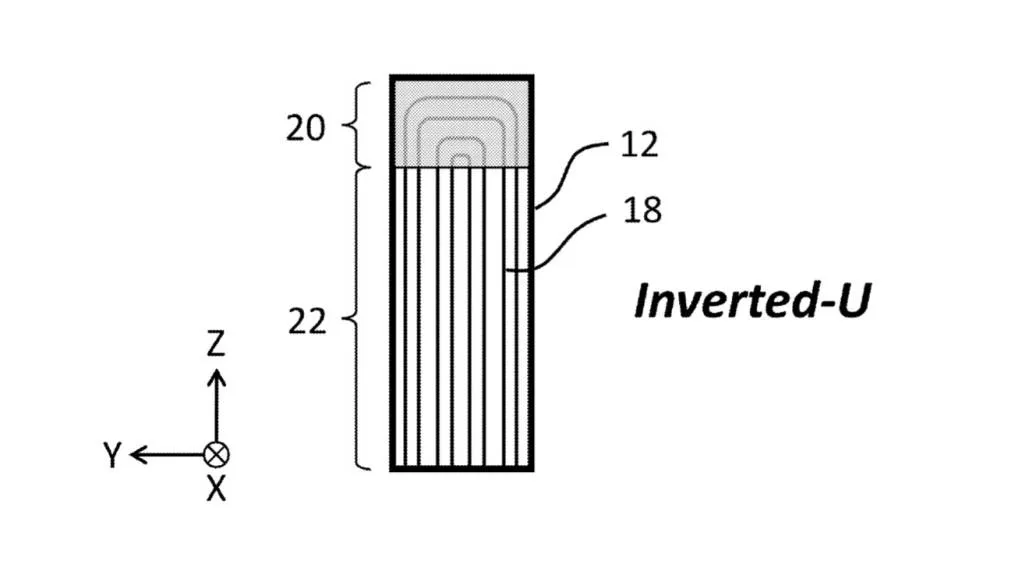
General Motors inverted
The inverted “U” stack also increases thermal delay time within the cell, causing heat to spread more slowly, according to the filing. Even if the cell overheats, the peak temperature should thus stay lower and potentially be more contained, GM claims, adding that this allows for a thermal response barrier that’s 50% thinner.
That could in future cell designs help reduce cell size, or boost energy density by cramming more active material into that space. And to tease out a greater advantage, pack size might also be smaller due to those reduced cooling needs.
But the cell format proposed here is also a more complex shape that could present manufacturing challenges, which might explain why the big battery manufacturers haven’t tried it yet.
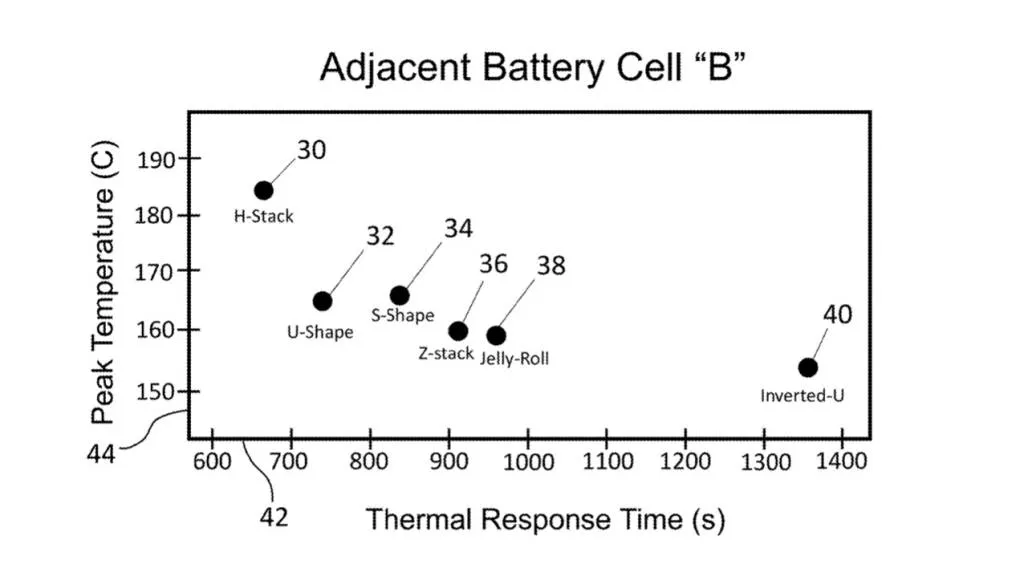
General Motors inverted
GM already appears to be on a path to use pouch, cylindrical, and prismatic cell formats, all at once, in its production EVs, and it’s emphasized that flexibility. It’s also considered some odd cell shapes in previously filed patents, also with an eye toward improved cooling.
Tesla, Lucid, and Rivian have all chosen to emphasize cylindrical cells—with apparent advantages in range and efficiency. BMW is also set to use cylindrical cells in its next-generation Neue Klasse EVs, the first of which recently entered pre-production ahead of a planned 2025 debut, with promises of substantially increased energy density.

GM working on mixed-chemistry EV battery packs
General Motors is following a handful of other automakers and battery firms in developing mixed-chemistry battery packs for electric vehicles.
GM laid out its version of this concept in a patent filing published by the United States Patent and Trademark Office (USPTO) Nov. 28, 2024. In that document, which was first filed by GM Aug. 2, 2023, the automaker discusses combining nickel manganese cobalt (NCM) with lithium iron phosphate (LFP) or other similar chemistries.
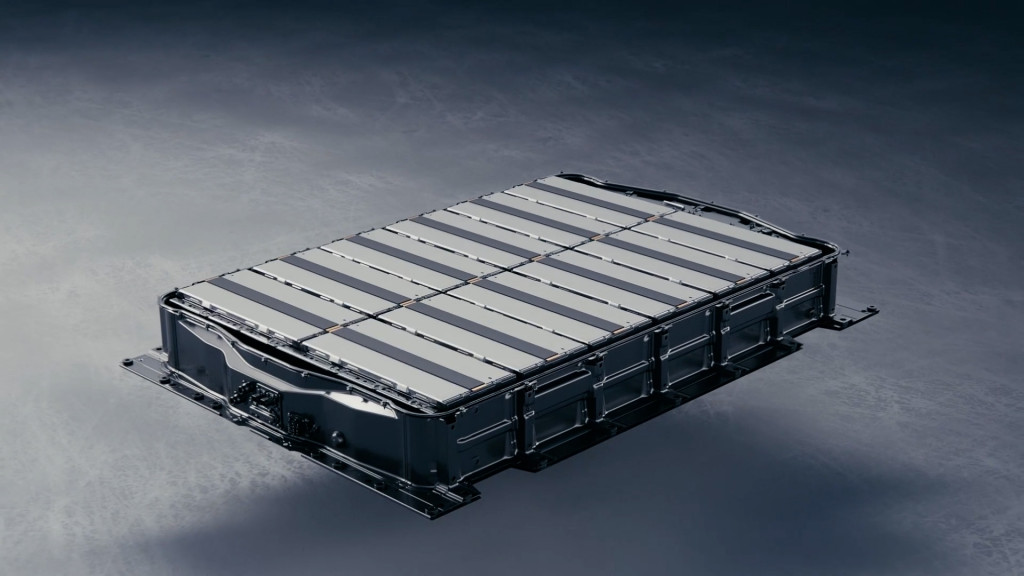
General Motors Ultium batteries
The two chemistries would be split into discreet modules, potentially with different usable capacities, according to the filing. A controller would monitor factors such as temperature and state of charge, and potentially bypass one chemistry or another in a given situation.
A mixed-chemistry pack could balance performance and cost by combining cheaper LFP battery cells with NCM cells, which offer higher power and energy density, GM notes in the filing. Two different chemistries can lead to a charge imbalance that reduce the usable capacity of a battery pack, GM adds, but the automaker hopes ability to bypass one set of cells while charging another will address that.
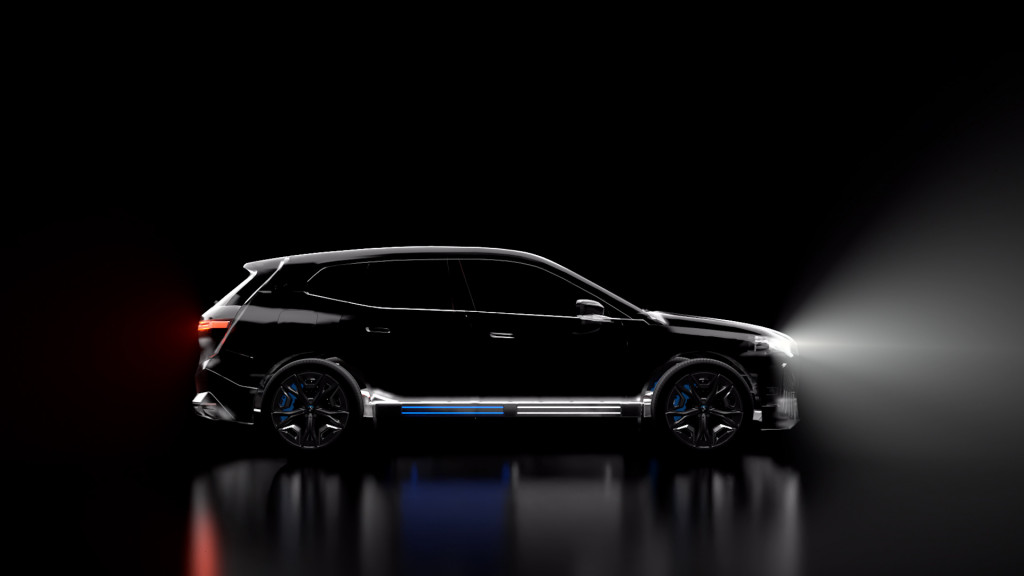
BMW iX prototype to use Our Next Energy mixed-chemistry battery pack
Certain chemistries can also be charged faster, which could enable smaller battery packs and counteract current pack inflation, which adds cost and weight, consumes more raw materials, and in the real world still often leads to longer charging times once that added charge is exhausted. Combining some of these specialized cells with slower-charging commodity cells could help make EVs more practical.
Other companies are working on mixed-chemistry battery packs. CATL recently announced one aimed at bringing faster charging to plug-in hybrids, and U.S. startup Our Next Energy (ONE) showed in 2022 how it could use mixed-chemistry tech to extract 600 miles of range from a BMW iX—nearly doubling its EPA range. Mercedes-Benz has also developed hardware that could lay the groundwork for mixed cell types.

Ford patents its steer-by-wire system
 Ford is following other automakers in developing a steer-by-wire system, a recently discovered patent filing shows. The filing in question was published by the United States Patent and Trademark Office (USPTO) Nov. 19, 2024, but was submitted by Ford just over two years earlier, on Nov. 14, 2022. But it deals not with steer-by-wire as a concept…

2025 Subaru Solterra
 What kind of vehicle is the 2025 Subaru Solterra What does it compare to? The 2025 Subaru Solterra is a small electric crossover SUV. Compare it to the nearly identical Toyota bZ4X, as well as the Hyundai Ioniq 5 and the Kia EV6. Is the 2025 Subaru Solterra a good SUV? It looks kinda weird and its range estimates trail class leaders, but the…

GM maps out how it might configure performance quad-motor EVs
 General Motors is looking at ways to add quad-motor powertrains to its electric vehicles, with a focus on performance both on and off-road. In a patent filing published by the United States Patent and Trademark Office (USPTO) Nov. 21, 2024, and filed by GM May 17, 2023, the automaker discusses use of a mechanical coupling to allow two electric…

Review: 2024 Hyundai Sonata Hybrid sips fuel with style
 The 2024 Hyundai Sonata got a futuristic design update Sonata Hybrids have EPA-rated fuel economy ratings of 47 mpg combined Starting price is $32,150 for 2025 Hyundai Sonata Hybrid The Sonata Hybrid arrived on the scene for 2024 with an injection of style, but not at the expense of fuel economy. As Toyota’s moved the Camry to an all-hybrid…

2025 Toyota bZ4X
 What kind of vehicle is the 2025 Toyota bZ4X? What does it compare to? The 2025 Toyota bZ4X is a small electric crossover SUV. Compare it to the closely related Subaru Solterra, the Kia EV6, and the Hyundai Ioniq 5. Is the 2025 Toyota bZ4X a good SUV? The bZ4X does some EV things well, like its comfortable ride and its quiet personality…

Genesis to go from scale model to Le Mans in 18 months
 Genesis’ LMDh race car currently only exists as a half-scale model To speed up development, Genesis will build a V-8 from two 4-cylinder engines from Hyundai’s World Rally Championship program Six-time Le Mans winner Jacky Ickx is serving as an advisor for the program Genesis in December launched its own motorsports division, Genesis Magma Racing…

Aston Martin may straight-pipe the Valkyrie race car
 Aston Martin’s Valkyrie AMR-LMH race car may swap out its mufflers for a straight-pipe setup for competition in the IMSA SportsCar Championship, Racer has learned. The Valkyrie AMR-LMH is being developed in time for the 2025 motorsports season and is set to be fielded by Aston Martin in partnership with Heart of Racing in both the FIA World…