
Author: EVAI

Rivian R1T VS. Toyota Tacoma: EV Against Hybrid Off-Road
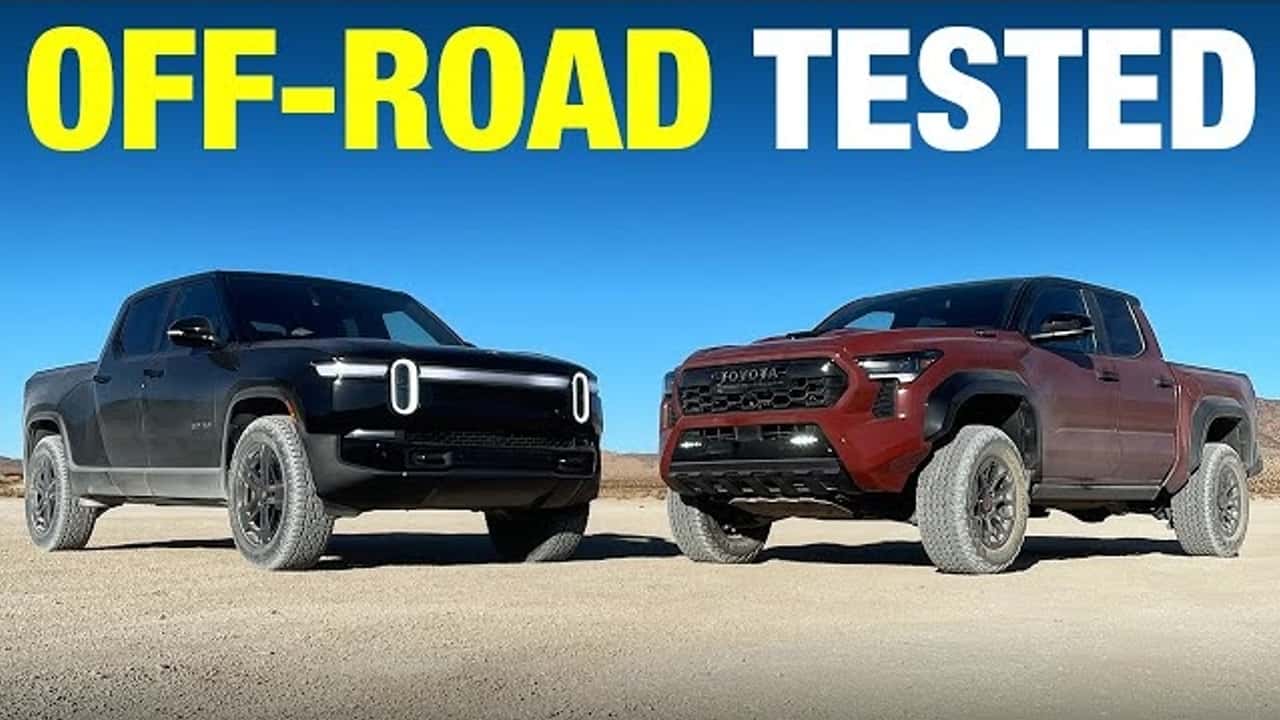
- The Rivian R1T and the hybrid Toyota Tacoma TRD Pro are both seriously capable off-roaders.
- The R1T gets adaptive dampers, dual e-motors churning over 800 pound-feet of torque and a clever traction system.
- The hybrid Tacoma is raw and mechanical, with proven off-road chops to take on the toughest terrain.
An electric vehicle may not strike as an obvious choice for your off-road escapades, but automakers are advertising their EVs as off-road capable anyway. Rivian is doing that more than others, with its adventurous positioning as the key differentiator between itself and its rivals like Tesla and Lucid. Rivian says the R1T can crawl on rocks, drive over snow, keep moving through sand and get you to your destination. But when it’s up against a proven hybrid off-roader in the real world, how does it fare?
Edmunds correspondent Emme Hall, who’s also an InsideEVs contributor, recently put the second-generation R1T head-to-head against the hybrid Toyota Tacoma TRD Pro to find out which truck would go further in an adventure setting. Her team drove both trucks to Johnson Valley in Southern California to test them out.
The R1T was the dual-motor version with the 149 kilowatt-hour Max battery pack. While it seems capable on paper with 533 horsepower and over 800 pound-feet of torque, off-roading requires more than that. Crazy torque figures won’t cut it. Its off-road chops include adaptive air suspension, a trick hydraulic suspension, high approach and departure angles, off-road tires, brake torque vectoring and a bunch of drive modes that adjust traction and suspension settings.
The Tacoma, on the other hand, is more mechanical. Its 2.4-liter, four-cylinder, turbo-charged engine produces 326 hp and 465 lb-ft of torque. Unlike the unibody R1T, the Tacoma relies on a body-on-frame construction, which is generally better suited when the going gets rough, thanks to its inherent rigidity. The Tacoma also has a locking rear differential, solid rear axle, disconnecting sway bar at the front, 4×4 transfer case and off-road-tuned Fox shocks.

[embedded content]
In the hill climb test, the R1T struggled to get past the steepest section despite having so much oomph from the electric motors. Rivian offers brake torque vectoring to power the wheels that have the most traction—and brake the ones slipping—but that wasn’t enough to get past this section. Brake torque vectoring only stops the wheels spinning excessively. It does not redistribute that lost torque to wheels with traction.
The Tacoma, meanwhile, aced the hill climb thanks to its rear locker, which allowed both rear wheels to spin together and put down power more effectively. The Tacoma also nailed the rock climbing and articulation tests thanks to its disconnecting sway bar, which allowed the front axle to dance up and down and adapt to the pattern of the terrain.
The Rivian, however, seemed more at home on the sand. That’s where the excess power and torque really helped it shine without the traction control being too intrusive. The sand section also seemed bumpy, which a unibody construction typically handles better as it can absorb, distribute and dissipate those harsh impacts much better, especially while going fast.
That last bit also makes the R1T better on the road, at least in comfort and smoothness. That’s not to say that it’s not capable off-road, but the Tacoma’s mechanical set-up seems just better suited for the slow-speed hill climbs and rock crawls.
The upcoming Scout Terra would probably make for a more apple-to-apples comparison. Scout has said that its EVs will get a solid rear axle like the Tacoma plus locking front and rear diffs, which should help them stand out as true off-roaders, at least on paper.
The video above is worth watching because it will help you understand the current limitations of the dual-motor R1T and what Rivian can do to improve its future iterations.
Have a tip? Contact the author: suvrat.kothari@insideevs.com
Share this Story

Special Alpina B8 GT marks transition to BMW takeover
 Alpina has unveiled the B8 GT Hommage Burkard Bovensiepen The tuned BMW 8-Series Gran Coupe packs 625 hp and will hit 62 mph in only 3.3 seconds Alpina plans to build just 99 examples German performance marque Alpina agreed in 2022 to have its brand acquired by BMW in a deal that will see BMW take over production of Alpina vehicles at the end of…

Electric pickup trucks: A complete guide
 Electric pickup trucks may not have the massive towing capacity of heavy duty diesel trucks, but for virtually every other purpose they are superior to gas- or diesel-powered trucks: they’re cleaner, quieter, quicker, more fun to drive, more tech-forward, and in many cases more capable. On the downside, they’re usually more expensive and towing…

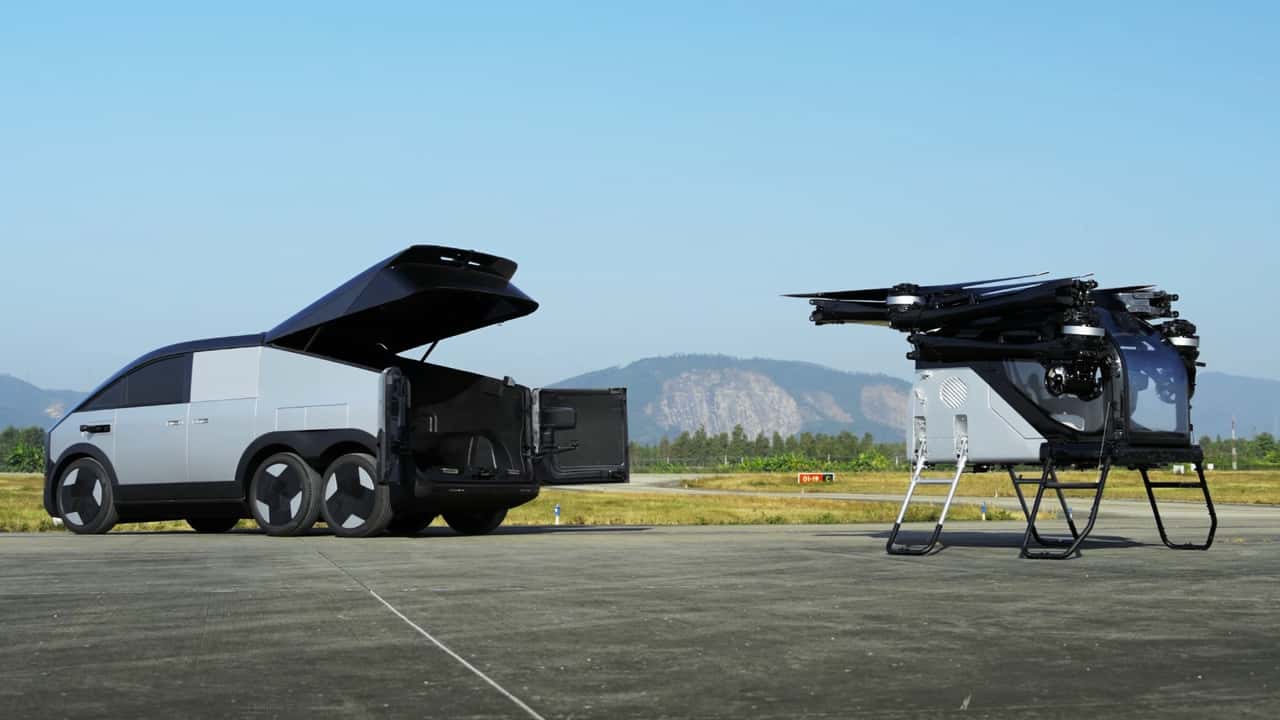
For Sale, Maybe: A Six-Wheel Van That Launches A Flying Car
CES has a long history with flying cars. But the CEO of Xpeng AeroHT says the company is serious. Can they pull it off?

Honda and Acura EVs gaining Tesla Supercharger access this spring
Honda and Acura electric vehicles will be able to use Tesla Supercharger stations starting this spring, Honda said Wednesday in a business update.
As with other non-Tesla brands, Honda and Acura EV owners will receive adapters that allow Tesla’s NACS connectors to plug into their CCS-equipped vehicles. The automaker did not provide any further detail, so it’s unclear whether any adapters will be provided for free, or how much they will cost if not.
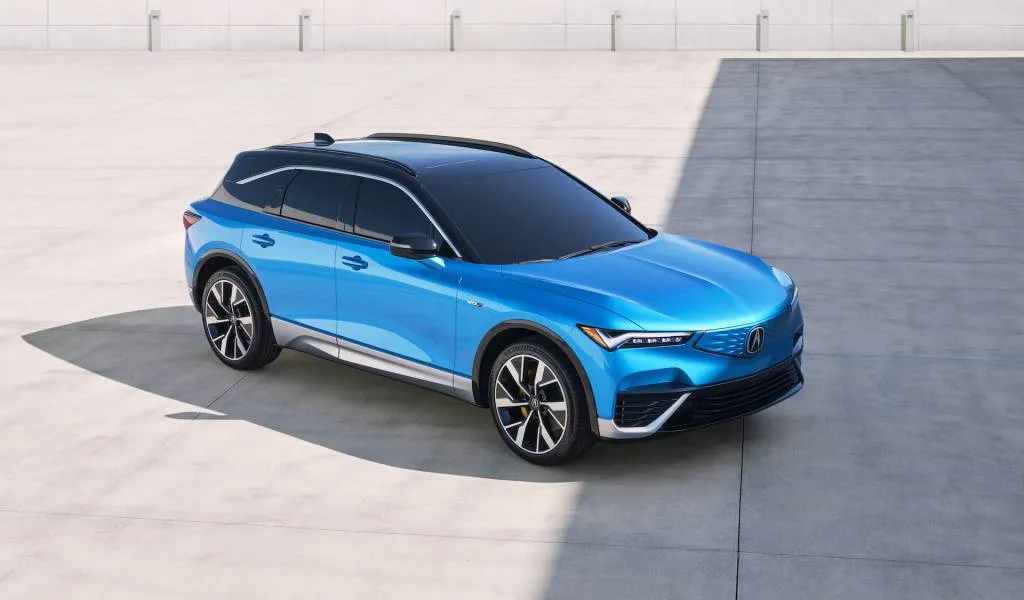
2024 Acura ZDX
The Honda Prologue and Acura ZDX SUVs—the only all-electric models currently sold in the U.S. by their respective brands—are based on General Motors architectures and are manufactured by GM. But Honda handles charging matters independently, hence the delay between GM’s rollout of Supercharger access in September 2024 and the Japanese automaker’s scheduled rollout.
Besides Honda and Acura, the next few months will see a few other brands adding Supercharger access. Mercedes-Benz plans to open Supercharger access in February, followed by Kia later in the quarter, and Volkswagen, this summer. BMW, Genesis, Lucid, and JLR (comprising Jaguar and Land Rover) are currently listed as “coming soon” on Tesla’s website, but specific timing has not been confirmed.
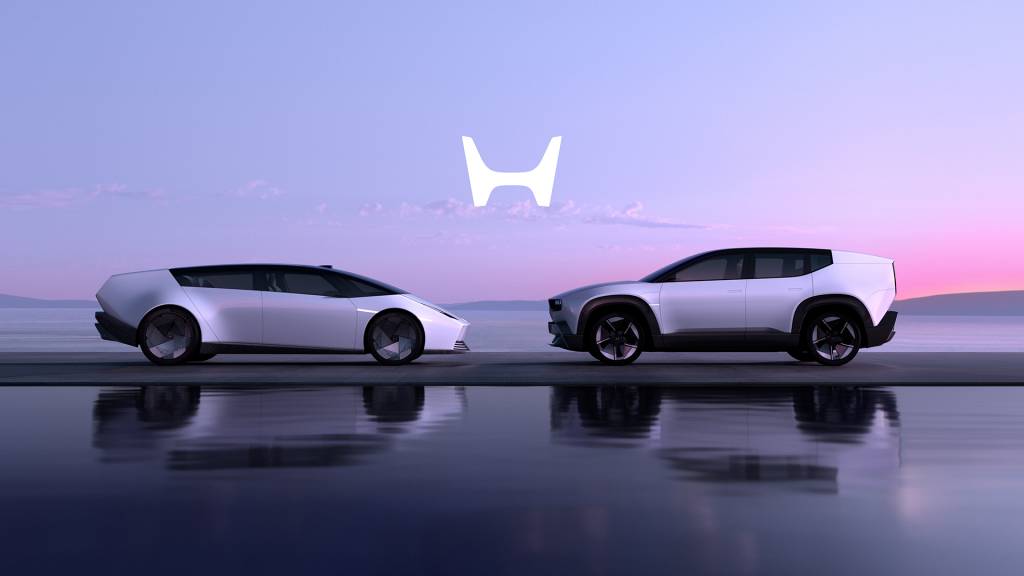
Honda 0 Saloon and 0 SUV prototypes
Honda is also one of the eight automakers backing the Ionna DC fast-charging network, which will offer both CCS and NACS connectors. The automaker said four Ionna charging sites—dubbed “Rechargeries”—are now in beta testing, with groundbreaking for a fifth site done in the last month.
The combination of Supercharger access and the Ionna network will support what is set to be a growing number of Honda and Acura EVs developed in-house and built at retooled facilities at Honda’s traditional U.S. manufacturing base in Ohio. The first of these will be the Acura RSX compact SUV launching later this year, followed by the first Honda 0 Series models in 2026. Recently previewed at CES 2025, the 0 Series models will have native NACS ports.

Italdesign Quintessenza hides 1,000-hp of Elaphe in-wheel electric motors
 Elaphe has a new in-wheel electric motor that can be used for hybrids or EVs Elaphe previewed the motor at 2025 CES in the Italdesign Quintessenza concept car The motor delivers a continuous 268 hp and peak 342 hp Legendary Italian design house Italdesign, now owned by the Volkswagen Group, showcased an updated version of its Quintessenza concept…

Which automakers have Tesla Supercharger access?
- Tesla’s opened its Supercharger network to non-Teslas
- Ford and Rivian were the first non-Teslas to plug in
- Access takes an automaker-provided adapter or Tesla Magic Dock
- In most cases there are software components and it’s more than just an adapter
By the end of 2024, nearly ever major EV brand selling cars in the U.S. had signed on to offer Tesla Supercharger access, and eventually adopt the automaker’s NACS port for future EVs. But the rollout has proceeded at different speeds for each brand.
Owners of EVs from most non-Tesla brands must use an adapter to connect with Supercharger stations until the widespread rollout of new cars with NACS ports, a process that recently started with the 2025 Hyundai Ioniq 5 and is aided by the formalization of NACS as a true standard by the SAE in late 2023.
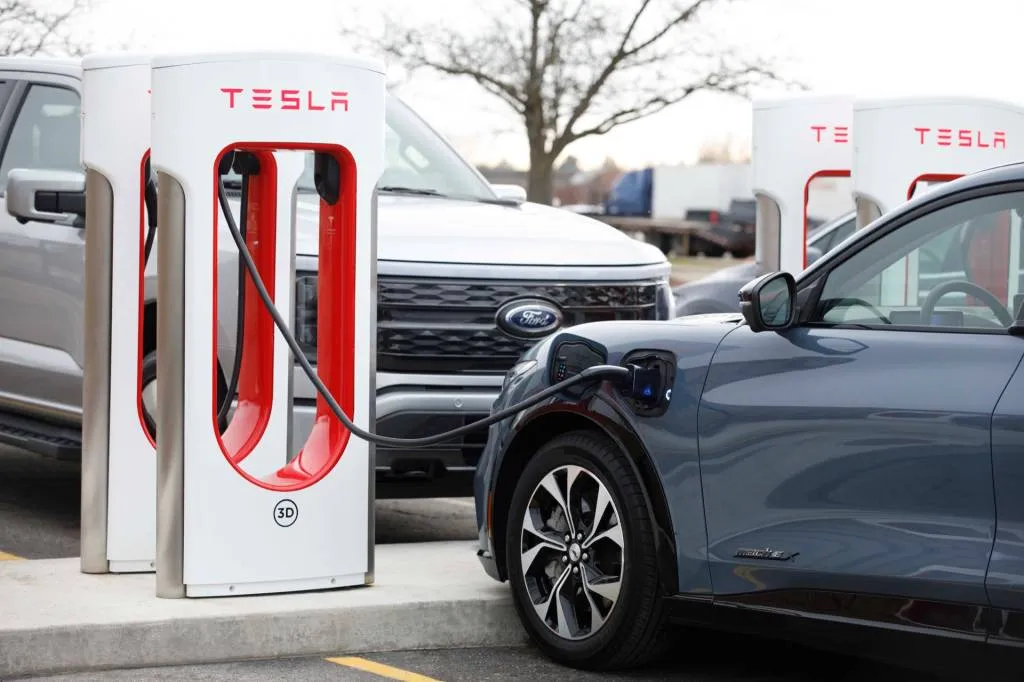
Ford EVs at Tesla Supercharger
Most automakers are also pushing software updates that allow their EVs to properly interface with Supercharger stations for plug-and-charge operation, as well as updates that allow Supercharger stations to appear on in-vehicle route planning and payment apps. With these updates in place, Tesla’s Magic Dock adapter at many Supercharger stations may work in lieu of a separate automaker-provided adapter.
As with the original announcements of the switch to the Tesla charge port, Ford led the way in providing adapters to let customers fast-charge at Supercharger stations. That started in February 2024, with other automakers following later in the year and a few now confirmed for the first half of 2025. Here’s where things stand now.
Automakers that have Supercharger access:
Ford
Rivian
General Motors
Volvo
Polestar
Nissan
Automakers said to be getting Supercharger access “soon” according to Tesla:
BMW
Genesis
Hyundai
JLR
Kia
Lucid
Mercedes-Benz
As Green Car Reports has pointed out before, Tesla’s V4 hardware will likely be able to handle electric vehicles that charge at 800 volts at the full rate. But Tesla’s V3 hardware—the majority of North American hardware available on the Supercharger network at this time—the limit is 400 volts, or maybe a little bit higher.
That creates a dilemma for automakers already selling vehicles with 800-volt charging, as those cars will charge slower at Tesla V3 Supercharger stations than they would at the most powerful CCS stations. But the more widespread deployment of V4 Superchargers will help solve that, along with the buildout of the Ionna fast-charging network backed by eight automakers that’s expected to include both CCS and NACS connectors.

Electric Chrysler SUV development halted
Stellantis has halted development of what was to be the first electric vehicle for its Chrysler brand, shifting focus to other electric models.
The Chrysler Airflow concept unveiled in 2022 was to serve as the basis for a production electric SUV, but Mopar Insiders reported earlier this week that development work on this model had been suspended. That report cited an email to suppliers saying the program was “on hold until further notice” and that “any spending associated with this program should be suspended immediately.”
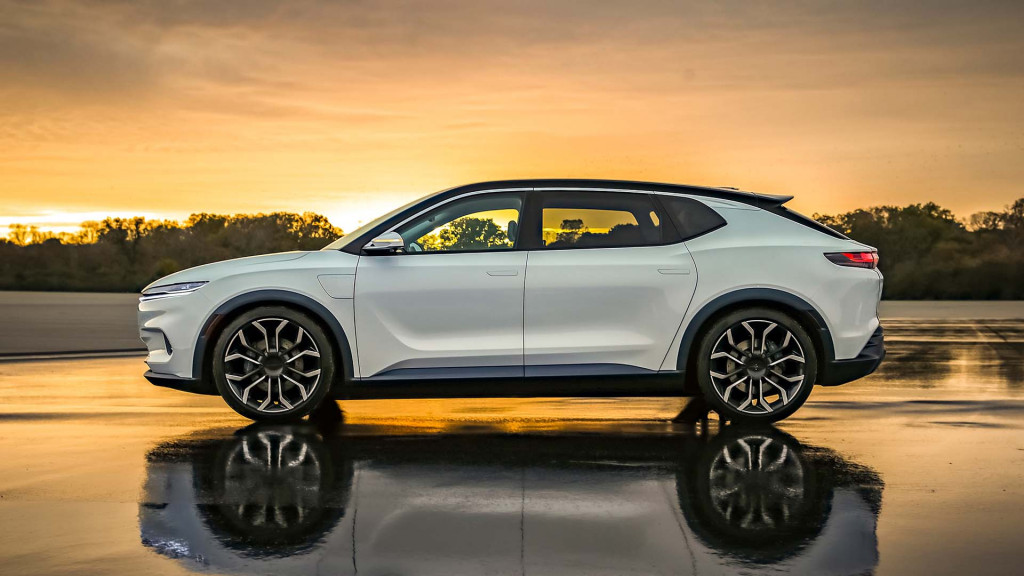
Chrysler Airflow concept
A Stellantis spokesperson confirmed to Green Car Reports that the electric SUV “is paused for now as we assess the market and our customers’ needs and wants.” This means the Chrysler brand will continue with just a single minivan—sold as both the Voyager and Pacifica, the latter available with a plug-in hybrid powertrain—in 2025, its 100th anniversary year.
A refreshed Pacifica is coming in 2026, the spokesperson confirmed, followed by a new crossover SUV and a third model based on the Halcyon concept, Chrysler CEO Christine Feuell confirmed in an interview earlier this month. Unveiled in 2024, the Halcyon is an electric four-door coupe that likely appeals to a smaller market than an SUV.
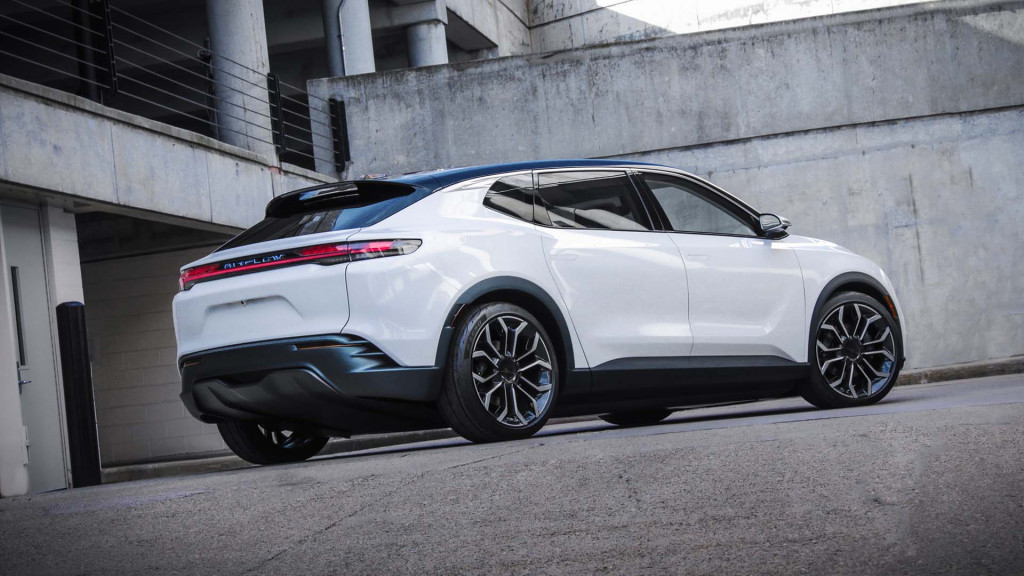
Chrysler Airflow concept
Chrysler initially said that it would launch an electric SUV based on the Airflow concept in 2025, but enthusiasm for the project seemed to wane quickly after that. In 2023, Feuell reportedly ordered a rethink that would have dropped the concept’s styling and the Airflow name, which references a pioneering Chrysler model line from the 1930s that helped introduce aerodynamic design to the automotive industry.
Feuell told Green Car Reports in 2022 that Chrysler was also developing an electric minivan, and in an interview at the 2024 LA Auto Show last November, the CEO confirmed that this new model will bear the Pacifica name. It’s slated to be introduced at some point after the refreshed version of the current Pacifica debuts in 2026.

Acura RSX returning as electric crossover
 Acura’s second EV will be the RSX crossover It enters production in late 2025 at the Honda EV Hub plant in Ohio It will share a platform with Honda’s 0 Series EVs, which will also be built in Ohio Acura will revive its RSX nameplate later this year for an electric crossover, the automaker has confirmed. The original RSX, badged as a Honda Integra…

2026 Honda CR-V TrailSport arrives soon as part of refresh
 The Honda CR-V will be updated for the 2026 model year Among the updates will be a rugged CR-V TrailSport model The smaller Honda HR-V will also be updated for the 2026 model year An updated Honda CR-V debuts later this year as a 2026 model, and Honda has confirmed it will gain a rugged TrailSport model. Honda made the announcement on Jan. 15…