
Author: EVAI

Rezvani Retro almost ready to show first 911-based RR1
 Rezvani’s new division, established to build modern cars with retro styling, is almost ready to unveil the first completed example of its debut creation, the Porsche 911-based RR1. On Wednesday, the new Rezvani Retro division announced that the first production RR1 will debut on Feb. 5. The RR1 is based on the current 992-generation 911, with a…

Honda reportedly planning sub-$30,000 EV, might be US-built
Honda could be reversing course on plans for an affordable electric vehicle, and may even build it in the U.S., according to a new report by Nikkei.
The report says Honda plans to launch a small EV costing less than $30,000 in the U.S., as early as next year. This new EV will also reportedly be U.S.-built, likely to avoid new tariffs on imported vehicles expected to be instituted by the Trump Administration.
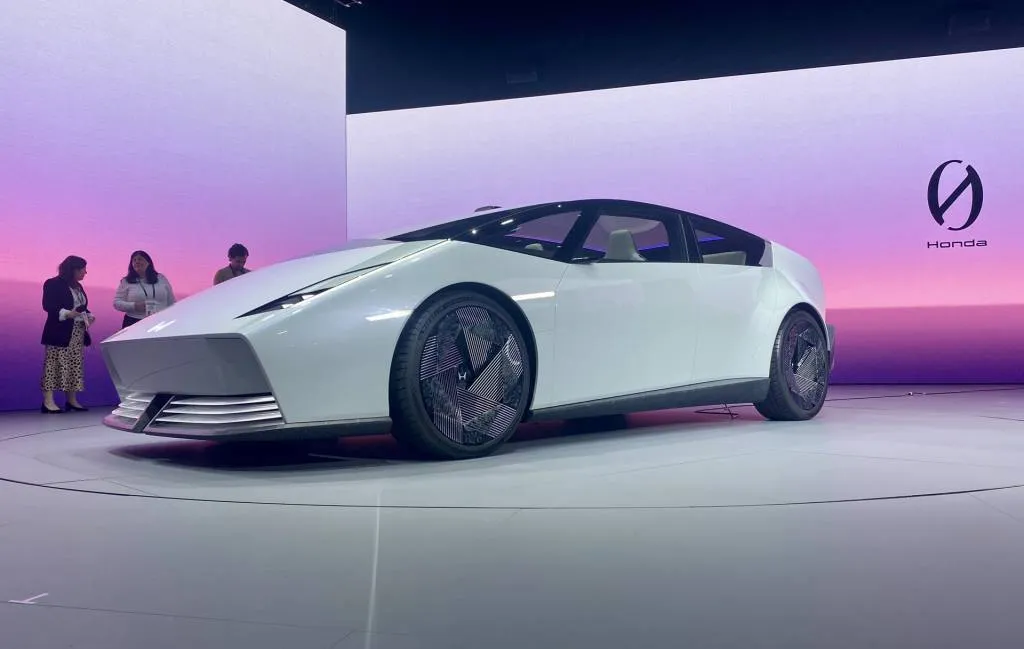
Honda 0 Saloon prototype
The sub-$30,000 EV would be the smallest and cheapest of the Honda 0 Series, set to comprise seven models by the end of the decade, on a global scale. Honda recently previewed what it said were the first two 0 Series models with its Saloon (sedan) and SUV prototypes at CES 2025.
At CES, Honda said a production version of the SUV prototype would arrive in the first half of 2026, with the sedan following later in the year. They’ll be built in Ohio, where Honda already produces gasoline cars, alongside the Acura RSX electric SUV and the Afeela 1 electric sedan from the Sony Honda Mobility joint venture. The Acura is due later this year, while the Afeela is scheduled to arrive in 2026 like the Honda-branded models.
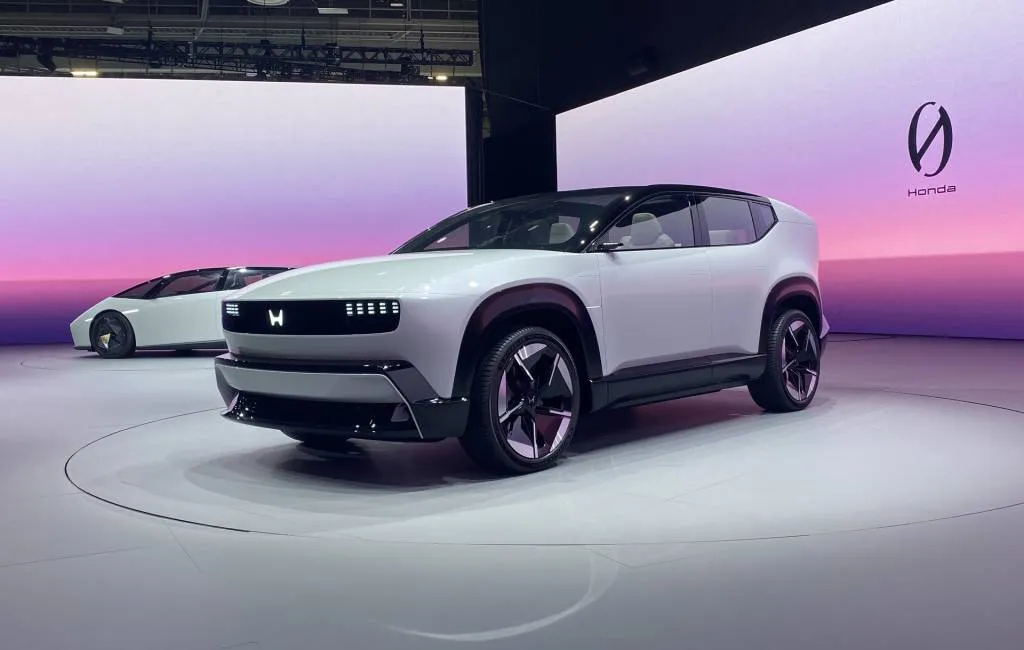
Honda 0 SUV prototype
American Honda declined comment regarding the report.
To prepare for mass EV production in the U.S., Honda is retooling three of its existing plants and creating a $3.5 billion battery plant. The automaker has emphasized throughout that the mix of EV and gasoline-vehicle production is market-dependent, but indicated in 2024 that it would be able to build hundreds of EVs per day at its revamped Marysville Auto Plant in Ohio, potentially surpassing all but Tesla’s production rate.
Whether a sub-$30,000 EV will be among the vehicles produced in Ohio next year remains to be seen. At CES 2024, Honda CEO Toshihiro Mibe told Green Car Reports that the automaker would like to realize an affordable EV “very late in the 2020s” and that a circa-$30,000 price point would likely be dependent on breakthroughs in battery tech, specifically solid-state batteries.

Volkswagen ID.7 canceled for US due to “challenging EV climate”
The Volkswagen ID.7 electric hatchback is no longer coming to the U.S., leaving the VW brand with just electric two vehicles in its U.S. lineup for now.
The ID.7’s cancellation was first reported by The Car Guide, and then confirmed to Green Car Reports by VW spokesperson Mark Gillies.
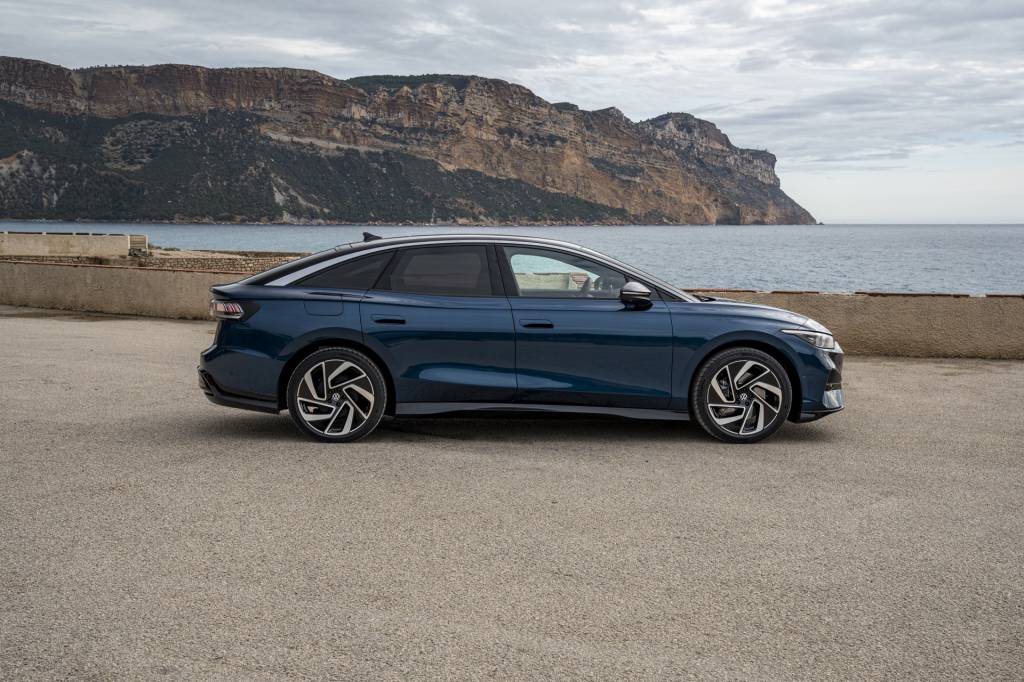
2025 Volkswagen ID.7
“Due to the ongoing challenging EV climate, Volkswagen has decided to no longer offer the ID.7 to the North American market,” Gillies said. “Despite this, electric vehicles continue to be a core part of Volkswagen’s long-term product strategy, and new electric models will continue to be introduced for this market.”
The ID.7 has been on sale in Europe since late 2023, and was originally due to arrive in the U.S. in late 2024 as a 2025 model, but VW announced a delay in May, citing changing market demands and stronger-than-anticipated demand for its Tourer wagon variant in Europe. The ID.7 Tourer was never planned for the U.S., but fulfilling demand for it in Europe likely meant sacrificing production capacity earmarked for U.S.-market hatchbacks.
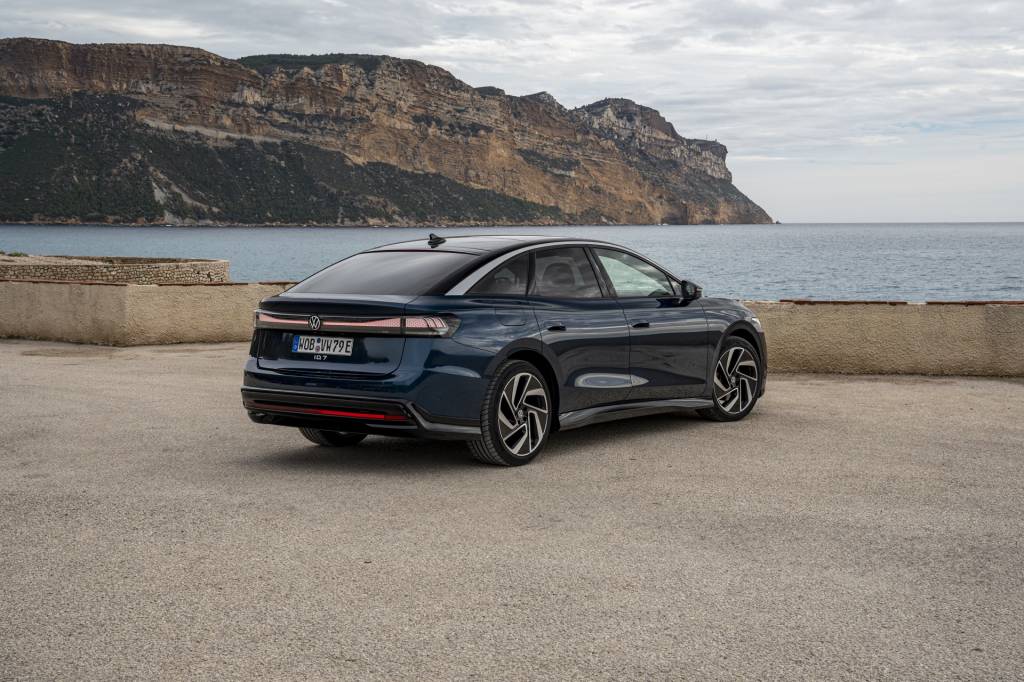
2025 Volkswagen ID.7
In a 2023 preview drive of the 2025 VW ID.7, Green Car Reports found that the electric hatchback handled well and had loads of passenger space, in an aerodynamically savvy package that aimed to maximize range. But VW never planned to bring the longest-range version of the ID.7, with its largest and fastest-charging battery configuration, to the U.S.
Cancellation of the ID.7 leaves the ID.4 crossover and the recently introduced ID.Buzz—which we recently named Green Car Reports Best Car To Buy 2025—as the only EVs in VW’s U.S. lineup, with no clear indication of what arrives next. The ID.4 has been around since the 2021 model year, but it did get substantial updates for 2024. Sales through January 2025 were strong, Gillies noted.

2026 BMW iX gains entry-level model, refinements throughout
- Every BMW iX has more range for 2026
- The iX gets a price cut with an expanded lineup; it now starts at $76,325
- The updated iX will arrive in the second quarter
The 2026 BMW iX electric crossover gets refreshed styling, improvements to range and power, and an effective price cut thanks to a new entry-level grade.
The new iX xDrive45 grade starts at $76,325 (including a $1,175 destination charge). That’s $11,920 less than the xDrive50 grade that was the less-expensive of the two iX grades available for the 2025 model year. The xDrive45 still has standard dual-motor all-wheel drive like other iX models, with an output of 402 hp and 516 lb-ft of torque that will get it from 0-60 mph in a BMW-estimated 4.9 seconds.
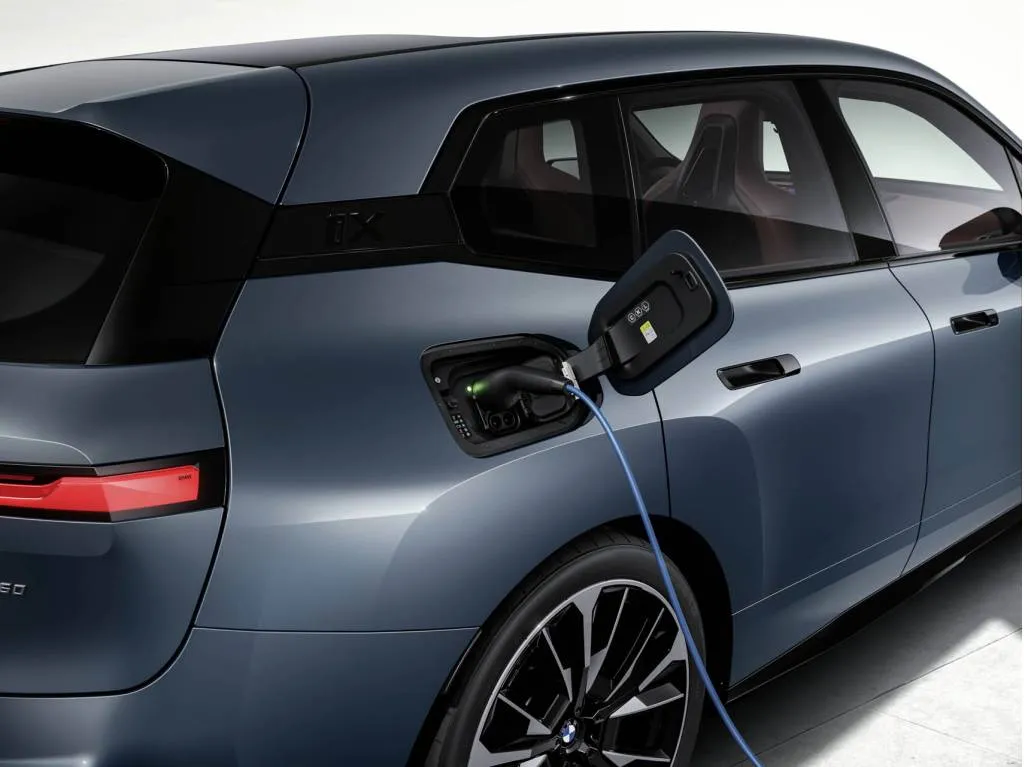
2025 BMW iX
At 312 miles, this version has slightly more range than the 309-mile maximum of the 2025 BMW iX. That’s also achieved with a bit less battery capacity than the other grades, at 100.1 kwh (usable). The iX xDrive60 extracts 340 miles from a 113.4-kwh pack, while the range-topping iX M70 xDrive gets an estimated 302 miles from 112.8 kwh.
The middle-child xDrive60 starts at $89,675 with destination. It’s rated at 536 hp and 564 lb-ft, giving it 20 more horsepower than the equivalent 2025 iX xDrive50, but the same amount of torque. The BMW-estimated 0-60 mph time is unchanged as well, at 4.4 seconds.
Priced at $112,675 with destination, the M70 xDrive replaces the M60 as the sportiest iX. Output increases from the M60’s 610 hp and 749 lb-ft to 650 hp and 811 lb-ft with launch control. The M70 also isn’t any quicker than its predecessor, but its estimated 0-60 mph time of 3.6 seconds is probably as quick as a big luxury crossover needs to be. It also tops out at 155 mph with proper tires, while the other two models are limited to 124 mph.
Range boosts come courtesy of new inverters with silicon-carbide semiconductor components, as well as a new battery management system, that improve overall powertrain efficiency, as well as new cell chemistry that provides greater energy density, BMW claims. All iX models also come standard with a heat pump to maximize efficiency in cold weather.
All models have a maximum Level 2 AC charging rate of 11 kw. The base xDrive45 can DC fast-charge at 175 kw; that increases to 195 kw for the other two models, with all versions expected to keep their CCS ports. BMW is expected to offer Tesla Supercharger access later this year using adapters, but it’s unclear when the automaker will start building cars with Tesla-style NACS ports.
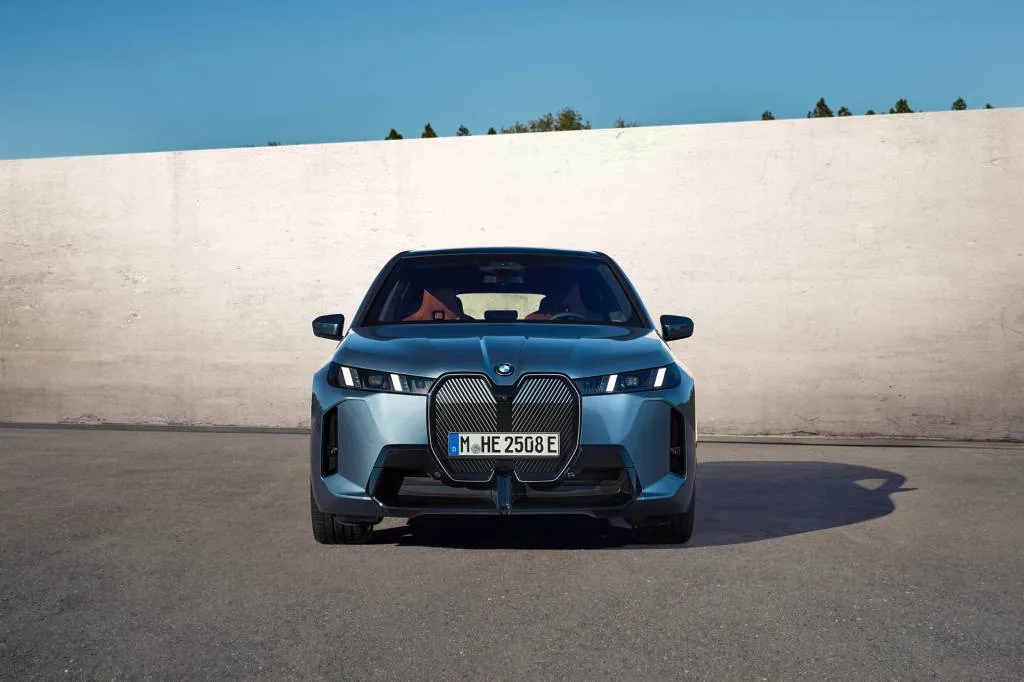
2025 BMW iX
The iX debuted for the 2022 model year with controversial styling that’s been pulled back a bit with this refresh. The more prominent wheel arches and squared-off front fascia bring the iX closer to traditional SUVs in appearance. Inside, the massive curved dashboard display remains, but the latest operating system allows for more functions, including gaming and video streaming.
The 2026 BMW iX begins production in March in Dingolfing, Germany, with U.S. deliveries scheduled for the second quarter. The updated iX will serve as a bridge between current BMW EVs derived from internal-combustion platforms and the next-generation Neue Klasse models that will debut a new architecture developed for EVs from the start.

2026 BMW iX gets updated styling and a lower price
 The refreshed 2026 BMW iX lineup expands Every iX has more than 300 miles of range The revised BMW iX costs $76,325 and arrives in the second quarter The 2026 BMW iX marks the first major update since the electric midsize SUV debuted for the 2022 model year, bringing power and efficiency upgrades as well as refreshed styling and a new base model…

2025 Lucid Gravity has Tesla NACS port, gets Supercharger access Jan. 31
Lucid is ready to roll out Tesla Supercharger access for its 2025 Gravity electric SUV.
Lucid committed to adopt the Tesla-developed NACS charge port in November 2023, and said in September 2024 that the Gravity would get a NACS port sometime this year, shortly after the start of production. The automaker on Tuesday confirmed that every Gravity built for the U.S. market has a NACS port, with Supercharger access to go live Jan. 31.
The Gravity’s NACS port is located in the same spot as on a Tesla—the rear driver’s side of the vehicle—to facilitate easy use of V3 and V4 Supercharger stations. That’s a completely different location than the front left fender, where it had located the charge port in prototypes.
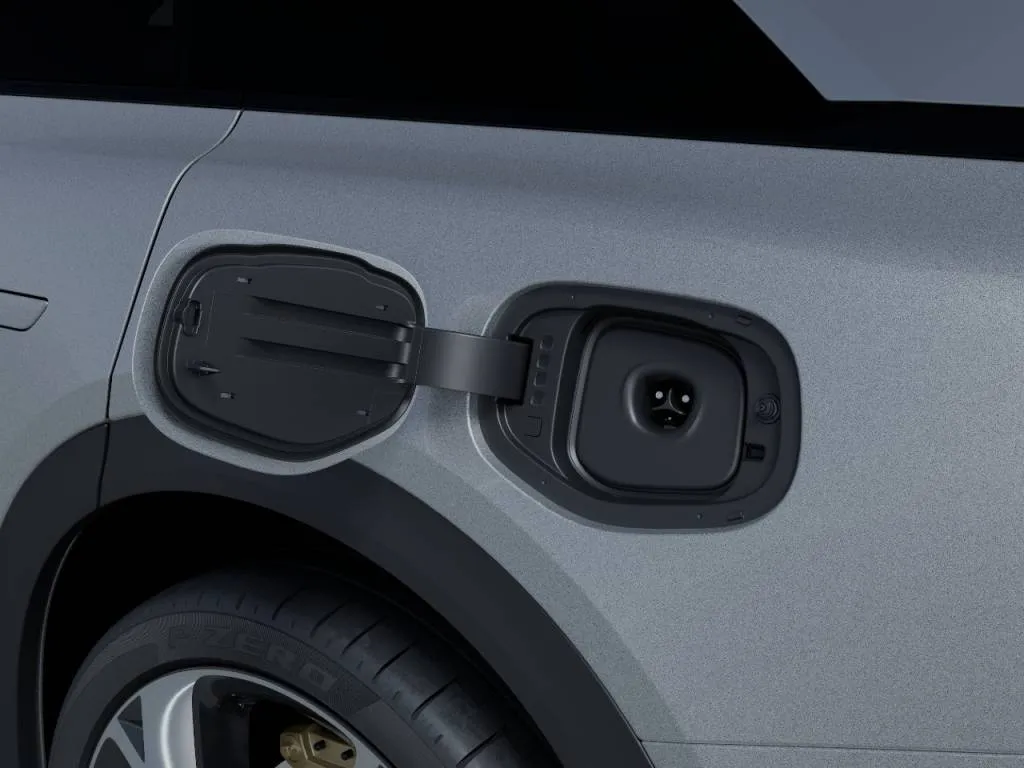
Lucid Gravity with Tesla NACS charge port
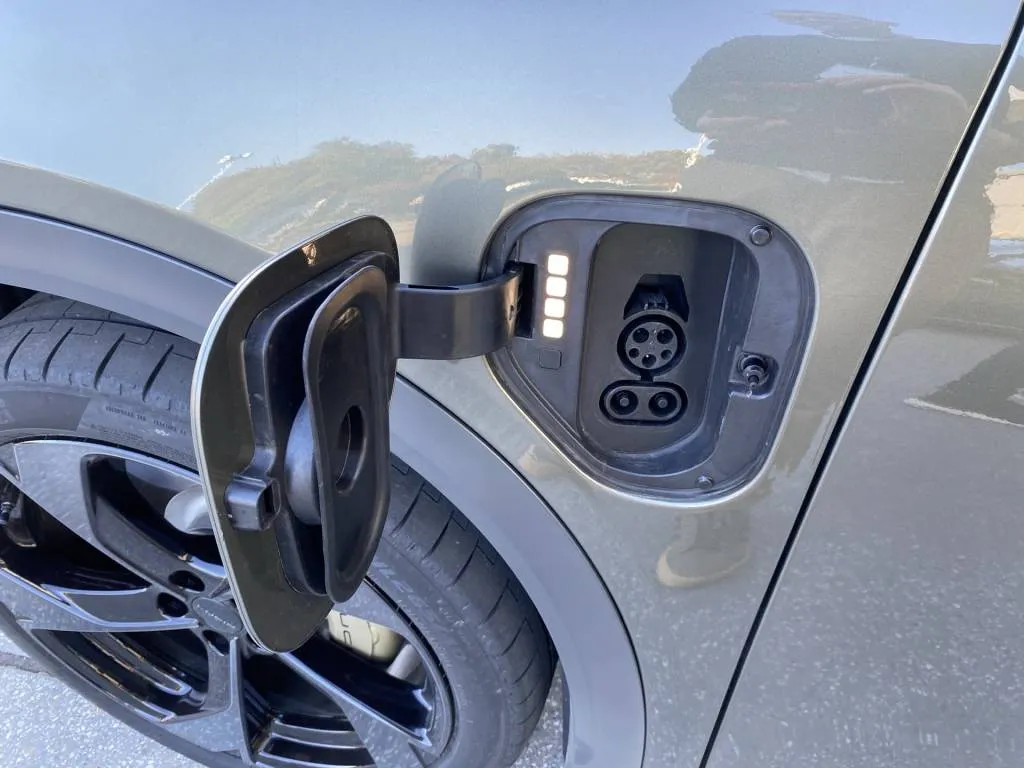
2025 Lucid Gravity Grand Touring
Lucid expects a sustained charging power level of 225 kw on 500-volt DC fast chargers like the V3 Superchargers and up to 400 kw with the 1,000-volt output of V4 Superchargers.
At peak charging rates, Lucid estimates that 200 miles of range can be added in less than 12 minutes at a peak 400 kw—a significant improvement over the 15 minutes it had previously claimed with a 350-kw connector.
Lucid also confirmed a 123-kwh battery capacity, with cells supplied by Panasonic but with what Lucid claims are chemistry updates compared to cells used in the automaker’s Air sedan, returning an estimated 450 miles of range.
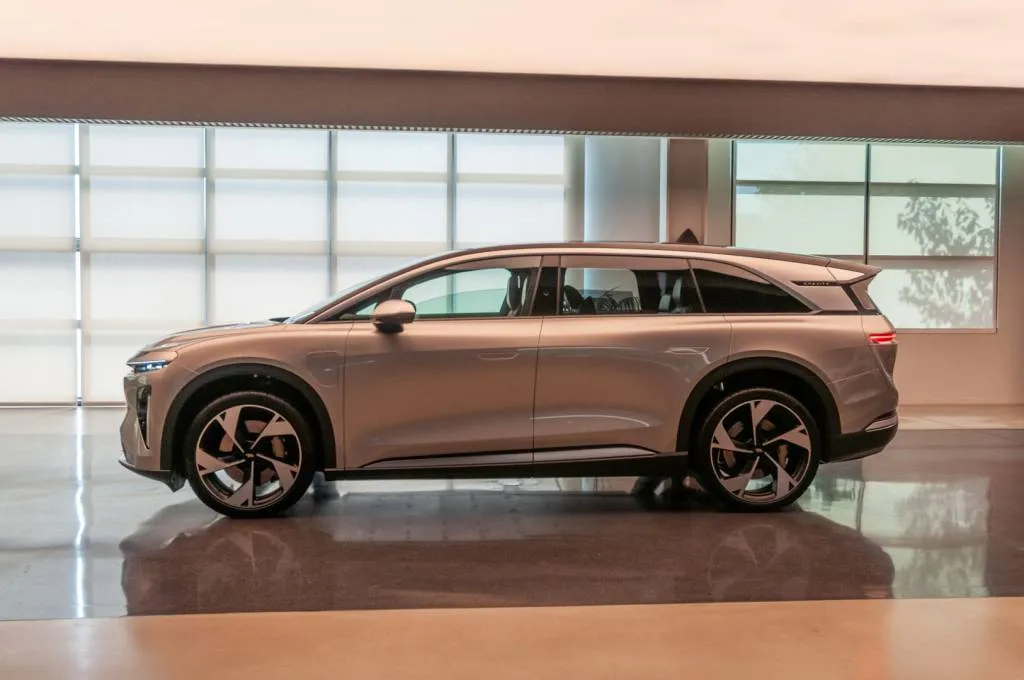
Lucid Gravity
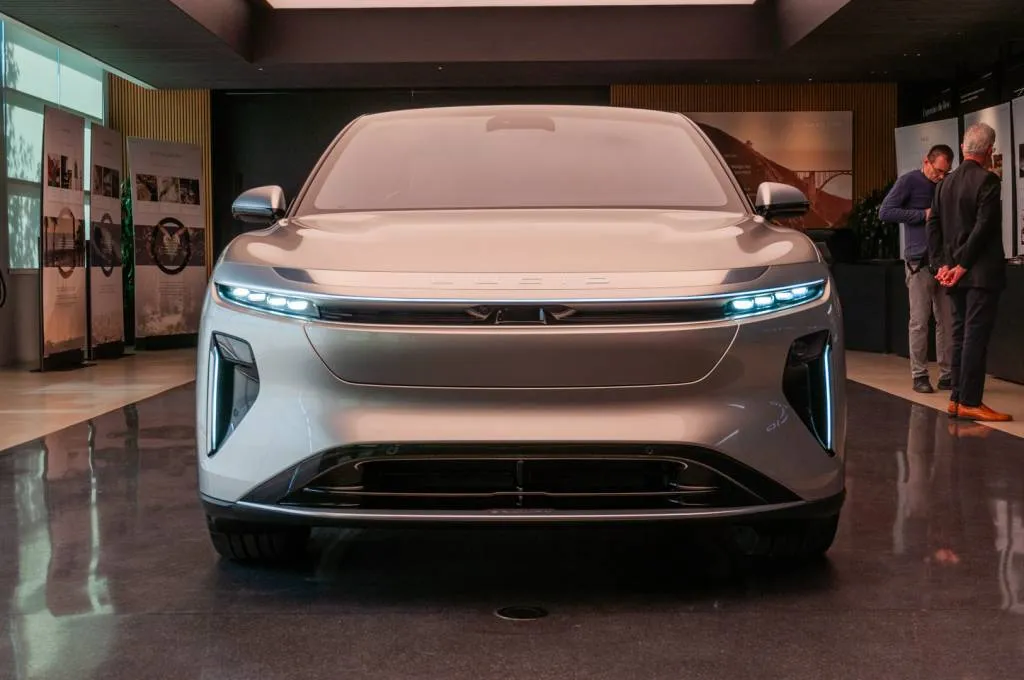
Lucid Gravity
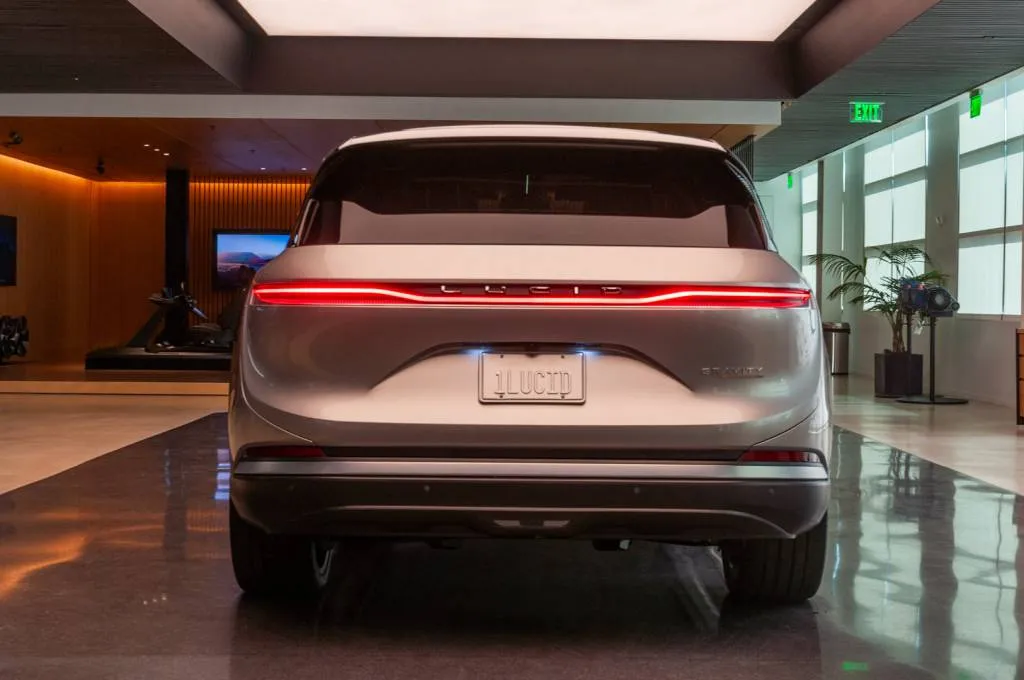
Lucid Gravity
A CCS1 adapter is included with NACS-equipped Gravity models, matching the 400-kw peak of the NACS port sans adapter, Lucid claims. Models equipped with the NACS port will also still be capable of bidirectional charging at up to 19.2 kw, according to Lucid.
Bidirectional charging includes the ability to charge other EVs, dubbed RangeXchange, a feature that debuted on the Lucid Air sedan in 2023. Lucid said it will add Supercharger access for the Air in the second quarter of this year, with more details to follow.
The 2025 Lucid Gravity arrives in Grand Touring form with a $94,900 base price before destination. A $79,900 Touring grade is due to arrive for the 2026 model year. First impressions, in the form of a prototype test drive and a review of a close-to-production Gravity, have been encouraging.

What’s New for 2025: BMW
 New BMW models for 2025 include the 2-Series Gran Coupe, X3, and M5 The 2026 model year will usher in the redesigned BMW iX and the Neue Klasse suite of EVs, starting with the iX3 This may be the last model year for the 8-Series and the X4 This year, BMW celebrates its 50th anniversary in North America as it prepares for a whole new spate of…

Polestar 6 convertible pushed back to after Polestar 7
The Polestar 6 electric sports car will arrive after the recently confirmed Polestar 7 SUV, meaning it will likely miss the original 2026 launch window.
The news was first reported by Australia’s CarExpert and subsequently confirmed to Green Car Reports by Polestar spokesperson Mike Ofiara.
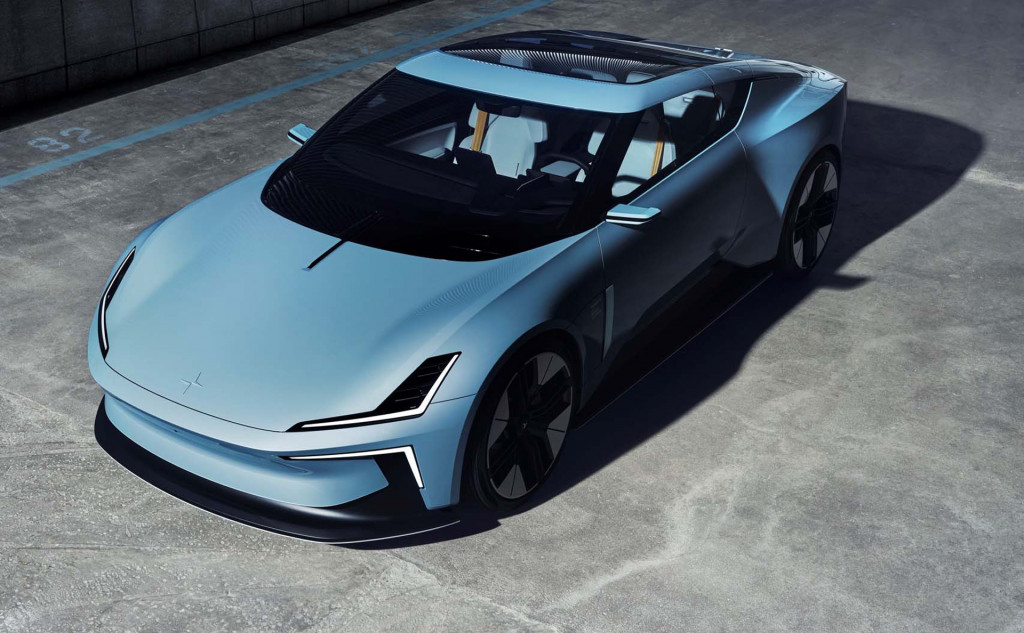
Polestar O2 concept
“The highly anticipated Polestar 6 will arrive at a later stage,” Ofiara said. Polestar’s immediate priority is to follow through on the rollout of the 3 and 4 SUVs, followed by the launch of the Polestar 5 fastback later this year, then the 7 SUV, and finally the 6, he said. Exact timing for the Polestar 7 still hasn’t been confirmed.
Polestar first previewed the 6 in March 2022 with the O2 concept car. It confirmed production plans for 2026 a few months later as well as opening reservations at that time. The 2026 target was still in effect last July when, when Polestar showed the Concept BST at the 2024 Goodwood Festival of Speed, hinting at a spicier version of the convertible sports car.
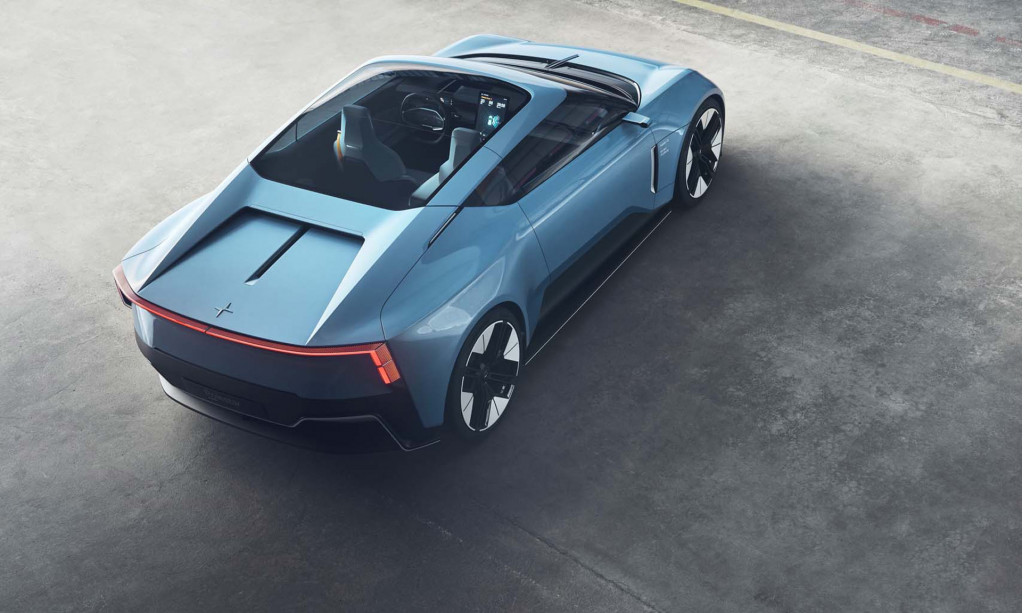
Polestar O2 concept
The Polestar 7 that’s now taking priority is likely to be a higher-volume model than the niche Polestar 6. The compact SUV will be manufactured in Europe, allowing it to avoid steep tariffs currently placed on Polestar’s Chinese-made vehicles. It will introduce a new architecture to be used on all subsequent Polestar models other than the 6, which is expected to use a shortened version of the Polestar 5’s bonded aluminum platform.
While there still aren’t many details, the Polestar 7 has been hinted at as far back as 2022. It was previously rumored to replace the Polestar 2 as the brand’s entry-level model, but more recent reporting indicates Polestar is planning a direct successor to that model later in the decade. The next-generation Polestar 2 will likely use the same architecture as the 7, and could be produced in Europe as well.

BP opens first 400-kw TA travel center location, along I-95
 BP on Monday unveiled the first of more than 40 planned electric-vehicle charging hubs to be co-located with TravelCenters of America (TA) highway rest stops. Located in Jacksonville, Florida, along the busy I-95 corridor, the first site features six CCS DC fast chargers, configured into 12 bays that each offer a connector. BP, which acquired TA…

2027 Porsche 718 Cayman EV spied for first time
 Porsche has been spotted testing an electric 718 Cayman Expected to debut in late 2026, it will trail an electric 718 Boxster by about a year The gas-powered 718 Boxster and Cayman end production in 2025 Porsche fans will soon have to get used to the idea of an electric sports car from the brand. Porsche is close to launching its first electric…