
Author: EVAI

2024 Toyota Land Cruiser, 2025 4Runner are similar — but different
The redesigned 2024 Toyota Land Cruiser goes on sale this spring with a higher price and lower volume expectations than the upcoming 2025 Toyota 4Runner, due late this year. Toyota admits there will be some overlap.

2025 Mercedes-Benz eSprinter adds smaller battery, shorter wheelbase
The Mercedes-Benz eSprinter electric van debuted for the 2024 model year with a long 170-inch wheelbase, a large 113-kwh battery, and a high roof. For 2025, it adds a shorter 144-inch-wheelbase version, a smaller 81-kwh battery, and a shorter standard roof, the brand announced on Monday.
In that configuration, the base price falls from $74,181 to $63,545 before the mandatory destination charge. Like the 2024 model, the 2024 eSprinter is offered with a choice of 100-kw (134-hp) and 150-kw (201-hp) rear-mounted permanent-magnet motors. Both versions are limited to 75 mph.
The short-wheelbase, small-battery, small-motor, low-roof configuration becomes the payload leader in the lineup, with the ability to carry up to 3,516 pounds, almost 500 pounds more than the bigger body style. The lower roof and shorter wheelbase cut down cargo space from 488 cubic feet to 319 cubic feet.
The smaller battery cuts range to 192 miles on the more lenient European WLTP test cycle, versus 273 miles with the tall roof and larger pack. A U.S. EPA rating isn’t available, but with a relatively light load the eSprinter gets close to that in real-world U.S. driving. Like the bigger battery, it has a lithium-iron phosphate (LFP) chemistry, and it can DC fast-charge at up to 115 kw. It also has the same 9.6-kw onboard charger that allows an overnight charge on a 240-volt outlet.

2025 Mercedes-Benz eSprinter
The shorter wheelbase and smaller battery give fleet buyers more options to best fit with their needs, though the eSprinter lineup still leaves plenty of room for vehicles such as campers, overlanders, and other more luxurious private use. The Mercedes Van.EA platform due in 2026 may be the answer to buyers interested in those types of vehicles, and it could offer the dual-motor all-wheel-drive configuration this version lacks. Mercedes has said Van.EA vehicles will sell alongside current eSprinters for awhile.
Standard safety systems on the 2025 eSprinter include automatic emergency braking that adds intersection assist. A new Sideguard Assist system combines with blind-spot monitors to detect other road users in a “danger area” on the passenger side of the vehicle and warn the driver with flashing LED lights and acoustic warnings.
A new optional Moving-off Information Assist system works in a similar manner, but’s aim is to prevent crashes when the driver sets off. It detects road users 12 feet in front of the van and 19.6 inches to the sides. It warns the driver of an impending collision at speeds up to 6 mph.

2025 Mercedes-Benz eSprinter
A new front camera enables active lane control. Also new for 2025 are adaptive cruise control, traffic-sign recognition, active lane control enabled by a new front camera, and a surround-view camera system.
The 2025 Mercedes-Benz eSprinter is available to order now, and is set to arrive in the second half of the year.

Rivian grades chargers, China’s battery problem, EV ownership cost: Today’s Car News
China is making too many EV batteries. Rivian is applying real-world letter grades to EV fast-chargers for smoother route planning. And despite depreciation woes, many EVs still pay back big over five years of ownership. This and more, here at Green Car Reports.
Rivian has announced that it’s rating EV fast-chargers for real-world reliability—and including those letter-grade ratings in its route planning and interface. It’s a situation that may put some pressure on networks to prioritize reliability, and in the meantime it may favor Tesla Supercharging and its generally superior reliability.
According to a recent deep dive into EV cost of ownership, half of new 2024 EVs cost less over five years versus ICE models—despite depreciation, which was far greater this past year.
And China now makes enough batteries for global EV production, according to data analyzed by Bloomberg New Energy Finance this past week. In 2023, manufacturing capacity was already double what global battery-cell demand amounted to for EVs and energy storage combined, and if companies keep to announcements there may be even more of a gap between supply of cells and demand by EV plants.
_________________________________
Green Car Reports Newsletter
Sign up to get the latest green car and environmental news, delivered to your inbox daily!
I agree to receive emails from Green Car Reports. I understand that I can unsubscribe at any time. Privacy Policy.

Rivian EV route planner will grade charging networks
Rivian announced Monday that its vehicles will plan routes around charger reliability in a new way—by grading each real-world charge site.
The change is part of Rivian’s Software Update 2024.11.01, which rolls out to its vehicles, including the R1T electric pickup and R1S electric SUV, starting Monday. With it, route planning will favor those chargers that have a better record of reliably charging its vehicles.
Rivian notes that whenever a driver of its vehicles plugs into a fast charger, the vehicle logs a set of data including the charger’s peak rate, payment success, and overall session success. After there are enough sessions for that charger, good or not, it’s given a reliability grade from A (best) to F (worst).
As Rivian showed in provided images, the grades will be visible during route planning and in navigation and charging interfaces. According to Rivian, it’s the first automaker tool to make such a distinction and include collective reliability info in charger recommendations—and route-planning decisions.

Rivian charging grades for trip planning – Software Update 2024.11.01
Now, in Rivian’s trip planning and navigation, drivers will be steered toward charging sites with A and B grades as much as possible. As before, Rivian drivers can use preferences to set a route, filter chargers, and navigate to a destination, with the potential to dynamically change it along the way if stops are added.
The grading system will roll out for all fast-charging sites its vehicles can use, it says, including those on its own Rivian Adventure Network as well as multiple other networks—including Tesla Supercharger locations, which are now widely enabled and require the Rivian-provided adapter.
It also notes that ease of payment applies to these charger reliability scores. So while Superchargers and some other networks fully support direct-billing plug-and-charge capability, those without it might see their grades impacted by payment issues.
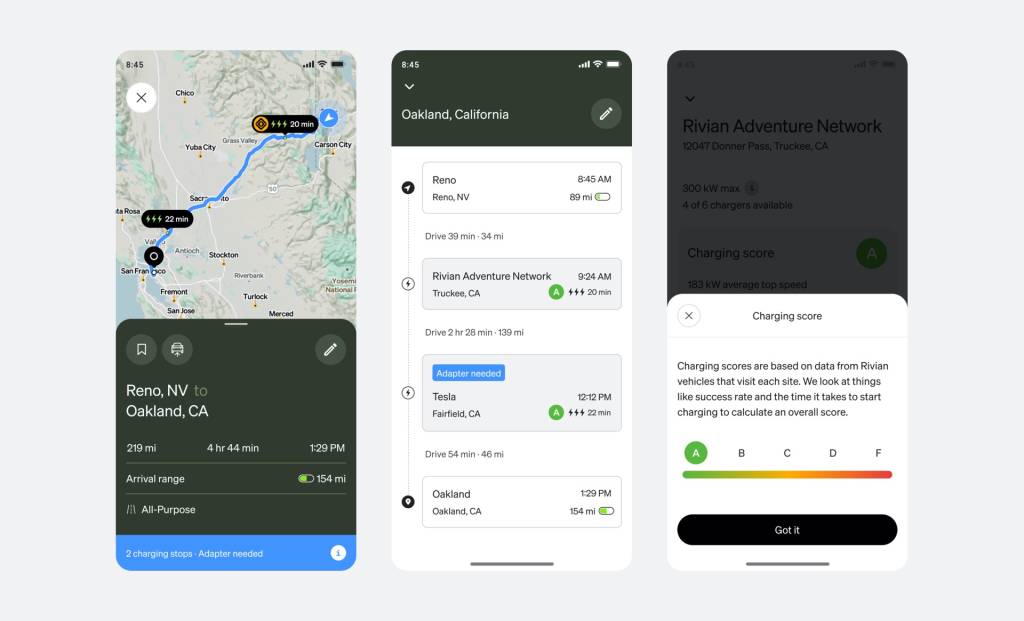
Rivian charging grades for trip planning – Software Update 2024.11.01
Rivian says that in choosing a fast-charging site, the vehicle’s peak rate may be above that of the charger, and in that case it clearly indicates so with a click of the information icon.
Although Rivian at no point directly says that it might choose a slightly slower charger that’s far more reliable over one that’s a speedy crapshoot, that appears to be the gist of it—and the real-world consequence, perhaps.
Charger reliability is surely top-of-mind for automakers, EV drivers, and prospective buyers alike. A 2022 UC Berkeley study found fast charging in abysmal shape in the Bay Area, with various hardware “nonfunctioning.” There, earlier this year, some criticized Electrify America’s most recent plan for being short on measures to address charger reliability.
The Biden administration’s Joint Office of Energy and Transportation has, with the buildout of NEVI-supported fast-chargers, laid out the basis for tracking charger reliability, although it’s oriented more toward where to make investment in the future rather than what works best at present.
Not just for Rivian but for any EV brand, finding a charger that simply works—and works at a charge rate that shows off the capabilities of the vehicle—is important for making a positive impression. With Rivian’s high-profile grade system, perhaps it will instill on charger networks that better uptime and reliability really do make good business sense.

Report: China now makes enough batteries for global EV production
China already has enough battery manufacturing capacity to supply all global EV production, according to Bloomberg New Energy Finance.
BNEF estimates to global battery-cell demand for both EVs and energy storage came in at around 950 gigawatt-hours in 2023—but manufacturing capacity was more than twice that, at around 2,600 gigawatt-hours.
China’s declared 2023 battery production alone was close to the actual global demand, according to BNEF, which notes that the U.S., Canada, Europe, and India are now incentivizing local battery production to compete with China—making the gap between supply and demand even greater.
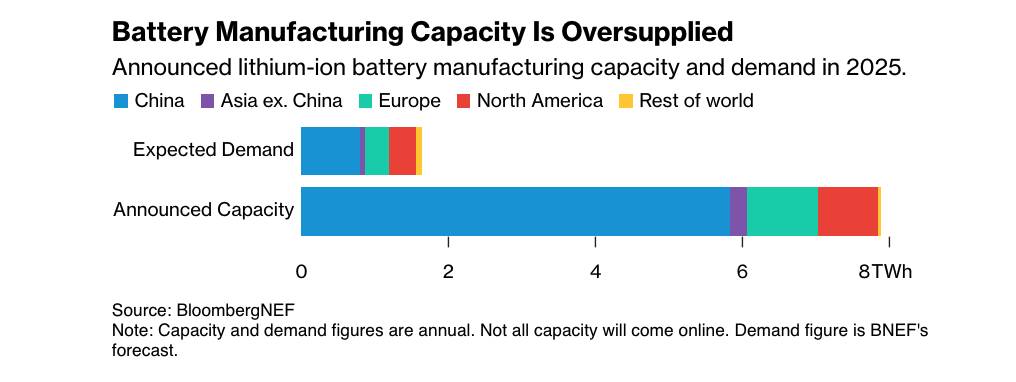
Announced battery manufacturing capacity and demand in 2025 (via Bloomberg)
BNEF reported 7,900 gigawatt-hours of annual battery manufacturing capacity announced by the end of 2025, but demand projections of just 1,600 gigawatt-hours. And that assumes continued, steady global EV sales growth, as well as growth in energy-storage use. Even half that total announced manufacturing capacity would be enough to equip every new car sold globally next year with a 50-kwh battery pack, BNEF calculates.
Overambition in building EV battery factories, along with a global lithium glut, after concerns of short supply just a few years earlier, has caused battery prices to drop inside and outside China across passenger cars, commercial vehicles, and energy storage.
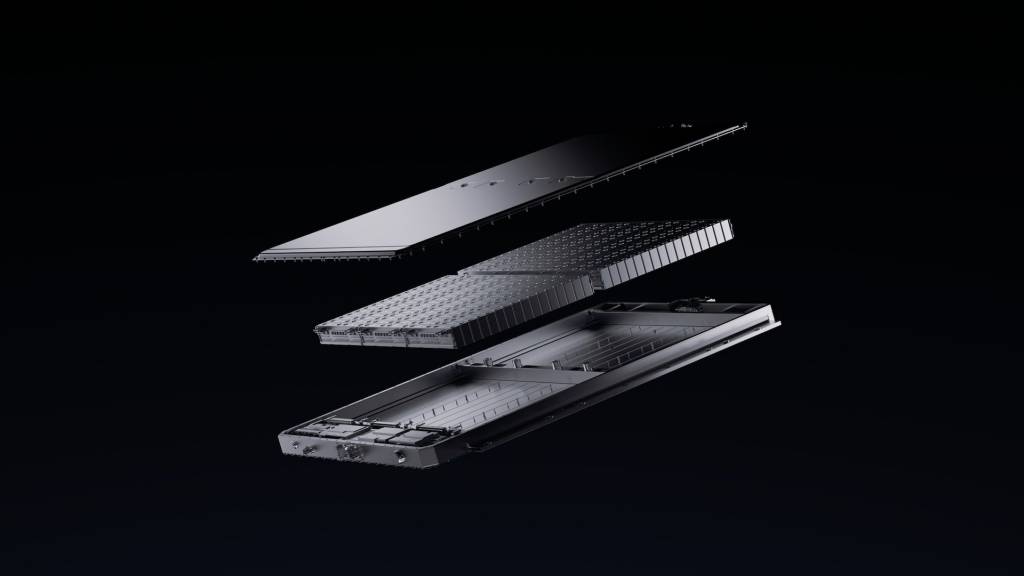
CATL Shenxing battery
There was concern over some price hikes in the costs of batteries in 2022. But as the Department of Energy reminded us earlier last year, battery costs have kept falling if you consider inflation and look at it in constant dollars.
A recent International Council on Clean Transportation (ICCT) study suggested that will help them reach cost parity with gasoline models within a couple of years—sooner than anticipated. And Goldman Sachs analysts expect a 40% drop in battery prices that will help boost sales, with or without subsidies.
Chery to sign platform deal with premium European brand
Chery’s Chairman, Yin Tongyue, said two premium European marques want to use a platform from the Chinese automaker.

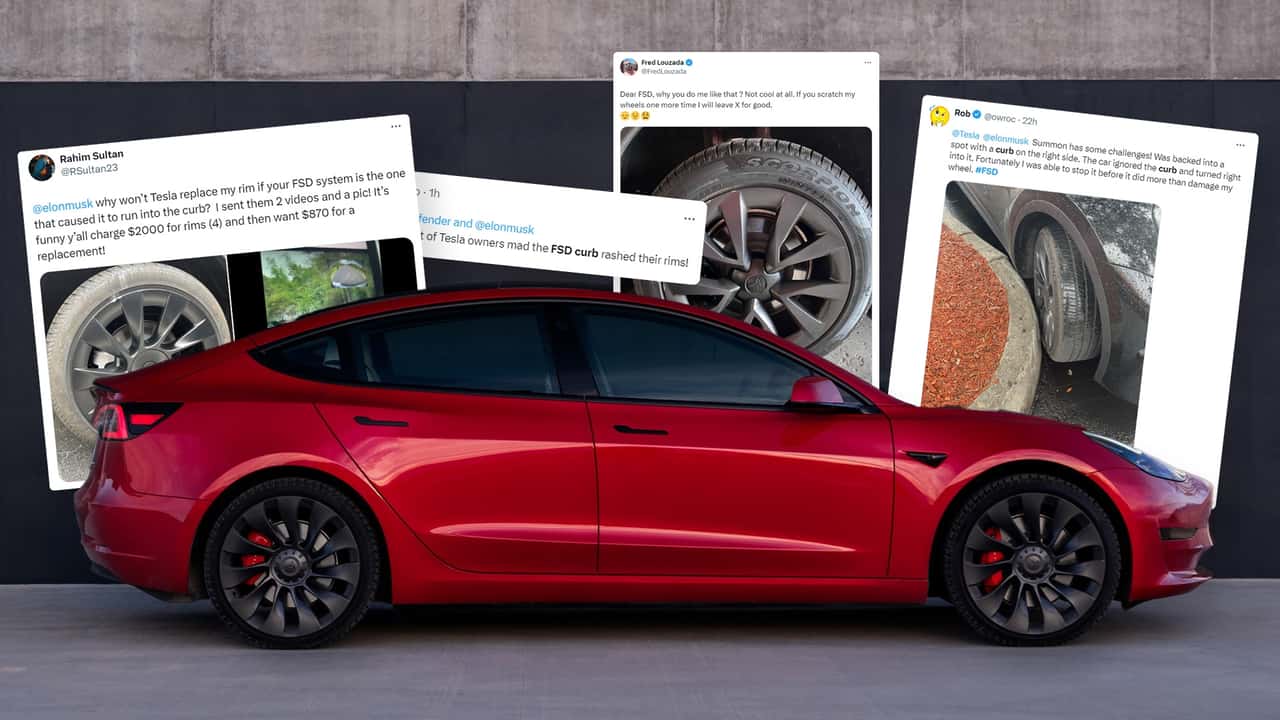
‘Full Self-Driving’ Teslas Keep Slamming Into Curbs
Owners trying out FSD for the first time are finding damage after their cars kiss the curb while turning.

Half of 2024 EVs have lower 5-year ownership cost vs. ICE
Many EVs have a lower five-year cost of ownership than comparable gasoline models, according an annual roundup from Vincentric, a source for ownership cost calculations for websites and automakers.
Vincentric’s analysis covers eight factors: depreciation, fees and taxes, financing, fuel cost, insurance, maintenance, opportunity cost and repairs. It assumes new vehicles are driven 15,000 annually over the first five years of ownership.
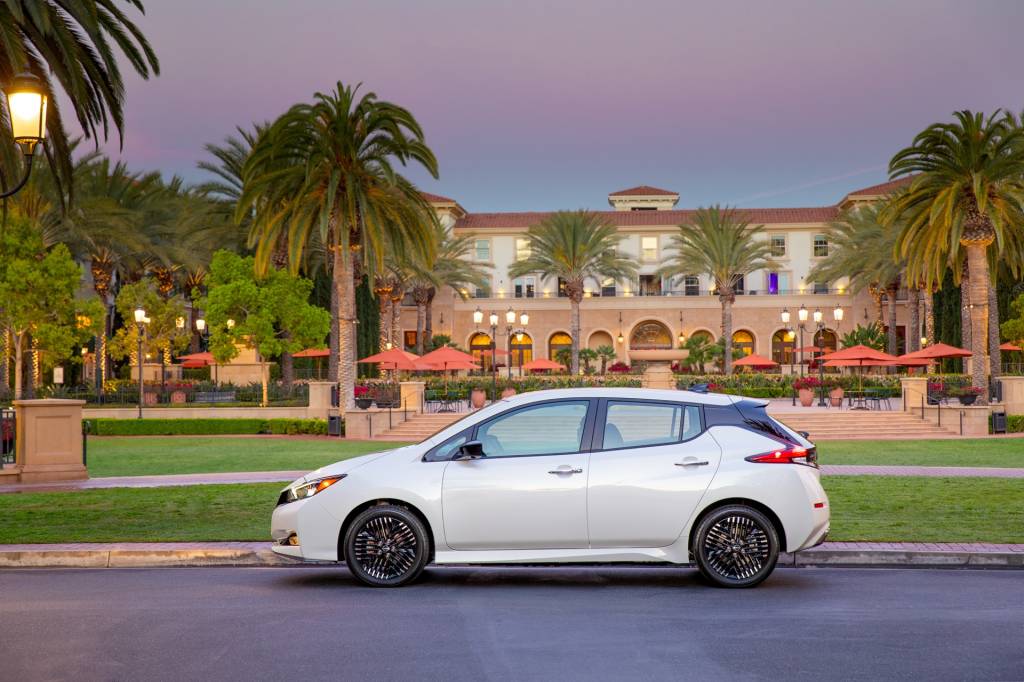
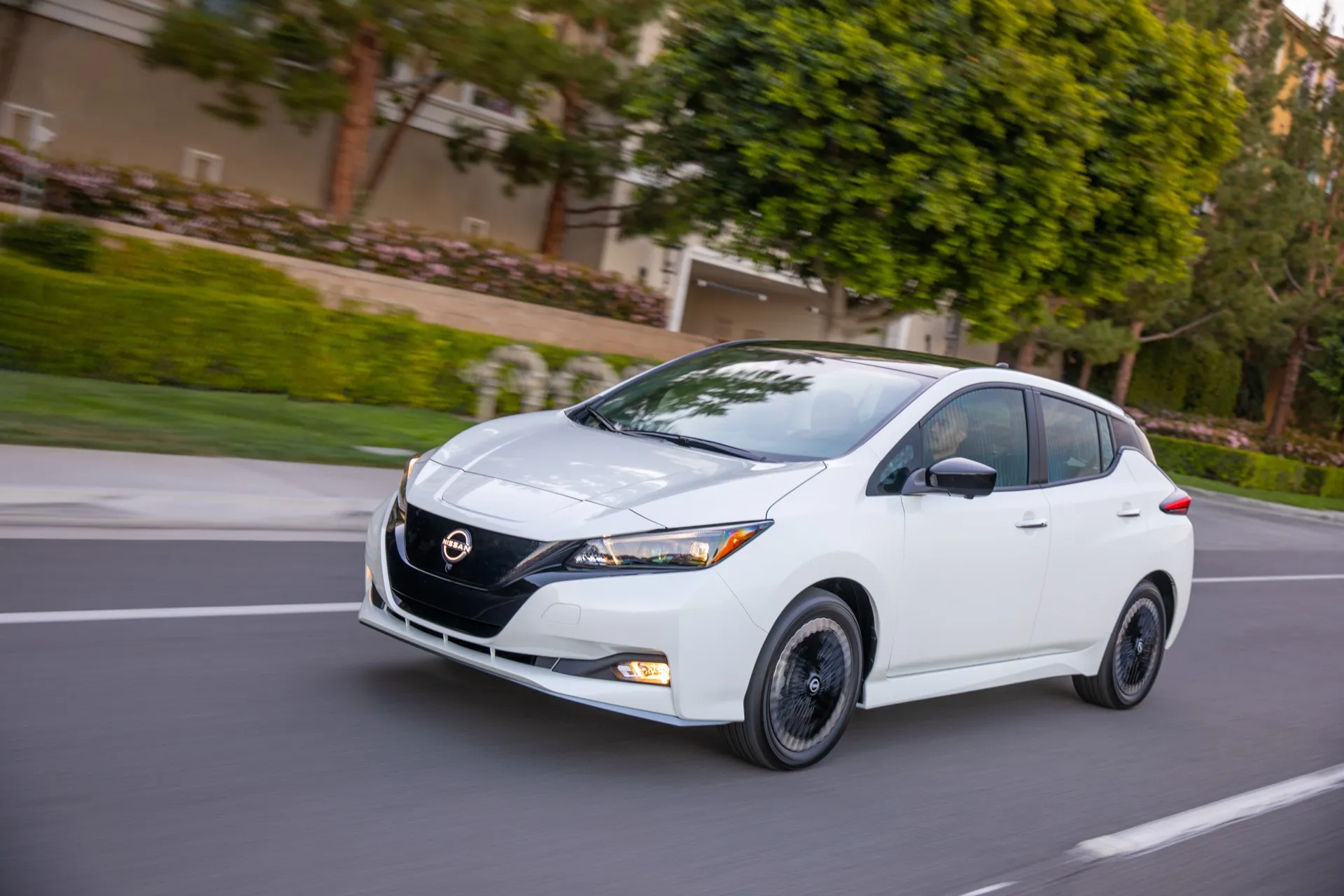
2024 Nissan Leaf
In its latest analysis, Vincentric found that 20 of 41 electric models (49%) cost less to own over five years than their gasoline counterparts. That’s down from the 2023 analysis, in which 52% of EVs surveyed had lower ownership costs than gasoline vehicles.
Depreciation is where EVs continue to lag behind gasoline vehicles, largely due to higher purchase prices, according to Vincentric. The loss of the federal EV tax credit for many models hasn’t helped, either. But analysts note that EV costs are expected to drop in the next few years, potentially allowing them to achieve price parity with gasoline models. That’s likely to happen because of continually falling battery prices, driven down by excess manufacturing capacity and more availability of raw materials.
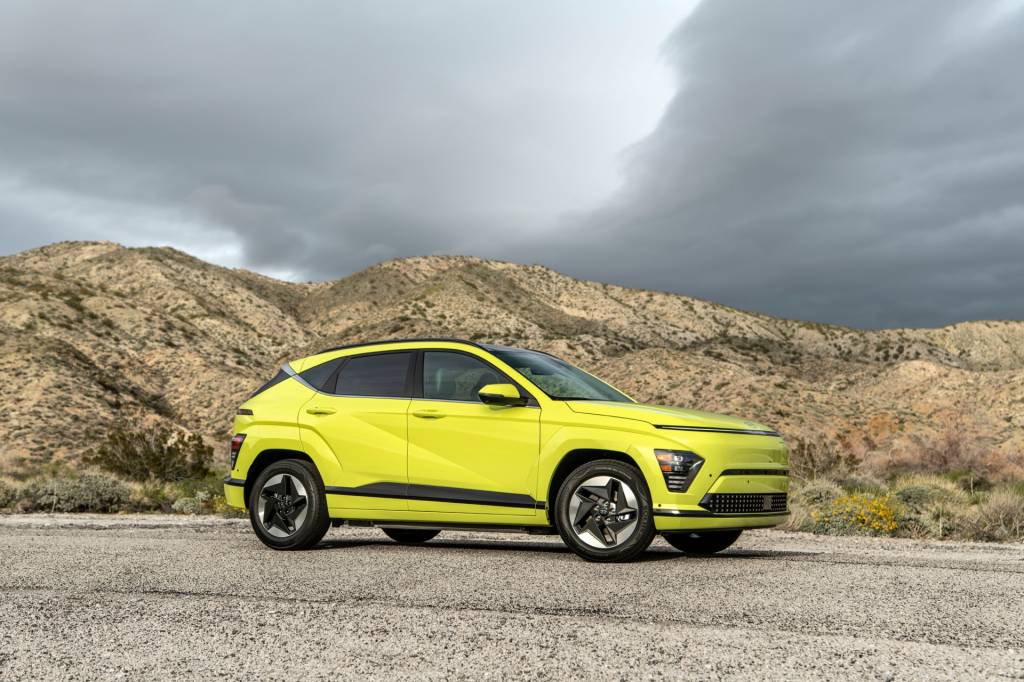
2024 Hyundai Kona Electric
Vincentric also found that 19 of the 41 EVs surveyed for 2024 recouped their price premiums in seven years, with eight of those EVs already having a lower purchase price than an equivalent gasoline model.
It’s a reminder that ownership-cost advantages can vary based on a variety of factors, such as where you live and the type of vehicle. A 2020 Consumer Reports study found that the ownership-cost advantages of EVs were particularly strong for SUVs and pickup trucks, for example.
Greg McGuire explores Mcity’s next chapter (Episode 246)
The managing director of the connected and autonomous vehicle test track details the facility’s evolution into a makerspace for mobility innovation that encompasses a data engine and mixed-reality tech development.