
Author: EVAI

Jeep Gladiator 4xe plug-in hybrid coming in 2025
Jeep, which has dominated the plug-in hybrid market, is adding a third nameplate to its 4xe line in 2025.

2024 Rezvani Arsenal teased as 7-seat bullet-proof SUV
 Rezvani is just weeks away from debuting the 2024 Arsenal, an armored SUV big enough for seven and able to be optioned with a 675-hp V-8. The California company already offers an armored SUV based on the Cadillac Escalade in the form of the 2023 Vengeance, which seats eight, but the Arsenal will feature a more toned-down design, judging by a…

Ferrari 812 successor, Red Bull RB17 hypercar: Today’s Car News
 Ferrari is just hours away from revealing its successor to the 812 Superfast. The new super GT is expected to debut with stunning looks, a new platform, a new V-12 engine, and possibly some form of electrification. Red Bull’s first hypercar, the RB17, is just months out from its debut. The track-only car designed by Adrian Newey will pack a V-10…

Cadillac says it will likely still sell gas cars beyond 2030
 Cadillac will likely still sell gas-powered cars beyond 2030, the brand’s chief, John Roth, told reporters on Wednesday. A Cadillac spokesperson later told the Detroit Free Press that the brand still plans to offer EVs in multiple segments by the end of the decade, but that the transition away from gas cars may be slower than anticipated. The end…

Review: 2024 Acura ZDX Type S keeps first EV mostly on-brand
The 2024 Acura ZDX is the Honda premium brand’s first-ever electric vehicle, a midsize crossover SUV with five seats.
Visually it’s every inch an Acura, and it’s very close in size to the brand’s bestselling model, the MDX midsize crossover. But the EV is differently proportioned—3 inches lower, on a wheelbase that’s 8 inches longer.
Named after a low-volume Acura SUV sold from 2010 to 2013, the new ZDX is actually built by General Motors and rides on that company’s Ultium EV platform—as does the related Honda Prologue from Acura’s parent brand. EPA range ratings vary from 313 miles for the rear-wheel-drive base ZDX A-Spec model to 278 miles for the top Type S trim, which has all-wheel drive standard. The ZDX A-Spec with AWD comes in between those ranges, at 304 miles.
In late April, we spent more than four hours driving the Acura ZDX in and around Santa Barbara, California. All our test vehicles were the top Type S version, so we can’t comment on the differences between those and the A-Spec models.
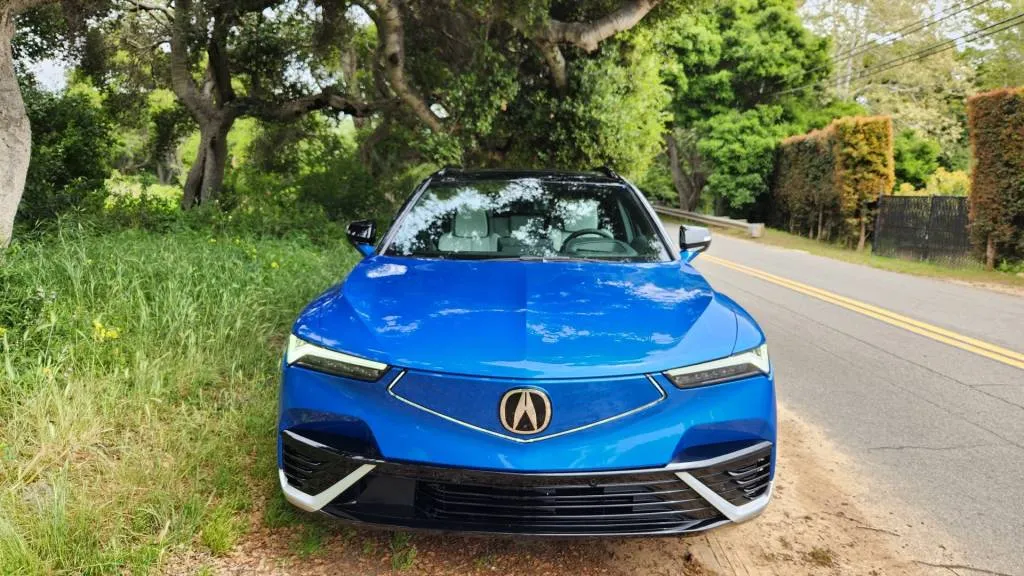
2024 Acura ZDX
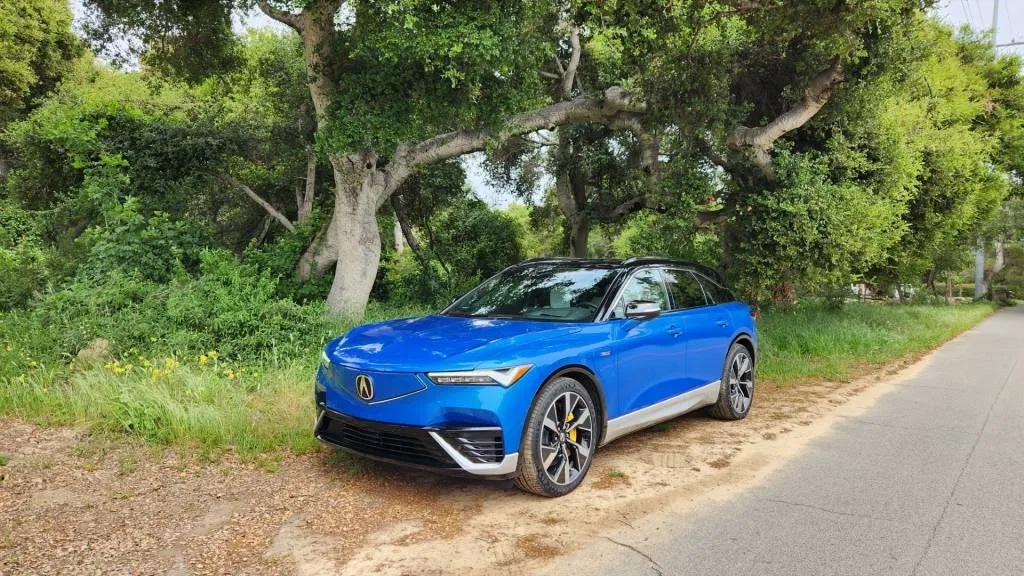
2024 Acura ZDX
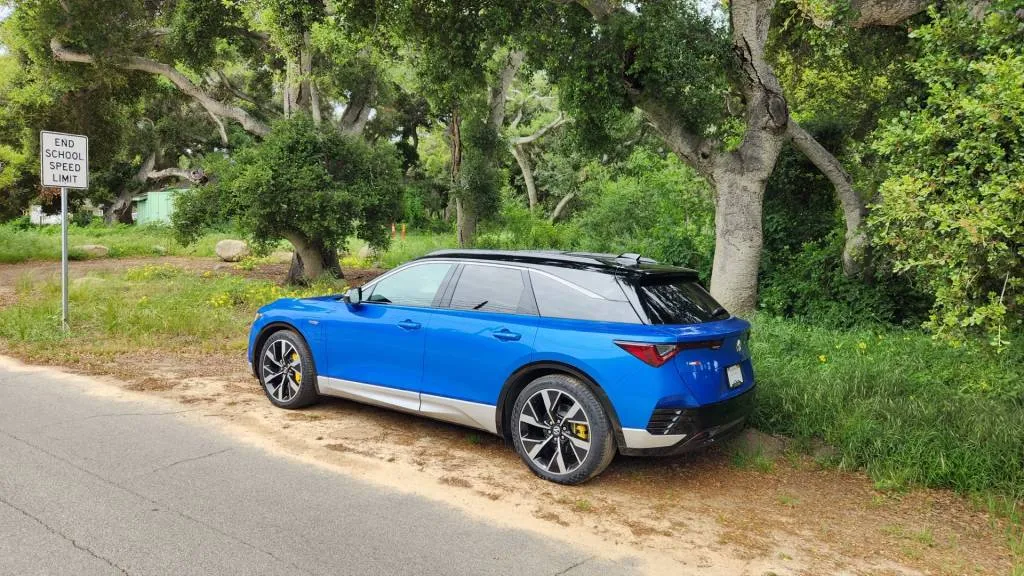
2024 Acura ZDX
An Acura inside and out—and electric
Overall, the Acura ZDX will likely appeal to MDX owners willing to make the jump to battery-electric power, though it foregoes that SUV’s third-row seating and it’s less sporty than other Acuras. For SUV buyers in particular, that is likely to be an acceptable tradeoff.
The 2024 ZDX looks every inch an Acura, inside and out. The shield-shaped front “grille” is a blanking plate, but the designers have managed to reduce the visual height of a midsize SUV. Tricks include a sculpted lower front fascia with horizontal fins, an optional black roof, a chrome band outlining the top of the windows—opinions on that flourish were very mixed indeed—and a silver “swoosh” under the doors.
Sadly, there is no front trunk under the long nose. Acura and GM engineers chose to package power electronics and charging equipment there instead, foregoing one of the benefits of an EV ‘skateboard’ platform.
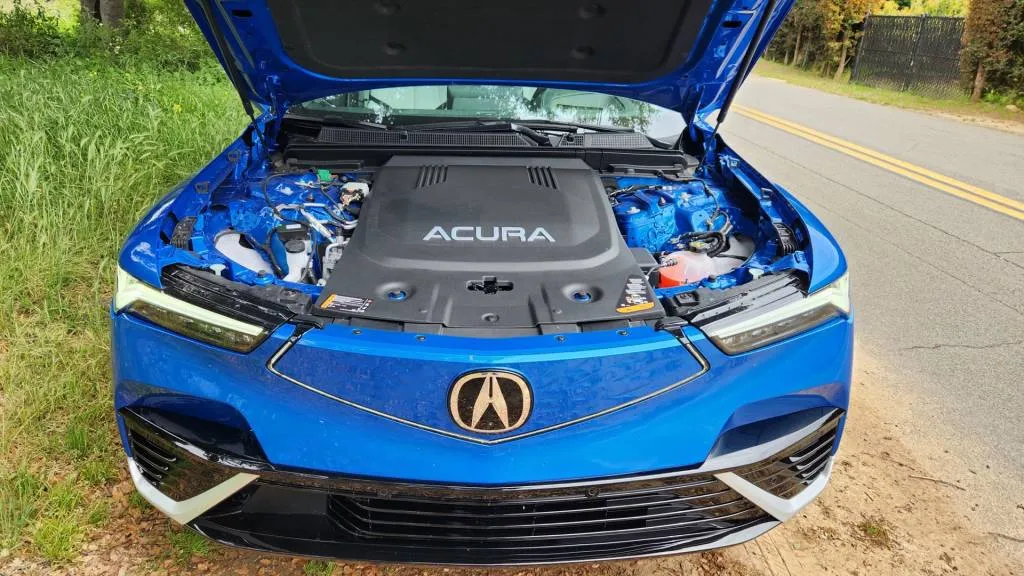
2024 Acura ZDX
ZDX charges quickly, has route planning
The 102-kwh battery pack charges at rates up to 190 kw, Acura says, noting that the ZDX can add “nearly 81 miles” in 10 minutes of fast-charging. That, of course, is under ideal conditions: low battery charge, optimal ambient and battery temperatures, and a charging station that can deliver that power. A more realistic road-trip scenario—20-80% fast-charging—is quoted at 42 minutes.
Acura says Google Assistant will route the ZDX to EV charging stations if a trip exceeds the car’s available range, and the electric SUV will also precondition its battery en route if needed to provide a faster charge. On our short drive, we weren’t able to test the routing functions. We did try to recharge our test ZDX, but the one CCS charging station within our deadline was entirely full—so that’ll have to wait for a longer-term test car.
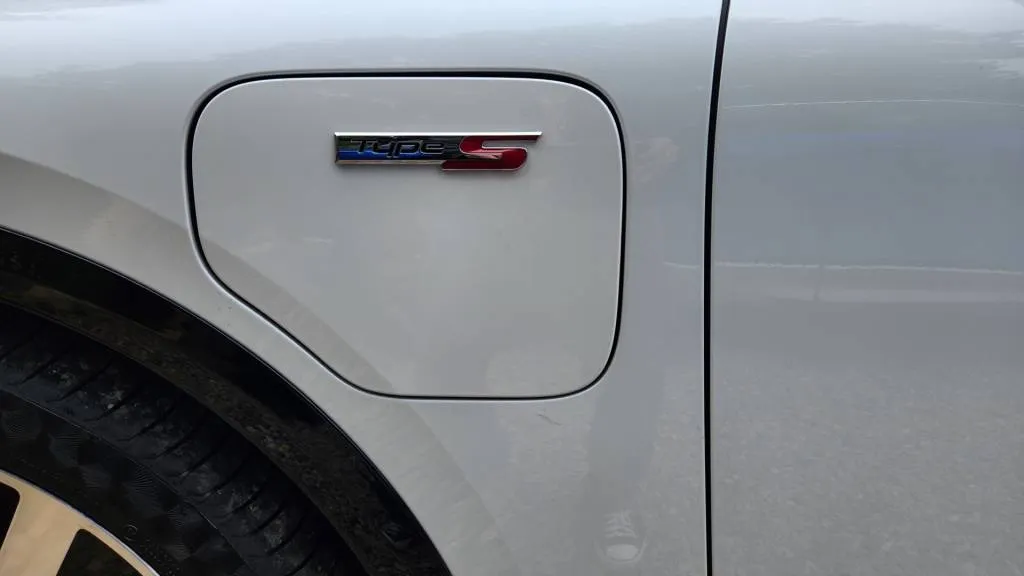
2024 Acura ZDX
On our various drive legs, we recorded efficiencies of 2.2 to 2.4 miles per kwh, lower than some EV SUVs but perhaps not surprising for a three-ton SUV, given the hills along our route and substantial travel at California highway speeds.
Acura takes an interesting approach in offering buyers a choice of three different options for charging gear. One option is a Level 2 home charging station; a $500 credit toward installation; and $100 in public charging credits. Buyers who don’t want to install a permanent charger can get a portable charging cord, with $250 toward installation and $300 in charging credits. Finally, users who can’t charge at home can opt for $750 in public-charging credits. Acura has wisely stayed away from the “unlimited” public-charging offers other makers use to lure buyers, which often leads drivers who could easily charge at home to clog public-charging sites because they’re free.
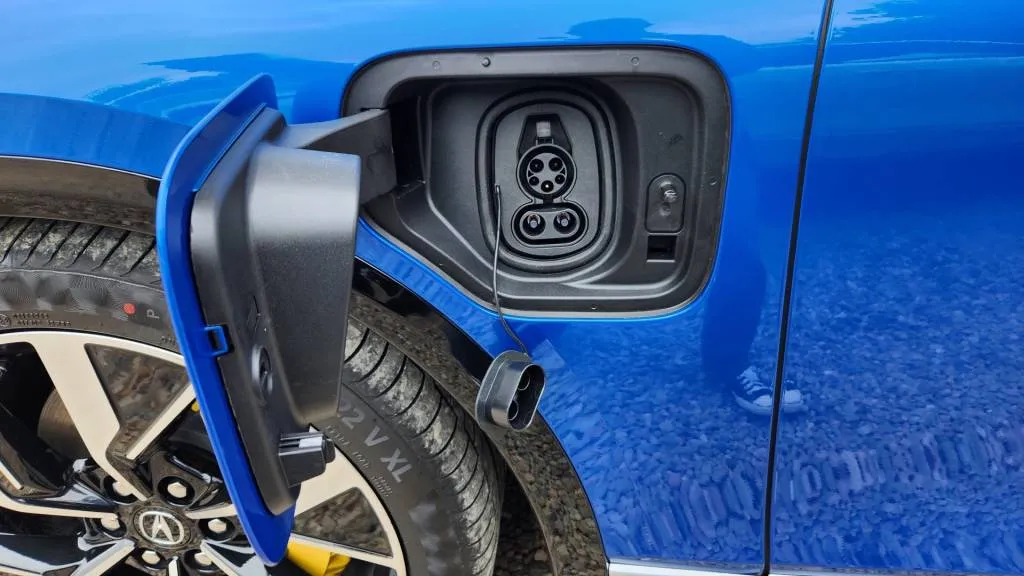
2024 Acura ZDX
Acura says 2024 ZDX models will come with the CCS charging port, but 2025 model-year cars should have the Tesla-style NACS connector. We recommend checking back closer to the start of next year to confirm that.
ZDX is quickest Acura SUV ever
Acura says the new electric ZDX is the quickest SUV it’s ever sold, underscoring the “performance” aspect of the brand. It’s also heavy: almost 1,200 pounds more than an MDX with roughly the same footprint. The all-wheel-drive electric powertrain gives it close to a 50/50 weight distribution, and the air suspension with adaptive dampers provides a Sport Mode that allows it to ride 15 mm lower than normal. Snow Mode raises the ride height by 25 mm and adjusts traction for slippery conditions, and an Individual Mode that lets owners tune settings for the steering, suspension, and power to their liking—though we doubt it will be used much.
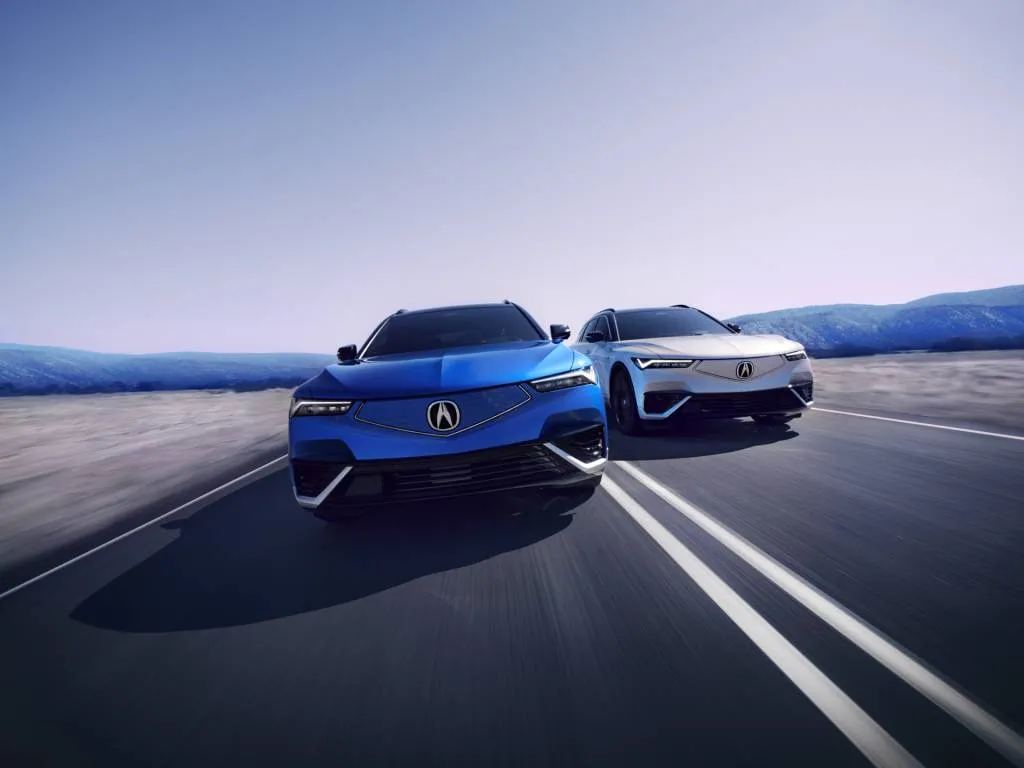
2024 Acura ZDX
The all-wheel-drive A-Spec is quoted at 360 kw (490 hp), while the Type S ekes out a few more horses to achieve “nearly 500 hp,” according to product planning manager Jonathon Rivers. The Type S also produces up to 544 lb-ft of torque, which he noted exceeds even the second-generation NSX two-seat performance car, with its mid-mounted V-6 engine and three electric motors. The base A-Spec model uses a single 263-kw (358-hp) motor that powers the rear wheels.
Massive Brembo brakes on our Type S use six-piston front calipers clamping down on 15.6-inch front rotors (13.6 inches at the rear). The calipers are painted bright yellow to underscore the sporty aspirations of the ZDX, and they hauled the 6,050-pound Type S down to a stop just fine under emergency braking. Our Type S rode on 22-inch wheels; all-weather tires are standard, or buyers can opt for performance tires as a $1,000 option.
The default drive mode approximates the powertrain feel of a conventional vehicle with an automatic transmission—minus the shifts, of course. The suspension was comfortable on most surfaces, with good damping and a comfortable ride. Sport mode gave us less added punch than we had hoped for: the suspension felt tighter but added some harshness, and the steering was both lighter and quicker.
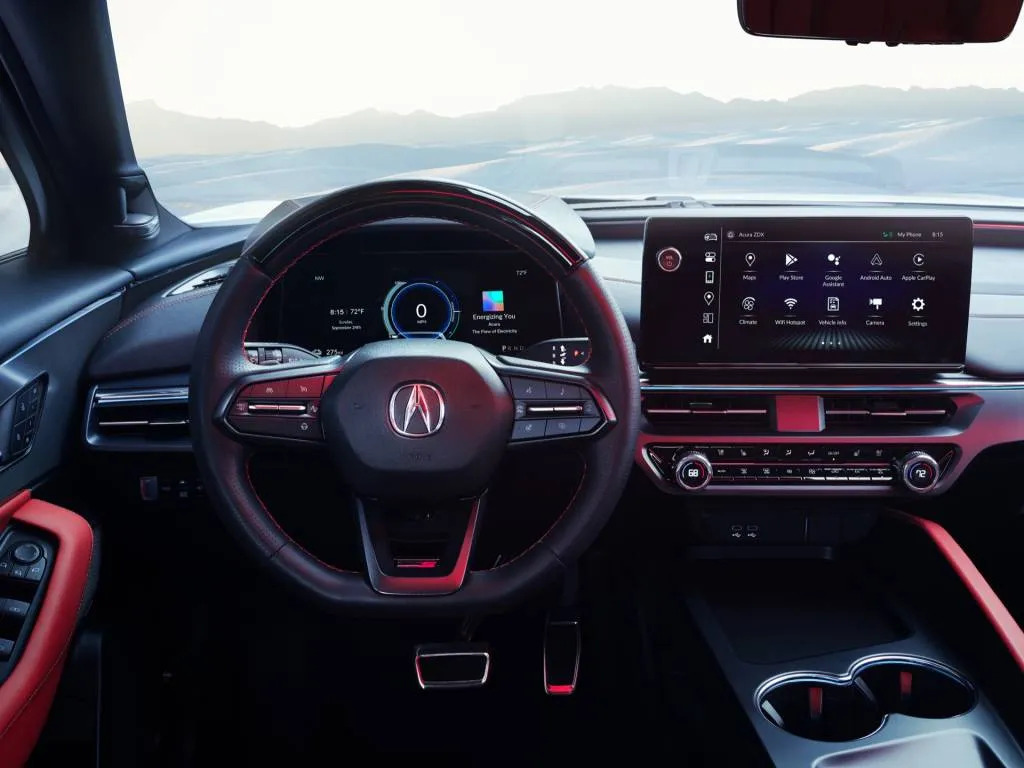
2024 Acura ZDX
2024 Acura ZDX
2024 Acura ZDX
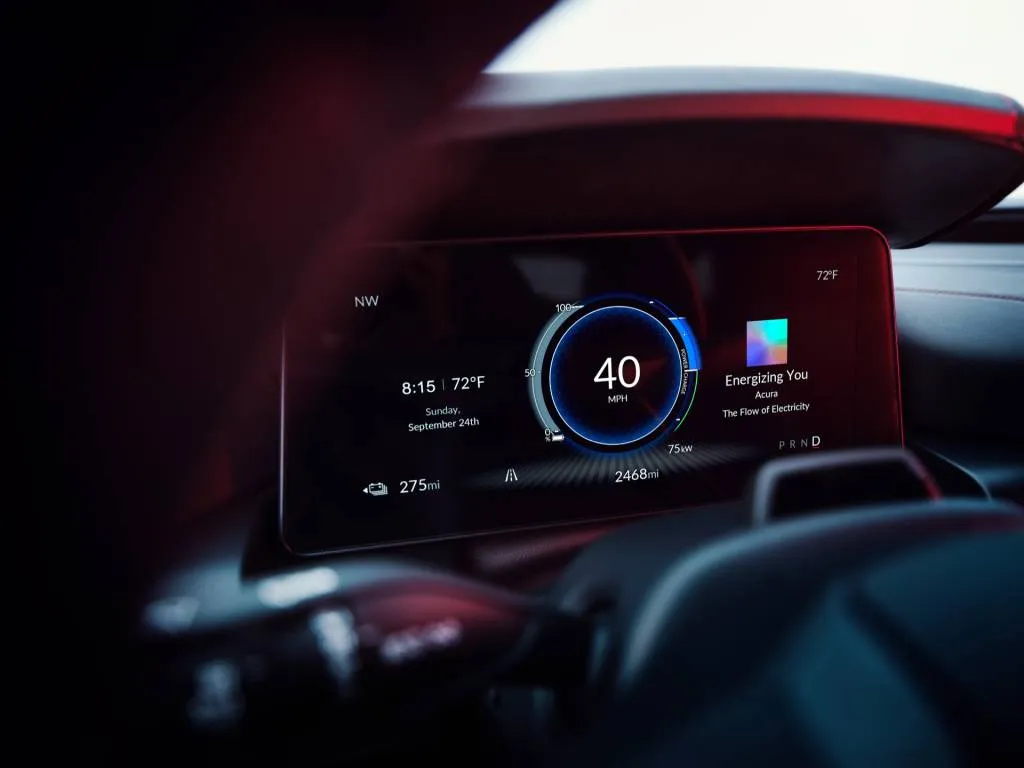
Tapping a permanent icon at the top of the touchscreen brings up a box for “One Pedal Driving” set to the “Normal” level. (Tapping it again turns off regenerative braking altogether.) But to get the strongest regen requires further action: a driver must tap the words “Set Level” and then choose the “High” option from a dropdown that appears. This seems like it could all be combined into a single popup for considerably less distraction.
Inside the ZDX cabin, the front seats are power-adjustable and comfortable. The perforated Milano leather upholstery with contrast stitching is appealing, and our Type S test model added embossed Type S logos for extra flash. The flat floor in front of the wide rear seat makes carrying three adults less cramped than in comparable crossovers with driveline humps.
2024 Acura ZDX will feature popular Google apps built in
ZDX doesn’t omit CarPlay or Android Auto
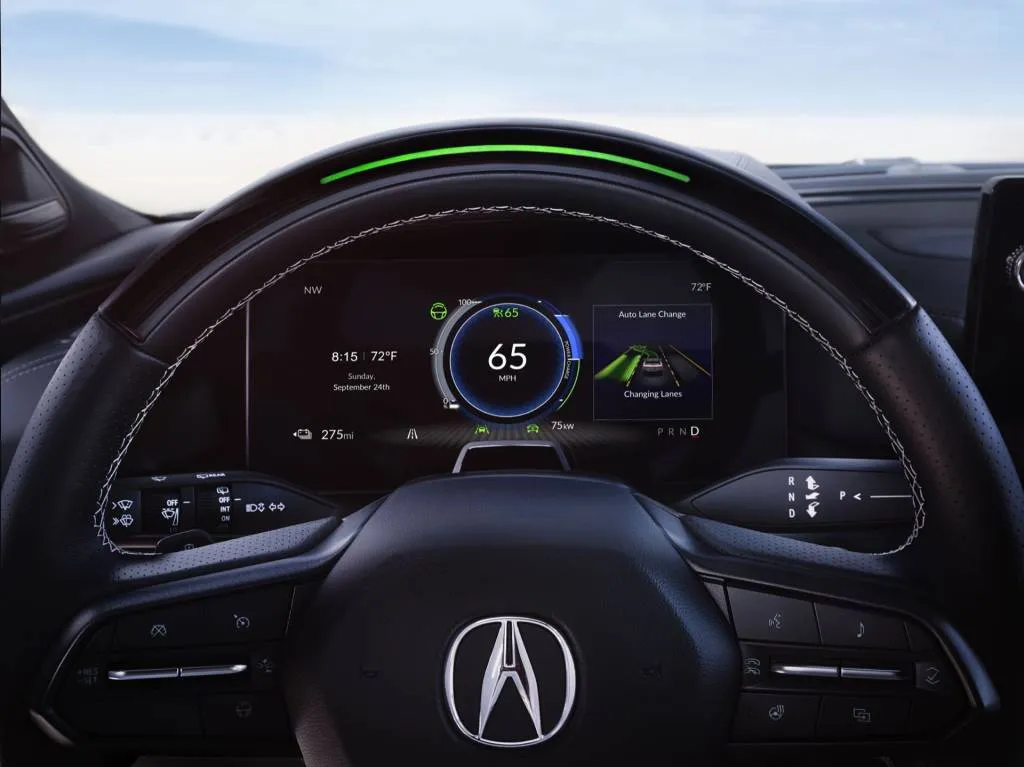
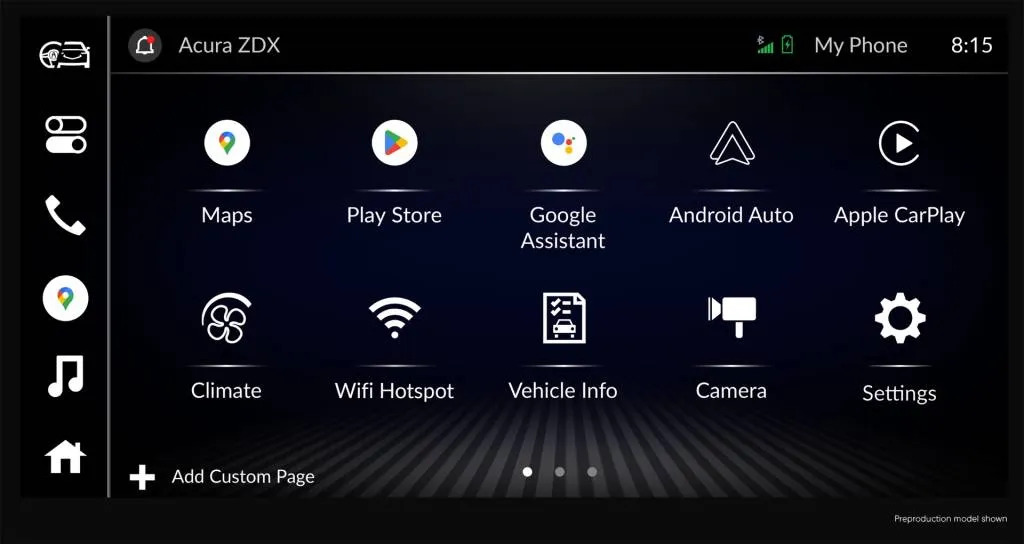
All models come with an 11.0-inch digital instrument cluster; the Type S adds a head-up display. It also comes with Google Assistant built into the infotainment system. The large icons on the central 11.3-inch touchscreen are easy to hit, and the ZDX offers both Android Auto and Apple CarPlay—unlike some Ultium-based EVs sold by GM. We tested wireless navigation mirrored to the car on both types of phone, and it worked flawlessly—though the word “Google” in conversation seemed to interrupt the Apple Maps app as the car woke up to await a command.
A wide console between the seats accommodates both two large cups and two smartphones lying side by side. A pocket just ahead of the central armrest offers wireless charging and keeps smartphone screens hidden to prevent drivers sneaking a glance—or worse. Large buttons and knobs on the dash provide familiar controls for things like audio volume and tuning, and ventilation functions. There’s also a large area under the forward part of the console for a small backpack or a purse—which was almost entirely invisible amidst the uniform dark gray plastic of the dash and console and the black carpeting.
2024 Acura ZDX
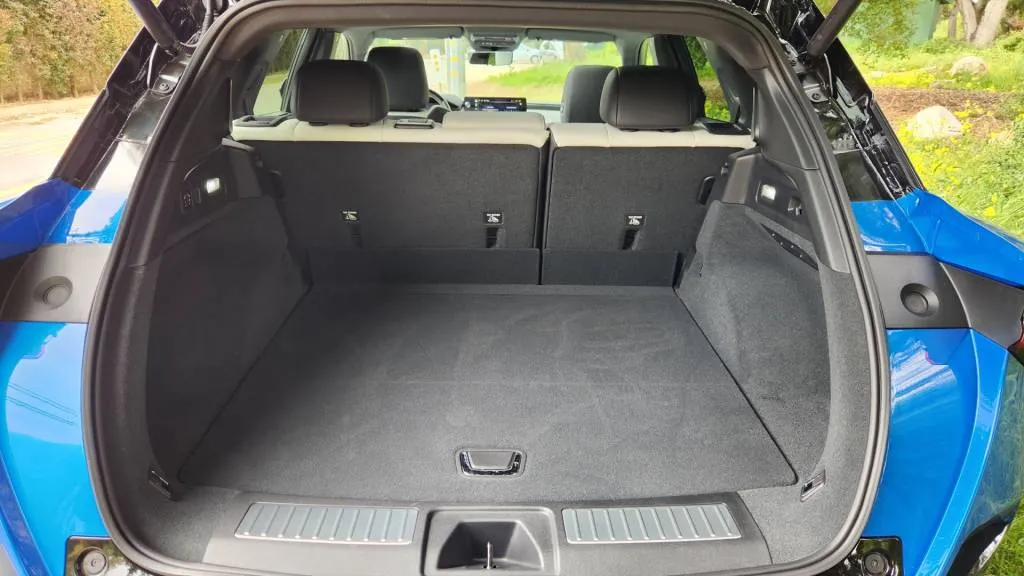
Cargo volume is a substantial 28.7 cubic feet behind the second row; with that row folded down, it rises to 62 cu ft. The rear seatbacks, however, don’t fold quite flat. It’s not a huge impediment, but it’s also not a flat load floor all the way up to the front seats.
The active safety system in the ZDX includes all usual automated driver-assistance systems, including automatic emergency braking, active lane control, and too many others to list here.
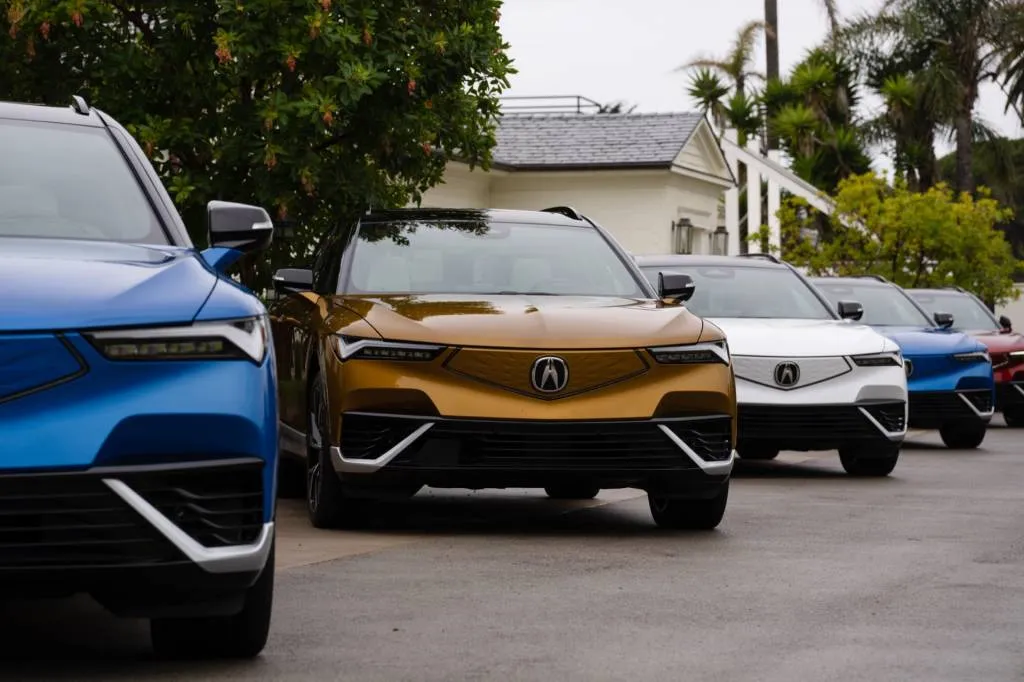
2024 Acura ZDX
Acura ZDX lineup is simplified
The 2024 Acura ZDX lineup is simple, with rear- or all-wheel-drive A-Spec models, the Type S for additional bling, and minimal options. Keyless access is standard, and both key-card and smartphone access are offered. One notable standard feature is an 18-speaker Bang & Olufsen audio system in all ZDX versions; it will be fitted to other Acura vehicles for the 2025 model year.
The ZDX is built at the same Spring Hill, Tennessee, assembly plant that produces the Cadillac Lyriq. As such, Acura says it should qualify for the $7,500 EV tax credit that, as of January 1, can be applied directly to the sticker price to reduce the cost of the vehicle. Acura told us it expects to deliver 20,000 ZDXes this year, and 30,000 annually in subsequent model years.
–
Acura provided airfare, lodging, and meals to enable Green Car Reports to bring you this first-person drive report.

Report: Feds to formalize foreign entity rules for EV tax credit
The U.S. Treasury Department could issue clarifications on federal EV tax-credit eligibility rules as early as Friday, reports Transport Topics.
Citing anonymous sources familiar with the matter, the report claims the federal government is ready to issue rules relating to its “foreign entities of concern” requirement. Specifically, vehicles with battery components or critical minerals from companies controlled by certain countries the U.S. does not have friendly trade relations with would not qualify for a $7,500 federal tax credit. This has remained at the “proposed guidance” stage, but the Biden administration appears ready to formalize it.
As Green Car Reports has pointed out before, the proposed rules suggest that products from some automakers that are set to build EVs in the U.S.—like Volvo and Polestar—might not be eligible because of their Chinese ownership and control.
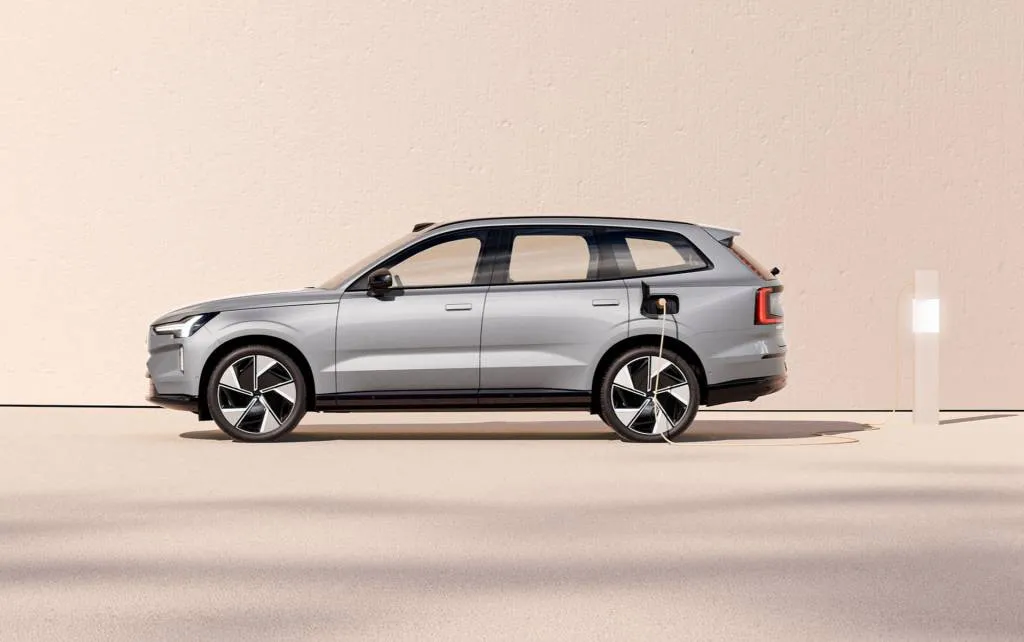
2025 Volvo EX90
Some proposals have looked at establishing a specific threshold of traceable battery minerals, aiming to quantify the amount of material from countries with which the U.S. does not have a free trade agreement, Forbes reports. But these could still limit the number of vehicles that qualify for the federal tax credit.
Just this year, new requirements for battery sourcing pushed some EVs off the list of qualifying vehicles—some temporarily. General Motors, for instance, had to make last-minute sourcing changes in its Ultium EVs.
Most EVs for sale in the U.S. have American-made batteries—but there are certainly some noteworthy exceptions like the North American-made Ford Mustang Mach-E. But if the U.S. opts for a particularly strict and narrow interpretation of the rules, then there may be a greater and renewed attention paid to EV battery recycling.
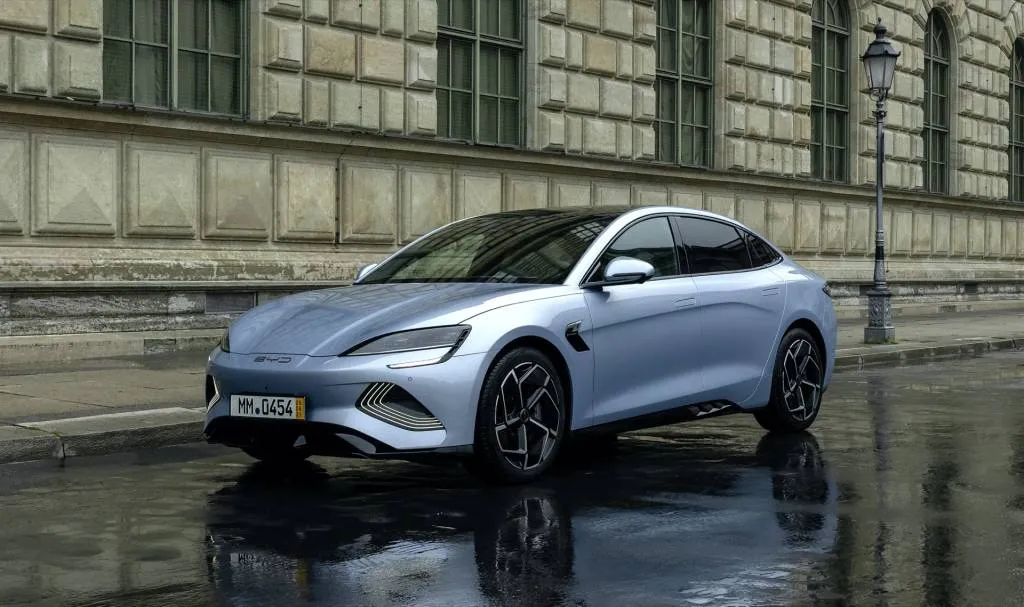
BYD Seal
In 2023, the U.S. eased concerns from a group of other countries with a trade pact that assured Japan, South Korea, and the European Union that battery components from these trade partners would be included in tax-credit eligibility.
Ultimately, the interpretation of the rules will likely determine how and when China’s massive EV buildout reaches the U.S. market. China now faces a glut of EV and EV battery production facilities.

Costco deal saves up to $2,000 on these EVs and PHEVs
Costco is once again offering deals on EVs and plug-in hybrids for its members.
Between May 1 and July 31, the retail chain is offering a $1,000 incentive on 2024 and 2025 Volvo models, including the 2024 XC40 and C40 Recharge EVs and XC60 Recharge and XC90 Recharge plug-in hybrids, as well as 2025 XC60 and XC90 plug-in hybrid models.
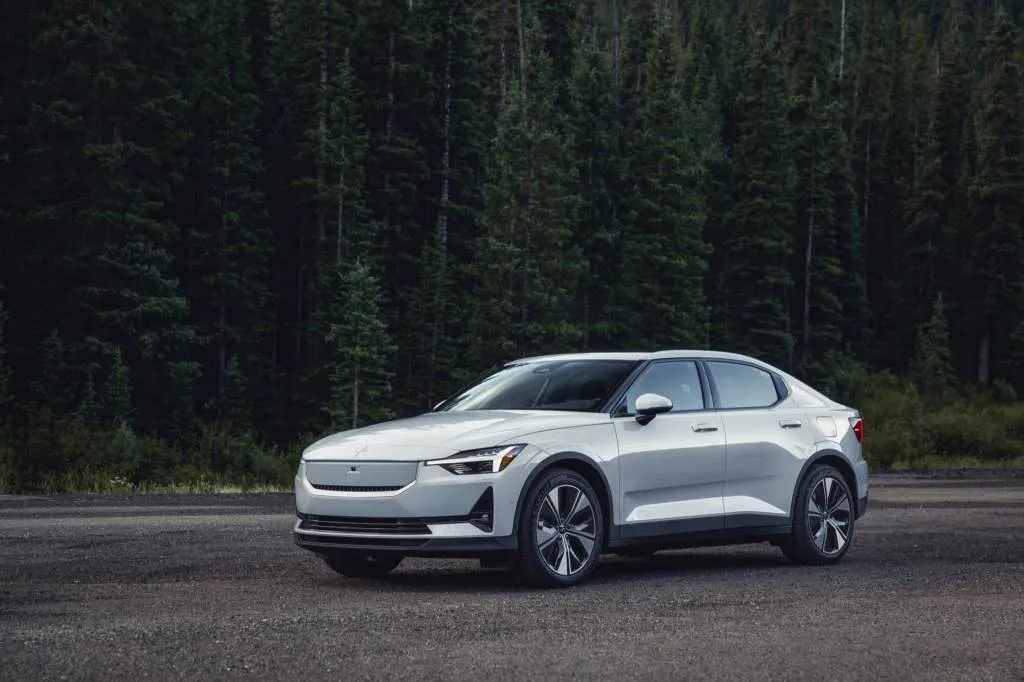
2024 Polestar 2 single motor
The XC40 Recharge and C40 Recharge are essentially the same vehicle, with the C40 Recharge having a more coupe-like body style. Both perform better and return more range for 2024 with a new rear motor and rear-wheel-drive focus. Volvo is in the process of rebadging the XC40 Recharge and C40 Recharge as the EX40 and EC40, respectively, to fit in with its updated EV naming scheme.
Costco is also offering incentives of $1,000 for the three General Motors EVs—the Cadillac Lyriq, Chevrolet Blazer EV, and Chevrolet Equinox EV—as well as a $2,000 incentive for the Polestar 2.
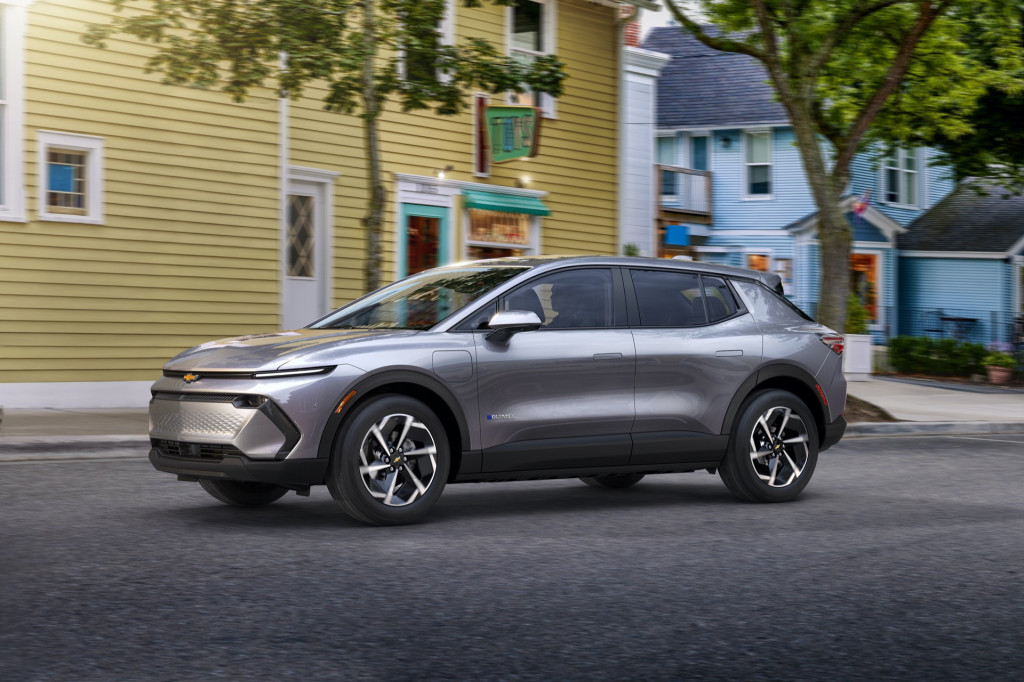
2024 Chevrolet Equinox EV
The Polestar 2 has received a similar makeover as its Volvo XC40 Recharge and C40 Recharge platform mates, switching from front-wheel drive to rear-wheel drive in single-motor form. That’s made the Polestar more satisfying to drive.
GM, meanwhile, has cut the priceof the 2024 Chevy Blazer EV by thousands in its inaugural model year. The Equinox EV is due to start arriving at dealerships very soon, but it will be awhile before the most affordable versions are available. Chevy has already announced another incentive on that model allowing Bolt EV drivers an extra $3,000 off, though, so at least some customers may be able to get an Equinox EV at a truly low price.
Zeekr aims to rival Mercedes, BMW in Level 3 self-driving tech
The Geely subsidiary wants to offer hands- and eyes-off driving at speeds up to 130 kph in Europe.
Fed holds rates steady, flags ‘lack of further progress’ on inflation
The Federal Reserve said it “does not expect it will be appropriate to reduce the target range until it has gained greater confidence that inflation is moving sustainably towards 2%.”