
Author: EVAI

2025 BMW 3-Series gains updates, including mild-hybrid power
 An updated BMW 3-Series arrives in showrooms later this year as a 2025 model. The update is the second for the current compact sedan, which arrived for the 2019 model year and was given its first update for 2023. The latest update mirrors changes made to the related 4-Series for 2025. At the top of the list is the addition of a 48-volt mild-hybrid…

2025 BMW M3 with all-wheel drive adds 20 hp
 The BMW M3 gains a round of updates for 2025, but one thing hasn’t changed: the availability of a 6-speed manual in a rear-wheel-drive sport sedan. The configuration is offered in the base M3, which continues with a 473-hp rating for 2025, or the same as last year. The next rung up the ladder is the M3 Competition, which features an 8-speed…

Rivian May Offer Dual Motor Performance Pack As A Software Update
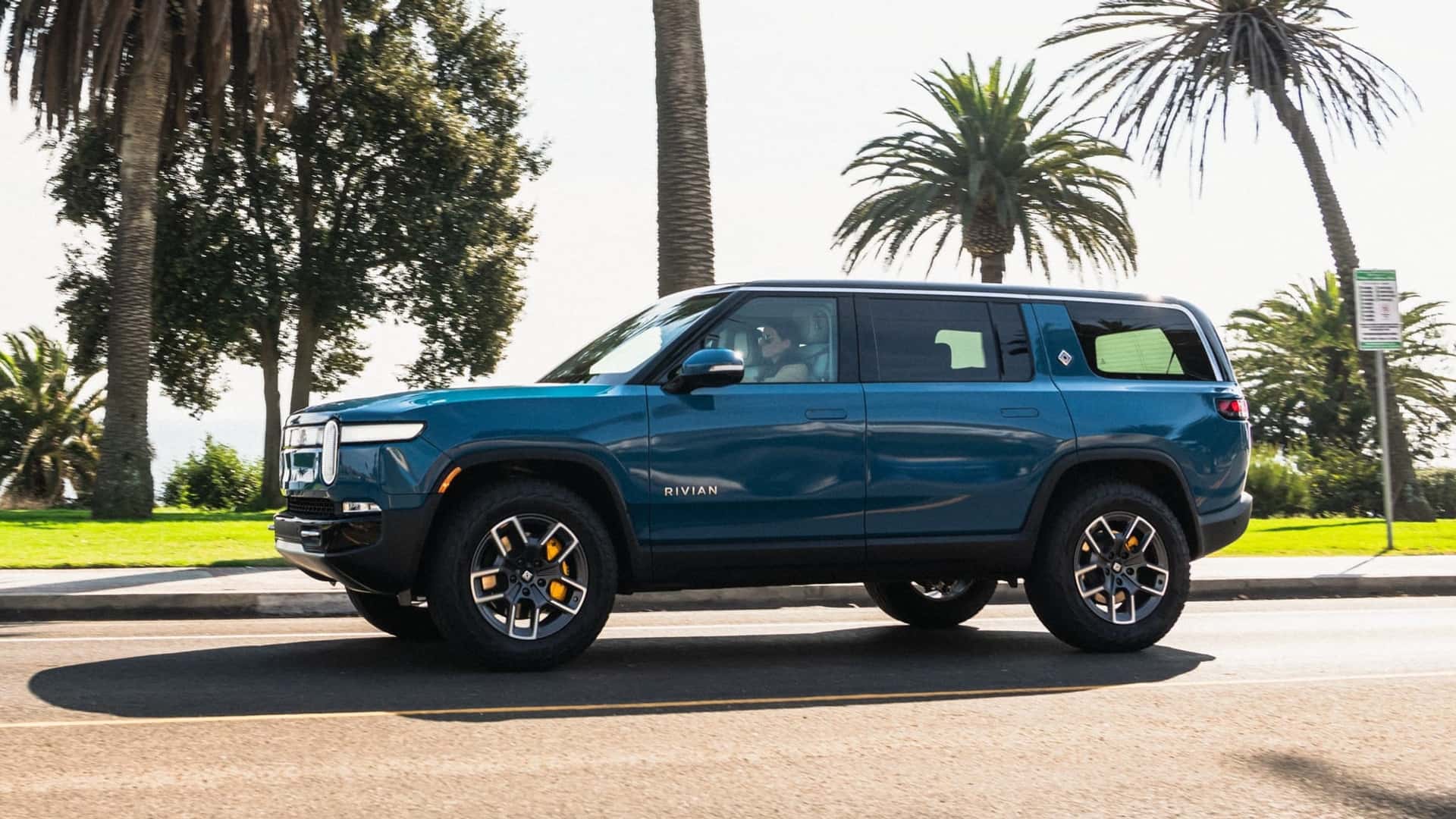
Rivian gave its dual-motor models a lot more go when it introduced the $5,000 Performance Pack. The package ups power from 533 horsepower to 665 hp, with an impressive 219 pound-feet torque gain for a maximum output of 829 lb-ft. It shaves eight-tenths off the 0 to 60 mph sprint time, which falls to 3.5 seconds, and almost one second off its quarter-mile time. But so far it’s only been available as an option when you configure a new truck.
However, a post on the Rivian Forums suggests that may change soon. According to the forum poster, a Rivian customer service agent said the manufacturer is planning to launch a software update sometime later this year that will make the Performance Pack available as an upgrade for all dual-motor Rivian trucks. The poster includes the text of the email, purportedly from the adventure truck brand. If this is true, it’ll be the first time Rivian will offer such an upgrade. Other electric vehicle manufacturers like Tesla have been doing it for years.
The Performance Pack makes dual-motor Rivians almost as quick as quads
With 665 horsepower and a lot more torque, Dual Motor Performance Rivians almost match quad-motor trucks for acceleration at a lower price.
There’s no word on how much the upgrade will cost, but a safe bet is that it will cost around the same as the package costs on a new truck: $5,000. There may be some constraints, like the upgrade being available only for trucks manufactured after a certain date, which may feature different hardware that makes the upgrade possible.
Even with the Performance Pack, dual-motor Rivians can’t quite match their quad-motor brethren, which have 831 hp and 908 lb-ft. This impressive combined output allows four-motor Rivians to do the dash to 60 mph in 3 seconds flat and complete the standing quarter-mile in under 12 seconds. The Performance dual-motor R1T and R1S aren’t far behind, though, with quarter-mile times of about 12.2 seconds.
Rivian has reportedly recently been offering big discounts on R1T and R1S trucks in its inventory as it aims to make way for 2025 model-year vehicles. According to Drive Tesla Canada, you can get a dual-motor R1T for up to $6,000 off the list price if you buy from inventory, which is still packed with plenty of 2023 model-year vehicles at the time of writing.
So you can buy a Rivian dual-motor from stock, and you should be able to get the Performance Pack for it as a separate upgrade. If you manage to get the truck at a discount, you should be able to spend the difference to make the truck faster when the standalone Performance upgrade becomes available. That sounds like a pretty sweet deal.
Share this Story

Auto loan tech company Defi Solutions says nothing sensitive accessed in breach
Car loan software provider Defi Solutions on April 29 reassured lenders that despite hacker claims to the contrary, no sensitive information had been accessed in a breach discovered nearly two months earlier.

Ford Mach-E GT review, VW ID.4 recall, wireless EV charging for fleets: Today’s Car News
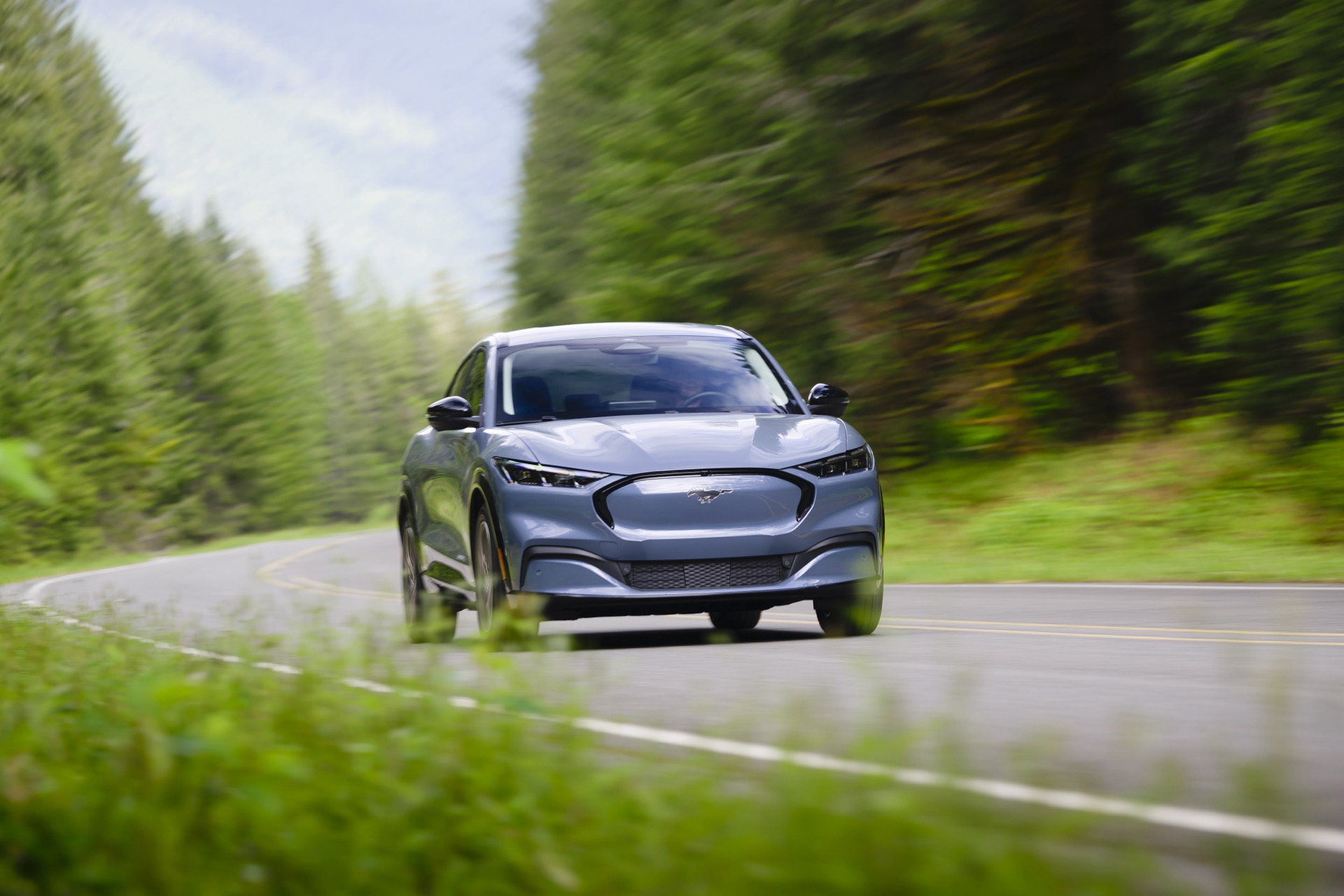
Does wireless EV charging make sense for commercial vehicle fleets? Is VW solving its earlier ID.4 display flickers and flaky controls with a recall remedy? And is the Mustang Mach-E GT worth the premium? This and more, here at Green Car Reports.
The 2024 Ford Mustang Mach-E GT goes quicker with a new rear motor from the F-150 Lightning, and it’s more enjoyable on the backroads with its magnetic damping system and performance seats now included.
In a recall of the 2021-2023 VW ID.4, Volkswagen will remedy glitchy gauge clusters and flickering infotainment screens by having dealerships update the software relating to a control unit and infotainment module.
And could commercial EVs be viable at a lower cost, with smaller batteries, thanks to dynamic wireless EV charging systems in the roadway? That’s what an Indiana test aims to investigate, and it’s one of several pilot programs looking at the tech.
_________________________________
Green Car Reports Newsletter
Sign up to get the latest green car and environmental news, delivered to your inbox daily!
I agree to receive emails from Green Car Reports. I understand that I can unsubscribe at any time. Privacy Policy.

2025 Porsche 911 enters the hybrid era
 The current 992 generation of the Porsche 911 has undergone a mid-cycle refresh for the 2025 model year, and among the updates is the availability of a hybrid powertrain for the first time. Revealed on Tuesday ahead of a market launch this fall, the updated 2025 911 includes the Carrera, Carrera GTS, and Targa 4 GTS grades, and the hybrid…

2021-2023 VW ID.4 recalled for screen issues, software
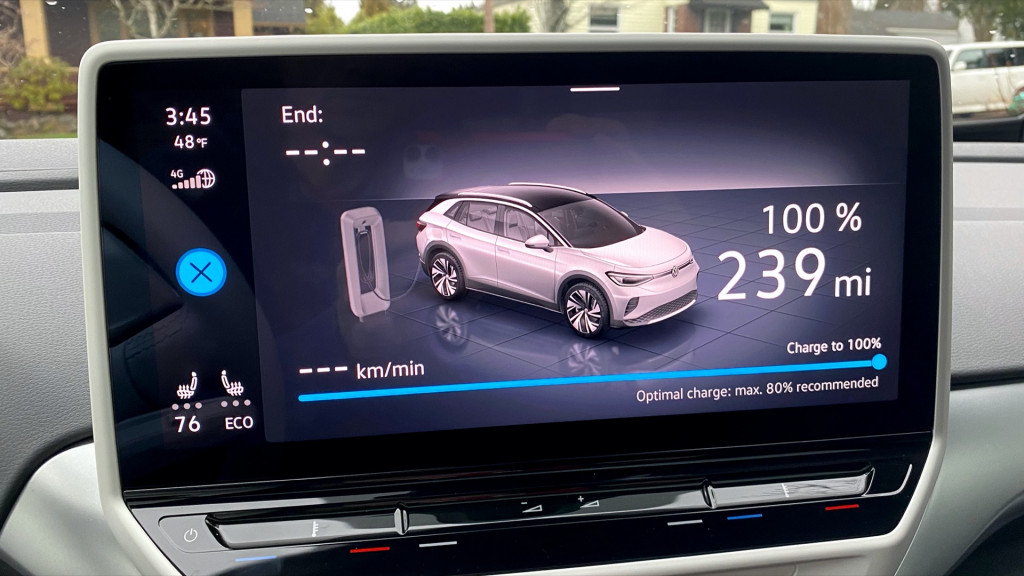
Volkswagen is recalling nearly 80,000 of its ID.4 electric vehicles in the U.S.—plus more than 8,000 in Canada—due to gauge clusters and infotainment systems that either unexpectedly reset or don’t start up in the first place.
The issue, which likely covers some or all of the many flickering screens and sudden reboots that owners have reported and documented, can result in the temporary loss of active safety systems while driving. VW has already rolled out some remedies to this trouble-prone system.
As VW notes, this issue can mean the loss of speedometer information and the rearview camera image, so it would mean they’re out of compliance with federal motor vehicle safety standards.
2021 Volkswagen ID.4 – First drive, Portland OR
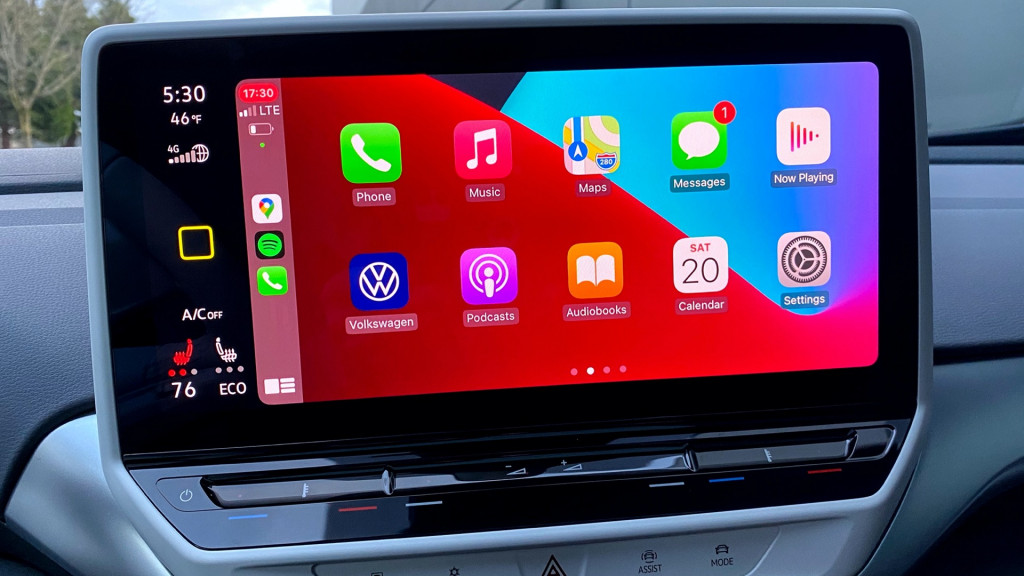
2021 Volkswagen ID.4 – First drive, Portland OR
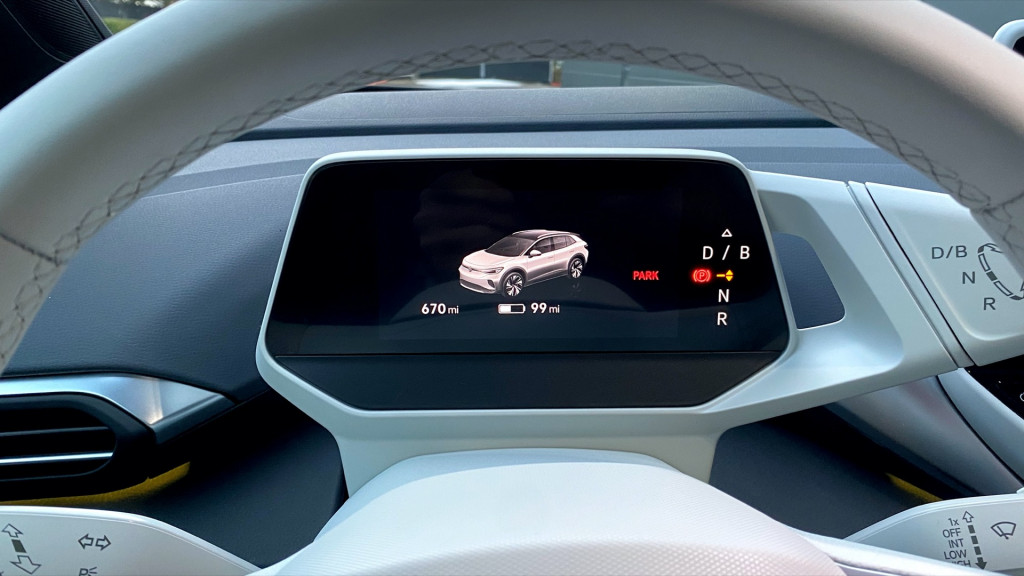
2021 Volkswagen ID.4 – First drive, Portland OR
The issue affects about 1% of the 88,004 vehicles recalled (79,953 in the U.S., 8,051 in Canada), VW estimates—which would point to nearly 9,000 North American vehicles that might be experiencing the issue. Through February, VW already points to 354 warranty claims relating to the issue.
The ID.4 recall remedy is a software update for a control unit and infotainment module that has already been introduced into production. Paperwork filed with the federal government indicates that, as of yet, it’s not available for the recalled vehicles, but when it is, the issue will require a trip to the dealership for the update, with owner notification starting as soon as July 12.
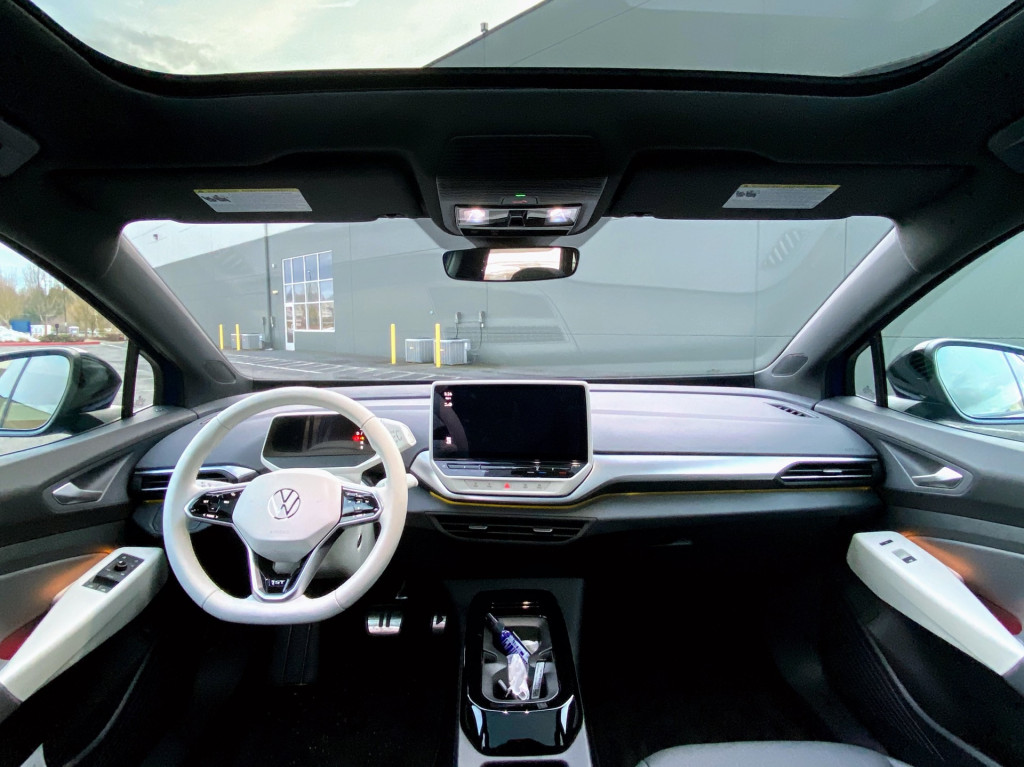
2021 Volkswagen ID.4 – First drive, Portland OR
The VW ID.4 has had a trouble-prone interface from the start while otherwise hitting the mark in most other respects. Green Car Reports experienced some of those issues, ranging from excessive screen latency to haptic controls that were momentarily unresponsive, in earlier versions of the ID.4.
VW promised that many of these issues would be fixed with over-the-air updates, but they weren’t for some owners. A recent review of the 2024 VW ID.4 with its larger 12.9-inch touchscreen (included with the larger 82-kwh battery pack) showed us that with revamped infotainment hardware, those issues have been purged.

Review: 2024 Ford Mustang Mach-E GT goes with Lightning
The Mach-E is Ford’s only dedicated electric vehicle, with no gasoline equivalent. Yet it won’t let you, or anyone driving near you, mistake it for anything but a member of the Mustang family.
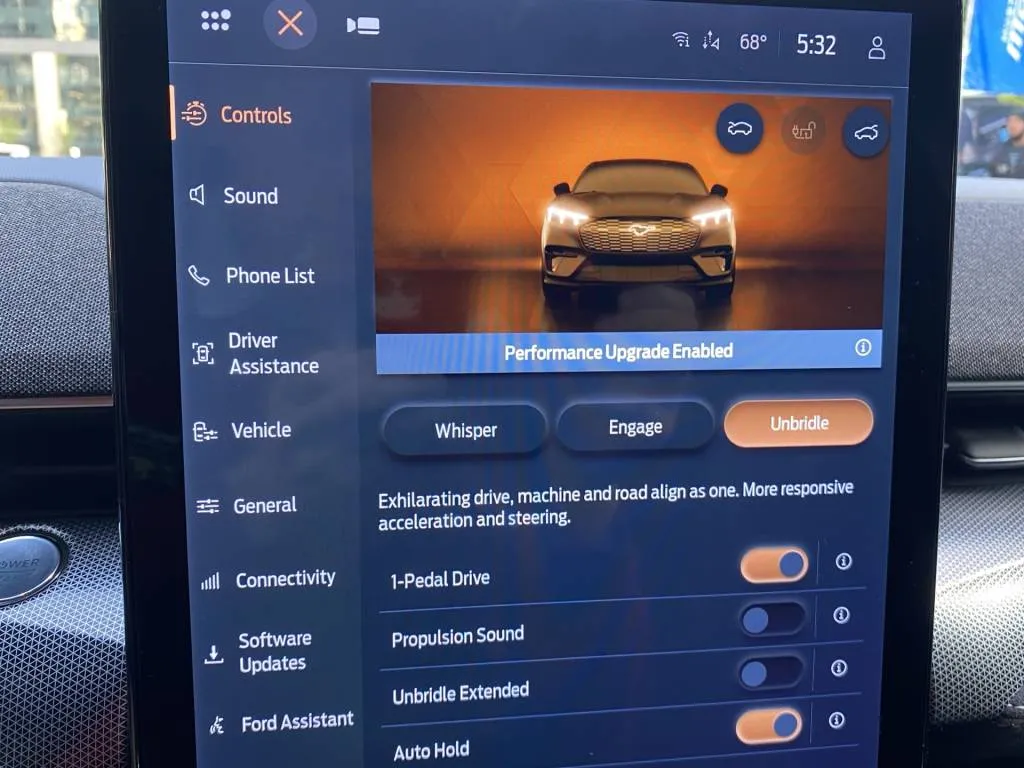
On the 2024 Ford Mustang Mach-E GT, the design cues and prancing-horse logos still deal out an overstated hand of pony-car attitude. I reach over and select this model’s performance mode—called Unbridle, which doubles down on the impression—and an overdubbed combustion-synth soundtrack breaks the conversation like a record scratch.
I ask my drive partner: “Ya like horses?”
Mustang Mach-E is an EV original
The Mustang badge does indeed get the Mach-E some name recognition, while its best attributes have always stood starkly aside from the Mustang lineup.
With the exception of the Chevy Blazer EV and Equinox EV, all its rivals are strong departures from their ICE equivalents.
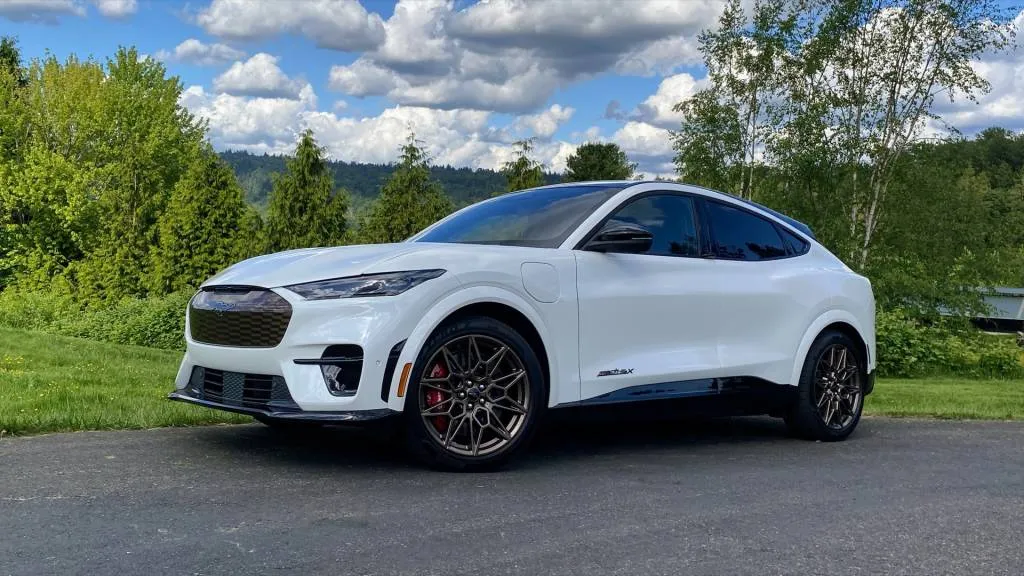
2024 Ford Mustang Mach-E GT
The Mach-E is one of the mainstream EV market’s originals—a leader in the cohort of electric compact crossover SUVs that have rakish rooflines and curvaceous sculpting meshing with futuristic cues and leading edge interfaces. When deliveries of the Mach-E started in late 2020, only the Tesla Model Y was being delivered, and the Hyundai Ioniq 5, Kia EV6, and Nissan Ariya hadn’t yet arrived.
While the Mach-E GT isn’t at all a track-focused model like the Hyundai Ioniq 5 N, a series of engineering changes and smart optimizations make this version an even better-driving EV for the backroads, as Green Car Reports recently experienced. Meanwhile, the 2024 Ford Mustang Mach-E Rally, tuned for dirt-track thrills, is the closed-circuit thriller instead, and we’ll have a first drive of that model soon on companion site Motor Authority.
Mach-E has good range, GT included
The 2024 Mach-E GT is a leader among performance-oriented crossovers with respect to range. It beats the Tesla Model Y Performance by a mile in official EPA ratings. It also beats the Kia EV6 GT and Hyundai Ioniq 5 N by a much more significant amount; those models are at 206 miles and 221 miles, respectively.
It’s not all in the name of efficiency; the Mach-E GT’s battery is indeed larger than the packs in all of those rivals. It comes with a 91-kwh (usable) Extended Range battery pack and a 280-mile EPA range rating. Mach-E Select and Premium models can also be had with a 72-kwh Standard Range pack providing 230 miles with all-wheel drive or 250 miles with rear-wheel drive.
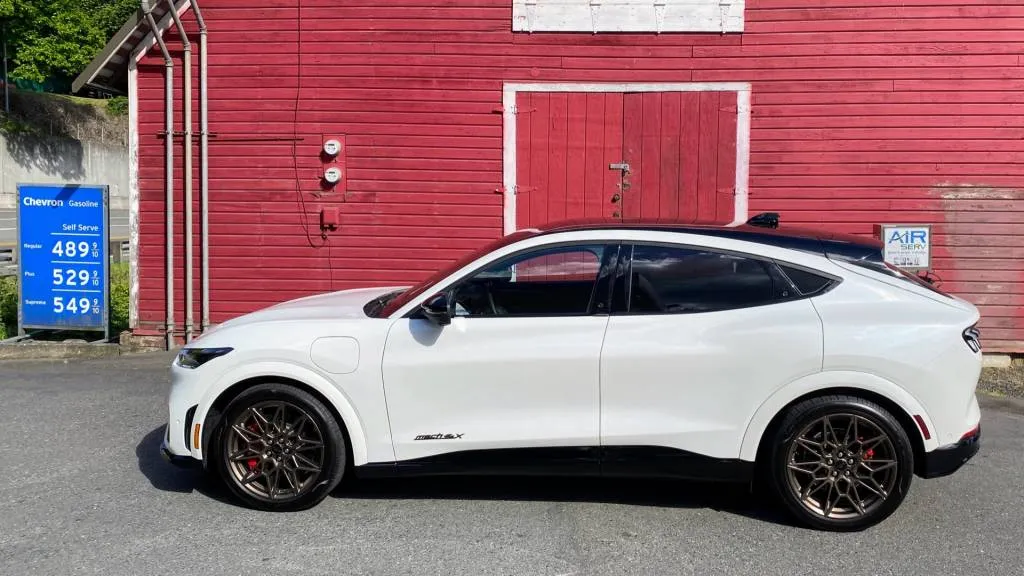
2024 Ford Mustang Mach-E GT
Outside of the GT, the Mach-E remains a standout for range with its Extended Range pack, the Mach-E can return up to 320 miles with rear-wheel drive, and it gets a 300-mile rating with all-wheel drive—better than the Ioniq 5 or EV6, albeit with the larger battery. All Mach-E models can now be charged on the Tesla Supercharger network, via a complimentary, Ford-provided NACS adapter plus the inclusion of that network in the aggregated locations of its FordPass charge-finding and route-planning app.
Versions of the Mach-E with the Standard Range pack have a completely different battery pack chemistry and configuration. In the smaller one there are 108 lithium-iron-phosphate (LFP) cells rather than the Extended Range version’s 376 cells.
From the vehicle’s trip computer, I observed 2.8 miles per kwh in a couple hours mixing freeway, fast-moving back roads, and urban traffic conditions, while using the climate control for best comfort (temps in the 60s) and driving without any heed to efficiency. That indicates a real-world range of around 250 miles.
Mach-E performance: Satisfying, smooth on back roads
The 2024 Mach-E GT makes 480 hp and 600 lb-ft of torque and can accelerate to 60 mph in 3.8 seconds. Opt for the $745 Performance Upgrade (fitted to my test car—$995 without a wheel and tire upgrade) and you bump the torque rating to 700 lb-ft and the 0-60 mph time down to 3.3 seconds. At that price, why not?
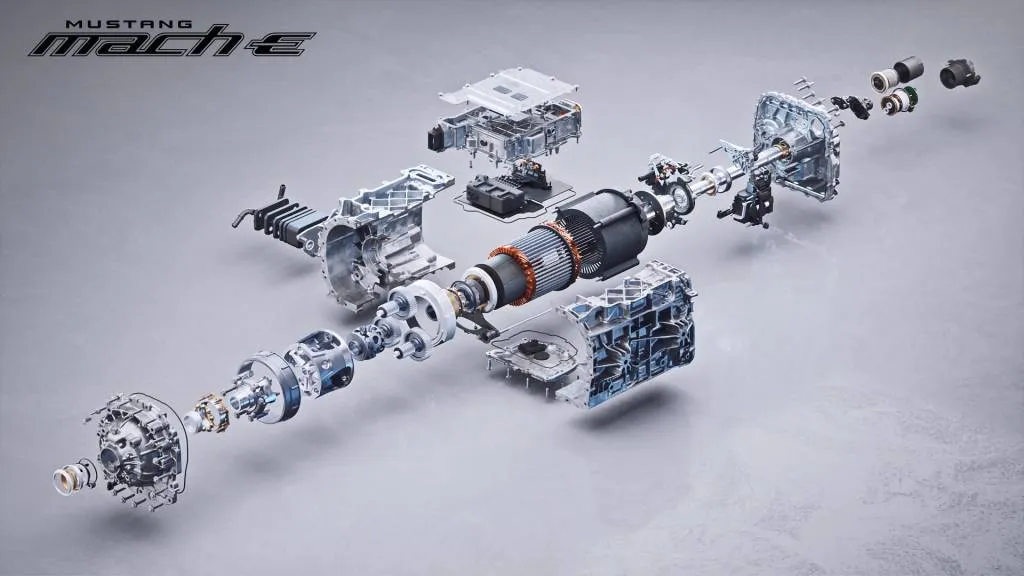
2024 Ford Mustang Mach-E near rear motor
When you get that upgrade, the 2024 Mach-E makes the most of a shift to a new, more powerful rear motor—the same Ford-made part number shared with the F-150 Lightning and a unit that Ford plans to scale up even more into future EVs.
For now Ford is only making the rear motor itself, while for the Mach-E it will continue to get the inverter for that motor, as well as front motors, from suppliers.
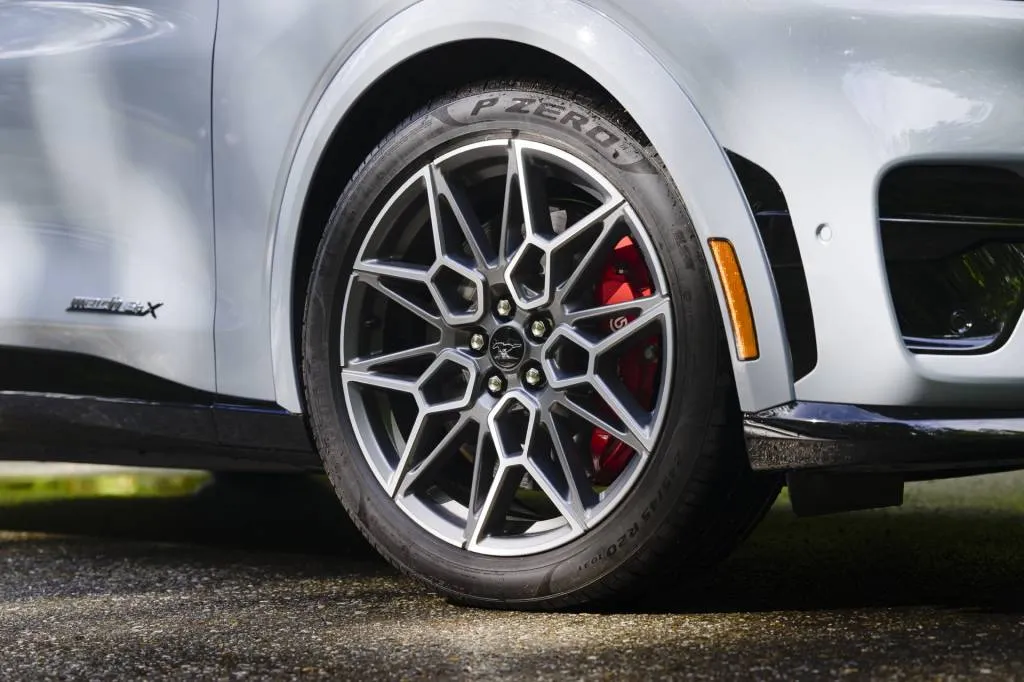
The Mach-E still doesn’t have a heat pump, but Ford has consolidated its three cooling circuits down to two primary circuits plus climate control. According to product development engineer and EV energy management expert Ling Gong, Ford also shifted the ratio to 9.7:1, versus the previous 9.0:1, to better match the characteristics of the new motor. And it switched out its wheels for aero wheels that collectively improve the model’s coefficient of drag by about 0.007.
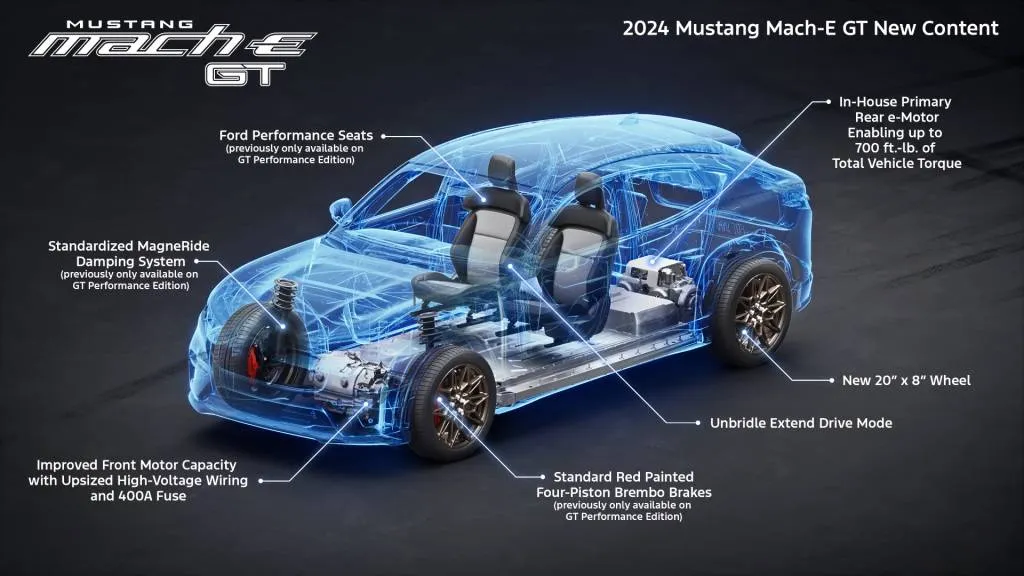
2024 Ford Mustang Mach-E changes
The propulsion sounds arguably undercut a lot of hard work that the development and engineering teams have continued to do in Mach-E refinement and sealing out wind and road noise as well as elements like gear whine. Turn the supplemental sound off, as you should, and the Mustang Mach-E GT now feels like it could wear a European luxury badge.
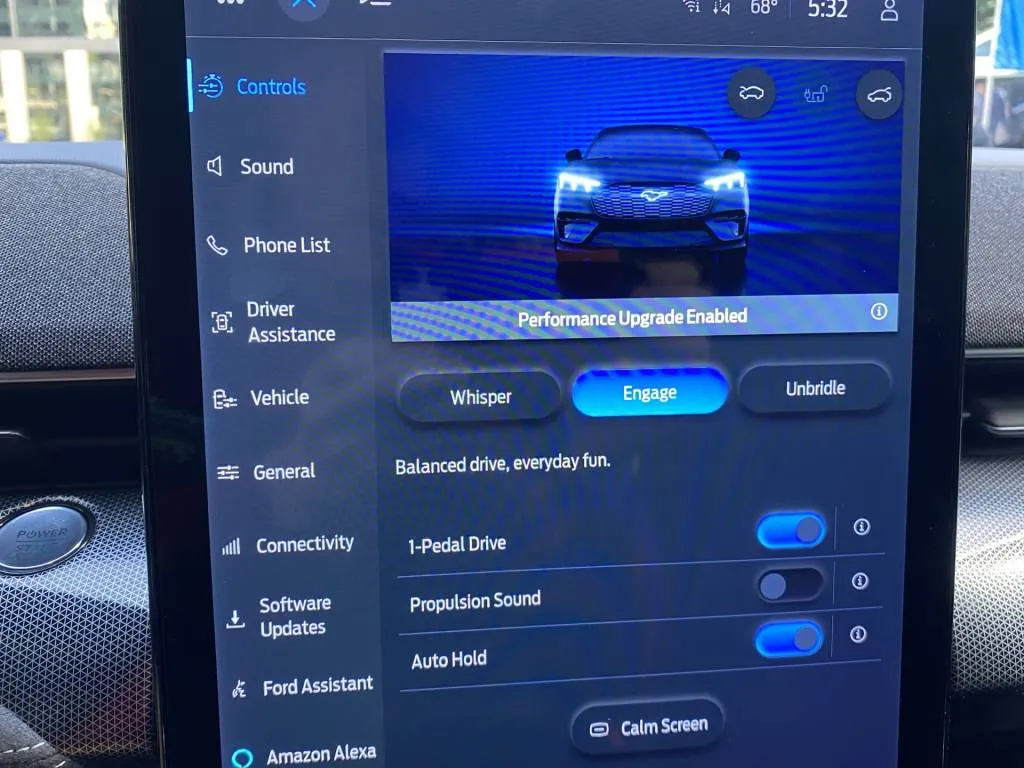
That sense of refinement is enabled partly by the magnetic damping system that’s now included in all GT versions, allowing different tuning across the Whisper, Engage, and Unbridle modes.
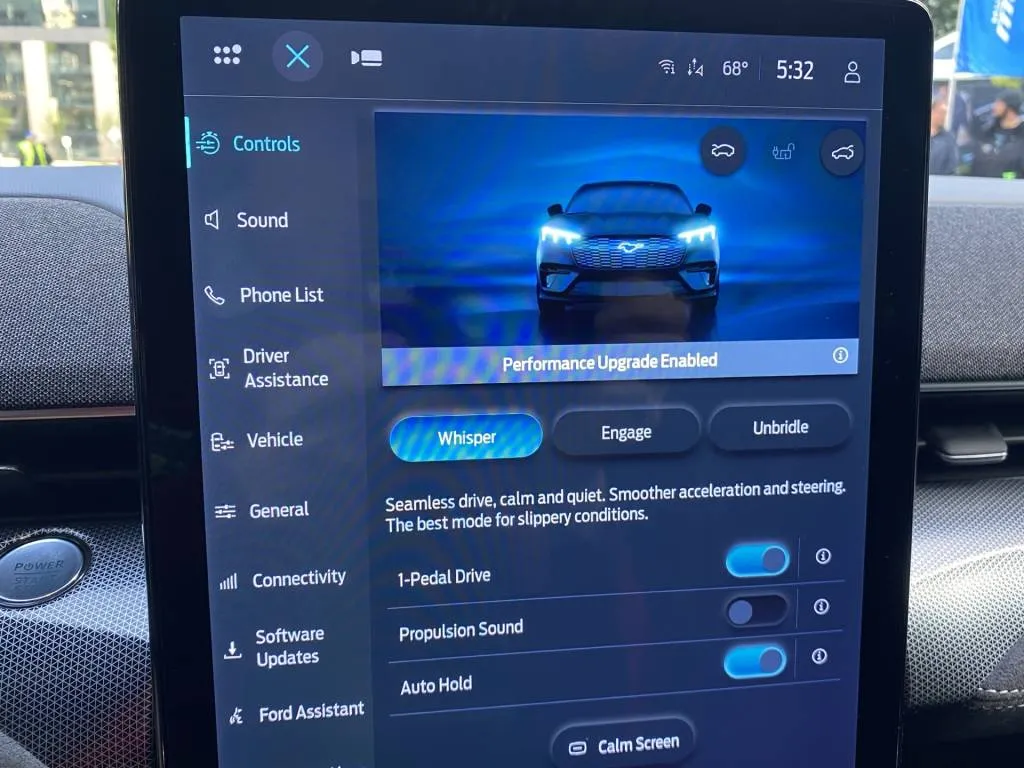
2024 Ford Mustang Mach-E GT
2024 Ford Mustang Mach-E GT
2024 Ford Mustang Mach-E GT
The Mach-E rides on a four-wheel independent suspension with struts in front and a multilink arrangement in back, both complemented with a hollow stabilizer bar.
All Mach-Es have four-wheel disc brakes. The GT gets larger discs, and the regenerative braking varies across those modes, too. There aren’t any steering wheel paddles, but a one-pedal driving mode ramps up regen so much that you might rarely need to press the brake pedal except the last few feet of a stop. The auto-hold mode in the Mach-E doesn’t offer a lot of subtlety when parking, so remember to turn it off if you just need to inch ahead into a parking space.
2024 Ford Mustang Mach-E GT
2024 Ford Mustang Mach-E GT
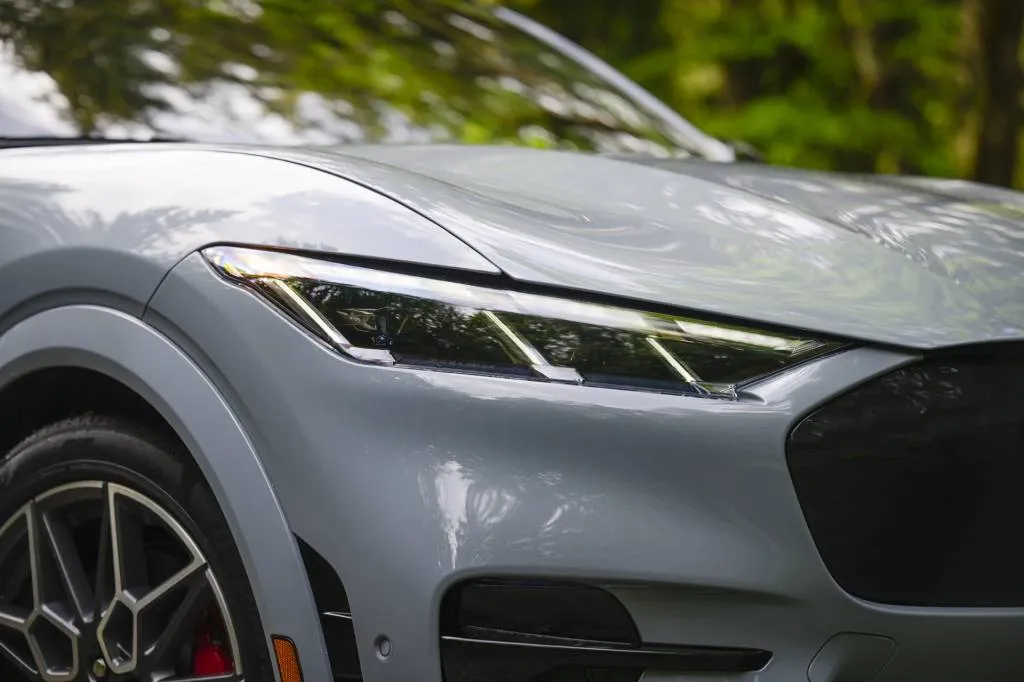
2024 Ford Mustang Mach-E GT
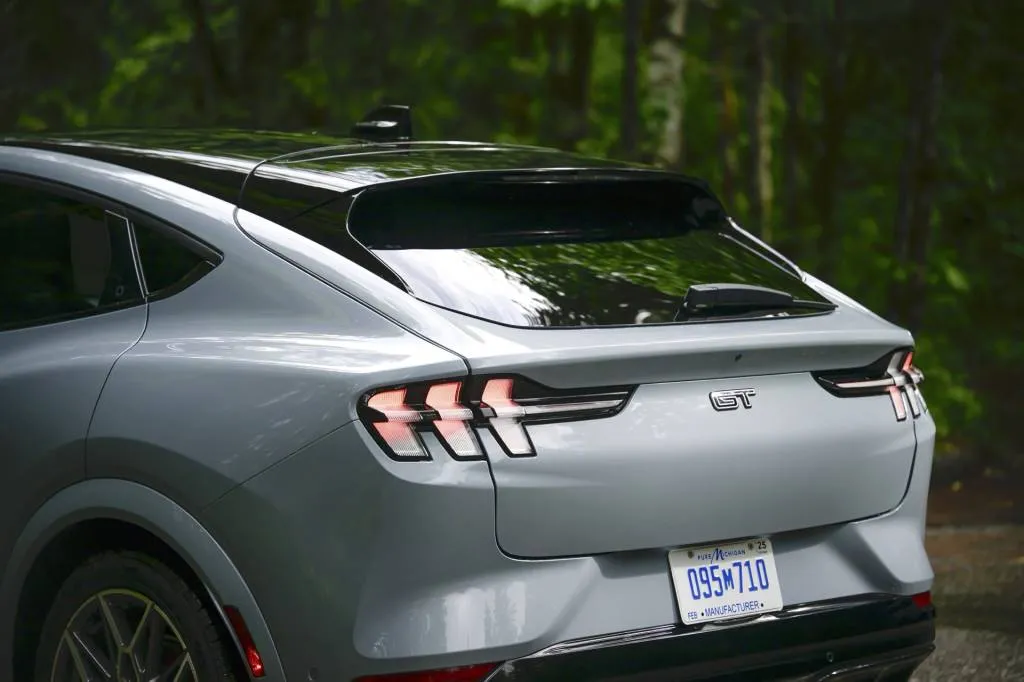
While the Mach-E does a great job masking all its weight the vast majority of the time, choppy back roads with heaved surfaces did underscore this model’s nearly 5,000 pounds (4,952) in GT guise.
The Mach-E’s packaging and cargo space haven’t changed at all, including reasonably good back seat space and a large frunk with a drain plug (tailgating time!). All GT models now include Ford Performance front seats that offer up great back support as well as thigh support without feeling too confining on the sides. Just as in other Mach-E versions, as a taller driver, I wished the hip point of these front seats could be lowered another inch or two—a choice that would also allow its roll center in handling to feel more natural.
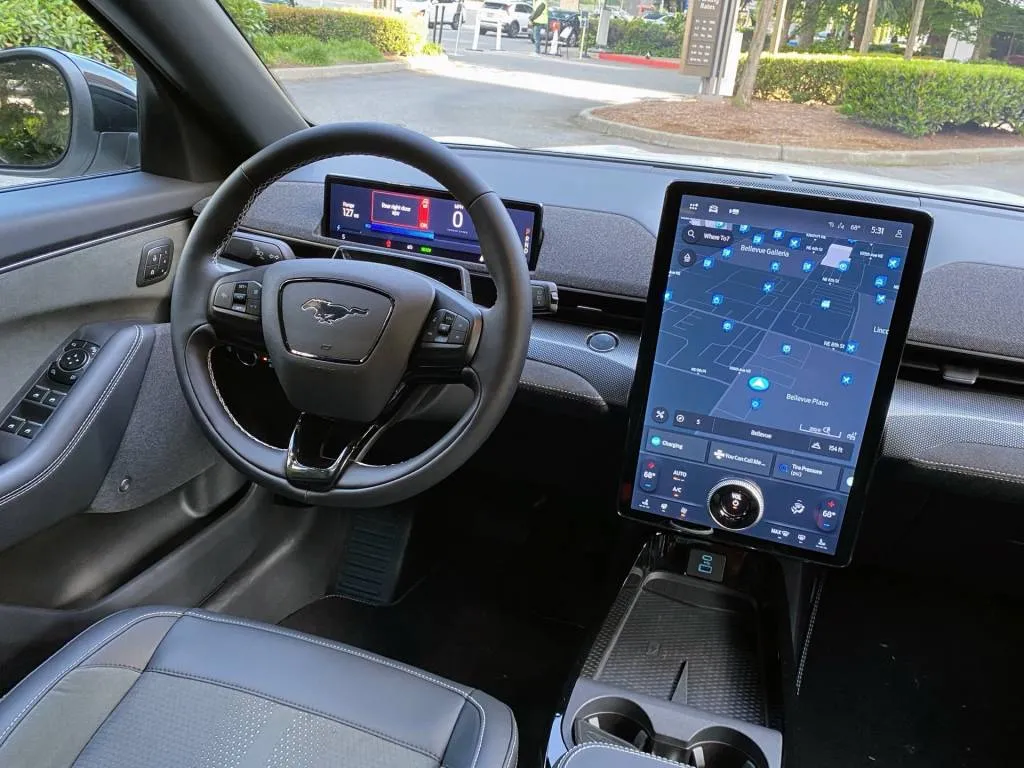
2024 Ford Mustang Mach-E GT
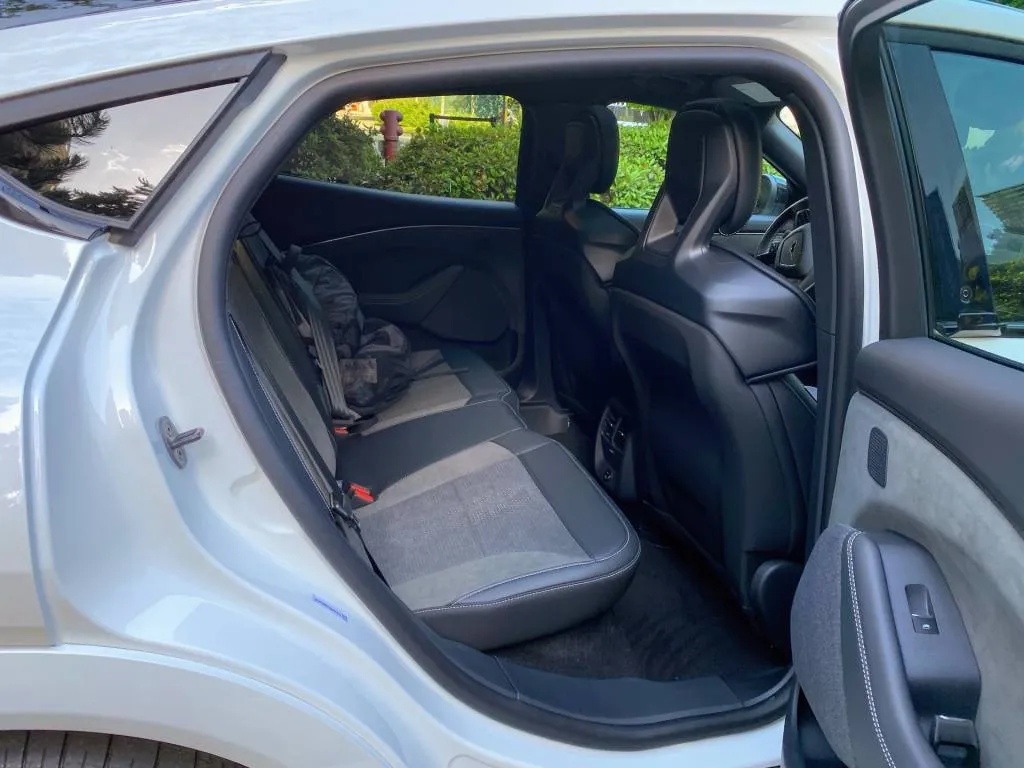
2024 Ford Mustang Mach-E GT
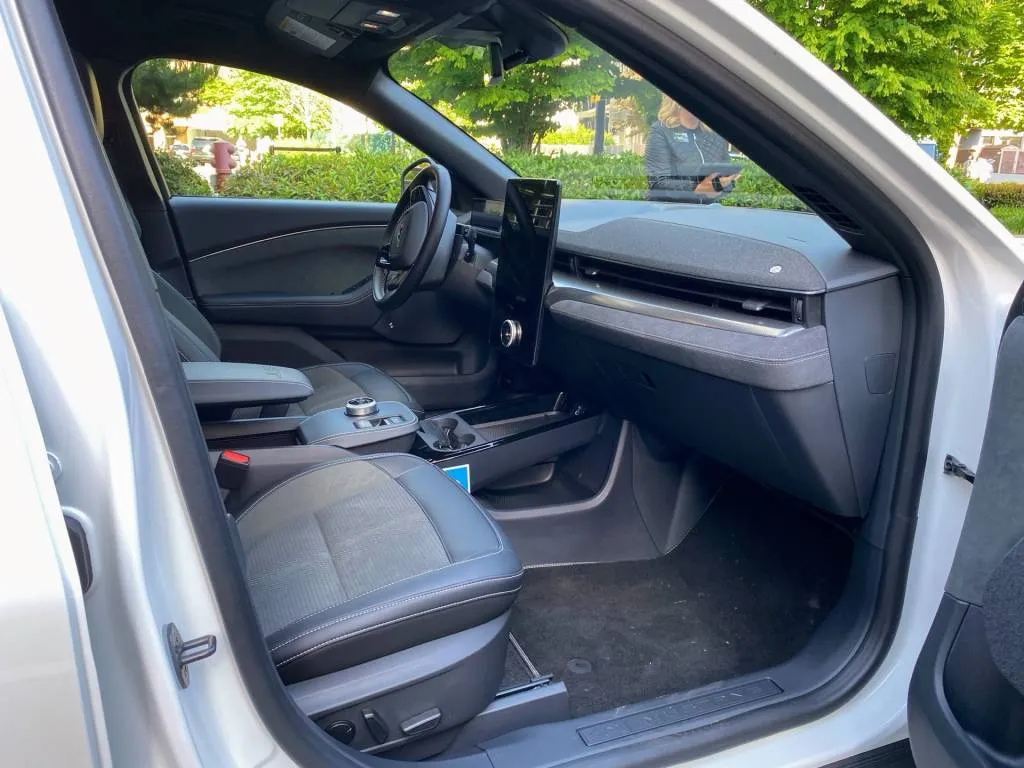
2024 Ford Mustang Mach-E GT
Mustang Mach-E features and options
The GT starts at $55,890, including destination, and it gets a whole lot of standard equipment. It carries over the Premium’s 10-speaker Bang & Olufsen premium sound system (including subwoofer), ambient cabin lighting, heated front seats, heated steering wheel, memory settings, and power tailgate, and it adds an aluminum instrument panel appliqué and accent stitching.
Ford’s BlueCruise driver-assist system, in its current iteration, costs $2,100 for three years and provides improved lane placement plus smoother automated lane changes—including multiple lanes as needed. Other options on my test vehicle included the panoramic fixed-glass roof and bronze-painted wheels, for a grand total around $61,000.
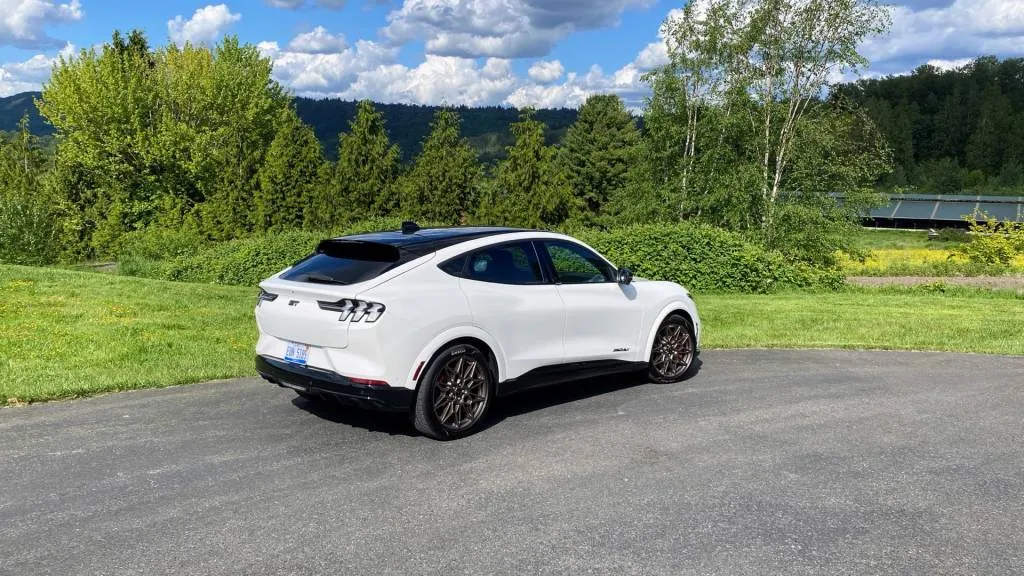
2024 Ford Mustang Mach-E GT
All Mustang Mach-E versions get an updated version of Ford’s Sync 4 infotainment system with a vertically oriented 15.5-inch capacitive touchscreen—nearly flat in its menu layout, which is a great thing—plus a reconfigurable 10.2-inch instrument screen, wireless phone charging, and front and rear USB ports.
Yes, the Mach-E still leans hard into its pony-car lineage; but love it or hate it, it amounts to an engaging personality and a good EV. All those horses in and out of the vehicle made sure of it.
Ford paid for travel and lodging for Green Car Reports to bring you this firsthand report.

Here’s how wireless charging could cut costs for commercial EVs
Two recent wireless charging pilot programs show the potential for the technology’s use with commercial EV fleets.
The Indiana Department of Transportation and Purdue University are working to outfit a quarter-mile stretch of U.S. Highway 231 in West Lafayette, Indiana, for wireless charging of electric trucks. A test truck provided by Cummins will drive over this section of road in tests starting next year, according to a Purdue University press release.
Construction of the test road section began April 1 and is expected to continue into the fall. This follows laboratory tests to see if sections of highway concrete and pavement could handle the weight of loaded trucks.
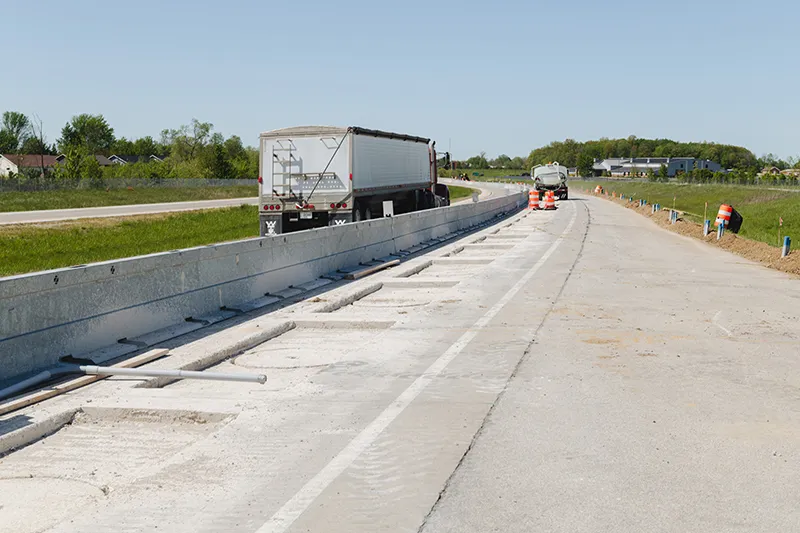
Indiana roadway to be used in dynamic wireless charging test (photo via Purdue University)
The Purdue-designed charging hardware is intended to work at higher power levels than other systems demonstrated in the U.S. so far, the university claims, making it better suited to heavy-duty vehicles. If tests prove successful, Purdue and the Indiana state government hope to add charging to a longer stretch of highway within the next four to five years.
This dynamic wireless charging—in which vehicles are charged as they drive along—has already been the subject of tests and pilot programs in Michigan, Sweden, and Israel. Stellantis tested the idea with an electric Fiat 500 in 2022, and a Ford patent filing indicates the Blue Oval is working on it as well.
Wireless-charging company WiTricity also recently launched a six-month pilot program with International Transportation Service LLC to test wireless-charging tech on a fleet of Ford E-Transit vans at the Port of Long Beach. In this case, vehicles park over a pad to charge, with performance claimed to be equivalent to conventional Level 2 AC chargers.
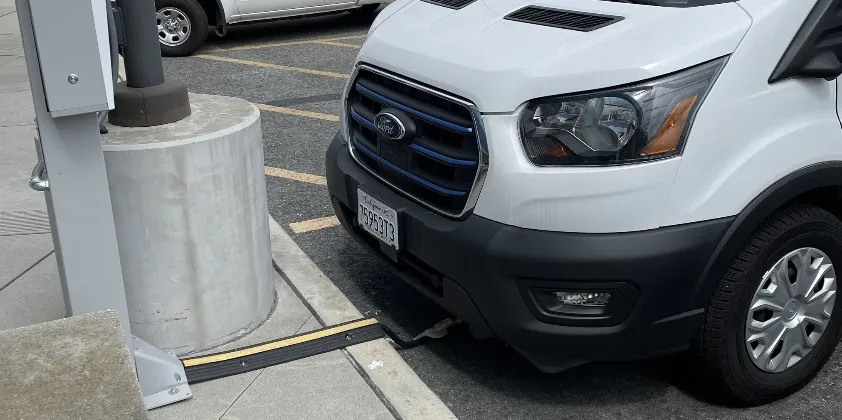
Ford E-Transit with WiTricity wireless charger
There are several potential benefits of wireless charging, including greater accessibility to charging that could allow for smaller EV batteries, which could in turn reduce the cost and weight of these vehicles. And overall, wireless charging could make EVs more livable on a day to day basis by eliminating cables and connectors.
The higher level of automation allowed for by wireless charging also helps set the stage for self-driving electric cars, as it would remove one more point of human involvement in the process. But self-driving cars themselves must prove to be reliable and commercially viable—definitely not a given.