
Author: EVAI

Next-gen VW EVs reportedly delayed by software issues
- Volkswagen’s reportedly having software issues with its next-gen EVs
- The software issues could lead to years-long delays for next-gen vehicles
- VW invested $5B in Rivian to get the startup automaker’s electrical architecture
Volkswagen’s next-generation EV platform is being delayed due to software issues, reports Autoblog, citing German media outlets.
Ongoing issues with the Volkswagen Group’s Cariad software division have pushed the launched of the Scalable Systems Platform (SSP), successor to the current MEB dedicated EV platform, from 2024 to an uncertain date after 2026, according to the report.
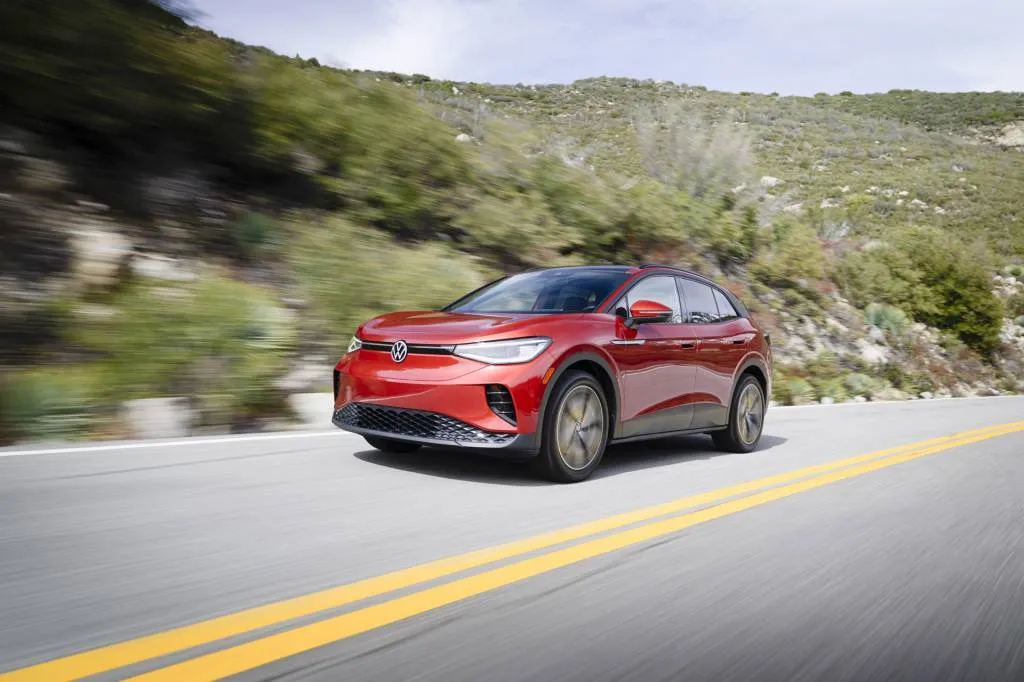
2024 Volkswagen ID.4
Audi was slated to be the first VW Group brand to utilize the SSP architecture, and VW Group CEO Oliver Blume said last year that the brand was on track to launch its first SSP-based model in 2026, but that’s been delayed to 2027 and 2028, and in the meantime Audi has been looking at buying a platform from a Chinese automaker, according to German media reports.
Software issues also mean the Volkswagen brand may also keep the current-generation ID.4 around until 2029, at which point it will be nine years old, Autoblog notes. This will also reportedly mean delays for a new electric VW Golf and a large VW electric SUV called the T-Sport, the launch date of which could move from 2028 to 2031. Meanwhile, VW has launched a sub-brand of the ID sub-brand in China, and committed to new solid-state battery tech.
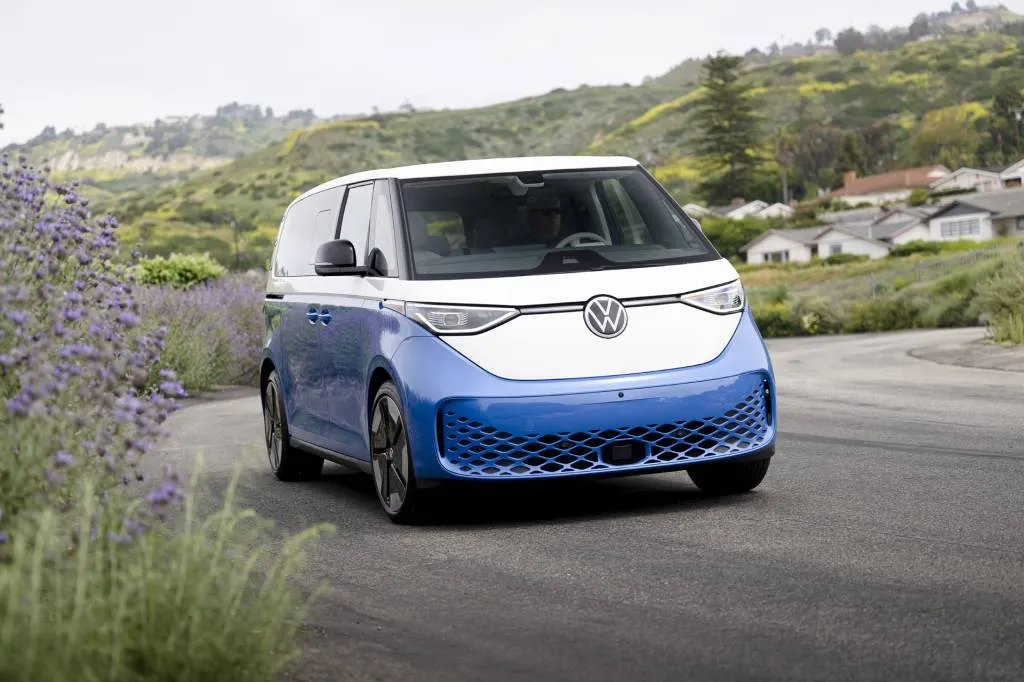
2025 Volkswagen ID.Buzz
A Porsche seven-seat SUV build on the SSP architecture is already out testing and due in 2027, reports Autoblog, but it could also be subject to software-related delays.
Reports of software problems at VW put the automaker’s investment in Rivian in a clearer context. VW in June confirmed that it would take a $5 billion stake in Rivian to access the U.S. automaker’s software and zonal electronics platform.

Tesla recalls over 1.8M vehicles due to unlatched hood issue
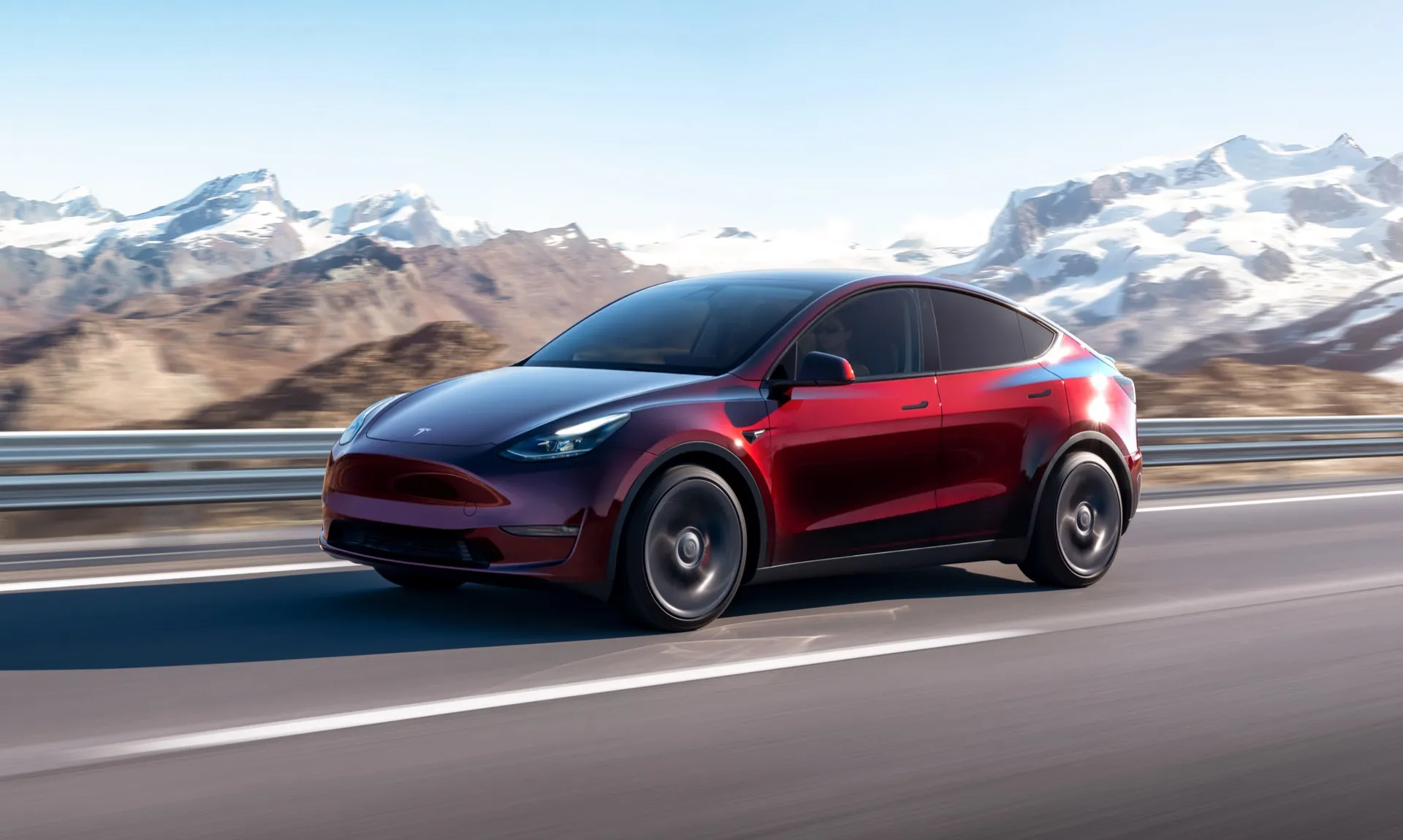
Tesla has issued a recall for a problem with hood closure across all its model lines. The problem could lead to the vehicle’s hood opening while in motion.
On Tuesday, Tesla and the NHTSA announced a recall for 1,849,638 vehicles, including the Model 3, Model Y, Model S, and Model X.
The issue stems from the vehicle’s hood latch assembly and related software. The assembly may fail to detect an unlatched hood after the hood has been opened. This could lead to the unlatched hood opening while driving.
Tesla said it began investigating customer complaints of unintended hood opening events on Model 3s and Model Ys in China on March 25.
Tesla said it has released an over-the-air (OTA) software update on June 18 to the affected vehicles. The update is said to detect the unlatched hood. Firmware release 2024.20.3 and later updates include the remedy.
Affected models, including Model X, Model S, Model 3, and Model Y built after July 15 came off the assembly line with firmware 2024.20.100, which incorporated the software fix, according to Tesla.
Vehicles affected include all model-year 2021-2024 Model S sedans, 2021-2024 Model X crossovers, 2020-2024 Model Y crossovers, and 2021-2024 Model 3s manufactured between September 21, 2020 and June 2, 2024 in China.
The recall is filed under NHTSA campaign 24V-554.
For more information, contact the NHTSA at 1-888-327-4236.

Review, Postmortem: Fisker Ocean was a promising EV, may be frozen in beta
- Ocean EV impressed in design and features, but software and tech details lagged
- OS 2.0 reportedly soothed some issues for this software-defined vehicle
- After June 2024 bankruptcy filing, owner support is a top concern
The most daunting challenge Fisker Ocean owners may face doesn’t relate directly to how this stylish, well-equipped EV is built, or how well it was engineered. It also might not be physical repairs or replacement parts, as resourceful Tesla Roadster owners at one point proved.
Simply put, it’s that the Ocean might never be fully realized in a software sense. Over-the-air software updates hold a good-faith promise of constant improvement—that an EV bought this year might be better-driving and more full-featured in a couple years. But once Fisker filed for bankruptcy on June 17, with creditors’ vying over a liquidation of its assets since then, it’s hard to imagine how or why any entity would continue to improve these “legacy” Oceans to go above and beyond the minimum of consumer support.
That’s arguably been part of the leap of faith that Fisker Ocean buyers took from the get-go, as they took delivery of their vehicles with some decidedly rough edges in a number of interface aspects, prior to the rollout of Fisker’s big update, termed Fisker OS update 2.0.
We’re entering an era, pioneered by Tesla, of software-defined vehicles that can be constantly upgraded over time. That software support often arrives as a brand-building bonus for owners, but it comes at significant cost to a company and involves a team of highly skilled people. It’s not uncommon for newly launched vehicles to have software issues, nor is it unusual for EVs to be delayed due to software or to launch without all of its features. Software has even been at the core of CEO upheaval at one of the world’s largest automakers.
Fisker delivered the vehicle. But somewhere along the way, it became apparent that the momentum from delivering the car alone wasn’t enough. Fisker never faced something like Tesla’s Model 3 “production hell,” and there was no need for CEO Henrik Fisker to be sleeping on the assembly floor even if its contract manufacturer, Austria’s Magna-Steyr, would have let him.
2023 Fisker Ocean One
2023 Fisker Ocean One
2023 Fisker Ocean One
Fisker Ocean: Complete as a functional EV, incomplete in innovation
Fisker’s challenges were revealed clearly late last year when it offered me a first drive of an Ocean overnight; I came away positively impressed in one big respect and quite disappointed in another. As a piece of hardware, the Ocean impressed as very close to fully baked. Next to any number of those vehicles the Ocean feels well-built. Doors opened and closed with a satisfying thunk; switchgear didn’t disappoint; and materials felt durable, pleasing to the touch, and better than what I might have expected for the mission.
But with all the challenges of on-the-ground sales and support channels aside, it was clear from that first experience that while software was key to the Ocean’s success, it clearly lagged.
Now, given the apparent path Fisker has opted to take in bankruptcy, there’s a chance that what Fisker has delivered in software up to now will effectively leave the vehicle frozen in beta. That’s it.
As John A.E. Pottow, a professor of law who studies bankruptcy at the University of Michigan Law School, told Wired in late June, a bankrupt Fisker would “have no obligation to update their software.”
2023 Fisker Ocean One
2023 Fisker Ocean One
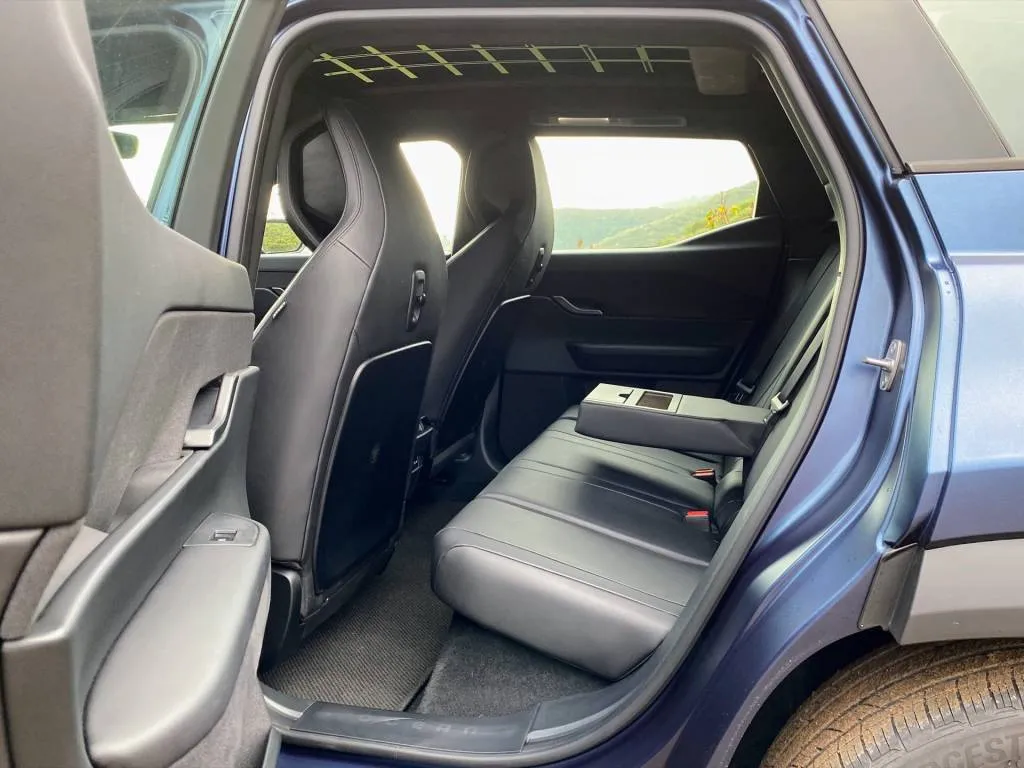
2023 Fisker Ocean One
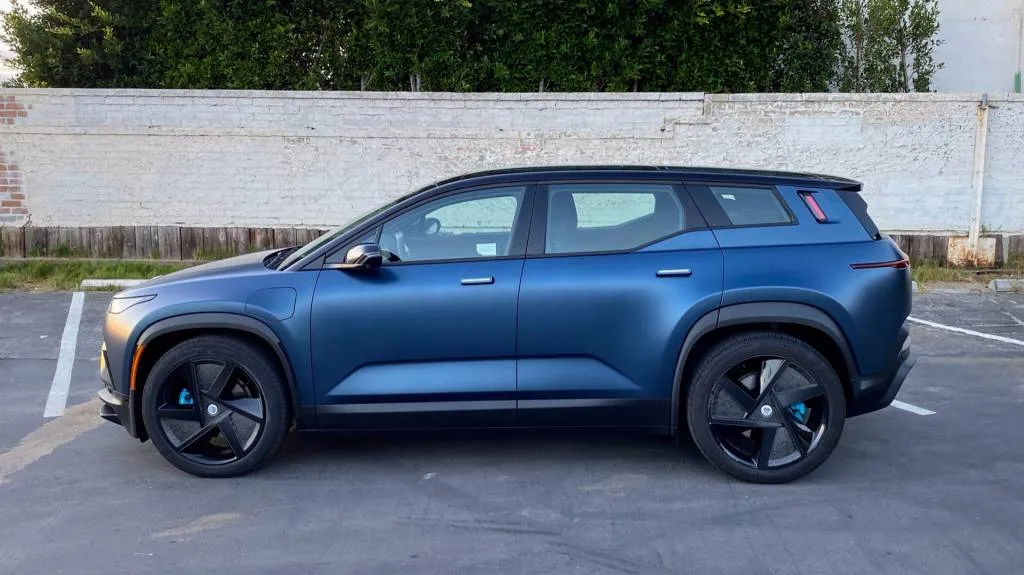
The Fisker Ocean has all of the fundamentals. It’s nicely proportioned and attractively styled, and thoughtful details abound pretty much everywhere you look. It’s also packaged very well. The first time I stepped into its roomy cabin I did a double-take, as itdoesn’t make concessions for a potential internal-combustion option. It really makes the most of what the platform allows.
I’d recently also been in the Kia EV9, and looking from the driver’s seat to the back corner of the vehicle the Ocean seems nearly as large, only it’s not a three-row vehicle. It’s long enough for a third row, with height probably the limiting factor. If space for five and a whole lot of stuff is what you need, the Ocean has it.
All of those smart-looking, smart-packaged traits fit in with what we’ve come to expect from design mastermind Henrik Fisker.
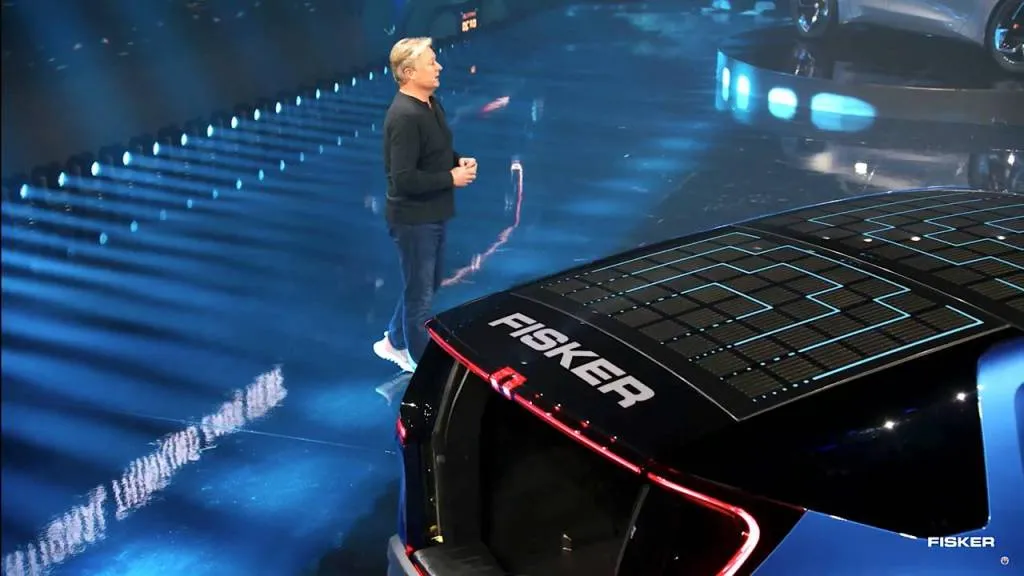
Fisker CEO Henrik Fisker with Ocean, solar roof
Fisker Ocean EV driving impressions: What could be vs. what is (or was)
If I could look past the software oddities and UHF snow and imagined a little bit, it may also be a great driving SUV. It felt like a vehicle that has the basics down pat but needed to quell some software gremlins. On LA freeways, the Ocean had rather light, almost overboosted steering but tracked really well, and it felt smooth, solid, and stable at 80 mph. Even when I loaded up the suspension for a tight, lower-speed off-ramp, it remained well behaved for all its approximately 5,400 pounds (!) of curb weight and it even hinted of a fun side.
I soon worked out that I just needed to bypass the Ocean’s eco-themed Earth mode, and mind the uneasy brake pedal. The core modes to select from are Earth, Fun, and Hyper, and Earth mode did more than just soften responses, as Eco driving modes tend to do. Rather, it added a rubber-band-like lag to power delivery when pressing quickly on the accelerator and suffered from lag before light regenerative braking kicked in when lifting off the pedal.
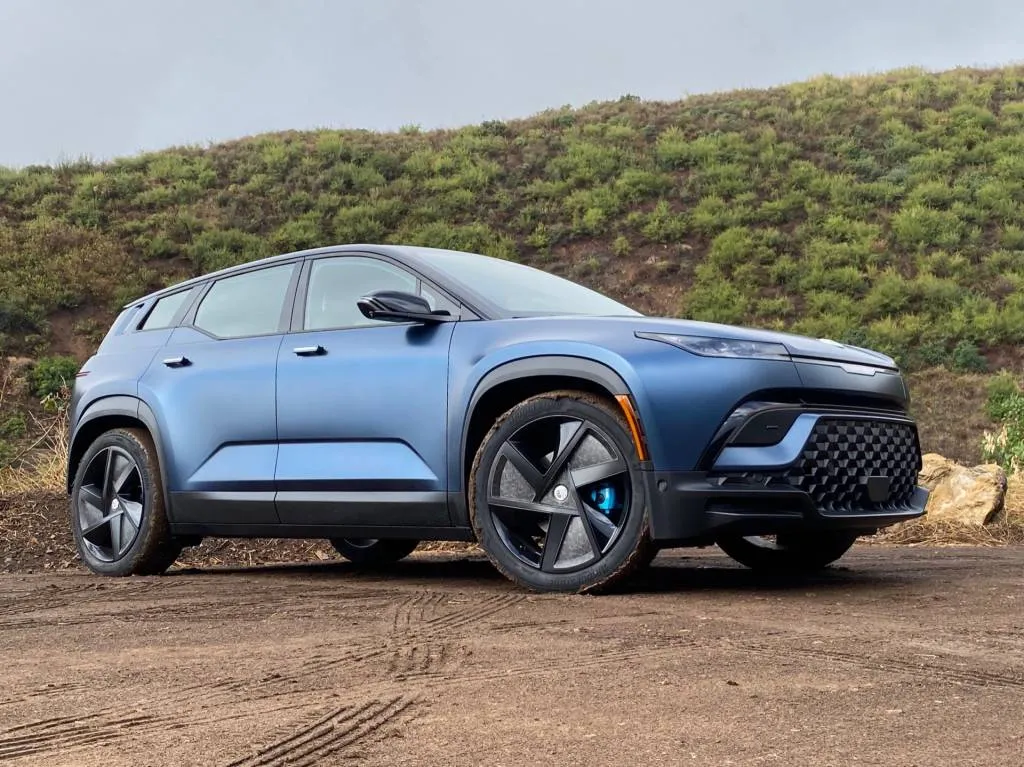
2023 Fisker Ocean One
The brake pedal itself, on my test vehicle, traveled disconcertingly far before scrubbing off speed, either blended or from the brake pads. I got used to it, but at times it felt a bit like the hybrids and EVs of a decade or more ago, where the last few feet of a stop were a guessing game. Then there also didn’t seem like any rhyme or reason as to why it would creep forward when I lifted off the brake pedal sometimes and not others.
Two permanent-magnet motors operate on the same reduction ratio, emit more than a typical level of EV whine during moderate to hard acceleration, and provide a combined 564 hp and 543 lb-ft of torque. The Ocean felt fully up to claims and expectations for acceleration. I experienced a 0-60 mph time of well under five seconds with a rolling start. Fisker claims just 3.7 seconds with a Launch Mode to be selected from the screen once in Hyper mode, but given my level of uncertainty with its traction and stability systems (which I’ll get to), I didn’t test that.
The Ocean has a lingering feeling that fine details are missing in the way it drives. It bounds over bumps in a way that’s disconcerting at first, but just as with other rather heavy electric SUVs that don’t have air suspensions or adaptive dampers, you get used to that. What remained sorely missing was the safety net of modern, sophisticated, and most importantly predictable stability systems. It became more apparent the more time I spent with it and the harder I pushed it.
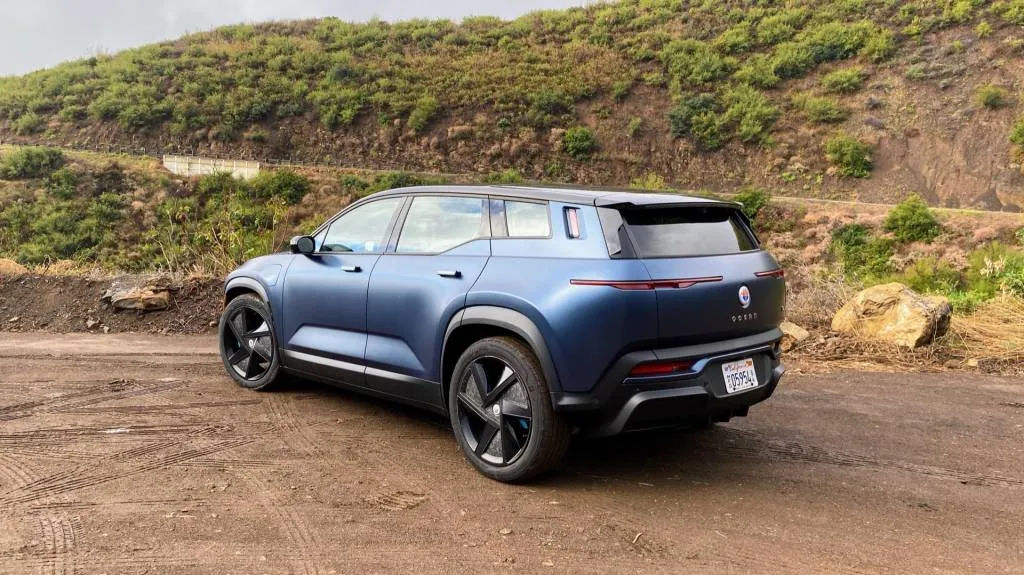
2023 Fisker Ocean One
Early on my second day with the Ocean I took it out to canyon roads and those somewhat unhinged electronic nannies kept me from enjoying any fun side of the vehicle. This Ocean’s dynamic envelope felt tuned for electronic chassis systems that weren’t dialed in yet and weren’t playing any anticipatory role. I pushed the Ocean hard on a few corners where I felt comfortable to do so and it simply didn’t feel like it had a modern stability control system. What I experienced instead felt like the early stability systems that were marginally a step ahead of traction control—blipping the brakes reactively rather than doing anything proactive to help keep the vehicle on its intended path and in its lane.
The Ocean seemed to lose some of its cornering poise with the higher regen setting. Regen can be adjusted, but it requires finding the Settings button, then the Driving menu of the infotainment screen. The high regen setting does not allow actual one-pedal driving, but it does scrub off a lot of speed.
Fisker Ocean efficiency underwhelmed
The trip meter didn’t assure me that the Ocean was particularly efficient. It reported that I covered 180.6 miles in the Ocean, using 87.8 kwh of total energy and averaging nearly 2.1 miles per kwh. Energy consumption during about 84 miles that included more spirited driving on canyon roads, using the Ocean’s Fun and Hyper modes, proved to be only slightly lower than moving mostly with the flow of traffic in Earth mode.
Considering the Ocean’s 113-kwh battery pack (106-kwh usable), that’s about 223 miles of range, or at least a third less than its 360-mile EPA range rating. Oof.
Since then, multiple Ocean owners have reported in the range of 300 miles or more on highway trips. Fisker has noted “enhanced accuracy in energy consumption metering,” and trip metering with its software updates made since then, so I’m unsure of the accuracy of those numbers seen during that early drive.
2023 Fisker Ocean One
Fisker Ocean interior: Spacious, innovative, modern
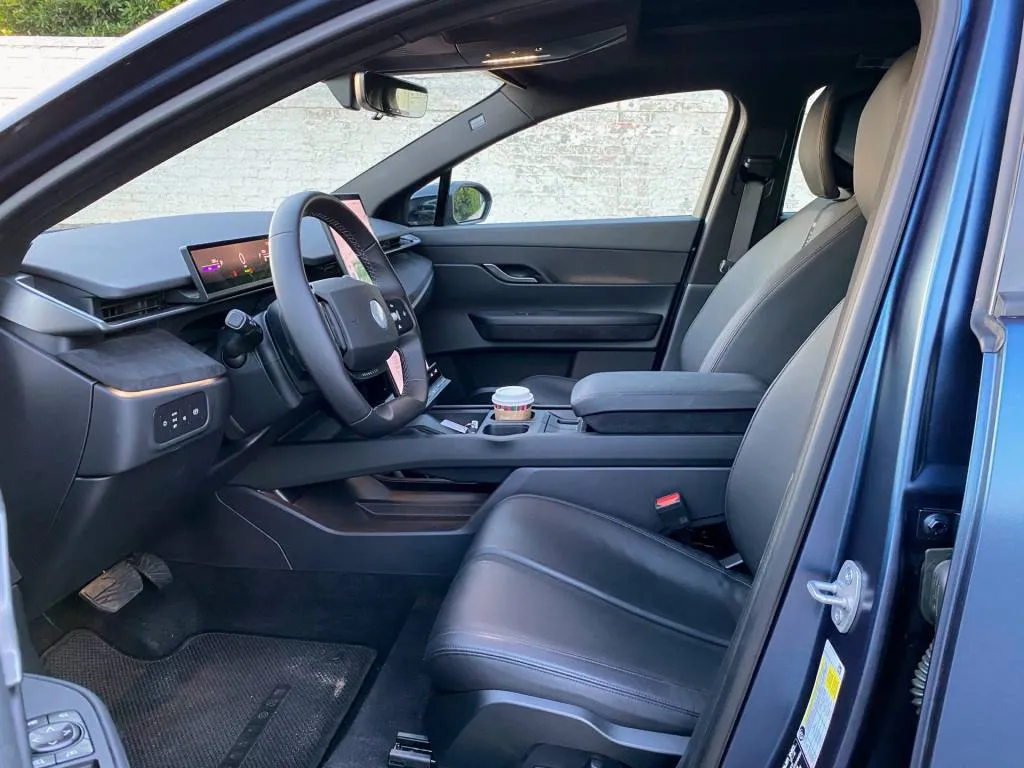
Upon first getting into the Ocean, there’s a lot to take in, and even beyond the top-level product-design work of Fisker, it’s an impressive cabin that the team put together, with great materials and touch points.
The semi-transparent, functional solar roof and California mode were two of the most noteworthy aspects from the get-go—different from what you can find in other EVs. The roof is functional, and according to Fisker it can recover up to 1,500 miles per year (although other automakers have suggested far less from similar systems). As of yet there’s no info screen or way to tell—as in the Hyundai Sonata Hybrid or Toyota Prius Prime—how much energy you’re getting from it.
Located on the roof is a button with a sun symbol to engage California mode, which after a confirming chime opens every window in the vehicle including the rear doggie window and rear tailgate glass. For the sake of rear passengers, California mode is for mostly low-speed cruising fun, although Fisker has tested California mode’s ability to close everything back up and maintain window seals at well over 100 mph, an engineering manager told me.
There’s a real shift lever and wiper stalk and generally speaking the switchgear was easy to figure out. While it lacks a glovebox, Fisker provides plenty of thoughtful touches and places to stow smaller items. Small sturdy tables that Fisker calls taco trays fold out from the center console and allow a space to eat lunch or, when used together, to hold a laptop or become a workstation good for up to 11 pounds. And there are little storage bins under both of the front seats, which is something I haven’t seen in any other vehicle. It works here, why not?
2023 Fisker Ocean One
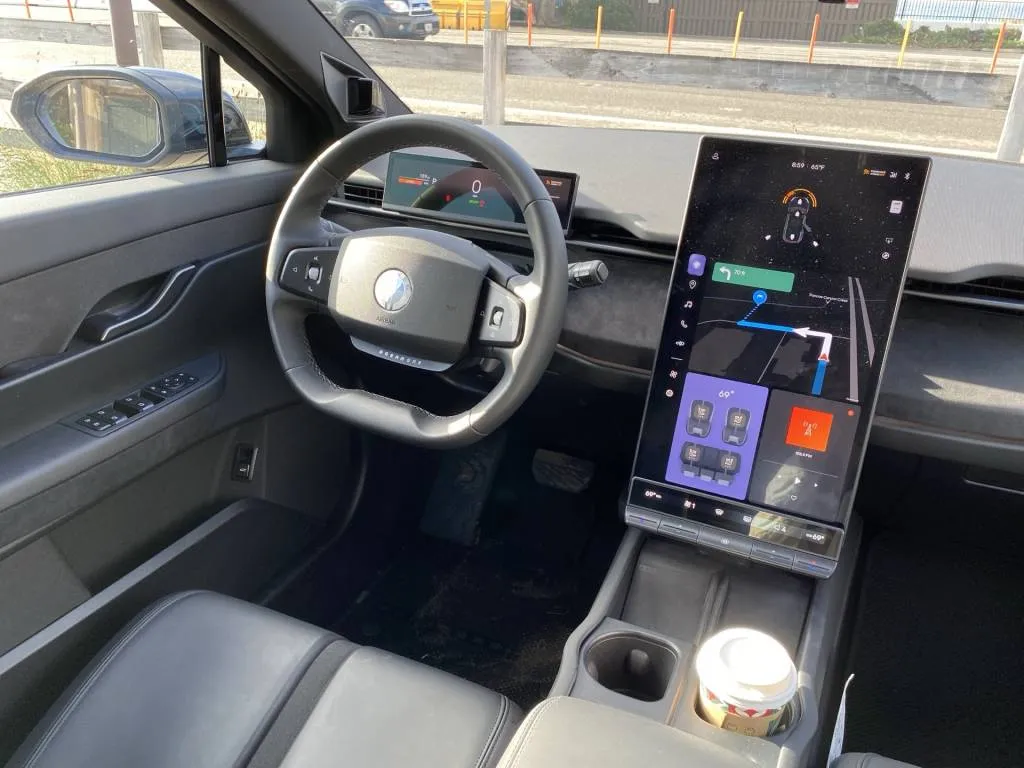
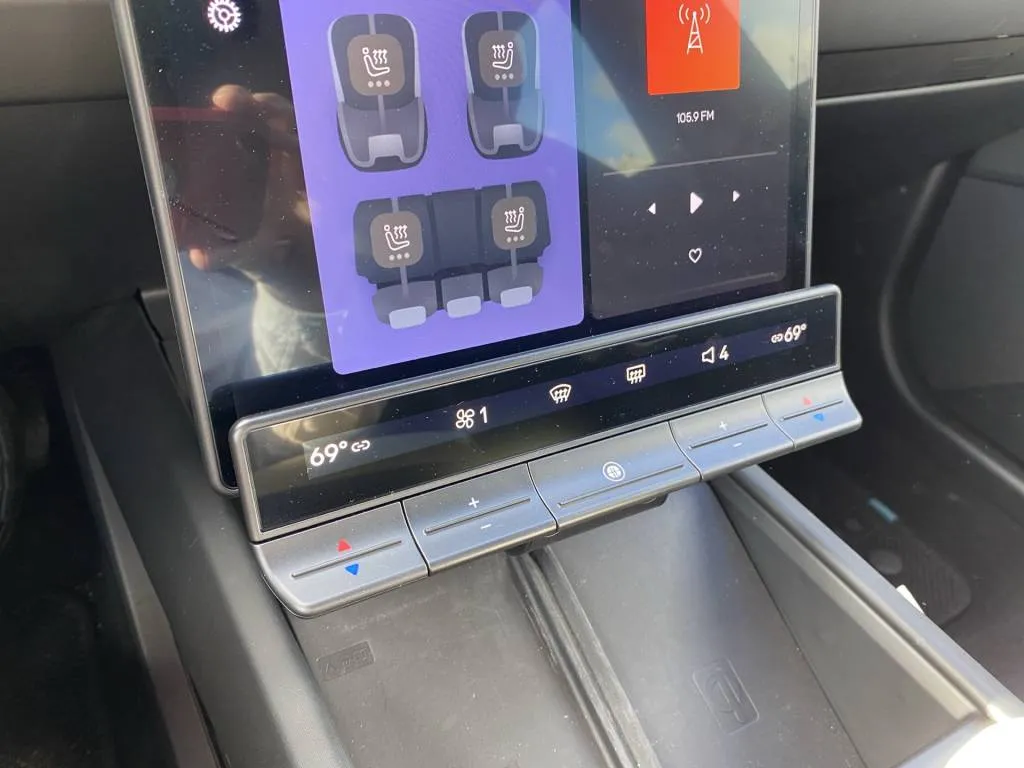
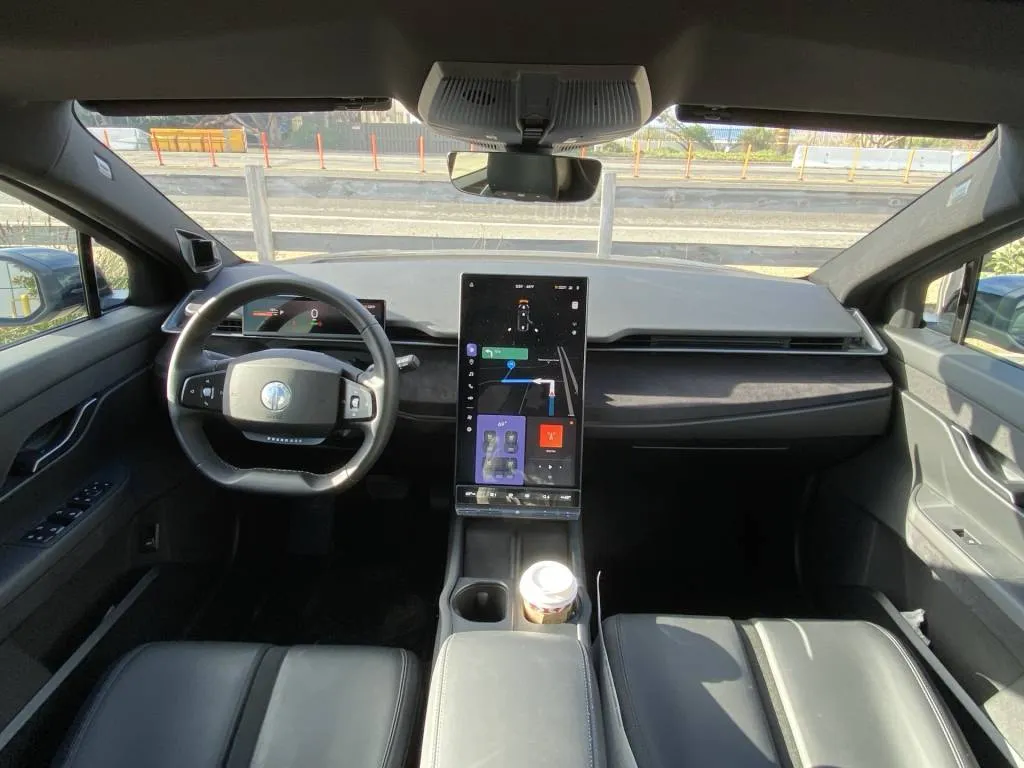
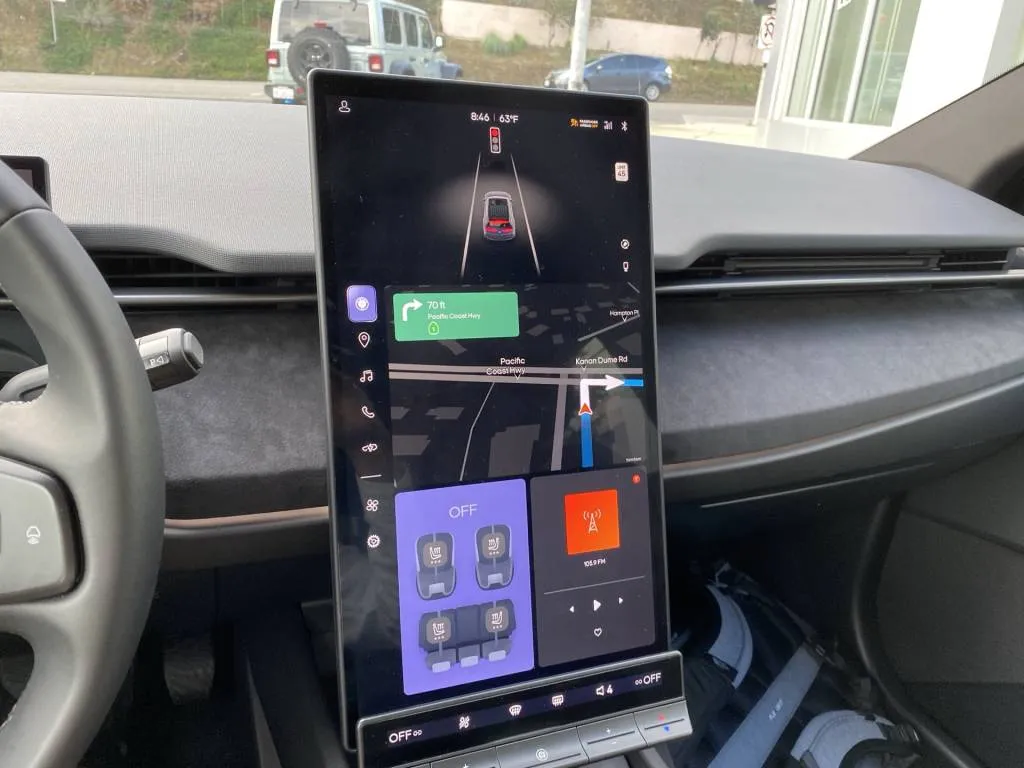
Both sides of the center console have wireless charging pads, and the infotainment screen can swivel from portrait to landscape positions. Hold the center button below the screen for a few seconds and it rotates, engaging what Fisker terms Hollywood mode. Only available when parked and stopped, it allows occupants to be entertained while charging. The screen mechanism has a very low force threshold (I tested it) for aborting its mission when fingers are in the way, yet it swivels smoothly.
When parked you can see a view of all the cameras available, assisting with low-speed maneuvers and parking, while “current” view allows a 360-degree overhead view combining camera inputs—definitely useful for a quick assessment during parallel parking. Shortcut buttons on the left of the screen toggle between the different priorities, including entertainment, climate, and the navigation, allowing the latter to go full screen. A green charging-station button works as a navigation shortcut to find one nearby. Fisker also claimed, then and now, that it will automatically route the user to charging stationsas needed along a road-trip route.
Carry the keyfob with you into the vehicle, and it should unlock the doors, Fisker told me—their emphasis—although that intermittently took some extra clicks. Once in the vehicle, tapping the brake pedal turns it on. Walking away from the vehicle is supposed to lock itand place it in a sleep mode, but as in other models it felt like a leap of faith as I would sometimes still see the door handles out from a distance, and then I’d have to walk closer before the Ocean would respond to the lock button on the fob.
The Ocean fast-charges at a peak of around 200 kw and doesn’t precondition, with a 10-80% time of about 35 minutes. All Oceans have a 32-amp onboard charger good for roughly 14 hours from 0% charge to full on a Level 2 outlet.
2023 Fisker Ocean One
2023 Fisker Ocean One
2023 Fisker Ocean One
2023 Fisker Ocean One
Fisker’s touchscreens banked a lot on the software future
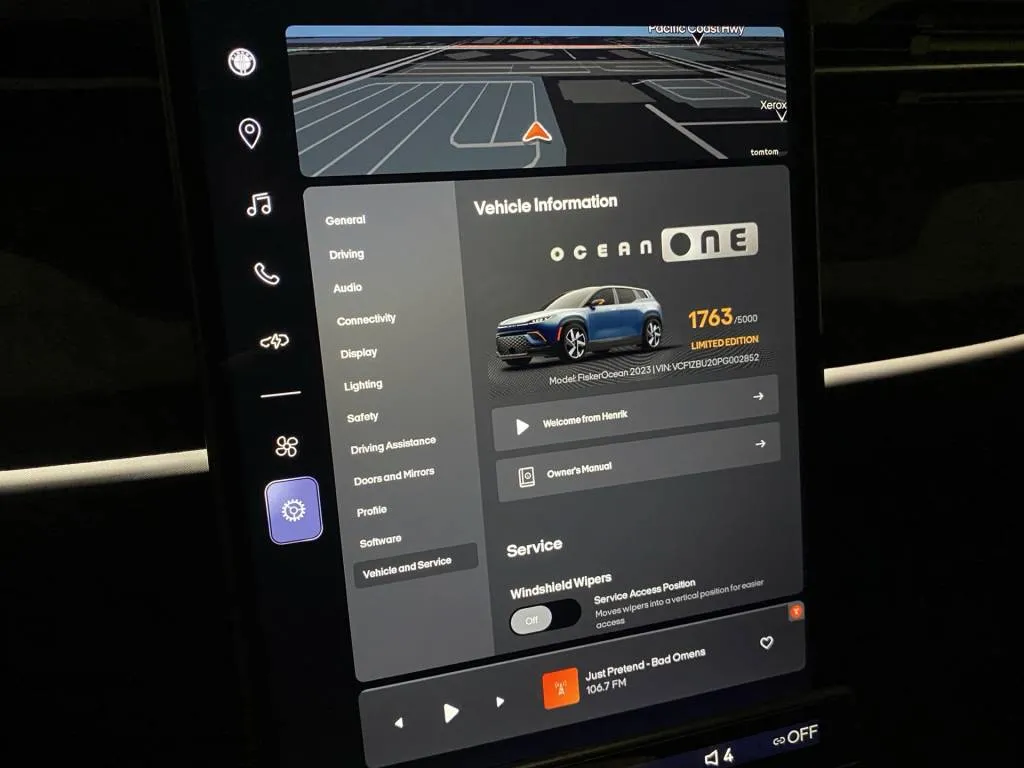
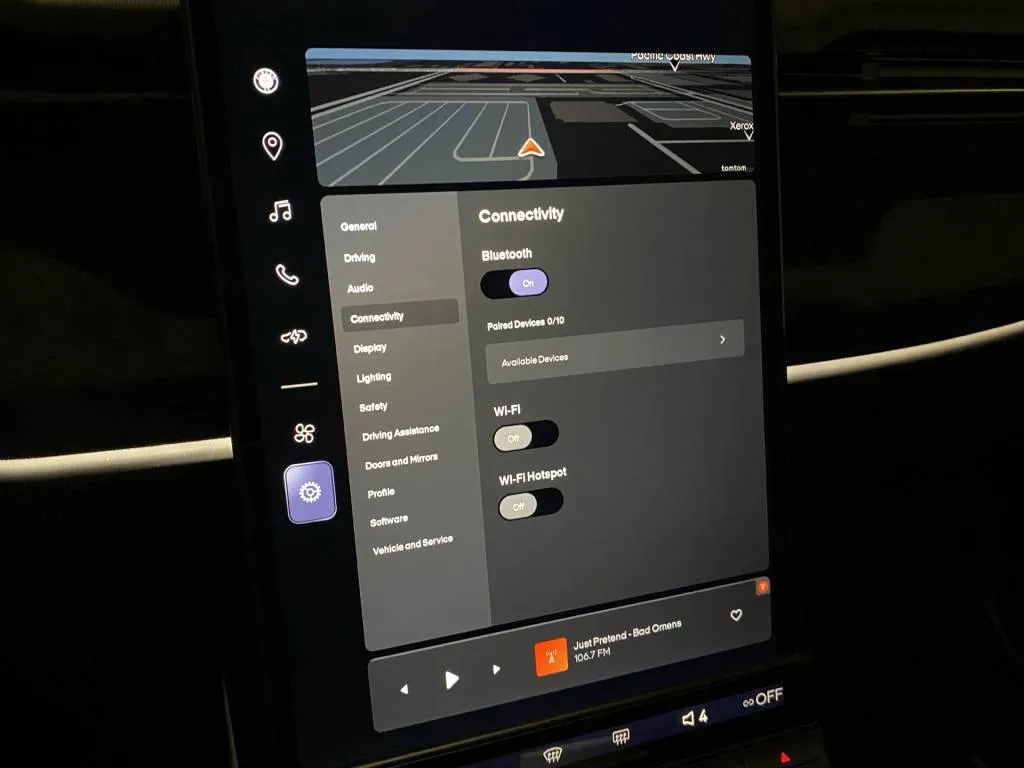
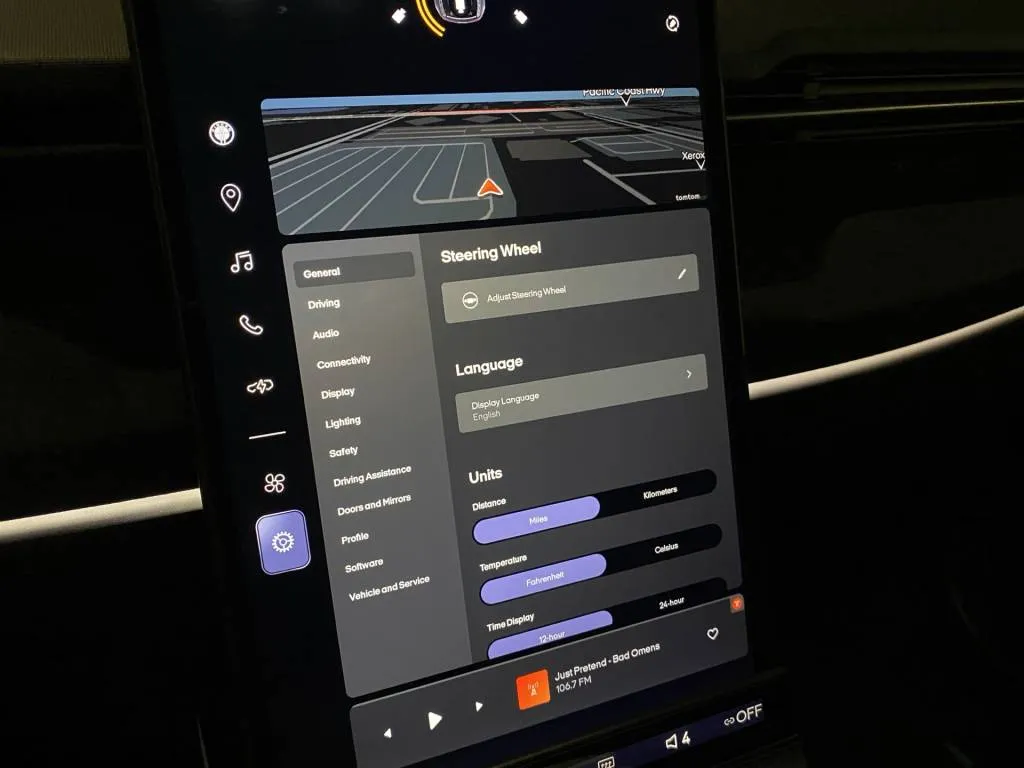
When I tested the Ocean, the infotainment system felt partly complete, and missing a number of features Fisker had promised. There’s no AM radio, but it offers FM plus apps for iHeartRadio, Spotify, and TuneIn. Fisker said months ago that this system could be Apple CarPlay and Android Auto compatible in the future, but by the time I drove it the official word was that it was waiting to get more customer feedback to see if it was necessary.
Some might prefer the map to be on the upper portion of the screen. But you can’t drag the modules around; they sit in dedicated locations on the screen. It also includes live-updated traffic-light information atop the screen, which I found to be remarkably in sync most of the time.
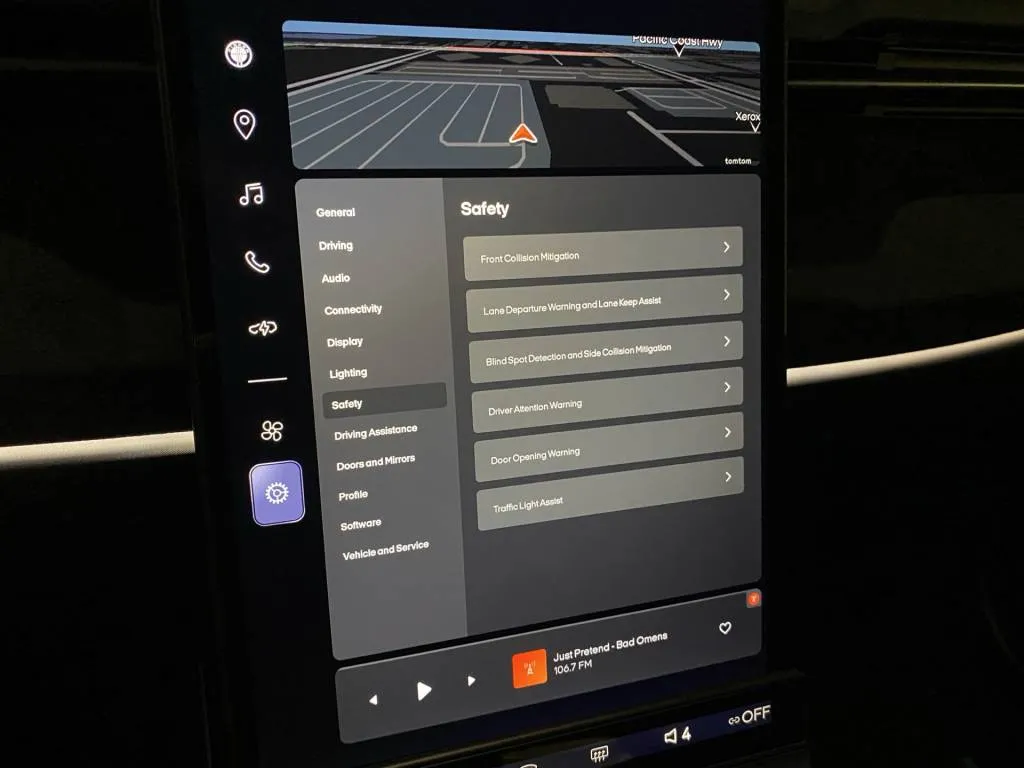
The menu system was quite easy to figure out and within a few minutes I’d switched to the dark display mode, toyed with ambient lighting, scrolled through ADAS features (driver monitoring is on the front pillar, not around the steering wheel), and seen that you can reset the height of the tailgate via the menu system. There was also a rear touchscreen and a Limo mode that gives priority for the climate and entertainment controls to the rear screen.
Some things were in glaring omission. Voice controls weren’t enabled yet, but Fisker said they soon would be. While I could pair my phone via Bluetooth, and while a voicemail played fine and I could answer a call, I couldn’t seem to make an outgoing call without disconnecting from the car.
Fisker had also promised to add phone-as-key functionality, but it appears that didn’t to arrive (Bluetooth first, right?). My test car also didn’t have adaptive cruise control. That was set for a future update, according to Fisker.
2023 Fisker Ocean One
Fisker Ocean post-drive download and epilogue
After I turned the vehicle in, I shared some of the feedback about interface niggles that the team had clearly heard about from others and was working on. I also shared those concerns about dynamics directly with chief technology officer David King, a longtime Aston Martin executive who jumped to lead Fisker’s global engineering and software teams. King promised me that the company’s software OS 2.0 was just a few weeks away, included updates that would batten down the dynamics I described, and that the team would make sure I experienced that as soon as they had it in something outside development vehicles.
Those few weeks turned into a few months. Fisker released the first of three pieces of Ocean OS 2.0 on a beta basis in late February, and it reported in early April that it had been rolled out to most customers. Part 2 and 3 arrived later in April, with the latter updating the keyfob. After more requests Fisker went dark on product PR. Then on June 17, however, the company filed for bankruptcy.
2023 Fisker Ocean One
2023 Fisker Ocean One
2023 Fisker Ocean One
What Fisker’s last and best official update gets you
The most noteworthy driving change for OS 2.0 is this model’s shift of the base torque split to rear-biased (45:55 front to rear), with an even stronger rear bias in Fun and Hyper modes during dynamic driving.
As King insisted, OS 2.0 was comprehensive in ways we haven’t seen from many other automakers. It even included a software update to the keyfob, said to “improve button click performance and response.”
Fisker adjusted the climate control performance in Earth Mode for more comfort, introduced individual driver profiles for a range of settings, and better managed energy drain when parked with a standby mode allowing an adjustable “sleep state” defaulting to 24 hours. It also fixed a few of the minor criticisms I had in notes, like how the vehicle’s Hill Hold feature held the vehicle so briefly there wasn’t enough time to look about and move one’s right foot to the accelerator.
Based anecdotally on some owners’ feedback and social-media postings, the brake-hold behavior has been soothed, energy management appears improved, and the modes and drivability have been improved. But plenty of bugs remain.
Among the features Fisker planned to enable in 2024 are a “Park My Car” autonomous parking feature, adaptive cruise control with lane awareness, a PowerHouse mode that would allow the Ocean to provide emergency backup power for days, and a PowerCar system that would allow the Ocean to charge other EVs. Unfortunately, these features will likely never arrive.
2023 Fisker Ocean One
Hold on. This could be a pretty good EV.
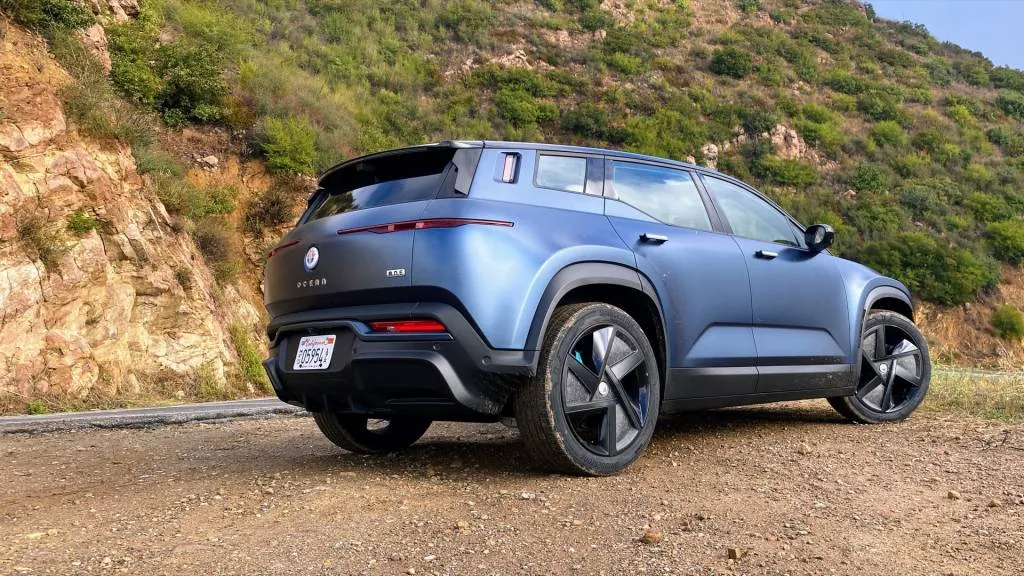
Why am I wrapping up these thoughts now? The Fisker bankruptcy is in process and production has halted indefinitely. Although I never got the promised perspective on how quickly its EV was improving, I should underscore that the Ocean as it was delivered had a lot of potential. It showed a lot of hard work was put in by both from supplier Magna and Fisker itself.
The Ocean is far, far from the worst vehicle I’ve ever tested. It’s not far-fetched to envision it, with some major software updates and simplification of hardware, being one of the better vehicles in its class. It was developed with real mass-production scale in sight, as its approximately 11,000-vehicle production total until the financially imposed shutdown demonstrates. And it did go through proper hot-weather and high-speed testing.
Earlier this month Fisker was cleared to sell more than 3,000 of its EVs in North America to a leasing company for up to $46.25 million, including an initial lot of about 1,000 vehicles at $14 million. Yes, that’s about $14,000 per Ocean EV—20% of the approximately $70,000 sticker for the one I’d driven months ago.
The Ocean is a more complete vehicle, and it shows far more market potential versus the Fisker Karma that was purchased many years ago and continues to be made in very low volume as the Karma Revero.
2023 Fisker Ocean One
In some respects, it seems unlikely that the Ocean as a product will be completely shelved. It’s fully DOT-legal, and it’s already complete in all the aspects that are very costly in the development stage. With the help of a couple more major software updates—admittedly a heavy lift, in all this context—it could be a very good vehicle. If it is revived, it might not ultimately bear the Fisker name. But if it does live up to its promise, it will have Henrik to thank.

Honda Canada dealers lawyer up, prep for class action suit over margin cuts
Honda dealers in Canada have retained legal counsel and are preparing for a possible class-action lawsuit against the automaker’s Canadian unit, as the company enacts a plan that will significantly reduce dealer profit margin on vehicle sales, according to multiple dealers.

The Alfa Romeo Junior EV Might Come To The U.S. Would You Buy One?
With the Volvo EX30 being delayed in the United States until next year due to the hiked import tariffs on Chinese-made electric vehicles, American buyers have a pretty thin selection of battery-powered sub-compact crossovers.
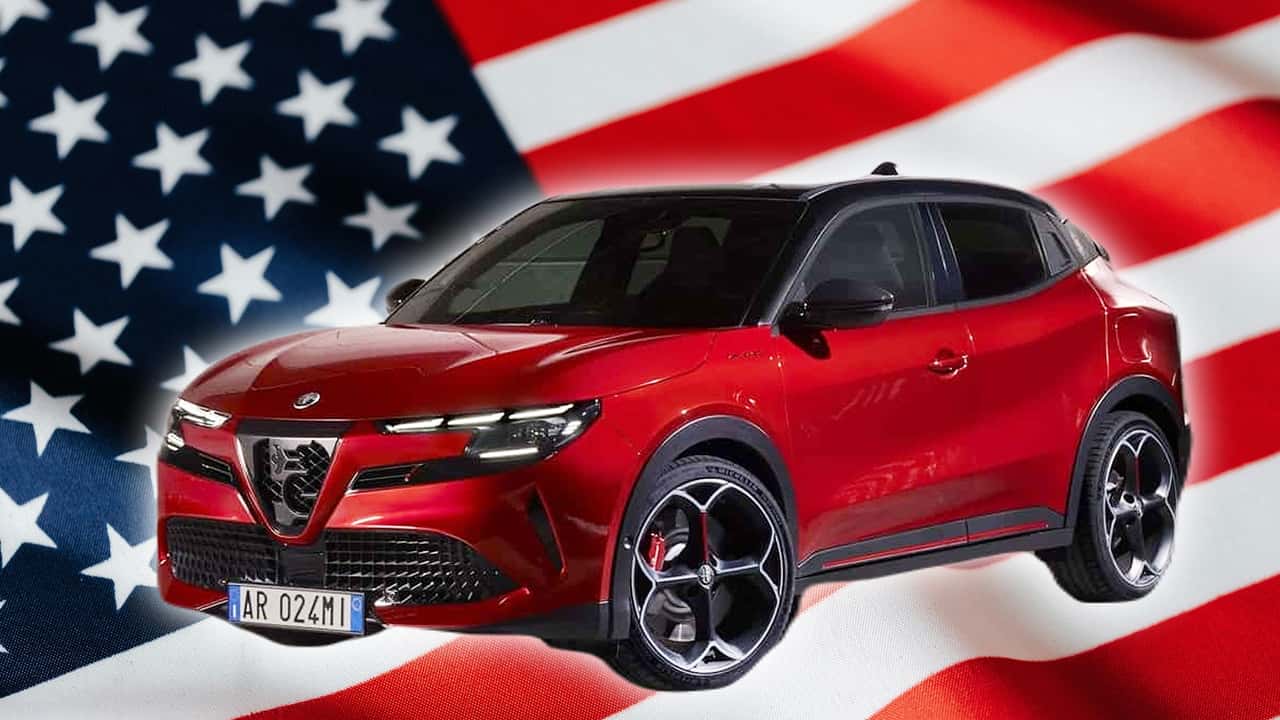
The Hyundai Kona Electric and Kia Niro EV are some, if not all of those choices, but they might soon have a contender trying to get a cut of their market in the form of the Alfa Romeo Junior, formerly known as the Milano.
The Alfa question
With sales numbers that pale in comparison to its German-based rivals, Alfa Romeo is trying to take advantage of the Volvo EX30’s delayed launch in the U.S. by potentially bringing its entry-level EV here. But can a battery-powered sub-compact crossover turn the Italian company’s fortunes around?
According to Automotive News Europe, the Italian automaker will meet with its U.S. dealers to gauge the potential for the all-electric, go-fast Junior Veloce on the American market, but not in all states.
Instead, the Stellantis-owned manufacturer will focus on California, Florida and other states that follow California’s emissions rules and generally have a pretty well-sorted EV charging infrastructure and an increased appetite for battery-powered cars.
Built in Poland, the Alfa Romeo Junior in Veloce trim is powered by a front-mounted electric motor that makes 281 horsepower–41 hp more than originally announced–allowing the Jeep Avenger’s cousin to sprint from zero to 62 miles per hour in 5.9 seconds. In Europe, there’s also a base Junior with a 156 hp electric drivetrain, with a hybrid set to join the lineup at a later date.
Both all-electric versions are powered by the same 54-kilowatt-hour battery pack which enables an estimated driving range of about 205 miles on the WLTP cycle for the potentially U.S.-bound Junior Veloce.

51
If it arrives stateside, Alfa’s entry-level EV would have some convincing to do. In Italy, the Veloce costs the equivalent of $52,000, including shipping and taxes, which would equate to a price of around $42,000 in the U.S. without shipping. By comparison, the entry-level 2024 Hyundai Kona Electric SE that has 133 hp goes for about $34,000, while the range-topping Limited with 201 hp starts at roughly $42,500 including shipping charges.
In the first half of the year, Alfa Romeo, which currently offers three models in the United States, recorded sales of just 4,777 units. With the Junior EV, the company could have a “window of opportunity” for U.S. sales, according to Daniele Tiago Guzzafame, Alfa Romeo’s head of product. At least until the Volvo EX30 starts being imported from Belgium, that is.
But what do you think? Would you spend your hard-earned money on a battery-powered Alfa Romeo? Let us know in the comments below.
Share this Story

2025 Chevy Corvette keeps base price unchanged, adds ZR1
 The 2025 Chevrolet Corvette costs $69,995 The Corvette E-Ray and Z06 both received $2,000 price increases The Corvette lineup carries over for 2025 outside the addition of the ZR1 The Chevrolet Corvette enters the 2025 model year with few changes, though for fans of extreme performance there’s a new generation of the ZR1 on offer. It joins the…

Lamborghini Huracán successor debuts Aug. 16
 Lamborghini’s next-generation mid-engine supercar has a date with destiny. On Monday, during the automaker’s latest sales report Lamborghini announced the Huracán successor will debut on Aug. 16 at the 2024 Monterey Car Week. The debut will mark the full hybridization of the Lamborghini lineup. The new model carries the code-name 634 and…

Here’s What’s Different In The New Rivian R1S. It’s More Than You Think
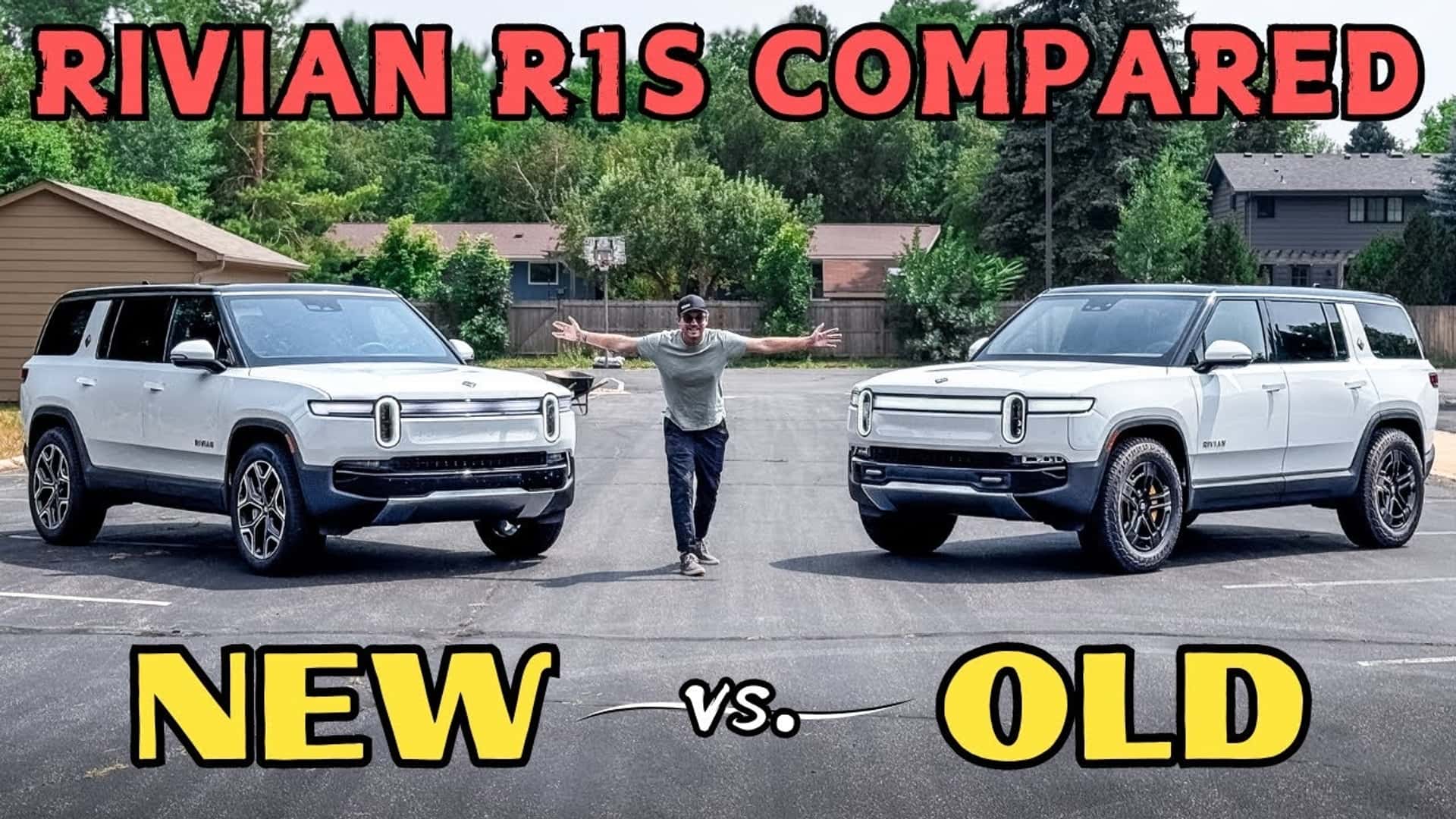
Rivian revealed what at first looked like a very lightly updated R1 model line that appeared almost identical to the vehicle it’s been selling since 2021. However, the exterior changes do not indicate how much work has been done to these trucks under the skin. Once you discover all the changes, you understand why Rivian bills these revised trucks as a new generation.
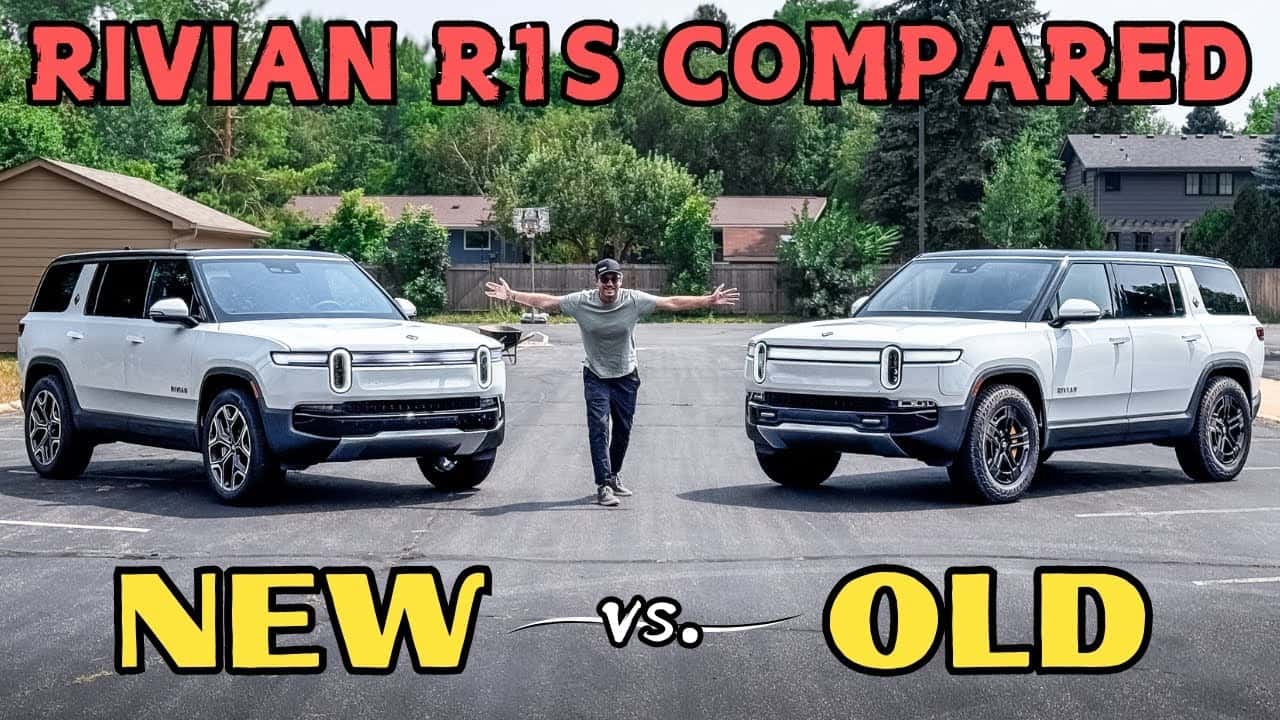
Jordan Schiefer of Out of Spec Reviews lined up pre- and post-refresh R1S SUVs to see what’s different and whether the new truck is more than just a facelift. In this lengthy video, Jordan, with a voiceless Kyle Conner behind the camera, goes over all of the visible changes and the ones you can’t see.
The biggest change under the skin is using drive units that Rivian now makes in-house. All pre-refresh R1 trucks with more than two motors had Bosch drive units, but now Rivian makes its own. It’s currently only building dual-motor vehicles, but it plans to launch tri-motor and quad-motor R1s with much more power than before.
The big changes are under the skin
With new motors, batteries and mechanical improvements (including the addition of a heat pump that R1 trucks didn’t have before regardless of version), the revised R1S and R1T promise to be a lot better than before.
The quad-motor will get a power boost from 835 horsepower to 1,025 hp, while torque will go up from 908 pound-feet to 1,198 lb-ft. Rivian says this will give its trucks an acceleration time from a standstill to 60 mph of under 2.5 seconds. The new tri-motor will have more power than the outgoing quad-motor, 850 hp, and can complete the benchmark sprint in a claimed 2.9 seconds.
Another significant under-the-skin change is the switch to an LFP (Lithium Iron Phosphate) battery pack for the base dual-motor R1 and adding a heat pump. It gives the R1T and R1S an EPA range of 270 miles on one charge. Out of Spec put a second-gen R1S dual-motor through the 70 mph range test, and the real-world highway result was 241 miles.
In this video, they go through more minor changes, like how the front and rear light bars are different. In revised R1s, you now get an emergency function that uses the rear light bar to direct traffic around the vehicle if it’s stopped in a dangerous, low-visibility area—it lights up segments on the light bar to indicate the direction to go around the stopped truck.
They also point out that the front light bar is more different than you might be able to spot at first glance. Whereas the pre-refresh truck had a diffuse effect on the whole light bar, the new one has more depth to it and looks quite different in person—let us know in the comments which style light bar you prefer. You can easily tell the difference if you have the older truck parked next to it like they have in the video.
Pre-refresh trucks seem to have better-quality door handles and door-opening mechanisms. The R1S they had in the video had squeaky handles, which was not a problem for the older version, even after a few years. They also point out that the door itself feels lighter and that there are subtle differences in the plastic used for the door card—this could be evidence of cost-cutting.
Other differences they found were the number of cameras on the side mirrors, the charging port, the interior, and the driving modes. If you want a complete breakdown of everything different between the two generations, this video should answer most of your questions.
Share this Story

2025 BMW i4 starts at $58,475, some models get range boost
- BMW’s i4 electric car gets new lighting treatments
- Range is up on the single-motor model, but down on the dual-motor model
- Prices have, naturally, increased—but in the hundreds of dollars, not thousands
The 2025 BMW i4 is on sale now with mildly updated exterior styling and interior trim, and an apparent range boost for some models.
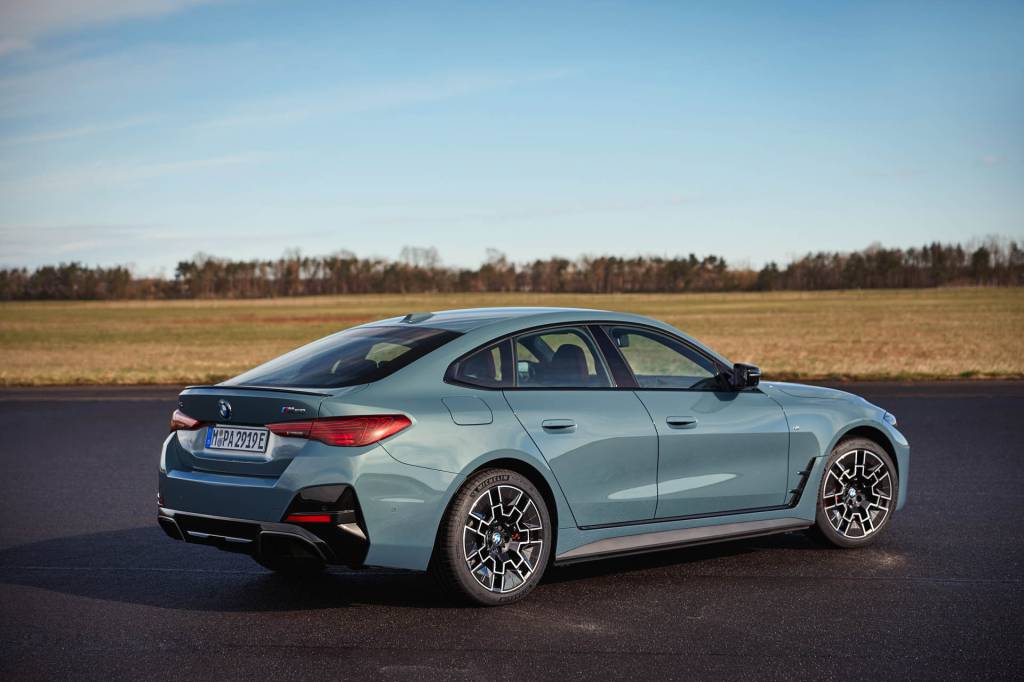
Both the i4 and the related 2025 BMW 4-Series Gran Coupe gasoline model receive new headlights, as well as taillights available with laser-lit accents previously seen on the M4 CSL, a limited edition version of the gasoline M4 2-door coupe. New exterior colors and wheel patterns are featured throughout the range as well.
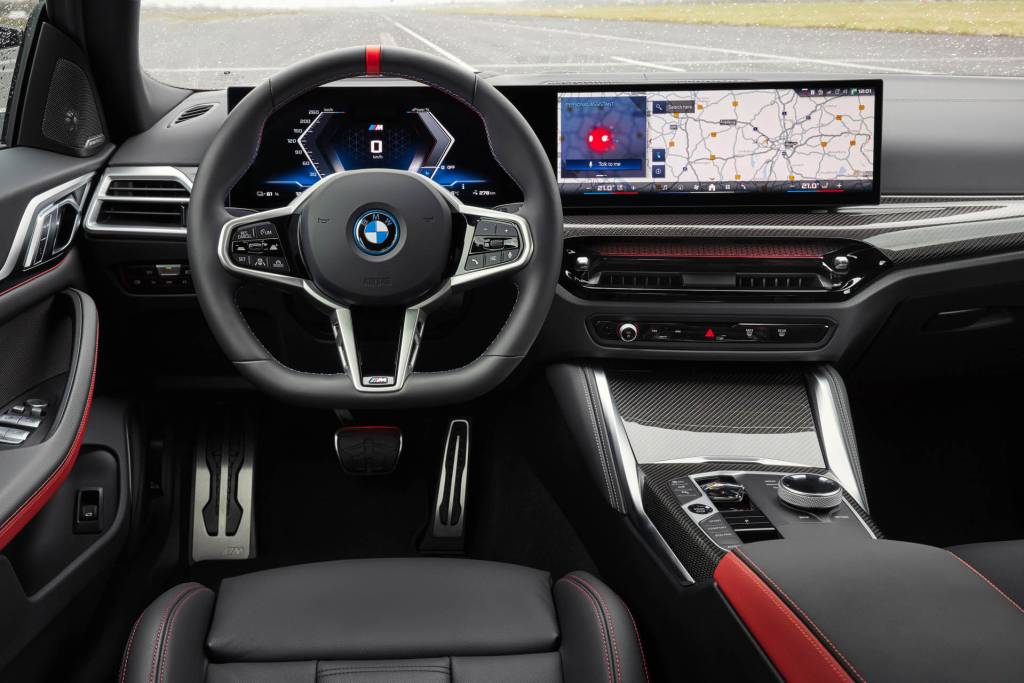
Inside, the i4 receives a new steering wheel design and some new interior trim options. It still features a curved display incorporating a 12.3-inch digital gauge cluster and 14.9-inch touchscreen, running the BMW iDrive 8.5 infotainment system. Apple CarPlay and Android Auto remain standard as well.
2025 BMW i4
The i4 supports the Plug & Charge protocol, with the ability to recognize accounts from up to five networks. BMW has been working to aggregate more EV chargers into a streamlined interface for its customers, a process that will continue in the 2025 calendar year with Tesla Supercharger access. The automaker has said it will adopt the Tesla North American Charging Standard (NACS) port starting next year, while also shipping adapters for existing vehicles.
The single-motor rear-wheel-drive i4 eDrive35 that was the base model for 2024 isn’t listed on the 2025 i4 configurator. The least expensive model listed is the i4 eDrive40, which starts at $58,475 with the mandatory $1,175 destination charge. That’s $600 more than the comparable 2024 model, but $5,100 more than the 2024 eDrive35 model.
The eDrive40 also has a single-motor powertrain, with output unchanged from the previous 335 hp, but BMW now lists up to 318 miles of range compared to 301 miles before. BMW also continues to offer a dual-motor all-wheel-drive xDrive40, which starts at $63,475 (a $700 increase). As with the eDrive40, output (in this case 396 hp) is unchanged. But BMW now lists a lower maximum range of 287 miles, down from 307 miles previously.
2025 BMW i4
The i4 M50 performance variant once again tops the lineup. This dual-motor model is rated at 536 hp—also unchanged from 2024. Estimated range dips just two miles, to 267 miles, while the prices increases $1,000, to $71,875.
While the i4 and other current BMW EVs share underpinnings with combustion models, the automaker will soon launch its Neue Klasse family of dedicated EVs based on a new architecture, starting with an electric SUV that’s due to start production for Europe in 2025.