
Author: EVAI

Rivian designs accessory system with removable hitch assembly
 Rivian is looking to patent a vehicle accessory system that works like a trailer hitch. A Rivian patent application for this feature was published by the United States Patent and Trademark Office (USPTO) on July 4, but was filed by Rivian in late 2022. In the document, Rivian details the use of two brackets to hold accessories, which attach to…

How to choose the best dog seat belt and car harness
 When you whistle to man’s best friend with an invitation to go for a ride, don’t just let the dog climb into the car and sit unrestrained during the outing. That’s asking for disaster in the event of a crash, propelling the animal and causing potential serious or fatal injury. Pet safety experts say the best protection is to…
How to choose the best dog seat belt and car harness
When you whistle to man’s best friend with an invitation to go for a ride, don’t just let the dog climb into the car and sit unrestrained during the outing. That’s asking for disaster in the event of a crash, propelling the animal and causing potential serious or fatal injury. Pet safety experts say the best protection is to…

Rivian R2 charge port moves to left rear, like Tesla
- Rivian confirmed rear left charge port location in upcoming R2 models
- That changes from plans on rear right for streetside charging and Rivian’s own networks
- R2 owners should have an easier time using Supercharger stations
Front, rear, left, right? Automakers still can’t agree on where to place EV charge ports on vehicles. But it appears that Tesla’s longtime preferred location at the left rear may have swayed another U.S. EV maker—Rivian.
News of Rivian’s switch in location for future EVs came Thursday through Rivian Forums. A contributor noted that as the R2 and R3X were being shown at the Rivian Space in Pasadena, Calif., an executive confirmed the move in charge port location from the brand’s currently set right rear location.
“We can confirm the charge port will be located on (the) rear driver’s side of R2,” a Rivian spokesperson stated to Green Car Reports Friday. “We look forward to sharing more info and specs on R2 in the future.”
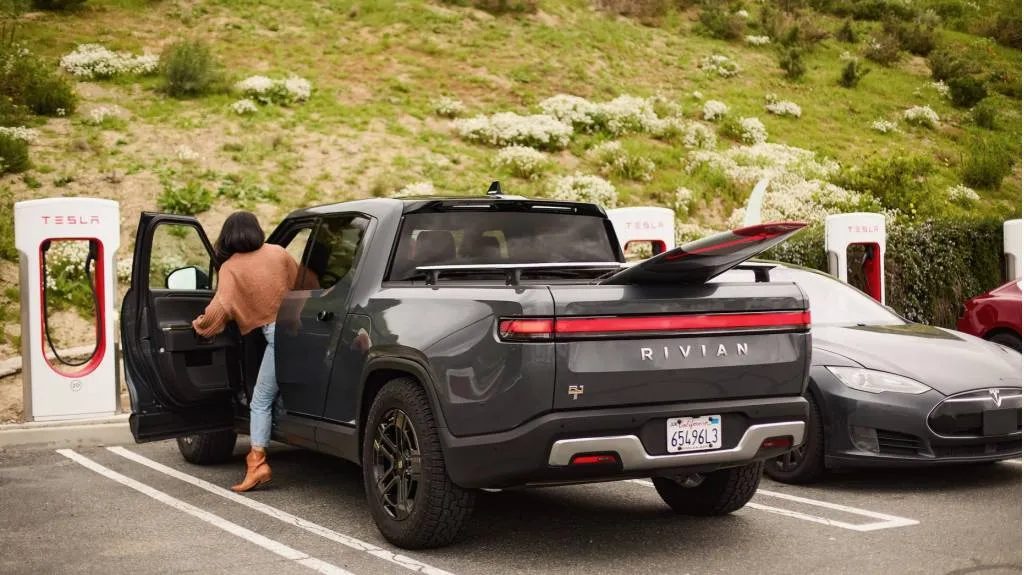
Rivian R1T at Tesla Supercharger
Reach issues with R1 charge port at Superchargers?
The shift may have something to do with Rivian owners’ experiences at Tesla Supercharger stations using the current charge-port location of R1S and R1T models—on the left side of the vehicle, just ahead of the driver’s door. At some Supercharger locations, in experiences well documented on YouTube and in forum posts, Rivian drivers have had to get creative with parking in order to reach their charge port with the Tesla connector.
Rivian confirmed last June that it would adopt the Tesla-based charge port, also called J3400, as part of the North American Charging Standard (NACS). The R2 and R3 families made their debut in March in prototype form with the Tesla port under neatly downsized charge-port doors at the right rear of the vehicle, instead of the bulkier CCS port. Then in March it announced that it would begin shipping free NACS adapters to R1 customers, arriving in April, with Superchargers since then appearing in Rivian trip planning.
There are currently 2,321 Tesla Supercharger locations in the U.S., offering 26,217 charging ports, according to the U.S. Department of Energy.
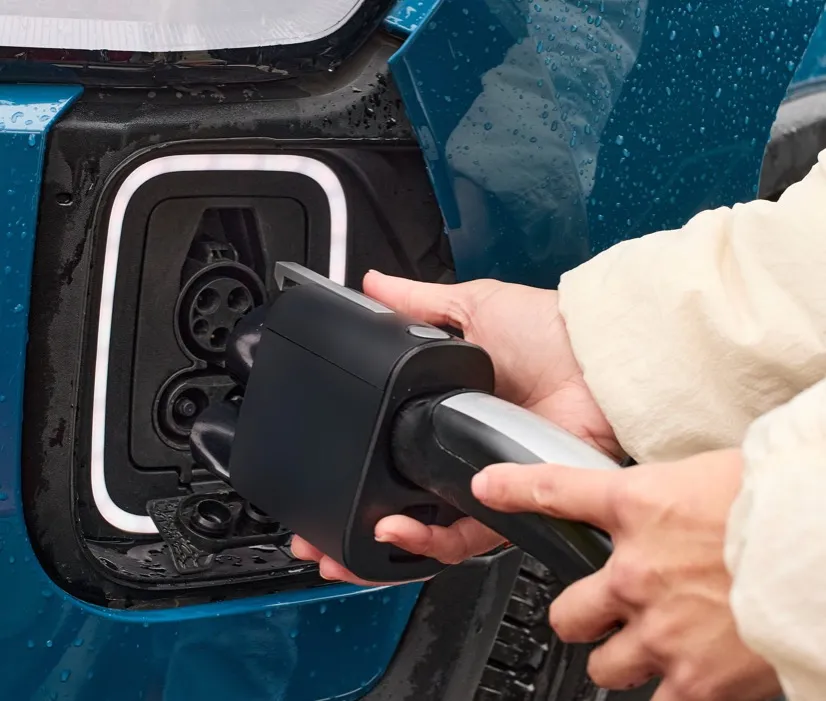
Rivian NACS adapter
Right rear was for streetside charging, Rivian’s networks
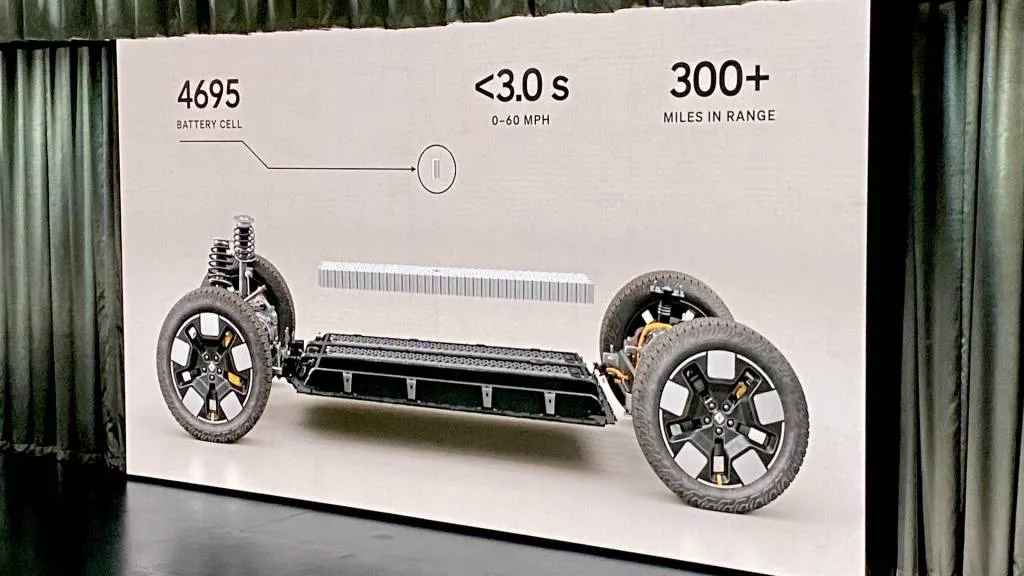
In March, at the launch of the $45,000 Rivian R2, as well as the smaller, even more affordable R3 and R3X, all built on the same next-generation platform and part of the same product family, Rivian officials suggested that the charge port placement on the rear right was an ideal location for streetside charging. That’s expected to be increasingly important in Europe, where Rivian is hoping to sell many of these vehicles, and eventually more U.S. urban environments.
Rivian R2
Rivian’s head designer Jeff Hammoud then fielded some additional questions about the placement of the charge port, making clear that Rivian had already given the location a lot of thought.
“We did a lot of research and specifically in left-hand-drive countries in Europe,” Hammoud said to a small group, including Green Car Reports. “We saw a lot of people charging cars on the street, and you’d see anything from charging cables wrapped over hoods to get to the other side, and we wanted to solve that.”
Hammoud summed that putting the port at the rear of the vehicle versus the front meant fewer wires, less weight, and less cost. Further, Rivian has been building its current charging network for that front left position of the R1, and he added, “If you’re gonna flip the car back into the space, it’s essentially the exact same location.”
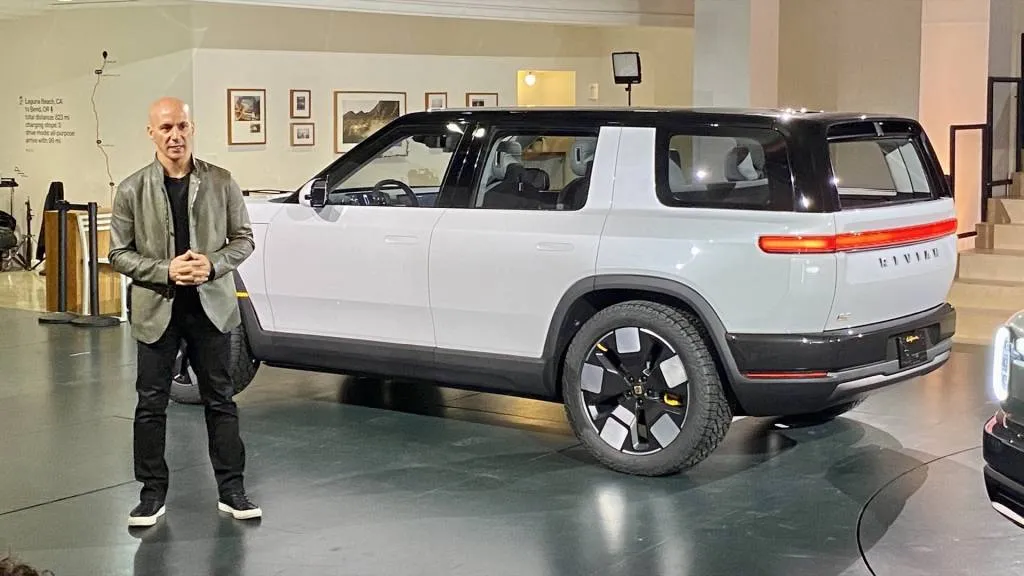
Rivian R2
To underscore what Rivian has confirmed versus what it hasn’t, this shift in location is technically so far only confirmed for the R2, not necessarily the R3.
The choice of the Tesla location for the R2 does however suggest that the sheer volume of charge sessions on the Tesla Supercharger network may make it a worthwhile tradeoff for customers, and perhaps for the brand’s image. In making these future, more mass-market vehicles easier to use on the Supercharger network, it’s future traffic and revenue for those Tesla stations. Now, will any other automakers follow?

VW ID.Buzz conversion vans brings good vibes into electric era
- A camper conversion of the VW ID.Buzz is in the works
- Deliveries of the VW ID.Buzz conversion van will begin in November
- The camper conversion is being done by a third-party independent of VW
A Seattle-based company is offering Volkswagen ID.Buzz camper van conversions that channel the groovy vibe of VW Microbus hippie-mobiles.
Peace Vans, which specializes in camper-van builds, is offering three such conversion options for the all-electric ID.Buzz, with deliveries scheduled to begin in November of this year. This is being done independently of VW, which does not have an official partner for camper-van conversions in the U.S. So far the automaker only plans to offer camper-friendly accessories for the ID.Buzz.
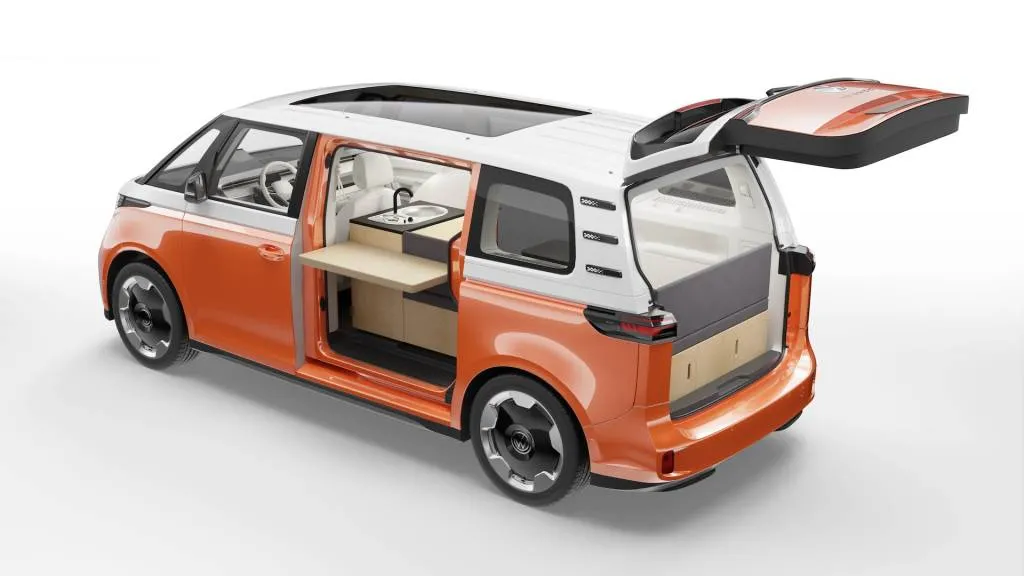
Volkswagen ID.Buzz.Camper by Peace Vans
The company’s Buzz.Camper is billed as a complete mobile home with a lounge area that converts into a bed, cabinets, a cooktop, a sink, and an onboard water storage. This requires removal of both rear rows of seats (the ID. Buzz will be sold in the U.S. only as a three-row passenger van). An alternative DOT-approved rear-seat setup is under development, which Peace Vans hopes to have approved by mid- to late-2025.
The Buzz.Box is more foodie-focused, with a modular rear-kitchen assembly that takes the place of the third row of seats. It includes a 25-liter refrigerator, a cooktop, a sink, water storage, and multiple prep surfaces, plus wireless device charging and integrated light and sound systems. A Buzz.Boz.Sleeper adds what Peace Vans calls an “almost queen size” sleeping platform that requires folding the second-row seats.
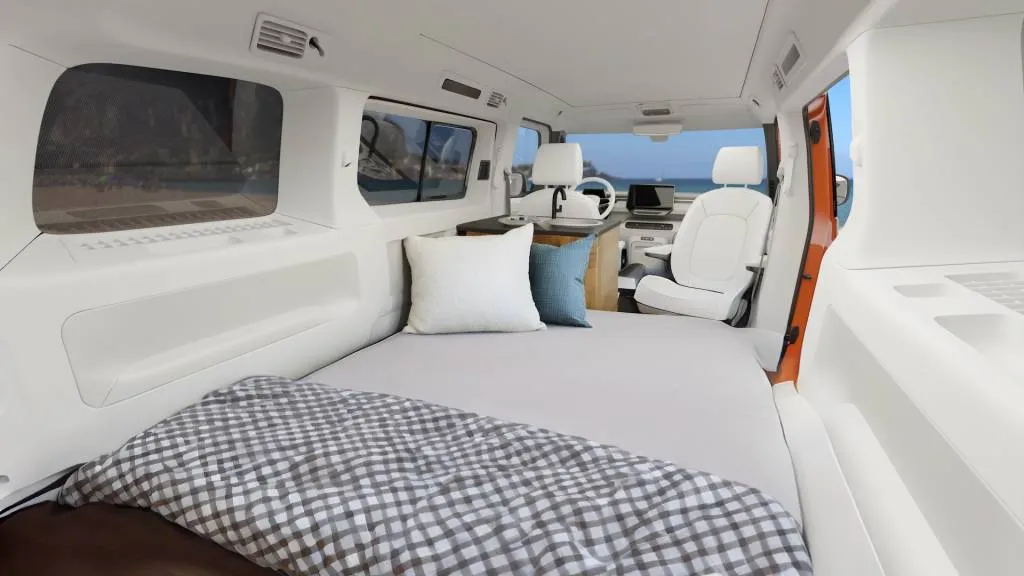
Volkswagen ID.Buzz.Box.Sleeper by Peace Vans
VW still hasn’t released U.S. pricing for the ID.Buzz itself, but Peace Vans is charging $7,995 for the Buzz.Box and $10,995 for the Buzz.Box.Sleeper installations, on top of the price of the vehicle itself. Pricing for the Buzz.Camper option will be released in the third quarter of this year. Peace Vans will also sell a limited number of pre-built ID.Buzz campers, allowing customers to take delivery of the vehicles with the conversion work already done.
Peace Vans is also working on a version of the iconic “pop top” roof from vintage VW vans for the ID.Buzz. The company hopes to have it ready in late 2025, and will give customers who purchase its other ID.Buzz conversions spots at the head of the line. And it notes on its website that all designs are still a work in progress and subject to change as development work continues. But, given how long it’s taking for the ID.Buzz to reach the U.S., potential customers are nothing if not patient.

2025 Volvo EX90 price hiked $3,300, still missing features
- The 2025 Volvo EX90 now costs $81,290
- The updated pricing includes a $3,300 price increase due to material costs
- The 2025 Volvo EX90 is in production in South Carolina
The 2025 Volvo EX90 has gotten $3,300 more expensive ahead of the planned start of U.S. deliveries later this year, reported Automotive News.
Volvo’s website now lists the base price as $81,290 with the mandatory $1,295 destination charge, meaning it now exceeds the $80,000 price cap for the federal EV tax credit. When it announced pricing last November, Volvo said the U.S.-made EX90 would start at $77,990 with destination.
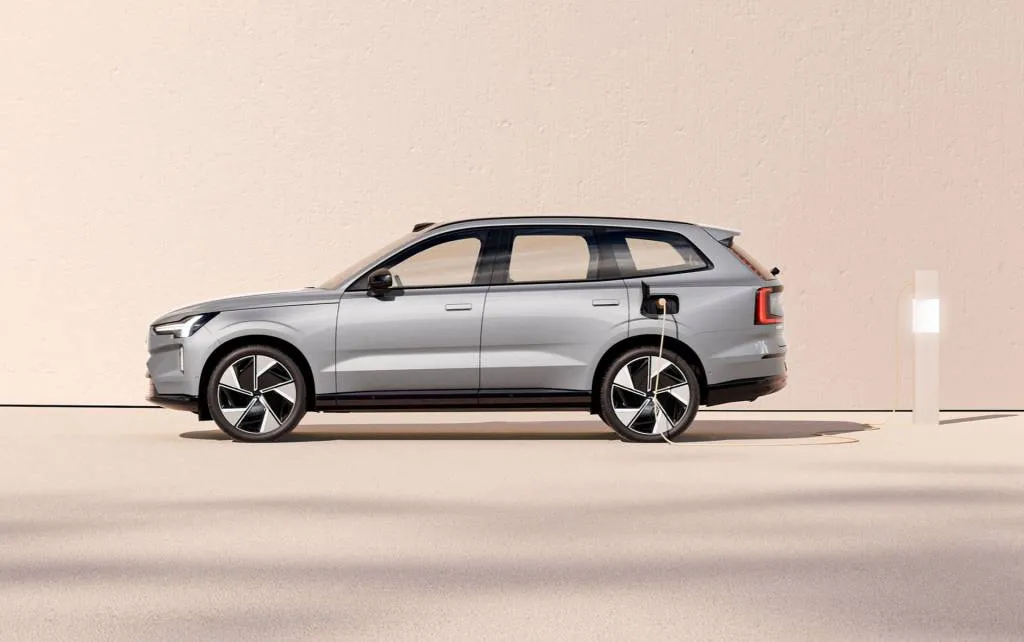
2025 Volvo EX90
A Volvo spokesperson told Automotive News that the price increase was due to higher material costs, adding that the higher pricing was announced to dealers and pre-order customers June 26 and that the website was updated the same day. Volvo began accepting pre-orders last November, but no “firm orders or non-refundable deposits” were placed before the price change was announced.
Volvo in June told customers that the first EX90 vehicles would ship without some features, including some driver aids, Apple CarPlay, and Plug & Charge and bidirectional charging, and that an unresolved battery-drain issue might cause early-build vehicles to use some energy while parked. The automaker said at the time that missing features would be added of free of charge via over-the-air updates, which would also address the power-draw issue.
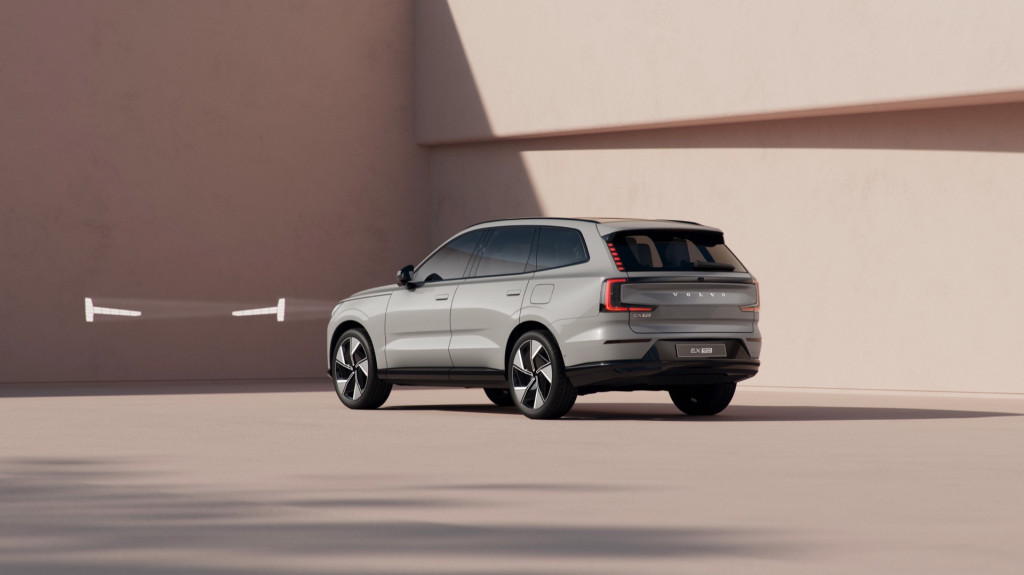
2025 Volvo EX90
Unveiled in November 2022, the EX90 was originally scheduled to start deliveries in early 2024, but was held back due to software issues that apparently weren’t completely resolved. Volvo now plans to deliver the first U.S. customer cars in the second half of this year, and has already started production of the EX90 at its South Carolina factory.
The Polestar 3 is slated to be built alongside the EX90 in South Carolina, and was held back by the same software issues. The two SUVs are built on the same platform, but the Polestar will be sold only with two rows of seats, while the Volvo is exclusively a three-row model. It’s unclear if the Polestar 3 will also ship with missing features, or whether Polestar will raise prices.

The EV sales reality has settled in — and suppliers worry they’ll be left holding the bag
The sunny electric vehicle forecasts of past CAR Management Briefing Seminars gave way to a cloudier picture this year.
Marissa West leaves GM after 8 months as North American president
Rory Harvey has taken over management of North America, and Duncan Aldred is being promoted to vice president of commercial growth strategies and operations.
Panelists say treat talent recruitment like a supply chain to attract skilled workers
Recruiting and retaining top employees will require work by companies, schools and state policymakers, experts said at the 2024 CAR Management Briefing Seminars.