Author: EVAI

Lexus EV concepts to make North American debut at Monterey Car Week
The Lexus LF-ZL and LF-ZC concept EVs feature styling cues and advanced technology that brand officials said will be coming to Lexus within the next several years.
Private equity firm buys auto retail ID check, remote notary provider Mavsign
Maverick Document Signings, which provides remote notary and identification verification services to car dealerships, has been purchased by private equity firm 1876 Partners, Colonnade Securities said.

Kia Carnival road trip: A father and son grow up on the road
 2024 Kia Carnival acts as transporter, living room, and sanctuary on the road Covering 700 miles, averaging 26.2 mpg, the Carnival impresses, even before the 2025 hybrid arrives National Parks, dolphins, and an Army duffel bag bind a father and son before college starts When my automotive friends heard that my son and I would be driving down U.S…

Mazda EZ-6 electric car goes global, U.S. unlikely
 The Mazda EZ-6 sedan will be the automaker’s first global-market EV, although Mazda isn’t specifically discussing plans to sell it in the U.S. Mazda unveiled the EZ-6 in April at the 2024 Beijing auto show, saying at the time that the sedan would go on sale in China by the end of the year without announcing sales in other markets. On Tuesday the…

What’s New for 2025: Mazda
 Mazda charges into 2025 with a growing lineup of crossover SUVs and an expansion of its plug-in hybrid powertrain option as well as its first modern hybrid offering. Without an electric car in its small but robust lineup consisting of one roadster, one sedan, one hatchback, and five crossover SUVs, Mazda has finally embraced electrification to…

Mazda EZ-6 electric sedan confirmed as brand’s first global EV
Mazda on Tuesday announced that the EZ-6 electric sedan will be its first global-market EV.
Mazda revealed this sedan in April in China, and at that time it didn’t provide information about whether it would be offered for any other markets. But in a press release Mazda said the EZ-6 will be “officially launched in the fall of 2024 as a global model,” going on sale in China first, followed by Europe. The U.S. wasn’t mentioned, but the “global” phrasing does at least leave the possibility of U.S. sales open—depending, perhaps, on U.S. tariff, trade, and EV policy after the November elections.
The announcement didn’t include any further information about the EZ-6. The electrified successor to the Mazda 6 combines the Japanese automaker’s styling with powertrain and connectivity tech from Chinese automaker Changan Automobile.
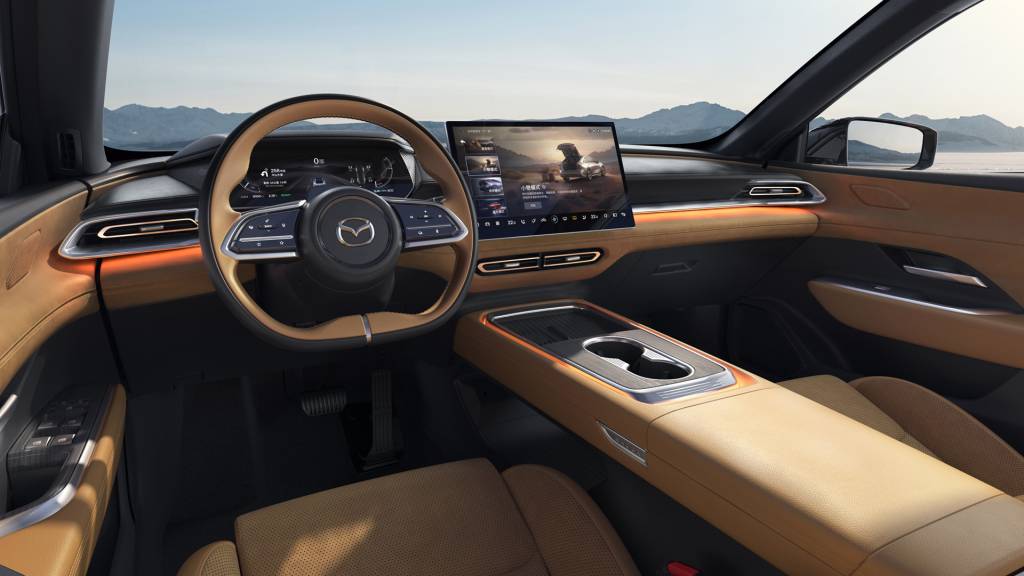
2025 Mazda EZ-6
On the powertrain side, Mazda has confirmed both all-electric and plug-in hybrid options, with rear-wheel drive for better handling. Adding to that, the all-electric version will also feature an ideal 50:50 front-rear weight distribution, Mazda said at the time of the reveal. The automaker also quoted a 373-mile range (based on the Chinese testing cycle) at that time.
Connectivity highlights will include gesture controls and voice recognition, Mazda has said, with a large horizontal infotainment touchscreen in keeping with current trends.
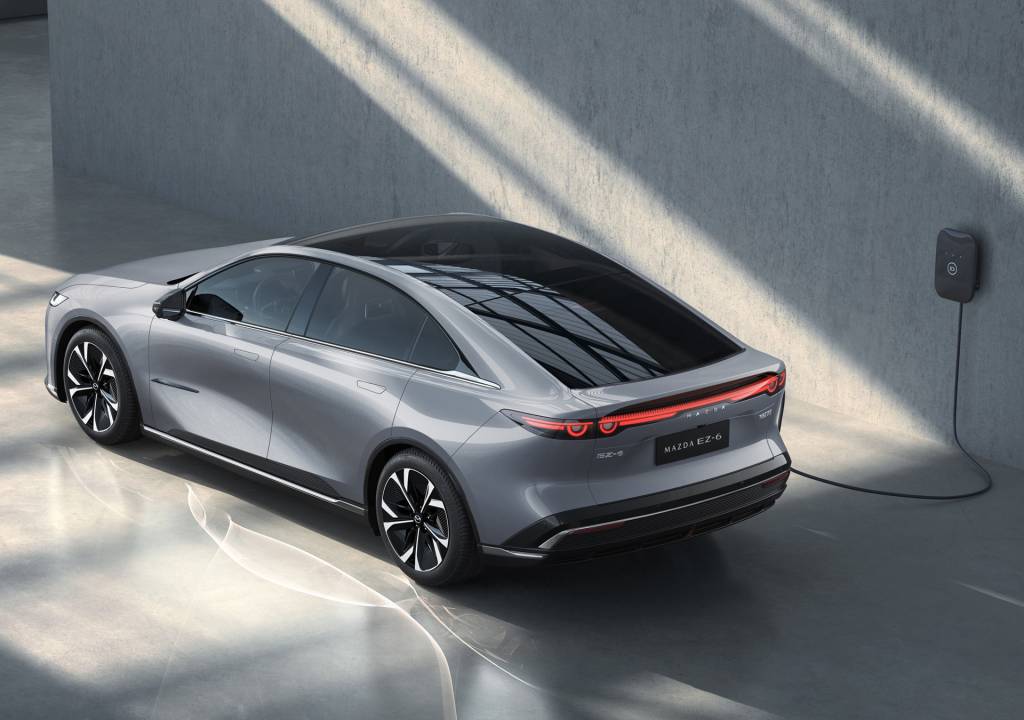
2025 Mazda EZ-6
In discussing the EZ-6 as its first entry into the global EV market, Mazda seems to have forgotten the MX-30, which was only around for a very short time. A rotary range-extended version of that crossover never even made it to the U.S.
The EZ-6 is definitely a long-range EV, but a U.S. Mazda executive just last year clearly stated that it doesn’t see long-range EVs as the future, predicting that EV buyers will learn, evolve, and shift their priorities, and in doing so realize they don’t really need much range.

Audi slashes EV interest rates, but Tesla Y can cost a lot less
Current Audi EV financing undercuts Tesla, but it may still be possible to get a better deal overall from the U.S. automaker, reports CarsDirect.
A recent dealer bulletin showed 0.99% financing on all 2024 Audi EVs for up to 60 months, compared to rates of 2.99% to 6.49% for most of the brand’s other models. It also undercuts the 1.99% rate Tesla is currently offering on the Model 3 and Model Y, and is dramatically lower than the 5.99% rate for the Model S and Model X, according to CarsDirect.
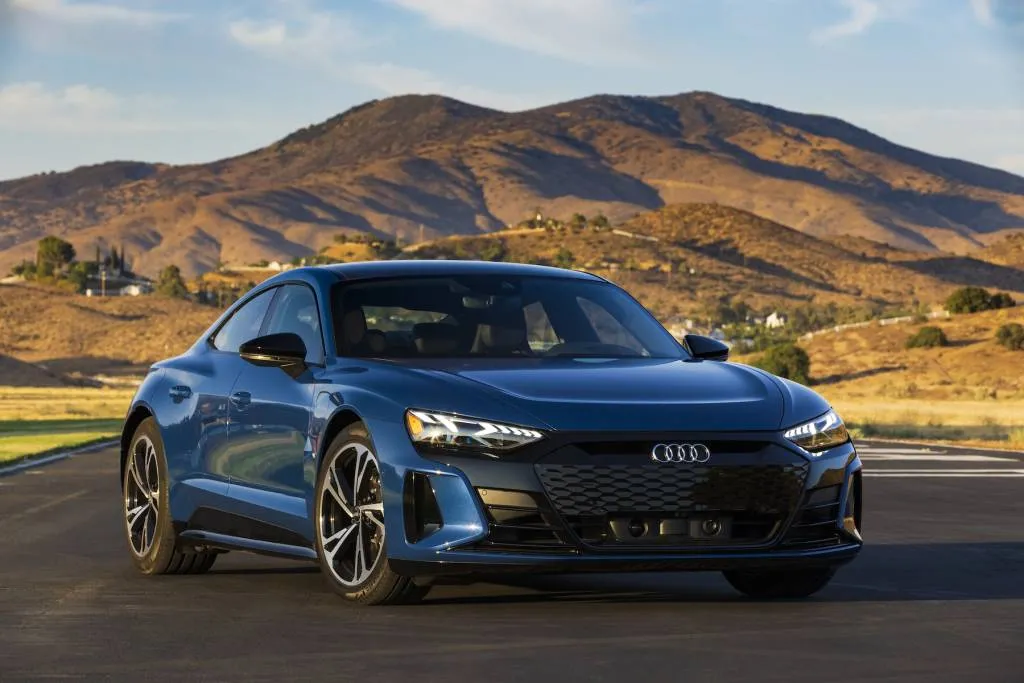
2024 Audi e-tron GT
However, most Model 3 and Model Y variants (apart from the base rear-wheel-drive Model 3) are eligible for a $7,500 federal tax credit, while no Audi EV is eligible for the credit under current rules that went into effect at the beginning of this year. And that means one of the entry-level Tesla EVs could still be a better deal.
With the tax credit factored in, CarsDirect estimates a $680 monthly payment for a 60-month financing term on a Tesla Model Y Long Range AWD. Even with the lower interest rate, it estimates a monthly payment of about $870 for an Audi Q4 E-Tron over the same term.
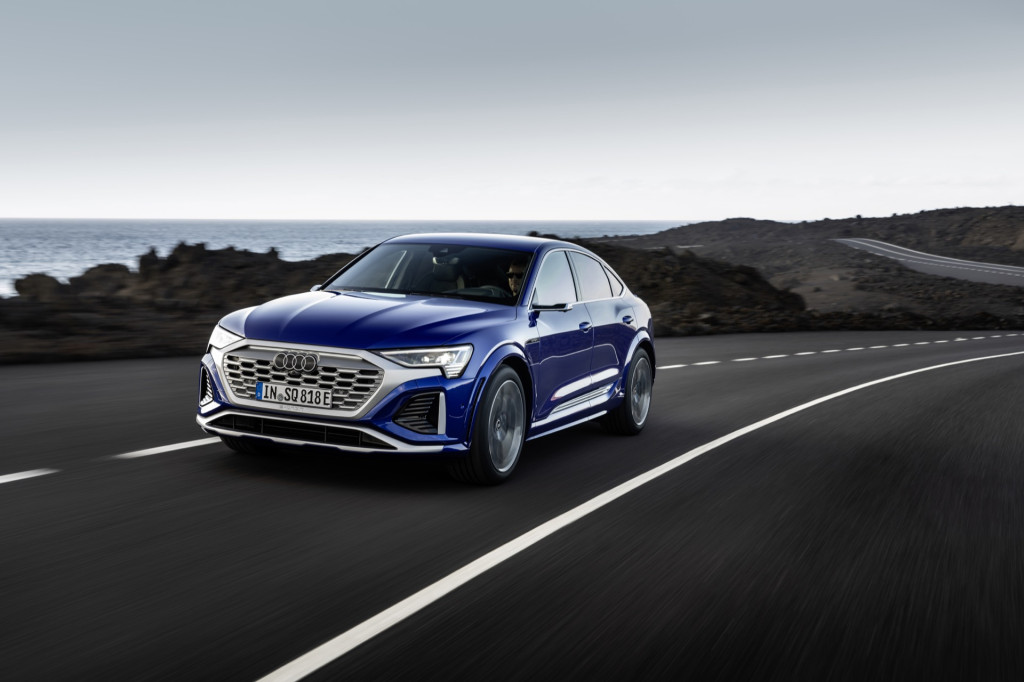
2024 Audi Q8 E-Tron
The Q4 E-Tron is Audi’s entry-level EV and thus the closest rival to the Model Y. It shares the MEB platform with the Volkswagen ID.4 and ID.Buzz from Audi’s parent brand. Audi’s EV lineup also includes the E-Tron GT and RS E-Tron GT, which share the J1 platform and its 800-volt electrical architecture with the Porsche Taycan, and Q8 E-Tron, which is based on a version of the MLB platform used by many VW Group gasoline models.
Both the Q4 E-Tron and E-Tron GT receive some updates for 2025, bringing more power and range to the Q4 E-Tron and a new RS E-Tron GT Performance grade for the flagship E-Tron GT. The existing models will soon be joined by the Q6 E-Tron crossover and A6 E-Tron hatchback, both based on the same Premium Platform Electric (PPE) as the all-electric 2025 Porsche Macan.

Cadillac Lyriq AWD recalled for potential brake failure
General Motors is recalling 2023-2024 Cadillac Lyriq electric SUVs over potential unexpected activation of anti-lock braking systems (ABS).
The recall encompasses 21,469 vehicles in the U.S., all with the dual-motor all-wheel-drive powertrain. Single-motor rear-wheel-drive models are not affected. The recalled vehicles may have overly sensitive ABS, according to the National Highway Traffic Safety Administration (NHTSA).
In rare circumstances, this condition could cause the ABS to activate unnecessarily, which could lead to the sustained release of brake pressure. That in turn could result in reduced stopping power or inoperative brakes. This can happen during braking on dry surfaces at speeds below 25 mph, according to the NHTSA.
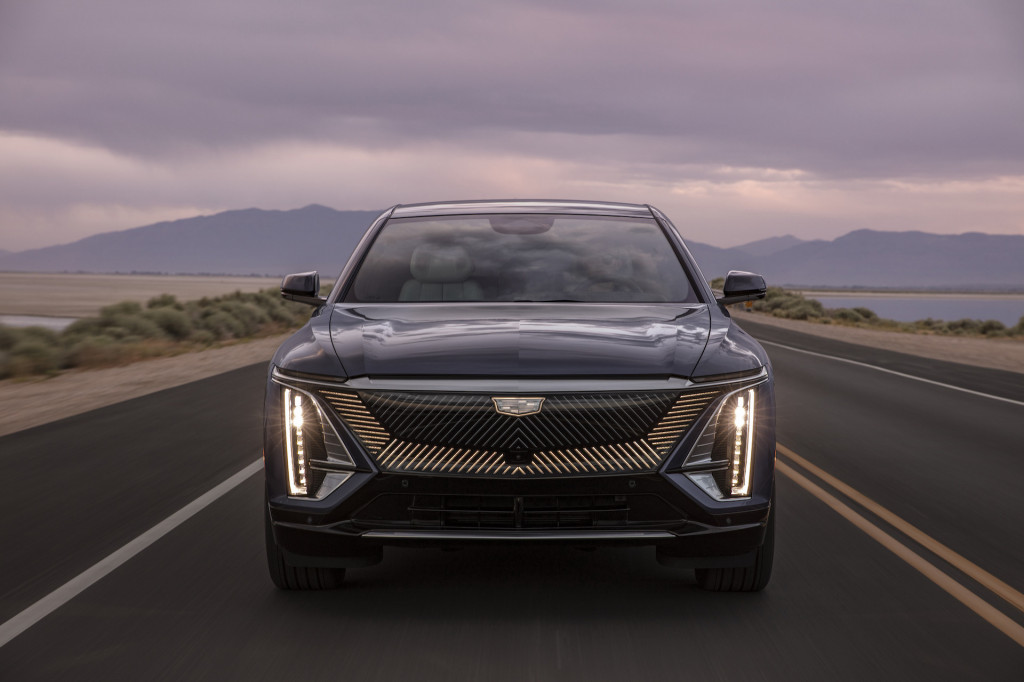
2023 Cadillac Lyriq
GM opened an investigation into the issue in May following two reports of “minor accidents” alleged to be the result of brake failure. The automaker is not aware of any injuries or fatalities related to this issue.
The remedy is a software update for the affected vehicles’ electronic brake control modules, which does not require a dealer visit. Owners can have the software installed as an over-the-air update, or take their vehicles to dealerships to have the update installed if they wish.
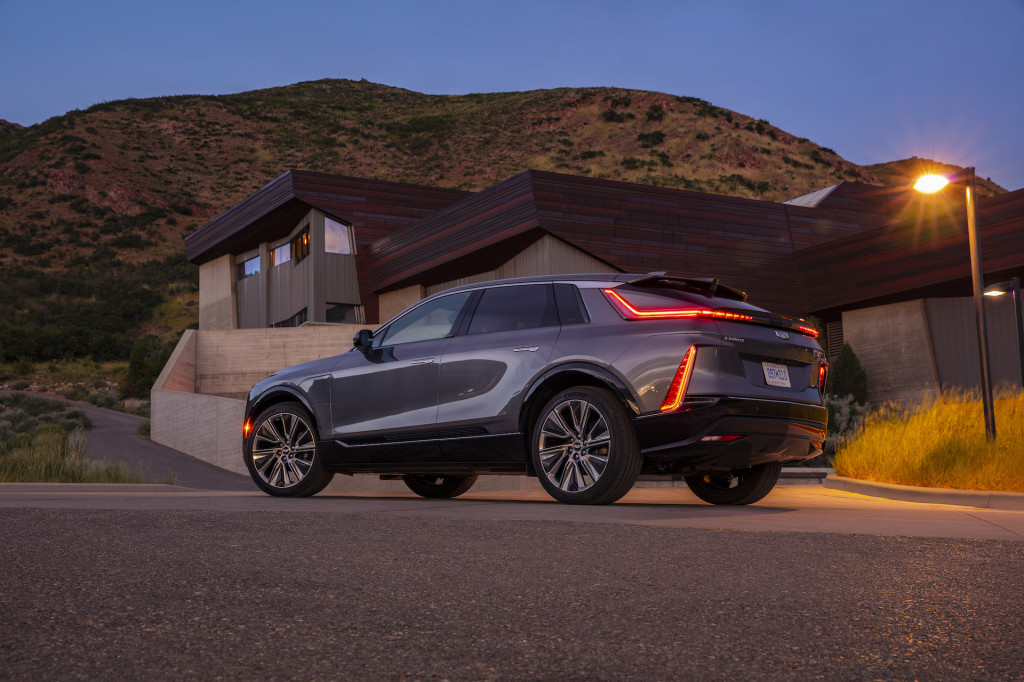
2023 Cadillac Lyriq
GM plans to mail owner notification letters Sept. 23, 2024. In the meantime, owners can contact GM customer service at 1-800-458-8006 or Cadillac’s EV Concierge service at 1-844-382-2345. GM’s reference number for this recall is N242453471.
This is the fifth recall for the 2023 Cadillac Lyriq, which arrived on the market earlier than expected in the 2022 calendar year as the first Cadillac model to use GM’s Ultium EV component set, and was a Green Car Reports Best Car to Buy 2023 finalist.

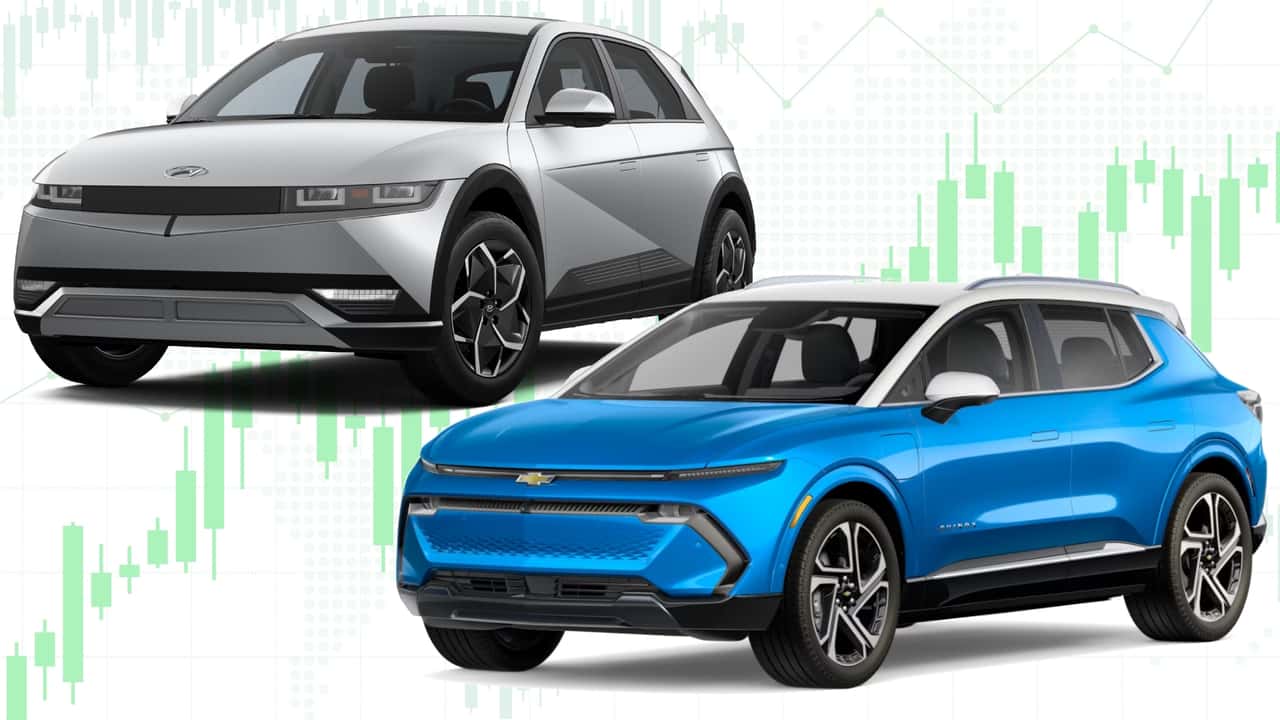
Chevrolet Equinox EV Vs. Hyundai Ioniq 5 Compared: Range, Price, Charging
Despite some hiccups in their plans, Hyundai and General Motors are charging ahead with their lofty electrification goals. Their entry-level electric SUVs, the Ioniq 5 and Chevrolet Equinox EV, offer generous tech features, serviceable driving ranges, and excellent safety features, making them solid options in their segment. Though very similar, key differences between the two deserve a deeper dive. The Ioniq 5 has been on sale for a few years, but the Chevy is brand-new for 2024, so let’s take a closer look at how the pair stacks up.

22
2024 Chevrolet Equinox EV vs. 2024 Hyundai Ioniq 5: Price
The Chevrolet Equinox EV isn’t as cheap as the automaker originally advertised, but it’s still one of the more affordable models on sale today. Pricing starts at $43,295 for the current base 2LT FWD variant, which includes a $1,395 destination charge. The base 2024 Hyundai Ioniq 5 SE Standard Range checks in at $100 less after a $1,395 destination charge. It’s also worth pointing out that the Equinox EV is eligible for a $7,500 tax credit, whereas the Ioniq 5 is not because of its foreign build location and battery materials sources.
Neither model is particularly affordable at the top end of their respective lineups, but the Chevy undercuts the Hyundai by a notable margin. The top Chevrolet Equinox EV 3RS AWD trim starts at $50,095, while the Ioniq 5 reaches $54,895 in its top Limited configuration. That said, the separate Ioniq 5 N performance model is significantly more expensive. Chevy buyers can add thousands to the price of the Equinox EV with options and accessories, but Hyundai keeps things simple with few accessories, and all-wheel drive is the only option, costing $3,900.
73
2024 Chevrolet Equinox EV vs. 2024 Hyundai Ioniq 5: Range
The longest-range Ioniq 5 tops out at 303 miles, but all-wheel drive knocks that number down to 260 miles. Impressively, Chevy estimates a 319-mile range for the Equinox EV with front-drive and 285 miles with all-wheel drive. Real-world range results depend heavily on several factors, including the driving style, temperature, and more.
Charging the Equinox EV takes around nine hours using a Level 2 240-volt charger. Things speed up considerably with a Level 3 DC fast charger, with the vehicle able to reach a full charge in around 40 minutes. The Ioniq 5 takes six hours to charge from ten to 100 percent on a 240-volt outlet, though more expensive configurations take about an hour longer to reach a full charge. Using DC fast charging, the EV can go from ten to 80 percent in under 20 minutes.
| Model | Drive | Battery (kWh) |
EPA Range |
0-60 mph (sec) |
| 2024 Chevrolet Equinox EV FWD | FWD | 85 | 319 mi | 7.9 |
| 2024 Chevrolet Equinox EV AWD | AWD | 85 | 285 mi | 5.9 |
| 2024 Hyundai Ioniq 5 Standard Range | RWD | 58.2 | 220 mi | |
| 2024 Hyundai Ioniq 5 Long Range RWD | RWD | 77 | 303 mi | |
| 2024 Hyundai Ioniq 5 Long Range AWD | AWD | 77 | 260 mi | 5.0 |
| 2024 Hyundai Ioniq 5 N | AWD | 84 | 221 mi | 3.0 |
2024 Chevrolet Equinox EV vs. 2024 Hyundai Ioniq 5: Efficiency
The Hyundai Ioniq 5’s most efficient configuration is the base trim with rear-wheel drive and long-range battery. It achieves an EPA-estimated 114 MPGe combined, while the standard-range variant reaches 110 MPGe. The long-range all-wheel drive model tops out at 99 MPGe.
The Equinox EV isn’t as efficient as the Hyundai. Its most frugal format is the base front-drive model, which reaches 108 MPGe combined. Adding all-wheel drive pushes efficiency down to 96 MPGe.
2024 Chevrolet Equinox EV vs. 2024 Hyundai Ioniq 5: Charge Time
Both SUVs are capable of fast charging using a Level 3 station. The Ioniq 5 takes around 18 minutes to charge from ten to 80 percent on a 350 kW charger, while Chevrolet states that the Equinox EV takes 40 minutes to reach a full charge on a Level 3 charger. Keep in mind that there are a variety of factors that impact charging speeds, including the charger itself and the vehicle’s ability to accept those speeds.
Level 3 chargers have a huge range of charging speeds, from 50 kW to 500 kW, so there’s a big difference between charging stations in some cases. And while the Equinox can technically accept 150 kW and charge in 40 minutes, you’re unlikely to see that sort of charging speed or power from a 150-kW charger. The Equinox has a low pack voltage when charge is low, so it takes a lot of current to reach 150 kW. Most 150 kW stations can’t provide what it needs, so you’ll need a more powerful charger to get from 10-80 in 40 minutes. Hyundai’s 800-volt architecture means the Ioniq 5 is a more consistently quick charger. Both EVs have battery conditioning systems that help ensure the ideal charging temperatures for faster speeds.
2024 Chevrolet Equinox EV vs. 2024 Hyundai Ioniq 5: 0-60 MPH
While EVs are known for delivering thrilling acceleration and low 0-60 mph times, neither of these sedate vehicles is particularly exciting to drive. The all-wheel drive Ioniq 5 is quicker, however, reaching 60 mph from a standstill in around 5 seconds in the more powerful all-wheel drive configuration. The quickest Equinox EV takes around six seconds to reach 60 mph. It’s worth noting that Hyundai offers a much hotter Ioniq 5 N, which can hit 60 mph in just over three seconds.
2024 Chevrolet Equinox EV vs. 2024 Hyundai Ioniq 5: Top Speed
While these two EVs are more than capable of breaking any legal speed limit in the U.S., they both have modest, electronically limited top speeds. The Equinox EV tops out at 113 mph, while the Ioniq 5 can reach 115 mph. Driving anywhere near their top speeds greatly reduces their range and efficiency, which is also true at highway speeds. Electric vehicles do not deliver their best range and efficiency numbers at higher speeds, returning better figures around town in stop-and-go traffic.
13
2024 Chevrolet Equinox EV vs. 2024 Hyundai Ioniq 5: Driver-Assistance Systems
The Hyundai Ioniq 5 comes well-equipped from the factory, offering several standard driver assistance features. The list includes forward collision warnings, adaptive cruise control, automatic emergency braking, pedestrian detection, blind spot monitoring with rear cross-traffic alerts, traffic sign recognition, rear parking sensors, automatic high beams, rear-seat alerts, driver attention warnings, lane keep assist, lane departure alerts, and safe exit warnings. Higher trims add a head-up display, front parking sensors, a blind spot camera system, rain-sensing wipers, and a surround-view camera system. The 2024 Ioniq 5 earned an IIHS Top Safety Pick + designation.
Chevy also equips the Equinox EV with plenty of safety gear, including blind spot monitoring with rear cross-traffic alerts, forward and reverse automatic emergency braking, pedestrian and cyclist detection, a surround-view camera, traffic sign recognition, rear-seat alerts, adaptive cruise control, lane keep assist, lane departure warnings, a safety alert seat system, automatic high beams, buckle-to-drive, and a teen driver mode that lets parents set limits on vehicle speed and other criteria. Neither the IIHS nor the NHTSA have evaluated the Equinox EV.
73
2024 Chevrolet Equinox EV vs. 2024 Hyundai Ioniq 5: Interior
The Equinox EV’s interior feels, well, like a Chevy. The SUV is well laid out, has physical buttons, and offers a good amount of passenger space. Synthetic leather comes standard, along with heated front seats and a heated steering wheel. Power-adjustable front seats are also standard, with eight-way movement on the driver’s side. More expensive configurations get a six-way power-adjustable front passenger seat, heated rear outboard seats, ventilated front seats, and a memory system for the driver’s seat. Standard tech features include an 11-inch digital gauge cluster, a 17.7-inch touchscreen, voice commands, LED ambient interior lighting, SiriusXM, and Bluetooth.
Hyundai equips the five-seat Ioniq 5 with cloth upholstery and manual, heated front seat adjustments as standard. Higher trims add synthetic leather, power-adjustable front seats, ventilated seats, a heated steering wheel, and more. A 12.3-inch touchscreen and 12.3-inch digital gauge cluster display are standard, along with HD radio, SiriusXM, Apple CarPlay and Android Auto, navigation, five USB ports, dual-zone automatic climate controls, and more.
The Ioniq 5’s cabin feels more modern than the Equinox EV’s. Part of that is due to the parts-sharing General Motors employs across some product lines. The Chevy’s climate controls and other features are very similar to its gas vehicles, such as the Colorado pickup truck, which has physical climate control buttons identical to the Equinox EV’s.
2024 Chevrolet Equinox EV vs. 2024 Hyundai Ioniq 5: Build Quality
Hyundai and Chevy’s build quality has improved over the years, though the Ioniq 5 feels and looks more upscale than the Equinox EV. Both are well screwed together, and neither exhibits many stray rattles or creaking inside. That said, the pair has cheap plastics and low-rent materials in places, though higher trims project more luxury, with nicer finishes throughout their cabins.
2024 Chevrolet Equinox EV vs. 2024 Hyundai Ioniq 5: Driving Dynamics and Ride Comfort
The new Equinox EV’s comfort tuning yields a mostly smooth ride, but the tradeoff is a too-light steering feel that offers very little feedback about what’s going on under the front wheels. Despite that, the SUV has a planted driving feel, and its brakes are confidence-inspiring in most situations. The Ioniq 5 has slightly more athletic handling but retains a decent ride quality on rougher roads. Its braking feel is linear, with little of the “grabby” feel that some vehicles exhibit.
2024 Chevrolet Equinox EV vs. 2024 Hyundai Ioniq 5: Conclusion
The Chevrolet Equinox EV and Hyundai Ioniq 5 are both great entry-level electric SUVs, though it’s hard to lean too hard on the “entry-level” wording because of their stout starting price tags. That said, their driving range estimates, generous standard features, and reasonable performance make them compelling alternatives to comparable gas vehicles, and the Chevy’s tax credit eligibility significantly reduces the cost of entry.
What Our Experts Say
I haven’t driven the Equinox EV—I will in a few weeks—but I did lease a Blazer EV, which shares a lot with the Equinox. GM’s software suite is the same in both cars. I find it far superior to the Hyundai’s. Built-in Google Assistant and Google Maps mean I don’t miss Apple CarPlay, and the graphics are slicker than in the Ioniq 5. There are also better physical controls for key climate functions, while the Ioniq 5 has more capacitive buttons.
Though I prefer the interior and software of the Equinox EV to the Ioniq 5, the Hyundai’s the better pick if you’re a frequent road-tripper. Real-world charging speeds for the Blazer—which shares its battery pack with the Equinox—have not been impressive. The car needs an ultra-fast charger to deliver so-so charging speeds. It’s fine for the occasional long trip, and will be better when the Equinox gets access to Tesla Superchargers, but for now it’s the weakest point of these otherwise great SUVs. — Mack Hogan, Deputy Editor
Share this Story