
Author: EVAI

EV collision repair costs 20% more than for gas models
EV collision repairs continue cost more than those of internal combustion vehicles, according to a new report from Mitchell International, which provides tech for the auto insurance and collision repair industries.
The report, based on second-quarter 2024 data, shows similar rates of EVs and 2021-and-newer gasoline vehicles being declared total losses by insurance companies. EVs were declared not worth repairing in 9.16% of cases studied in the U.S., compared to 9.45% of newer gasoline cars.
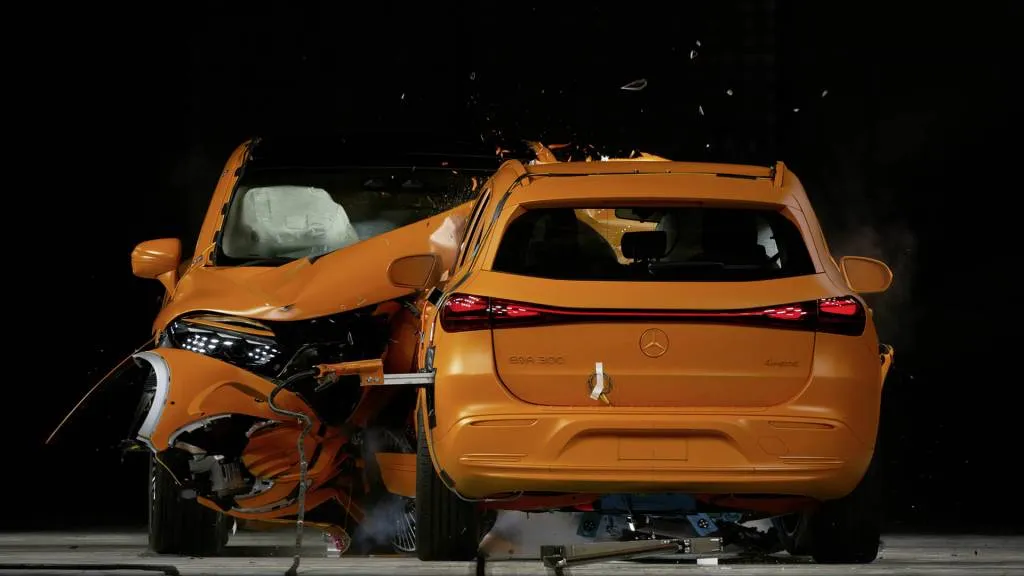
Mercedes-Benz EQS SUV and EQA crash test
When EVs aren’t totaled, though, they cost nearly 20% more to repair than comparable gasoline vehicles, according to the report. EV repair costs averaged $5,753 in the U.S. in Q2, compared to $4,806 for vehicles with a combustion engine. The average repair-cost rates for hybrids and plug-in hybrids were $4,726 and $5,059, respectively, which Mitchell puts down to plug-in hybrids’ use of larger battery packs.
The rate of claims for EVs also increased 45% in the second quarter, the report found, although that’s to be expected as more vehicles join the fleet and are inevitably crashed. The newness of many EV models is also reflected in a higher use of OEM parts for repairs, at 89% of parts dollars spent compared to 65% for combustion cars.
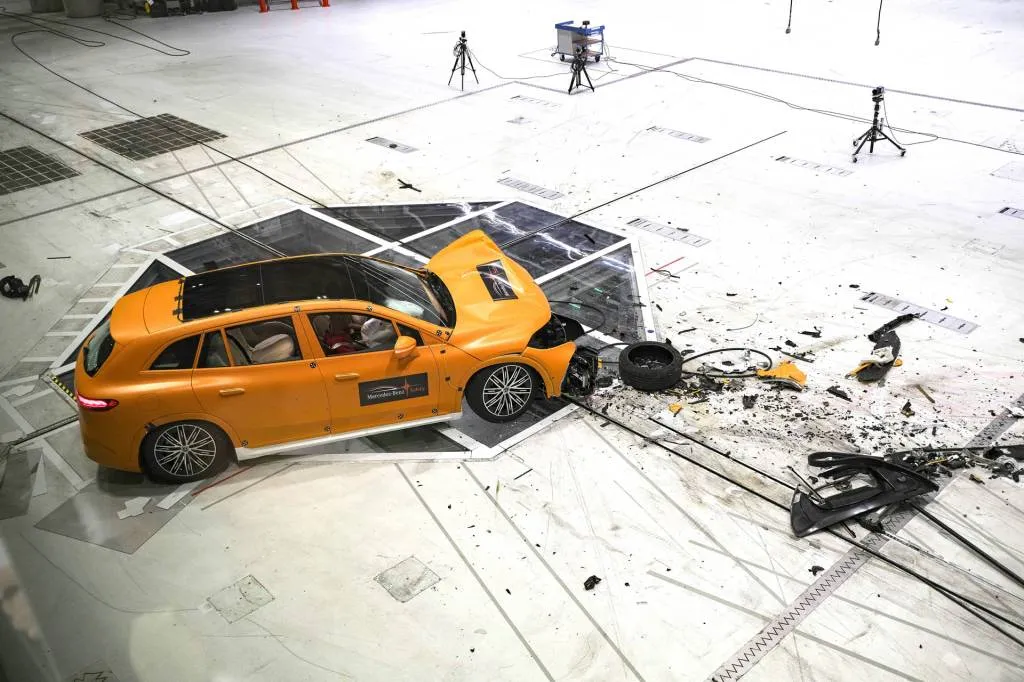
Mercedes-Benz EQS SUV and EQA crash test
EVs do at least require less frame repair work, according to the report, likely the result of higher curb weights and battery packs that can act as structural reinforcements. However, mechanics spent more time in Q2 appraising EV repairs than those of combustion vehicles, at 8.18% and 5.21%, respectively.
The new report has similar findings to one published by Mitchell in 2023, which found that average repair costs for EVs in the U.S. were $963 higher than comparable gasoline cars. Hertz also cited high collision repair costs as the main reason for slowing its EV plans, and they continue to be a factor in why EVs cost more to insure than hybrids right now.

Tesla Cybertruck Sting package adds generator to be “apocalypse ready”
 Buyers can now pre-order a Cybertruck with a frunk-mounted generator Archimedes Defense is responsible for the generator install, and upfitting more armor Pricing hasn’t been announced for the extra armor and generator A Tesla Cybertruck ready for overlanding or even crossing enemy lines is now a reality thanks to Archimedes Defense, a company…

2025 Audi Q4 E-Tron
 What kind of vehicle is the 2025 Audi Q4 E-Tron? What does it compare to? The 2025 Audi Q4 E-Tron is a small electric SUV that competes with the Genesis GV60, Tesla Model Y, and Volvo XC40 Recharge. Is the 2025 Audi Q4 E-Tron a good SUV? It’s an increasingly appealing choice now that it has more power and a longer range estimate. The 2025…

2025 Nissan Altima drops turbo-4, adds SV edition
 Nissan may be planning to discontinue the Altima midsize four-door sedan in 2026, but in the meantime it’s slimmed down the complexity of the lineup—at least in its powertrain offerings. This year Nissan has dropped the former turbo-4 option that once promised to boost performance and efficiency across the Nissan and Infiniti lineups. That…

EV wireless charging could catch on faster with this tech
- EV wireless charging has a standard to get positioned for an efficient charge
- Called DIPS, it enables cross-compatibility between hardware from different suppliers
- It also helps set the stage for wireless bidirectional charging
Charge ports, connectors, and cables may soon no longer be the only typical way to keep EVs and some types of hybrids charged up.
That’s because the inductive wireless charging industry is finally on its way toward a whole ecosystem of components that will be able to send a charge to vehicle batteries with no physical connection—via an oscillating magnetic field and the principle of electromagnetic induction.
The core of these new standards—on top of the unified standard for wireless charging announced in 2020 and original guidelines set in 2016—is the so-called Differential Inductive Positioning System (DIPS), which uses a low-intensity magnetic field with multiple smaller coils. The arrangement will recognize multiple ground assemblies and help the vehicle get aligned precisely with the charging pad despite various vehicle ride heights and weather conditions.
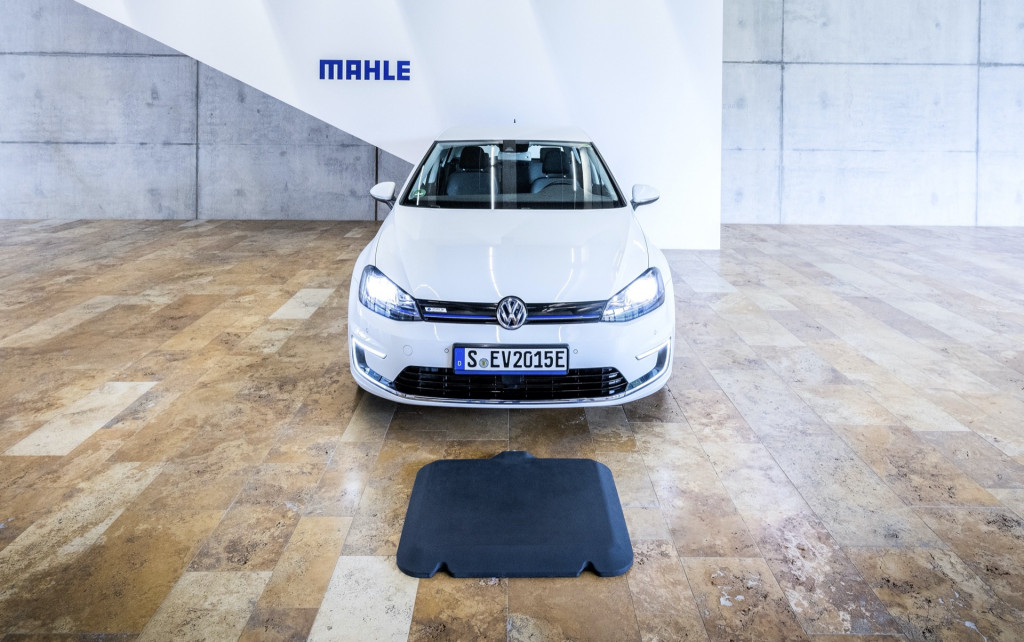
Mahle wireless charging
Publication of the standards was announced last week by the organization SAE International, the same organization that finalized the Tesla-based NACS charging interface. They address unidirectional wireless power transfer, so it might be used in both vehicle charging or in applications that send power banked in batteries back to the home or to the grid.
SAE finalized the methodology for DIPS last November. Now that it’s set as a standard, it opens the door for a range of suppliers to build a wide range of wireless charging components and accessories for EVs—including driveway or parking-lot charging pads, vehicle units, and fleet systems, all with a high level of confidence these systems will be cross-compatible.
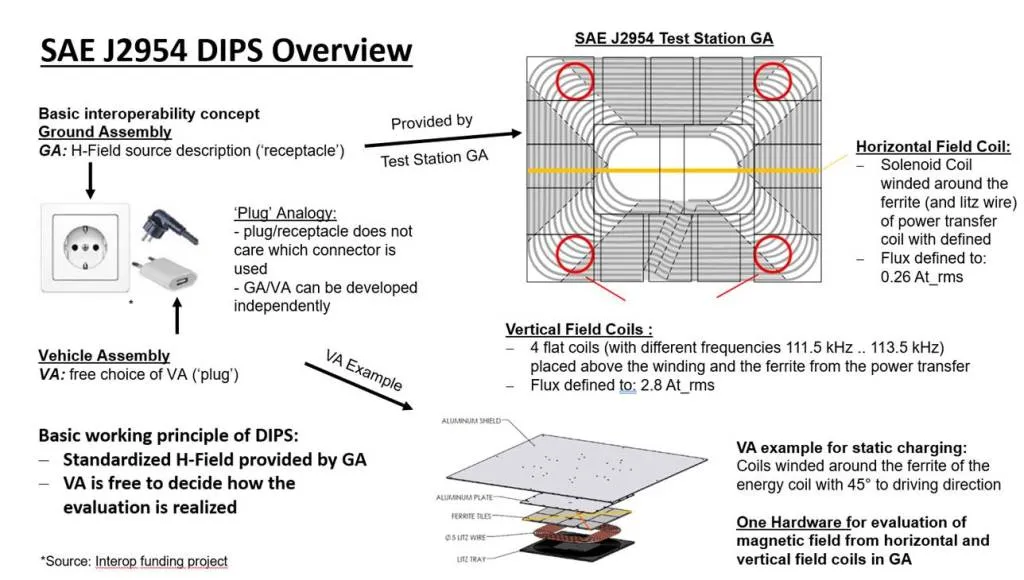
Differential Inductive Positioning System component of SAE J954 wireless-charging standard
According to the organization, these standards used “a lengthy consensus process” to finalize alignment for safe wireless power transfer of up to 11 kw at efficiencies of up to 93%. That’s far better than the efficiencies typically seen for smartphone charging pads, and nearly the same as for physical charging connectors when including long charge cables.
Wireless charging costs more than than physical charging, but over the long-term it’s an EV game-changer. Although it could help reduce the reliance on DC fast-charging by making public EV charging less complicated and deliberate.
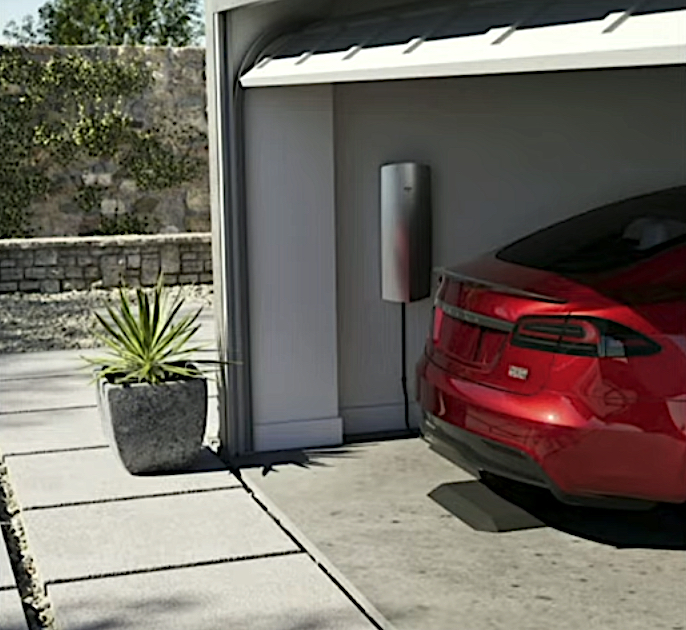
Model S wireless charging pad
So far, the expense of it—and the compatibility concerns—have kept wireless charging from going big. But with this boost from cross-compatibility plus plenty of hints Tesla is considering wireless charging, this tech might finally be on the verge of catching on.

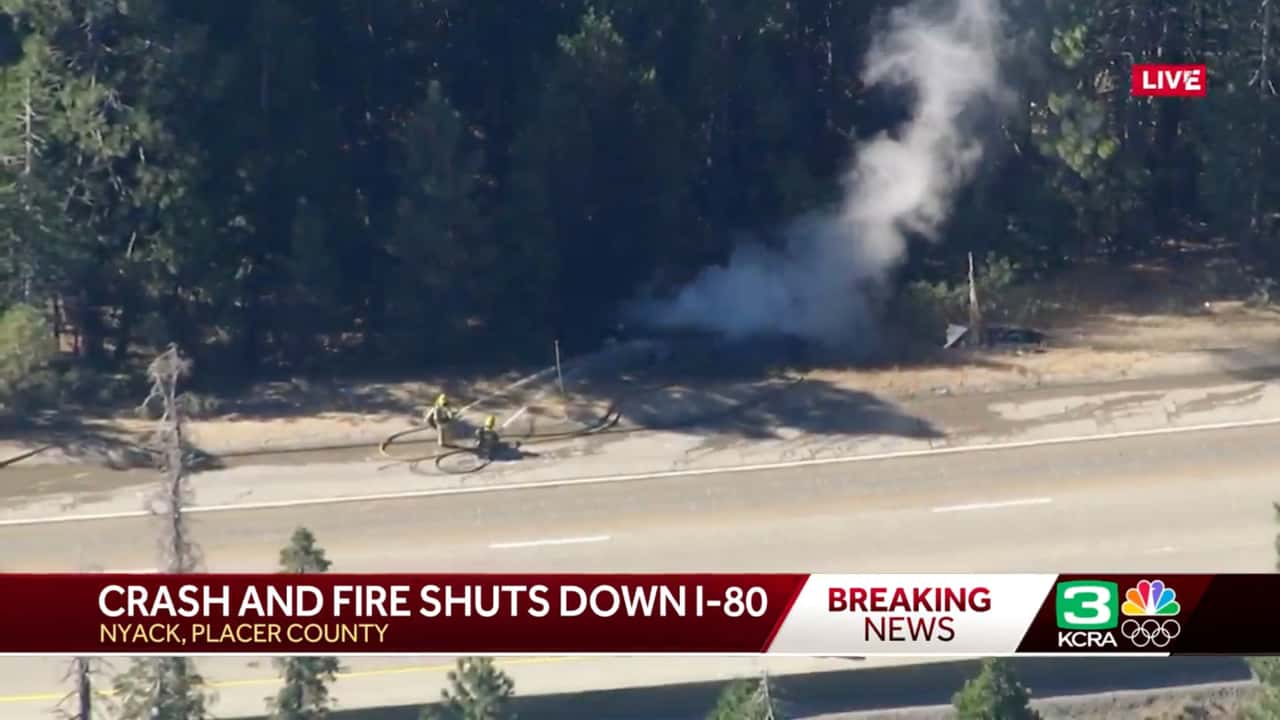
Tesla Semi Fire Shut Down California Highway For Hours (Updated)
Parts of Interstate 80 in Placer County, California shut down for hours Monday as crews worked to extinguish a Tesla Semi blaze.

Aston Martin renews private-label captive finance deal with Chase Auto
Aston Martin will continue to use Chase Auto as the private-label lender behind the captive finance company Aston Martin Financial Services following a renewal of their partnership announced Aug. 13.
Rhode Island dealerships settle deceptive sales claims for $1 million
Six Rhode Island dealerships have settled with the state attorney general over allegations of deceptive sales practices.

2023 Ford Mustang Mach-E recalled due to bad windshield wiper motor

The 2023 Ford Mustang Mach-E is among three vehicles Ford is recalling for a bad windshield wiper motor. The others are the 2023-2024 Maverick and 2023 Ford Bronco Sport. A total of 37,371 vehicles are affected.
According to the NHTSA, the front windshield wiper motor of the affected vehicles may become inoperative, causing the wipers to fail. This could result in reduced visibility, increasing the risk of a crash.
The issue was brought to Ford’s attention on April 16. Ford investigated and discovered that water intrusion on the motor due to improper application of a sealer between the gear cover and gear housing was the cause for the failures.
The affected motors were assembled by a supplier on two dates: June 18, 2023, for the Mach-E and Maverick, and Sept. 1, 2023, for the Maverick and Bronco Sport. A total of 2,142 motors were built during this time. The affected Mach-Es were built at the Cuautitlan, Mexico, plant from July 3-17, 2023, and a total of 3,603 vehicles are affected.
The Mavericks were built at the Hermosillo, Mexico, plant June 20-Sept. 29, 2023, and the Bronco Sports were built at the same plant Sept. 3-Oct. 6, 2023. These more popular models make up the rest of the affected vehicles.
Ford is aware of 81 warranty reports across all three models, and says it is not aware of any reports of accidents or injuries due to the issue.
The cost of repairs will be covered by Ford. Owners can bring their vehicles to dealers, which will inspect and replace the windshield wiper motor if needed.
Ford is expected to notify owners on Aug. 26. Owners can also contact Ford customer service at 1-866-436-7332 and refer to recall number 24S51.