
Author: EVAI

Interior car cleaning and detailing: Revive your car’s look
 We do a lot of living inside our cars, and the end results are more than just stories to tell. Our interiors quickly show the rigors of commuting, errands and road trips. Dust, receipts and random French fries begin claiming too much of our personal space. It’s time to reclaim your interior with detailing, and these hints will help get…


2024 F1 Dutch Grand Prix preview: End of the summer break
 The 2024 Formula 1 season returns from summer break The Dutch Grand Prix marks round 15 of the 2024 F1 season Alpine announced reserve driver Jack Doohan will replace Esteban Ocon for the 2025 season After the three-week summer break, the 2024 Formula 1 World Championship continues this weekend with round 15, the Dutch Grand Prix. The race once…

Electric NASCAR race cars could feature sustainable bodywork
- NASCAR is considering an electric racing series
- A prototype electric SUV race car was revealed in July
- The electric NASCAR race car prototype’s body panels were made from plants
NASCAR surprised attendees at its July Chicago Street Race with an electric SUV prototype race car, but the powertrain and body style weren’t the prototypes only unusual features.
The NASCAR EV Prototype also featured bodywork from Swiss firm Bcomp that incorporates flax, which Bcomp claims is a sustainable alternative to the carbon fiber used throughout motorsports today, with an overall carbon footprint 85% smaller with a similar level of stiffness.
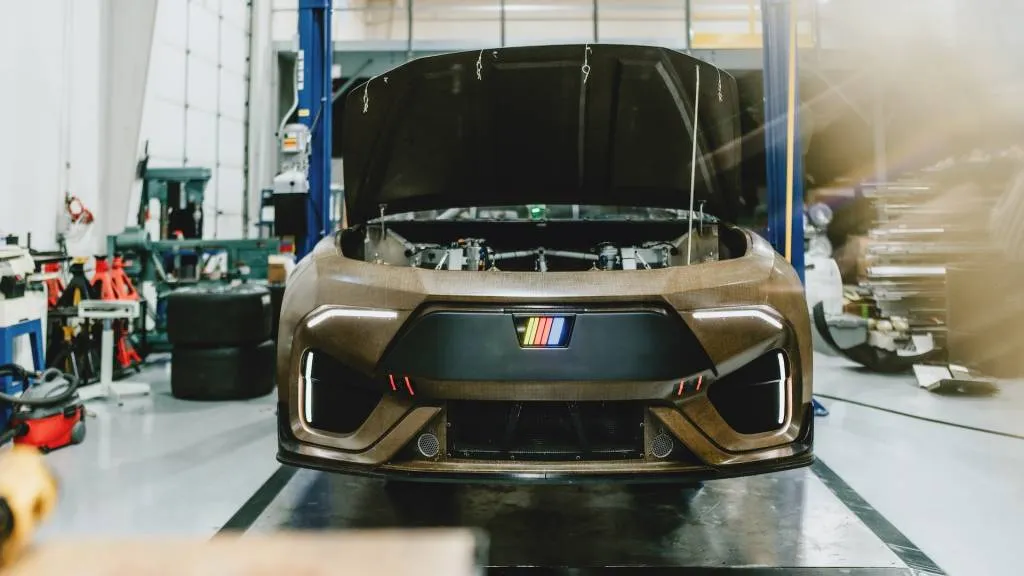
NASCAR electric race car prototype (image via Bcomp)
That stiffness is thanks in part to an inner structure inspired by the vein structure of leaves, Bcomp said in a blog post. The flax fibers used in this material—which takes the form of a fabric that can be layered and molded into shape like carbon fiber or fiberglass—is grown in Europe without competing with food crops, according to the company’s website.
In April 2023 NASCAR committed to its first long-term carbon emissions goal and “the beginning of a new era in sustainability for America’s top motorsport.” That included a goal to cut its carbon footprint to zero across its core operations by 2035.
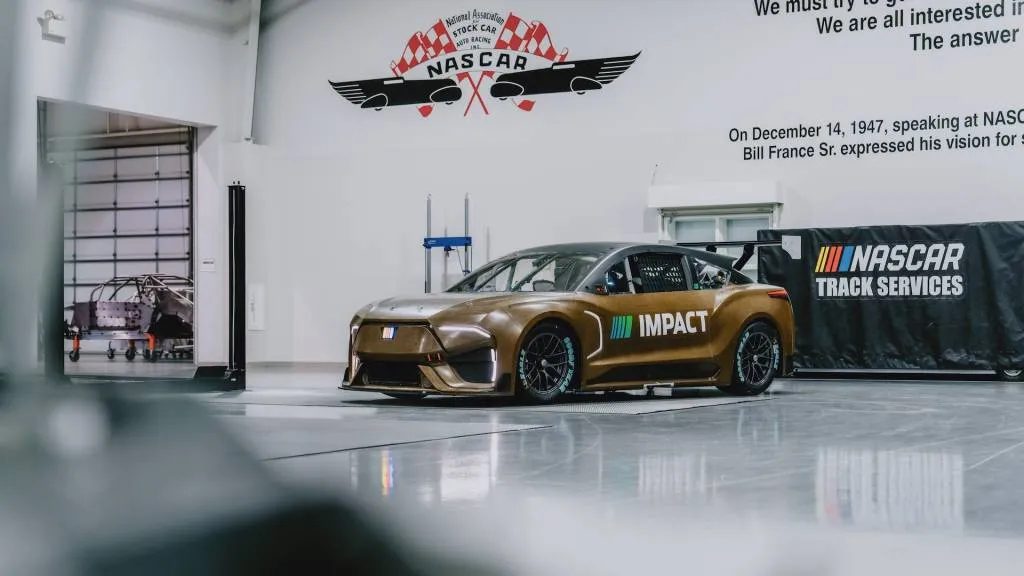
NASCAR electric race car prototype (image via Bcomp)
Flax-based bodywork could make a small contribution toward that goal with less shock than switching from the current race cars—which feature loud, thirsty V-8 engines—to something like the electric SUV prototype. The prototype has all-wheel drive and three six-phase motors—one in front, two in back—potentially producing more than 1,300 hp. A 78-kwh battery pack, along with regenerative braking, make the SUV “ideal for road courses and short oval tracks,” NASCAR previously said.
The SUV body style of the prototype is nearly a big a change as its electric motors, but is more in line with automaker’s current lineups. NASCAR is not giving a timeline of when it might introduce electric race cars, but if it did it is easy to imagine the prototype being reskinned as a Ford Mustang Mach-E, Chevrolet Blazer EV, or Toyota bZ4X in keeping with NASCAR’s current practice of racing cars branded as ones fans can buy.

2024 GMC Sierra EV Denali Edition 1 arrives at dealers
- GMC now has two electric trucks in production
- The 2024 GMC Sierra EV will be a low-volume model for at least a year
- The limited-edition launch version of the Sierra EV costs $99,495
The 2024 GMC Sierra EV Denali Edition 1 is now being delivered to customers, General Motors announced Wednesday. But it will be some time before other versions of the electric pickup reach dealerships.
The limited-edition launch version of the Sierra EV arrives with a starting price of $99,495 with a $1,995 destination fee—a few thousand less than the price suggested when the Sierra EV was first previewed by Green Car Reports in 2022. The launch model’s 440-mile EPA range is also about 10% more than originally suggested.
Bearing GMC’s top-luxury Denali badge, the Edition 1 features adaptive air suspension, rear-wheel steering, and the CrabWalk feature from the GMC Hummer EV. The latter distinguishes the GMC from the top-trim 2024 Chevrolet Silverado EV RST. Like their internal-combustion counterparts, the Sierra EV and Silverado EV are essentially twins, with the main differences coming down to styling and some feature content.
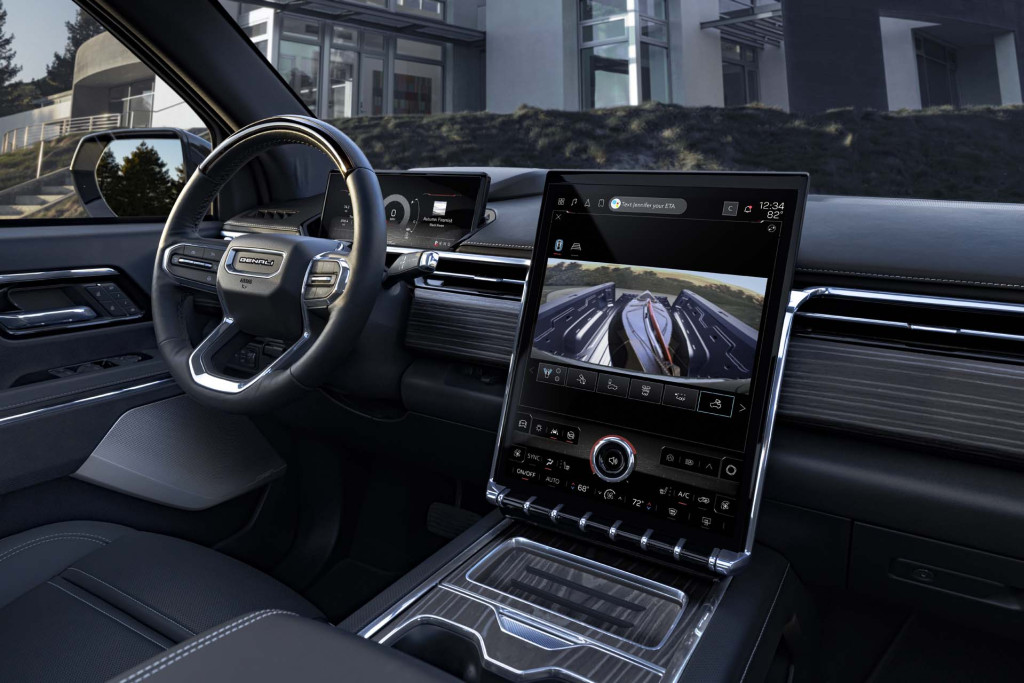
2024 GMC Sierra EV Denali Edition 1
Edition 1 models have a dual-motor powertrain producing up to 754 hp and 785 lb-ft of torque, enabling 0-60 mph acceleration in 4.5 seconds and a maximum towing capacity of 10,000 lbs that’s slightly higher than the 9,500 pounds originally suggested. A midgate pass-through—pioneered by GM in the 2000s—allows the truck to swallow items up to 11 feet long. A front trunk is included as well.
With a dual-layer battery pack expected to be the same 205 kwh as top trims of the Hummer EV, the Sierra EV can take full advantage of 350-kw, 800-volt charging connectors, according to GMC, allowing up to 100 miles of range in 10 minutes. Bidirectional charging at up to 10.2 kw allows the Sierra EV to serve as a mobile power source.
The truck rides on massive 24-inch wheels and features a generously-sized 16.8-inch infotainment touchscreen. The Super Cruise highway driving-assistance system, which can be used while towing a trailer, is also available. GM expects 750,000 of compatible U.S. and Canadian roads to be available by the end of 2025.
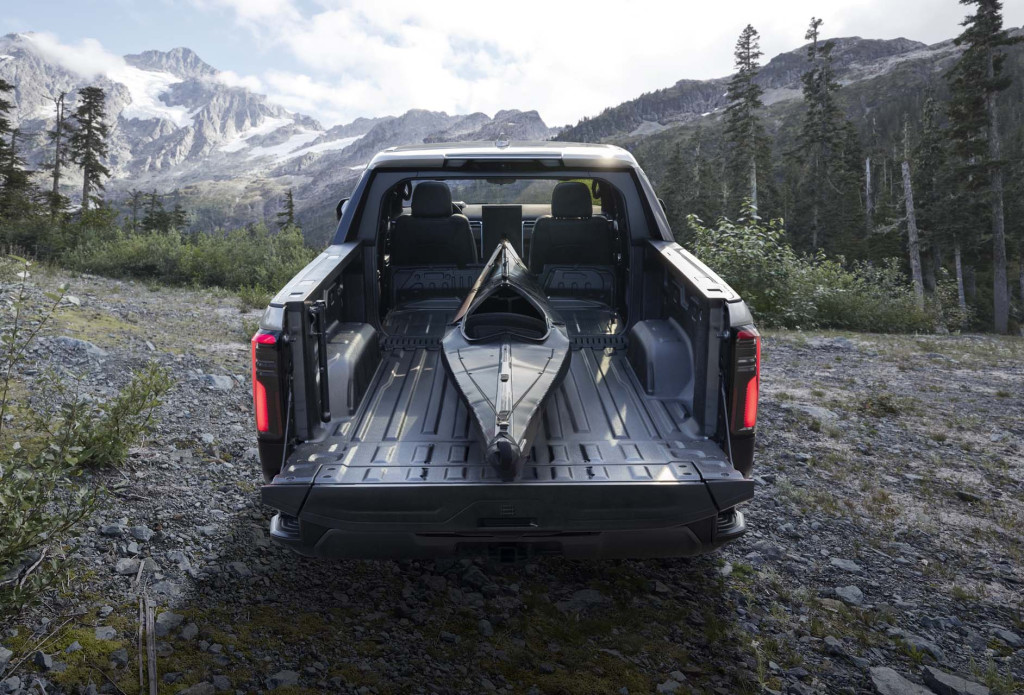
2024 GMC Sierra EV Denali Edition 1
The Sierra EV was announced in 2021 and at that time was confirmed for a 2023 market arrival. GMC has suggested all along that it might not be “high-volume entry” electric truck that GM CEO Mary Barra stressed in describing the Silverado EV, so work-truck variants like those offered for the Chevy likely aren’t planned. GMC has said that an AT4 off-road model is on the way, as well as an entry-level Elevation model priced around $50,000.
These other versions likely won’t arrive right away, though. Large-scale production of the Sierra EV and Silverado EV at GM’s Orion Assembly plant in Michigan has been postponed until mid-2026—the latest in multiple delays of the production ramp-up of these trucks and other GM Ultium EVs.

Cruise prepares to return robotaxis to the road, join Uber fleet
 Cruise robotaxis will return to public roads Uber will use Cruise robotaxis in its fleet next year Uber canceled its robotaxi service and sold its self-driving division General Motors-backed self-driving technology company Cruise is making steady progress in getting its fleet of robotaxis back in operation after they were grounded last fall…

Lucid reportedly developing three affordable EVs
- Lucid has three affordable EVs in the pipeline
- The project “mid-size program” will encompass a crossover SUV, probably a sedan, and possibly a hatchback
- Lucid’s model will put an emphasis on efficiency
Lucid is developing three affordable EVs priced below the Air sedan and the upcoming Gravity SUV, CarBuzz reports.
The automaker is currently working on a “mid-size program” that will apply technology and design elements first seen on the Air to a trio of smaller vehicles aimed at a wider audience, Lucid design boss Derek Jenkins told CarBuzz in an interview during 2024 Monterey Car Week.
“The whole idea is to take our technology and hit a wider swathe of consumers,” Jenkins said. “We’re creating a range of possibilities around that program.”
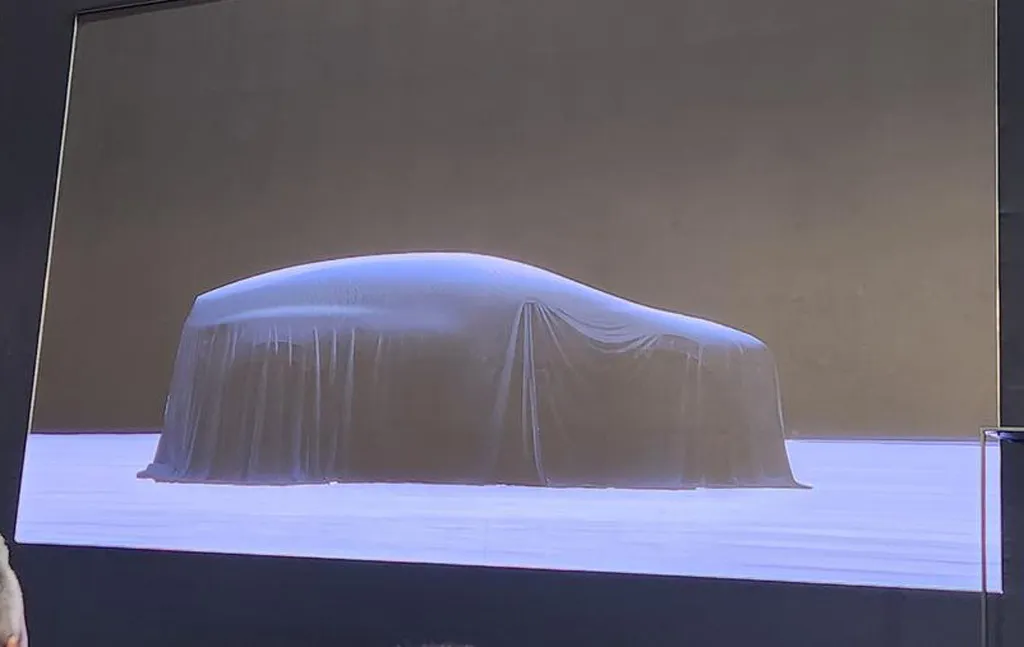
Teaser for Lucid Project Midsize – Photo credit: John Voelcker
The three new models won’t be as quick as the Air, but will share a focus on efficiency and aerodynamics with the sedan, Jenkins said. They will also be “compact, lighter vehicles” compared to the Air, he noted.
One of these vehicles could be the potential Tesla Model Y rival Lucid teased in January at the opening of the second manufacturing stage of its Casa Grande, Arizona, assembly plant. Lucid referred to this model as “Project Midsize” in that announcement, in which the company said engineering prototypes of the vehicle already existed.
In the interview, Jenkins didn’t confirm any other body styles but shot down the idea of a station wagon, noting that this segment is shrinking even in Europe, where wagons have retained greater market share than in the U.S.
A sedan to compete with the Model 3 and complement the Model Y competitor makes sense. Lucid CEO Peter Rawlinson has told Green Car Reports in the past he likes the Golf size and format and would love to make an affordable and sporty hatchback.
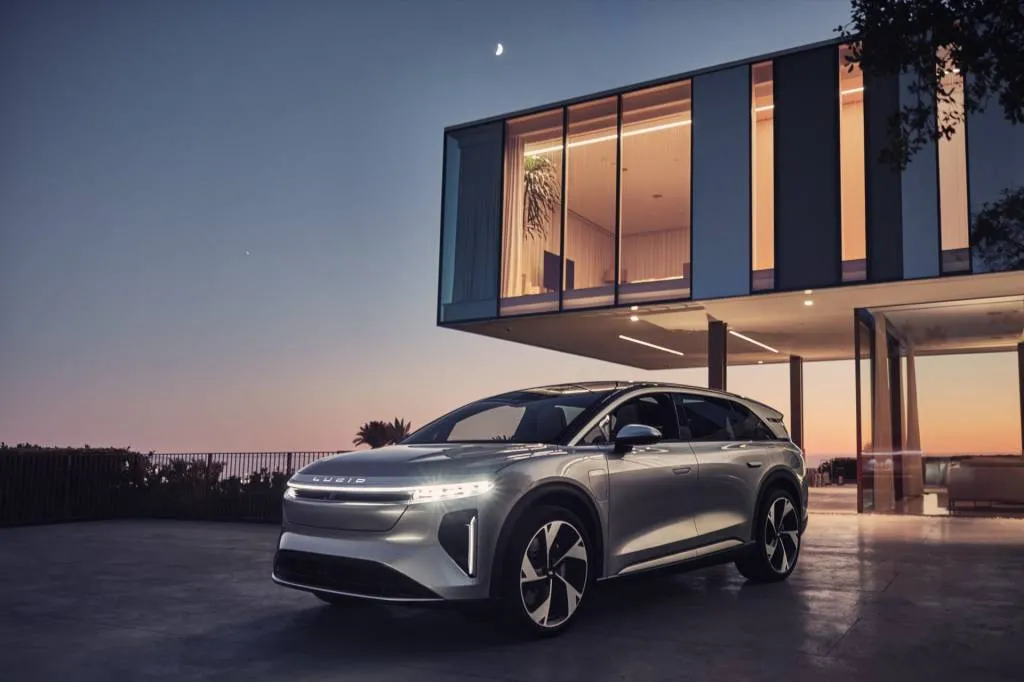
Lucid Gravity
In the meantime, Lucid is moving ahead with the launch of the Gravity. The SUV was unveiled in 2023 and pre-production units started rolling off the assembly line in January. In a separate Monterey Car Week interview, Rawlinson said the EV market was experiencing “a temporary blip” and called other automakers’ refocus on hybrids a “blind alley.” In a LinkedIn post published earlier in August, Rawlinson said those automakers still committed to EVs would take years to catch up to Lucid in efficiency.
Green Car Reports has reached out to Lucid for comment and will update this story when we hear back.

Aston Martin Valhalla supercar tests hard at the ‘Ring
 The Aston Martin Valhalla is undergoing track testing Valhallas will be powered by a plug-in hybrid V-8 powertrain The mid-engine supercar will top the automaker’s lineup A prototype for Aston Martin’s upcoming Valhalla has been spotted at Germany’s Nürburgring racetrack, in what is likely to be some of the final testing for the plug-in…

The $80,000 Volvo EX90 Cut One Infuriating Corner
- Volvo is finally launching its all-electric EX90 flagship after a series of delays.
- The interior looks great, but the window switches are an annoying example of cost-cutting gone too far.
- It’s not a dealbreaker, but we’ll have to see whether the EX90 is nice enough on the road to justify its long gestation period and missing features.
The EX90 is Volvo’s long-awaited electric flagship. It’s the start of a new era for Volvo, with a new platform, new interior, new infotainment system and new safety suite. Sitting inside one, it feels every bit as nice as its $81,290 starting price would suggest. Until you look at the window switches.

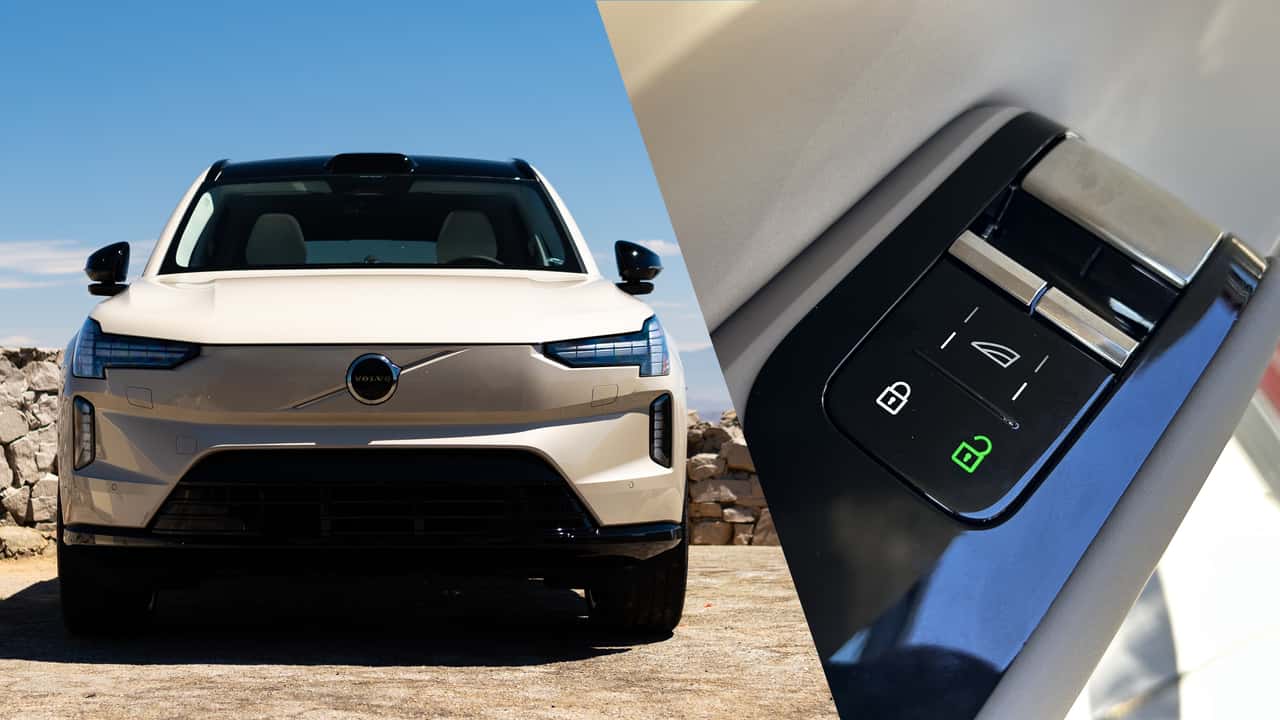
The offending switch, my mortal enemy.
InsideEVs
Volvo has copied my least-favorite detail from the Volkswagen ID.4. Rather than giving you four individual switches for the car’s four windows, Volvo gives you a left window control, a right window control and a toggle button. The toggle switches the “focus” between the front and rear windows. So if you want to put down the front and rear left windows, you press the left window switch down, toggle the focus to the rear using the toggle switch, and then press the same window switch down again.
Which window you actually roll down when you first hit the switch changes depending on where you left the toggle switch. Because the indicator for which set of windows you’re controlling is an set of extraordinarily thin backlit lines positioned a centimeter apart, it’s difficult to tell at a glance which windows are selected. On a sunny day in the bright and airy EX90’s cabin, it’s near impossible. Volkswagen at least lights up the word “REAR” in bright lettering to show you what’s selected.
At least it looks good. I dig the “Sand Dune” paint color.
But don’t get it twisted. Volvo’s version, while annoying, is far less aggravating than Volkswagen’s. VW uses a capacitive touch button for the rear window toggle. The result is that it doesn’t always take on the first attempt. While a two-step process to roll down the rear window is annoying, a three-step process when the first attempt fails is unacceptable. Four steps if you accidentally roll down the fronts while attempting to select the rears, or vice versa.
Why do they do this?
It’s cheaper.
Automakers are pinching pennies as they reconfigure to sell EVs. High battery production costs make EVs more expensive to build than equivalent gas cars, and consumers have shown that they’re not willing to pay the whole premium. So car companies—already ruthless about cutting out unnecessary costs—are now getting more bold. For window switches, they argue the minor convenience is worth the tradeoff.
“How often are you rolling down your rear windows?” a Volvo spokesperson asked me. I’m a bad target for that question, because I roll all four windows down for part of almost every drive I take. I like fresh air, I live in a mild climate and I can’t stand the buffeting feeling you get when you only roll down one window.
While I may be an outlier, rolling down the windows is not some bizarre edge case. People drive with the windows down all of the time. Many people roll them all down, some only roll down their own window. But big family SUVs carry big families, and their dogs. Between kids rolling their windows down and forgetting to roll them back up when the car parks, dogs and toddlers, I imagine the driver’s rear window controls are used relatively frequently in cars like this.
There’s not much else to complain about in this cabin.
Volvo
Is it a dealbreaker? No. But when you’re launching an $80,000 flagship that’s supposed to spearhead your next era, you’re selling the image of ultimate luxury. When you raise the price before the car goes on sale, you build those expectations higher. Cutting such an obvious corner is a weird note to start off on. If the EX90’s as good to drive as it looks inside, all may be forgiven. But you’ll just have to wait until our first drive drops to find out whether Volvo pulled it off.
Share this Story

Fisker Ocean recalled due to regen brake issue
The Fisker Ocean has been recalled once again, this time for an issue that could lead to an unexpected reduction in regenerative braking.
The recall includes 7,745 Ocean electric SUVs from model years 2023 and 2024 (the only two in which the Ocean was sold before Fisker filed for bankruptcy). Software issues in these vehicles may reduce regenerative braking while decelerating over bumps, according to the NHTSA.
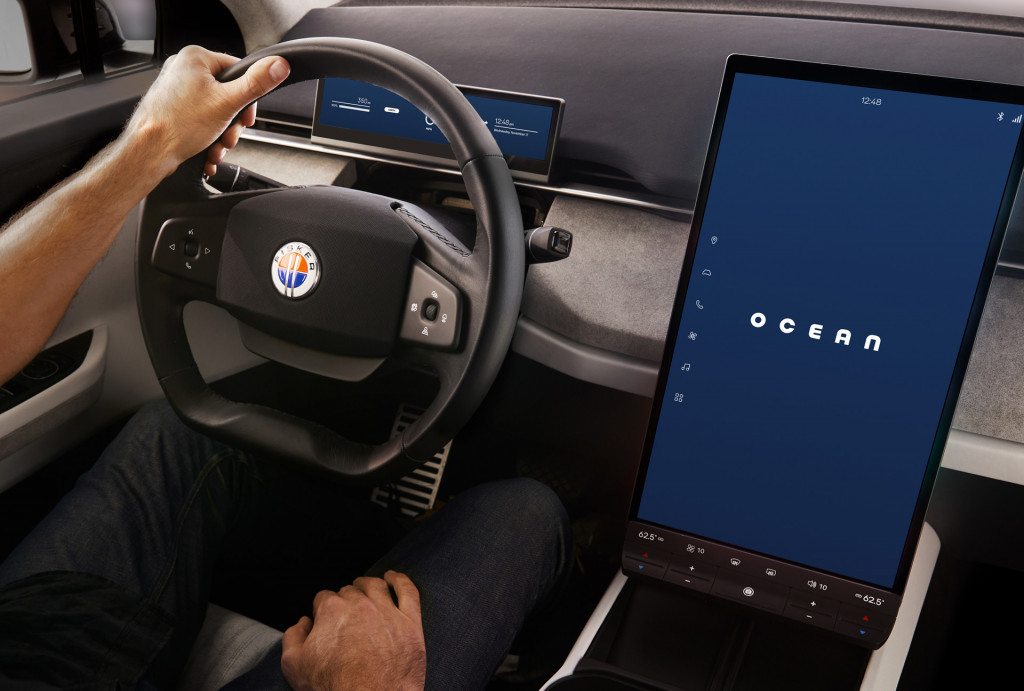
2023 Fisker Ocean
Drivers still have access to friction brakes, and “normal operation” resets after 740 milliseconds, according to recall documents. However, drivers may have to press the brake pedal unexpectedly due to the reduced regen. Fisker is aware of one injury related to this issue.
Fisker will release an over-the-air software update to address the issue. It plans to mail owner notification letters Oct. 14, 2024, but in the meantime owners can contact Fisker customer service at 1-844-347-5371. Fisker’s reference number for this recall is TSB10062408.
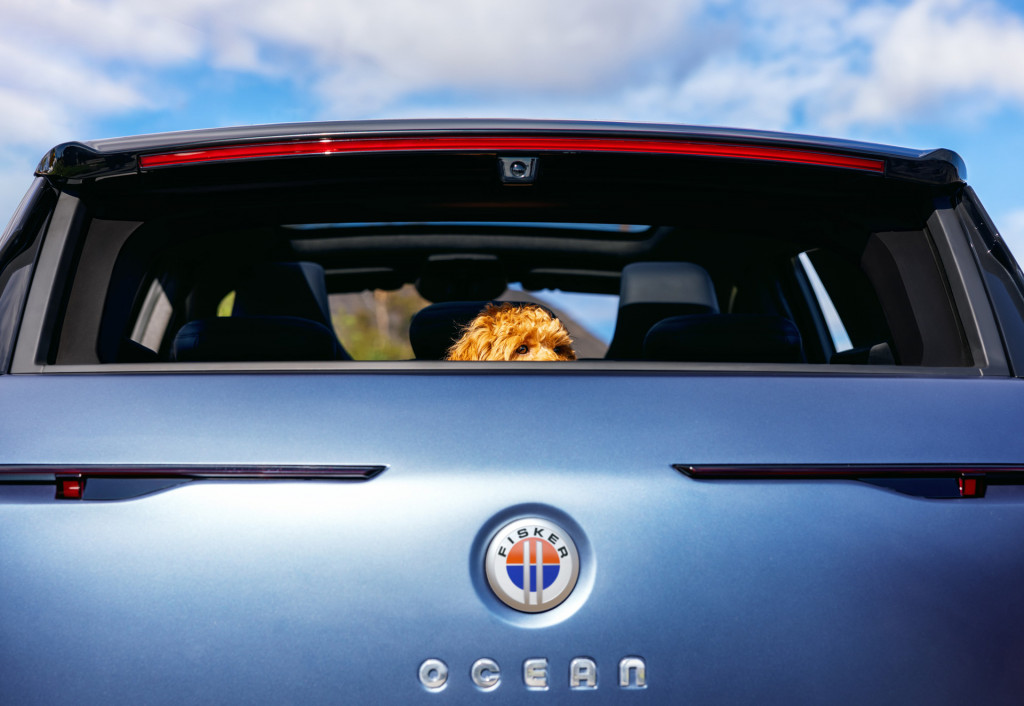
2023 Fisker Ocean
This is the fifth recall of the Ocean during its brief production run, although only three recalls apply to both 2023 and 2024 models. That includes a recall of 8,204 vehicles in the U.S. to address sticking door handles that could prevent the doors from opening. Assembly and some development work was contracted out to Magna, which built the Ocean at its facility in Graz, Austria, alongside the also discontinued Jaguar I-Pace.
Production was slow to ramp up and, once it did, slow sales left Fisker vulnerable. In July, the bankrupt automaker asked the judge overseeing its Chapter 11 proceedings for permission to sell leftover cars to a leasing company for $14,000 each. In a postmortem drive, Green Car Reports found that the Ocean was frozen in beta, with a stylish design but tech features left incomplete by software updates that may never come.