
Author: EVAI

2025 Cadillac Lyriq drops prices and base trim
The 2025 Cadillac Lyriq drops the previous Tech base trim, and but lower prices for the remaining trim levels help counteract that move.
The Lyriq Tech started at $58,590 for the 2024 model year but lacked many of the standard features on the Luxury 1 grade that is now the base model for 2025. Thanks to a $2,700 price cut, the Luxury 1 costs $59,990 including the mandatory $1,395 destination charge. A Sport 1 grade is positioned just above that at $61,090 ($2,100 less than the 2024 model year).
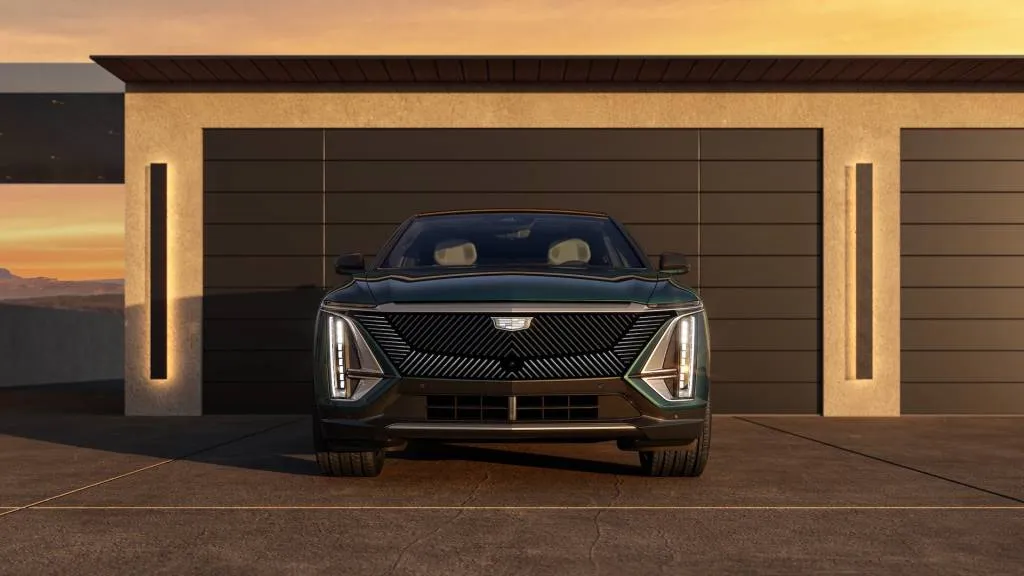
2025 Cadillac Lyriq
Cadillac also cut the prices of the Luxury 2 and Sport 2 grades by $2,000, so they now start at $64,990 and $65,490, respectively. The top Luxury 3 and Sport 3 grades are priced $2,220 lower, at $68,390 for the Luxury 3 and $68,890 for the Sport 3.
A single-motor rear-wheel-drive powertrain rated at 340 hp and 325 lb-ft of torque remains standard. A dual-motor all-wheel-drive powertrain that bumps output to 500 hp and 450 lb-ft is an extra $3,500. All Lyriq models use a 102-kwh battery pack. EPA range ratings of 314 miles for single-motor models and 307 miles for dual-motor models will likely remain unchanged.
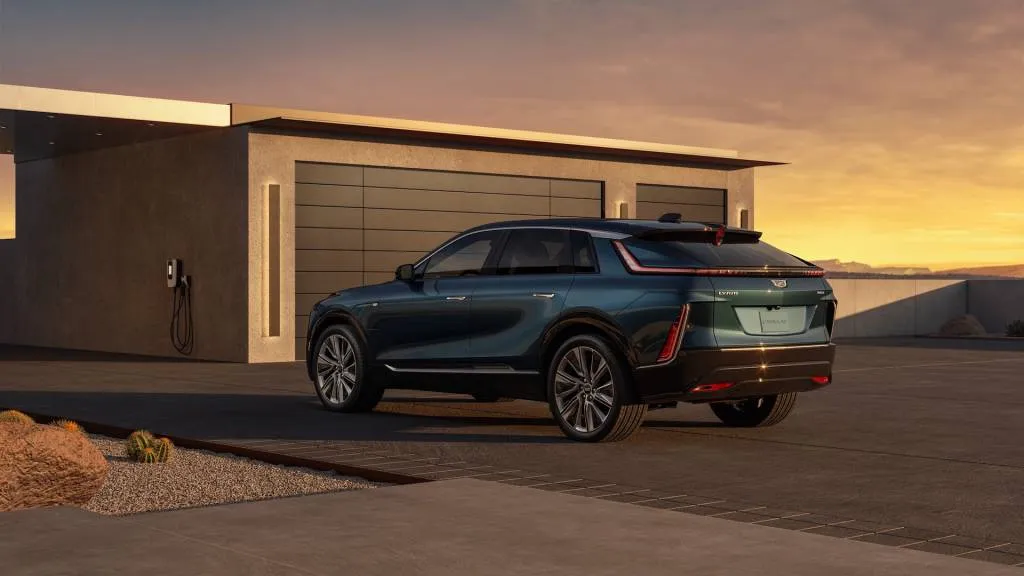
2025 Cadillac Lyriq
The only notable changes to equipment for 2025 are standard OnStar telematics features and front-passenger memory, a standard Technology Package for Luxury 2 and Sport 2 grades that includes a hands-free tailgate and rearview camera mirror, and more color choices for the interior ambient lighting system.
The Lyriq debuted for the 2023 model year as the first Cadillac EV based on General Motors’ Ultium architecture. Cadillac is continuing to add EVs, including the entry-level Optiq and three-row Vistiq, but GM is reportedly reconsidering plans to make the luxury brand all-EV by 2030.

Lithia’s captive finance company Driveway Finance turned a Q2 profit
Lithia Motors Q2 2024 earnings: After just a few years of operation, Lithia’s relaunched captive finance car loan company Driveway Finance Corp. turned a profit during the second quarter and was on track to stay that way.

Canada adds 100% tariff for “extraordinary threat” of Chinese EVs
- 100% tariff on Chinese-made EVs follows U.S.
- EV incentives only apply to free-trade partners, Canada underscored
- Mexico remains a potential U.S. entry point for Chinese automakers
Canada’s national government Monday announced a 100% tariff on the import of Chinese-made electric vehicles.
The 100% tariff, set to go into effect October 1, 2024, closely matches that adopted by the U.S., and it follows language similar to that being adopted by the EU. Specific tariff items apply widely without exceptions, on everything from passenger vehicles to buses and trucks, and of fuel types ranging from gasoline to electric and hydrogen fuel-cell.
Accompanying the vehicle tariff, Canada also announced a 25% tariff on Chinese steel and aluminum set to start October 15, 2024.
Additionally, Canada took its actions versus China a step further than the U.S. has thus far: It’s limiting eligibility of Chinese EVs for all federal EV incentives—to those that have negotiated free-trade agreements with Canada. With no limitations on final assembly or battery and mineral sourcing requirements for Section 45W, U.S. firms eying commercial use or leasing and purchasing Chinese vehicles subject to the new tariffs would appear to still be eligible to get $7,500 or more back via the EV “leasing loophole.”
Canada’s move follows Biden’s 100% tariff hike
“China’s intentional, state-directed policy of overcapacity and lack of rigorous labor and environmental standards threaten workers and businesses in the EV industry around the world and undermine Canada’s long term economic prosperity,” said Canada’s Department of Finance in a press release accompanying the announcement. It added that “exceptional measures are required to address this extraordinary threat.”
The Biden administration tariff hike versus China was announced in May, and it was directly positioned to keep Chinese EVs out. That U.S. move raises tariffs on EVs from 25% to 100% this year, and it hikes the tariff rate on lithium-ion batteries and battery parts from 7.5% to 25% when applied to EVs. An equivalent hike on tariffs for lithium-ion batteries imported from China for other applications applies starting in 2026.
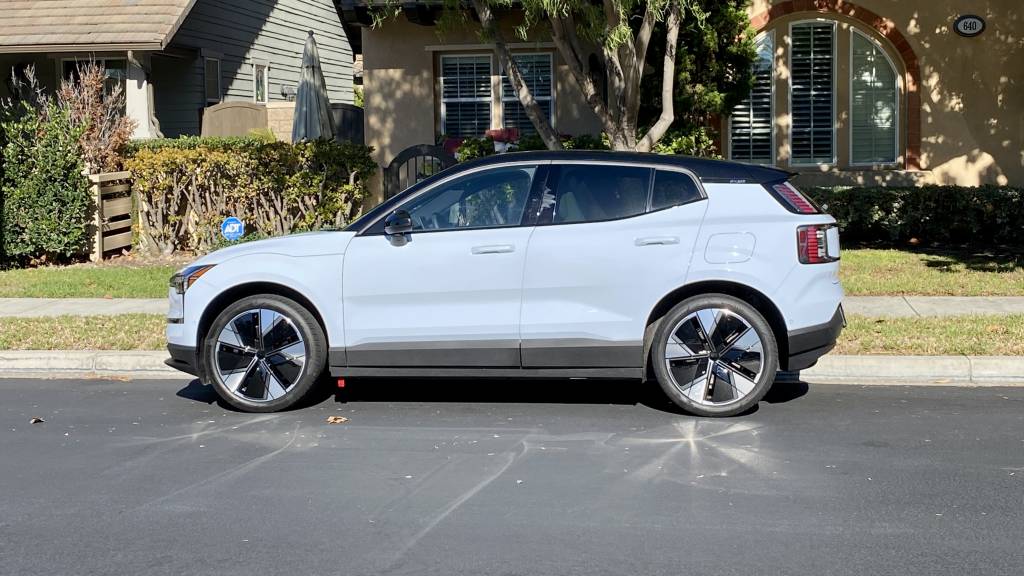
2025 Volvo EX30
That reportedly led to the delay of the Volvo EX30 compact EV, a vehicle that was slated to arrive first as a Chinese import, with Europe-built vehicles arriving later.
Mexico in the balance—especially for EVs
Presidential candidate Donald Trump, who has underscored that Mexico has taken away 34% of automobile manufacturing business in the U.S., has promised to take the 100% Chinese tariffs a step further—to all vehicle types—with policies to pressure automakers to build vehicles in the U.S. rather than Mexico.
Mexico remains part of the evolution of a free-trade framework with the U.S. and Canada. Once called NAFTA, it was revamped only slightly during the Trump administration and renamed the U.S.-Mexico-Canada Agreement (USMCA).
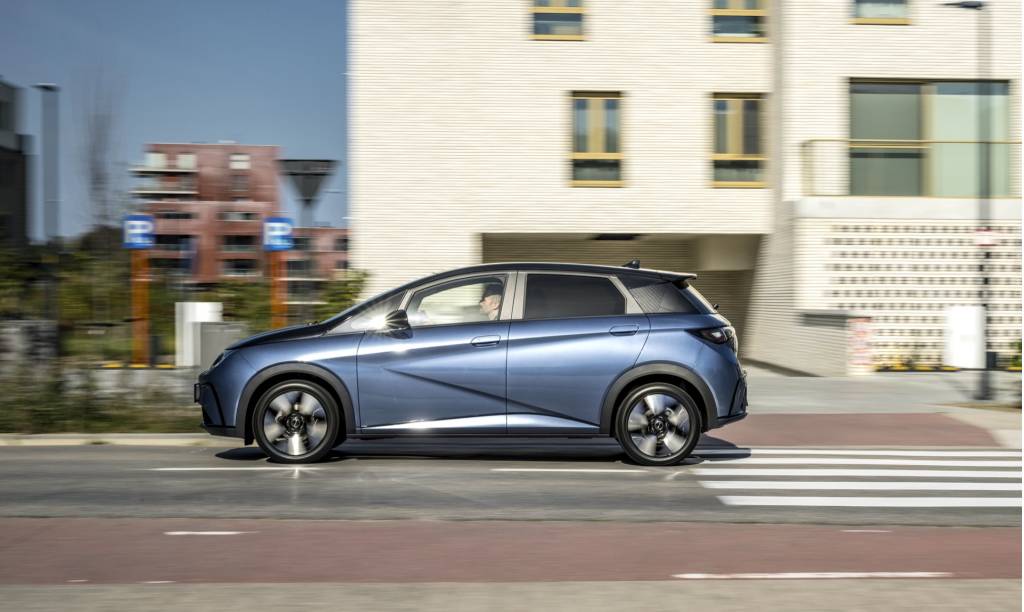
BYD Dolphin EV – Euro spec
But Mexico is also proving to be the weak point in the defense against the onslaught of inexpensive Chinese EVs. Under the USMCA, Chinese EVs made in Mexico, with Mexican materials, could still potentially be sold in the U.S. free of trade tariffs. So far the nation has made no move to step up its Chinese tariff rules.
Europe remains in pushback mode, and it appears that versus Chinese EVs, its implementation of EU tariff rules may be too late. China’s BYD has already begun selling its Dolphin EV, a well-rated compact hatchback, for less than $30,000 in some EU markets, and the lower-priced Seagull might be sold for less than $20,000 in some markets.

Hyundai seeks to save energy with radiant heating, 48V glass
 Hyundai’s working on three pieces of tech to advance vehicle cabin heating and cooling The tech could lead to efficiency gains The efficiency gains could lead to more EV range, but could also make more efficient gas cars Hyundai and Kia are testing ways to heat and cool vehicle cabins more efficiently, saving energy in the process. During a…

Canoo leaves California, CTO leaves company
- Canoo’s done with California and will now be based out of Texas
- Two of the three founders have left Canoo
- Canoo pivoted its business model to focus on commercial applications
Canoo is planning to leave its original headquarters location in California and is replacing one of its founding executives, according to two separate reports from TechCrunch.
The website reported Thursday that Canoo told staff in an all-hands meeting that it would close its Los Angeles office, which served as Canoo’s original headquarters when the EV startup launched in 2017. Canoo plans to relocate its headquarters to Justin, Texas, where it has maintained a corporate office since CEO Tony Aquila took over a few years ago.
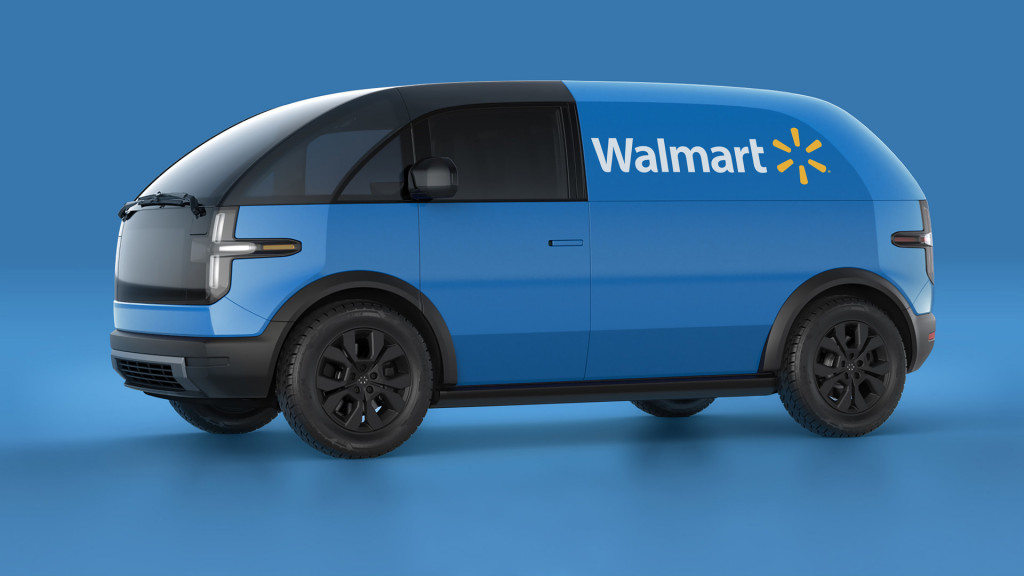
Canoo Lifestyle Delivery Vehicle with Walmart logo
As TechCrunch notes, Canoo previously tried to move its headquarters to Bentonville, Arkansas, as it was courting Walmart, which announced an order for 4,500 electric vans from the startup in 2022. Canoo has also tried to set up a small-scale manufacturing facility in Arkansas, with larger-scale production to take place in Oklahoma.
Canoo isn’t any closer to ramping up production than when it announced those manufacturing plans in 2021, but it is offering the option for 137 of 194 employees at its Los Angeles office to relocate to either Oklahoma or Texas, TechCrunch reports, with the remaining staff being laid off.

USPS Canoo LDV 190 van
Employees had “long expected” the L.A. office to shut down, according to the report, especially after Canoo co-founder and chief design officer Richard Kim left the startup in 2023. Kim is now being joined by CTO Sohel Merchant, TechCrunch reported Friday, citing two anonymous sources familiar with the matter. That leaves just one of the original executives who founded Canoo still at the company—chief engineer Christoph Kuttner.
Canoo initially had eyes on selling a stylish EV on a subscription basis, but has pivoted to commercial vehicles under current CEO Aquila. It’s since provided vehicles to NASA, the U.S. Postal Service, and the U.S. Army for testing, but has failed to produce EVs in meaningful numbers. Earlier this year it announced the acquisition of the remains of EV startup Arrival, including manufacturing equipment that could help it finally ramp up production.

Next Discovery may become more van-like
 JLR wants more differentiation between Discovery and Defender Volkswagen ID.Buzz may be inspiration for new Discovery EV and gas powertrains are likely for new Discovery JLR is planning a rethink of its Discovery midsize SUV to help prevent its sales being cannibalized by the similar but more rugged Defender. The information was revealed by JLR…

Porsche won’t make EVs with simulated shifts
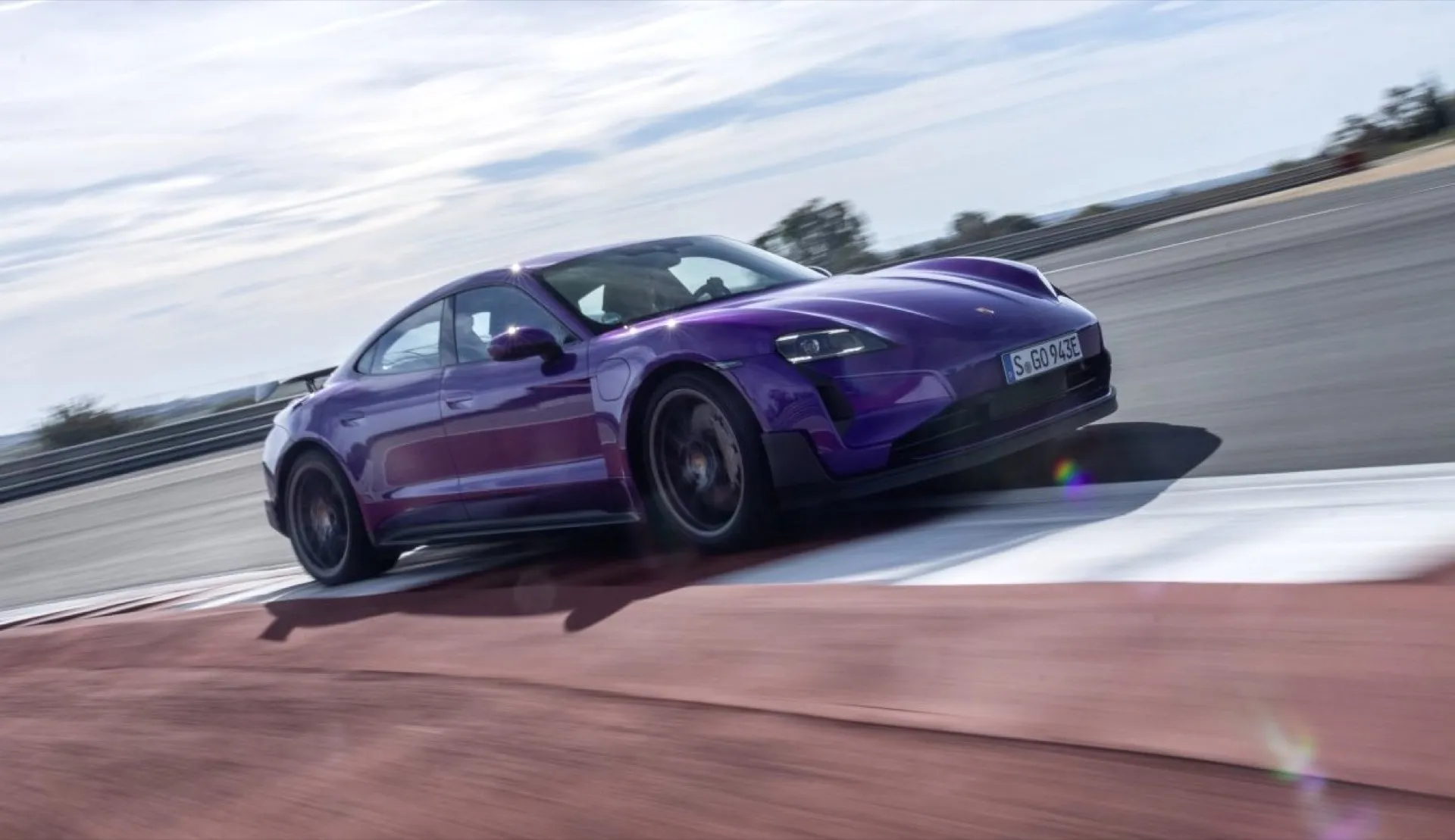
- Porsche EVs won’t pretend to be gas-powered cars
- The automaker explored the idea of fake shift points
- Porsche has two EVs in its lineup and a third en route
Porsche seemingly won’t follow Hyundai’s lead.
Porsche development driver Lars Kern told Drive that the automaker doesn’t see a need to put fake shift points in EVs.
“Our perspective on this is always why should we make something worse,” Kern said.
The driver acknowledged the automaker’s watching what others, including Hyundai, are doing to simulate sporty characteristics in EVs, but features like fake shift points are viewed as counter-intuitive to driving as fast as possible.
Kern noted “there’s no reason to simulate what has been in the past.”
Porsche still makes combustion engines for those that want that feeling.
Porsche explored the technology to simulate shit points and gear changes, but the automaker stopped at the idea stage. A prototype was never created, according to Kern.
Hyundai developed shift points, power cutoff and transfer, and even sound generators (speakers) at various points around the vehicle in the Ioniq 5 N. All were done in an effort to simulate a gas-powered car’s driving experience in an EV.
The effort was all in the name of fun rather than lap times. Hyundai execs and spokespeople told Green Car Reports at the launch of the Ioniq 5 N that the shift points and sound help drivers have more fun and provide a better sense of speed on the track.
The 2025 Hyundai Ioniq 5 N was worth the wait, and both the fake shit points, power curves, and sound generators work to create a different experience in an EV. An experience that’s closer to that of a gas-powered car than a BEV, but while fun, it was clear on a race track these things don’t make the car lap the course quicker. If anything, they might slow the car down due to the fake power curves being implemented for the fake gearing.
Kern said that’s not what Porsche is looking for. “We don’t try to make the electric car feel like a combustion engine, so that’s why we just didn’t follow up on that.”
The Porsche Taycan has been on sale since 2020, and the automaker’s second EV, the Macan, is launching now. A successor to the 718 Boxster and Cayman is in the wings and will bring Porsche’s sports cars into the electric era.

Norris recovers to win 2024 F1 Dutch Grand Prix
 Lando Norris won the 2024 Formula 1 Dutch Grand Prix Local hero Max Verstappen struggled for grip after leading early on Verstappen still has a sizable gap in the Drivers’ championship McLaren’s Lando Norris converted a pole position into a win on Sunday at the 2024 Formula1 Dutch Grand Prix, denying local hero Max Verstappen of Red Bull Racing a…

World’s first solar-powered DC-to-DC fast charger can be pre-ordered
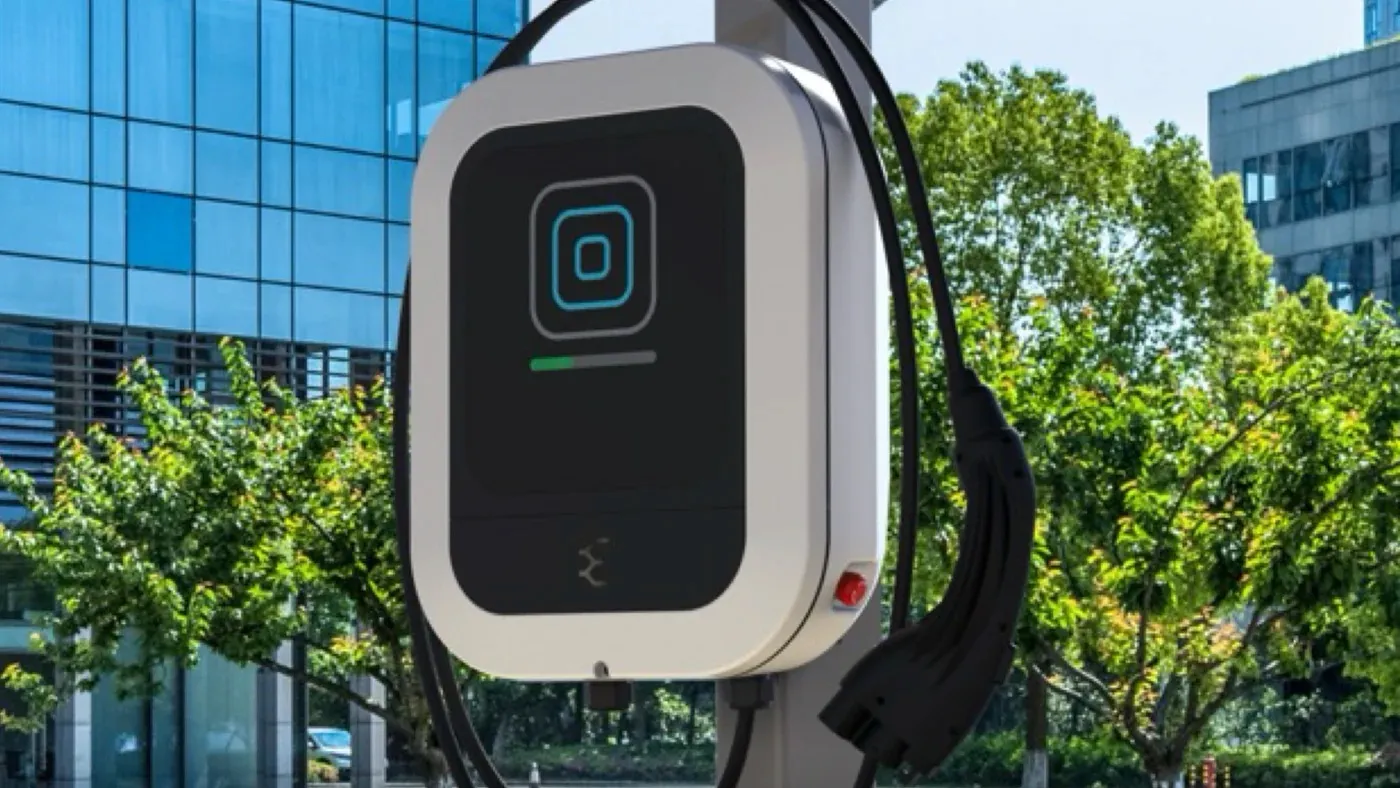
California-based Enteligent is taking pre-orders for a DC-to-DC EV fast charger that can be paired with solar to minimize emissions.
Pitched as an alternative to Level 2 AC chargers, the Enteligent TLCEV T1 EVSE eliminates energy losses from DC-AC-DC conversion losses that would otherwise be a factor if installed at a location without a dedicated power source for the charger, the company said.
This setup, which Enteligent claims is a world first, allows for DC fast charging installations at sites that previously had lower-power Level 2 charging. And if chargers are connected to solar installations, Enteligent claims, there’s no need to connect them to the grid. This cuts down on permitting and other complications while ensuring EVs are charged exclusively with renewable energy, further lowering their carbon footprint.
Enteligent said its hardware can support fast charging at up to 12.5 kw, and is available with Tesla North American Charging Standard (NACS) or CCS-1 connectors. This setup can now be pre-ordered with a refundable $250 deposit, which will be applied toward an “early bird” price of $2,249.
Enteligent also announced that it had supplied a 25-kw DC-to-DC bidirectional charger to a “large logistics company” to charge electric deliver vehicles, and had raised $6 million for further commercialization.
Solar-powered bidirectional charging could provide the capability for EVs to act as an emergency backup power source. Such capability is already with the Ford F-150 Lightning pickup truck for residential applications, while General Motors has established an entire energy business unit to take advantage of the bidirectional charging that will soon be available across its EV lineup.