
Author: EVAI

2019 Jaguar I-Pace recalled because high-voltage battery may overheat
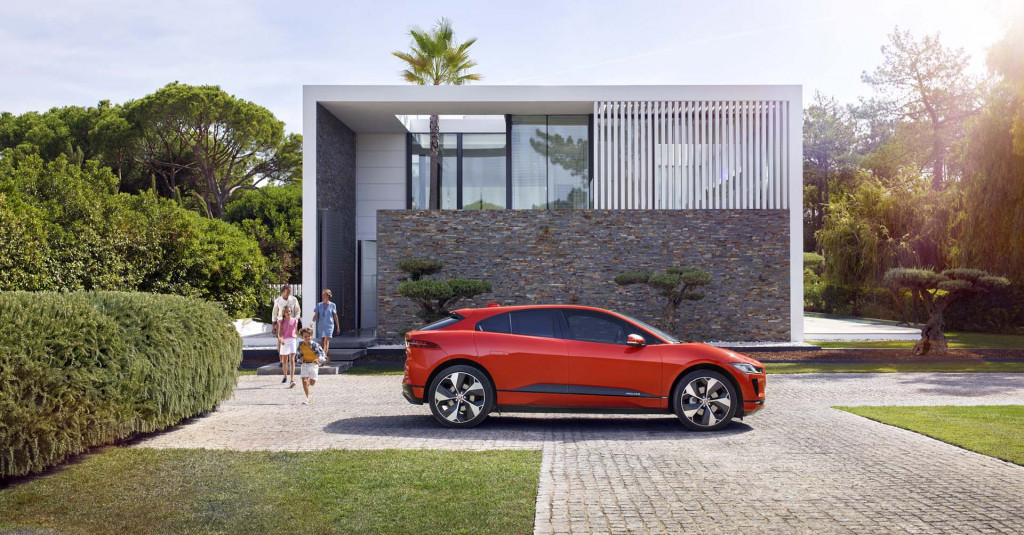
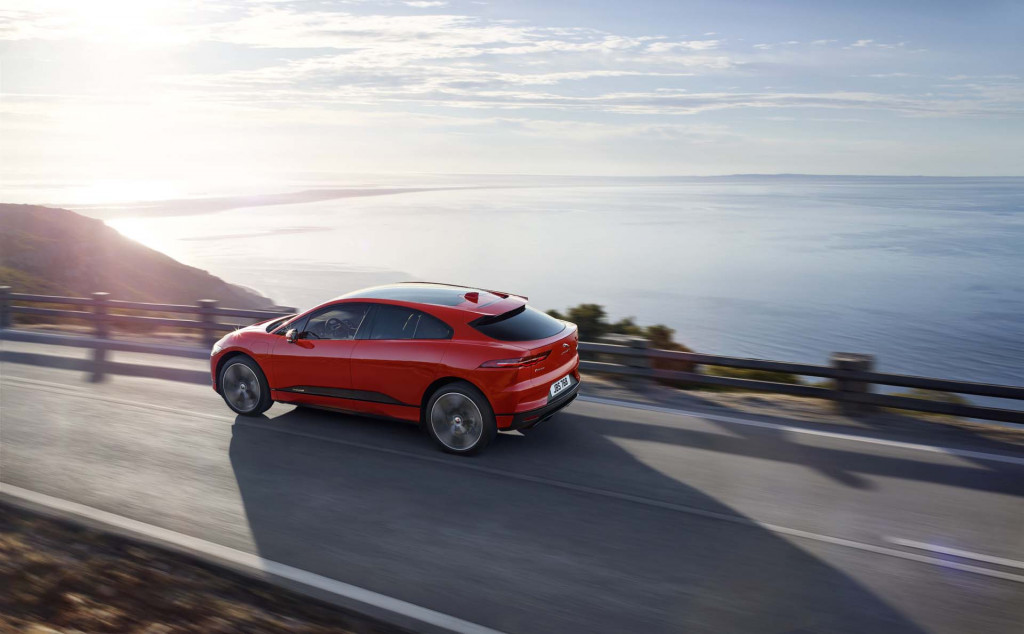
JLR is again recalling early Jaguar I-Pace electric SUVs due to an issue that could cause the vehicles’ battery packs to overheat—and asking owners to park and charge their cars outside and away from structures until a remedy is implemented and for 30 days after.
The recall includes 2,760 vehicles, all from the 2019 model year—the first for Jaguar’s sole EV. These were included in previous recalls that included improved software to diagnose potential issues with the battery pack. But even after this software was installed, JLR received reports of three first involving 2019 I-Pace EVs—all in 2024.
2019 Jaguar I-Pace
With battery packs still overheating after the diagnostic software was installed, JLR deemed the software inadequate and is looking for another solution. The automaker said an investigation is ongoing, noting that the software identified some battery modules as having the characteristics of a folded anode tab, which could contribute to the risk of overheating.
In the meantime, dealers will install updated battery module control software limiting capacity to 80%, free of charge. Jaguar plans to mail owner notification letters Oct. 18, 2024. Owners can call Jaguar customer service at 1-800-452-4827 and mention recall number H514 for more information.
2019 Jaguar I-Pace
After a broader recall of I-Paces due to fire risk last year, Jaguar announced another small recall earlier this year of just 258 vehicles—all 2019 models. The automaker found that these vehicles had a higher propensity for short circuits within their battery cells, and eventually opted to replace entire packs.
Jaguar hasn’t redesigned the I-Pace since its launch, but an update a few years ago added faster charging and a snappier interface. A previous report that Jaguar would abandon the I-Pace has proven accurate, as the brand has dropped it and most other models ahead of an alleged rejuvenation that could include a new generation of EVs.

2025 VW Jetta GLI boasts new look inside and out for $33,940
 Volkswagen gave the 2025 Jetta GLI a refresh with nicer interior materials Jetta GLIs are powered by a turbo-4 with either a 6-speed manual or 7-speed dual-clutch automatic transmission The 2025 Jetta GLI costs $33,940 A performance sedan with a manual transmission might seem as rare as a unicorn’s tears these days, but some are still available…

2025 Hyundai Ioniq 5 now U.S.-built, adds Tesla NACS port
- The 2025 Hyundai Ioniq 5 sports bigger batteries, more range, and a Tesla NACS charge port
- The 2025 Hyundai Ioniq 5 will be made in Georgia
- Hyundai didn’t say how much the 2025 Ioniq 5 will cost when it arrives
The 2025 Hyundai Ioniq 5 receives a number of notable updates, including bigger battery packs, a Tesla North American Charging Standard (NACS) port, and more rugged XRT variant. It will also be the first Hyundai EV built at the automaker’s new manufacturing complex in Georgia, dubbed the “Metaplant.”
Battery-pack sizes grow from 58.0 kwh to 63.0 kwh for Standard Range models and 77.4 kwh to 84.0 kwh for Long Range models—with expected increases in EPA range for both. The change was hinted at with the raucous 2025 Hyundai Ioniq 5 N performance model, which debuted earlier this year with the 84.0-kwh pack.
Hyundai estimates a 20-mile boost for the single-motor SE Standard Range, to 240 miles. Single-motor SE, SEL, and Limited models with the bigger pack get a smaller bump from 303 miles to 310 miles. Dual-motor versions of those models should get 250 miles to 280 miles of range, depending on the specific trim level and wheel/tire size, up from the previous 260 miles.
2025 Hyundai Ioniq 5
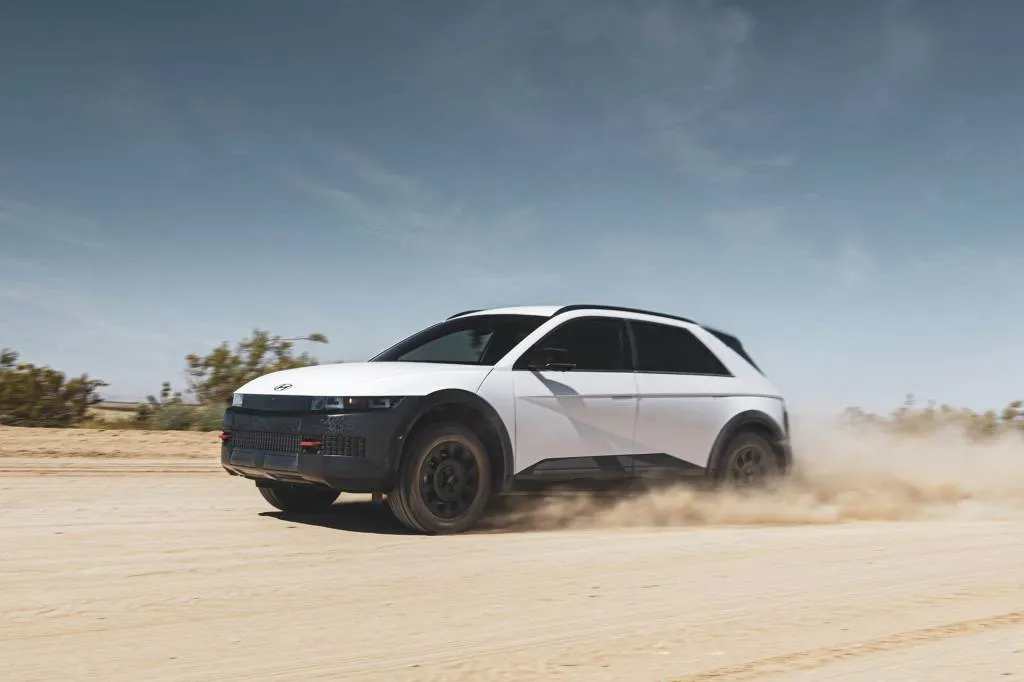
A new XRT grade also joins the lineup for 2025, marking the first time this off-road-inspired trim has been applied to a Hyundai EV. The Ioniq 5 XRT receives a 0.9-inch suspension lift, new suspension tuning, all-terrain tires on 18-inch wheels, and exterior cladding with a digital camouflage pattern. It’s only available with the dual-motor powertrain and larger battery pack, but Hyundai did not have a range estimate at press time.
2025 Hyundai Ioniq 5
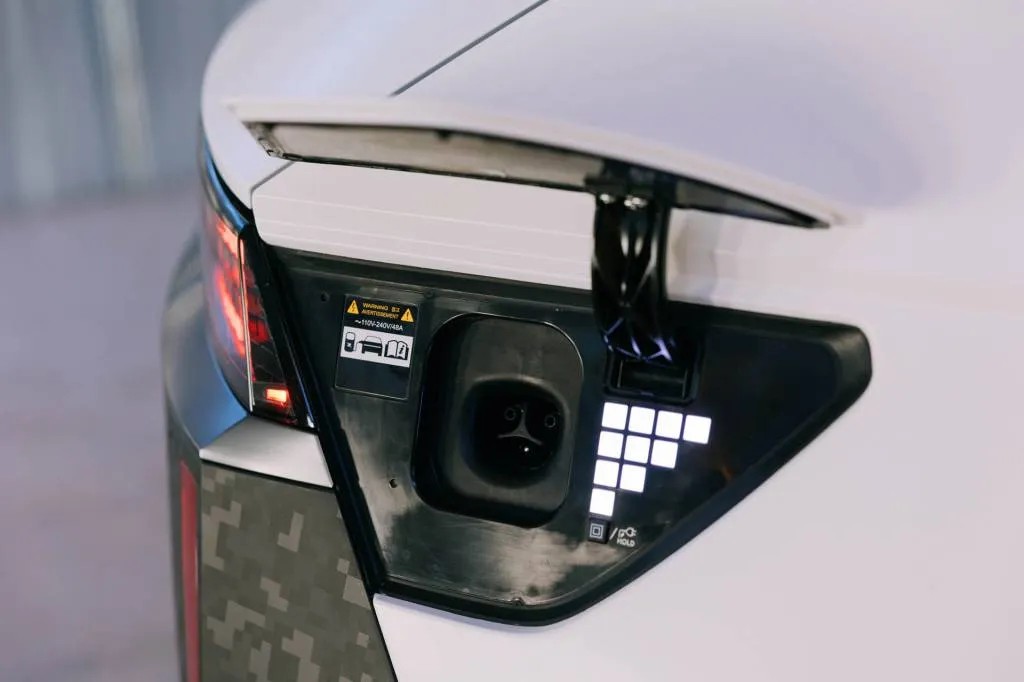
The Ioniq 5 will be the first Hyundai EV with a built-in Tesla NACS charge port, which Hyundai says will open up access to more than 17,000 Tesla Supercharger stations without requiring an adapter. Hyundai will instead sell an adapter for the Combined Charging Standard (CCS) port the Ioniq 5 previously used. All new or refreshed Hyundai EVs will come exclusively with a NACS port starting in the fourth quarter of this year.
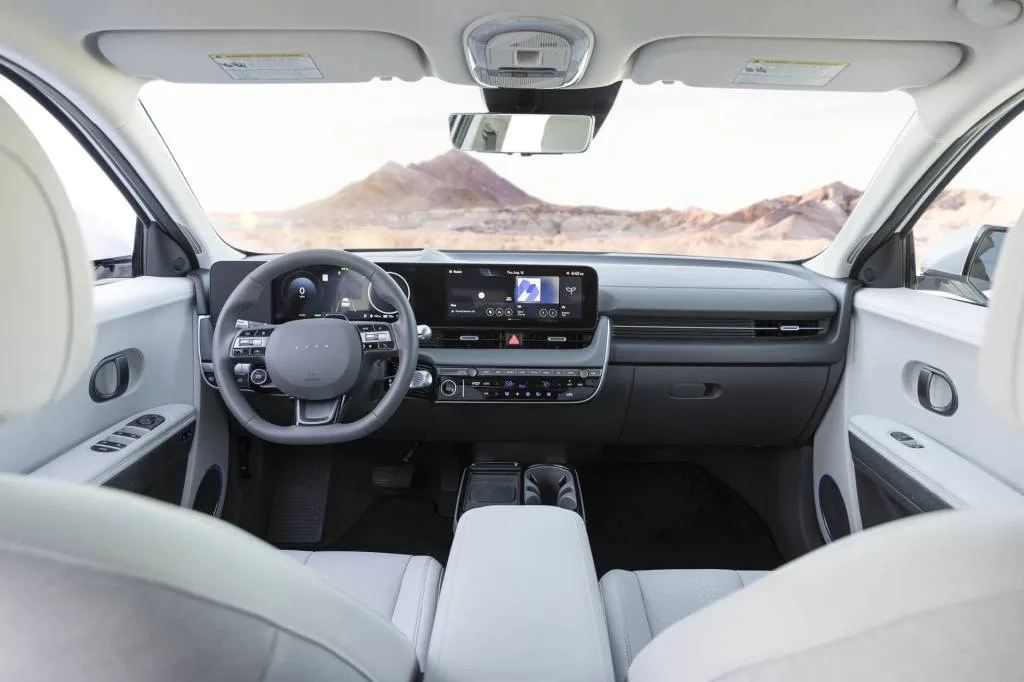
2025 Hyundai Ioniq 5
Like some other 2025 Hyundai models, the Ioniq 5 finally offers wireless Apple CarPlay and Android Auto as standard equipment on all models. A parking collision-avoidance assist feature and sensors to detect whether the driver has their hands on the steering wheel are new, while the lane-centering and remote automated parking assist features are updated.
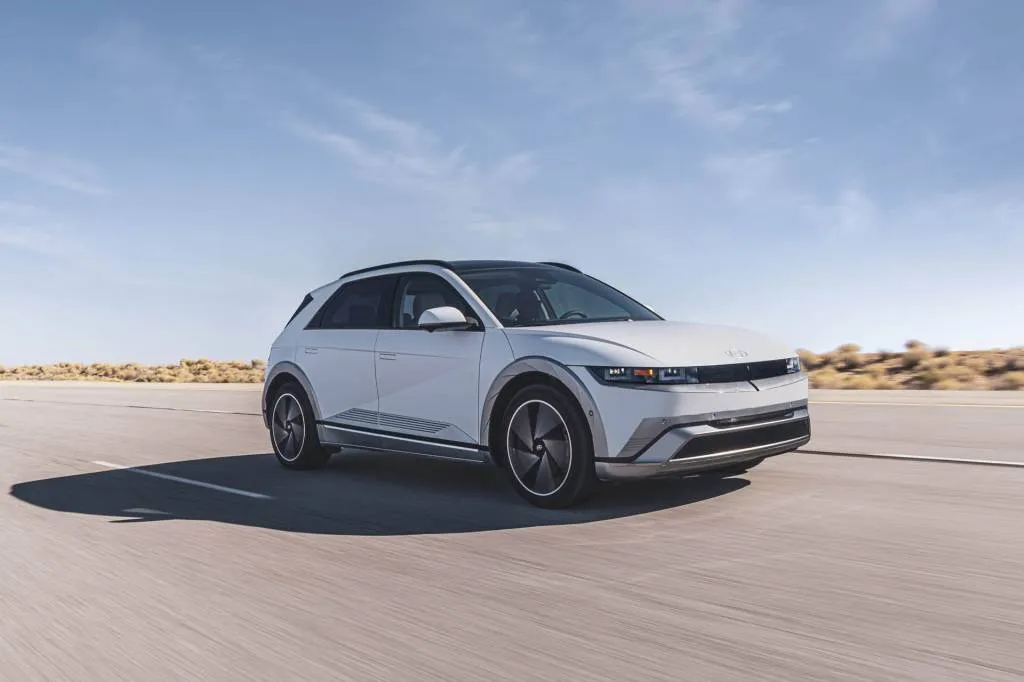
2025 Hyundai Ioniq 5
Exterior styling changes include new front and rear bumpers, a new rear spoiler, and new wheel designs Hyundai claims are more aerodynamic. Under the skin, the body shell, front and rear doors, and parts of the B-pillars have been reinforced to improve side-impact protection. Inside, the Ioniq 5 features a redesigned center console and climate controls, as well as a new steering wheel design.
As confirmed by Hyundai earlier this year, the Ioniq 5 will be the first EV built at the automaker’s new Georgia factory. This will help 2025 models qualify for a $3,750 federal tax credit, but Hyundai will continue to offer a $7,500 discount to lease customers through a loophole in the rules. Actual pricing information will be released closer to the 2025 Ioniq 5’s arrival at dealerships.

Efficiency can cut EV prices by $5k, charging costs by nearly a third
Increased EV efficiency isn’t just better for the environment. It’s also better for owners’ wallets, reports the American Council for an Energy-Efficient Economy (ACEEE).
In a new white paper, the group notes that boosting efficiency allows for smaller battery sizes, which in turn cuts costs. Most EVs average 2.5 miles per kwh, according to the paper, but the Tesla Model Y averages 3.5 miles per kwh. That’s a 40% increase which, assuming similar range, allows for a 40% reduction in battery size that’s worth up to $4,800 in cost savings, the ACEEE reasons.
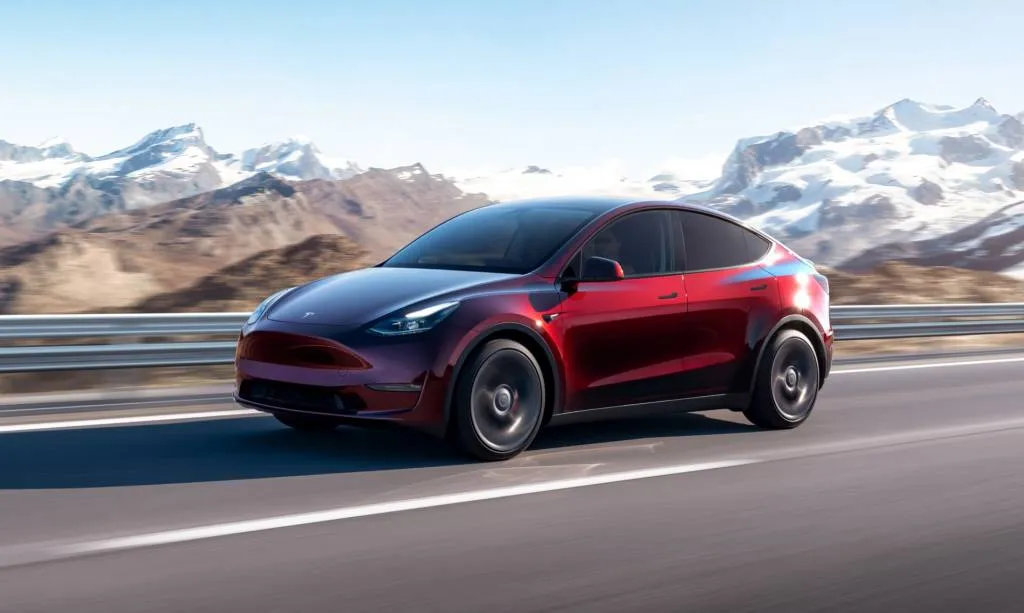
2024 Tesla Model Y. – Courtesy of Tesla, Inc.
Even less efficient EVs can save owners money compared to gasoline cars, though. At 2.5 miles per kwh, the ACEEE estimates annual charging costs at $960, compared to about $2,000 for fueling a car with gasoline. But increasing efficiency to 3.5 miles per kwh drops annual charging costs to an estimated $680 a year—a 29% savings.
Greater efficiency also means EVs gain more miles of range for a given amount of charging time, the ACEEE notes. That means drivers can spend less time charging—potentially helping to quell range anxiety—and there is less demand on the grid. This echoes the findings of a study published earlier this year by the non-profit utility organization EPRI and the National Resources Defense Council (NRDC), which found that efficiency improvements could cut grid demand from EVs by up to 20%.
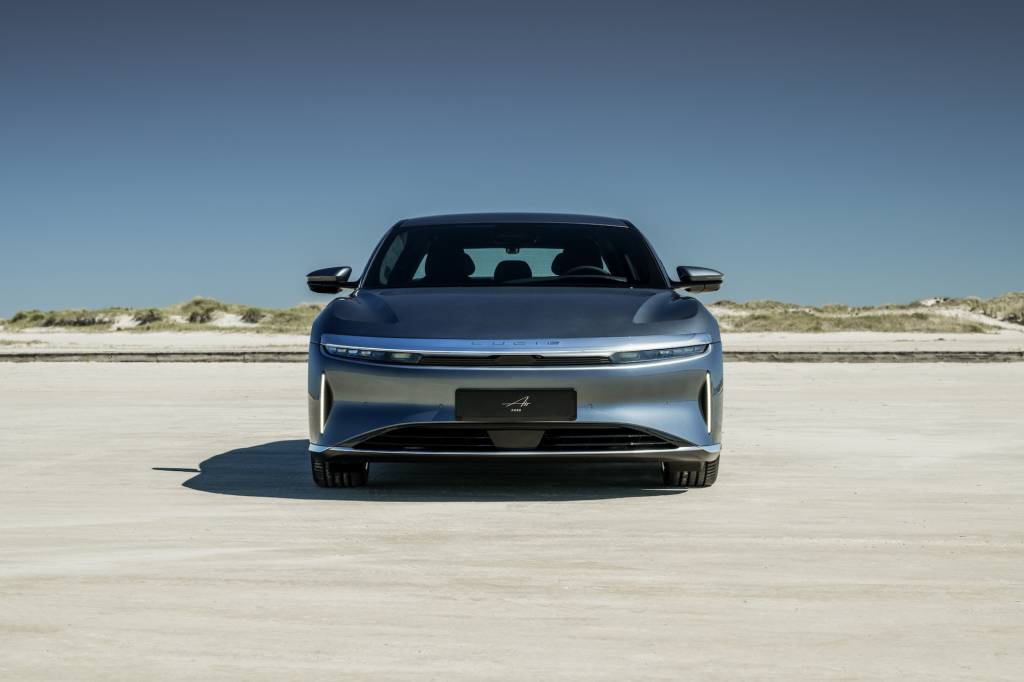
2025 Lucid Air Pure
As the ACEEE notes, different automakers have widely varying attitudes toward efficiency. Lucid has made efficiency a priority, and as a result the Lucid Air Pure luxury sedan achieves 5.0 miles per kwh, which the automaker claims is an industry benchmark. At the other end of the spectrum sits the GMC Hummer EV, which can only manage 1.4 miles per kwh, according to the ACEEE.
The white paper recommends policies to incentivize more efficient EVs, including changing EPA emissions standards to no longer focus solely on “tailpipe” emissions, a framework that currently treats all EVs the same regardless of efficiency. Purchase incentives could also be scaled based on efficiency, and registration fees could be based on vehicle weight, as is currently the case in Oklahoma and the District of Columbia, the paper suggests.

Review: 2025 Volvo EX90 EV reboots the brand but doesn’t flaunt it
Keep to quick first impressions of the 2025 Volvo EX90 and you might get the wrong idea.
In one of the many inherently Swedish aspects of this next-generation electric SUV, it doesn’t flaunt the future on the outside, but it certainly wears it well inside.
The exterior of the Volvo EX90 is what it needs to be—an evolution from the XC90. On the other hand, its cabin embraces an extreme minimalist approach, cozies up to a touchscreen for nearly everything, and syncs up with a software-defined-vehicle future.
In a recent day of up-close time with the South Carolina-made EX90, set to arrive this fall, Volvo was big on the vehicle’s software, and its platform’s origin story rooted in global technology partnerships with Google, Nvidia, Qualcomm, and Luminar. But with the perspective of several hours of driving time, I was reminded that Volvo hasn’t forgotten with the EX90 what the company does best—making people feel comfortable, safe, and pampered, without overtly flaunting it.
2025 Volvo EX90
Volvo EX90: Touchscreen’s the key touchpoint
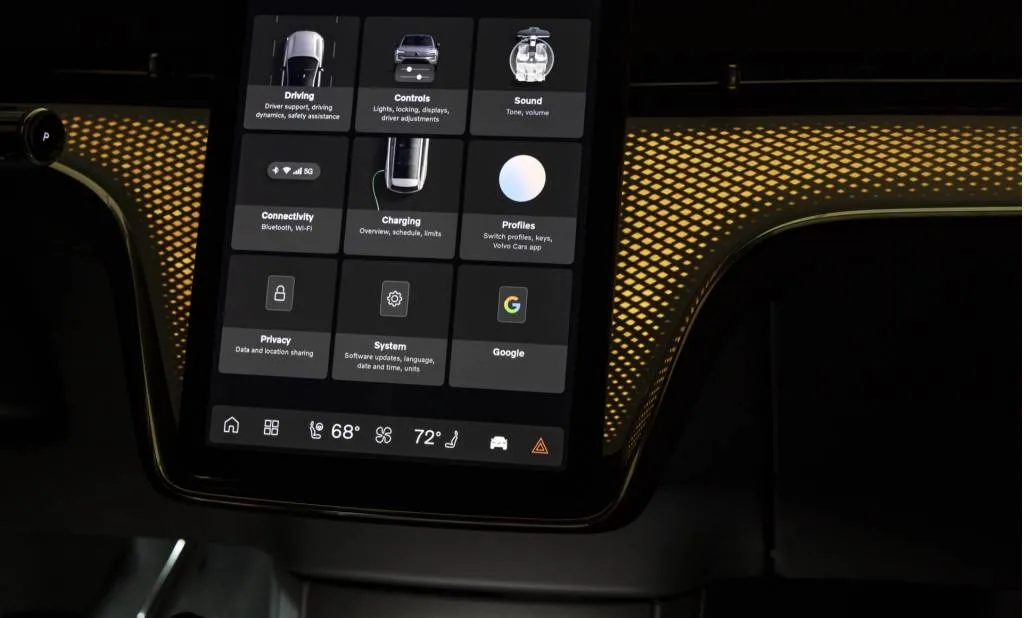
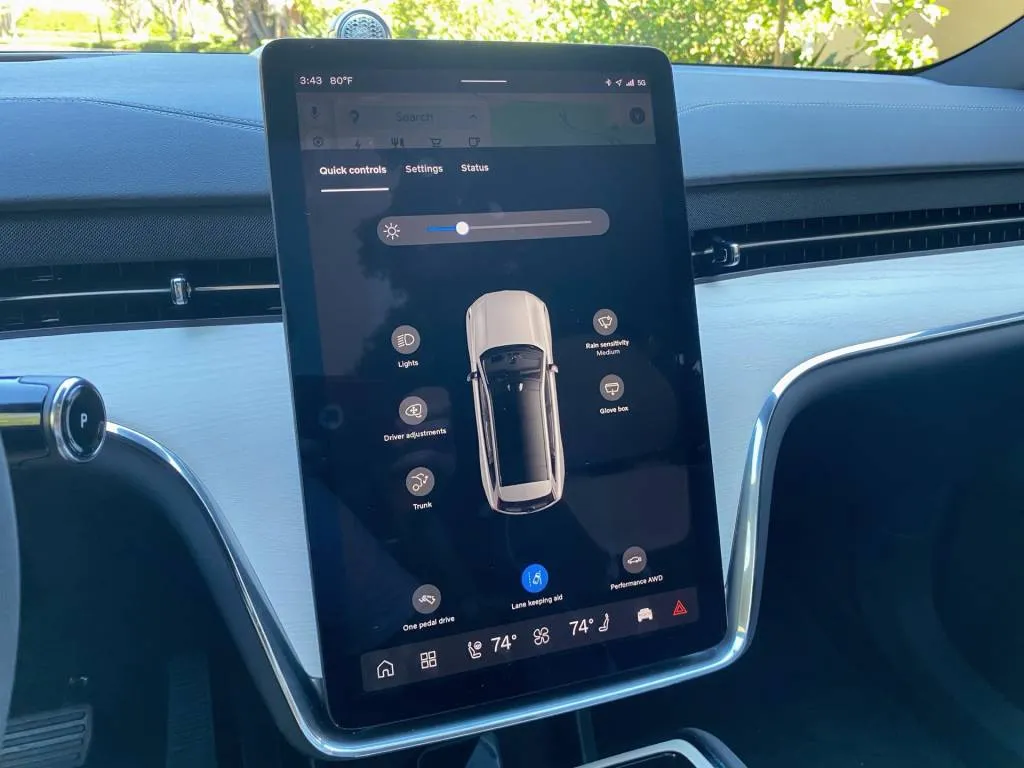
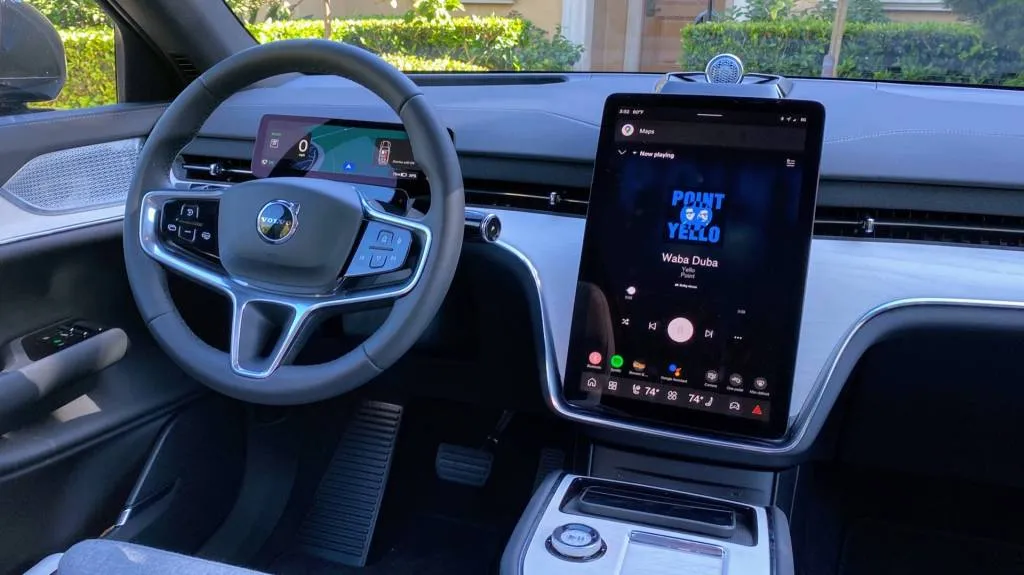
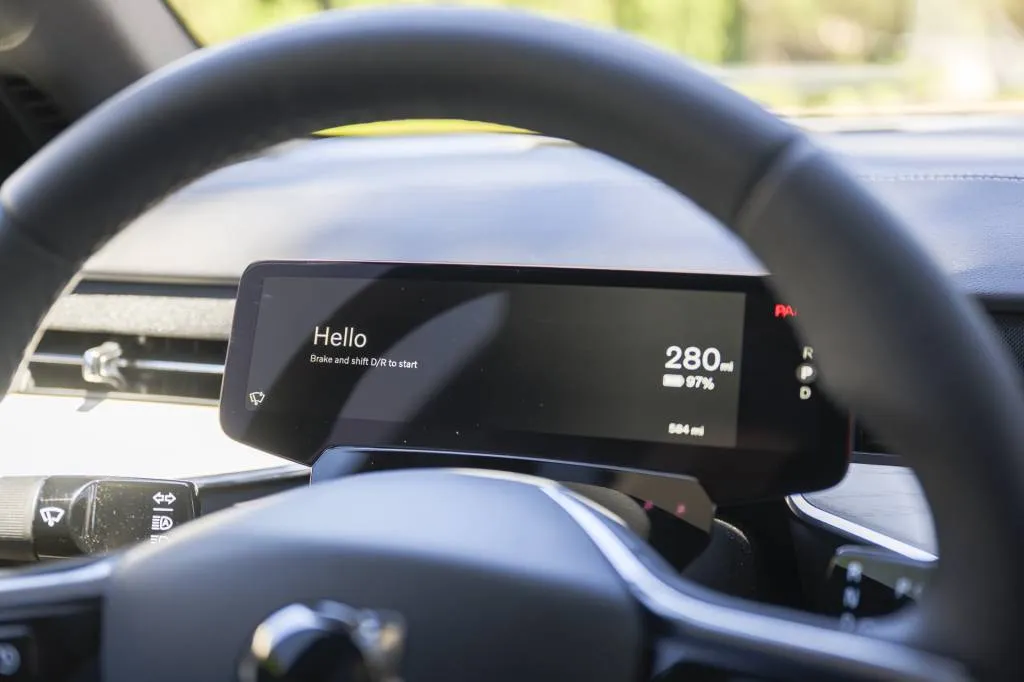
There’s no shying away from the vertically oriented 14.5-inch touchscreen when you get into the 2025 EX90, and you’ll get familiar with it quickly. While a 9.0-inch digital gauge cluster and head-up display help keep track of everything, the touchscreen is the hub for many of the controls and, like it or not, you’ll need to toggle through screen-based tabs to adjust the mirrors, steering wheel, and seats—although the seats have a center button to click through its power adjustments.
For newbies like me, it’s simply not as easy as actual adjustment switches. While we’re at it, the directional buttons on the Volvo steering wheel simply don’t offer the kind of fine precision in adjustment that Tesla’s tactile thumbwheels do.
But drivers may realistically only need to do this once, and Volvo says that its system is a step ahead. Driver profiles correspond to each known smartphone, along with Phone as Key technology, and as someone approaches the vehicle, pings from four to six ultra-wideband sensors around the vehicle determine which phone is entering at the driver’s door. If this all goes according to plan, the driver enters the vehicle with the seats, mirrors, steering wheel, presets, and other preferences all set to their liking. If by some chance the car guesses wrong, Volvo says you can select those profiles manually. This is one I truly look forward to putting to the test with a family of devices.
2025 Volvo EX90
2025 Volvo EX90
2025 Volvo EX90
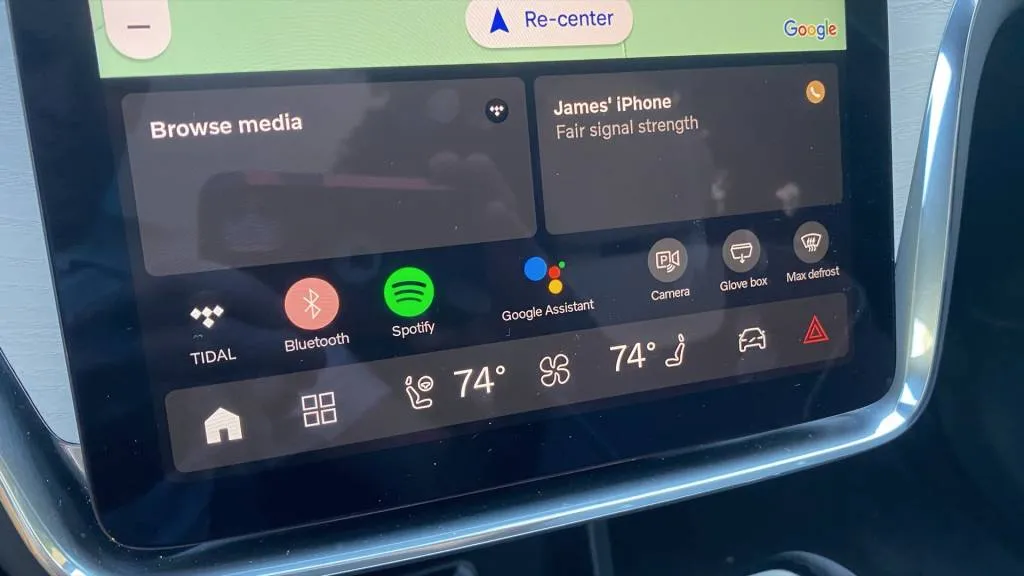
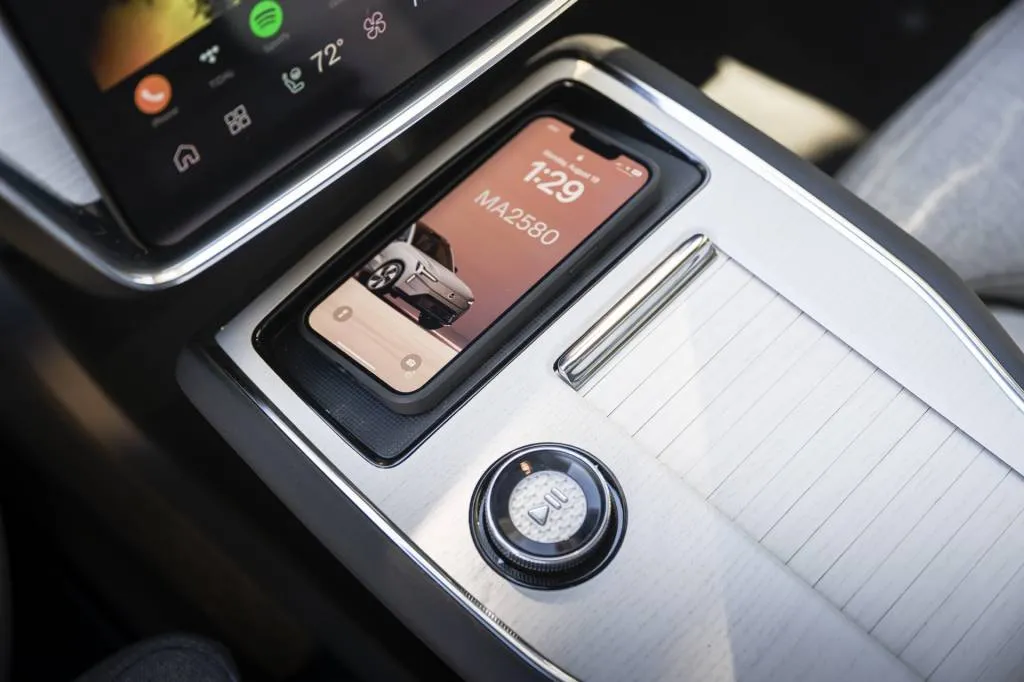
Volvo’s latest screen experience in the EX90 will feel familiar to virtually anyone, with a tablet-like interface that handles climate controls. At the bottom of the screen is a locked row of icons that provides quick navigation to a home screen, apps, settings, and climate control details. Above it is a row of contextual icons that will change depending on the current use, while above that widgets (for phone or audio) provide a quick look at what’s playing or available. The vast majority of the screen is used for navigation, with a clear, vertically oriented map display that’s easy to glance at quickly (but you can also add it to the instrument panel). It’s likely to evolve and a lifetime of vehicle updates are coming. Volvo says it will keep data for navigation and over-the-air updates live even if customers let their 5G data subscriptions for apps and streaming lapse.
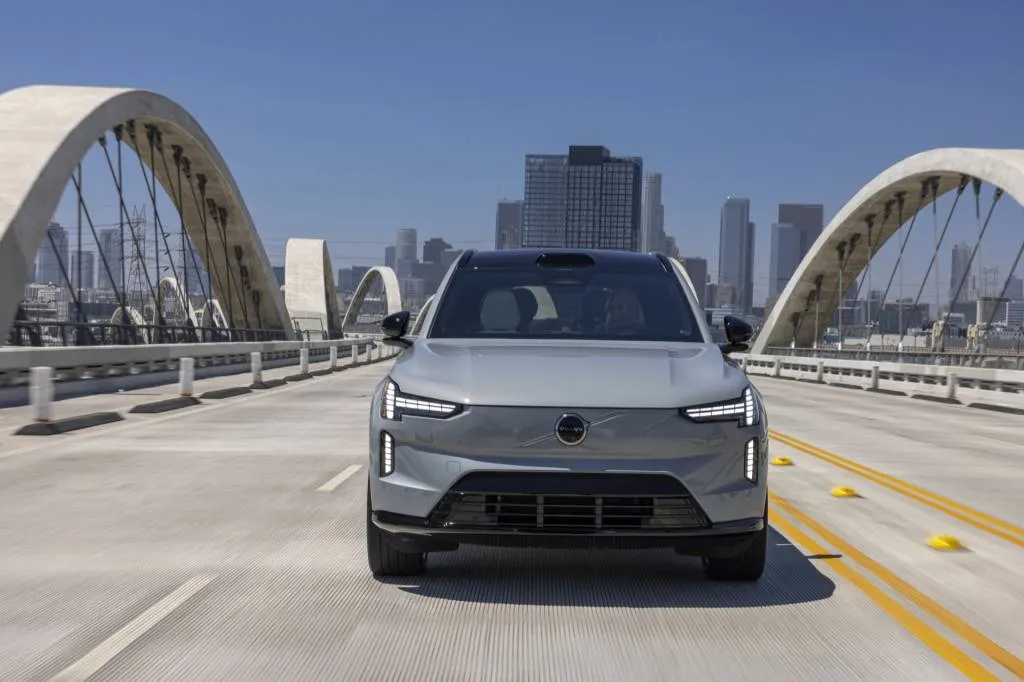
2025 Volvo EX90
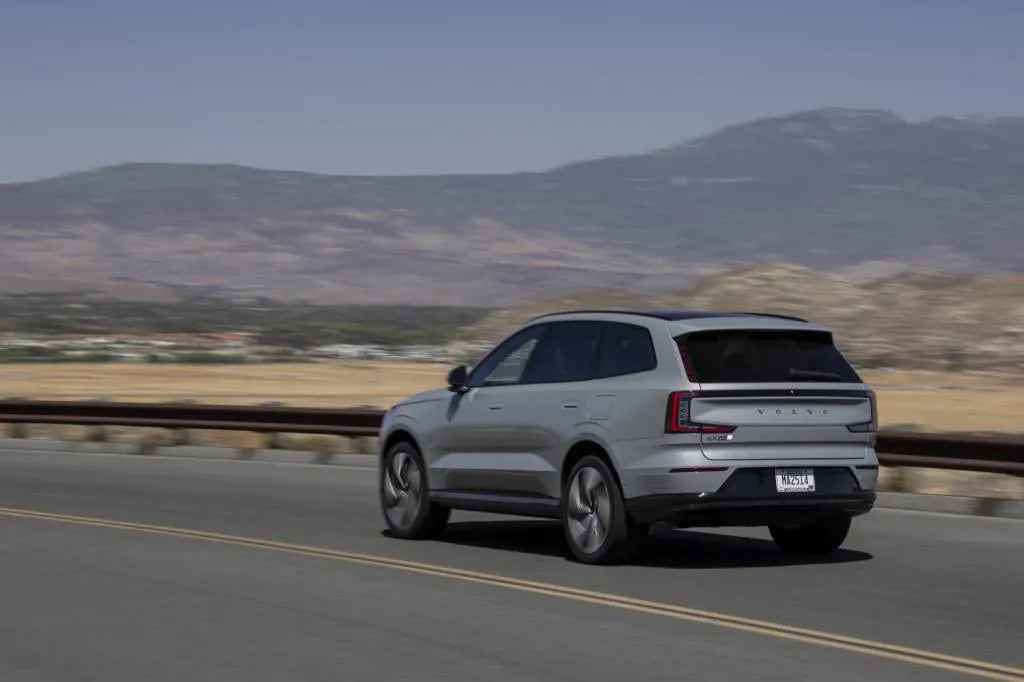
2025 Volvo EX90
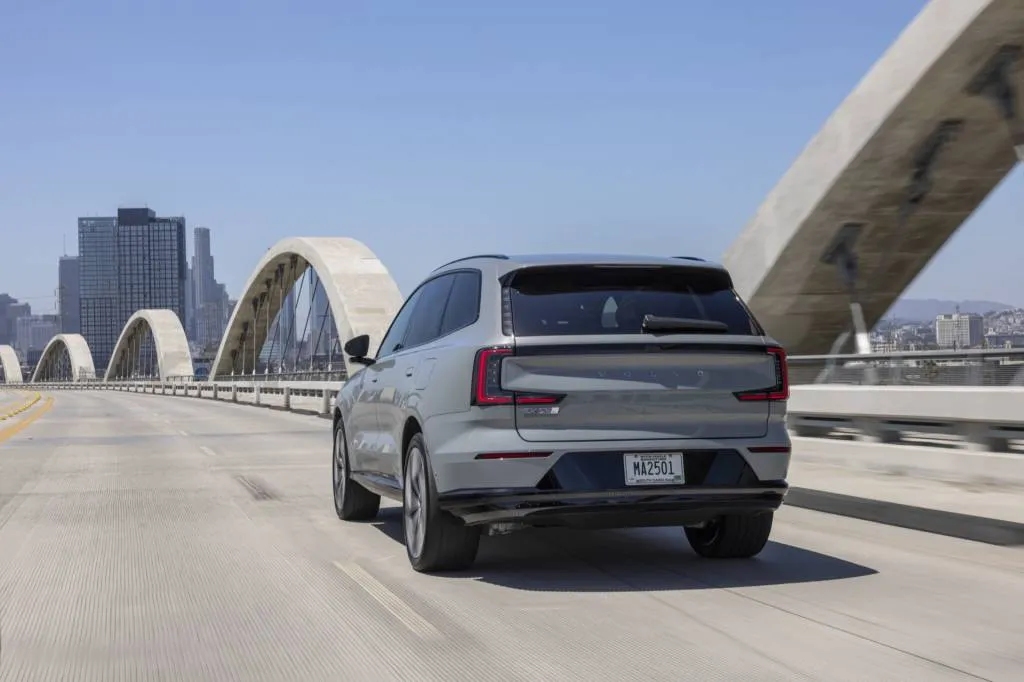
2025 Volvo EX90
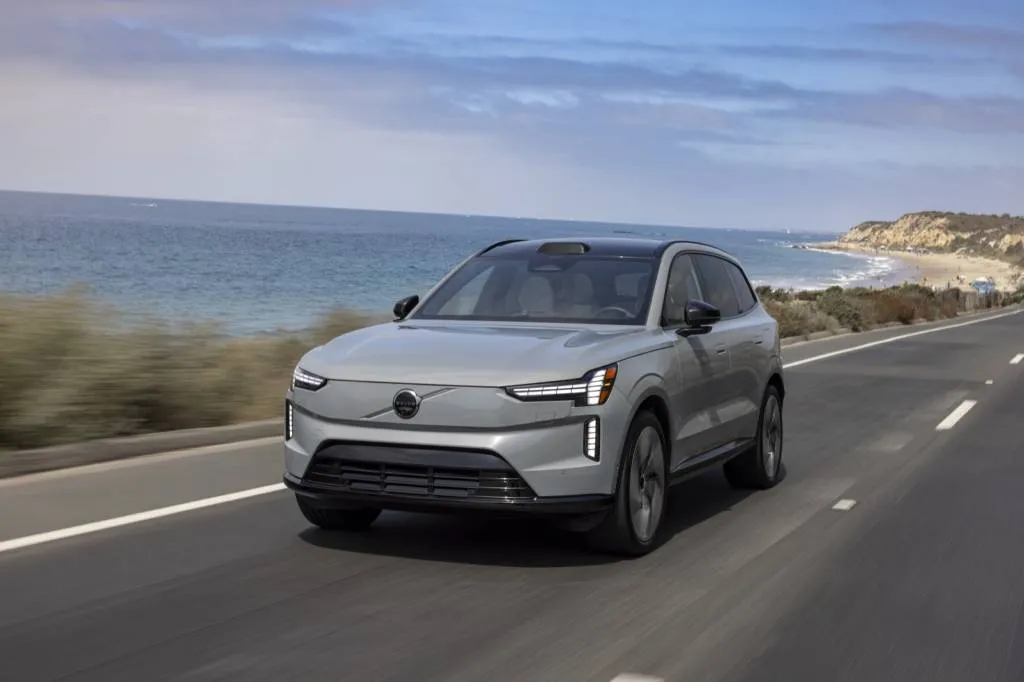
2025 Volvo EX90
Volvo EX90 is efficient, nimble, and quiet
I spent the day with two different Twin Motor Performance versions of the SUV, in the top Ultra trim, both bearing the same $93,345 sticker price. One of them offered a Sand Dune exterior (a very light tan) with a Dawn Quilted Nordico interior, the other a tailored wool blend interior and Vapour Grey exterior. Both of them wore 22-inch five spoke aero wheels.
This is the heaviest, most luxurious EX90 in the lineup, at more than 6,000 pounds by international-market specs, and this brought three pleasant surprises in the driving experience.
First, by early indications, the EX90 is very efficient for a big three-row SUV. I averaged 2.7 miles per kwh on a 146-mile loop including some stop-and-go boulevard driving in Orange County, up and down a demanding mountain road, and some high-speed cruising at a very fast clip. Then on a loop of about 40 miles that included more boulevard driving and some denser, slower-moving afternoon traffic I averaged more than 2.9 miles per kwh.
The EX90’s battery pack uses lithium-ion nickel manganese cobalt cells and adds up to a gross 111 kwh. Volvo has said that usable capacity is up to 107 kwh, so based on what we saw that amounts to a real-world range right around 300 miles, without driving particularly slowly or gently.
Volvo’s official EPA ratings for the EX90 are 310 miles with the 21-inch wheels and 300 miles for models with the 20- and 22-inch wheels.
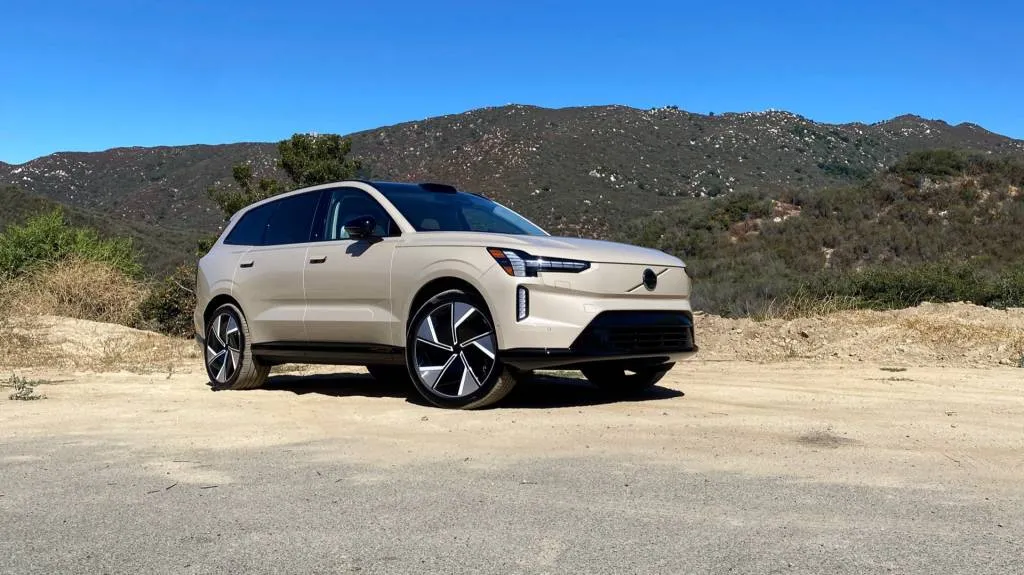
2025 Volvo EX90
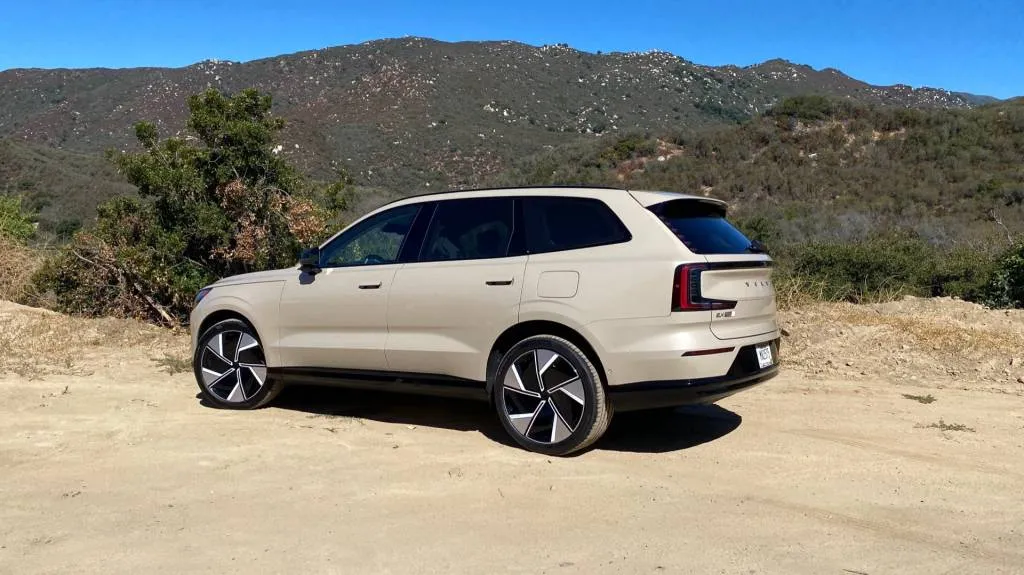
2025 Volvo EX90
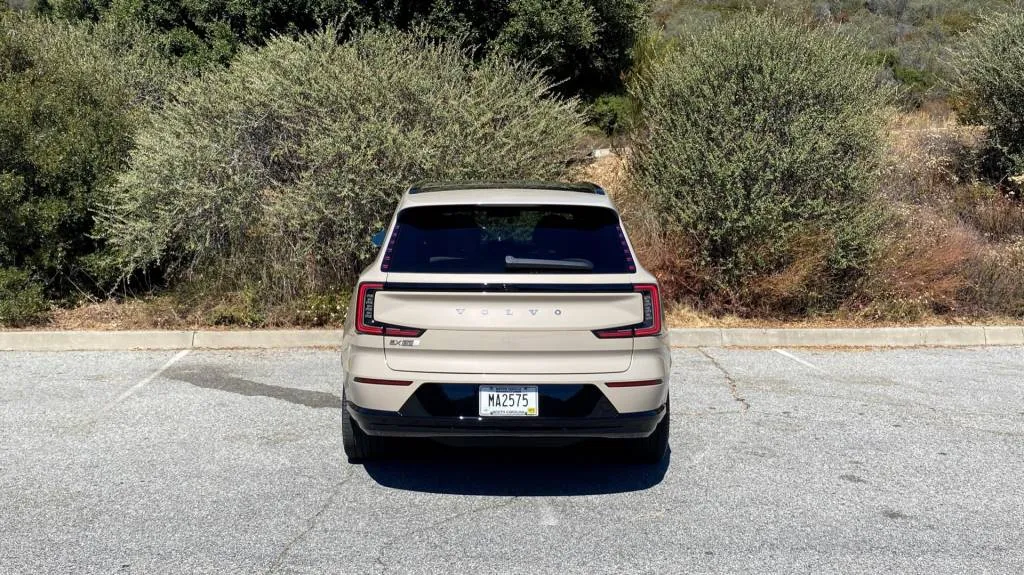
2025 Volvo EX90
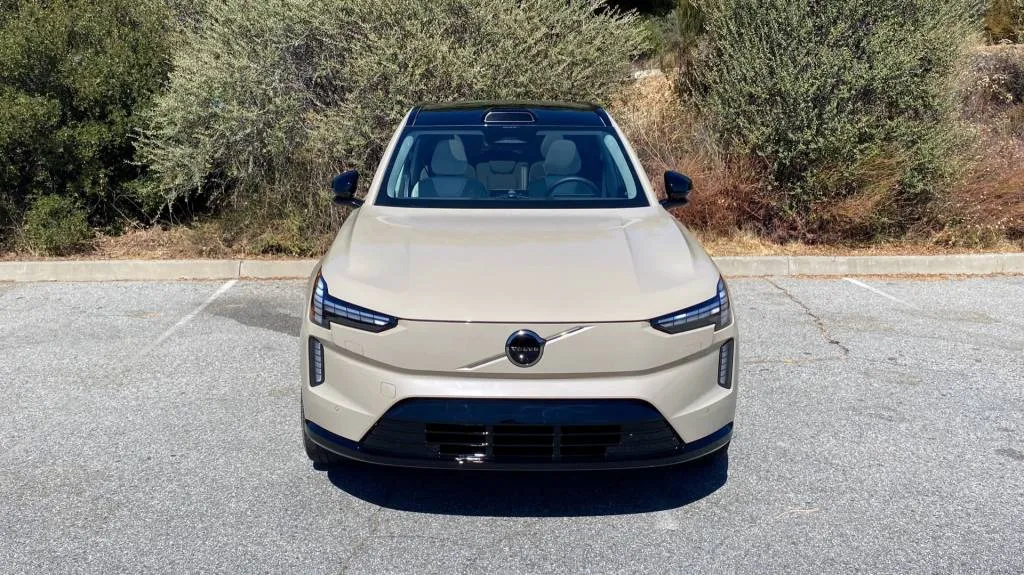
2025 Volvo EX90
The second pleasant surprise was how light and nimble the EX90 drives, considering those three rows and 6,000-plus pounds. Ultra versions—the only kind we drove at this event—include the air suspension as well as semi-active (multi-stage) dampers. Those extra suspension bits aren’t included in more affordable Plus versions, so we’ll need to report back in the future on whether they can maintain such prowess in the corners. In the Ultra, you can select from soft or firm for the steering and suspension, independently, but I settled on soft for both as with that the steering centered more neatly and the suspension still firmed up when needed in tight corners.
The third takeaway, which left me rather awestruck, was simply how quietly the EX90 rides, whether accelerating rapidly, traveling at high speed, or riding on the roughest road we found along our route in mostly smooth Orange County. Hannes Veen, Volvo’s senior manager for propulsion systems, said that the team didn’t use any kind of active noise cancellation or sound manipulation; instead Volvo simply paid a lot of attention to noise insulation and bushings, including fluid-filled mounts for the motor units.
While this is indeed Volvo’s first home-grown “software-defined vehicle,” it’s also home-grown in an engineering sense, with the vast majority of development done around the automaker’s headquarters in Gothenburg, Sweden.
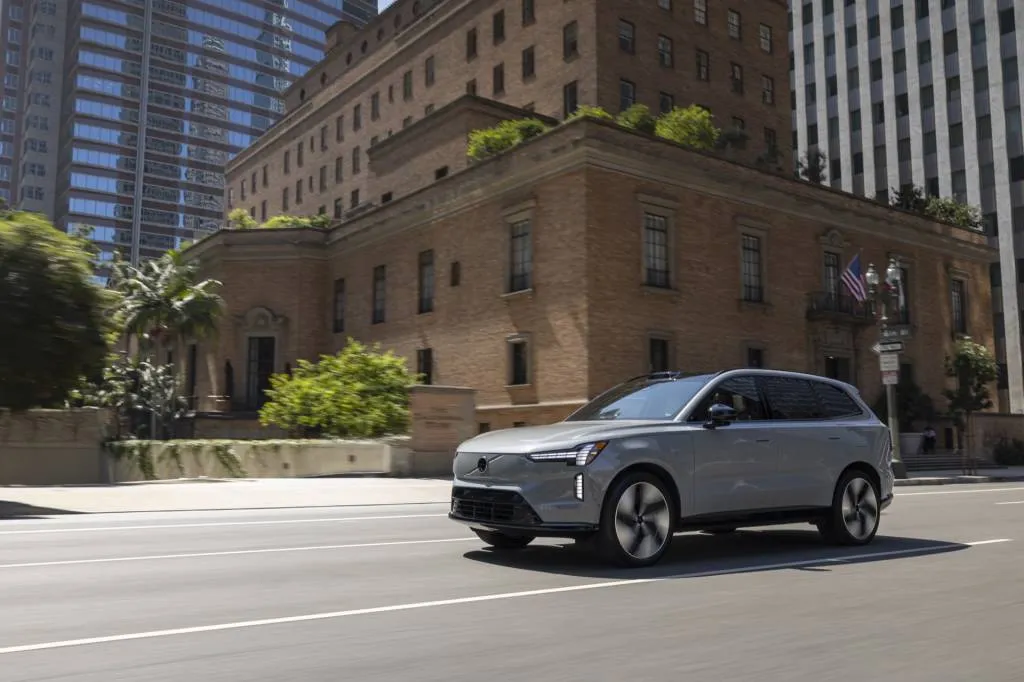
2025 Volvo EX90
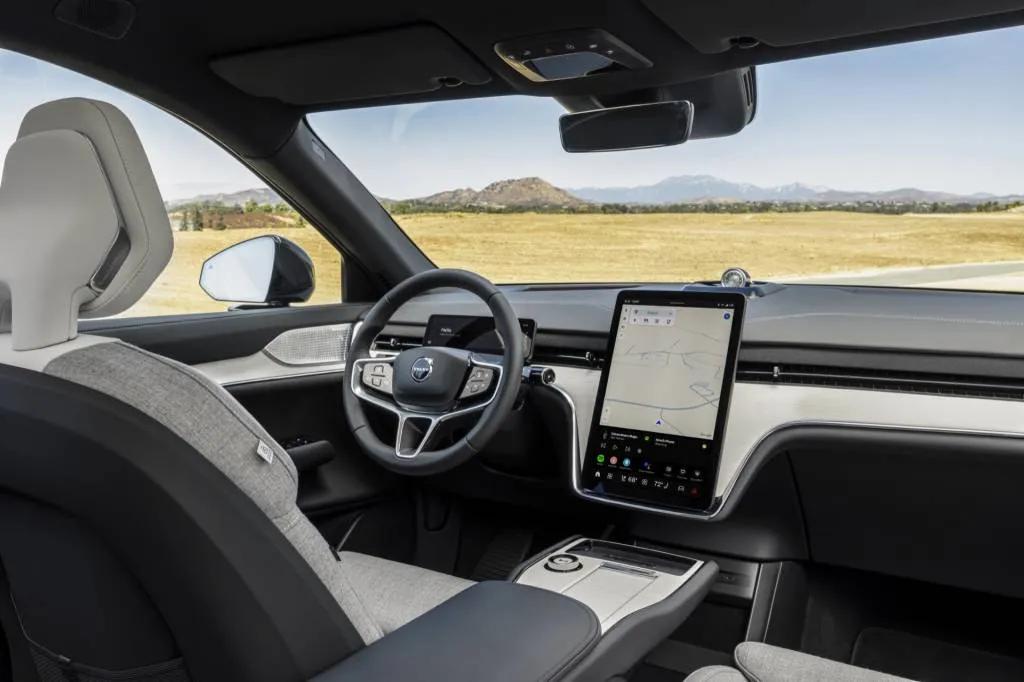
2025 Volvo EX90
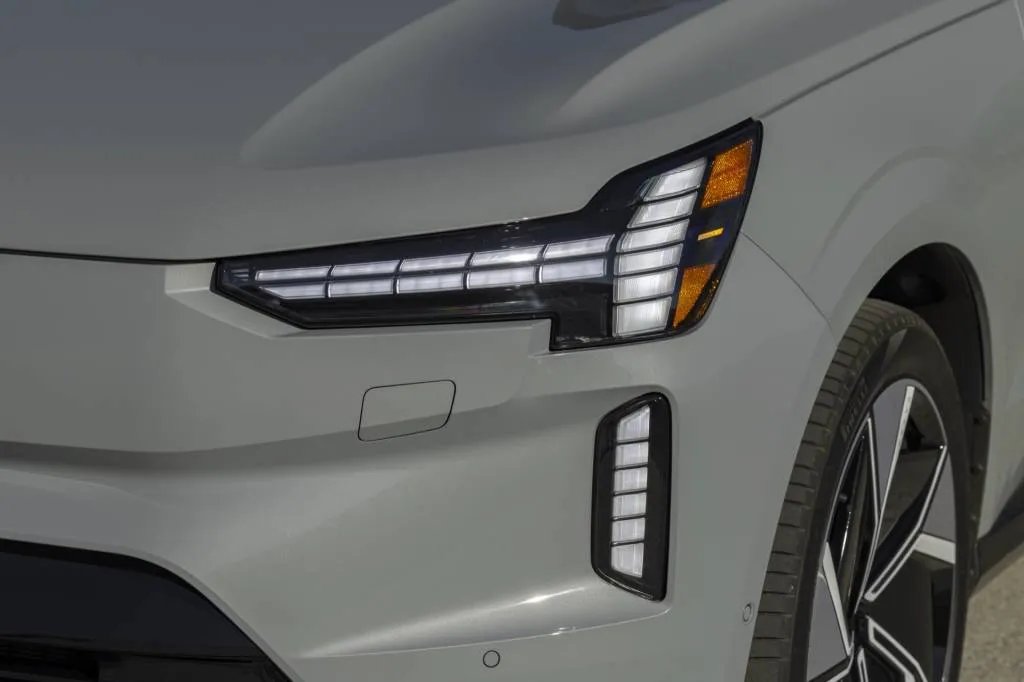
2025 Volvo EX90
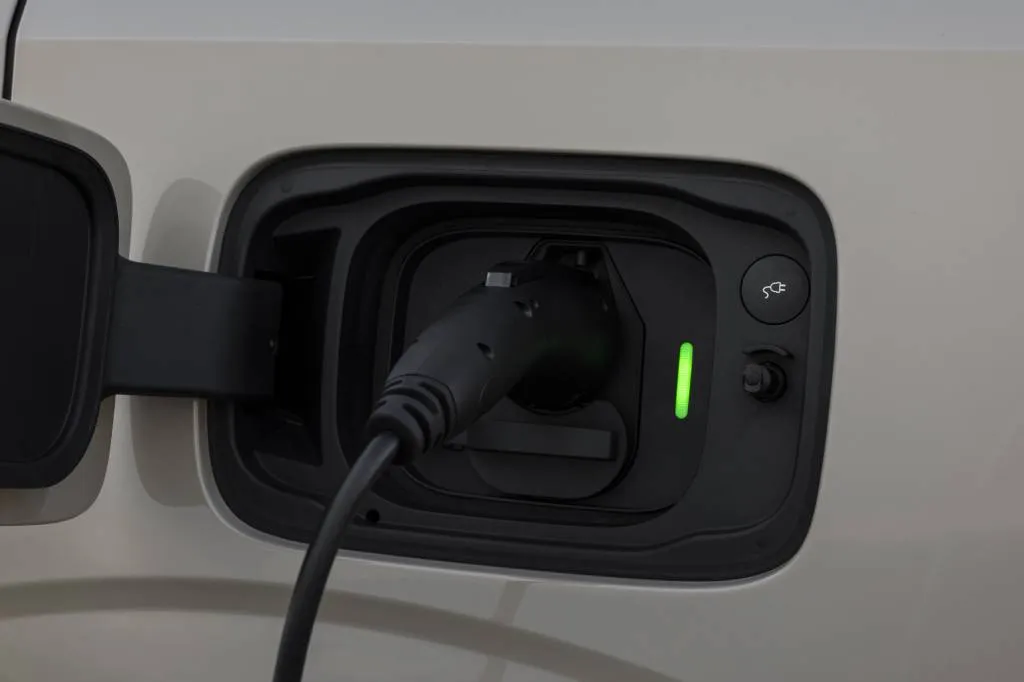
2025 Volvo EX90
EX90 has quick, satisfying performance, with one exception
In its top-trim Twin Motor Performance Ultra form, the EX90 is very quick. As is often the case in larger EVs, it felt even quicker from the front seats than its 0-60 mph time of 4.7 seconds might suggest. While motor units themselves are the same across the EX90 lineup, Twin Motor models make 402 hp and 568 lb-ft of torque combined, while Twin Motor Performance versions offer 510 hp and 571 lb-ft. The EX90 favors the front motor in steady cruising, and much of the time saves the rear motor for quick launches and traction needs. But a Performance AWD mode will access a constant (but still variable) power flow to the rear wheels at 19-81 mph, accessing more balanced dynamics. I couldn’t feel much of a difference, or detect the seamless transition as the EX90 brings its rear motor in and out via a clutch.
The accelerator and steering inputs have a felt precise, but there was one thing missing in the EX90’s otherwise finely fettled dynamics. Volvo has opted to provide just three modes for regenerative braking: off, auto, and on—and the brake-pedal feel in our test vehicles was downright spongy at a standstill, to the point where it was hard to tell when the friction pads were or weren’t making contact.
The “on” setting is a true one-pedal mode. It’s aggressive enough that you may only need to press the brake pedal for unanticipated stops. “Off” brings a coasting/gliding behavior that dials out all the regen and is like Neutral in a gasoline model. The “auto” setting applies a situational approach, relying on sensors, but I simply didn’t have enough drive time to get a sense of that. I was left wanting a middle setting for regenerative braking—one that would gradually scrub speed off more like a gasoline vehicle in Drive or one gear down.
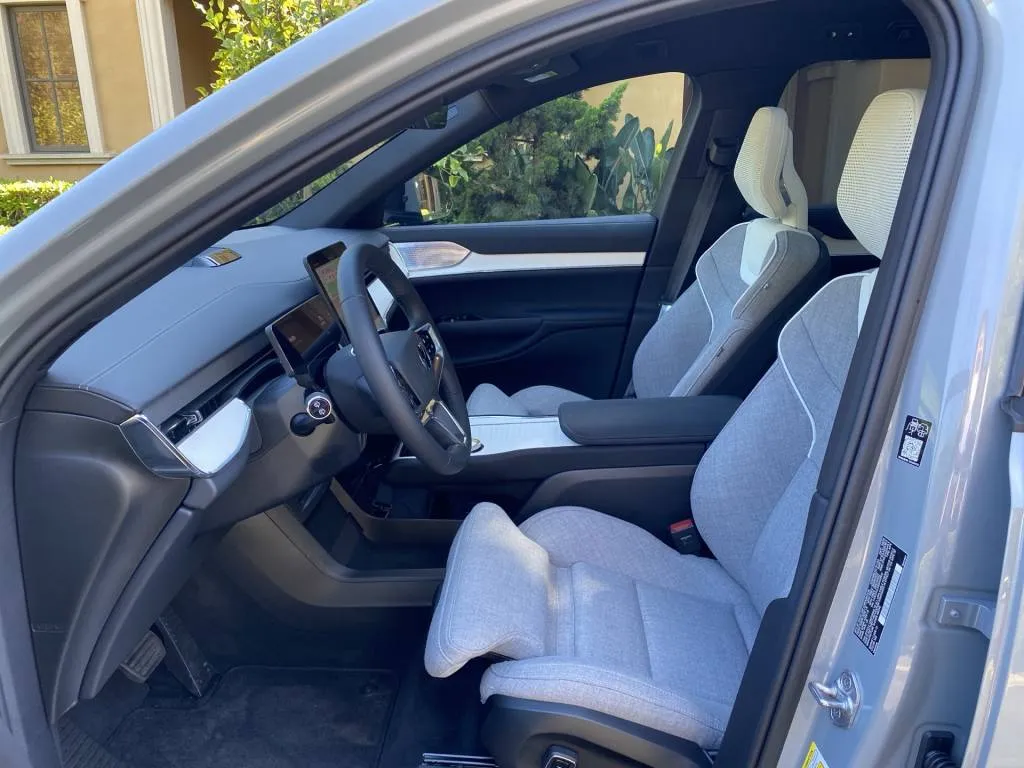
2025 Volvo EX90
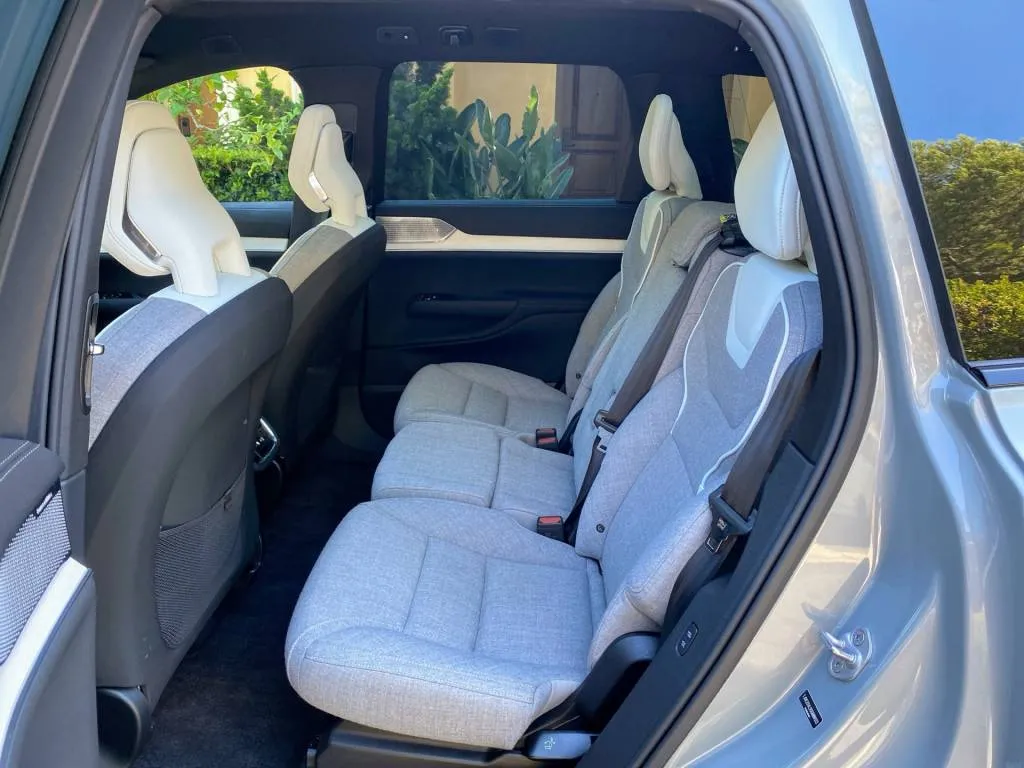
2025 Volvo EX90
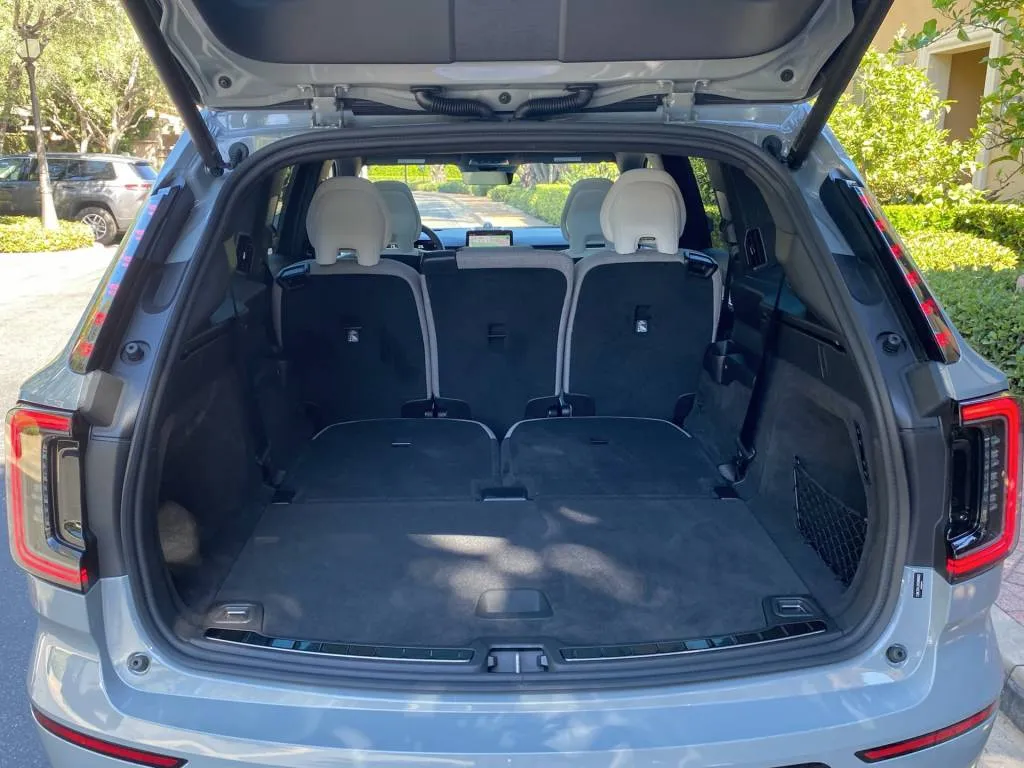
2025 Volvo EX90
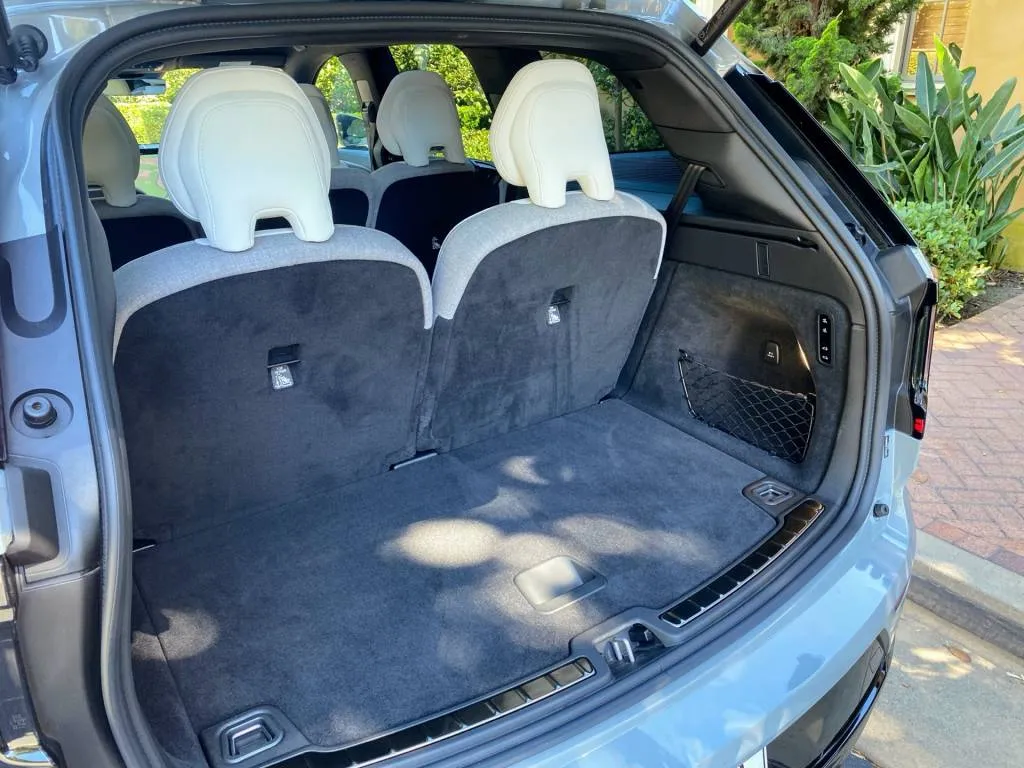
2025 Volvo EX90
Volvo EX90 has luxurious seats and space
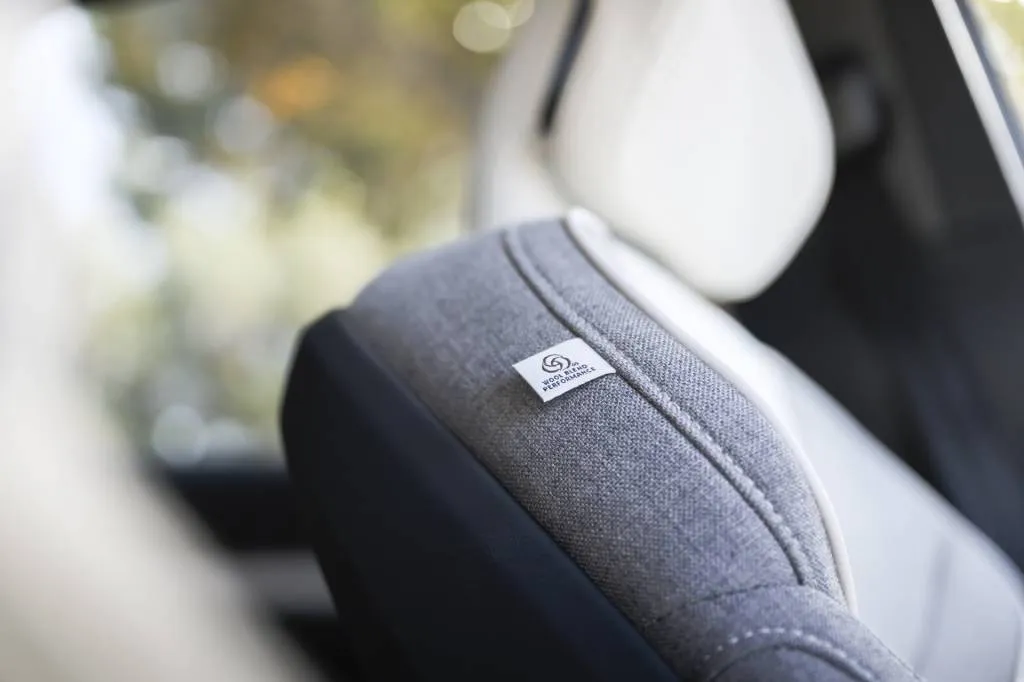
Between the two vehicles I was in, I got to sample Volvo’s two high-end upholstery choices for the EX90. While one of them had the Nordico synthetic upholstery, which mixes in plant products and looks a little easier to clean, my favorite of the two was the tailored wool blend, which mixes in recycled polyester and provides the comfortable yet breathable feel of an outdoorsy wool sweater.
It’s just an easy, comfortable space overall. A wide range of heights and sizes will find no issue fitting into the first two rows, and the second row includes a built-in booster seat for smaller kids. The third row is a pinch for taller people to get into and out of, but we found that 6-footers could fit behind two successive 6-footers in the first and second rows. Front-seat space is vast, and the passenger side has an extended footwell that impresses as a ledge for shoes (even though Volvo told me it’s there for safety).
U.S. cargo space measurements aren’t available yet, but it feels decidedly larger in this area than the XC90. The power-folding third row easily taps into 50.2 inches of cargo floor from the back of the second row and potentially more than 80 inches for long items if you fold down the second row. A front trunk sits under the long hood, and while it covers a wide area it’s shallow and too divided-up by hard-plastic partitions to be all that useful.
2025 Volvo EX90
2025 Volvo EX90
2025 Volvo EX90
2025 Volvo EX90
Volvo EX90: Lidar, Pilot Assist, V2X to make your world better
Volvo’s safety suite incorporates a lidar sensor for the first time in the EX90, and it gives its active-safety systems a longer, more accurate look at the road ahead. Volvo says that it may help cut severe accidents by 20%.
Pilot Assist is Volvo’s appropriately named driver-assistance system intended to help with freeway driving, and it employs all of the vehicle’s safety sensors while using capacitive sensors to monitor that the driver’s hands are on the wheel. So far, it takes a conservative approach. Engaging it requires a tip down on the shift lever to where the “B” setting would be on some vehicles. Drivers can only take their hands off the wheel for 14 seconds, and while one hand can be on the wheel while cruising along, both hands need to be on the wheel before it provides an assisted lane change. That sort of defeats the purpose, I found, and it’s so cautious that it’s not a feature you’ll be using in traffic.
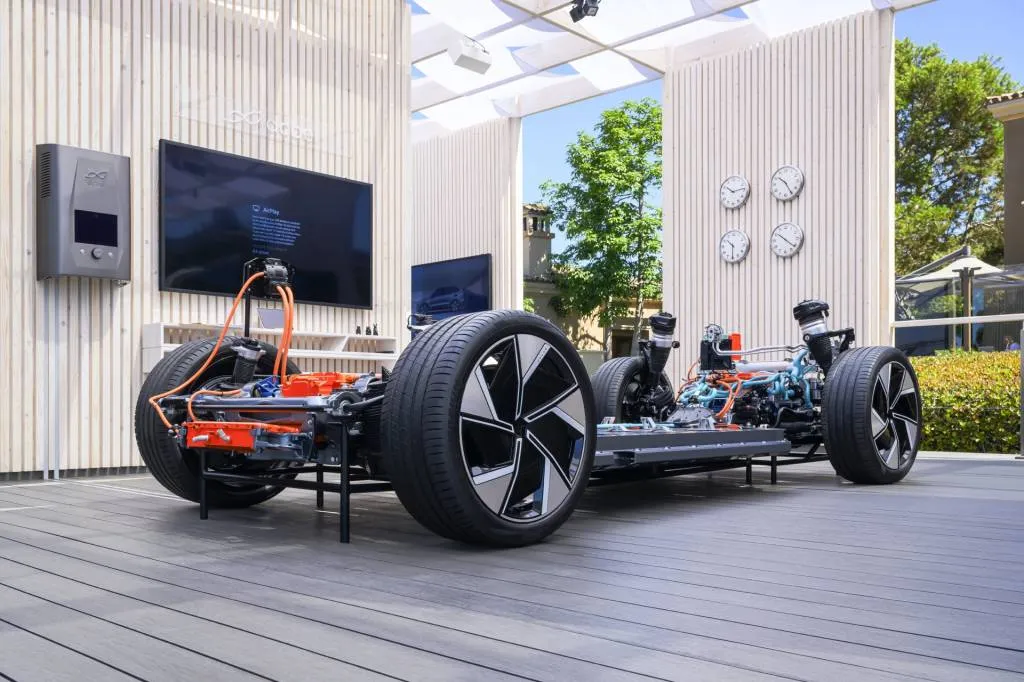
dcbel bidirectional charger for 2025 Volvo EX90
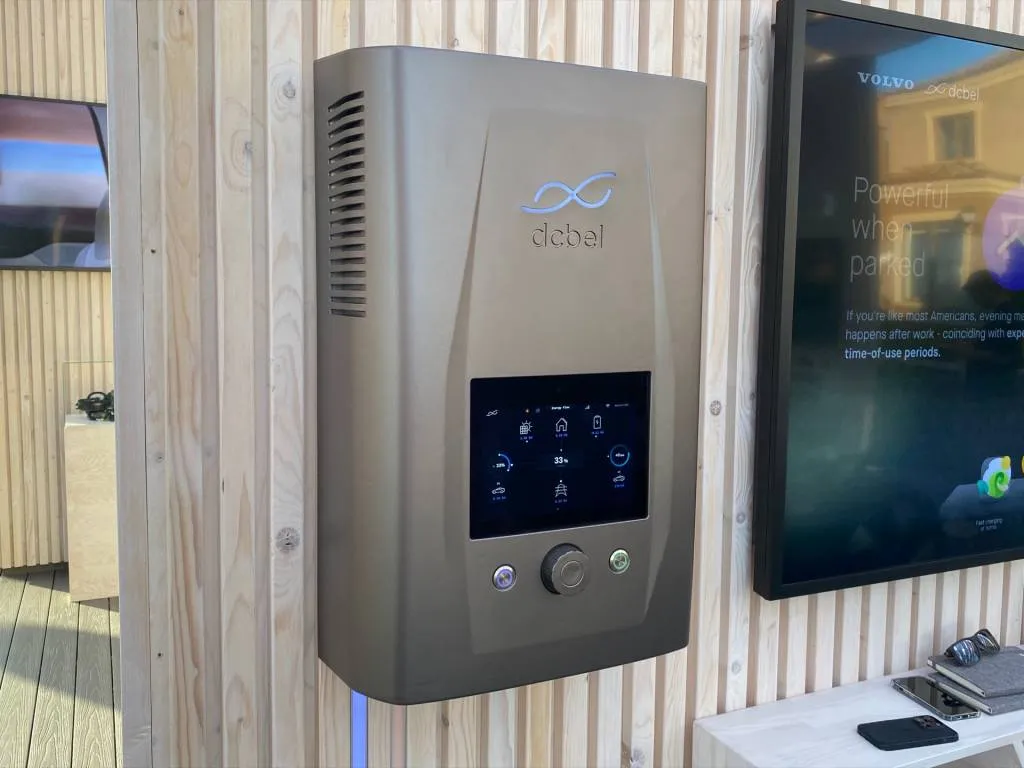
dcbel bidirectional charger for 2025 Volvo EX90
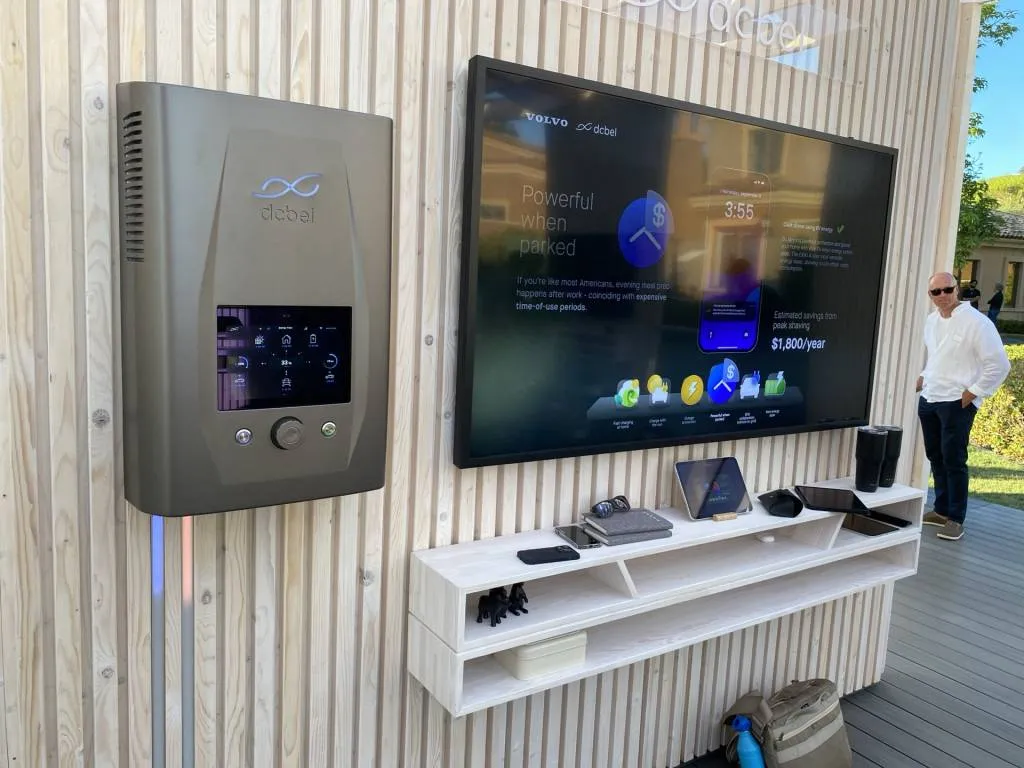
dcbel bidirectional charger for 2025 Volvo EX90
Bidirectional charging is coming in the form of a DC unit from Volvo partner dcbel that will operate at up to 25 kw depending on the situation and is capable of backing up the home, peak-shaving, or sending power back to the grid. More details are coming soon.
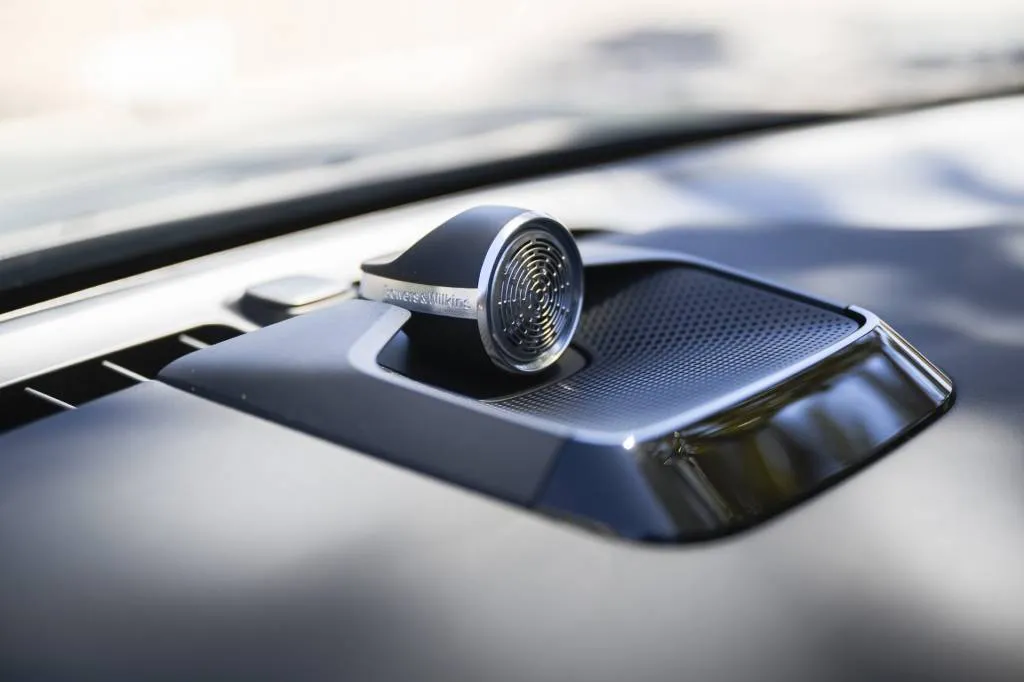
Now the hard part: The 2025 Volvo EX90, as I tested it in Ultra trim, with the optional Bowers & Wilkins audio system and 22-inch wheels, costs $94,640, including the $1,295 destination fee. The starting price for the EX90 is $81,290. That’s about $6,000 higher than the top-spec, all-wheel-drive Kia EV9 GT-Line, another three-row SUV that supports bidirectional charging. It appears that the EX90 will not qualify for the EV tax credit, at least initially.
Ultimately it feels like Volvo has kept its priorities straight. The EX90 is a completely new kind of vehicle on the inside and innovates in a long list of thoughtful ways. Those who get it won’t feel a need to shout that out.
Volvo paid for travel expenses so that we could bring you this test drive review.

VW warns of plant closures, job cuts in Germany to reduce spending
VW considers one large vehicle plant and one component factory in Germany to be obsolete, according to the automaker’s works council.

GM patents deployable awning just like Rivian
 Future General Motors vehicles could feature deployable awnings. That’s something Rivian has also tried to patent, although GM may have different uses in mind. A deployable awning was the subject of a GM patent application that was published by the United States Patent and Trademark Office (USPTO) on Aug. 22, but originally filed by GM in 2023. In…

2025 Dodge Hornet
 What kind of vehicle is the 2025 Dodge Hornet? What does it compare to? The Hornet is Dodge’s smaller crossover SUV, a sportier and decidedly costlier rival to the Hyundai Kona, Kia Seltos, and Mazda CX-30. Is the 2025 Dodge Hornet a good SUV? The Hornet is fun to drive and interesting to look at, though it can be quite expensive against…

Hyundai to make cars more comfortable with radiant heat, 48V glass
 Radiant heat could be key to using less energy to heat vehicle cabins Heated glass could help rapidly defrost windshields in the future Window tint could help lower vehicle cabin temps and increase efficiency At a technology demonstration event in South Korea, Hyundai and Kia recently showed off new ways to heat and cool vehicle cabins more…