
Author: EVAI

How often should you charge your EV’s LFP battery?
Automakers are increasingly turning to lithium iron phosphate (LFP) batteries for affordable EVs, and packs with that chemistry can benefit from a different charging regimen than that usually used for the currently dominant nickel manganese cobalt (NMC) chemistry.
As laid out in a recent Engineering Explained video, automakers are recommending different best practices for the their LFP-equipped EVs. For example, the owner’s manual for the Ford Mustang Mach-E states that it’s best to set the maximum charge rate to 100% and charge to that level at least once a month. Tesla has also recommended charging LFP-equipped cars to 100%, which runs counter to normal best practices for NMC-equipped cars.
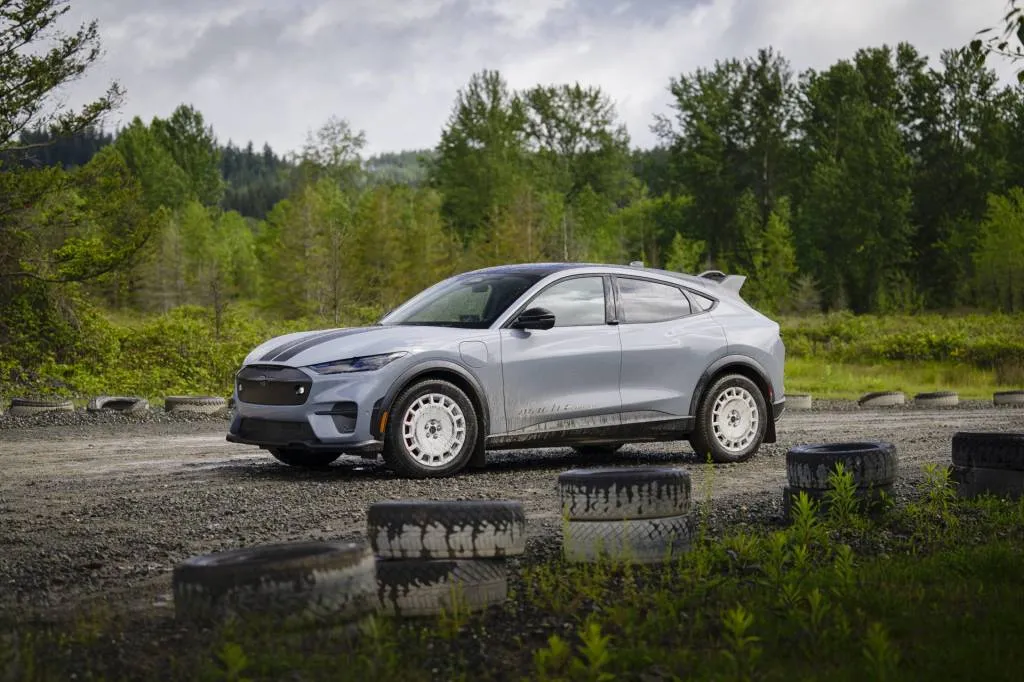
2024 Ford Mustang Mach-E Rally
That’s because charging LFP cells to 100% aids in calculations of remaining charge, which is normally done based on voltage. LFP cells have a flatter voltage curve, meaning they’re at roughly the same voltage for different states of charge. But charging to 100% causes a voltage spike that serves as a marker for determining state of charge.
However, a recent study published in the Journal of the Electrochemical Society noted that high states of charge lead to greater battery degradation. State of charge was found to be the “most critical factor” influencing capacity loss, with higher states of charge accelerating the process.
[embedded content]
That leads Engineering Explained to recommend plugging in an EV with an LFP battery pack only when needed. The same study noted less degradation in LFP batteries charged from 0%-100% than from 75%-100%. So smaller charge cycles with a high starting capacity are best avoided with LFP batteries, something that isn’t necessarily the case with NMC cells. But it’s also important not to be overzealous and let the battery drain to 0%, which can permanently damage the cells.
Such advice will be more relevant as more automakers begin using LFP cells in U.S.-market EVs. For example, in addition to Ford and Tesla, Rivian has discussed plans to use LFP cells in the near future. Those cells did not arrive with recently-launched cheaper versions of the R1S and R1T as anticipated, though.

Study: Initial high-power charging at factory could extend EV battery life
An EV battery’s first charge is more than just symbolic. It could help determine the battery’s overall longevity, according to a new study funded by the Toyota Research Institute and published in the scientific journal Joule.
First spotted by InsideEVs, the study by Stanford University’s SLAC-Stanford Battery Center found that giving lithium-ion batteries their first charge at unusually high currents—enough to reduce the charge time from 10 hours to 20 minutes—increased their average longevity by 50% and in some cases by as much as 70%, Stanford said in a press release.
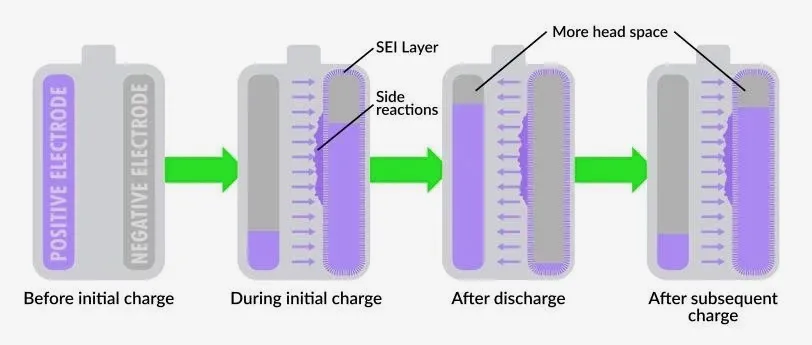
Lithium-ion battery SEI layer formation (via SLAC-Stanford Battery Center)
When it is freshly manufactured, but before it is charged to store energy or discharged so that the stored energy can power a vehicle, a battery cell’s positive electrode contains a given amount of lithium that’s gradually lost as the battery is used, reducing its lifespan. But researchers found that losing a greater amount of lithium during the initial charge could actually be beneficial in the long term.
That’s because the first bit of lithium forms part of a “squishy layer” called the solid electrolyte interphase (SEI) that forms on the surface of the negative electrode and help protect it from reactions that could speed up battery degradation.
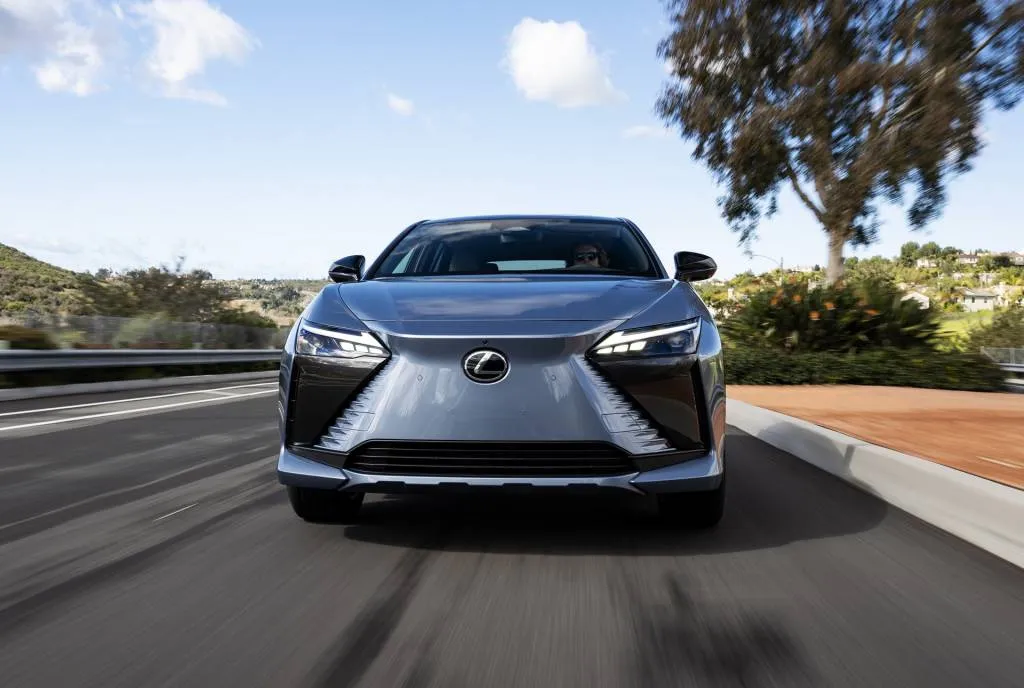
2024 Lexus RZ
Manufacturers generally charge batteries with low current initially on the belief that this forms a more robust SEI layer, but researchers found that higher currents are actually better—while also getting that first charge done quicker. Higher current was one of the two main factors in producing the best results, according to researchers, along with battery temperature.
Many EVs already on the road, particularly Teslas, appear to resist battery degradation fairly well. But an additional measure to boost battery longevity might provide peace of mind to consumers and could become especially relevant if California moves forward with proposed battery degradation limits.

Audi freshens A3 sedan for 2025
The sedan gains a tweaked exterior design, new interior features and additional power.

Hydrogen-powered BMW to reach showrooms in 2028
 BMW will add a hydrogen-powered vehicle to its lineup in 2028, the automaker announced on Thursday. It will be a hydrogen-electric vehicle using a next-generation powertrain developed jointly with Toyota, which plans to use the powertrain in its own vehicles. A hydrogen-electric vehicle is similar to a battery-electric vehicle, but instead of the…

Review: 2024 Hyundai Santa Fe Hybrid calms the 3-row crossover
 The Santa Fe Hybrid’s the smart pick in Hyundai’s three-row SUV family. A turbo-4 plus a motor and batteries nets 231 hp for good acceleration EPA combined gas mileage hits 36 mpg with front-wheel drive The 2024 Hyundai Santa Fe is a striking redesign of the Korean maker’s longstanding SUV model. With three rows now standard, the midsize…

Volvo EX60 electric SUV due in 2026, on new scalable architecture
- Electric alternative to Volvo XC60 expected to launch in 2026
- New crossover to be called EX60, and use next-generation SPA3 platform
- SPA3 vehicles to incorporate mega casting to save weight and improve production efficiencies
Volvo has only introduced the SPA2 platform in the 2025 EX90 electric midsize SUV which starts U.S. deliveries later this year, but the automaker is already close to introducing the next evolution of the platform. Volvo on Thursday announced the new platform as the SPA3.
Citing comments made by Volvo chief commercial officer and deputy CEO Björn Annwall at Wednesday’s reveal of the updated 2025.5 XC90 SUV, Autocar has reported that the SPA3 platform will debut in 2026 in the EX60, essentially an electric alternative to the top-selling XC60 compact crossover.
“[The XC60 is] a fantastic car, and one a lot of people are waiting to get as a full electric option,” Annwall said. “So the day we have that you’re going to see a big shift in electrification.”

Björn Annwall
The reason for the quick gestation of the SPA3 platform is that it will share its software systems and electrical architecture with the SPA2 platform, what Volvo refers to as the Volvo Cars Superset technology stack.
Where the SPA3 platform will differ is scalability. The SPA3 platform will be able to support EVs ranging from subcompacts to full-size vehicles, according to Volvo.
Autocar also reported that the platform will introduce mega casting, a production process Volvo in 2022 said it plans to implement at its plant in Torslanda, Sweden. The plant is where Volvo builds the XC60.
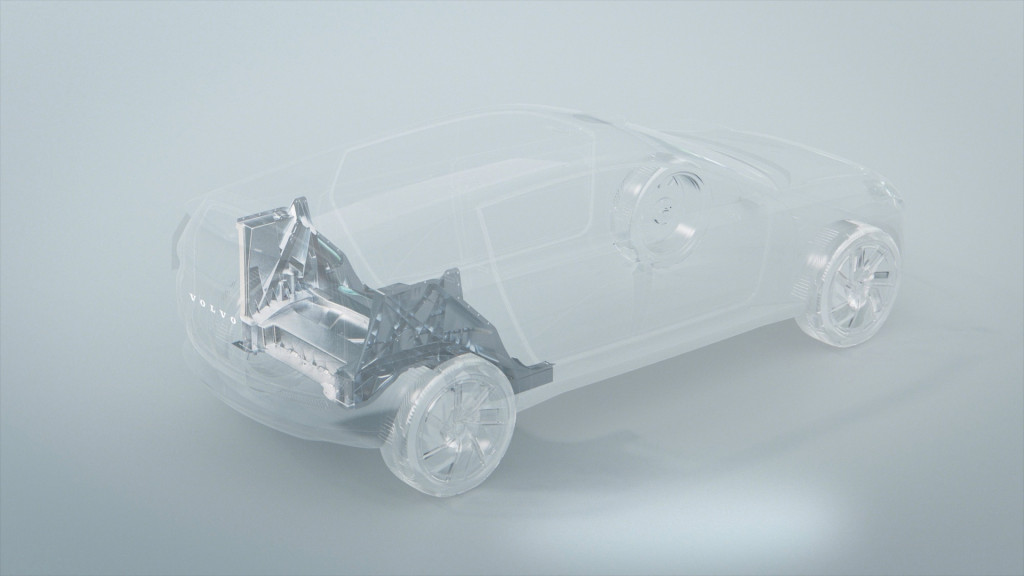
Volvo mega casting
Mega casting refers to the use of large single castings for certain body components like parts of the vehicle floor, replacing the traditional method where multiple smaller components are fitted together to form the component. According to Volvo, mega casting reduces weight (helping to improve range and efficiency) and also allows designers to make better use of interior space. It should also improve production efficiencies.
The EX60 is one of the five new EVs Volvo said it is working on during Wednesday’s 2025.5 XC90 debut. Another is an ES90 sedan that will serve as an electric alternative to the S90. The ES90 is expected to use the SPA2 platform.
Volvo on Wednesday also said it has abandoned its plan announced in 2021 to become a fully electric and PHEV brand by 2030. The automaker now aims to have 90-100% of its sales made up of a combination of EVs and plug-in hybrids by 2030, with the remaining 10% or less to be gas-powered cars. That means the XC60 will likely remain on sale once the EX60 arrives, similar to how Volvo will sell the XC90 alongside the EX90.

Ford recalls thousands of vehicles with potentially defective turbo engines
 Ford has issued a recall on multiple vehicles from the Ford and Lincoln brands due to engines potentially stalling. Vehicles listed in the recall include the Ford Bronco, F-150, Edge, and Explorer from the 2021-2022 model years, and the Lincoln Nautilus and Aviator from the same model years. However, it is only those examples with Ford’s…

LA is building out 10,000 streetlight EV chargers, under brighter LEDs
Los Angeles is expanding an infrastructure project to put EV chargers in streetlight poles.
First spotted by Charged EVs, the Los Angeles Bureau of Street Lighting has contracted with two companies—AmpUp for software and EVSE for retractable charging cables—to add Level 2 chargers to 150 streetlight poles in the City of Angels.
The 25-foot cables are installed in existing poles 10 feet off the ground, which can lower installation costs by 70% while reducing the potential for vandalism, damage, or injuries from tripping over cables, according to AmpUP and EVSE.
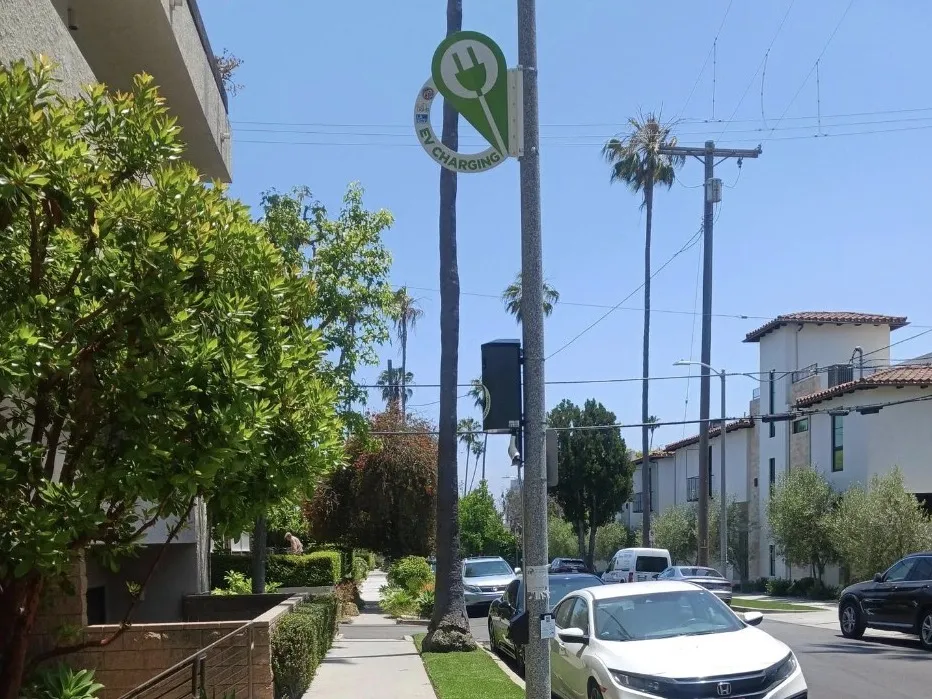
Streetlight EV charger in Los Angeles
The Los Angeles Bureau of Street Lighting, which oversees 220,000 light poles in the city, is in the process of meeting a mayoral target to install 10,000 EV chargers, alongside a project to replace existing streetlight bulbs with brighter, more energy-efficient LEDs. L.A. launched the initiative to redesign street-side lighting in 2020, and EV charging has been a part of it from the start.
Light pole EV charging can be especially handy in urban areas because it makes use of existing infrastructure without taking up precious sidewalk space, while giving apartment dwellers for whom home charging may not be an option a place to plug in.
In addition to L.A., Seattle in 2022 announced plans to install curbside EV chargers by request, while Kansas City and New York City began testing the concept in 2021, with the latter reporting high utilization rates. Voltpost earlier this year showed off sleek streetlight EV chargers that the company said it was preparing to install in major U.S. metro areas like New York, Chicago, and Detroit.

Volvo the latest to backtrack on EV pledge
 Volvo no longer expects to be a 100% EV brand by 2030 Volvo currently aims to have 90-100% of its sales made up of both EVs and plug-in hybrids by 2030 Volvo is still committed to EVs and has five currently in the pipeline Volvo has joined a growing list of automakers curtailing their EV ambitions in the wake of lower than expected growth in…