
Author: EVAI

What’s New for 2025: Mitsubishi
 Mitsubishi leans into its small but robust lineup of crossover SUVs for the 2025 model year. Conspicuously absent from its 2025 lineup released Tuesday is the Mitsubishi Mirage budget car. One of the last few new cars with a starting price under $20,000 won’t be offered for 2025, with Mitsubishi allowing the remaining inventory to run out without…

Lucid CEO doesn’t want automaker thinking about an electric truck
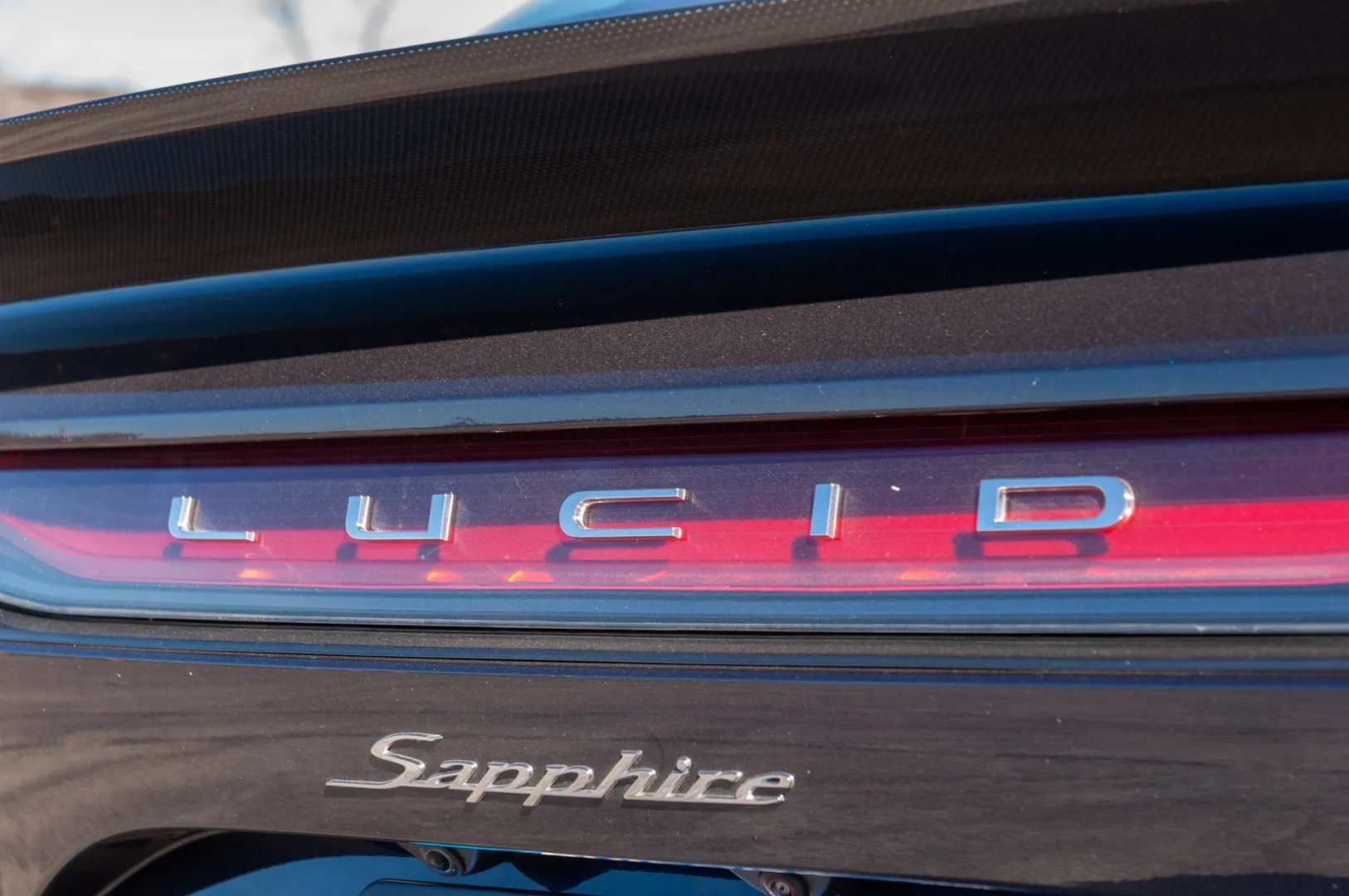
- Lucid’s paint shop could fit an electric truck, but the CEO said it’s not happening
- Lucid’s CEO said there’s no business case for an electric truck with today’s technology
- The issue with electric trucks is efficiency and usability, according to Lucid’s CEO
Buyers holding out hope Lucid will create an efficiency-focused pickup truck are about to be left out in the cold.
On Tuesday during the Lucid’s manufacturing and technology day, founder and CEO Peter Rawlinson said, “I don’t want Lucid to start thinking about a pickup truck.”
The issues surrounding an electric truck for Rawlinson all stem around efficiency, battery size, and a business case.
Rawlinson’s tune on an electric truck has changed. In 2020 the CEO told Green Car Reports “if we want to make a longer vehicle like a pickup or something like that, which we may want to make in the future, the paint shop is future-proof for pickups.” At the time Rawlinson said Lucid wasn’t planning a pickup, at least not quite yet, but it was an idea the team was considering.
That idea’s time has passed, as indicated by Rawlinson’s comments on Tuesday.
Rawlinson said, “I really think it’s very tough to make an electric pickup work today.”
The main issues with making an electric truck work is having it be “usable and cost effective,” Rawlinson said.
Rawlinson noted that towing isn’t an efficient activity, acknowledged truck owners tow and that deals a blow to driving range. That translates to huge batteries, which drive up costs and prices.
To achieve a 300-mile pickup Rawlinson said it would take a 120-kwh battery, but that’s not enough to tow with. “I think the minimum threshold for a usable pickup is probably 150 kilowatt-hours,” the CEO said. The Lucid Air Sedan in base Pure trim has a 420-mile EPA-rated range using a 84-kwh battery pack.
Rawlinson said, “Now, how on Earth are you ever going to do that around 50, 55, $60,000 and make a business case?”
Rawlinson is focused on getting the most mileage out of the smallest battery pack. The CEO said in August it will take the competition years to catch up. Lucid sells the most efficient vehicle on sale today in the U.S. with the Air, which achieved 5.0 miles per kwh and 146 MPGe in EPA testing.
During the manufacturing and technology event Lucid also teased its upcoming midsize electric SUV. The automaker said its Tesla Model Y competitor will arrive late in 2026 and cost less than $50,000. Lucid said the unnamed vehicle will have the same range as competitors though it will have a smaller battery.
Lucid’s currently focused on ramping production of the electric Gravity SUV. Pre-production units are rolling off the assembly line and customer deliveries are supposed to begin later this year. The Gravity will gain a NACS charge port in 2025, according to Lucid.

Lucid Gravity getting Tesla NACS charge port in 2025
- Lucid said the Gravity SUV will get a NACS charge port in 2025
- Initial deliveries of the electric Gravity SUV will have a CCS charge port
- Lucid hasn’t said when the Air sedan will get a NACS charge port
Lucid just put a timeline to its transition to Tesla’s North American Charging System (NACS) charge port.
On Tuesday, during the automaker’s manufacturing and technology day, Lucid posted on Twitter (now known as X) that the upcoming Gravity electric SUV will come with Tesla’s NACS charge port starting in 2025.
The announcement came with two images showing that the NACS port will be mounted on the driver’s side rear fender. The location of the charge port is different than the pre-production Gravity units rolling off the assembly line today, which feature a CCS charge port on the driver’s side front fender.
The new charge port location is the same area on the vehicle where Tesla places its charge ports, which allows vehicles to neatly back into parking spots at Tesla Superchargers.
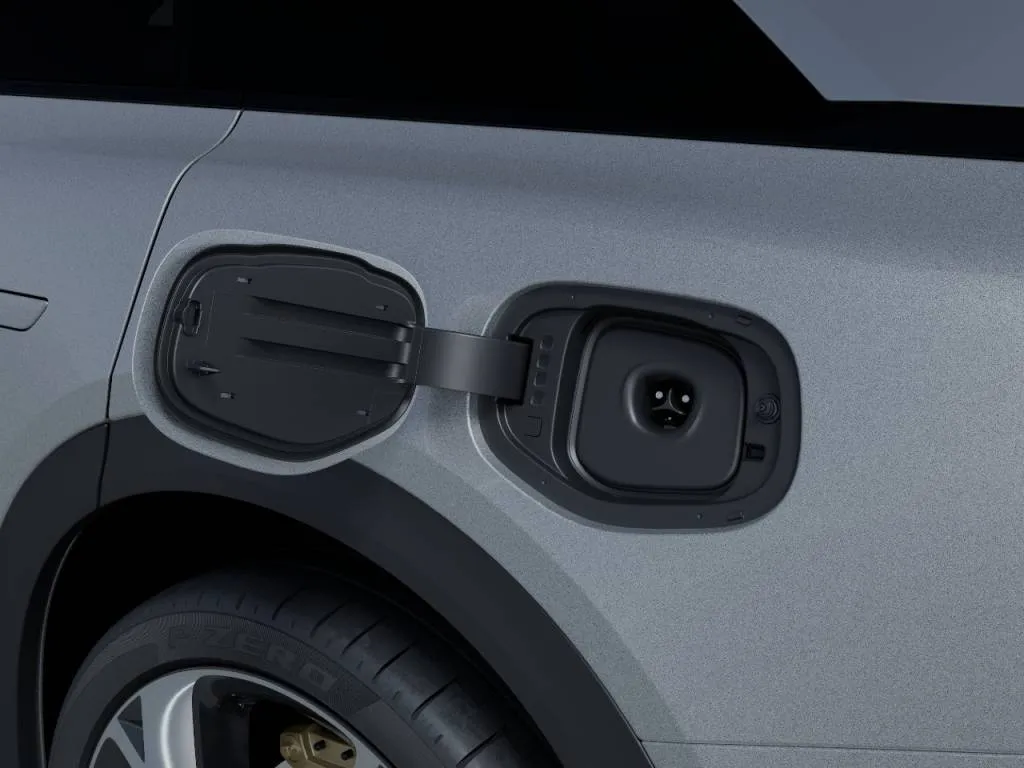
Lucid Gravity with Tesla NACS charge port
Twitter users were quick to note the new charge port door and housing is large compared to what’s necessary for the smaller NACS port, but the reasoning could be to easily allow space for a CCS2 port, which is the fast-charging standard in Europe
Lucid has said deliveries of the Gravity SUV will begin later this year, which means the first cars off the line going to customers will still have a CCS charge port, likely on the front fender as originally shown and seen on prototypes.
Lucid hasn’t said when the Air sedan will make the switch to a NACS charge port, or whether the charge port location will move on the sedan. The automaker also didn’t show full images of the Gravity with the NACS port. Missing is the front half of the car, which is where today’s CCS charge port is located.
Lucid committed to adopt Tesla’s NACS charge port on Nov. 6, 2023. The announcement on Tuesday is the first time the automaker’s given a timeline to the move.
During the event Lucid tweeted an image of its upcoming midsize electric SUV that will be about the size of the Tesla Model Y. The automaker said the SUV will arrive late in 2026 and cost less than $50,000.

Jeep boss: Wagoneer S will be delayed if quality isn’t “perfect”
The 2024 Jeep Wagoneer S is the brand’s first electric vehicle for the U.S., but Jeep won’t rush it into showrooms if it is not ready, the brand’s boss said in an interview with Automotive News.
Jeep has said the Wagoneer S, which was revealed in May, will arrive in U.S. dealerships this fall. That will only happen if the electric SUV meets the standards of CEO Antonio Filosa.
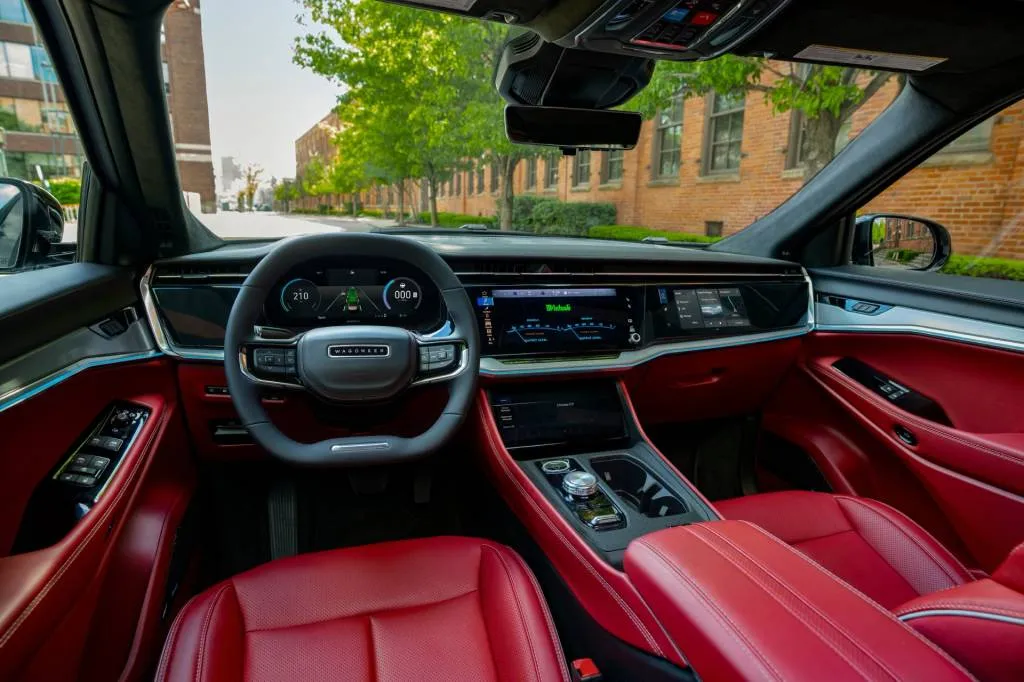
2024 Jeep Wagoneer S
“I want perfect quality, and I know that we are close, but close is not good enough,” Filosa told Automotive News. “Timing is important, but more important than that is to be perfect for the consumers that will give us the privilege to buy this car.”
Filosa said he had received word from the factory in Toluca, Mexico, that builds the Wagoneer S that “quality is increasing,” and did not confirm a delay. But he emphasized that the mandate for the Wagoneer S is “no launch if the quality isn’t perfect.”
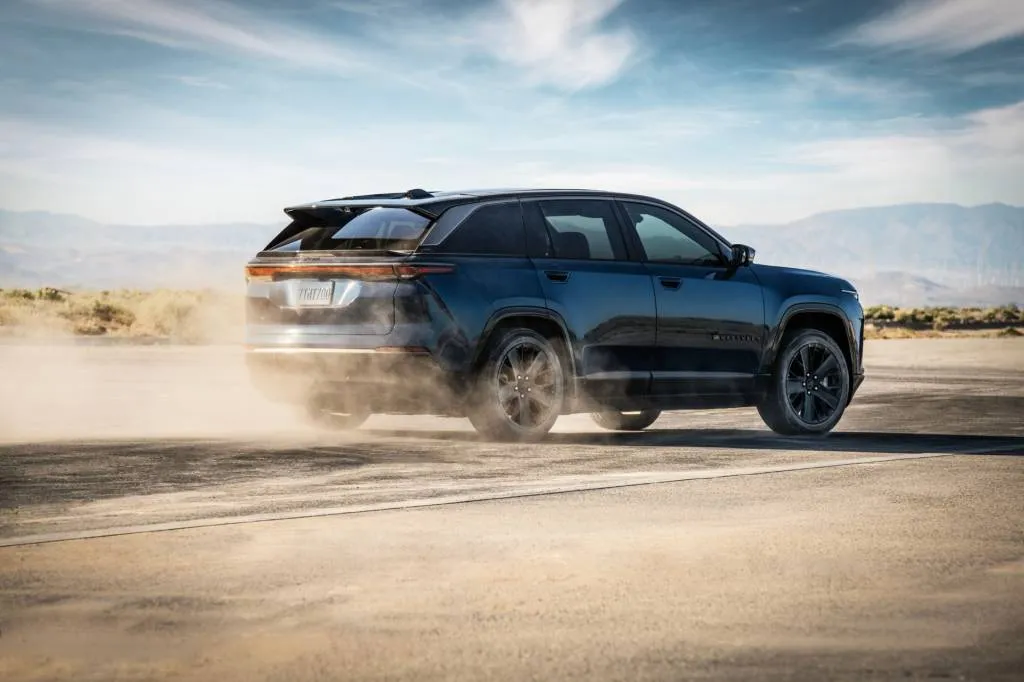
2024 Jeep Wagoneer S
Built on Stellantis’ STLA Large platform, the Wagoneer S is about the same size as the Jeep Grand Cherokee. It will launch with a dual-motor powertrain producing 600 hp and 617 lb-ft of torque, with a 0-60 mph time of 3.4 seconds. Jeep says the EPA range will top 300 miles, but that’s not official yet. So far Jeep as only detailed the Wagoneer S Launch Edition, which costs $71,995 with destination. Other versions will arrive for the 2025 model year.
The Wagoneer S will be joined by the Jeep Recon, which the automaker describes as a fully electric “brother” to the Wrangler, next year, with a new “electrified” midsize model that could replace the Cherokee arriving in 2026. Jeep has said that by 2025 it will offer “multi-energy options” across its whole lineup.

Tesla supplier Panasonic ready to ramp 4860 EV battery production
Panasonic has finalized preparations to begin manufacturing 4680-format lithium-ion battery cells at a Japanese factory, Reuters reported Monday.
The company is reportedly sending sample cells produced at the factory in Japan’s western prefecture of Wakayama to automaker customers for approval, with production to start once that approval is received.

Comparing 4680 vs. 2170 – Panasonic
Panasonic supplies batteries to Tesla, which has been one of the principal advocate for 4680 cells, so named because they measure 46 millimeters in diameter and 80 inches tall, compared to 21 millimeters and 70 millimeters, respectively, for Panasonic’s current 2170 cylindrical cells.
The bigger cells have been championed by Tesla CEO Elon Musk since 2020 as the key to unlocking cheaper electric cars, as well as a critical component to ore power-intensive applications like the Tesla Semi and Cybertruck. Tesla has begun manufacturing its own 4680 cells, but has had difficulty ramping up volume. Musk in July reportedly told the Tesla battery team that the issues needed to be fixed or the large-format cells would be abandoned.
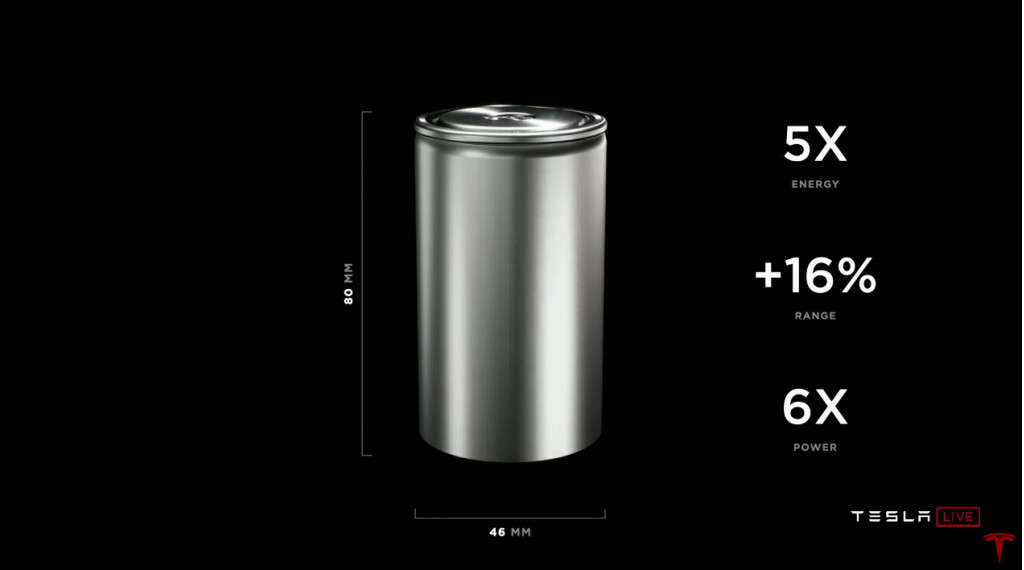
Future Tesla cell will make energy, power gains
Panasonic anticipated difficulties with the new cell format, cautioning in 2021 that mass producing Tesla 4680 cells would require “new techniques” and expressing skepticism that potential issues with overheating could be overcome. Nonetheless, the start of production is only somewhat delayed from the target Panasonic announced in 2022. At that time, the company said mass production would start during the fiscal year ending in March 2024.
Other battery suppliers have shown interest in large-format cells, but none has been able to scale them up faster than Panasonic and Tesla. CATL has gone a completely different route with its cell-to-pack tech, which eliminates the modules used in most current battery-pack designs. In 2022, CATL said the then-current version of cell-to-pack could deliver 13% more power than Tesla’s 4680 cells, given the same volume. But cell-to-pack has also been slow to ramp up.

Ally Financial warns of ‘intensifying’ credit challenges, shares slump
Ally Financial warned of challenges that have intensified over the quarter as borrowers struggled with high inflation.

Midsize Lucid SUV teased with sub-$50,000 price
 Lucid’s already thinking beyond Gravity. On Tuesday during the automaker’s technology and manufacturing day, a teaser image of Lucid’s midsize crossover SUV was posted on Twitter (now called X). Lucid said the midsize electric SUV will arrive in late 2026 and cost less than $50,000. The midsize EV will have “leading technology and efficiency,”…

Lucid midsize SUV to cost less than $50,000
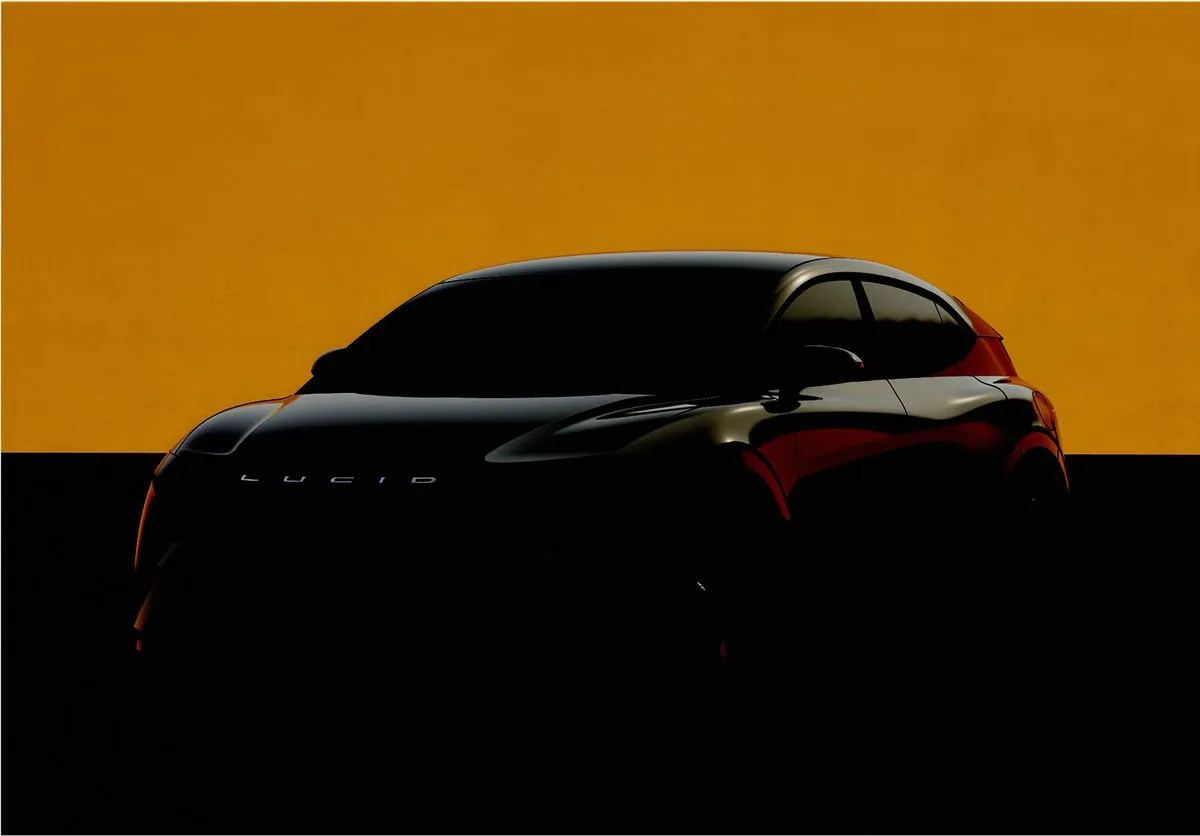
Lucid has given the first sneak peek at its upcoming midsize SUV.
On Tuesday at the automaker’s technology and manufacturing day, Lucid revealed on Twitter (now known as X) a teaser image of a midsize SUV. Lucid said production is set for late 2026 and added that the crossover will cost less than $50,000.
Lucid said the crossover SUV will feature “leading technology and efficiency.” The company said the unnamed vehicle will have the same range as competitors while using a smaller battery.
The electric midsize SUV might be named Earth. Lucid filed a trademark for the Earth name with the United States Patent and Trademark Office in January.
Lucid’s CEO Peter Rawlinson said in August it will take the competition years to catch up to the automaker in terms of efficiency.
The teaser image shows a crossover SUV that has a curved roofline akin to the larger Gravity SUV, but in a package sized similar to the Tesla Model Y. The front end shares its core design traits with the Air and Gravity, such as the horizontal headlights and full-width chrome trim with “LUCID” lettering. Unlike the Gravity, the midsize SUV’s hood appears to have scallops on both sides similar to the Air sedan. The fenders are curved, the side mirrors are fender-mounted, and no door handles are visible.
The midsize crossover is reportedly one of three affordable EVs Lucid is developing.
Lucid design boss Derek Jenkins has said the midsize vehicles will focus on efficiency and aerodynamics. The vehicles will be compact and lighter than the Air. A crossover SUV, a sedan, and possibly an affordable sporty hatchback are all possible.
Pre-production units of the Gravity SUV are now rolling off the assembly line with deliveries set to begin later in the year.
Lucid hasn’t said when the formal unveiling of the midsize vehicles will take place.

2025 Dodge Durango SRT Hellcat gets Hammerhead special
 Dodge is celebrating 20 years of the Hemi V-8’s use in the Durango with a trio of special editions The third has been revealed as the Durango SRT Hellcat Hammerhead Dodge also plans a series of “Last Call” special editions to mark the end of the V-8’s run in the Durango Dodge in August revealed a pair of special-edition Durangos…