
Author: EVAI

Tifani Sadek on keeping human drivers aboard ‘driverless’ cars (Episode 268)
The director of the University of Michigan’s Law and Mobility Program argues against removing humans from self-driving vehicles and suggests the autonomous-vehicle industry can learn a lot from aviation on building trust.

Tesla Model 3 Performance Holds Its Own Racing BMW M3 CS, Mercedes C63 PHEV
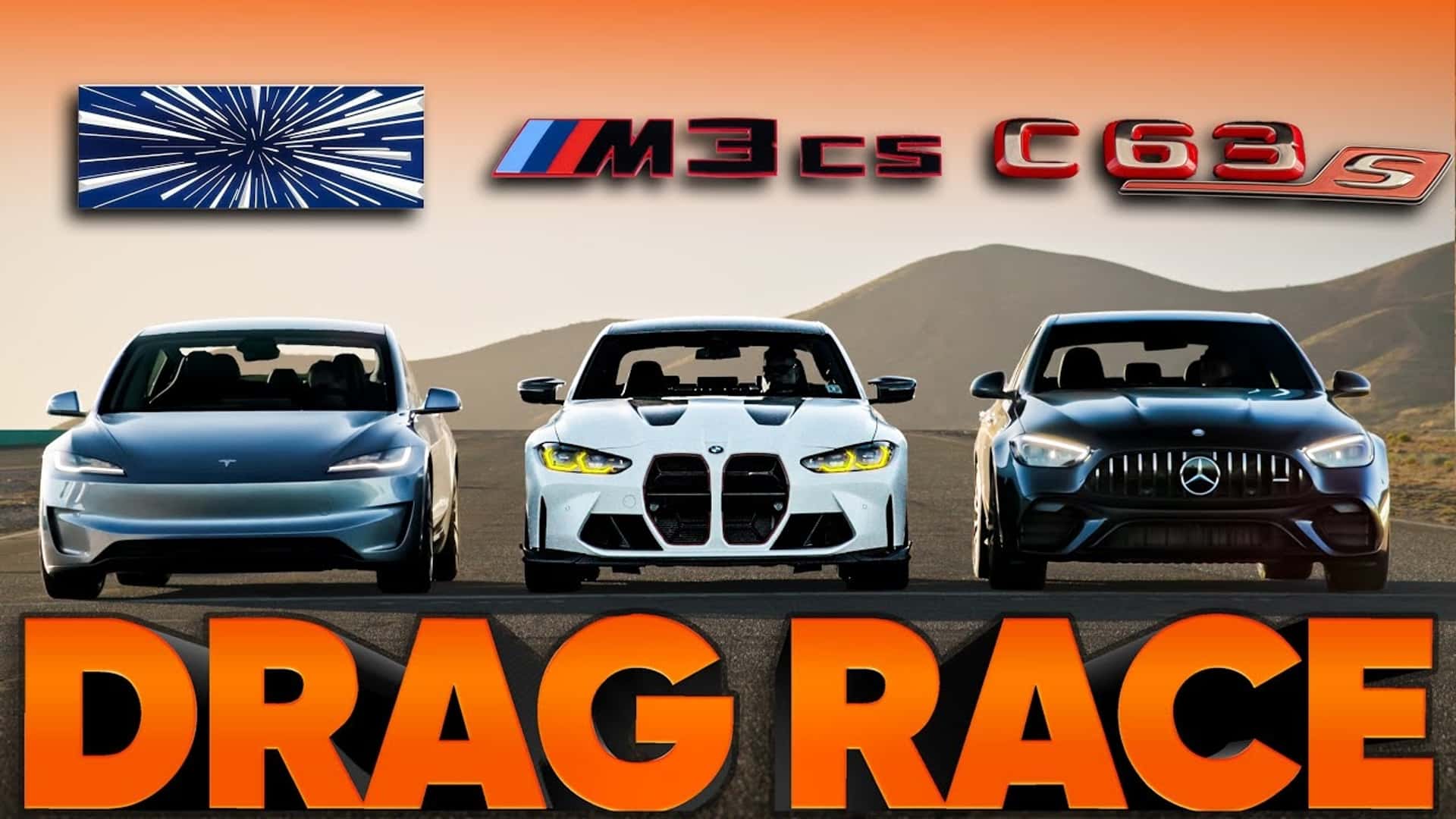
- Tesla Model 3 Performance is quick enough to match and even surpass two of the world’s most powerful performance sedans.
- It comes second to the M3 CS with launch control and it beats the BMW when it’s not used.
Performance electric vehicles are known to be quick in a straight line but heavier and more expensive than an equivalent combustion model. The Tesla Model 3 Performance is none of those things, and it can hold its own in a drag race against the world’s fastest compact executive sedans, the BMW M3 and the Mercedes-AMG C63.
Hagerty’s Jason Cammisa put these three vehicles head to head to see which was the quickest in a quarter-mile dash, and the results were eye-opening. These are three different cars with electric, plug-in hybrid and pure combustion powertrains, yet they are about as close as direct rivals get.
The $85,050 Mercedes-AMG C63 S E Performance has both a combustion engine and a battery pack and electric motor combo, which is why it’s the only one of the vehicles that exceeds two tons. Its official weight is just over 4,600 pounds, but it’s also the most powerful car with the most torque of the trio.
Mercedes’ decision to remove the much-loved twin-turbo V8 from the C63 is unanimously hated by enthusiasts, even if the new plug-in hybrid has a peak output of 671 horsepower and 752 pound-feet of torque. It can easily accelerate to 60 mph quicker than the 3.3-second claimed time, but it’s no match for the other two cars.
Cammisa chose the more extreme, powerful and lighter M3 CS for this drag race, which is also the most expensive of the three cars, with a starting price of $118,700 (considerably more than the base M3, which costs $76,000). It weighs 3,915 lbs and has 543 hp from its twin-turbocharged straight-six, which thanks to all-wheel drive allows it to dip below the claimed 3.2 seconds to sixty.
With 510 hp, the Model 3 Performance was the least powerful of the trio and in the middle in terms of weight with its 4,054 lbs. It accelerates to 60 mph in 2.9 seconds, and unlike the other two, there’s no need to enable launch control to achieve it.
During the first drag race, the two combustion vehicles used launch control to get off the line as quickly as they could. This resulted in the M3 CS sprinting ahead and staying there for the entirety of the race, completing the quarter-mile in 10.9 seconds at 126 mph. The Tesla was about a car length behind and achieved a time of 11 seconds flat at 122 mph. The Mercedes was two-tenths behind with a trap speed of 120 mph, although it seemed slower than that in comparison with its two rivals.
For the second drag race of the video, they don’t use launch control and simply floor the gas off the line without building boost. The Tesla is unaffected by this and it shoots off ahead of the other two cars, followed by the Mercedes and the BMW. The M3 takes the longest to build boost, but it does manage to catch the C63 before the end of the run and finishes second.
Share this Story
GM issues stop sale, recall on 2024 GMC Canyon pickups to fix headlamp issue
The recall affects about 13,200 Canyons in the U.S., about 40 percent of which are in dealership inventory or in transit, a GM spokesperson said.

Pirelli and Bosch developing software-based smart tires
 Pirelli and Bosch plan to jointly develop tires with embedded sensors that can transmit data directly to a vehicle’s onboard computers. These software-enhanced tires will deliver “greater safety, comfort, and sustainability, as well as improved driving dynamics,” the two companies said. That will be made possible by harnessing data from tires to…

Software-based smart tires under development at Pirelli and Bosch
 As the only part of a car that actually touches the road, tires can have a major impact on both performance and efficiency. Tire manufacturer Pirelli and automotive supplier Bosch both believe that making tires an extension of vehicle sensing systems can help enhance both. The joint development agreement was announced Tuesday for tires with…

2025 Land Rover Range Rover Sport
 What kind of vehicle is the 2025 Land Rover Range Rover Sport? What does it compare to? The 2025 Range Rover Sport is a high-end midsize SUV that squares off against the BMW X5, Mercedes-Benz GLE Class, and Audi Q7. Is the 2025 Land Rover Range Rover Sport a good SUV? This is no bargain basement luxury SUV, but it feels worth the money thanks to…

Italy says Europe’s 2035 gas-engine ban is “absurd”
Italian officials want the European Union to review a plan to end sales of new internal-combustion cars by 2035 earlier than scheduled.
“The ban must be changed,” Italian energy minister Gilberto Pichetto Fratin told Automotive News Europe last week on the sidelines of the TEHA business forum in Cernobbio, on the shores of Italy’s Lake Como, calling it “absurd” and dictated by an “ideological vision” and saying changes were required to address different market realities created by a slowdown of the European auto industry.
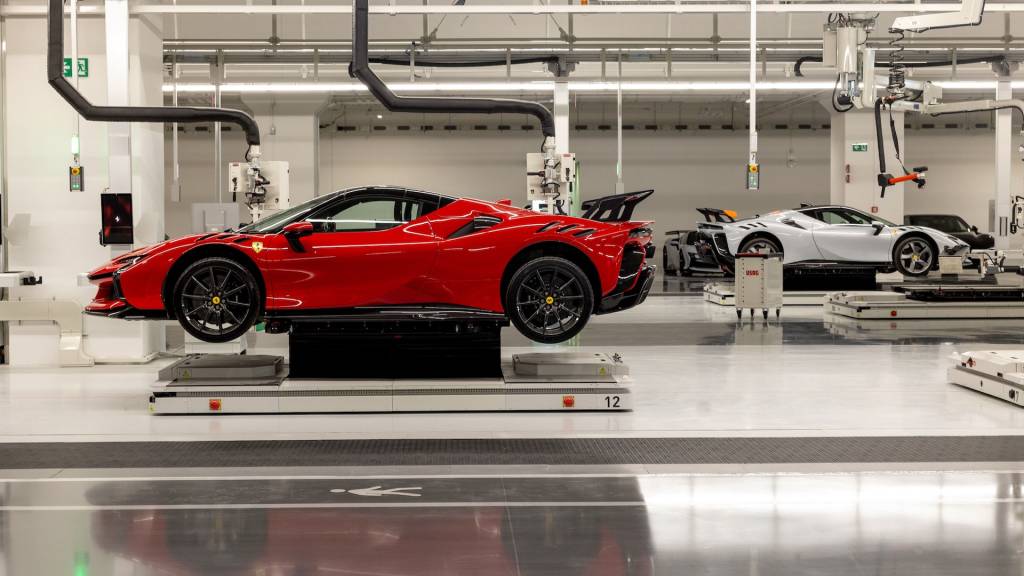
Ferrari e-building
Adolfo Urso, Italy’s industry minister, said a planned intermediate assessment of progress toward meeting the stricter emissions rules that underpin the internal-combustion ban should be moved forward from 2026 to next year, declaring that the EU needs a “pragmatic vision” for the future of the auto industry.
The current right-wing Italian government of Giorgia Meloni wants EU member states to have more freedom in the technologies used to meet emissions-reduction goals, as well as a more gradual shift away from combustion engines, Automotive News Europe notes. Some markets in Northern Europe and Scandinavia don’t need more time for the transition, though, as they’re already at very high rates of plug-in vehicles.
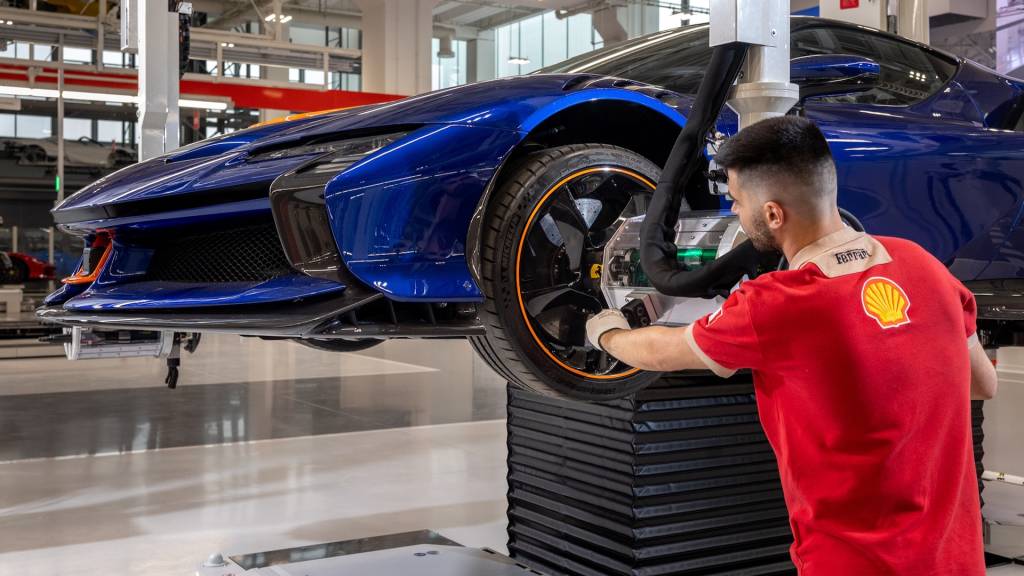
Ferrari e-building
The 2035 end date for internal combustion was first proposed in 2021, with steep cuts in emissions on the way toward that goal. But that policy was softened in 2023 after Germany successfully lobbied for a loophole for vehicles burning e-fuels. These synthetic fuels are billed as having lower overall carbon emissions than gasoline or diesel, and are viewed by some automakers—including Italy’s Ferrari—as a savior for internal-combustion cars.
The U.S. has no national plan for phasing out combustion engines. Current emissions rules could lead to 67% EV sales by 2032, regulators estimate, but they could also be overturned if the Republican Party seizes power in the upcoming election. California has enacted its own strict 2035 emissions rules that would end sales of most combustion-engine vehicles, with an exception for 50-mile plug-in hybrids.

Volvo bails on vehicle subscriptions in favor of leasing
 Volvo ended its Care by Volvo subscription program in August, Automotive News (subscription required) has learned. The program was introduced in the U.S. in 2017 and covered not only the vehicle but also maintenance and insurance in the one monthly price. Volvo now plans to return its focus to traditional sales and leasing models. A spokesperson…

2024 F1 Azerbaijan Grand Prix preview: Europe’s final round
 Round 17 of the 2024 Formula 1 season gets underway this weekend in Azerbaijan on the Caspian Sea The race is held on the 3.7-mile Baku City Circuit Ferrari’s Charles Leclerc and Williams’ Franco Colapinto both crashed during practice Round 17 of the 2024 Formula 1 World Championship takes place this weekend in Baku, home of the Azerbaijan Grand…