
Author: EVAI

Stellantis developing deployable tables for front seats
 Stellantis could soon make the drive-through experience a little less complicated with fold-out tables for the driver and front passenger. Such tables are the subject of a patent application filed by Stellantis with the United States Patent and Trademark Office (USPTO) in February 2023, and was published by the USPTO in August of this year…

GM boss: Corvette won’t become its own brand
 A few years back there were rumors General Motors was considering using the Corvette nameplate for a standalone brand completely separate from Chevrolet, with the lineup to include perhaps an SUV and sedan along with the traditional sports car. However, in a recent episode of “Jay Leno’s Garage” featuring the new 2025 Chevrolet…

Stellantis taking heat from dealers, UAW amid EV push
As Stellantis tries to build sales momentum in the U.S. and presses forward with its EV offensive, it’s facing unrest among several constituencies that are monumentally important to its success.

Ford Mustang Mach-E vs. Tesla Model 3: Compare Electric Cars
 It’s a case of legacy versus upstart—but in the competition between the Ford Mustang Mach-E and Tesla Model 3, 20-year old Tesla is the legacy electric vehicle maker, and 120-year old Ford is the upstart. While both of these choices are compelling, relatively affordable electric vehicles, one of them is a crossover SUV and the other is…

Cheapest new car? 2025 Nissan Versa returns for $18,330
 Just when we thought the era of new cars costing less than $20,000 had ended, Nissan announces its carrying over the Versa subcompact sedan for at least one more model year. The 2025 Nissan Versa still rolls with a pokey 122-hp 1.6-liter inline-4 with a 5-speed manual transmission and front-wheel drive. The base S costs $18,330, including a $1,140…

Cheapest new cars for 2025 cost less than $25,000
 Mark the 2025 model year as the end of an era. The budget car era of new cars costing less than $20,000 nearly ended with the discontinuation of the Kia Rio, Mitsubishi Mirage, and the rumored end of the Nissan Versa. Nissan announced on Sept. 20 that the Versa would carry on for at least one more year. The new era of budget cars are way better…
Top 5 stories of the week: VW drops in-house loans; UAW pressures Stellantis
A quick look at the top automotive stories of the week as determined by reader interest.

EV charging stations give bump to nearby businesses, research confirms
Public charging stations don’t just drive EV adoption; they also increase consumer spending at nearby businesses, a new MIT study found.
The study is based on data from over 4,000 charging stations in California and 140,000 businesses, using anonymized credit and debit card transactions to track changes in spending. Researchers used data from 2019 through June 2023, but skipped 2020 to minimize any skewing of the results by the coronavirus pandemic.
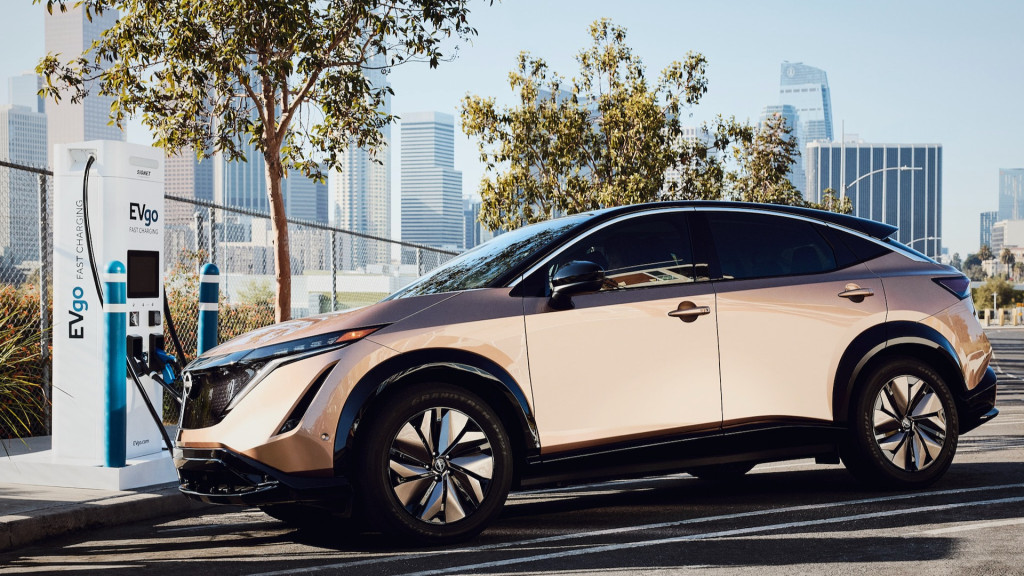
2023 Nissan Ariya at EVgo charging station
Using this data set, researchers found that opening a charging station in California boosted annual spending at adjacent businesses, on average, about $1,500 in 2019 and about $400 between January 2021 and June 2023.
To determine whether charging stations actually caused these spending increases, researchers compared data from businesses within 1,640 feet of a charging station before and after installation. The also analyzed data from similar businesses that weren’t near charging stations within the same timeframe.
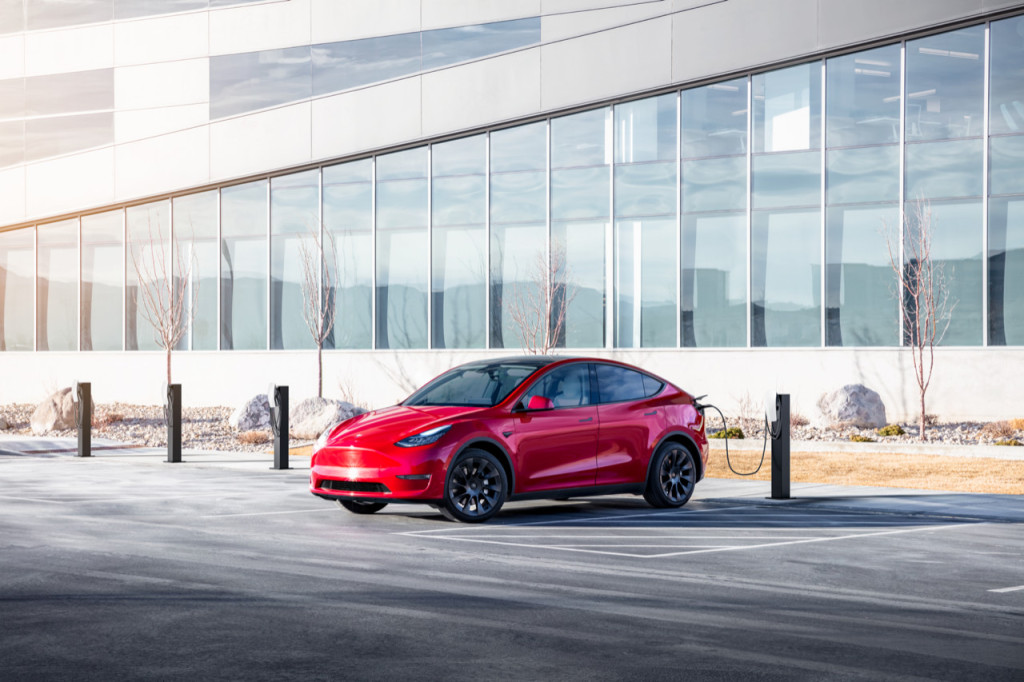
Tesla charging
In addition to pushing EV drivers to spend more at nearby businesses, charging stations themselves can make money. In 2022 a BP executive said, under certain circumstances, fast-charging stations could even be as profitable as gasoline pumps. An AutoPacific study published earlier this year also found that EV drivers want gas-station perks at charging stations—hinting at another way to get drivers to stop and shop at local businesses.
This helps underscore the potential economic ripple effects of the Bipartisan Infrastructure Law and the National Electric Vehicle Infrastructure (NEVI) program it backed. That program aims to start a national network of 500,000 EV chargers and, while that rollout is happening slowly due to a patchwork of local and utility rules, and coordinated state proposals, these results provide a picture of the economic growth they might help provide.

Lab-grown hides, shrooms, bamboo promise lower CO2 vs leather
- Leather alternatives could play a large role on lowering CO2
- Plant-based materials are being investigated
- The leather industry is pushing back
Leather alternatives could have a lower environmental impact than traditional leather made from animal hides, but may still require some development work, according to a new report from research firm IDTechEx.
Plant-based material and mycelium (mushroom) material are the leather alternatives attracting the most interest, according to the report. Either could be more sustainable than animal-based leather, the production of which is associated with greenhouse gas emissions, deforestation, and land monopolization from raising cattle, the report noted.
Plant-based leather could be made from a number of sources, including apple skins, pineapple leaves, cacti, grapes, and bamboo, adding that the challenge in making it a viable alternative to animal hides is in reducing plastic content and ensuring sufficient durability.
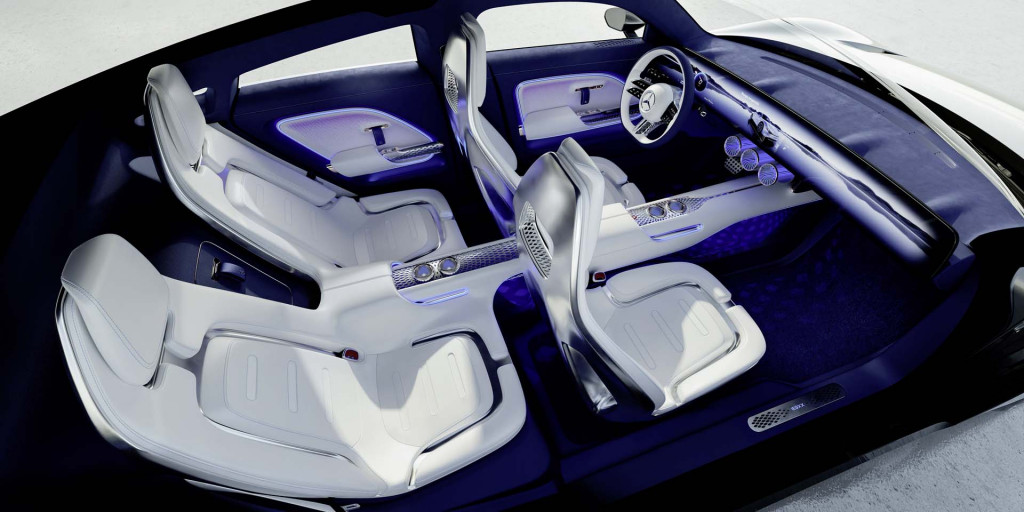
Mercedes Vision EQXX EV concept
Another alternative is mycelial leather made from the thread-like roots of fungi, which can be woven together into a mat-like format that can be cut and shaped, according to the report. Potential advantages include low water and energy usage, and the ability to both grow the feedstock and produce the leather within the same environment.
Automakers are already experimenting with shrooms. The Mercedes-Benz Vision EQXX and Cadillac Sollei EV concepts both used mycelium in their upholstery. But neither was intended as a production vehicle.
Microbial and lab-grown material, made from the fermentation of microorganisms and biopsies of animal skin cells, are another possibility, according to the report. This is still in the very early stages of development, however, and currently requires use of some plastic in the final product, the report notes. The use of animal skin cells also means the resulting leather isn’t vegan, although it would still be a major improvement over traditional leather in terms of emissions reductions.
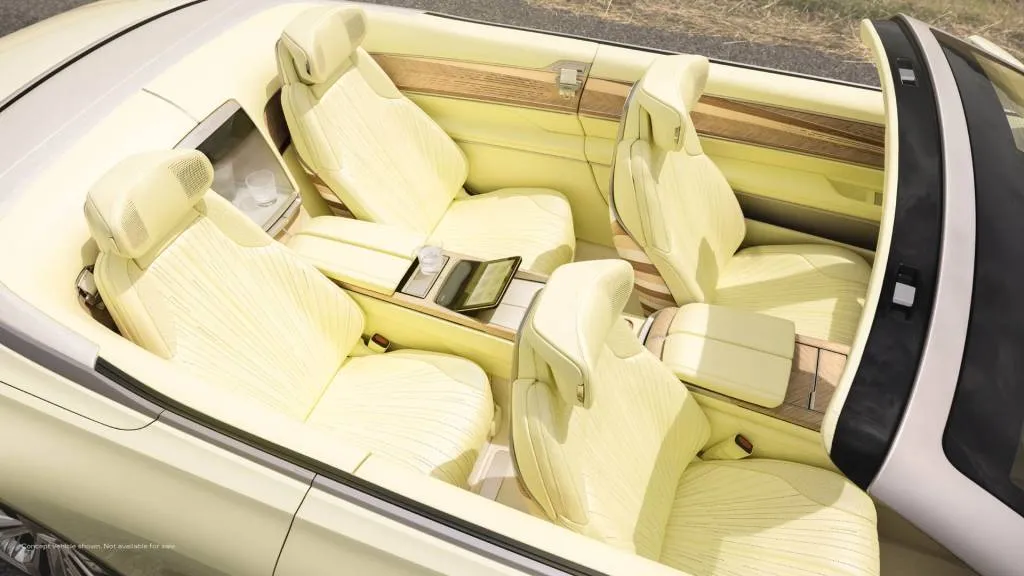
Cadillac Sollei concept
As automakers continue to reduce emissions from vehicle powertrains, more attention is being paid to use of sustainable materials to further reduce the carbon footprint of new cars. Volkswagen is working on synthetic leather made from hemp, and NASCAR even commissioned flax-based bodywork for its electric race car prototype.
The leather industry is pushing back, though. A trade group has argued that choosing leather lowers EVs’ carbon footprint because cattle are already being raised as a food source, so the use of hides for leather is effectively upcycling material that would otherwise be wasted. But that’s as much an argument against eating meat as it is against using synthetic leather.