
Author: EVAI

2025 Jeep Wrangler
 What kind of vehicle is the 2025 Jeep Wrangler? What does it compare to? The 2025 Jeep Wrangler is an off-road-focused SUV with a removable top. It’s best shopped against the Ford Bronco, though the Toyota 4Runner and Land Rover Defender make for intriguing rivals as well. Is the 2025 Jeep Wrangler a good SUV? Viewed within the realm of its…

Kia EVs gain Tesla Supercharger access Jan. 15, adapters in early 2025
- Those who purchased a Kia EV after Sept. 4 will get free NACS adapters in 2025
- Kia hasn’t said how much the adapters will cost for everyone else
- Kia EVs will be able to charge at Tesla Superchargers starting Jan. 15
Kia on Wednesday confirmed its rollout plan for Tesla North American Charging Standard (NACS) adapters and access to the Tesla Supercharger network.
Customers who take delivery of a 2024 or 2025 Kia EV9 or a 2024 Kia EV6 from Sept. 4, 2024, will receive a free NACS adapter. All other Kia EV owners—including EV6 and EV9 owners who took delivery of their vehicles before the cutoff date, as well as all Kia Niro EV owners—will have to pay an undisclosed price for their adapters.
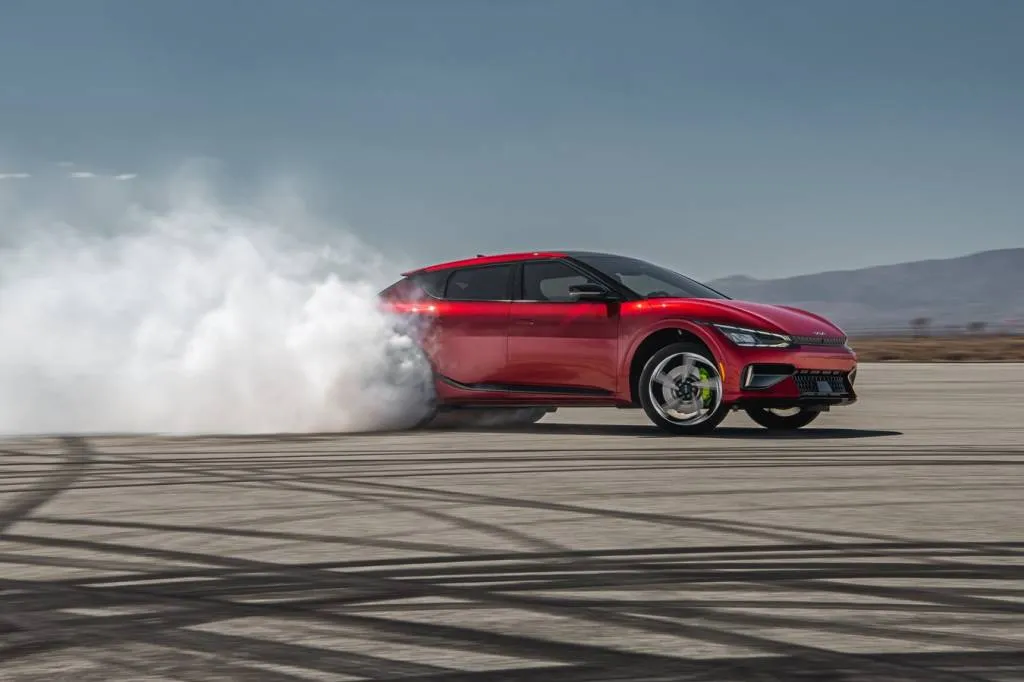
2024 Kia EV6 GT
Most major car brands have announced plans to adopt the NACS charge port, but only a handful have followed through with plans to offer adapters and Supercharger access. Of those, only General Motors is making all customers pay for adapters. But Kia is being stingier than Ford, which offered one free adapter per vehicle to all existing EV customers initially.
Kia plans to begin shipping adapters in early 2025, and plans to open up Supercharger access January 15 of that year. Interestingly, Kia’s didn’t specifically mention Tesla or Superchargers, only saying that customers will be able to charge at “more than 16,500 NACS DC fast chargers in the U.S.” That number is based on the count of total NACS connectors by the Energy Department’s Alternative Fuel Data Center (AFDC) as of September 2024.
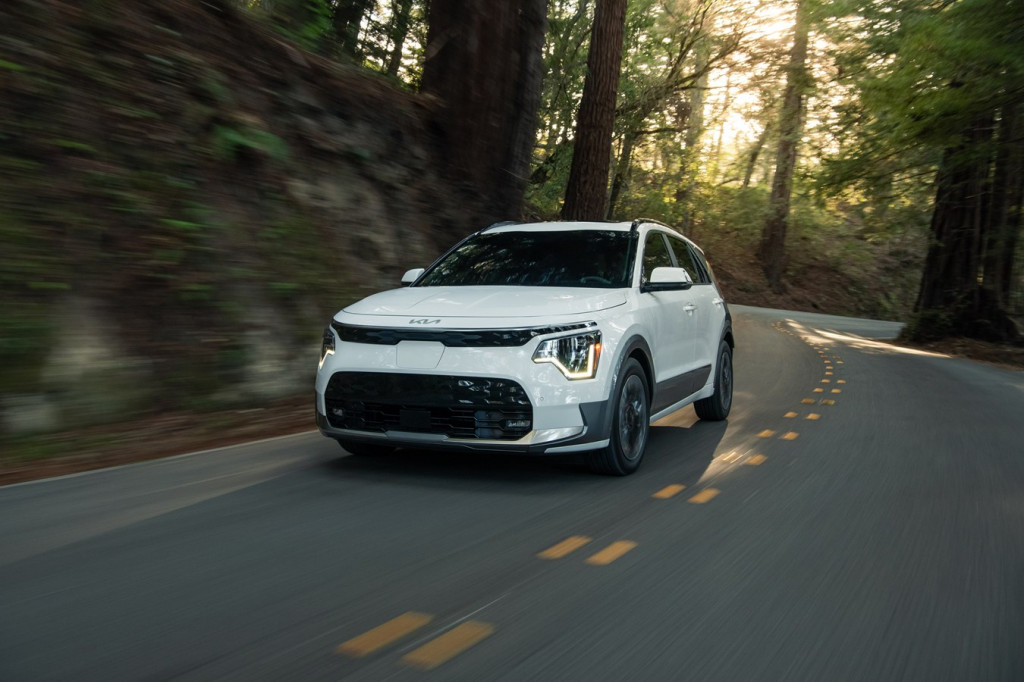
2023 Kia Niro EV
Most other automakers—Stellantis being the only exception—were quick to mention Tesla in their announcements. Kia is one of the automaker partners in the Ionna North American fast-charging network, which has voiced its commitment to both the NACS and CCS standards. So perhaps Kia is looking to emphasize the idea of NACS connectors that aren’t part of the Supercharger network in anticipated of Ionna’s buildout.
Kia, along with sibling brands Hyundai and Genesis, announced NACS support. Hyundai has started building Ioniq 5 EVs with Tesla NACS charge ports, but Kia did not discuss a timeline for adding NACS ports to its vehicles.

Ford recalling 144,516 Mavericks due to freezing backup camera images
 The Ford Maverick is being recalled, again. In the regular flow of Ford recalls the 2022-2024 Maverick is the latest offender. Ford has issued a recall for 144,516 pickups because the backup camera display can freeze. Ford said the frozen image displayed on the infotainment screen while in reverse could result in a false representation of where…


Rolls-Royce doubles down on EVs, planning SUV and sedan
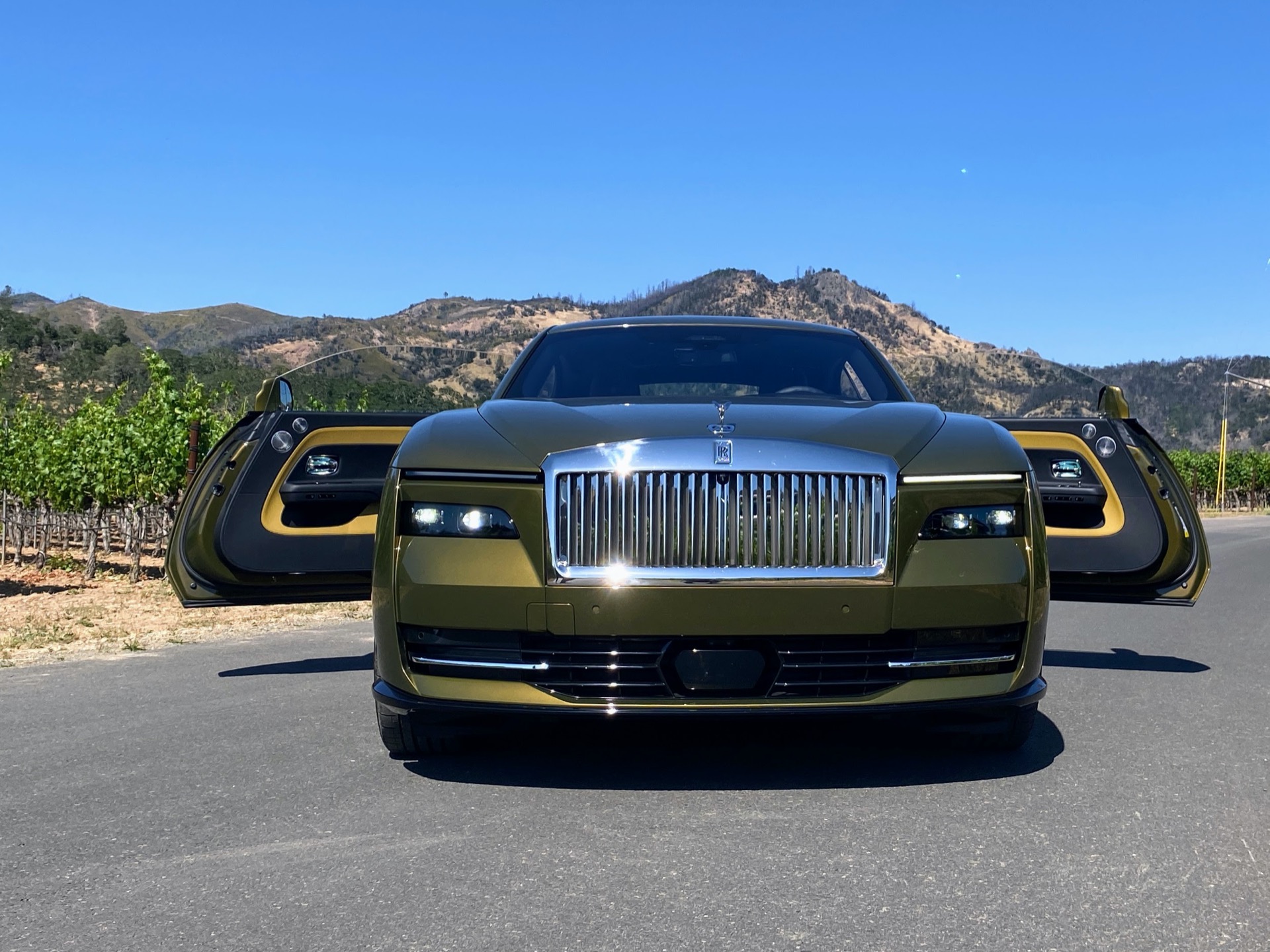
Rolls-Royce will leapfrog rival Bentley into the all-electric era.
Automotive News reported the automaker is now planning two new EVs including a crossover and a sedan. And that may be in addition to the possibility of an electric Rolls-Royce convertible.
Rolls-Royce launched its first EV, dubbed the Spectre, in 2023, as the brand’s unique expression of electric excess.
The second Rolls-Royce EV to join the lineup after the Spectre coupe will be an SUV, the report claims. The automaker’s electric SUV is going to be full-size, but smaller than today’s V-12-powered Cullinan, according to Automotive News. Expect the electric SUV to arrive in early 2027.
Following the electric SUV in late 2028 will be Rolls-Royce’s third EV, a sedan. The electric sedan will be the replacement for the full-size Phantom flagship, according to Automotive News. The Phantom is a historic Rolls-Royce nameplate and it’s unclear if the electric sedan will bear the name.
The Spectre will serve as the Phantom coupe’s replacement for the foreseeable future. Rolls-Royce already had to recall the Spectre EV due to an insufficient electrical ground that could increase the chance of a fire.
Like other automakers, Rolls-Royce committed to go all-electric by 2030, but unlike competitors, it remains steadfast with that commitment. Despite over 60% of Rolls-Royce vehicles having a V-12 under the hood during the first quarter of 2024, the automaker will wind down models with a combustion engine by the end of 2031.
Rolls-Royce’s main competitor, Bentley, at one time looked poised to go fully electric before its rival. It said in 2020 it would have an entire lineup of plug-in hybrids by 2026 and move to an electric lineup by 2030. But in March Bentley noted its first EV won’t debut until 2026 with deliveries starting in 2027, with the later target because of a changing market landscape.

Sharp electric van backs up the home, turns into lounge space
- EV concept gets retro Japanese-van form with futuristic cues on the outside
- It can store energy from solar panels, back up the home when needed
- Interior experience is prioritized—as an “extended living room” for viewing, gaming, or work
Japanese electronics firm Sharp recently unveiled a fully electric concept van. And perhaps not surprisingly for a company known for televisions and audio systems, the Sharp EV emphasizes the cabin experience.
Unveiled at Sharp’s Tech-Day ’24 product showcase in Tokyo last week, the LDK+ is an electric van with an interior imagined as an “extended living room,” according to a Sharp press release, focusing more on how the vehicle is used while stationary.
This takes the form of a high-tech makeover of classic camper van or custom van builds. There’s no shag carpeting to be found, but the rear seats can rotate backward to face a screen mounted on the inner side of the tailgate. Liquid-crystal material in the windows allows the transparency to be adjusted for privacy.
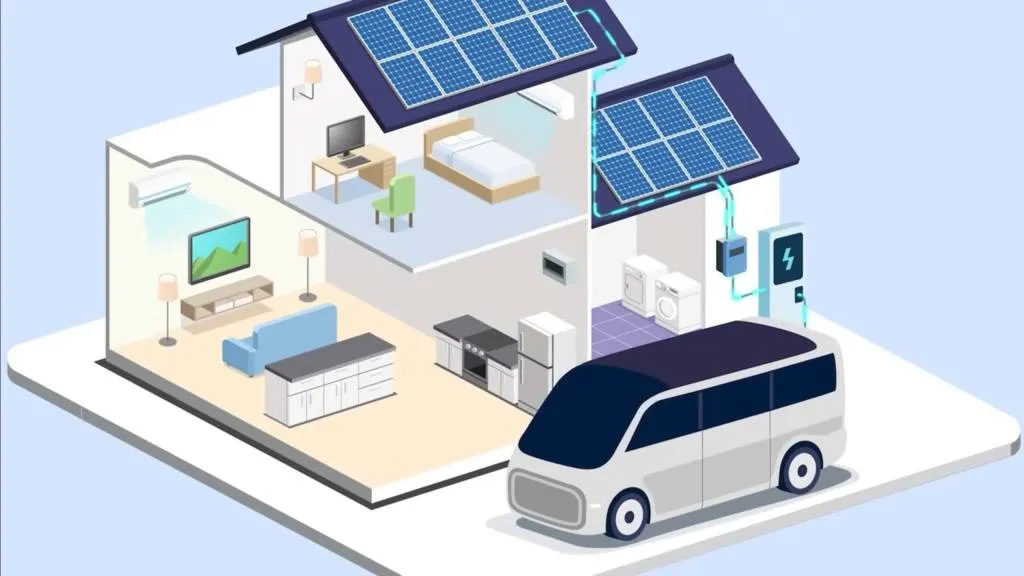
Sharp LDK+ electric van concept
Sharp suggests the LDK+ could be used as an extension of a house. Parked in the driveway, it could serve as a theater room, children’s play area, or workspace while still maintaining connectivity with family members “as if they were in the next room.”
This focus on the experience inside the vehicle reminds us of the Afeela brand, a project between Sony and Honda also built around a Japanese electronics company with no previous direct experience building cars.
Bidirectional charging could also allow the LDK+ to serve as a home backup power source, Sharp suggests. Excess power from home solar panels could be stored in the van’s battery pack for use in an emergency or to lessen overall emissions.
Sharp is already supplying some of the tech for new vehicles and EVs—like the displays for the Fisker Ocean. Since 2016, the company has also been majority owned by the Hon Hai Technology Group, otherwise known as Foxconn, which has its own automotive ambitions.
Foxconn introduced an open platform for EVs in 2020, and has shown an electric cargo van that may or may not be related to the Sharp LDK+ concept. Foxconn has had various other EV projects and, in the U.S., purchased a former GM plant in Ohio that briefly built the failed Lordstown Endurance electric truck in the U.S.

Revived coachbuilder Saoutchik conjures a modern 300 SL
 A Parisian coachbuilder that built bodies for the most luxurious automotive brands in the first half of the 20th century has been revived, and the modern company’s first project is a homage to the iconic Mercedes-Benz 300 SL. The coachbuilder is Saoutchik, the original incarnation of which was founded in 1906 by Jacques Saoutchik, born Iakov…

GM CEO surprised EVs became political
- GM CEO is “surprised” EVs are political
- Barra said GM is on track to be EV-only by 2035 if customers are ready
- GM’s Corvette boss didn’t commit to an electric Corvette, but one’s already been confirmed
GM’s top executive is surprised that EVs became a political lightning rod.
“It did surprise me; I never thought the propulsion system on a vehicle would be (a political issue),” GM CEO Mary Barra said during an interview with Kris Van Cleave for CBS Sunday Morning.
In 2021 GM said that it would not sell vehicles with tailpipes by 2035 and that it intended to be net-zero carbon status by 2040.
The all EV pledge still exists—kind of. Barra told Van Cleave that for GM’s light-duty vehicles (i.e. not its heavy-duty pickup trucks) it will be ready to be EV only by the originally stated 2035 mark. But Barra was quick to note that the automaker will be “guided by the consumer, but the plans we have in place will get us there.”
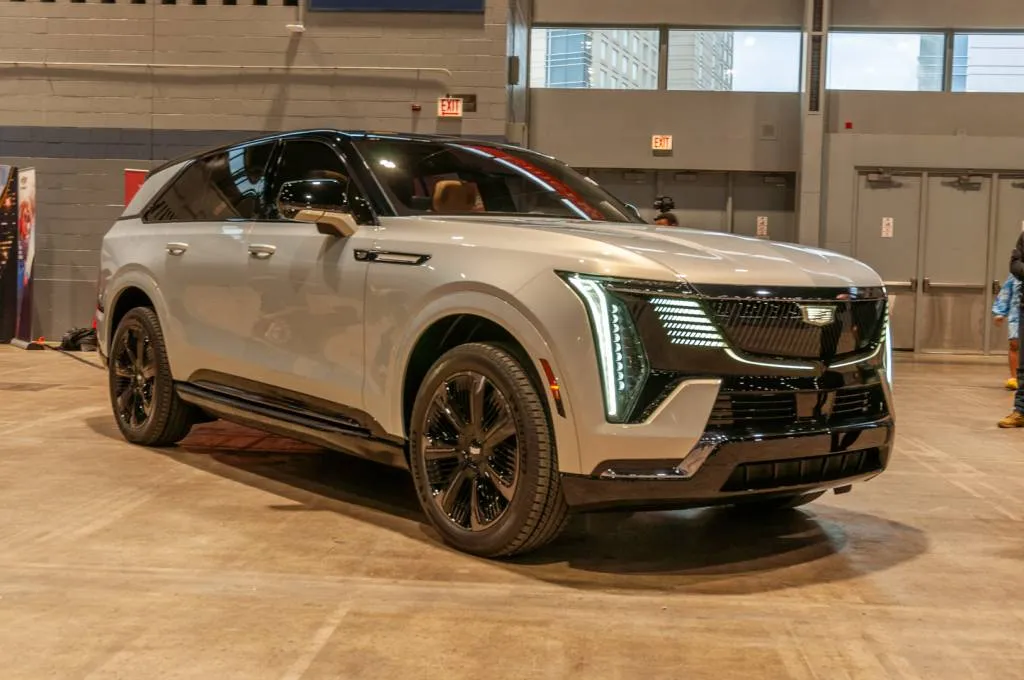
2025 Cadillac Escalade IQ
In 2022 GM announced it would produce 1 million EVs in North America annually by 2025. That included 600,000 electric trucks. But that’s not going to happen. Barra backed away from that EV target in July noting slowing demand.
Addressing concerns about softening EV sales, Barra noted the automaker never thought this would be a linear transition. While EV market share is sagging in California, overall EV sales are up in the state leading EV sales for the U.S. market.
Van Cleave asked Barra if legacy automakers can move fast enough to compete on the world’s stage against Chinese automakers. “I believe yes, absolutely yes we can and I think yes we are. Our workforce is quite young,” Barra said.
Barra noted that most of GM’s technical talent has been with the company less than five years. She said “for about 40% the new, young, employees are joining GM because they want to be part of a company that is going to change and lead in the move to electric vehicles.”
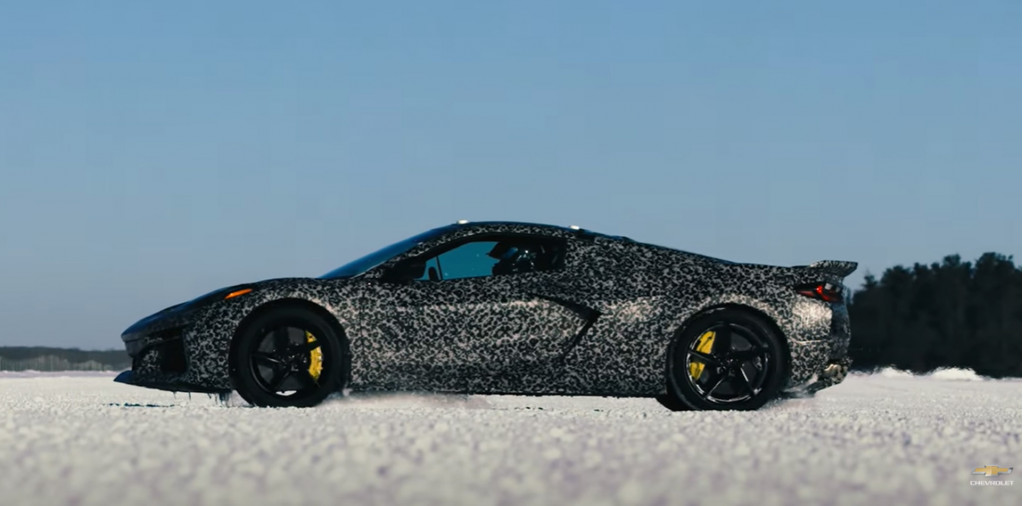
Teaser video for C8 Chevrolet Corvette hybrid
Van Cleave also interviewed Tony Roma, the executive chief engineer of the Corvette sports car. When asked about an electric Corvette Roma told Van Cleave that GM wouldn’t apply electrification just for the sake of it. “It has to earn its way in and make the cars better in a way our customers will respond to,” Roma said.
GM president Mark Reuss announced in 2022 that an electric Corvette is in the works. First to come would be the electrified Corvette E-Ray hybrid, which arrived in 2023. No timeline has been given for the electric Corvette, but Reuss noted it would be Ultium-based, which means it would theoretically not ride on the current C8 Corvette’s chassis.

2025 Ford F-150
 What kind of vehicle is the 2025 Ford F-150? What does it compare to? The F-150 is a full-size pickup truck comparable to the Ram 1500, Chevrolet Silverado 1500, GMC Sierra 1500, and Toyota Tundra. Is the 2025 Ford F-150 a good truck? It’s an amazingly capable truck that is available in myriad diverse configurations. The F-150 is arguably…

Ineos Grenadier production stopped, possibly into 2025
 The U.K.’s Ineos has been forced to cease production at its plant in Hambach, France, due to financial trouble at one of its suppliers. The news was first reported on Sept. 19 by Automotive News (subscription required), which cited comments by CEO Lynn Calder. She said the supplier is responsible for a certain trim component that Ineos’ vehicles…