
Author: EVAI

Mini launches hot JCW versions of Cooper and Aceman EVs
 Mini has revealed its first John Cooper Works EVs The vehicles are based on the Cooper and Aceman Both feature a 54.2-kwh battery and electric motor rated at 255 hp Mini’s John Cooper Works performance treatment has been applied to an electric vehicle for the first time, simultaneously on both the electric Cooper hatch and the Aceman subcompact…

GM, Barclays sign long-term credit card partnership agreement
Company-branded credit cards can be a major win for banks, as they capitalize on customer loyalty to the partner brand along with offers of attractive perks such as cashback and rewards.

2025 Audi Q6 Sportback E-Tron debuts as a more fashionable electric SUV
- The 2025 Audi Q6 Sportback E-Tron is a more rakish take on the automaker’s electric SUV
- Audi said the Q6 Sportback E-Tron will have about 300 miles of range
- The 2025 Audi Q6 Sportback E-Tron will arrive in the U.S. in 2025
In keeping with the pattern set with its other electric SUVs, Audi on Sunday night unveiled a sleeker, coupe-like version of the Q6 E-Tron.
The Q6 Sportback E-Tron is scheduled to reach the U.S. in 2025. It follows the standard Q6 E-Tron, which is scheduled to arrive at U.S. dealerships before the end of the year as the first Audi-badged model off the new Premium Platform Electric (PPE), which the Q6 shares with the Porsche Macan EV.
As with previous Audi Sportback SUVs, the Q6 Sportback E-Tron differs from the standard Q6 E-Tron mostly in exterior styling. The roof is 1.4 inches lower, and the 114.1-inch wheelbase is 0.4 inch longer than the standard Q6 E-Tron. But width and overall length—along with most other styling details—are the same.
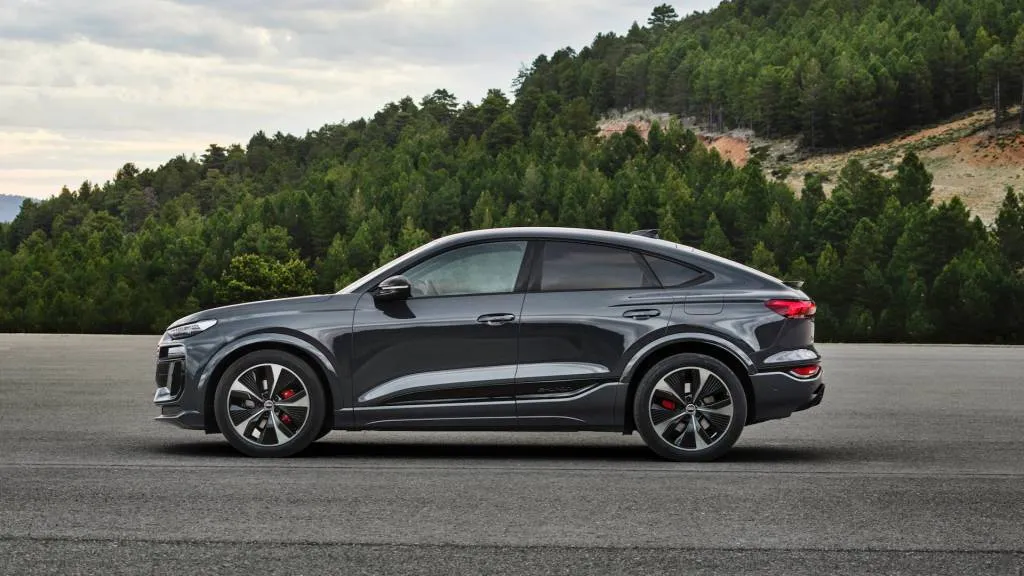
2025 Audi Q6 E-Tron Sportback (European-spec)
A 100-kwh battery pack (94.4 kwh usable) also carries over from the standard Q6 E-Tron. Performance figures for the U.S. will be finalized closer to the on-sale date, but so far Audi is only discussing dual-motor Q6 and S6 models rated at a peak 456 hp and 609 hp, respectively. Those numbers match the non-Sportback Q6 and SQ6, but Audi will also offer a single-motor version in the standard body style.
EPA ratings will be finalized closer to launch as well, but Audi expects Sportback models to offer around 300 miles of range. The standard Q6 E-Tron is rated at 321 miles in single-motor form, 307 miles in dual-motor form, and 275 miles in SQ6 form.
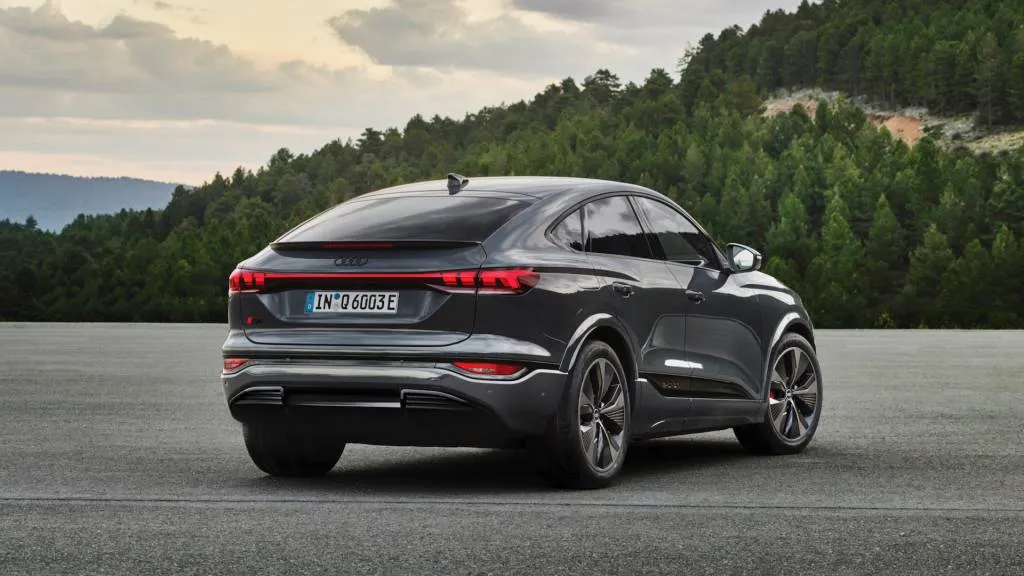
2025 Audi Q6 E-Tron Sportback (European-spec)
While rear-seat headroom and cargo space may suffer from the restyle, up front the Q6 Sportback E-Tron shares other models’ three-screen interior layout, with an 11.9-inch digital instrument cluster, 14.5-inch infotainment touchscreen, and a 10.9-inch touchscreen for the front passenger.
The Q6 Sportback E-Tron joins Sportback versions of the entry-level Q4 E-Tron, which for 2025 gets a reworked powertrain delivering more power and range, and the Q8 E-Tron. Audi is also applying that designation to the A6 Sportback E-Tron hatchback, also based on the PPE architecture, which is due to arrive in North America next spring or summer.

Bespoke Aston Martin DB12 marks “Goldfinger” 60th anniversary
 Aston Martin DB12 Goldfinger Edition celebrates 60th anniversary of “Goldfinger” Special-edition Aston Martin features real gold accents, including gold-laced carbon fiber Production run to total 60 units It’s been 60 years since the James Bond classic “Goldfinger” hit theaters, and kicked off a partnership between the…

Nissan uses AI to check for paint flaws
 Nissan has tapped AI to check for paint defects on new cars AI has improved paint defect detection by 7%, according to Nissan Nissan said AI is meant to enhance detection, not replace humans Nissan is using artificial intelligence to help spot paint imperfections on cars produced at its U.S. assembly plants. About three years ago, the automaker…

Porsche and Michelin developed new tires for the Carrera GT
 Porsche Carrera GT owners have a new tire option A new variant of the Michelin Pilot Sport Cup 2 is being developed for the Carrera GT This is the second time Porsche commissioned new tires for the Carrera GT Porsche Carrera GT production may have stopped almost two decades ago, but Porsche is still working on ways to make its millennial supercar…

Kia marks 80th anniversary with EV restomod
- Kia is celebrating its 80th anniversary
- The automaker commissioned an electric conversion of its Pride hatchback
- A pair of 10-kwh batteries provide up to 120 miles of range in the restomod
Kia turns 80 this year, and to celebrate the automaker’s U.K. division commissioned an electric restomod of a humble Pride hatchback.
The EV conversion was done by Electrogenic, a U.K. firm that specializes in fitting classic cars like the Citroën DS with electric powertrains. The Kia Pride doesn’t have the stature of the DS, but it was a very important car for Kia.
While the company was founded in 1944 as a bicycle parts manufacturer named Kyungsung Precision Industry (the name was changed to Kia Industries in 1952), and built its first car (the Kia Brisa) in 1974, the Pride was what gave Kia an international presence. Based on what was known in Europe and elsewhere as the Mazda 121, it was sold in the U.S. as the Ford Festiva from model years 1988 to 1993 (later evolving to the Aspire).
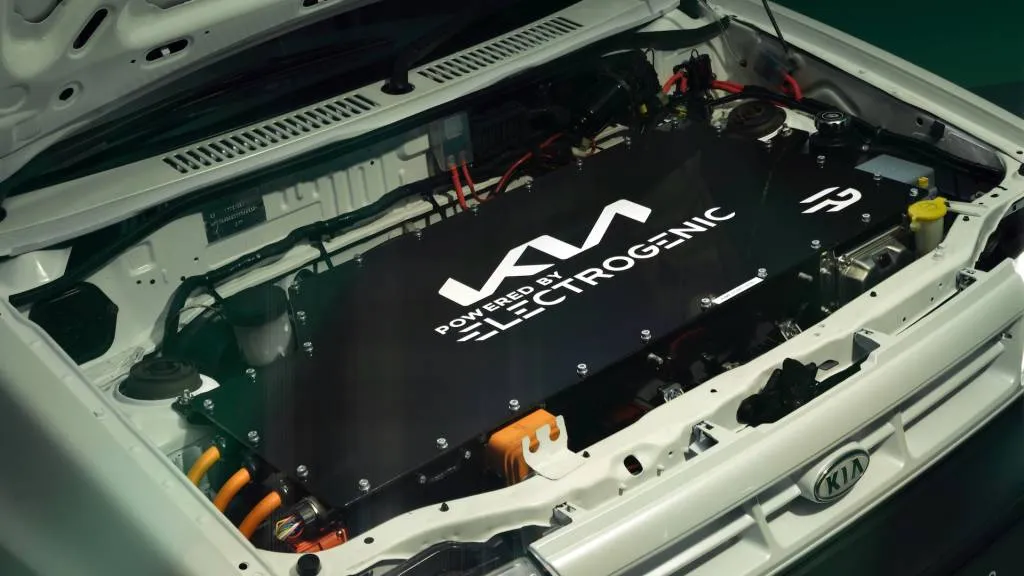
1996 Kia Pride EV conversion
The donor car was a 1996 Kia Pride 1.3 LX five-door hatchback from Kia’s U.K. heritage fleet. The exterior is original—down to the tiny 12-inch wheels—and no permanent alterations were made to the structure, according to Electrogenic, allowing the conversion to be reversed if desired.
However, replacing the 1.3-liter inline-4 with an electric motor nets a substantial increase in power. The gasoline engine made 60 hp and 87 lb-ft of torque, but the Pride EV now boasts 80 hp and 130 lb-ft in its default Auto drive mode and 107 hp and 173 lb-ft in Sport mode, cutting the 0-62 mph time from the original 19.8 seconds to a more reasonable time of approximately 8.0 seconds. An Eco mode, matching the output of the gasoline engine, is also available.
Power is still sent to the front wheels through the original 5-speed manual transmission, which was rebuilt with a performance clutch to handle the extra torque from the electric motor. Eco and Sport modes limit regenerative braking so drivers can make better use of the manual, according to Kia, while Auto mode features more regeneration and a driving feel more like that of a conventional EV.
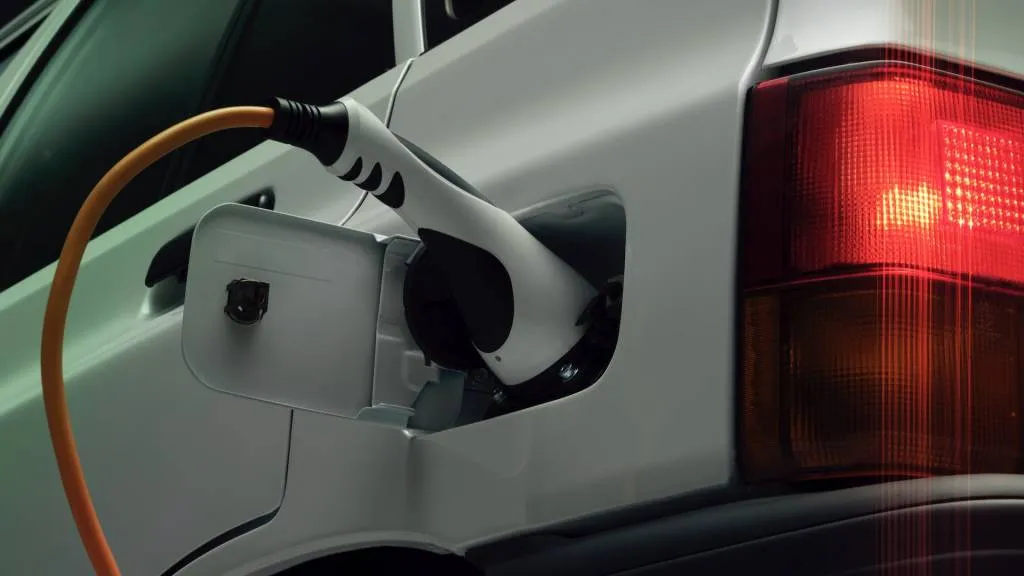
1996 Kia Pride EV conversion
A pair of 10-kwh battery packs—one under the hood and one underneath a slightly raised cargo-area floor—provide up to 120 miles of range. That’s when being driven “sensibly” in Eco mode, Kia notes. A 3.3-kw charger, with its port hidden under the stock fuel filler flap, can complete a full recharge in around six hours.
Even with the pair of battery packs, the Pride EV weighs just 1,918 pounds, compared to 1,873 pounds for the stock version. It’s another indication that, while keeping weight in check with EV conversions is difficult, it’s not impossible. U.K.-based Bedeo has also claimed its Land Rover EV conversions don’t pack on pounds.
Kia isn’t the only automaker to resurrect a car from its formative years as an EV restomod. Parent Hyundai has done the same with a Pony hatchback—its first in-house design—and its 1980s Grandeur flagship sedan. In 2023 a group of apprentices at Audi’s Neckarsulm, Germany, plant turned a vintage NSU Prinz 4 from one of the automaker’s predecessor brands into an EV to mark 150 years of manufacturing at the site.
Sion Power’s Pam Fletcher | EV Adoption’s Loren McDonald (Episode 271)
Pam Fletcher, a former leader at General Motors and Delta Air Lines, discusses her move to the battery startup world as CEO of Sion Power. Then Loren McDonald, CEO of analyst firm EV Adoption, provides a status report on the rollout of federally backed EV chargers.

Brembo buys Öhlins for $405 million
 Brembo on Friday announced its acquisition of Öhlins Racing, a well-known manufacturer of performance suspension components for cars and motorcycles. The purchase price—$405 million—is the largest every paid by Brembo to acquire another company, according to the company, which added that the deal is still subject to regulatory…

2025 Chevrolet Colorado
 What kind of vehicle is the 2025 Chevrolet Colorado? What does it compare to? The Colorado is a midsize pickup truck. Compare it to the mechanically similar GMC Canyon plus the Ford Ranger and Toyota Tacoma. Is the 2025 Chevrolet Colorado a good truck? Overall, the Colorado is a very good choice. It’s powerful, comfortable, and has great…